








Valance
✅ Controlul crizelor
✅ Tratamentul tulburării bipolare
✅ Stabilizare a stării de spirit
✅ Previne migrenele
✅ Prescris de medici
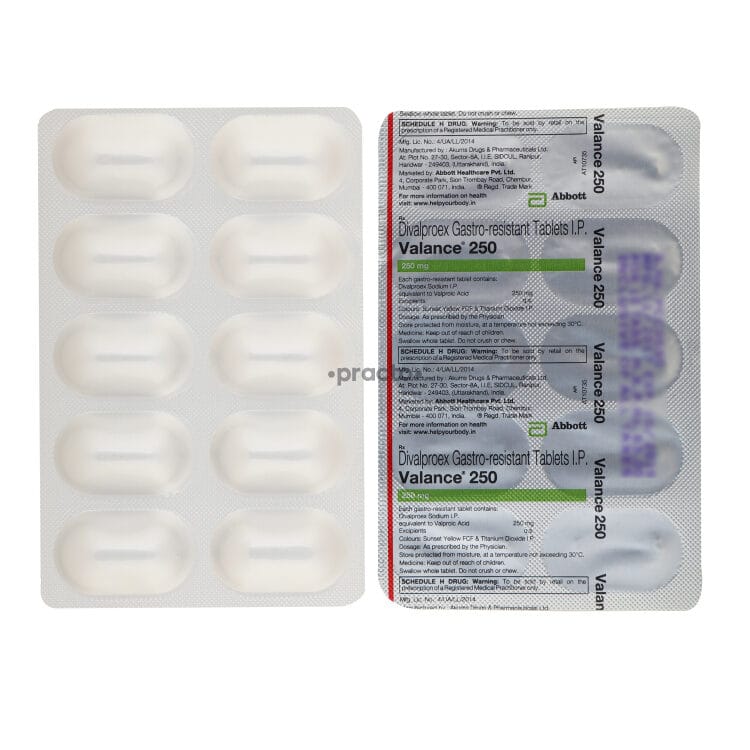
Valance conține Divalproex Sodium IP.
✓ Verificat medical de Morgan Ellis — Cercetător farmaceutic · 8 ani de experiență · Ultima recenzie: mai 2026
⚡ Răspuns rapid — Ce este Valance?
Valance este un comprimat care conțin divalproex sodium (250 mg) — un compus de coordinație stabil de sodium valproat și acid valproic. Utilizat pentru: multiple tipuri de crize epileptice (tonico-clonice generalizate, absențe, mioclonice, parțiale), mania acută în tulburarea bipolară tip I, și profilaxia migrenei. Dozaj pentru adulți: 600–2.500 mg/zi în 2–3 doze divizate. Se administrează în timpul sau după masă pentru a reduce disconfortul gastrointestinal. FDA Categorie de sarcină X pentru migrene, Categorie D pentru epilepsie — unul dintre cele mai teratogene medicamente din uzul clinic obișnuit. Monitorizare obligatorie: teste hepatice de bază + periodice, hemogramă completă, amoniuac dacă sunt prezente simptome. Efecte secundare frecvente: greață, somnolență, tremur, creștere în greutate, subțierea părului. Nu încetați brusc — risc de stat epileptic.
📦 Fiecare comandă este acoperită de politica noastră de Politica noastră de Reexpediere Garantată — dacă coletul dumneavoastră nu sosește în 20 de zile lucrătoare, îl relivrăm.
De ce să comanzi de la MedsBase
Medicamentele noastre generice sunt procurate de la producători certificați WHO-GMP și expediate la nivel mondial în ambalaje discrete și simple — fără denumirea medicamentului pe exteriorul coletului. Plățile cu cardul sunt procesate printr-un procesor reglementat (descrierile de pe extrasul de cont includ un procesor de plăți cu card reglementat — niciodată “MedsBase” sau numele vreunui medicament). Acceptăm și criptomonede și transferuri bancare SEPA. Fiecare comandă este susținută de Politica noastră de Asigurare pentru Relivrare.
Ce este Valance?
Valance este un divalproex sodiu oral comprimat disponibil în doze de 250 mg. Divalproex sodiu este un compus de coordonare 1:1 din valproat de sodiu și acid valproic — în soluție se disociază în aceeași specie activă, dar formularea compusă este mai stabilă și mai bine tolerată decât valproatul de sodiu simplu. Este unul dintre cele mai largi spectre de medicamente antiepileptice din uzul clinic și se află pe Lista Model WHO de Medicamente Esențiale.
Valance este furnizat de un producător certificat WHO-GMP și este bioechivalent cu divalproexul de marcă originală (Depakote®, AbbVie).
Cum funcționează Valance?
Valproatul are multiple mecanisme complementare care împreună produc efectele sale antiepileptice de spectru larg și de stabilizare a dispoziției:
- Blocarea canalelor de sodiu dependente de voltaj — reduce activitatea neuronală de înaltă frecvență.
- Inhibarea canalelor de calciu tip T — relevantă în special pentru crizele de absență.
- Întărirea sistemului GABAergic — crește nivelul GABA cerebral prin inhibarea enzimelor care degradează GABA.
- Modularea receptorului NMDA — reduce transmisia excitatorie a glutamatului.
- Inhibarea histon deacetilazei (HDAC) — efecte epigenetice relevante pentru stabilizarea stării de spirit.
Efectul combinat este un spectru terapeutic larg pentru diferite tipuri de crize, activitate stabilizatoare a dispoziției în tulburarea bipolară tip I și profilaxie a migrenei prin suprimarea depresiunii corticale de răspândire.
Utilizări și indicații
- Epilepsie — crize tonic-clonice generalizate (primă linie)
- Epilepsie — crize de absență (primă linie)
- Epilepsie — crize mioclonice (linie de primă intenție pentru epilepsia mioclonică juvenilă)
- Epilepsie — crize parțiale (focale) (cu sau fără generalizare secundară)
- sindromul Lennox-Gastaut și alte tipuri mixte de crize
- Tulburare bipolară tip I — manie acută (monoterapie aprobată de FDA)
- Tulburare bipolară de tip I — terapie de întreținere (off-label, utilizat pe scară largă)
- Profilaxia migrenei la adulți
Valance este primește, de primă intenție pentru: femei în vârstă fertilă care ar putea rămâne însărcinate (din cauza teratogenității), sau agitație comportamentală în demență (semnal de mortalitate în date observaționale).
Doza Valance și modul de administrare
Concentrații Valance: 250 mg.
Doze standard pentru adulți pe indicație:
- Epilepsie: Începeți cu 600 mg/zi (300 mg de două ori pe zi). Creșteți cu 200 mg la fiecare 3 zile. Doză de întreținere 1.000–2.000 mg/zi în 2–3 doze. Maxim 2.500 mg/zi.
- Bipolar I (mania acută): Începeți cu 750 mg/zi în doze divizate; creșteți rapid până la un nivel seric de 50–125 µg/mL.
- Profilaxia migrenei: Începeți cu 250 mg de două ori pe zi; creșteți la 500–1.000 mg/zi dacă este necesar.
Cum să luați corect Valance
- Luați în timpul sau după masă. Administrarea pe stomacul gol provoacă greață la majoritatea pacienților.
- Înghițiți întreaga tabletă cu apă. NU zdrobiți sau mestecați Valance — acest lucru distruge stratul de eliberare graduală și provoacă o eliberare bruscă a dozei.
- De două până la trei ori pe zi pentru formele cu eliberare imediată; versiunile CR/ER permit administrarea o dată sau de două ori pe zi.
- Fiți consecvenți cu orarul. Dozele omise produc scăderi vizibile ale concentrației.
- Program de monitorizare: teste hepatice de bază, hemogramă completă, număr de trombocite, greutate înainte de începere. Repetați la 1 lună, 3 luni, 6 luni, apoi anual. Verificați amoniacul dacă apar somnolență, confuzie sau vărsături.
- Monitorizarea terapeutică a medicamentelor: nivel seric minim — țintă 50–100 µg/mL (epilepsie), 50–125 µg/mL (bipolar). Nu este necesar în mod obișnuit pentru migrenă.
- Nu încetați brusc. Întreruperea bruscă în epilepsie poate precipita stare epileptică. Reduceți progresiv doza în 2–6 săptămâni sub supraveghere medicală.
- Prevenirea sarcinii la femeile în vârstă fertilă: utilizați metode contraceptive sigure pe tot parcursul tratamentului. Discutați alternativele dacă există posibilitatea unei sarcini.
Efecte secundare ale Valproatului
Frecvente (adesea dependente de doză):
- Greață, vărsături, dispepsie, dureri abdominale
- Somnolență, oboseală
- Tremur (fin, postural)
- Creștere în greutate (10–20% câștig >5 kg)
- Subțierea părului sau căderea părului (reversibilă)
- Diaree sau constipație
- Creșterea apetitului
Mai puțin frecvente, dar importante:
- Trombocitopenie (număr scăzut de trombocite)
- Encefalopatie hiperamonemică — poate apărea chiar și cu teste hepatice normale
- Trăsături ale sindromului ovarelor polichistice la femei
- Enzime hepatice crescute
- Pancreatită (rară, dar potențial letală)
- Încetinire cognitivă, dificultăți de memorie
Rar, dar necesită îngrijire de urgență:
- Insuficiență hepatică fulminantă acută (în special la copiii sub 2 ani sub polifarmacie)
- Pancreatită acută
- Encefalopatie hiperamonemică cu teste hepatice normale
- Reacții cutanate severe (sindromul Stevens-Johnson, DRESS)
- Supresie de măduvă osoasă
- Hemoragii severe din cauza trombocitopeniei sau disfuncției plachetare
Avertismente și Precauții — CRITICAL
- Sarcină: CONTRAINDICAȚIE ABSOLUTĂ pentru migrenă (Categoria X) și AVERTIZARE IMPORTANTĂ pentru epilepsie (Categoria D). Valproatul de sodiu/divalproex este unul dintre cei mai puternici teratogeni umani din uzul clinic obișnuit — ~10% malformații congenitale majore (defecte ale tubului neural, defecte craniofaciale, cardiace, hipospadias, defecte ale membrelor) plus un risc de 30–40% de deficiențe neurodezvoltamentale semnificative (IQ mai scăzut, autism). Utilizați numai dacă nu există altă opțiune eficientă. Contraceptia fiabilă este obligatorie la femeile în vârstă fertilă.
- Hepatotoxicitate: riscul cel mai mare la copiii sub 2 ani cu polifarmacie. Întrerupeți imediat la apariția icterului, vărsăturilor severe sau letargiei.
- Pancreatită: rar, dar potențial letal; idiosincratic. Solicități ajutor medical de urgență pentru dureri abdominale severe.
- Encefalopatie hiperamonemică — poate apărea și cu teste hepatice normale. Verificați amonemia dacă apar somnolență, confuzie sau vărsături.
- Boală mitocondrială (mutații POLG): contraindicație absolută.
- Tulburări ale ciclului ureic: contraindicație.
- Riscul de sângerare: afectează funcția trombocitelor. Informați chirurgul și întrerupeți administrarea cu 1-2 săptămâni înainte de intervenția chirurgicală electivă, dacă este posibil.
- Pacienți cu demență: utilizare off-label nu mai recomandată — semnal de mortalitate.
- Nu întrerupeți brusc în epilepsie — stare epileptică.
Contraindicații — Cine NU ar trebui să ia Valance
- Sarcină sau planificare sarcinii (în special pentru profilaxia migrenei)
- Hipersensibilitate cunoscută la valproat
- Insuficiență hepatică severă sau boală hepatică activă
- Boală mitocondrială (mutații POLG)
- Tulburări ale ciclului ureic
- Porfirie acută
- Copii sub 2 ani (în special la polifarmacie — risc ridicat de hepatotoxicitate)
- Pancreatită activă
Interacțiuni medicamentoase
| Combinați cu | Efect | Ce să faceți |
|---|---|---|
| Lamotrigină | Dublează nivelurile de lamotrigină — risc de erupție cutanată severă, sindrom Stevens-Johnson | Reduceți la jumătate doza inițială de lamotrigină; titrare foarte lentă. Supraveghere specializată. |
| Carbapeneme (meropenem, ertapenem, imipenem) | Reduce dramatic nivelurile de valproat — poate declanșa crize epileptice | Evitați combinația. |
| Fenitoină, carbamazepină, fenobarbital | Interacțiuni bidirecționale — imprevizibile | Monitorizați nivelurile ambelor; supraveghere specializată. |
| Aspirină (doze mari), AINS | Deplasează valproatul de pe albumina — crește fracția liberă | Evitați aspirina în doze mari. Monitorizați efectele adverse ale valproatului. |
| Warfarin | Crește efectul anticoagulant și inhibă agregarea trombocitară | Monitorizați INR; observați semne de hemoragie. |
| Topiramate | Risc de encefalopatie hiperamonemică | Verificați amoniemul dacă apar simptome. |
| Alcool | Depresie CNS aditivă și hepatotoxicitate | Evitați complet consumul de alcool. |
| Contraceptive orale combinate | Nicio interacțiune semnificativă | COC-urile rămân eficiente. Contraceptia fiabilă este obligatorie din cauza teratogenității. |
| Benzodiazepine | Depresie CNS aditivă | Evitați combinația de rutină. |
Instrucțiuni de Depozitare
- Se păstrează la temperatura camerei, 15–25°C. Protejați de lumină și umiditate.
- Păstrați comprimatele în ambalajul original blister până la utilizare.
- Nu depozitați în baie.
- Păstrați în afara zonei accesibile copiilor — valproatul este puternic teratogen; ingestia accidentală de către o femeie însărcinată din gospodărie reprezintă un risc grav.
- Nu utilizați după data de expirare.
- Returnați comprimatele neutilizate la o farmacie pentru eliminarea corespunzătoare.
Alternative conexe pe MedsBase
Alte medicamente disponibile pentru afecțiuni conexe:
- Răsfoiți toate medicamentele neurologice și antiepileptice
- Răsfoiți medicamentele anti-migrenă
- Răsfoiți medicamentele pentru sănătatea mintală și psihiatrie
Întrebări frecvente
Care este diferența dintre Valance (divalproex) și valproatul de sodiu?
Farmacologic, practic același lucru. Divalproexul de sodiu este un compus de coordonare 1:1 dintre valproatul de sodiu și acidul valproic; în soluție se disociază în aceeași specie activă. Formularea compusă este ceva mai stabilă și se raportează că provoacă puțin mai puțină iritație gastrointestinală decât valproatul de sodiu simplu, dar doza, monitorizarea, profilul efectelor adverse și riscul de sarcină sunt identice. Majoritatea autorităților de reglementare și prescriitori le tratează interschimbabil.
De ce este Valance atât de periculos în sarcină?
Valproatul este unul dintre cele mai teratogene medicamente utilizate în mod obișnuit în clinică. Expunerea în uter implică aproximativ un risc de 10% de malformații congenitale majore (defecte ale tubului neural, cardiace, craniofaciale, hipospadias, defecte ale membrelor) plus un risc de 30–40% de deficiențe neurodezvoltamentale semnificative (IQ mai scăzut, tulburare din spectrul autist). Pentru profilaxia migrenei, FDA îl clasifică drept Categoria X (contraindicație absolută); pentru epilepsie, Categoria D. Femeile în vârstă fertilă au nevoie de consiliere explicită, contracepție fiabilă pe tot parcursul și 5 mg/zi de folat înainte de orice sarcină planificată.
De ce nu trebuie să opresc niciodată Valance brusc?
În epilepsie, întreruperea bruscă poate precipita stare epileptică — o urgență medicală, cu mortalitate semnificativă dacă nu este tratată. Acest lucru se poate întâmpla chiar și după ani de stabilitate. Reduceți treptat doza în 2–6 săptămâni sub supraveghere medicală. Aceeași precauție se aplică și în cazul menținerii bipolare — întreruperea bruscă poate precipita recidiva maniacală.
Ce analize de sânge am nevoie pentru Valance?
Înainte de a începe: funcția hepatică (AST, ALT, GGT), hemogramă completă inclusiv trombocite, greutate de bază, glicemie la stomacul gol. În timpul tratamentului: repetă la 1 lună, 3 luni, 6 luni, apoi anual. Dacă nu te simți bine: nivelul de amoniac în caz de somnolență, confuzie, vărsături. Monitorizarea periodică a nivelului seric de valproat pentru epilepsie (țintă 50–100 µg/mL).
Valance poate provoca creștere în greutate sau pierdere de păr?
Ambele sunt frecvente. Creșterea în greutate afectează 10–20% din pacienți (5–10 kg în primele 6–12 luni). Subțierea părului afectează până la 10% din pacienți, de obicei începe în primele 3–6 luni și este reversibilă la reducerea dozei sau întreruperea tratamentului. Suplimentarea cu zinc și seleniu este uneori utilizată (dovezi limitate).
Valance poate fi utilizat cu lamotrigina?
Da, dar cu precauție extremă. Valproatul dublează nivelurile de lamotrigină, crescând semnificativ riscul de erupții cutanate severe și sindromul Stevens-Johnson. Combinația este uneori utilizată, dar lamotrigina trebuie inițiată la jumătate din doza obișnuită cu o titrare mult mai lentă. Supravegherea specializată este esențială.
De ce anumite antibiotice interacționează periculos cu Valance?
Antibioticele carbapenemice (meropenem, ertapenem, imipenem) reduc dramatic nivelurile de valproat — uneori >90% în 1–3 zile — printr-un mecanism slab înțeles care poate implica recircularea enterohepatică. Rezultatul este pierderea bruscă a controlului crizelor. Evitați această combinație. Dacă un pacient care ia valproat are nevoie de un carbapenem, schimbați antibioticul.
Poate Valance să provoace sindromul ovarelor polichistice?
Utilizarea pe termen lung a valproatului la femei este asociată cu caracteristici ale sindromului ovarelor polichistice — neregularități menstruale, hiperandrogenism (acnee, hirsutism), creștere în greutate și chisturi ovariene. Riscul este mai mare la utilizarea pe termen lung și la doze mai mari. Dacă apar caracteristici ale SOPC, ar trebui luate în considerare alte anticonvulsivante (lamotrigină, levetiracetam).
Pot să consum alcool în timp ce iau Valance?
Alcoolul consumat ușor și ocazional este de obicei tolerat, dar combinația are efect aditiv: mai multă sedare, mai mult stres hepatic. Consumul excesiv de alcool crește semnificativ toxicitatea hepatică și ar trebui evitat.
Cum pot reduce progresiv doza de Valance în siguranță?
Reduceți cu 200–500 mg la fiecare 2 săptămâni sub supravegherea neurologului sau psihiatrului dumneavoastră. Reducerea prea rapidă poate duce la reapariția crizelor (epilepsie) sau a recăderii maniacale (tulburare bipolară). Întreruperea bruscă este rezervată pentru reacții adverse grave (pancreatită severă, insuficiență hepatică fulminantă).
Unde este fabricat Valance?
Valance este furnizat de un producător certificat WHO-GMP și este bioechivalent cu divalproex-ul de marcă originală (Depakote®). Certificatele de analiză ale loturilor sunt disponibile la cerere.
Alternative conexe
Alte produse din Afecțiuni cronice pe care clienții le vizualizează de asemenea:
Mai multe opțiuni în Afecțiuni Neurologice și Epilepsie
Clasificate în funcție de volumul recent de comenzi MedsBase — ce aleg alți clienți în această categorie.


| Concentrație | 250 mg |
|---|---|
| Cantitate | 30 Comprimat/e, 60 Comprimat/e, 90 Comprimat/e, 180 Comprimat/e |
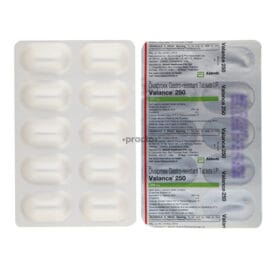 Valance
Întrebări și răspunsuri
Valance
Produse similare





Recenzii
Nu există recenzii încă