









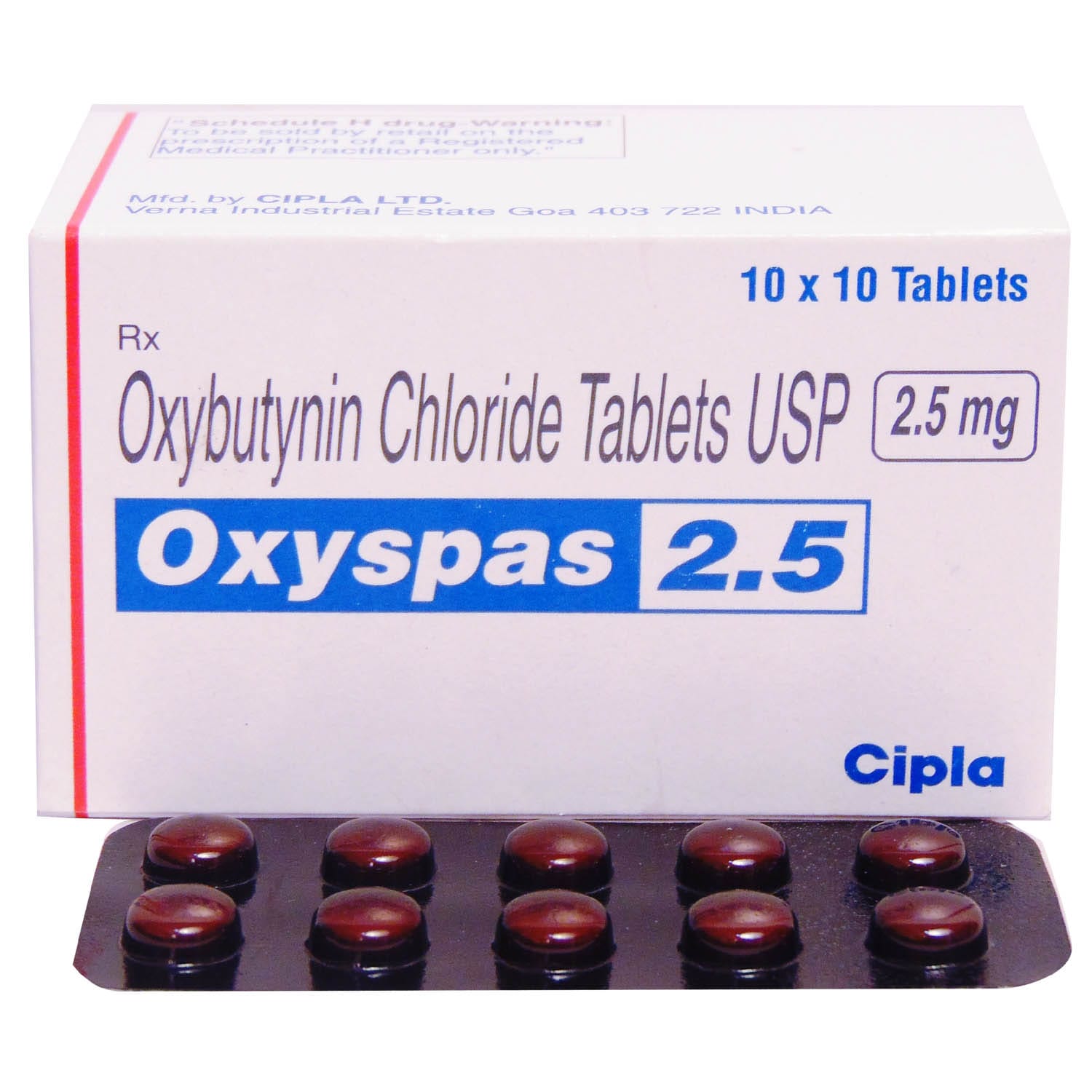
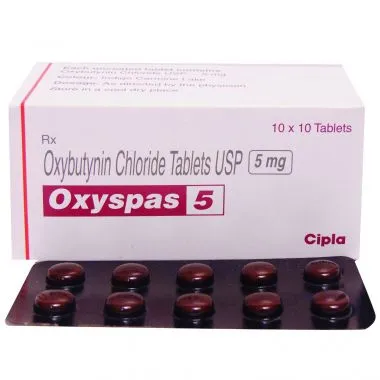
Oxyspas
✅ Minskar blåsspasmer
✅ Lindrar akut urininkontinens
✅ Minskar urineringens frekvens
✅ Förbättrar blåskontroll
✅ Behandlar överaktiv blåsa
Oxyspas innehåller Oxybutynin Chloride.
✓ Medicinskt granskad av Morgan Ellis — Apoteksforskare · 8 års erfarenhet · Senast granskad: maj 2026
Snabb svar — Vad är Oxyspas?
Oxyspas innehåller oxybutynin chloride — en tertiär amin antikolinergisk/antimuskarinisk läkemedel som används för att behandla överaktiv blåsa (OAB) med symptom som trängningar, frekvent urinering och urgeinkontinens. Finns i 2,5 mg och 5 mg tabletter. Oxybutynin är det äldsta och mest föreskrivna läkemedlet mot överaktiv blåsa i världen. Det blockerar M3-muskarinacetylkolinreceptorer på blåsans detrusor, vilket minskar ofrivilliga sammandragningar under fyllnad. Standarddos för vuxna: 5 mg två till tre gånger dagligen (10-15 mg totalt/dag); börja med 2,5 mg två gånger dagligen hos äldre eller personer som är känsliga för antikolinerga biverkningar. Vanligaste biverkningar: torr mun (50%+), förstoppning, suddig syn, trötthet, yrsel, kvarhållning av urin. Använd med försiktighet hos vuxna 65+ år — de amerikanska Beers-kriterierna från 2023 klassar oxybutynin som “potentiellt olämpligt” hos äldre på grund av ökad risk för fall, kognitiva problem och delirium relaterade till antikolinerga effekter. Mirabegron är det föredragna förstahandsvalet för överaktiv blåsa hos äldre patienter.
📦 Varje beställning omfattas av vår Reshipment Assurance Policy — om din försändelse inte anländer inom 20 arbetsdagar, skickar vi om den.
Varför beställa från MedsBase
Varje sats härstammar från en WHO-GMP-certifierad tillverkare. Beställningar skickas i enkel, omärkt förpackning från våra uppfyllningspartners och täcks av vår Reshipment Assurance Policy: om ett paket inte anländer inom 20 arbetsdagar skickar vi en gratis omleverans, inga frågor ställs.
Vad är Oxyspas?
Oxyspas är ett varumärke för oxybutynin chloride omedelbart frigivande tabletter, tillgängliga i 2,5 mg och 5 mg styrkor. Internationellt marknadsfört som Ditropan (US, UK, EU, AU), Cystrin (UK), Lyrinel XL (förlängd frisättning), Oxytrol (transdermal plåster), Gelnique (gel). Förpackningsstorlekar tillgängliga på MedsBase: 30, 60, 90 eller 180 tabletter per styrka.
Hur oxybutynin fungerar
Oxybutynin är en kompetitiv antagonist vid M1, M2 och M3 muskariniska acetylkolinreceptorer. Den kliniskt relevanta effekten är blockad av M3-receptorer på urinblåsans detrusormuskel — detta minskar de parasympatiskt drivna detrusorkontraktionerna under fyllnadsfasen, vilket reducerar trängningar och inkontinensepisoder och ökar den funktionella urinblåsekapaciteten.
Torr mun, förstoppning, suddig syn och CNS-biverkningar är följderna av SAMMA mekanism som verkar på muskarinreceptorer utanför urinblåsan i kroppen — spottkörtlar (M3), tarm (M2/M3), ögats ciliärmuskel (M3) och centrala nervsystemet (M1/M2). Nyare “uroselektiva” antimuskarinika (solifenacin, darifenacin) har något bättre selektivitet för urinblåsans M3, men skillnaden är måttlig. Mirabegron, en β3-agonist med en helt annan mekanism, undviker dessa biverkningar helt och hållet.
När oxybutynin används
- Överaktiv blåsa (OAB) med trängningar, frekvent urinering, urgeinkontinens — det godkända indikationen
- Neurogen detrusoröveraktivitet (multipel skleros, ryggmärgsskada, ryggmärgsbråck)
- Nattlig enures (sängvätning) hos barn >5 år — används ibland som andraval efter desmopressin
- Off-label: hyperhidros — används ibland för överdriven svettning eftersom samma antikolinerga mekanism minskar svettproduktionen. Biverkningarna uppväger ofta fördelen om inte lokalbehandling används.
Dosering & hur man tar
Vuxna:
- Standard startdos: 5 mg två gånger dagligen; öka till 5 mg tre gånger dagligen vid behov (maximalt 20 mg/dag hos yngre patienter)
- Känsliga eller äldre: börja med 2,5 mg två gånger dagligen och öka endast om tolererat
- Ta med eller utan mat. Drick tillräckligt med vatten.
- Effekt på trängningar utvecklas inom 1-2 veckor; full effekt efter 4-8 veckor
Barn >5 år för nattlig enures: 2,5-5 mg vid läggdags, pediatrisk övervakning är nödvändig.
Nedsatt njur-/leverfunktion: reducera startdos; titrera försiktigt. Svår leverfunktionsnedsättning är en relativ kontraindikation.
Biverkningar & säkerhet
- Mycket vanligt (mer än 1 av 10): torr mun (den främsta anledningen till avbrott), förstoppning, yrsel
- Vanligt: suddig syn (cyklopentolat-liknande effekt), trötthet, huvudvärk, illamående, urinretention eller svårigheter att urinera, hjärtklappning, våta upplevelser, torr hud
- Mindre vanliga: nedsatt värmetolerans (minskat svettning — risk vid varmt väder, träning), förvirring, hallucinationer (särskilt hos äldre), takykardi
- Sällsynta men allvarliga: akut vinkelstängd glaukom (hos predisponerade individer), svår förstoppning / paralytisk ileus, urinretention, allergiskt angioödem, QT-förlängning
- Hos äldre: ökad fallrisk, kognitiv avmattning, delirium, möjligen ökad långtidsrisk för demens — se geriatriska avsnittet nedan
Antikolinerg belastning och äldre
Oxybutynin är det mest antikolinerga av OAB-läkemedlen och passerar lätt blod-hjärnbarriären. Hos vuxna 65+ är den kumulativa antikolinerga belastningen från oxybutynin (ofta i kombination med andra antikolinerga läkemedel i medicinlistan) associerad med mätbar kognitiv försämring, ökad fallrisk och växande evidens för långtidsrisk för demens i observationsstudier.
Praktiska implikationer:
- Om du är 65+ och ska börja OAB-behandling, fråga din läkare om mirabegron först — den har likvärdig effektivitet utan den antikolinerga belastningen
- Om oxybutynin är nödvändigt, använd den lägsta effektiva dosen och överväg transdermala eller topikala formuleringar (lägre CNS-exponering)
- Granska din fullständiga medicinlista för andra antikolinerga läkemedel (difenhydramin, hydroxyzinkväve, amitriptylin, kvetiapin, tolterodin, hyoscyamin) — avsluta behandling där möjligt
- Utvärdera efter 6–12 månader: uppväger fördelen biverkningskostnaden?
Kontraindikationer & varningar
Ta inte oxybutynin om du har:
- Obotat glaukom med sluten vinkel
- Urinretention eller betydande blåsutflödeshinder
- Svåra gastrointestinala motilitetsstörningar (paralytisk ileus, svår ulcerös kolit, toxisk megakolon
- Myastenia gravis
- Överkänslighet mot oxybutynin
Använd med försiktighet om du har: hög ålder (se ovan), godartad prostataförstoring (risk för urinretention), refluxesofagit, autonom neuropati, hypertyreos, kranskärlssjukdom, hypertoni, arytmi, demens eller kognitiv nedsättning.
Graviditet och amning: använd endast om fördelen uppväger risken.
Läkemedelsinteraktioner
- Andra antikolinergika — additiva effekter; minimera stapling. Vanliga förövare: difenhydramin, hydroxyzin, amitriptylin, nortriptylin, paroxetin, kvetiapin, hyoscyamin, skopolamin, tolterodin, atropin
- CNS-depressiva medel (alkohol, bensodiazepiner, opioider) — additiv sedering
- Kolinesterashämmare (donepezil, rivastigmin, galantamin vid demens) — MOTVERKANDE mekanismer; att samtidigt ordinera båda är irrationellt och kombinationen är förknippad med sämre utfall än var och en enskilt
- Starka CYP3A4-hämmare (ketokonazol, itrakonazol, ritonavir) — höjer oxybutyninnivåerna
- Läkemedel som fördröjs av nedsatt GI-motilitet — absorption kan förändras (depåpreparat, levodopa)
Hur oxybutynin jämförs
| Läkemedel | Klass | Anmärkningsvärd egenskap |
|---|---|---|
| Oxybutynin | Antikolinerg (M1-M3) | Billigast, mest förskriven; högst risk för torr mun och kognitiva biverkningar |
| Tolterodin / Terol LA | Antikolinerg | Bättre tolererad än oxybutynin; LA-formulering en gång dagligen |
| Solifenacin / darifenacin | Selektiv M3-antikolinerg | Något mindre torr mun än oxybutynin |
| Mirabegron (Mirago) | β3-agonist | Förstahandsval för 65+; ingen antikolinerg belastning |
| Flavoxat (Urispas) | Antispasmodikum | Mild; användbar för urinvägsspasmer efter ingrepp |
Förvaring & hållbarhet
Förvara Oxyspas-tabletter under 25°C i originalblisterförpackningen. Skydda från fukt och ljus. Förvara utom räckhåll för barn. Använd inte efter utgångsdatumet.
Vanliga frågor
Varför orsakar oxybutynin så kraftig torr mun?
Oxybutynin blockerar M3-muskarinreceptorer som stimulerar salivproduktion i spottkörtlarna — samma receptor som den blockerar i urinblåsan. Torr mun är en direkt konsekvens av den önskade effekten på urinblåsan som ger en oönskad biverkan. Sockerfri tuggummi, frekventa små klunkar vatten och en salivsubstitut (Biotene, Glandosane) kan hjälpa. Om torr mun är outhärdlig är byte till mirabegron (ingen antikolinerg effekt) vanligtvis det bästa valet.
Bör jag ta oxybutynin om jag är över 65?
American Geriatrics Society Beers Criteria 2023 klassificerar oxybutynin som “potentiellt olämpligt” för äldre vuxna — ackumulerad antikolinerg belastning är associerad med fall, kognitiv nedsättning, delirium och möjligen långsiktig demensrisk. Diskutera mirabegron först med din läkare; den har likvärdig effekt för överaktiv urinblåsa utan dessa biverkningar. Om oxybutynin är nödvändigt, använd den lägsta effektiva dosen och granska övriga läkemedel för andra antikolinerga preparat som kan avslutas.
Hur snabbt verkar oxybutynin?
Inledande minskning av trängningar och ökad frekvens märks vanligen inom den första veckan, med full effekt efter 4-8 veckor. Om det inte finns någon förbättring efter 8 veckor vid maximal tolererad dos, är det rimligt att byta till ett annat läkemedel mot överaktiv blåsa (mirabegron, solifenacin, tolterodin LA).
Kan jag dricka alkohol med oxybutynin?
Alkohol förstärker biverkningarna som trötthet och yrsel. Måttlig och tillfällig alkoholkonsum är generellt acceptabel, men tung eller regelbunden konsum bör undvikas.
Påverkar oxybutynin min körförmåga?
Trötthet och suddig syn kan påverka körförmågan, särskilt under de första veckorna. Undvik att köra bil tills du vet hur oxybutynin påverkar dig.
Varför överhettar jag på sommaren?
Oxybutynin minskar svettning (antikolinerg effekt på svettkörtlarna), vilket kan göra att du inte kan reglera din kroppstemperatur ordentligt i varmt väder eller vid fysisk aktivitet. Se till att dricka tillräckligt, undvik extrem värme och överväg att byta till mirabegron om du bor i ett varmt klimat eller utför krävande utomhusaktiviteter.
Kan jag ta oxybutynin med mina demensläkemedel (donepezil, rivastigmin)?
Detta är en vanlig men problematisk kombination — oxybutynin (antikolinerg) motverkar direkt mekanismen hos donepezil/rivastigmin/galantamin (kolinesterashämmare som ökar acetylkolin). Studier visar sämre kognitiva utfall när båda ordineras samtidigt jämfört med endera enskilt. Om båda verkar nödvändiga, diskutera med din läkare om att byta läkemedlet mot överaktiv blåsa till mirabegron.
Är styrkan 2,5 mg eller 5 mg rätt för mig?
De flesta vuxna börjar med 5 mg två gånger dagligen. Äldre patienter, de som väger under 50 kg, de med nedsatt njur- eller leverfunktion och de som är känsliga för antikolinerga biverkningar bör börja med 2,5 mg två gånger dagligen och öka endast om det tolereras. Styrkan 2,5 mg av Oxyspas möjliggör denna mildare titrering utan att behöva dela tabletter.
Var kan jag beställa Oxyspas online?
Du kan beställa Oxyspas 2,5 mg eller 5 mg tabletter från MedsBase i förpackningsstorlekar om 30, 60, 90 eller 180 tabletter. Beställningar skickas världen över med diskret förpackning. Oxybutynin kräver specialistövervakning världen över.
Relaterade alternativ
Andra produkter inom Allmän hälsa som kunder även tittar på:
Fler alternativ i Bladder Prostate
Rangerade efter senaste ordervolym på MedsBase — vad andra kunder i denna kategori väljer.
| Styrka | 2,5 mg, 5 mg |
|---|---|
| Kvantitet | 30 tabletter, 60 tabletter, 90 tabletter, 180 tabletter |
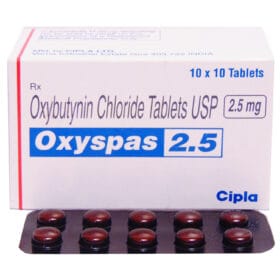 Oxyspas
Frågor & svar
Oxyspas
Relaterade produkter

Recensioner
Det finns inga recensioner än