







Sulpitac
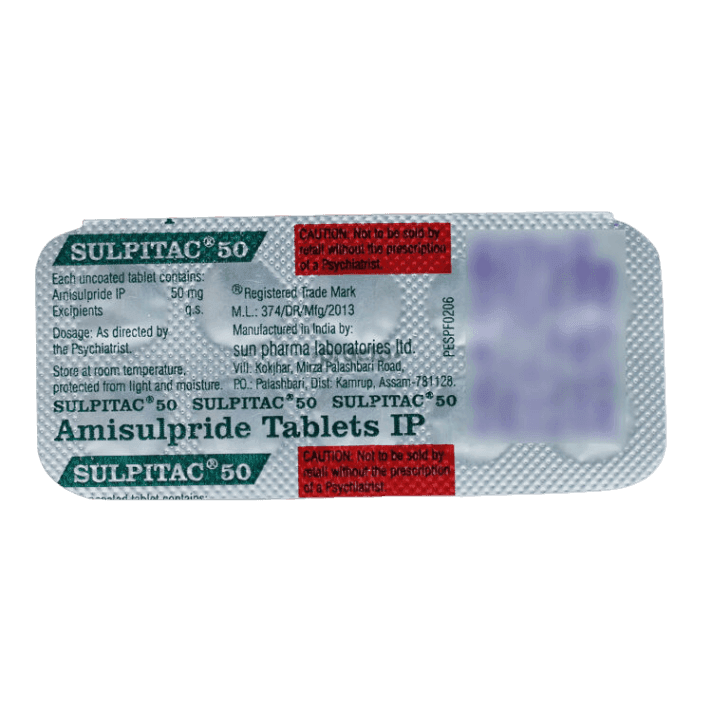


Sulpitac (Amisulpride 50–400 mg) — D2/D3-szelektív benzamid típusú atipikus antipszichotikum szkizofrénia (negatív vagy pozitív tünetek) kezelésére. Dózisfüggő kettős mechanizmus — 50–300 mg a negatív tünetek kezelésére.
✓ Orvosi ellenőrzés Morgan Ellis — Gyógyszerkutató · 8 év tapasztalat · Utolsó felülvizsgálat: 2026 május
⚡ Gyors válasz
Sulpitac (Amisulpride 50 / 100 / 200 / 400 mg) benzamid típusú atipikus antipszichotikum szkizofrénia kezelésére. Dózisfüggő kettős mechanizmus — alacsony dózisok (50–300 mg) a negatív tüneteket kezelik; magasabb dózisok (400–1200 mg) a pozitív tüneteket kezelik. Főleg vese útján ürül. Elérhető Európában és Ázsiában; nincs FDA jóváhagyva.
📦 Minden rendelést fedez a Újraküldési Garancia — ha a csomagod nem érkezik meg 20 munkanapon belül, újraküldjük.
Miért rendelj a MedsBase-ról
A MedsBase-en kapható Sulpitac közvetlenül egy WHO-GMP tanúsított gyártótól származik, egyszerű, diszkrét csomagolásban. Minden rendelést a mi Újraküldési Garancia — 20 üzleti napos érkezési ablak vagy ingyenes újraszállítás — és jogosult a mi hűségprogramunkra. Világszerte szállítunk a legtöbb célállomásra.
Mi a Sulpitac és hogyan működik
A Sulpitac egy amisulprid tabletta, amelyet a Sun Pharma szállít. Elérhető erősségek: 50 / 100 / 200 / 400 mg. Az amisulprid egy benzamid típusú atipikus antipszichotikum, szelektív D2/D3 antagonizmussal — nincs jelentős hatása a 5-HT2A, H1, M1 vagy α-adrenerg receptorokon. Az egyedi jellemzője a dopaminra gyakorolt dózisfüggő hatás: alacsony dózisoknál (50–300 mg) előnyben részesíti a preszinaptikus D2 autoreceptorok blokkolását, növelve a dopamin felszabadulását a prefrontális kéregben (a negatív tünetek kezelésére); magasabb dózisoknál (400–1200 mg) a posztszinaptikus D2 receptorokat blokkolja (a pozitív tünetek kezelésére).
Jóváhagyva Európában és Ázsiában szkizofrénia kezelésére; nincs FDA jóváhagyva (orális formában). Az intravénás formuláció FDA jóváhagyott posztoperatív hányinger/hányás kezelésére egy másik márkanév alatt (Barhemsys), de az Egyesült Államokban nem elérhető orális formában.
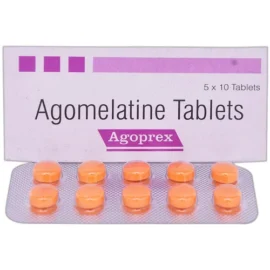
What Agoprex is and how it works
| Agoprex is a 25 mg agomelatine tablet supplied by Sun Pharma. Agomelatine is mechanistically unique among antidepressants: it acts as an agonist at melatonin MT1 and MT2 receptors and an antagonist at 5-HT2C serotonin receptors. The dual mechanism resynchronises disrupted circadian rhythms (a feature of major depression) while indirectly increasing dopamine and noradrenaline release in the frontal cortex. | Agomelatine has no SERT activity, no anticholinergic effects, and no histaminergic effects — explaining its very different side-effect profile from SSRIs and TCAs. | Indications and dosing | Indication |
|---|---|---|---|
| Főleg negatív tünetek | 50 mg naponta egyszer | 50–300 mg/nap | 300 mg |
| Főleg pozitív tünetek | 200 mg naponta kétszer | 400–800 mg/nap | 1200 mg |
| Vegyes kép | 200 mg naponta kétszer | 400–800 mg/nap | 1200 mg |
| Veseelégtelenség (CrCl 30–60) | féldózis | — | — |
| Veseelégtelenség (CrCl 10–30) | normál dózis egyharmada | — | — |
Fontos biztonsági megfontolások
Az összes atípusos antipszichotikum hordoz egy FDA fekete doboz figyelmeztetést a megnövekedett halálozási kockázat miatt (főleg cardiovascularis és fertőzéses okokból), amikor idős, demenciában szenvedő betegek viselkedészavarainak kezelésére használják. Az atípusos antipszichotikumok nincsenek jóváhagyva demenciával összefüggő pszichózis vagy agitáció kezelésére. Használatuk ebben a populációban off-label, utolsó lehetőség, időkorlátozott, és kifejezett kockázat-haszon beszélgetést igényel.
Az amiszulprid dózisfüggő QT-intervallum-megnyúlást okoz – jelentős a magasabb dózisoknál. Előzetes EKG javasolt. Kerülendő ismert hosszú QT-szindrómában, hipokalémiában/hipomagnéziában, friss szívinfarktusban, kompenzálatlan szívelégtelenségben és egyidejű QT-megnyúló terápiával.
Az amiszulprid jelentősen emeli a prolaktinszintet – hasonlóan a risperidonhoz. Ugyanazok a következmények: amenorrhoea, galactorrhoea, szexuális diszfunkció, gyorsult osteoporózis. Váltás aripiprazolra tünetek esetén.
Az EPS jelentősen növekszik 800 mg/nap felett.
Gyakori mellékhatások
- Hyperprolactinaemia és következményei – gyakori.
- EPS / akathisia – dózisfüggő.
- Súlygyarapodás – mérsékelt.
- Álmatlanság, szorongás – alacsony dózisoknál (preszinaptikus D2-stimuláció).
- QT-intervallum meghosszabbodás – dózisfüggő.
Gyógyszerkölcsönhatások
- Egyéb QT-idejét meghosszabbító gyógyszerek – additív kockázat; kerülendő a kombináció.
- Antihipertenzív szerek – additív hypotensió.
- Levodopa – antagonizmus; kerülendő Parkinson-kórban.
- Vese által klírált gyógyszerek — kiegészítő veseterhelés.
Terhesség, szoptatás, gyermekkori kor
Terhesség: korlátozott adatok; mérlegelni a kezeletlen betegséggel szemben. Szoptatás: átjut a tejbe; általában monitorozást igényel. Gyermekkori használat: a legtöbb országban nincs engedélyezve.
Tárolás
15–30 °C között tároljuk eredeti csomagolásban.
Gyakran Ismételt Kérdések
Hogyan működik a Sulpitac dózisfüggő hatása?
Alacsony dózisokban az amiszulprid előnyben részesíti a preszinaptikus D2 autoreceptorok blokkolását, ami valójában növeli a dopamin felszabadulását a prefrontális kéregben — hasznos a negatív tünetek (apátia, érzelmi tompulás, visszahúzódás) kezelésében. Magasabb dózisokban a posztszinaptikus D2 receptorokat foglalja el és klasszikus antipszichotikus blokkoló hatást fejt ki a pozitív tünetek kezelésére. A dózis-válasz görbe egyedi az atípusos antipszichotikumok között.
Miért nincs FDA-engedélyezve a Sulpitac?
Az amiszulpridot a Sanofi fejlesztette ki Franciaországban, és 1986-tól engedélyezték Európában és Ázsia nagy részén. A Sanofi nem folytatott FDA-engedélyezési eljárást a szájformulára. Az intravénás formuláció FDA-engedélyezett a műtét utáni hányinger kezelésére (Barhemsys), de a szájformulájú pszichiátriai változat nem elérhető az USA-ban.
Hat a Sulpitac a termékenységemre?
Igen — az amiszulprid növeli a prolaktinszintet, ugyanolyan termékenységi, menstruációs, szexuális és csontsűrűségi hatásokkal, mint a riszperidon. Váltson aripiprazolra, ha a hiperprolaktinaemia tünetes.
Mennyi idő, mire a Sulpitac hatni kezd?
Akut hatás az agitációra napok alatt. Antipszichotikus hatás a pozitív tünetekre 1–2 hét alatt; teljes hatás 4–6 hét múlva. A negatív tünetek (alacsony dózisú használat) hetektől hónapokig tarthatnak, amíg javulnak.
A Sulpitac hízást okoz?
Mérsékelt — általában 1–3 kg 6 hónap alatt. Kevesebb, mint az olanzapin/quetiapin esetében.
A Sulpitac meghosszabbítja a QT intervallumot?
Igen — jelentős mértékben magasabb dózisoknál. Kezelés előtti EKG javasolt. Kerülni kell a QT kockázati tényezőkkel rendelkező betegeknél.
Kombinálható a Sulpitac más antipszichotikumokkal?
Általában kerülni kell — kumulatív QT és prolaktin kockázat. Szakorvosi felügyelet szükséges.
Mi a helyzet a vezetéssel Sulpitac szedése közben?
A nyugtató hatás enyhébb az olanzapin vagy quetiapinhez képest. A legtöbb beteg stabil dózis mellett normálisan vezet.
Le lehet abbahagyni hirtelen a Sulpitacot?
Fokozatosan csökkentendő 2–4 hét alatt. A skizofrénia visszaesésének kockázata a fő aggodalom.
Miért van szükség vesefunkció-alkalmazkodásra a Sulpitac esetében?
Az amiszulprid nagyrészt vesével ürül (50–60%). A vesekárosodás jelentősen megnöveli a szintet, ami növeli az EPS, hyperprolactinaemia és QT kockázatot. Dózis-korrekció kötelező, ha a CrCl < 60.
Egyéb Pszichés Egészségügyi Gyógyszerek
- Aripicon (Aripiprazole — D2 részleges agonista)
- Olanzap (Olanzapin — erős antipszichotikum)
- Risdone (Risperidon)
- Seroquit (Kvetiapin — bipoláris depresszió)
- Atlura (Lurasidon — metabolikusan kedvező)
További lehetőségek a Pszichés Egészségügyi és Pszichiátriai Gyógyszerek között
Rangsorolva a MedsBase legutóbbi rendelési adatai alapján — hogy ebben a kategóriában más vásárlók mit választanak.

| Mennyiség | 30 tabletta, 60 tabletta, 90 tabletta, 180 tabletta |
|---|---|
| Erősség | 50 mg, 100 mg |
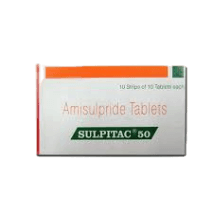 Sulpitac
Kérdések és válaszok
Sulpitac
Kapcsolódó termékek




Vélemények
Még nincsenek vélemények