







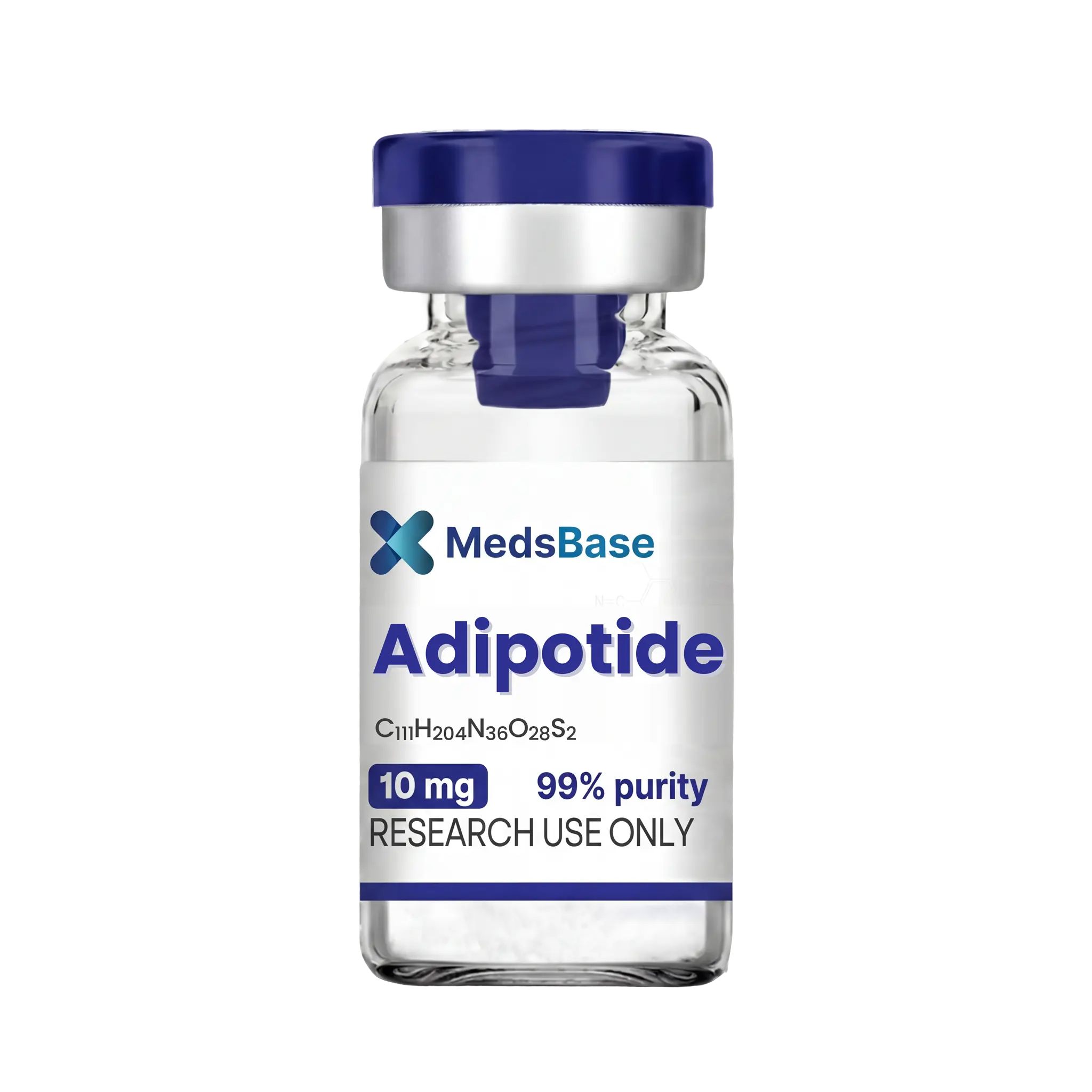
Adipotide(FTPP — 脂肪標的プロアポトーシスペプチド)
✅ 25アミノ酸キメラペプチド — CKGGRAKDCホーミング配列+GGリンカー+D(KLAKLAK)₂アポトーシス誘導キラー
✅ 白色脂肪組織の毛細血管内皮上のプロヒビチン1+アネキシンA2を標的化
✅ 血管内皮アポトーシス誘導 → 脂肪細胞の血液供給遮断
✅ アカゲザルで4週間で約11%の体重減少(Barnhart 2011, Sci Trans Med)
✅ MD Anderson / Kolonin-Arap-Pasqualiniキメラペプチド;分子量約2,611 Da
Adipotide / FTPP contains CKGGRAKDC-GG-D(KLAKLAK)₂ chimeric peptide. Documented nephrotoxicity in primate studies — context only.
✓ 医学的監修: Morgan Ellis — 医薬品研究者 · 8年の経験 · 最終監修日:2026年5月
クイックアンサー — Adipotide(FTPP)とは何ですか?
Adipotide (別名: FTPP — “Fat-Targeted Pro-apoptotic Peptide”) is a synthetic 25-amino-acid chimeric peptide developed by Kolonin、Arap、Pasqualini MDアンダーソンがんセンターで。本ペプチドは、機能的に異なる2つのドメインを融合しています:環状ホーミングペプチド CKGGRAKDC 白色脂肪組織の毛細血管内皮上のprohibitin-1(およびannexin A2)に結合し、D-立体異性体のアポトーシス誘導性αヘリックスペプチド D(KLAKLAK)2 ミトコンドリア膜を破壊します。この融合キメラは、白色脂肪組織に栄養を供給する血管系を選択的に標的とし、内皮細胞のアポトーシスを誘導して脂肪細胞への血液供給を遮断し、急速な脂肪組織量の減少をもたらします。肥満のアカゲザルで発表されました(Barnhart et al. 2011, Science Translational Medicine) — 4週間で約11%の体重減少。 注意事項: documented nephrotoxicity in primate studies is the major translational limitation, and a Phase I human cancer trial (2014–2016) had limited published outcomes. For clinical studies use only.
📦 すべてのご注文は、当店の 再発送保証ポリシー — 万が一、20営業日以内に商品が届かない場合は、再発送いたします。
| 仕様 | 詳細 |
|---|---|
| 化合物クラス | 合成25アミノ酸キメラペプチド模倣体;ホーミングドメインとアポトーシス誘導ドメインがGGリンカーで結合;; 脂肪標的型アポトーシス誘導ペプチド |
| 化学名 | Adipotide / FTPP(脂肪標的型アポトーシス誘導ペプチド);別名:Prohibitin-targeting peptide-1 + D(KLAKLAK)2 chimera; CKGGRAKDC-GG-D(KLAKLAK)2 |
| CAS番号 | Pharmaceutical-grade chimeric peptide — no single canonical CAS. Some supplier listings cite 1422956-49-3; identification primarily by published sequence (CKGGRAKDC-GG-D(KLAKLAK)2) ではなく、CAS番号です。バッチ固有の識別についてはCOAをご確認ください。 |
| 配列 | Cys-Lys-Gly-Gly-Arg-Ala-Lys-Asp-Cys(Cys1–Cys9ジスルフィド結合で環状化された「CKGGRAKDC」プロヒビチン結合性ホーミングモチーフ)— グリシン-グリシンリンカー — D-Lys-D-Leu-D-Ala-D-Lys-D-Leu-D-Ala-D-Lys-D-Lys-D-Leu-D-Ala-D-Lys-D-Leu-D-Ala-D-Lys(D-立体異性体のアポトーシス促進性αヘリックスペプチドD(KLAKLAK))2~2,611 Da(計算上の平均値;公表文献では2,500~2,611 Daと報告). |
| 分子量 | ~2,611 Da(計算上の平均値;公表文献では2,500~2,611 Daと報告) |
| 分子式 | キメラペプチド — 配列 CKGGRAKDC-GG-D(KLAKLAK)2; 2段階の標的化アポトーシス","114H196N40O26S2; 。(1)環状CKGGRAKDCホーミングドメインはプロヒビチン-1に結合します。プロヒビチン-1はミトコンドリアのシャペロン様タンパク質で、通常では発現していない. |
| 作用機序 | 最大連続使用期間:",". (1) 環状CKGGRAKDCホーミングドメインはプロヒビチン-1—ミトコンドリアのシャペロン様タンパク質で、異常に発現している 白色脂肪組織に供給する毛細血管内皮細胞の表面(Koloninらが2004年に生体内ファージディスプレイスクリーニングで同定)— また同じ血管系上のアネキシンA2。(2) 細胞表面に結合すると、キメラは細胞内に取り込まれ、D(KLAKLAK) 白色脂肪組織に供給する毛細血管内皮細胞(Kolonin et al. 2004 の in-vivo ファージディスプレイスクリーニングで同定) — および同血管系上のannexin A2。 (2) 細胞表面に結合すると、キメラは内部移行し、そしてD(KLAKLAK)2 αヘリックス構造のアポトーシス促進ドメインは、内皮細胞のミトコンドリア膜を直接的な膜相互作用によって破壊します。ミトコンドリアの崩壊により、脂肪組織の血管でカスパーゼ媒介アポトーシスが起こり、脂肪細胞への血液供給が遮断され、数日から数週間かけて脂肪組織量が減少します。 |
| アポトーシス誘導性KLAKLAKKLAKLAKドメインは専ら | アポトーシス促進性KLAKLAKKLAKLAKドメインは、もっぱら~で合成されます D-アミノ酸の立体化学 (鏡像異性アミノ酸残基)。D-体の立体化学はプロテアーゼ耐性をもたらし、宿主のプロテアーゼはL-アミノ酸のみを認識するため、殺傷ドメインの生体内半減期が天然のL-体と比較して延長されます。ホーミングドメイン(CKGGRAKDC)は、標準的な受容体-リガンド構造で宿主タンパク質(プロヒビチン-1)に結合する必要があるため、通常のL-アミノ酸の立体化学で構成されています。 |
| Documented Toxicity (studies-relevant) | 腎毒性 was documented in the obese-rhesus-monkey study (Barnhart et al. 2011) and is the leading translational limitation. The kidney expresses prohibitin and is highly vascularised, so off-target homing of the chimera to renal vasculature produces dose-dependent renal injury. The MD Anderson group repositioned the compound for cancer rather than obesity precisely because the risk-benefit balance is more favourable in a cancer-treatment context than in an elective-fat-loss context. Users in any in-vivo protocol with Adipotide should include comprehensive renal-function monitoring (BUN, creatinine, urinalysis). |
| 形態 | Lyophilized white-to-off-white amorphous powder; single-use vials. Synthesis is technically demanding (D-amino-acid Fmoc-SPPS + cyclic disulfide closure of the homing domain) — purity grade matters more for this compound than for most. |
| 純度 | 静菌水、滅菌水、PBSに2 mg/mL以上で可溶;in vitroストック調製用にはDMSOに10 mg/mL以上で可溶。両親媒性のD(KLAKLAK). |
| 溶解性 | 静菌水、滅菌水、およびPBSに2 mg/mL以上の濃度で可溶です。インビトロでのストック調製には、DMSOに10 mg/mL以上の濃度で可溶です。両親媒性のD(KLAKLAK)2 凍結乾燥品:短期使用の作業用ストックとして未開封で2~8 °C;長期保管は−20 °C(−20 °Cで36ヶ月以上安定;2~8 °Cで18ヶ月以上安定)。再溶解後水溶液:2~8 °Cで約30日以内に使用。遮光保存。凍結融解の繰り返しを避けてください — 繰り返すことでCys1–Cys9ジスルフィドのスクランブリングが生じるリスクがあります。 |
| 保管方法 | 凍結乾燥品:短期使用の場合は未開封のまま2~8℃で保存し、長期保存には-20℃で保存してください(安定性:-20℃で36ヵ月以上、2~8℃で18ヵ月以上)。再溶解液:2~8℃で保存し、約30日以内にご使用ください。遮光保存してください。凍結融解の繰り返しは避けてください。繰り返しによりCys1–Cys9間のジスルフィド結合スクランブリングのリスクがあります。 |
Adipotide / FTPPとは何ですか?
Adipotide (別名: FTPP —「脂肪標的化プロアポトーシスペプチド」)は、25アミノ酸からなる合成キメラペプチド模倣体であり、開発されたのは MDアンダーソンがんセンター Mikhail Kolonin、Wadih Arap、Renata Pasqualiniによって。この化合物は、...の最も明確な例の一つであり、 合理的キメラペプチドドラッグデザイン in modern peptide pharmacology: a tissue-specific homing domain (identified by in-vivo phage display) is covalently fused to a generic killer domain (a pro-apoptotic mitochondrion-disrupting α-helical peptide), producing a chimera that delivers the killer activity selectively to the target tissue. The two functional domains and the design logic:
1. CKGGRAKDC — プロヒビチン結合ホーミングペプチド。 Koloninら(2004年)は、肥満マウスを用いたin-vivoファージディスプレイスクリーニングにより、白色脂肪組織の血管系に選択的に結合する9残基の環状ペプチド(配列:Cys-Lys-Gly-Gly-Arg-Ala-Lys-Asp-Cys、Cys1-Cys9ジスルフィド架橋により構造が制約される)を同定しました。結合標的はその後、 プロヒビチン-1 (PHB1)— 通常はミトコンドリア膜に常在するシャペロン様タンパク質ですが、白色脂肪組織内皮では、細胞表面にも発現し、循環リガンドがアクセス可能です。同じ血管系では、アネキシンA2が二次的な結合パートナーとして同定されています。CKGGRAKDCホーミングドメインは、キメラを全身の内皮ではなく脂肪組織の毛細血管に特異的に導く分子の郵便番号です。 2. D(KLAKLAK)2 — プロアポトーシス性αヘリックスキラーペプチド。 The 14-residue D-amino-acid α-helical peptide D-Lys-D-Leu-D-Ala-D-Lys-D-Leu-D-Ala-D-Lys-D-Lys-D-Leu-D-Ala-D-Lys-D-Leu-D-Ala-D-Lys is a synthetic membrane-disrupting peptide (originally developed in cancer-targeting studies by Ellerby et al. 1999). The amphipathic α-helical geometry causes the peptide to insert into membranes; the D-amino-acid stereochemistry confers protease-resistance in vivo. Crucially, the killer activity is しません 特定の細胞型に対して選択的—ペプチドは内部に入ったほぼすべての細胞のミトコンドリア膜を破壊します—そのため、治療的利用にはホーミングドメインとの組み合わせが必要です。 3. GGリンカー。 The two functional domains are joined by a simple di-glycine linker that provides flexible spacing and avoids steric interference between the homing and killer functions. The combined chimera (CKGGRAKDC-GG-D(KLAKLAK)2, 、約2,611 Da)は、肥満アカゲザルを用いた画期的なBarnhart et al.(2011年)の論文において Science Translational Medicine — 動物は4週間の連日皮下投与により体重が約11%減少し、インスリン感受性の改善も同時に認められました。しかし、同じ研究とその後の研究では、 用量依存性腎毒性: the kidney has high prohibitin expression and is densely vascularised, so off-target homing of the chimera to renal vasculature produces renal-cortex tubular damage. The MD Anderson group repositioned Adipotide for human oncology rather than obesity, and a Phase I clinical trial in patients with metastatic prostate cancer was conducted 2014–2016 with limited published outcomes. The compound remains a tool today — extensively cited as a reference example of chimeric peptide drug design and the canonical pharmacological tool for studying targeted adipose-vascular apoptosis.
作用機序 — 脂肪組織血管への組織標的化アポトーシス
Adipotideの作用機序は、キメラペプチド薬理学において最も詳細に特性評価されたものの1つです:
- prohibitin-1結合による血管標的化 — CKGGRAKDCホーミングドメインは、白色脂肪組織(WAT)に供給する毛細血管内皮細胞の表面に発現するプロヒビチン-1に結合します。プロヒビチン-1は通常、ミトコンドリア内膜のシャペロンですが、WAT内皮では形質膜外層に異常に発現しており、循環リガンドがアクセス可能となります。CKGGRAKDCモチーフは、他のプロヒビチン発現状況よりもWAT内皮のプロヒビチンプールに対して高度に選択的であり、公表された結合研究では、全身血管系と比較してAdipotideがWAT血管系に約10〜100倍濃縮されることが示されています。
- 二次結合パートナーとしてのアネキシンA2 — その後の公表研究により、同じWAT内皮上でアネキシンA2がCKGGRAKDCホーミングドメインの追加結合パートナーであることが同定されました。プロヒビチン/アネキシンA2の二重認識パターンがAdipotideの選択性プロファイルに寄与している可能性があります。
- キラードメインの内在化と細胞質への送達 — CKGGRAKDCが内皮細胞表面受容体に結合した後、キメラはエンドサイトーシスによって内在化されます。両親媒性D(KLAKLAK) ドメインはエンドソーム脱出を経て細胞質に放出され、そこからミトコンドリア外膜にアクセスします。2 ドメインはエンドソーム脱出により細胞質基質へ放出され、そこからミトコンドリア外膜にアクセスします。
- ミトコンドリア膜の破壊とアポトーシス 血管除去 → 脂肪細胞飢餓 → 脂肪組織量減少2 — WATに供給する内皮細胞のアポトーシスにより、脂肪細胞への血液供給が断たれます。数日から数週間かけて、脂肪細胞は代謝的欠乏により二次的な細胞死を起こし、脂肪組織が縮小します。マクロな表現型としては、AOD-9604やβ3アドレナリン作動薬のような古典的脂肪分解剤で見られる急激な脂質動員を伴わない、用量依存的な体重減少が生じます。
- 血管アブレーション → 脂肪細胞の飢餓 → 脂肪組織の減少 — 腎臓は血管密度が非常に高く、プロヒビチンの発現も高いです。Adipotideが腎毛細血管へオフターゲットでホーミングすると、霊長類研究(Barnhart et al. 2011)では用量依存的に腎皮質尿細管障害が生じます。これが本化合物の主要なトランスレーショナルな限界であり、より積極的なリスク・ベネフィットバランスが受け入れられるがん領域を優先して肥満薬理学プログラムが中止された理由です。
- これらの作用機序プロファイルの総合により、Adipotideは 血管 — 腎臓は血管密度が非常に高く、prohibitinの発現も高いです。Adipotide(アディポチド)の腎毛細血管へのオフターゲットホーミングにより、霊長類の研究では用量依存的な腎皮質尿細管損傷が生じます(Barnhart et al. 2011)。これが本化合物の主要なトランスレーショナルな限界であり、肥満薬理プログラムが中止され、より積極的なリスク・ベネフィットバランスが許容されるがん用途に切り替えられた理由です。
The combined mechanistic profile makes Adipotide uniquely useful for studies on the vascular contribution to adipose-tissue biology — distinct from studies on adipocyte-intrinsic lipolysis (the AOD-9604 /β3-AR軸)やGLP-1を介した中枢性食欲抑制( セマグルチド / GLP-1 family axis). Users studying angiogenesis-vs-anti-angiogenesis approaches to obesity, or testing other targeted-apoptosis peptide constructs, use Adipotide as the canonical positive-control compound.
Published Evidence
Adipotide is used in clinical contexts that investigate:
- キメラペプチド薬剤設計 — 標準的な参照化合物 — 発表文献において組織標的型アポトーシスキメラとして最も引用されている例であり、「ホーミングペプチド+キラーペプチド」治療ペプチド設計パラダイムの標準参照化合物です。
- White adipose tissue vasculature studies — Adipotide’s WAT-vasculature selectivity makes it the canonical tool for studying the role of vascular biology in adipose tissue mass regulation; used in studies that explores whether obesity could be approached through anti-angiogenic / vascular-targeted strategies rather than appetite-suppressive or lipolytic strategies
- プロヒビチンおよびアネキシンA2の生物学 — ホーミング受容体同定研究(Kolonin 2004年以降)により、表面プロヒビチンが血管マーカーであることが確立されました。Adipotideは、初代内皮培養および生体内研究におけるプロヒビチン標的アプローチを探るための標準的な薬理学的ツールです。
- D-アミノ酸プロアポトーシスペプチド薬理学 — D(KLAKLAK)2 is the most-cited pro-apoptotic D-peptide in the literature; Adipotide is the most-cited chimera incorporating it; widely used in studies on protease-resistant peptide design
- Obesity-pharmacology comparative studies — Adipotideと脂肪分解ペプチド(AOD-9604)、GLP-1作動薬(セマグルチド、チルゼパチド)、および直接β3-AR作動薬(ミラベグロン)との公表された直接比較により、脂肪量減少の異なるメカニズムプロファイルが特徴付けられています。
- Cancer / tumour-vasculature studies — after the obesity programme was discontinued, Adipotide and related chimeras were repositioned for prostate-cancer studies (Phase I trial 2014–2016); published studies has explored the same homing-killer paradigm targeting tumour-specific endothelial markers (RGD-containing homing peptides + D(KLAKLAK)2 腫瘍血管系アブレーションのため)
- Targeted apoptosis pharmacology and drug-delivery studies — Adipotideは、新しい組織標的アポトーシスペプチド構築物(CPP毒素キメラ、ペプチド弾頭付き抗体毒素複合体など)の標準的な陽性対照化合物です。
- Nephrotoxicity / vascular off-target studies — the documented kidney toxicity is itself a studies subject; published work has explored the basis of the renal off-target homing and tested second-generation Adipotide analogues with modified homing domains to reduce renal accumulation
For broader context on fat-loss and adipose-biology peptides in this catalogue, see AOD-9604 (脂肪分解のみのhGH断片 — 直接メカニズム比較;脂肪細胞内在性 vs 血管標的化), HGHフラグメント176-191 (親化合物の未安定化脂肪分解フラグメント)、, セマグルチド (GLP-1受容体作動薬 — 中枢性食欲抑制メカニズム)、, チルゼパチド (デュアルGLP-1/GIP — より広範な代謝効果)、および MOTS-c (ミトコンドリア由来代謝ペプチド)。全ラインナップを見る peptides & compounds catalog, 、または厳選された fat-loss peptides ハブ。
利用可能な力価と濃度
MedsBase stocks Adipotide / FTPP in three lyophilized vial sizes calibrated to typical in-vitro and in-vivo protocols. Each strength is available in 10-vial, 20-vial, or 30-vial pack formats:
| バイアル力価 | 代表的な使用例 | パックサイズ |
|---|---|---|
| 2 mg | インビトロ細胞培養薬理学および短期インビボ漸増 — 脂肪組織血管内皮細胞のアポトーシスアッセイ、用量反応パネル、単一群マウス漸増(腎機能モニタリング付き) | 10、20、または30バイアル |
| 5 mg | スタンダードな中用量 — 食事誘発性肥満げっ歯類のインビボプロトコル(Kolonin 2004に基づく、典型的な文献用量0.43 mg/kg/日、4週間サイクルの皮下投与)、多群サンプルサイズ | 10、20、または30バイアル |
| 10 mg | High-strength vial — extended-cycle / multi-cohort protocols, primate-scale dosing (rhesus published doses 0.43 mg/kg/d), large-cohort mechanism-of-action studies; lowest per-mg cost | 10、20、または30バイアル |
3つの濃度はすべて同じ化学物質です(凍結乾燥されたAdipotide / FTPP、HPLC純度99%以上、MALDI-TOF質量確認で約2,611 Da、環状ジスルフィド結合確認済みのホーミングドメイン)。10 mgバイアルは、大規模インビボプロトコルにおいて1mgあたりのコストが最も低くなります。 Users conducting any in-vivo work with Adipotide should plan comprehensive renal-function monitoring (BUN, creatinine, urinalysis, histology where appropriate) from the outset, given the well-documented nephrotoxicity profile in primate studies. Users should determine specific dose ranges from peer-reviewed literature appropriate to the protocol.
比較 — Adipotide vs AOD-9604
Adipotideと AOD-9604 are the two best-characterised fat-loss peptides in this catalogue, and they target adipose-tissue biology through completely different mechanisms. Adipotide acts on the 血管系 脂肪組織に栄養を供給する — 標的アポトーシスによりWAT内皮を選択的に破壊し、脂肪細胞への血液供給を遮断します。AOD-9604は、 脂肪細胞そのもの — driving lipolysis and suppressing lipogenesis via a β3-AR-dependent mechanism (GHR-decoupled). The two compounds therefore probe completely different layers of adipose biology and are commonly used as positive controls in mechanism-of-action studies.
| 評価項目 | Adipotide / FTPP | AOD-9604 |
|---|---|---|
| 化学分類 | 25アミノ酸キメラペプチド(ホーミング+GG+アポトーシス誘導性D-ペプチド);ホーミングドメイン内の環状ジスルフィド | 16アミノ酸直鎖ペプチド(hGH C末端断片+N末端Tyr);内部に単一のジスルフィド結合 |
| 分子量 | ~2,611 Da | 1,815.1 Da |
| 細胞標的 | WAT毛細血管内皮(prohibitin-1 + annexin A2受容体) | 脂肪細胞(β3アドレナリン受容体、仮説) |
| 細胞応答 | 血管内皮細胞のアポトーシス → 脂肪細胞の飢餓 → 組織量の減少 | 脂肪分解の活性化(HSLリン酸化)+ 脂肪細胞での脂肪合成抑制 |
| 発現/経時変化 | 遅い — 数日から数週間(アポトーシス → 飢餓カスケード) | 速い — 数分から数時間(脂肪分解の活性化) |
| 実証された生体内有効性 | 肥満のアカゲザルで4週間で約11%の体重減少(Barnhart 2011) | 第IIb相肥満試験では体重減少エンドポイントを達成せず(2007年) |
| 毒性の記録 | 腎毒性 — 霊長類試験において用量依存的な腎皮質尿細管障害が報告されており、トランスレーショナル研究における主要な制約です。 | 臨床試験では概ね良好な忍容性を示し、第II相試験では臓器特異的な毒性は報告されていません。 |
| Best applications | Vascular-targeted apoptosis studies, chimeric peptide drug design, anti-angiogenic obesity studies, oncology vascular ablation | GHR-decoupled lipolysis pharmacology, structure-function HGH studies, β3-AR-linked adipocyte signalling |
For studies focused on vascular contribution to adipose biology, chimeric peptide drug design, or targeted-apoptosis pharmacology, Adipotide is the canonical reference compound. For studies focused on direct adipocyte lipolysis isolated from GH-axis signalling, AOD-9604 is the more targeted tool. The two compounds are mechanistically complementary and are commonly used as parallel positive controls in obesity-pharmacology mechanism studies.
保管方法と再溶解
再溶解前: 短期使用のワーキングストックとして、凍結乾燥品は元の包装のまま2~8°Cで冷蔵保存してください。長期保存の場合は、未開封のバイアルを−20°Cで冷凍保存してください(−20°Cで36か月以上安定、2~8°Cで18か月以上安定)。ホーミングドメインの環状ジスルフィド結合は凍結乾燥状態で安定です。光から保護してください。 再溶解手順: 静菌水をバイアルの側壁に沿って注入してください(凍結乾燥ケーキに直接かけないでください)。2 mgのバイアルの場合、1.0 mLの希釈液で2 mg/mLのワーキングストックが得られます。5 mgのバイアルの場合、1.0 mLで5 mg/mL、2.5 mLで2 mg/mLの液が得られます。10 mgのバイアルの場合、1.0 mLで10 mg/mL(水性緩衝液中での実用的な溶解限度)、5.0 mLで2 mg/mLの液が得られます。アディポタイドは室温で穏やかに旋回させることで30~60秒以内に溶解します。両親媒性のD(KLAKLAK)2 ドメインは初回復元時に一過性の泡立ちを生じることがあります — 吸引前に静置してください。 ボルテックスしないでください — high-shear mixing risks Cys1–Cys9 disulfide-bond disruption of the homing domain. Once reconstituted, store the vial at 2–8 °C and use within 30 days. Protect from light. Avoid repeated freeze-thaw cycles of reconstituted material — cumulative cycles risk disulfide scrambling and loss of homing-domain target selectivity. Discard if cloudiness, particulates, or marked colour change appears.
よくある質問
Adipotide(アディポタイド)とは何ですか?他の「脂肪減少ペプチド」とはどう違いますか?
Adipotide(FTPP)は、~の代表的な例です。 血管標的アポトーシス 脂肪組織減少へのアプローチであり、脂肪分解ペプチド(AOD-9604, 、β3-AR作動薬)、中枢性食欲抑制ペプチド(セマグルチド, チルゼパチド, 、GLP-1ファミリー)、およびエネルギーバランスペプチド(MOTS-c)。脂肪分解ペプチドが脂肪細胞の内因性脂質動員を活性化するのに対し、Adipotideは血液供給を遮断し に the adipocytes — a fundamentally different point of mechanistic intervention. It is the canonical tool for studying the vascular contribution to adipose-tissue biology.
What is the documented nephrotoxicity, and what does it mean for protocols?
Barnhartら(2011年)およびその後の霊長類研究では、用量依存性の 腎皮質尿細管障害 in Adipotide-treated rhesus monkeys. The mechanistic basis is straightforward: the kidney has very high vascular density and high prohibitin expression, so off-target homing of the chimera to renal capillaries produces the same vascular-apoptosis-then-starvation cascade as it produces in adipose tissue, but in a tissue where this is highly undesirable. This is the major translational limitation of the compound and is the reason the obesity-pharmacology programme was discontinued in favour of oncology repositioning (where a more aggressive risk-benefit balance is acceptable). Study protocols using Adipotide in vivo must include comprehensive renal-function monitoring — BUN, serum creatinine, urinalysis, and renal histology where appropriate.
What published dose ranges have been used in studies?
The Kolonin et al. (2004) mouse work used 0.43 mg/kg/d SC for 4-week cycles. The Barnhart et al. (2011) rhesus-monkey work used the same 0.43 mg/kg/d SC for 4 weeks, with concurrent renal-function monitoring. The Phase I human prostate-cancer trial (2014–2016) used escalating SC doses on a weekly or twice-weekly schedule. In-vitro endothelial-cell apoptosis assays typically use micromolar concentrations. Users should consult primary literature (Kolonin et al. 2004, Nature Medicine; Barnhartら、2011年、, Science Translational Medicine)を参照し、種、モデル、評価項目に特化した用量設定の指針を得る必要があります。
D(KLAKLAK)のD-アミノ酸立体化学とは何ですか2, 、そしてなぜそれが重要なのでしょうか?
アディポタイドのアポトーシス誘導キラードメインは、もっぱら D-アミノ酸立体化学 —天然のL-アミノ酸の鏡像異性体で合成されます。その理由はプロテアーゼ耐性にあります。細胞内および循環中のプロテアーゼは、天然のL-アミノ酸立体化学に基づいてペプチドを認識・分解するため、D-アミノ酸ペプチドは宿主のタンパク質分解から実質的に逃れることができます。これによりキラードメインがミトコンドリア標的に到達する前に早期分解されるのを防ぎます。ホーミングドメイン(CKGGRAKDC)は、標準的な受容体-リガンド結合幾何学に従って宿主タンパク質(プロヒビチン-1)と結合する必要があるため、通常のL-アミノ酸立体化学で構成されています。D-立体化学では結合が完全に妨げられます。この分割立体化学設計(結合用のLドメイン+プロテアーゼ耐性用のDドメイン)は、キメラペプチド薬物設計における反復モチーフであり、アディポタイドで最も引用される特徴の1つです。
なぜアディポタイドはFDAに承認されていないのですか?
Adipotide is a compound that completed Phase I trials in human cancer patients (prostate cancer, 2014–2016) but has not progressed to large-scale Phase II/III trials. The reasons are a combination of the documented nephrotoxicity (which limits the dose window in any human-subject context), the modest published efficacy data in the limited clinical work to date, and the relatively narrow indication (vascular-targeted apoptosis is mechanism-appropriate for certain cancer settings but the broader development pathway is unclear). The compound remains a tool today, widely used as the canonical chimeric peptide drug-design reference compound.
AdipotideはAOD-9604とどのように異なりますか?
Completely different mechanisms despite both being “fat-loss peptides.” AOD-9604 は、16アミノ酸のhGH C末端断片で、β3アドレナリン受容体を介して脂肪細胞で直接脂肪分解を活性化します(GHR非依存性)。Adipotideは25アミノ酸のキメラペプチドで、血管の血液供給を破壊し に adipocytes via targeted endothelial apoptosis. AOD-9604 produces rapid acute lipolytic effects within hours; Adipotide produces slow tissue-mass reduction over days to weeks. AOD-9604 is generally well-tolerated; Adipotide has documented nephrotoxicity. Users studying obesity mechanisms often use both as parallel positive controls representing the two ends of the “adipocyte-intrinsic vs adipose-vascular” mechanistic spectrum.
Can Adipotide be combined with other fat-loss peptides in protocols?
はい — Adipotideは脂肪分解ペプチド(AOD-9604)、GLP-1系ペプチド(セマグルチド, チルゼパチド)、代謝ペプチド(MOTS-c), so combinations are mechanistically rational for protocols that aim to dissect different layers of adipose biology. The most-published combinations in the limited literature are Adipotide + GLP-1 agonist (testing whether vascular ablation adds to appetite-suppression-driven weight loss). Reconstitute each separately and follow each compound’s specific storage rules. As always with Adipotide in vivo, comprehensive renal-function monitoring is required regardless of the co-administered compound.
Adipotide/FTPPと「プロヒビチン標的ペプチド-1」(PTP1)の違いは何ですか?
PTP1はホーミングドメインペプチド単独であり、環状CKGGRAKDC配列のみで、アポトーシス促進性のD(KLAKLAK)2 キラードメインが結合していません。PTP1単独ではWAT血管系のプロヒビチン-1に結合しますが、アポトーシス活性は引き起こしません。これは弾頭のない分子の郵便番号にすぎません。Adipotide/FTPPは完全なキメラ(CKGGRAKDC + GGリンカー + D(KLAKLAK)2) that combines the homing function with the killer function. Users studying the homing-domain biology in isolation use PTP1; users studying the integrated targeted-apoptosis effect use the full Adipotide chimera.
Other Peptides for Adipose Biology and Fat-Loss Studies
- AOD-9604 — 脂肪分解性hGH C末端フラグメント — 直接的なメカニズム比較;脂肪細胞内因性 vs 血管標的
- HGHフラグメント176-191 — 非安定化脂肪分解性フラグメント — 代替的な脂肪細胞直接脂肪分解ツール
- セマグルチド — GLP-1受容体作動薬 — 中枢性食欲抑制メカニズム
- チルゼパチド — デュアルGLP-1/GIP作動薬 — より広範な代謝効果
- MOTS-c — Mitochondrial-derived metabolic peptide — alternative-mechanism fat-loss studies
- BAC Water(静菌水) — 全ての凍結乾燥バイアルの再溶解に必要 — 無菌、0.9%ベンジルアルコール保存希釈液
ペプチドをもっと見る
最近のMedsBaseでの注文数に基づくランキング — このカテゴリーで他のお客様が選んでいる商品です。
| 含量 | 2 mg、5 mg、10 mg |
|---|---|
| 数量 | 10バイアル、20バイアル、30バイアル |
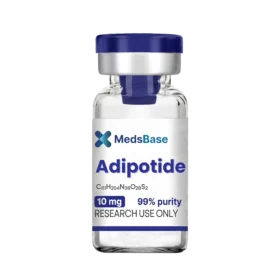 Adipotide(FTPP — 脂肪標的プロアポトーシスペプチド)
Q&A
Adipotide(FTPP — 脂肪標的プロアポトーシスペプチド)
関連商品
レビュー
まだレビューはありません