







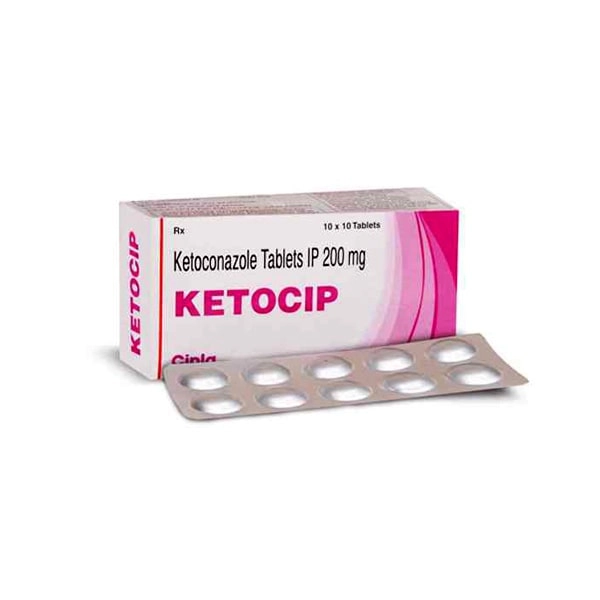
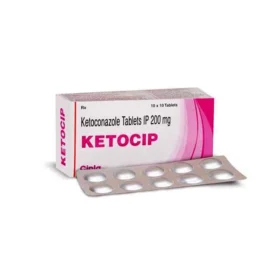
Ketocip
✅ Leczenie szerokiego spektrum infekcji grzybiczych
✅ Skuteczny wobec szczepów opornych
✅ Łatwy w stosowaniu
Ketocip zawiera ketokonazol
✓ Zweryfikowany medycznie przez Morgan Ellis — Badacz farmaceutyczny · 8 lat doświadczenia · Ostatnia weryfikacja: maj 2026
💡 Szybka odpowiedź
Ketocip to ketokonazol 200 mg w tabletkach doustnych — starszy lek przeciwgrzybiczy z grupy imidazoli. FDA, EMA, MHRA oraz Health Canada wprowadziły ograniczenia w stosowaniu doustnego ketokonazolu ze względu na wysokie ryzyko hepatotoksyczności, niewydolności nadnerczy oraz interakcji lekowej. NIE powinien być stosowany jako lek pierwszego wyboru w infekcjach skóry, pochwy czy paznokci — bezpieczniejsze są flukonazol/itrakonazol/terbinafina. Pozostałe wskazania to: endemiczne grzybice (blastomykoza, parakokcydioidomikoza) gdy inne leki zawiodą oraz zespół Cushinga (poza wskazaniami, w celu supresji kortyzolu). Miejscowe postaci ketokonazolu (krem, płyn, szampon) nie podlegają tym ograniczeniom.
WHO-GMP
certyfikowany producent
📦 Każde zamówienie jest objęte naszą Polityka Gwarancji Ponownej Wysyłki — jeśli Twoja przesyłka nie dotrze w ciągu 20 dni roboczych, wysyłamy ją ponownie.
Dlaczego warto zamawiać z MedsBase
Nasze leki generyczne pochodzą od producentów posiadających certyfikat WHO-GMP i są wysyłane na cały świat w dyskretnym, zwykłym opakowaniu — bez nazwy leku na zewnątrz przesyłki. Płatności kartami są kierowane przez regulowanego procesora (opis wyciągu zawiera nazwę regulowanego procesora płatności — nigdy “MedsBase” ani żadnej nazwy leku). Akceptujemy również kryptowaluty i przelewy bankowe SEPA. Każde zamówienie jest objęte naszą Reshipment Assurance Policy.
Dyskretne opakowanie
zwykła koperta
Wysyłka na cały świat
do większości krajów
🔒 Dlaczego warto zamówić Ketocip w MedsBase
- producenta certyfikowanego przez WHO-GMP — pochodzące z regulowanego zakładu, oryginalne opakowanie z numerem partii i datą ważności.
- Dyskretne opakowanie — zwykła koperta bez widocznej nazwy leku na zewnątrz.
- Wysyłka na cały świat do większości krajów z Reshipment Assurance.
- Punkty lojalnościowe — 1 punkt za każde wydane $1 (nie dotyczy peptydów/kosztów wysyłki); 100 punktów = $5 zniżki na kolejne zamówienie.
Po przeglądach z 2013 roku, agencje regulacyjne w większości wycofały rejestrację doustnego ketokonazolu w rutynowym leczeniu infekcji grzybiczych:
- Ciężka hepatotoksyczność — nawet krótkotrwałe stosowanie może prowadzić do śmiertelnej niewydolności wątroby. Ryzyko jest zależne od dawki i idiosynkratyczne.
- Niewydolność kory nadnerczy — ketokonazol hamuje steroidogenezę w nadnerczach w dawkach terapeutycznych (dlatego jest stosowany poza wskazaniami w zespole Cushinga).
- Wydłużenie QT i torsade de pointes z jednocześnie podawanymi lekami metabolizowanymi przez CYP3A4.
- Poważne interakcje lekowe poprzez silne hamowanie CYP3A4.
W przypadku kandydozy pochwowej, pleśniawki jamy ustnej, grzybicy skóry/grzybicy paznokci lub łupieżu pstrego — zamiast tego stosuj flukonazol, itrakonazol lub terbinafinę. Miejscowe preparaty ketokonazolu (krem/płyn/szampon) pozostają bezpieczne — słabo się wchłaniają i są dobrym wyborem w leczeniu skóry i owłosionej skóry głowy.
Pozostałe wąskie wskazania
Ketocip (ketokonazol 200 mg, Cipla) w postaci doustnej jest obecnie stosowany tylko wtedy, gdy inne leki przeciwgrzybicze nie są tolerowane lub są przeciwwskazane, lub w określonych wskazaniach, w których pozostaje oparty na dowodach:
- Grzybice endemiczne — blastomykoza, parakokcydioidomikoza, histoplazmoza, chromoblastomykoza — gdy amfoterycyna B lub itrakonazol zawiodły lub są niedostępne.
- Zespół Cushinga — lek drugiego rzutu obniżający poziom kortyzolu (stosowany poza wskazaniami, inicjowany w warunkach szpitalnych, pod kontrolą).
- Oporny łupież pstry, który nie odpowiada na leczenie miejscowe i doustne flukonazolem/itrakonazolem.
Dawkowanie i monitorowanie
| Wskazanie | Schemat |
|---|---|
| Grzybice endemiczne | 200–400 mg na dobę z posiłkiem; czas trwania według zaleceń specjalisty chorób zakaźnych (często 6–12 miesięcy) |
| Zespół Cushinga (stosowanie off-label) | 200 mg dwa razy na dobę, z możliwością zwiększenia do 400–1200 mg/dobę w dawkach podzielonych |
Monitorowanie jest obowiązkowe:
- Początkowe badania funkcji wątroby, następnie co 2 tygodnie przez pierwsze 2 miesiące, potem co miesiąc.
- Natychmiast przerwać stosowanie, jeśli AST/ALT > 3× ULN LUB żółtaczka, ciemny mocz lub uporczywe nudności.
- Badanie EKG wyjściowe; powtórzyć w przypadku współistniejącego stosowania leków wydłużających odstęp QT.
- W przypadku stosowania w zespole Cushinga: kortyzol poranny, wolny kortyzol w moczu oraz test stymulacji ACTH, jeśli występują objawy sugerujące niewydolność nadnerczy.
Jak przyjmować
Przyjmować z posiłkiem — kwas żołądkowy jest niezbędny do rozpuszczenia kapsułki i wchłaniania. Unikać jednoczesnego stosowania inhibitorów pompy protonowej / H2-blokerów / leków zobojętniających, chyba że są przyjmowane w odstępie ≥ 2 godzin.
Jak to działa
Ketokonazol hamuje grzybiczą CYP51 (lanosterol 14-α-demetylazę) — ten sam cel co flukonazol i itrakonazol. Jest mniej selektywny niż nowsze triazole, hamując również ludzkie enzymy steroidogenezy (CYP17, CYP11B1, CYP11B2) — co stanowi podstawę zarówno do stosowania w zespole Cushinga, jak i do niewydolności kory nadnerczy jako efektu ubocznego.
Efekty uboczne
| Częstotliwość | Efekty |
|---|---|
| Częste | Nudności, bóle brzucha, ból głowy, zawroty głowy, ginekomastia (u mężczyzn, zależna od dawki) |
| Niezbyt często | Spadek libido, oligospermia, światłowstręt |
| Rzadkie, ale poważne | Śmiertelna hepatotoksyczność (1 na ~10 000 — idiosynkratyczna, może wystąpić w pierwszym miesiącu), niewydolność kory nadnerczy, wydłużenie QT, anafilaksja, ciężkie reakcje skórne |
Interakcje lekowe
Ketokonazol jest jednym z najsilniejszych znanych inhibitorów CYP3A4 — podnosi poziom każdego leku metabolizowanego przez CYP3A4. Wybrane istotne interakcje:
| Lek | Efekt | Działanie |
|---|---|---|
| Pimozyd, terfenadyna, astemizol, cisapryd, dofetilid, chinidyna | Wydłużenie QT → torsade de pointes | Przeciwwskazane |
| Triazolam, midazolam, alprazolam (doustnie) | Ciężka sedacja | Przeciwwskazane |
| Statyny (simwastatyna, atorwastatyna, lowastatyna) | Rabdomioliza | Przeciwwskazane; przejść na prawastatynę / rosuwastatynę |
| Alkaloidy sporyszu | Wazokonstrykcja, ergotyzm | Przeciwwskazane |
| Takrolimus, cyklosporyna, syrolimus | Toksyczność | Znacznie zmniejszyć dawkę; monitorowanie stężenia minimalnego |
| Warfaryna | Wzrost INR | Monitoruj uważnie |
| Apiksaban, rywaroksaban | Krwawienie | Unikać |
| Metadon | Wydłużenie QT, sedacja | Unikać |
Przeciwwskazania
- Ostra lub przewlekła choroba wątroby.
- Jednoczesne stosowanie leków wydłużających odstęp QT powyżej.
- Jednoczesne stosowanie simwastatyny / atorwastatyny / lowastatyny / triazolamu / midazolamu (doustnego) / alkaloidów sporyszu.
- Ciąża i karmienie piersią.
- Nadwrażliwość na azole.
Najczęściej zadawane pytania
Dlaczego doustny ketokonazol jest ‘ograniczony’?
FDA, EMA, MHRA i Health Canada stwierdziły w latach 2013-2014, że śmiertelna hepatotoksyczność sprawia, iż doustny ketokonazol jest nieodpowiedni do rutynowego leczenia infekcji grzybiczych, gdy dostępne są bezpieczniejsze alternatywy (flukonazol, itrakonazol, terbinafina). Szampon / krem z ketokonazolem do stosowania miejscowego nie jest objęty tym ograniczeniem — jest słabo wchłaniany.
Czy powinienem/powinnam stosować to na grzybicę stóp lub pleśniawki?
Prawie na pewno nie. Standardowe leczenie kandydozy pochwy to flukonazol 150 mg w pojedynczej dawce; w przypadku grzybicy stóp 4-tygodniowa terapia miejscowa lub doustna terbinafina; w przypadku pleśniawek jamy ustnej flukonazol lub itrakonazol w postaci roztworu doustnego. Omów zmianę leczenia z lekarzem.
Czy miejscowy ketokonazol jest nadal bezpieczny?
Tak — szampon z ketokonazolem (stosowany w łojotokowym zapaleniu skóry, łupieżu) oraz krem/płyn (stosowany w grzybicy skóry, kandydozie, łupieżu pstrym) nie są objęte tymi ograniczeniami regulacyjnymi. Wchłanianie miejscowe jest minimalne.
Jak ketokonazol wpływa na moje hormony?
Hamuje syntezę kortyzolu w nadnerczach (dlatego jest stosowany poza wskazaniami w chorobie Cushinga) oraz syntezę testosteronu w jądrach. Przewlekła terapia doustna w wysokich dawkach może powodować niewydolność nadnerczy, ginekomastię u mężczyzn, oligospermię, utratę libido i nieregularne miesiączkowanie u kobiet.
Jakie są objawy uszkodzenia wątroby?
Żółte zabarwienie skóry lub oczu, ciemny mocz, jasne stolce, uporczywe nudności, ból w prawym górnym kwadrancie brzucha, silne zmęczenie, dezorientacja. Natychmiast odstaw lek i zasięgnij porady lekarskiej. Hepatotoksyczność może być nagła i śmiertelna — wczesne rozpoznanie ma znaczenie.
Co zrobić, jeśli już ukończyłem krótką kurację ketokonazolem?
Jeśli ukończyłeś krótką kurację (np. 1–2 tygodnie w przypadku blastomykozy lub opornego łupieżu pstrego) bez objawów, mało prawdopodobne jest wystąpienie opóźnionej hepatotoksyczności. Jeśli masz jakiekolwiek objawy (żółtaczka, ciemny mocz), zasięgnij porady lekarskiej. W przypadku przyszłych infekcji grzybiczych — omów bezpieczniejsze alternatywy.
Dlaczego ketokonazol jest czasem nadal stosowany w zespole Cushinga?
Ponieważ hamuje syntezę kortyzolu w nadnerczach. W zespole Cushinga jest to pożądany efekt — obniżenie nadmiaru. Wymaga specjalistycznej opieki endokrynologicznej; alternatywami są metyrapon, mifepriston, osilodrostat lub obustronna adrenalektomia.
Czy ketokonazol może być stosowany w nowotworach (np. prostatstaty)?
Historycznie stosowany w wysokich dawkach (1200 mg/dzień) w celu supresji syntezy androgenów jądrowych i nadnerczowych w zaawansowanym raku prostaty. Obecnie w większości zastąpiony przez abirateron, enzalutamid itp. Nie jest terapią pierwszego rzutu w onkologii.
Czy Ketocip to to samo co Nizoral?
Tak — Nizoral to oryginalna marka ketokonazolu firmy Janssen. Ketocip zawiera tę samą substancję czynną, produkowaną przez Cipla zgodnie z normami WHO-GMP. Ograniczenia regulacyjne dotyczą jednakowo wszystkich marek ketokonazolu doustnego.
Jaki lek przeciwgrzybiczy powinienem przyjmować zamiast tego?
Zależy od infekcji. Kandydoza pochwy → flukonazol 150 mg w pojedynczej dawce. Pleśniawki jamy ustnej → flukonazol 100 mg/dzień × 7 dni. Grzybica stóp/pachwin → terbinafina w kremie × 1–4 tygodnie. Grzybica paznokci → terbinafina doustna 250 mg/dzień × 6 tygodni (paznokcie dłoni) lub 12 tygodni (paznokcie stóp). Łupież pstry → szampon z ketokonazolem lub flukonazol doustny.
Przechowywanie
Przechowuj tabletki w temperaturze 15–25 °C, z dala od wilgoci i światła. Nie stosować po upływie terminu ważności. Przechowywać w miejscu niedostępnym dla dzieci.
Inne leki przeciwgrzybicze, które mogą Cię zainteresować
Ketokonazol doustny nie jest już lekiem pierwszego rzutu w rutynowych infekcjach grzybiczych. Poniżej wymieniono zalecane alternatywy dla częstych wskazań.
- Zocon (flukonazol 150 mg) — Doustny lek pierwszego rzutu dla Candida — bezpieczniejszy niż ketokonazol doustny.
- Zimig (terbinafina 250 mg) — Doustny lek pierwszego rzutu dla dermatofitów paznokci/skóry głowy/rozległych zmian skórnych.
- Sporanox (itrakonazol 100 mg) — Dla niedermatofitowych pleśni, grzybic dimorficznych, mieszanych infekcji Candida.
- Keto Cream (ketokonazol 2%) — Ketokonazol miejscowy — bezpieczny mimo ograniczeń dotyczących postaci doustnej.
- Clocip (krem z klotrimazolem 1%) — Miejscowy lek przeciwgrzybiczy o szerokim spektrum działania.
Więcej opcji w kategorii Leki przeciwgrzybicze
Ranking według liczby ostatnich zamówień MedsBase — co wybierają inni klienci w tej kategorii.
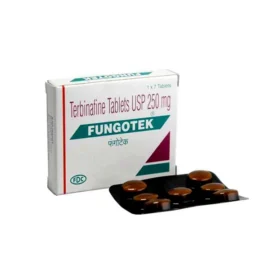
| Moc | 200 mg |
|---|---|
| Ilość | 30 tabletek, 60 tabletek, 90 tabletek |
| Postać farmaceutyczna | Tabletka/s |
| Producent | Cipla Inc |
| Leczenie | Zakażenia grzybicze |
| Marka generyczna | Ketokonazol |
 Ketocip
Pytania i odpowiedzi
Ketocip
Produkty powiązane





Opinie
Nie ma jeszcze opinii