







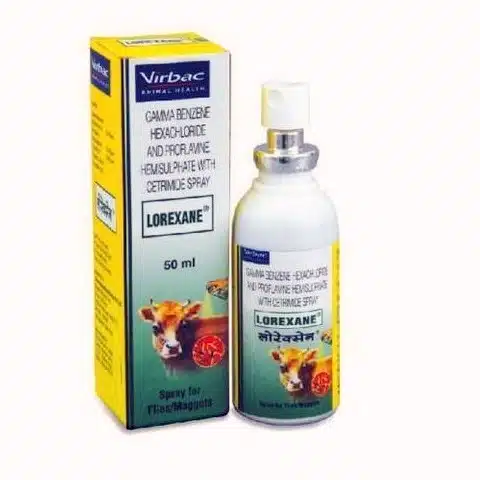
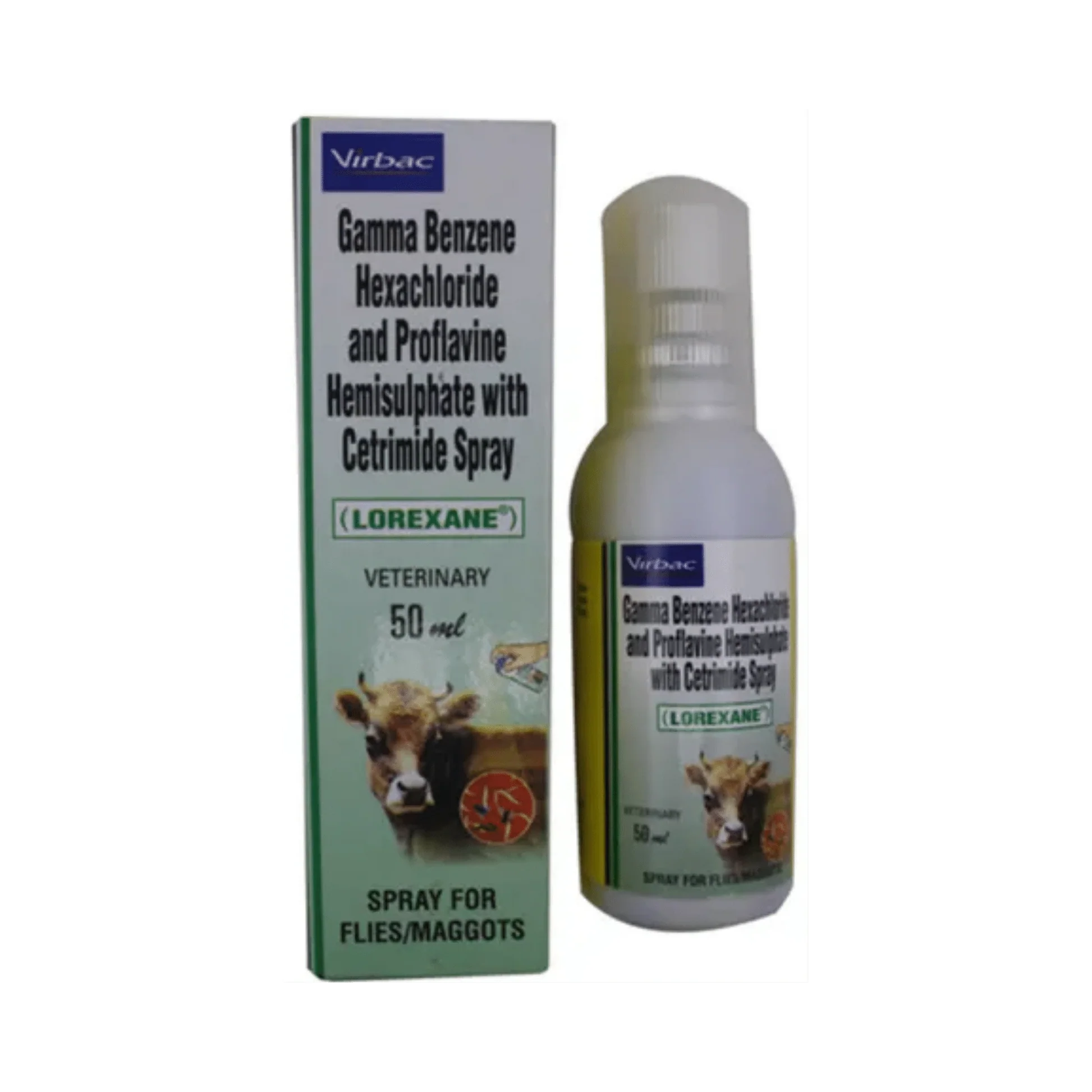
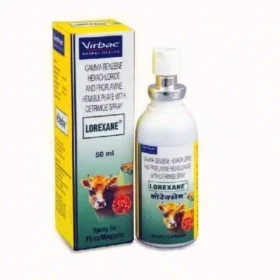
Lorexane Spray


✅ Silny środek odstraszający muchy
✅ Zabija larwy
✅ Skuteczne właściwości przeciwgrzybicze
✅ Wspomaga gojenie się ran
✅ Wygodna aplikacja w sprayu
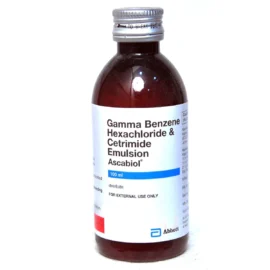
Spray Lorexane zawiera Gamma Benzeno Heksachlorek, Proflawinę Hemisiarczan i Cetrimid.
✓ Zweryfikowany medycznie przez Morgan Ellis — Badacz farmaceutyczny · 8 lat doświadczenia · Ostatnia weryfikacja: maj 2026
⚡ Szybka odpowiedź — Czym jest spray Lorexane?
Lorexane Spray jest weterynaryjny spray przeciwpasożytniczy i antyseptyczny do ran od Virbac dla psów, kotów, koni i zwierząt gospodarskich. Zawiera trzy substancje aktywne: gamma-heksachlorocykloheksan (lindan) 0,1% — insektycyd zabijający pchły, kleszcze, wszy, roztocza świerzbu, larwy much i gzów; proflawina hemisiarczan 0,1% — antyseptyczny barwnik z grupy akrydyn; oraz cetrymid 0,5% — antyseptyk z grupy czwartorzędowych soli amoniowych i środek powierzchniowo czynny. Stosowany przy otwartych i powierzchownych ranach, miiazie ran (inwazja larw much), ranach po ugryzieniach i zadrapaniach, inwazjach pcheł i kleszczy, świerzbie, zmianach związanych z grzybicą strzygową oraz higienie ran pooperacyjnych. Spryskiwać z odległości 15–20 cm na dotknięty obszar 2–3 razy dziennie do czasu wygojenia, unikając kontaktu z oczami i pyskiem zwierzęcia. TYLKO DO STOSOWANIA U ZWIERZĄT. Nie stosować u ludzi. Nie stosować u kotów poniżej 3 miesiąca życia, kotek ciężarnych lub karmiących bez konsultacji z lekarzem weterynarii.
📦 Każde zamówienie jest objęte naszą Polityka Gwarancji Ponownej Wysyłki — jeśli Twoja przesyłka nie dotrze w ciągu 20 dni roboczych, wysyłamy ją ponownie.
Dlaczego warto zamawiać z MedsBase
Nasze leki generyczne pochodzą od producentów posiadających certyfikat WHO-GMP i są wysyłane na cały świat w dyskretnym, zwykłym opakowaniu — bez nazwy leku na zewnątrz przesyłki. Płatności kartami są kierowane przez regulowanego procesora (opis wyciągu zawiera nazwę regulowanego procesora płatności — nigdy “MedsBase” ani żadnej nazwy leku). Akceptujemy również kryptowaluty i przelewy bankowe SEPA. Każde zamówienie jest objęte naszą Reshipment Assurance Policy.
Co to jest Lorexane Spray?
Lorexane Spray to kombinowany spray weterynaryjny od Virbac Animal Health zaprojektowany, aby radzić sobie z dwoma problemami, które stale występują w opiece nad ranami zwierząt towarzyszących i hodowlanych: infestacja pasożytami zewnętrznymi i posocznica ran. Łącząc insektycyd z dwoma różnymi środkami antyseptycznymi w jednym sprayu, Lorexane Spray jest stosowany przez właścicieli zwierząt, personel hodowli oraz weterynarzy małych zwierząt jako pierwsza linia miejscowego leczenia brudnych lub zainfekowanych pasożytami ran u psów, kotów, koni, bydła, owiec i kóz.
Trzy składniki aktywne obejmują różne problemy:
- Gamma heksachlorocykloheksan (gamma BHC, γ-HCH, lindan) 0.1% — chlorowany węglowodór owadobójczy, który zabija dorosłe i młodociane formy pcheł, kleszczy, wszy, świerzbowców (Sarcoptes, Demodex, Otodectes, Cheyletiella), larwy much (Lucilia i Calliphora gatunki) oraz larwy much plujek, które atakują zabrudzoną wełnę, rany pokryte kałem lub otwarte zmiany skórne.
- Proflawina hemisiarczan 0.1% — pomarańczowo-żółty barwnik akrydynowy o działaniu antyseptycznym, skuteczny przeciwko szerokiemu spektrum bakterii Gram-dodatnich i Gram-ujemnych. Jego trwałe zabarwienie wizualnie pokazuje, że rana została potraktowana, działając jako łagodna bakteriostatyczna powłoka na powierzchni rany.
- Cetrimid 0.5% — czwartorzędowy związek amoniowy o działaniu antyseptycznym i łagodnym detergentem/surfaktantem, który oczyszcza powierzchnię rany z martwiczych resztek, zapewniając jednocześnie szerokie działanie przeciwbakteryjne (szczególnie przeciwko Pseudomonas aeruginosa, powszechny patogen ran).
Uwaga regulacyjna: Lindan (gamma BHC) jest ograniczony lub zakazany do stosowania w lekach dla ludzi w wielu jurysdykcjach ze względu na trwałość w środowisku i neurotoksyczność przy wysokiej ekspozycji. Nadal jest szeroko stosowany w weterynaryjnych sprayach na rany/ektopasożyty w Indiach, Australii, Afryce i częściach Azji Południowo-Wschodniej ze względu na skuteczność w małych dawkach stosowanych powierzchniowo. Przed użyciem w swoim kraju sprawdź lokalne przepisy.
Jak działa spray Lorexane?
- Gamma BHC (lindan) działa na kanały chlorkowe stymulowane GABA u owadów, powodując nadmierne pobudzenie, drgawki i śmierć stawonogów w ciągu kilku minut od kontaktu. Larwy much w ranach giną szybko (30–60 minut) i są łatwo usuwane gazą po tym czasie.
- Proflawina wbudowuje się w DNA bakterii (jako barwnik interkalujący), zapobiegając replikacji. Działanie jest bakteriostatyczne w stosowanych stężeniach, obejmując gronkowce, Streptococcus i wiele Gram-ujemnych bakterii komensalnych.
- Cetrimid uszkadza błony komórkowe bakterii (kationowy surfaktant) i ma działanie detergentowe, usuwając ropę, skrzepy krwi i martwicze resztki z ran. Szczególnie skuteczny przeciwko Pseudomonas aeruginosa biofilmom w przewlekłych ranach.
Działanie owadobójcze jest natychmiastowe (larwy widocznie giną i odłączają się w ciągu godziny); obciążenie bakteryjne rany znacząco spada w ciągu 24 godzin przy dwukrotnym stosowaniu dziennie.
— wzmacnia normalną odpowiedź fizjologiczną, a nie wywołuje ją sztucznie.
- Miaza ran (infestacja larwami) — owady atakujące owce, zaniedbane rany u psów i kotów z widocznymi larwami na powierzchni rany
- Otwarte rany skórne — ugryzienia, zadrapania, nacięcia, otarcia, ropnie po ugryzieniach po drenażu
- Higiena ran pooperacyjnych — po kastracji, drobnych zabiegach dermatologicznych, usunięciu pazura szczątkowego, kopiowaniu ogona
- Inwazje ektopasożytów — pchły, kleszcze, wszy gryzące, wszy ssące, świerzbowce — szczególnie gdy inwazja jest ograniczona do małego obszaru (twarz, nasada ucha, nasada ogona); w przypadku inwazji całego ciała preferowana jest pełna kąpiel lub preparat spot-on
- Gorące punkty (ostre wilgotne zapalenie skóry) — powierzchowne wilgotne zapalenie skóry związane z Pseudomonas u psów; najpierw wygolić sierść, następnie spryskać
- Zmiany skórne związane z grzybicą obrączkowatą — w przypadku wtórnego zakażenia bakteryjnego; nadal konieczny jest dedykowany lek przeciwgrzybiczy (mikonazol, enilkonazol) w celu eliminacji dermatofitów
- Wtórne zakażenie skóry w przebiegu kaszlu kenelowego — w okolicy twarzy i szyi spowodowane uporczywym drapaniem
- Pielęgnacja ran u zwierząt gospodarskich — konie (odleżyny, ukąszenia much, otarcia pęcin), bydło i bawoły (rany rogów, miejsca przyczepu kleszczy), owce (nacięcia po strzyży, muszyca)
Lorexane Spray jest przeznaczony otrzymuje, przechowuje, nie ma dostępu ani wglądu w dane osobowe przekazywane przez Ciebie dostawcy płatności. Proces weryfikacji odbywa się w całości na platformie dostawcy i podlega jego własnej polityce prywatności oraz standardom bezpieczeństwa. do: głębokich ran kłutych wymagających chirurgicznego opracowania i antybiotykoterapii ogólnoustrojowej, ciężkich oparzeń (wymagających innego postępowania), uszu (nie stosować w przewodzie słuchowym — użyć dedykowanego preparatu do uszu, takiego jak Auriko Ear Drops), oczu, utrzymania systemowej kontroli pcheł/kleszczy (stosować preparaty spot-on lub doustne) oraz pierwotnego zakażenia dermatofitami (grzybicze choroby skóry wymagają leczenia ogólnoustrojowego lub dedykowanego miejscowego leku przeciwgrzybiczego).
Dawkowanie i sposób stosowania Lorexane Spray
| Wskazanie | Gatunek | Częstotliwość | Kuracja |
|---|---|---|---|
| Usuwanie miiazy/robaczycy rannej | Psy, koty, owce, bydło | Co 8 godzin przez pierwsze 24 h, następnie 2–3× dziennie | Do całkowitego usunięcia larw i wygojenia rany |
| Otwarta rana / pooperacyjna | Psy, koty, konie | 2–3 razy dziennie | Do wygojenia rany (7–14 dni) |
| Ektopasożyty (miejscowe) | Psy, koty, zwierzęta hodowlane | Jednorazowo, powtórzyć po 7–10 dniach | 2 aplikacje w odstępie 7–10 dni |
| Gorące punkty / ostre wilgotne zapalenie skóry | Psy | 2–3 razy dziennie | 5–7 dni |
| Zapobieganie muszycy latem | Owce, psy przebywające na zewnątrz | Raz w tygodniu na wrażliwe obszary | W sezonie występowania muszycy |
Jak prawidłowo stosować spray Lorexane
- Bezpiecznie unieruchom zwierzę. Druga osoba do przytrzymania zwierzęcia jest pomocna, szczególnie przy wrażliwych obszarach.
- Przytnij splątane włosy nad i wokół rany, aby ją całkowicie odsłonić. Oczyść duże zanieczyszczenia sterylnym roztworem soli fizjologicznej lub letnią wodą.
- Wstrząśnij butelką i napełnij pompkę raz w chusteczkę, skierowaną od zwierzęcia.
- Trzymaj spray w odległości 15–20 cm od rany lub dotkniętego obszaru. Skieruj końcówkę w dół.
- Spryskaj krótko i równomiernie na powierzchnię rany i 2 cm otaczającej skóry. Jedno lub dwa naciśnięcia na 5 cm² powierzchni rany wystarczy. Nie przepełniaj.
- Unikaj kontaktu z oczami, ustami i nozdrzami. W przypadku przypadkowego kontaktu, natychmiast spłucz obficie wodą.
- Nie przykrywaj rany opatrunkiem okluzyjnym bezpośrednio po spryskaniu — pozwól nośnikowi wyschnąć (2–3 minuty). Jeśli potrzebny jest lekki opatrunek ochronny, użyj luźnej gazy.
- Zapobiegaj lizaniu przez zwierzę potraktowanego obszaru przez 15–20 minut po spryskaniu. Kołnierz Buster lub kołnierz elżbietański jest pomocny w przypadku ran dostępnych dla pyska.
- W przypadku miiazy rannej: spryskaj dokładnie, odczekaj 30–60 minut, następnie delikatnie usuń martwe i umierające larwy gazą i pęsetą. Powtórz po 6–8 godzinach, aż nie będzie więcej larw.
- Dokładnie umyj ręce po każdym zastosowaniu. Noś jednorazowe rękawiczki, jeśli spryskujesz często lub jesteś w ciąży.
Działania niepożądane
Częste:
- Przejściowe pieczenie / lekki dyskomfort przy aplikacji na otwartą ranę
- Widoczne pomarańczowo-żółte zabarwienie sierści przez proflawinę (tylko kosmetyczne, zanika w ciągu tygodni)
- Lekkie zaczerwienienie skóry w miejscu aplikacji
- Efekt mokrej sierści w potraktowanym obszarze do wyschnięcia
Rzadsze:
- Nadmierne ślinienie się / ślinotok, jeśli zwierzę poliże potraktowany obszar przed wyschnięciem sprayu
- Wymioty w przypadku polizania (cetrymid i gamma BHC są drażniące)
- Miejscowe zapalenie skóry (nadwrażliwość kontaktowa)
Poważne (przerwij i skontaktuj się z weterynarzem):
- Toksyczność ogólnoustrojowa gamma BHC — drżenie, drgawki, nadpobudliwość, ataksja — występuje rzadko przy stosowaniu powierzchniowym, ale stanowi realne ryzyko, jeśli (a) zwierzę połknie dużą ilość przez lizanie, (b) spray zostanie zastosowany na bardzo duże powierzchnie ciała u kotów lub (c) u młodych/małych/osłabionych zwierząt. Zmyć ciepłą wodą z mydłem i pilnie zasięgnąć pomocy weterynaryjnej.
- Uporczywe, obfite ślinienie się lub wymioty — wskazują na doustne spożycie
- Pogarszająca się infekcja rany pomimo 3–5 dni stosowania — rana może wymagać chirurgicznego oczyszczenia i antybiotyków ogólnoustrojowych
Ostrzeżenia i środki ostrożności
- TYLKO DO STOSOWANIA U ZWIERZĄT. NIE DO STOSOWANIA U LUDZI. Przechowywać w miejscu niedostępnym dla dzieci. W przypadku przypadkowego zastosowania u ludzi, dokładnie zmyć mydłem i wodą.
- Koty: Koty są bardziej wrażliwe na chlorowane insektycydy węglowodorowe niż psy. Stosować spray oszczędnie tylko na małych, ograniczonych obszarach. Nie stosować u kociąt poniżej 3 miesiąca życia. Rozważyć alternatywne produkty (fipronil w formie spot-on, selamektyna) do szeroko zakrojonej kontroli pcheł/kleszczy u kotów.
- Rasy miniaturowe i małe psy: stosować oszczędnie; pokrywać proporcjonalnie mniejszy obszar za jednym razem.
- Koty/suki/owce w ciąży lub karmiące: stosować tylko po konsultacji z weterynarzem; etykieta sprayu zaleca ostrożność w czasie ciąży i laktacji.
- Zwierzęta osłabione, wychudzone lub chore: zmniejszyć dawkę i częstotliwość — niższa zawartość tkanki tłuszczowej zmniejsza zdolność magazynowania gamma BHC i zwiększa ekspozycję ogólnoustrojową.
- Nie rozpylać w pobliżu oczu, uszu, ust ani odbytu. W przypadku przypadkowego kontaktu z oczami, przepłukać obficie wodą przez 10 minut i skonsultować się z weterynarzem.
- Nie stosować w wolierach ani w pobliżu akwariów — gamma BHC jest wysoce toksyczny dla ptaków, organizmów wodnych i pszczół.
- Bezpieczeństwo operatora: nosić rękawice. Unikać wdychania aerozolu — rozpylać w dobrze wentylowanym pomieszczeniu. Kobiety w ciąży powinny unikać aplikacji.
- Nie rozpylać w pobliżu otwartego ognia, kuchenek ani urządzeń elektrycznych — nośnik jest łatwopalny.
- Okres karencji u zwierząt przeznaczonych do produkcji żywności: postępuj zgodnie z etykietą — zazwyczaj wymagany jest okres karencji dla mleka i mięsa po zastosowaniu gamma BHC. Skonsultuj się z weterynarzem.
- Nie stosować z innymi insektycydami chlorowcopochodnymi ani z kąpielami organofosforanowymi w tym samym czasie — ryzyko addytywnej neurotoksyczności.
Przeciwwskazania
- Znana nadwrażliwość na jakikolwiek składnik (lindan, proflawina, cetrimid lub substancje pomocnicze)
- Kocięta poniżej 3 miesięcy
- Szczenięta poniżej 6 tygodni
- Otwarte rany w okolicach oka, jamy ustnej lub błon śluzowych narządów płciowych
- Ptaki (papugi, kury, ptaki łowne) — lindan jest wysoce toksyczny
- Ryby i środowiska wodne — nie dopuszczać do spływania preparatu do stawów, strumieni
- Kobiety w ciąży nie powinny stosować sprayu
Przechowywanie
- Przechowuj w temperaturze poniżej 25°C w suchym, dobrze wentylowanym miejscu, z dala od bezpośredniego światła słonecznego.
- Zamykaj szczelnie nakrętkę.
- Przechowywać z dala od otwartego ognia i źródeł zapłonu — aerozol jest łatwopalny.
- Przechowywać w miejscu niedostępnym dla dzieci i zwierząt niebędących celem zabiegu (akwaria, klatki dla ptaków).
- Odpowiedzialnie utylizować puste opakowania — nie spalać; postępować zgodnie z lokalnymi wytycznymi dotyczącymi odpadów niebezpiecznych.
Powiązane alternatywy w MedsBase
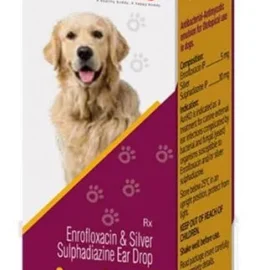
- Auriko Krople do Uszu (enrofloksacyna + srebro sulfadiazyny) — bakteryjne zapalenie ucha zewnętrznego u psów i kotów
- Fenever Pet Suspension — zawiesina doustna fenbendazolu dla zwierząt domowych
Najczęściej zadawane pytania
Czy mogę użyć Lorexane Spray na moim kocie?
Tak — ale oszczędnie, tylko na małych, miejscowych obszarach i nie na kociętach poniżej 3 miesięcy. Koty są bardziej wrażliwe na gamma BHC niż psy, ponieważ brakuje im niektórych enzymów glukuronidacji, które detoksykują chlorowane węglowodory. Do rutynowej kontroli pcheł/kleszczy u kotów, dedykowane produkty specjalnie dla kotów (fipronil spot-on, selamectin, fluralaner doustny) są bezpieczniejsze i bardziej skuteczne niż spray ogólnego przeznaczenia. Używaj Lorexane Spray głównie do czyszczenia ran po ugryzieniach i małych, miejscowych problematycznych obszarach.
Mój pies ma robaki w ranie — co mam zrobić?
Wytnij włosy wokół rany, delikatnie oczyść obszar solą fizjologiczną i obficie spryskaj Lorexane Spray na dotknięty obszar. Poczekaj 30–60 minut, aż robaki umrą. Następnie usuń martwe robaki pęsetą i gazą. Powtarzaj co 8 godzin przez pierwsze 24 godziny, następnie 2–3 razy dziennie, aż rana będzie czysta. Zasięgnij również pomocy weterynaryjnej — obecność larw w ranie wskazuje, że podstawowa rana była zaniedbana, a pies może potrzebować antybiotyków, środków przeciwbólowych i ewentualnie chirurgicznego oczyszczenia rany, aby zapobiec infekcji ogólnoustrojowej.
Dlaczego sierść mojego psa żółknie po użyciu Lorexane Spray?
To jest proflavina barwiąca potraktowane włosy — efekt całkowicie kosmetyczny. Proflavina to pomarańczowo-żółty antyseptyk akrydynowy, który dokładnie pokazuje, który obszar został potraktowany. Plama blednie w ciągu kilku tygodni, gdy potraktowane włosy wypadną i odrosną. Nie szkodzi zwierzęciu.
Czy Lorexane Spray jest bezpieczny w pobliżu moich dzieci?
Produkt jest przeznaczony wyłącznie do stosowania u zwierząt. Trzymać poza zasięgiem dzieci. Po aplikacji należy uniemożliwić dzieciom głaskanie potraktowanego zwierzęcia przez 2–3 godziny, aż spray wyschnie — oraz dokładnie myć ręce po każdym kontakcie z potraktowanym zwierzęciem przez resztę dnia. Nie pozwalać dzieciom obsługiwać otwartej butelki. Kobiety w ciąży nie powinny aplikować sprayu.
Jak często należy spryskiwać psa zarażonego pchłami?
W przypadku lokalnej infestacji pcheł u psa, dwie aplikacje w odstępie 7–10 dni (celując w jaja, które wyklują się po pierwszym sprayu) zazwyczaj eliminują aktywną infestację. W przypadku całego ciała lub uporczywego problemu z pchłami, produkt spot-on (fipronil, imidachlopryd, selamektyna) lub produkt doustny (afoksolaner, fluralaner) działa lepiej — zapewnia ochronę na 30–90 dni na dawkę. Połącz z leczeniem środowiska legowiska i ulubionych miejsc odpoczynku zwierzęcia dla pełnej kontroli.
Czy mogę użyć Lorexane Spray na moim koniu?
Tak — Lorexane Spray jest dopuszczony do stosowania u koni i kucyków. Stosuj go przy odleżynach, ukąszeniach much, otarciach popręgu, małych ranach oraz do antyseptyki miejsca przedoperacyjnego. Aplikuj z odległości 20 cm na dotknięty obszar. Unikaj aplikacji tuż przed intensywnym wysiłkiem (pot może upłynnić film sprayu). Do kontroli much na całym ciele konia latem, dedykowany repelent dla koni jest bardziej praktyczny.
Czy spray Lorexane można stosować w kanale słuchowym?
Nie. Nigdy nie stosuj sprayu w kanale słuchowym — ciśnienie aerozolu może uszkodzić ucho, a podłoże cetrimidu/gamma BHC może uszkodzić delikatne struktury ucha środkowego w przypadku perforacji błony bębenkowej. W przypadku zewnętrznego zapalenia ucha u psów i kotów (bakteryjna infekcja ucha z wydzieliną) należy użyć dedykowanego preparatu do uszu, takiego jak Auriko Ear Drops (enrofloksacyna + sulfadiazyna srebra). W przypadku zmian skórnych na brzegu ucha lub małżowinie usznej, spray Lorexane stosowany na zewnątrz kanału jest bezpieczny.
Czy spray Lorexane to to samo co krem lub proszek Lorexane?
Firma Virbac produkuje rodzinę produktów Lorexane w kilku postaciach. Spray jest najbardziej praktyczny w przypadku aktywnej miiazy ran, otwartych ran i trudno dostępnych miejsc. Proszek jest bardziej suchy i przydatny przy sączących się zmianach oraz tam, gdzie pożądana jest sucha powierzchnia. Krem (lub maść) przeznaczony jest do mniejszych, kontrolowanych aplikacji. Wskazania kliniczne w dużej mierze się pokrywają; wybierz postać odpowiednią do rodzaju rany.
Co zrobić, jeśli moje zwierzę poliże potraktowane miejsce?
Niewielka ilość lizania zwykle nie stanowi problemu — wysuszająca powłoka ma gorzki smak i większość zwierząt szybko przestaje. Intensywne, uporczywe lizanie świeżo spryskanej powierzchni może prowadzić do wymiotów, ślinienia się, a u wrażliwych lub małych zwierząt — do objawów neurologicznych spowodowanych przez gamma BHC. Należy używać kołnierza ochronnego (Buster/Elżbietańskiego) przez 15–20 minut po aplikacji sprayu, aż nośnik wyschnie. Jeśli zwierzę wykazuje ślinienie się, niestabilność chodu lub drżenie po lizaniu, należy zmyć preparat ciepłą wodą z mydłem i zasięgnąć pomocy weterynaryjnej.
Czy mogę używać sprayu Lorexane u ciężarnej suki lub kotki?
Tylko po konsultacji z weterynarzem. Etykieta wskazuje na stosowanie “z ostrożnością” w czasie ciąży i laktacji, ponieważ gamma BHC przenika przez łożysko i jest wydzielany z mlekiem. W przypadku ciężarnego zwierzęcia z małą, zlokalizowaną raną, ryzyko pozostawienia rany nieleczonej jest zwykle większe niż pojedyncza mała dawka sprayu — należy to omówić z weterynarzem.
Powiązane alternatywy
Inne produkty w Produkty weterynaryjne które klienci również przeglądają:
Więcej opcji w produktach weterynaryjnych
Ranking według liczby ostatnich zamówień MedsBase — co wybierają inni klienci w tej kategorii.

| Moc | 50 ml |
|---|---|
| Ilość | 1 spray, 2 spraye, 3 spraye, 6 sprayów |
 Lorexane Spray
Pytania i odpowiedzi
Lorexane Spray
Produkty powiązane





Opinie
Nie ma jeszcze opinii