








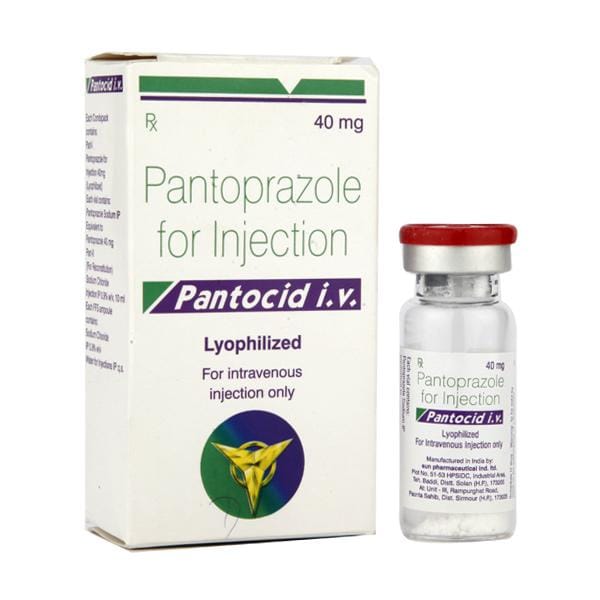
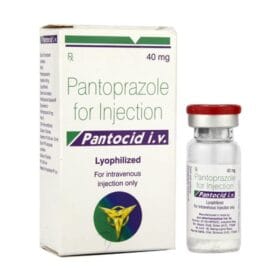
Pantocid Injection
✅ Szybka ulga w nadkwasocie
✅ Gojenie wrzodów żołądka
✅ Zmniejsza refluks kwasowy
✅ Zapobiega uszkodzeniom związanym z kwasem
✅ Skuteczne leczenie GERD
Pantocid Injection zawiera pantoprazol.
✓ Zweryfikowany medycznie przez Morgan Ellis — Badacz farmaceutyczny · 8 lat doświadczenia · Ostatnia weryfikacja: maj 2026
⚡ Szybka odpowiedź — Czym jest Pantocid Injection?
Pantocid Injection to pantoprazol sodowy 40 mg na fiolkę do stosowania dożylnego, wyprodukowany przez Sun Pharma w zakładzie produkcyjnym certyfikowanym przez WHO-GMP. Jest to postać parenteralna pantoprazolu stosowana w szpitalu, gdy pacjent nie może przyjmować doustnego PPI — pacjenci na czczo, pooperacyjni, intubowani lub z aktywnym krwawieniem z górnego odcinka przewodu pokarmowego. Dawka standardowa: 40 mg dożylnie raz na dobę, rozpuszczone w 0,9% roztworze soli fizjologicznej, podawane w infuzji przez 15 minut. W przypadku aktywnego krwawienia z górnego odcinka przewodu pokarmowego niezwiązanego z żylakami z wysokim ryzykiem endoskopowym (Forrest Ia/Ib/IIa/IIb), protokół obejmuje bolus dożylny 80 mg, a następnie ciągłą infuzję 8 mg/h przez 72 godziny. Przejście na pantoprazol doustny (np. Pantodac 40 mg) tak szybko, jak pacjent będzie mógł bezpiecznie połykać. Kontynuacja dożylnego podawania inhibitorów pompy protonowej (IPP) powyżej 3–5 dni nie przynosi dodatkowych korzyści farmakologicznych.
📦 Każde zamówienie jest objęte naszą Polityka Gwarancji Ponownej Wysyłki — jeśli Twoja przesyłka nie dotrze w ciągu 20 dni roboczych, wysyłamy ją ponownie.
Dlaczego warto zamawiać z MedsBase
Nasze leki generyczne pochodzą od producentów posiadających certyfikat WHO-GMP i są wysyłane na cały świat w dyskretnym, zwykłym opakowaniu — bez nazwy leku na zewnątrz przesyłki. Płatności kartami są kierowane przez regulowanego procesora (opis wyciągu zawiera nazwę regulowanego procesora płatności — nigdy “MedsBase” ani żadnej nazwy leku). Akceptujemy również kryptowaluty i przelewy bankowe SEPA. Każde zamówienie jest objęte naszą Reshipment Assurance Policy.
Czym jest Pantocid Injection
Pantocid Injection to marka Sun Pharma dożylny pantoprazol sodowy. Każda fiolka zawiera pantoprazol sodowy odpowiadający 40 mg pantoprazolu w postaci zasadowej, dostarczany jako sterylny liofilizowany proszek do rekonstytucji. Jest to postać parenteralna tej samej cząsteczki dostępnej doustnie jako Pantodac, Pan, Pentab, Penlip i Walapan-40.
Jak działa zastrzyk Pantocid
Pantoprazole jest inhibitorem pompy protonowej z grupy benzimidazoli. Po podaniu dożylnym lek koncentruje się w kwaśnych kanalikach wydzielniczych komórek okładzinowych żołądka. Tam ulega protonowaniu do aktywnej formy sulfenamidowej, która tworzy kowalencyjne wiązanie disiarczkowe z resztami cysteinowymi na H+/K+-Pompa ATPazy. To nieodwracalnie blokuje wydzielanie kwasu, dopóki nie zostaną zsyntetyzowane nowe pompy, zapewniając 24–72 godziny efektu farmakodynamicznego z każdej dawki, pomimo krótkiego okresu półtrwania leku w osoczu wynoszącego około 1 godziny. Ciągła infuzja jest stosowana w przypadku aktywnego krwawienia z przewodu pokarmowego, ponieważ utrzymuje podwyższone pH wewnątrzżołądkowe na poziomie > 6 — progu, powyżej którego agregacja płytek jest zachowana, a stabilność skrzepu ulega poprawie.
Wskazania — kiedy stosuje się pantoprazol dożylnie
1. Aktywne krwawienie z górnego odcinka przewodu pokarmowego z powodu wrzodu trawiennego (po endoskopii)
Największa baza dowodów. Po endoskopowym zahamowaniu krwawienia z wysokiego ryzyka (aktywne krwawienie tętnicze Forrest Ia, sączące Ib, widoczny naczyniak IIa lub przylegający skrzep IIb), 72-godzinna infuzja dożylna PPI w dawce 80 mg bolus + 8 mg/h zmniejsza ryzyko ponownego krwawienia, konieczności interwencji chirurgicznej i 30-dniowej śmiertelności. Pacjenci z zmianami niskiego ryzyka (Forrest IIc/III) nie wymagają terapii dożylnej i mogą od razu przejść na wysoką dawkę pantoprazolu doustnie.
2. Pacjenci NPO (nil by mouth) wymagający supresji kwasu
Niedrożność poronna pooperacyjna, wentylacja mechaniczna, ciężkie zapalenie trzustki, uporczywe wymioty lub dysfagia. Po wznowieniu żywienia dojelitowego należy przejść na pantoprazol w postaci doustnej.
3. Profilaktyka wrzodów stresowych na OIOM
Dla pacjentów wentylowanych mechanicznie > 48 godzin, z koagulopatią lub przyjmujących leki wazopresyjne. Uwaga: długotrwałe stosowanie inhibitorów pompy protonowej (IPP) na OIT wiąże się ze zwiększonym C. difficile Dla pacjentów z nadmiernym wydzielaniem kwasu, którzy tymczasowo nie mogą przyjmować PPI doustnie.
4. Zollinger-Ellison syndrome — bridging
Dla pacjentów z nadmiernym wydzielaniem kwasu żołądkowego, którzy tymczasowo nie mogą przyjmować doustnych inhibitorów pompy protonowej (PPI).
Dawkowanie i podawanie
| Wskazanie | Dawka | Uwagi |
|---|---|---|
| Standardowa dawka dla dorosłych | 40 mg dożylnie raz na dobę | Rozpuścić w 10 ml 0,9% roztworu chlorku sodu; można dalej rozcieńczyć w 100 ml 0,9% NaCl; podawać w infuzji przez 15 minut |
| Krwawienie z górnego odcinka przewodu pokarmowego (wysokie ryzyko, po endoskopii) | 80 mg w bolusie dożylnym, następnie 8 mg/h w ciągłej infuzji | 72 godziny, następnie przejść na doustne 40 mg dwa razy na dobę przez 14 dni |
| Ciężki zespół Zollingera-Ellisona | 80 mg dożylnie co 8–12 godzin (pod nadzorem specjalisty) | Roztwór 0,9% NaCl do rozpuszczenia; nadzór specjalisty |
| Niewydolność wątroby | Maksymalnie 40 mg/dobę | Monitorować próby wątrobowe |
| Niewydolność nerek | Nie wymaga dostosowania dawki | Standardowy schemat |
Zgodność: Rozpuścić wyłącznie w 0,9% roztworze chlorku sodu. Nie mieszać z innymi lekami dożylnymi w tej samej linii. Roztwór po rozpuszczeniu jest stabilny przez 12 godzin w temperaturze pokojowej; wyrzucić niewykorzystaną część.
Przejść na doustny inhibitor pompy protonowej jak tylko pacjent będzie mógł bezpiecznie połykać. Kontynuacja dożylnego inhibitora pompy protonowej powyżej 3–5 dni nie ma przewagi farmakologicznej nad terapią doustną i znacząco zwiększa koszty oraz ryzyko infekcji.
Działania niepożądane
Częste (1–10%): ból głowy, biegunka, nudności, ból brzucha, reakcje w miejscu wstrzyknięcia (ból, zakrzepowe zapalenie żył w miejscu wkłucia).
Rzadkie, ale istotne: nadwrażliwość (wysypka, obrzęk naczynioruchowy; bardzo rzadko wstrząs anafilaktyczny), ostre śródmiąższowe zapalenie nerek, hepatotoksyczność (rzadko), ciężka hipomagnezemia (przy długotrwałym stosowaniu), C. difficile zakażenie (szczególnie u pacjentów hospitalizowanych) oraz zapalenie płuc związane z wentylacją mechaniczną.
Przeciwwskazania
- Znana nadwrażliwość na pantoprazol lub jakikolwiek inhibitor pompy protonowej z grupy benzimidazoli
- Współistniejące stosowanie rilpiwiryny (HIV) — bezwzględne przeciwwskazanie
- Ciężka niewydolność wątroby — zmniejszyć dawkę
Przechowywanie
Przechowywać nieotwarte fiolki w temperaturze 15–30 °C, chroniąc przed światłem. Po przygotowaniu roztwór jest stabilny przez 12 godzin w temperaturze pokojowej; chłodzenie nie jest wymagane, ale nie przedłuża stabilności powyżej 24 godzin. Odrzucić każdy roztwór o widocznej zmianie koloru lub zawierający cząstki stałe.
Najczęściej zadawane pytania
Kiedy stosuje się pantoprazol dożylnie zamiast doustnego?
Tylko wtedy, gdy pacjent nie może przyjmować PPI doustnie — brak możliwości przyjmowania pokarmów i płynów, stan pooperacyjny, intubacja, uporczywe wymioty, ciężka dysfagia — lub w szczególnym przypadku ostrego krwawienia z górnego odcinka przewodu pokarmowego, gdzie wysoka dawka w ciągłym wlewie poprawia wyniki po endoskopowym zatrzymaniu krwawienia. Po wznowieniu żywienia enteralnego, pantoprazol doustny zapewnia równoważne hamowanie wydzielania kwasu przy znacznie niższych kosztach.
Dlaczego dawka w protokole krwawienia jest znacznie wyższa (80 mg + 8 mg/h)?
Aktywne krwawienie z górnego odcinka przewodu pokarmowego wymaga utrzymania pH wewnątrzżołądkowego > 6, aby ustabilizować agregację płytek krwi i chronić skrzep przed trawieniem przez sok żołądkowy. Dawka nasycająca 80 mg plus ciągły wlew 8 mg/h to schemat z największą bazą dowodową z randomizowanych badań klinicznych w tym wskazaniu. Niższe dawki lub podawanie przerywane powodują duże wahania pH i mniejszą ochronę przed ponownym krwawieniem.
Jak długo należy kontynuować dożylne podawanie PPI?
W przypadku ostrego krwawienia z przewodu pokarmowego, 72-godzinna ciągła infuzja, następnie zmniejszenie dawki do 40 mg doustnie dwa razy dziennie przez 14 dni, a następnie raz dziennie. U pacjentów NPO przejść na doustny inhibitor pompy protonowej (IPP), gdy tylko przewód pokarmowy zacznie funkcjonować. Długotrwałe stosowanie IPP dożylnie >5 dni nie daje korzyści farmakologicznych i zwiększa C. difficile oraz ryzyko zapalenia płuc w szpitalu.
Czy dożylny pantoprazol jest lepszy niż dożylny omeprazol lub ezomeprazol?
W przypadku samego hamowania wydzielania kwasu — nie — wszystkie dożylne IPP osiągają równoważne pH wewnątrzżołądkowe. Pantoprazol jest preferowany w praktyce klinicznej ze względu na czystszy profil interakcji lekowych (szczególnie istotny u pacjentów na OIT przyjmujących wiele leków metabolizowanych przez CYP3A4 i CYP2C19) oraz dlatego, że największa baza dowodów dotyczących protokołów krwawienia dotyczy pantoprazolu i ezomeprazolu.
Czy można go mieszać z innymi lekami dożylnymi?
Nie. Roztwór pantoprazolu należy przygotowywać tylko z 0,9% chlorku sodu i podawać przez dedykowaną linię dożylną. Nie podawać jednocześnie z innymi lekami w tej samej linii ze względu na problemy z kompatybilnością z wieloma powszechnie stosowanymi lekami dożylnymi.
Czy dożylny pantoprazol jest bezpieczny w ciąży?
Pantoprazol ma rozsądne dane dotyczące bezpieczeństwa w ciąży. Dożylny pantoprazol byłby stosowany w ciąży tylko wtedy, gdy terapia doustna jest niemożliwa — np. w przypadku niepowściągliwych wymiotów ciężarnych na tyle ciężkich, że wymagają żywienia pozajelitowego lub ostrego krwawienia z wrzodu trawiennego. Należy skonsultować się z zespołem położniczym i gastroenterologicznym.
Jakie są działania niepożądane dożylnego pantoprazolu?
Większość jest podobna jak w przypadku doustnych IPP: ból głowy, biegunka, nudności. Specyficzne dla podania dożylnego: ból w miejscu wstrzyknięcia lub zakrzepowe zapalenie żył przy kaniuli. Ważne powikłania szpitalne, na które należy zwrócić uwagę: C. difficile zakażenie, zapalenie płuc związane z wentylacją mechaniczną, hipomagnezemia (długie pobyty na OIT) oraz rzadkie ostre śródmiąższowe zapalenie nerek (wzrost kreatyniny).
Czy dożylny pantoprazol wchodzi w interakcje z klopidogrelem?
Pantoprazol ma najmniejszą interakcję z klopidogrelem ze wszystkich IPP, ponieważ nie hamuje CYP2C19 w stopniu klinicznie istotnym. Jest to jeden z powodów, dla których jest domyślnym dożylnym IPP na oddziałach kardiologii i chirurgii serca.
Czy można podawać przez obwodowy wenflon?
Tak — standardowa dawka 40 mg po rozpuszczeniu i rozcieńczeniu w 100 mL 0,9% roztworze soli fizjologicznej może być podawana przez linię obwodową. Ciągła infuzja 8 mg/h w przypadku krwawienia z przewodu pokarmowego jest częściej podawana przez dedykowaną linię ze względu na czas trwania. Należy obserwować miejsce wkłucia pod kątem zakrzepowego zapalenia żył.
Jak przechowywać po rozpuszczeniu?
Rozpuszczony i rozcieńczony roztwór jest stabilny przez 12 godzin w temperaturze pokojowej w 0,9% roztworze soli fizjologicznej. Przechowywanie w lodówce przedłuża okres przydatności do 24 godzin. Należy wyrzucić każdy roztwór, który jest przebarwiony, mętny lub zawiera cząstki stałe.
Powiązane alternatywy
Inne produkty w Zdrowie ogólne które klienci również przeglądają:
Więcej opcji w leczeniu refluksu żołądkowego
Ranking według liczby ostatnich zamówień MedsBase — co wybierają inni klienci w tej kategorii.


| Moc | 40 mg |
|---|---|
| Ilość | 1 fiolka, 2 fiolki, 3 fiolki, 6 fiolek |
 Pantocid Injection
Pytania i odpowiedzi
Pantocid Injection
Produkty powiązane






Opinie
Nie ma jeszcze opinii