







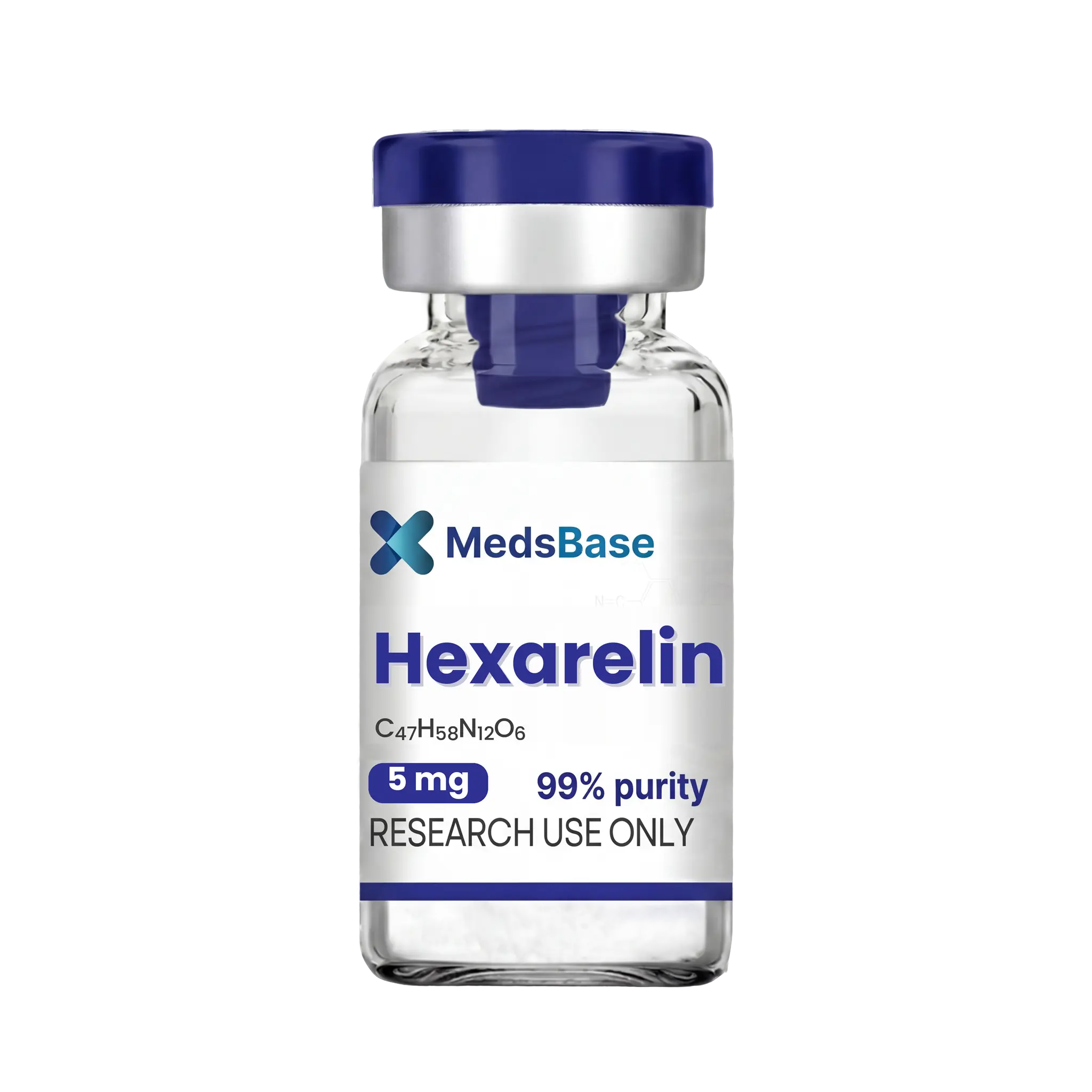
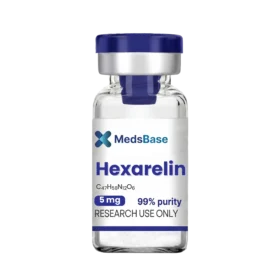
Octan Hexareliny (Examorelina)
✅ Najsilniejszy sekretagog hormonu wzrostu z rodziny GHRP w przeliczeniu na mg
✅ Podwójny mechanizm — GHSR-1a (uwalnianie GH) + CD36 (kardioprotekcja)
✅ Syntetyczny peptyd 6-aa; modyfikacje D-2-Me-Trp + D-Phe dla stabilności
✅ Silne uwalnianie GH z udokumentowanym wzrostem kortyzolu/prolaktyny przy wyższych dawkach
✅ CAS 140703-51-1 (wolny) / 171263-26-6 (octan); MW 887,04 / 947,07
Octan Hexareliny zawiera syntetyczny peptyd badawczy 6-aa.
✓ Zweryfikowany medycznie przez Morgan Ellis — Badacz farmaceutyczny · 8 lat doświadczenia · Ostatnia weryfikacja: maj 2026
Krótka odpowiedź — czym jest octan Hexarelinu?
Octan Hexareliny (zwany również Examorelina) to syntetyczny 6-aminokwasowy sekretagog hormonu wzrostu (GHS): His-D-2-metylo-Trp-Ala-Trp-D-Phe-Lys-NH2, z bioaktywnym przeciwjonem w postaci soli octanowej. CAS 140703-51-1 (wolny peptyd) / 171263-26-6 (sól octanowa). Masa cząsteczkowa 887,04 wolny / 947,07 g/mol jako octan. Najsilniejszy mimetyk greliny w rodzinie GHRP-2 / GHRP-6 / Ipamorelinu — silnie aktywuje GHSR-1a na somatotrofach przysadki oraz na kardiomiocytach (te ostatnie poprzez receptor CD36 dla efektów kardioprotekcyjnych niezależnych od uwalniania GH). Wywołuje silne pulsacyjne uwalnianie GH bez ostrego wzrostu głodu, ale z udokumentowanym podwyższeniem kortyzolu i prolaktyny przy wyższych dawkach. Wyłącznie do użytku laboratoryjnego. Syntetyczny peptyd — nie jest naturalną greliną.
📦 Każde zamówienie jest objęte naszą Polityka Gwarancji Ponownej Wysyłki — jeśli Twoja przesyłka nie dotrze w ciągu 20 dni roboczych, wysyłamy ją ponownie.
| Specyfikacja | Szczegóły |
|---|---|
| Klasa związku | Syntetyczny 6-aa peptydowy sekretagog hormonu wzrostu (rodzina GHRP); mimetyk greliny; sól octowa |
| Nazwa chemiczna | Hexarelin Acetate (synonimy: Examorelin, EP-23905, MF6003) |
| Numer CAS | 140703-51-1 (wolny peptyd); 171263-26-6 (sól octowa) |
| Sekwencja | L-His-D-2-metylo-Trp-L-Ala-L-Trp-D-Phe-L-Lys-NH2 (6 aminokwasów; D-2-Me-Trp na pozycji 2 i D-Phe na pozycji 5 nadają stabilność proteolityczną i selektywność receptorową; C-końcowa amida) |
| Wzór cząsteczkowy / MW | C47H58N12O6 (wolny peptyd, MW 887,04 g/mol); + C2H4O2 przeciwjon octanowy (sól octowa, MW 947,07 g/mol) |
| Mechanizm | Farmakologia dwureceptorowa. (1) Pierwotny: agonista GHSR-1a (receptor sekretagogu hormonu wzrostu typu 1a, receptor greliny) na somatotrofach przysadki — silnie stymuluje pulsacyjne uwalnianie GH poprzez szlak Gq-PLC-IP3-Ca2+ sygnalizacja; oddziałuje również z GHSR na neuronach jądra łukowatego. (2) Wtórny: wiąże CD36 (receptor zmiatający) na kardiomiocytach, śródbłonku naczyniowym i makrofagach — wywiera działanie kardioprotekcyjne w modelach niedokrwienia-reperfuzji niezależne od uwalniania GH. Podwójny mechanizm działania jest charakterystyczny wyłącznie dla heksareliny wśród rodziny GHRP. |
| Moc w porównaniu z rodziną | Najsilniejszy peptyd uwalniający GH w rodzinie GHRP-2/GHRP-6/Hexarelin/Ipamorelin w przeliczeniu na mg — ale z odpowiednim wzrostem kortyzolu i prolaktyny przy wyższych dawkach (w przeciwieństwie do Ipamorelina, który powoduje wyłącznie czyste uwalnianie GH). |
| Postać | Liofilizowany biały do białego z odcieniem żółtawym proszek; fiolki jednorazowego użytku do badań |
| Czystość | ≥99% (zweryfikowane HPLC, COA na życzenie) |
| Przechowywanie | Liofilizat: krótkoterminowo 2–8 °C; długoterminowo −20 °C (≥36 miesięcy). Po rekonstytucji: 2–8 °C, użyć w ciągu 30 dni. Unikać wielokrotnego zamrażania i rozmrażania. |
| Do celów badawczych | Wyłącznie do zastosowań laboratoryjnych. Nie do diagnostyki lub terapii u ludzi i zwierząt. Hexarelin/Examorelin znajduje się na Liście Substancji Zabronionych WADA (klasa S2, Hormony peptydowe i czynniki wzrostu) i jest zabroniony w każdej sytuacji w kontekście sportowym. |
Mechanizm działania — podwójna farmakologia GHSR-1a + CD36
Hexarelin jest wyjątkowy w rodzinie GHRP, ponieważ ma dobrze udokumentowane działanie na dwóch mechanistycznie odmiennych receptorach:
- Agonizm GHSR-1a (główny mechanizm uwalniania GH) — Hexarelin wiąże się z receptorem greliny (GHSR-1a, sprzężony z Gq GPCR) na somatotrofach przysadki z powinowactwem subnanomolowym. Aktywacja receptora prowadzi do PLC → IP3 → uwalnianie Ca2+ , wywołując egzocytozę ziaren wydzielniczych GH. D-2-Me-Trp w pozycji 2 i D-Phe w pozycji 5 nadają wysoką odporność na degradację proteolityczną, wydłużając okres półtrwania w osoczu w porównaniu z naturalną greliną.
- Wiązanie CD36 (wtórny mechanizm kardioprotekcyjny) — Hexarelin (w przeciwieństwie do Ipamorelinu lub GHRP-6 w tym samym stopniu) wiąże CD36 — receptor zmiatający na kardiomiocytach, śródbłonku naczyniowym i makrofagach. Opublikowane badania (Bodart i in. 2002, inni) wykazały bezpośrednie efekty kardioprotekcyjne w modelach uszkodzenia niedokrwienno-reperfuzyjnego, które są niezależne od hormonu wzrostu — mechanizm wiązania CD36 zachowuje kurczliwość serca, zmniejsza dysfunkcję komór po niedokrwieniu i moduluje aktywację makrofagów.
- Konsekwencje w dalszej części osi GH — Podobnie jak wszystkie GHRP, aktywność Hexarelinu w uwalnianiu GH prowadzi do zwiększonej produkcji IGF-1, zwiększonej lipolizy, zwiększonej masy beztłuszczowej i poprawy bilansu azotowego w opublikowanych badaniach in vivo. Efekty w dużej mierze odzwierciedlają szerszą farmakologię osi GH.
- Tachyfilaksja przy przewlekłym dawkowaniu — Długotrwałe podawanie wysokich dawek Hexarelinu powoduje desensytyzację GHSR-1a (tachyfilaksję), zmniejszając skuteczność uwalniania GH po 4–6 tygodniach ciągłego podawania. Opublikowane badania wykorzystują protokoły pulsacyjnego dawkowania, aby złagodzić ten efekt.
- Wzrost kortyzolu i prolaktyny — Przy wyższych dawkach Hexarelin zwiększa stężenie kortyzolu i prolaktyny w surowicy wraz z GH (podobnie jak GHRP-2 i GHRP-6 pod tym względem). W protokołach badawczych, w których potrzebne jest tylko czyste uwalnianie GH, Ipamorelina jest preferowaną selektywną alternatywą.
Opublikowane zastosowania badawcze
- Farmakologia GHRP / sekretagogów GH — najbardziej skuteczny związek referencyjny GHRP w przeliczeniu na miligram
- Farmakologia receptora GHSR-1a — kanoniczne narzędzie badawcze obok greliny i ipamoreliny
- Badania nad kardioprotekcją (zależne od CD36) — wyjątkowy w rodzinie GHRP ze względu na udokumentowane bezpośrednie działanie na serce w modelach niedokrwienia-reperfuzji
- Badania nad osią hormonu wzrostu — wywołuje silny puls endogennego GH bez iniekcji egzogennego hGH
- Badania nad składem ciała — stosowany w opublikowanych badaniach na gryzoniach wraz z analogami GHRH do analizy masy beztłuszczowej/tłuszczowej
- Badania nad tachyfilaksją i desensytyzacją GHSR-1a — dobrze udokumentowany profil tachyfilaksji czyni go przydatnym narzędziem w farmakologii desensytyzacji receptorów
Szerszy kontekst można znaleźć w Ipamorelina (czysty sekretagog GH — bez kortyzolu/prolaktyny), Octan GHRP-2 (pokrewny GHS), Octan GHRP-6 (pokrewny GHS), CJC-1295 z DAC (analog GHRH, często stosowany w połączeniu), Sermorelina (GHRH 1-29).
Dostępne mocowania
| Mocowanie fiolki | Rozmiary opakowań |
|---|---|
| 2 mg — protokoły badawcze wstępne, prace nad doborem dawek | 10, 20 lub 30 fiolek |
| 5 mg — standardowe protokoły badawcze, wielkości prób wielokohortowych; najniższy koszt na mg | 10, 20 lub 30 fiolek |
Porównanie — Hexarelin vs Ipamorelin
Ipamorelina jest najczystszym sekretagogiem wyłącznie GH w tej rodzinie — silne uwalnianie GH bez podwyższania kortyzolu lub prolaktyny. Hexarelin jest najsilniejszy w rodzinie w przeliczeniu na mg, ale podwyższa kortyzol i prolaktynę przy wyższych dawkach. Hexarelin ma również unikalny mechanizm kardioprotekcyjny poprzez wiązanie CD36. Badacze wybierają Hexarelin dla maksymalnej skuteczności uwalniania GH lub specyficznie dla osi CD36; Ipamorelin do czystych badań izolowanej osi GH, gdy unikanie zakłóceń przez kortyzol/prolaktynę ma znaczenie.
| Kryterium | Hexarelin | Ipamorelina |
|---|---|---|
| MW | 887 / 947 (octan) | 711.85 |
| Skuteczność uwalniania GH | Najwyższa w rodzinie (na mg) | Silna, ale mniejsza niż Hexarelin |
| Kortyzol/prolaktyna | Podwyższone przy wyższych dawkach | Brak udokumentowanego podwyższenia — czysty |
| Wiązanie CD36 | Tak — kardioprotekcyjne | Minimalne / nieudokumentowane |
| Najlepsze dla | Badania GH o maksymalnej mocy, kardioprotekcja | Czyste badania GH, protokoły bez czynników zakłócających |
Przechowywanie i rekonstytucja
Przechowuj liofilizowane fiolki w temperaturze 2–8 °C; zamrażaj nieotwarte fiolki w temperaturze −20 °C do długotrwałego przechowywania. Rekonstytuuj za pomocą wody bakteriostatycznej (1,0 mL na fiolkę 2 mg → 2 mg/mL; 1,0 mL na fiolkę 5 mg → 5 mg/mL). Delikatnie zamieszaj, aby rozpuścić. Przechowuj zrekonstytuowane fiolki w temperaturze 2–8 °C, użyj w ciągu 30 dni. Chroń przed światłem. Unikaj wielokrotnych cykli zamrażania-rozmrażania.
FAQ
Czym Hexarelin różni się od GHRP-2 i GHRP-6?
Wszystkie trzy to syntetyczne peptydy uwalniające GH z rodziny 6-aminokwasów. Hexarelin jest najbardziej skuteczny na mg, ale także zwiększa poziom kortyzolu/prolaktyny bardziej niż GHRP-2 i mniej niż GHRP-6. Hexarelin wiąże się wyjątkowo z CD36, co daje efekty kardioprotekcyjne, których nie obserwuje się w przypadku GHRP-2 ani GHRP-6.
Jaka jest typowa dawka badawcza?
Protokoły in vivo na gryzoniach zwykle stosują 50–200 µg/kg SC, 1–3×/dzień. Protokoły in vitro w hodowlach przysadki wykorzystują stężenia nanomolarne. Opublikowane badania na ludziach stosowały 1–2 mg SC na dawkę.
Jaki jest status WADA?
Hexarelin (Examorelin) znajduje się na Liście Zakazanych Substancji WADA w klasie S2 (Hormony Peptydowe, Czynniki Wzrostu). Zabroniony w każdym czasie w kontekście sportowym.
Czy Hexarelin można łączyć z CJC-1295 lub innymi analogami GHRH?
Tak — Hexarelin (GHS) + CJC-1295 (analog GHRH) to kanoniczny protokół “GHRP + GHRH”, który powoduje synergiczne uwalnianie GH poprzez zaangażowanie dwóch uzupełniających się szlaków przysadkowych. Sermorelin i Tesamorelin to alternatywne partnerzy GHRH.
Inne peptydy badawcze do badań osi hormonu wzrostu
- Ipamorelina — Czysty sekretagog GH — bez podwyższania poziomu kortyzolu/prolaktyny
- Octan GHRP-2 — Członek rodziny GHRP
- Octan GHRP-6 — Członek rodziny GHRP (również zwiększa głód)
- CJC-1295 z DAC — Analog GHRH — kanoniczny partner do stosowania w kombinacji
- Sermorelina — Analog GHRH 1-29 — alternatywny partner GHRH
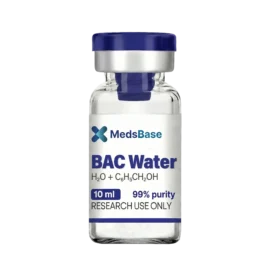
- BAC Water (Woda bakteriostatyczna) — Wymagany do rekonstytucji każdej liofilizowanej fiolki — sterylny rozcieńczalnik z 0,9% benzylowym alkoholem jako środkiem konserwującym
Więcej opcji w Peptydach
Ranking według liczby ostatnich zamówień MedsBase — co wybierają inni klienci w tej kategorii.
| Moc | 2 mg, 5 mg |
|---|---|
| Ilość | 10 fiolek, 20 fiolek, 30 fiolek |
 Octan Hexareliny (Examorelina)
Pytania i odpowiedzi
Octan Hexareliny (Examorelina)
Produkty powiązane
Opinie
Nie ma jeszcze opinii