







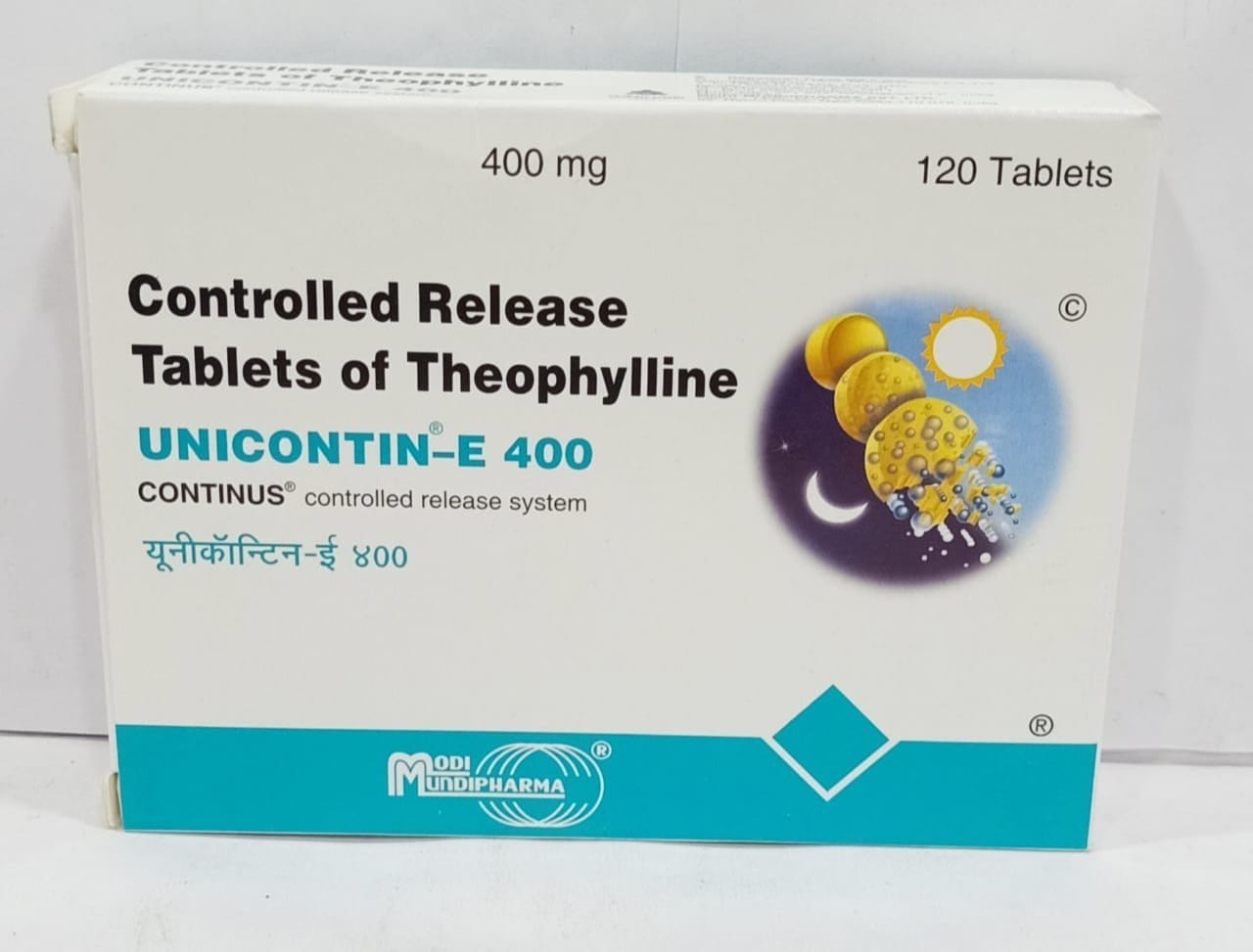
Unicontin-E
✅ Łagodzi skurcz oskrzeli
✅ Poprawia funkcję płuc
✅ Zmniejsza duszność
✅ Usprawnia przepływ powietrza w drogach oddechowych
✅ Łagodzi objawy astmy
Unicontin-E zawiera Teofilinę.
✓ Zweryfikowany medycznie przez Morgan Ellis — Badacz farmaceutyczny · 8 lat doświadczenia · Ostatnia weryfikacja: maj 2026
⚡ Krótka odpowiedź — Czym jest Unicontin-E?
Unicontin-E zawiera teofilina, będący metyloksantyna o działaniu rozszerzającym oskrzela o działaniu przeciwzapalnym, stosowany jako terapia dodatkowa w przewlekłej astmie i POChP. Teofilina działa na wiele celów — hamowanie fosfodiesterazy (zwiększając cAMP), antagonizm receptorów adenozyny i aktywacja HDAC2 (działanie przeciwzapalne). Ma wąski indeks terapeutyczny (docelowe stężenie w surowicy 10–20 mg/L; toksyczność powyżej 20) i wiele interakcji lekowych, wymagające ostrożnego dawkowania oraz (u niektórych pacjentów) monitorowania poziomu we krwi. Każda tabletka o kontrolowanym uwalnianiu zawiera 400 mg, wyprodukowana przez Modi-Mundipharma w obiektach certyfikowanych WHO-GMP.
📦 Każde zamówienie jest objęte naszą Polityka Gwarancji Ponownej Wysyłki — jeśli Twoja przesyłka nie dotrze w ciągu 20 dni roboczych, wysyłamy ją ponownie.
Dlaczego warto zamawiać z MedsBase
Nasze leki generyczne pochodzą od producentów posiadających certyfikat WHO-GMP i są wysyłane na cały świat w dyskretnym, zwykłym opakowaniu — bez nazwy leku na zewnątrz przesyłki. Płatności kartami są kierowane przez regulowanego procesora (opis wyciągu zawiera nazwę regulowanego procesora płatności — nigdy “MedsBase” ani żadnej nazwy leku). Akceptujemy również kryptowaluty i przelewy bankowe SEPA. Każde zamówienie jest objęte naszą Reshipment Assurance Policy.
Co to jest Unicontin-E?
Unicontin-E to doustny metyloksantynowy lek rozszerzający oskrzela. Metyloksantyny pochodzą od naturalnych alkaloidów (teofilina to dimetyloksantyna występująca w herbacie). Ich stosowanie zmniejszyło się od lat 90., gdy wziewne β2-mimetyki i kortykosteroidy stały się terapią pierwszego wyboru — ale zachowały rolę jako terapia dodatkowa trzeciego rzutu w trudnej astmie i POChP.
Jak działa Unicontin-E?
- Hamowanie fosfodiesterazy (PDE3, PDE4) — zwiększa poziom cyklicznego AMP w mięśniach gładkich dróg oddechowych i komórkach zapalnych; efektem końcowym jest rozszerzenie oskrzeli i zmniejszone uwalnianie mediatorów.
- Antagonizm receptorów adenozyny — blokuje bronchokonstrykcję mediowaną przez adenozynę oraz uwalnianie mediatorów z komórek tucznych.
- Aktywacja HDAC2 (teofilina przy niskich stężeniach w surowicy 5–10 mg/L) — przywraca wrażliwość na kortykosteroidy w POChP i ciężkiej astmie, gdzie oporność na steroidy jest częściowo spowodowana zmniejszoną aktywnością HDAC2.
- Kurczliwość przepony — metyloksantyny zmniejszają zmęczenie przepony, co jest przydatne w POChP z ciężkim ograniczeniem przepływu powietrza.
— wzmacnia normalną odpowiedź fizjologiczną, a nie wywołuje ją sztucznie.
- Ciężka astma przewlekła — dodatek do wysokich dawek ICS-LABA, gdy potrzebne jest dodatkowe rozszerzenie oskrzeli
- leczenie podtrzymujące POChP — dodatek do LAMA-LABA lub terapii potrójnej
- Astma nocna — postać o przedłużonym uwalnianiu zapewnia rozszerzenie oskrzeli przez całą noc
- Bezdech wcześniaków (teofilina) — stosowanie u noworodków
- Serce płucne i nadciśnienie płucne — lek wspomagający
Dawkowanie Unicontin-E
| Pacjent | Dawka | Częstotliwość |
|---|---|---|
| Dorośli — dawka początkowa | 200 mg | Dwa razy dziennie; dostosować dawkę do stężenia w surowicy 10–20 mg/L |
| Dorośli — leczenie podtrzymujące | 400 mg | Dwa razy dziennie (lub 600 mg raz dziennie w postaci ER) |
| Osoby starsze / niewydolność serca / choroba wątroby | Zmniejszyć dawkę o połowę | Monitoruj poziom w surowicy |
Skutki uboczne Unicontin-E
- Nudności, wymioty, niestrawność
- Ból głowy
- Drżenie
- Bezsenność, niepokój
- Tachykardia, kołatanie serca
- Łagodna hipokaliemia przy wysokich dawkach
Poziomy toksyczne (>20 mg/L) — stan nagły:
- Silne nudności, uporczywe wymioty
- Arytmia serca (migotanie przedsionków, częstoskurcz nadkomorowy)
- Drgawki (często bez ostrzeżenia)
- Hipotensja, hiperglikemia, hipokaliemia, hiperkalcemia
Ostrzeżenia i środki ostrożności
- Wąski indeks terapeutyczny. Docelowe stężenie w surowicy 10–20 mg/L. Sprawdź poziom we krwi po 5 dniach od rozpoczęcia, po zmianie dawki, przy wprowadzeniu nowego leku oddziałującego, po rzuceniu palenia oraz podczas choroby/gorączki (klirens spada).
- Wiele interakcji lekowych — patrz tabela interakcji. Większość metabolizowana przez CYP1A2; wiele inhibitorów i induktorów znacząco wpływa na stężenia.
- Palenie tytoniu indukuje CYP1A2 i obniża stężenie teofiliny o ~50% — dostosuj dawkę po zaprzestaniu palenia.
- Choroba serca: stosować ostrożnie w zaburzeniach rytmu serca, niewydolności serca, ciężkim nadciśnieniu.
- Nadczynność tarczycy: zwiększone klirens plus nasilone efekty adrenergiczne.
- Ciąża i karmienie piersią: zazwyczaj unikać; stosować tylko przy wyraźnej korzyści.
- Choroba wątroby: zmniejszyć dawkę — metyloksantyny są metabolizowane w wątrobie.
Przeciwwskazania
- Nadwrażliwość na teofilinę lub inne ksantyny (kofeina, teobromina)
- Aktywna choroba wrzodowa
- Niekontrolowane tachyarytmie
- Ciężka niewydolność serca (NYHA IV)
Interakcje lekowe
| Lek oddziałujący | Efekt | Co robić |
|---|---|---|
| Ciprofloksacyna, erytromycyna, klarytromycyna, fluwoksamina | Hamują CYP1A2 → podwyższają poziom teofiliny → toksyczność (nudności, arytmia, drgawki) | Unikaj lub zmniejsz dawkę teofiliny o 50%; monitoruj poziom w surowicy |
| Cymetydyna, allopurynol | Podwyższ poziom teofiliny | Zmniejsz dawkę; monitoruj poziom |
| Fenytoina, karbamazepina, ryfampicyna | Indukuje CYP — niższe poziomy | Może być wymagana wyższa dawka |
| Palenie tytoniu | Indukuje CYP1A2 — niższe poziomy | Ponownie dostosuj dawkę po zaprzestaniu palenia |
| β-mimetyki, diuretyki | Dodatkowa hipokaliemia | Monitoruj poziom potasu |
Przechowywanie
- Przechowuj w temperaturze poniżej 25°C w chłodnym, suchym miejscu, z dala od bezpośredniego światła słonecznego.
- Przechowuj w oryginalnym opakowaniu do momentu użycia, aby chronić przed wilgocią i światłem.
- Nie stosować po upływie terminu ważności wydrukowanego na blistrze.
- Przechowywać w miejscu niedostępnym dla dzieci.
Powiązane alternatywy w MedsBase
- Asthalin Inhaler — salbutamol doraźny
- Budecort Inhaler — budezonid ICS profilaktyczny
- Foracort Inhaler — budezonid + formoterol ICS-LABA
- Tiova Inhaler — tiotropium LAMA dla POChP
- Montair — tabletka montelukast LTRA
Najczęściej zadawane pytania
Czy teofilina jest nadal stosowana w nowoczesnym leczeniu astmy?
Tak, ale jako lek trzeciego rzutu. Wziewne β2-mimetyki, ICS, ICS-LABA, LTRA i LAMA są lekami pierwszego wyboru; teofilinę dodaje się w przypadku choroby opornej na leczenie, szczególnie w astmie nocnej. Wąski indeks terapeutyczny i liczne interakcje lekowe ograniczają jej stosowanie.
Jak ustala się dawkę?
Dostosowuje się do poziomu teofiliny w surowicy 10–20 mg/L. Kontroluj 5 dni po rozpoczęciu, po zmianie dawki, przy wprowadzeniu nowego leku oddziałującego, po rzuceniu palenia oraz podczas choroby/gorączki.
Dlaczego tak wiele interakcji?
Teofilina jest metabolizowana przez CYP1A2 — wiele leków podnosi jej poziom (cyprofloksacyna, erytromycyna, fluwoksamina, cymetydyna) lub obniża (ryfampicyna, fenytoina, palenie tytoniu).
Jak długo działa Unicontin-E?
Tabletka o przedłużonym uwalnianiu zapewnia 12-godzinne działanie. Dawkowanie dwa razy dziennie utrzymuje stabilny poziom w surowicy.
Jakie są objawy toksyczności?
Silne nudności, uporczywe wymioty, tachykardia, kołatanie serca, drżenie, nadpobudliwość, drgawki (często bez ostrzeżenia), arytmie, niedociśnienie. Toksyczność powyżej 20 mg/L wymaga pilnej interwencji — wstrzymaj dawkę, sprawdź poziom, zapewnij leczenie wspomagające.
Czy można ją przyjmować z kofeiną?
Kofeina i teofilina są metyloksantynami o nakładających się efektach. Duże ilości kofeiny mogą nasilać drżenie, tachykardię i bezsenność. Zmniejsz spożycie kofeiny, jeśli występują objawy.
Dlaczego palenie wpływa na dawkę?
Palenie tytoniu indukuje CYP1A2 (enzym metabolizujący teofilinę). Palacze wymagają wyższych dawek; po zaprzestaniu palenia poziom leku wzrasta — konieczna jest ponowna tytracja.
Czy Unicontin-E jest bezpieczny w ciąży?
Zazwyczaj unika się stosowania, chyba że korzyści są wyraźne. Preferowana jest terapia wziewna.
Czy mogę rozgryzać lub dzielić tabletki Unicontin-E?
Nie — tabletki o kontrolowanym uwalnianiu należy połykać w całości. Rozgryzanie niszczy matrycę uwalniającą i grozi ostrą toksycznością.
Powiązane alternatywy
Inne produkty w Choroby przewlekłe które klienci również przeglądają:
Więcej opcji w leczeniu astmy/POChP
Ranking według liczby ostatnich zamówień MedsBase — co wybierają inni klienci w tej kategorii.


| Moc | 400 mg |
|---|---|
| Ilość | 10 tabletek, 30 tabletek, 60 tabletek, 90 tabletek, 180 tabletek |
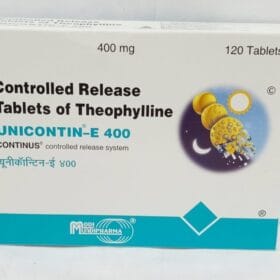 Unicontin-E
Pytania i odpowiedzi
Unicontin-E
Produkty powiązane



Opinie
Nie ma jeszcze opinii