








Prazopress
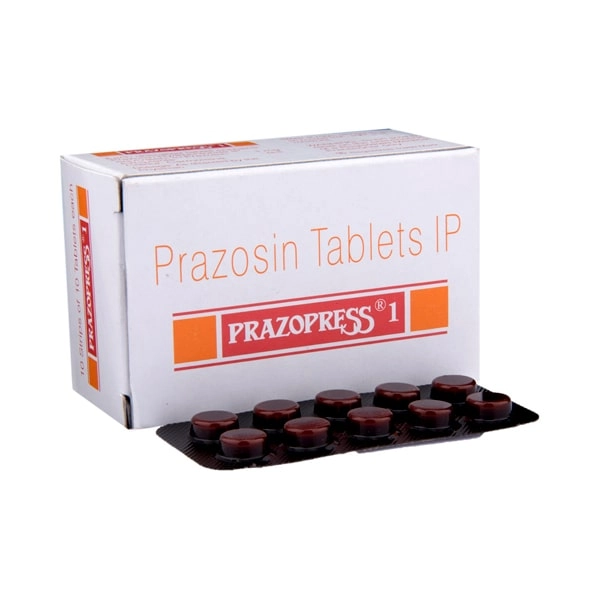
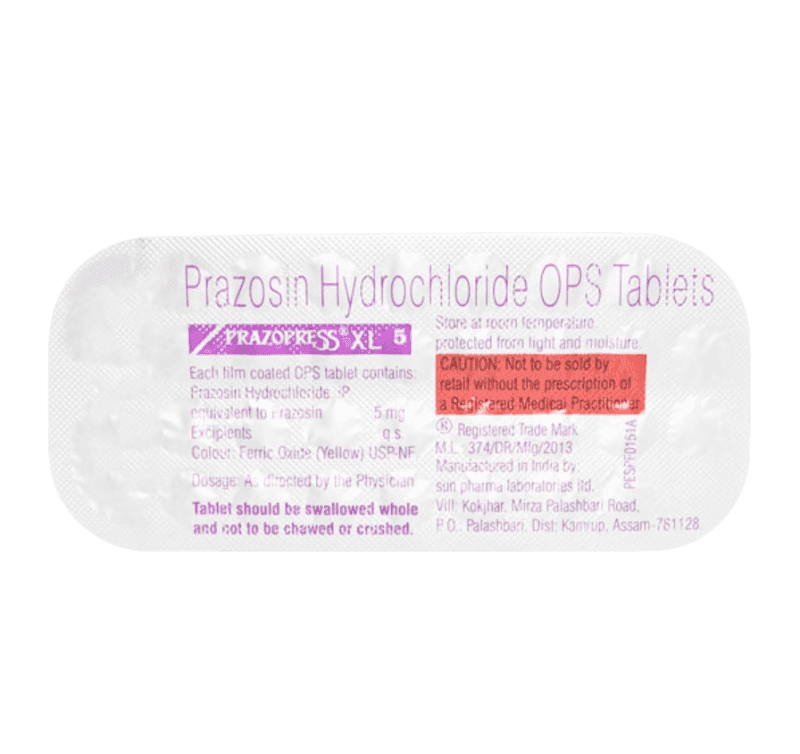
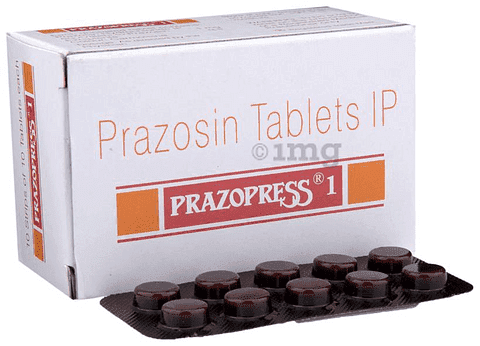
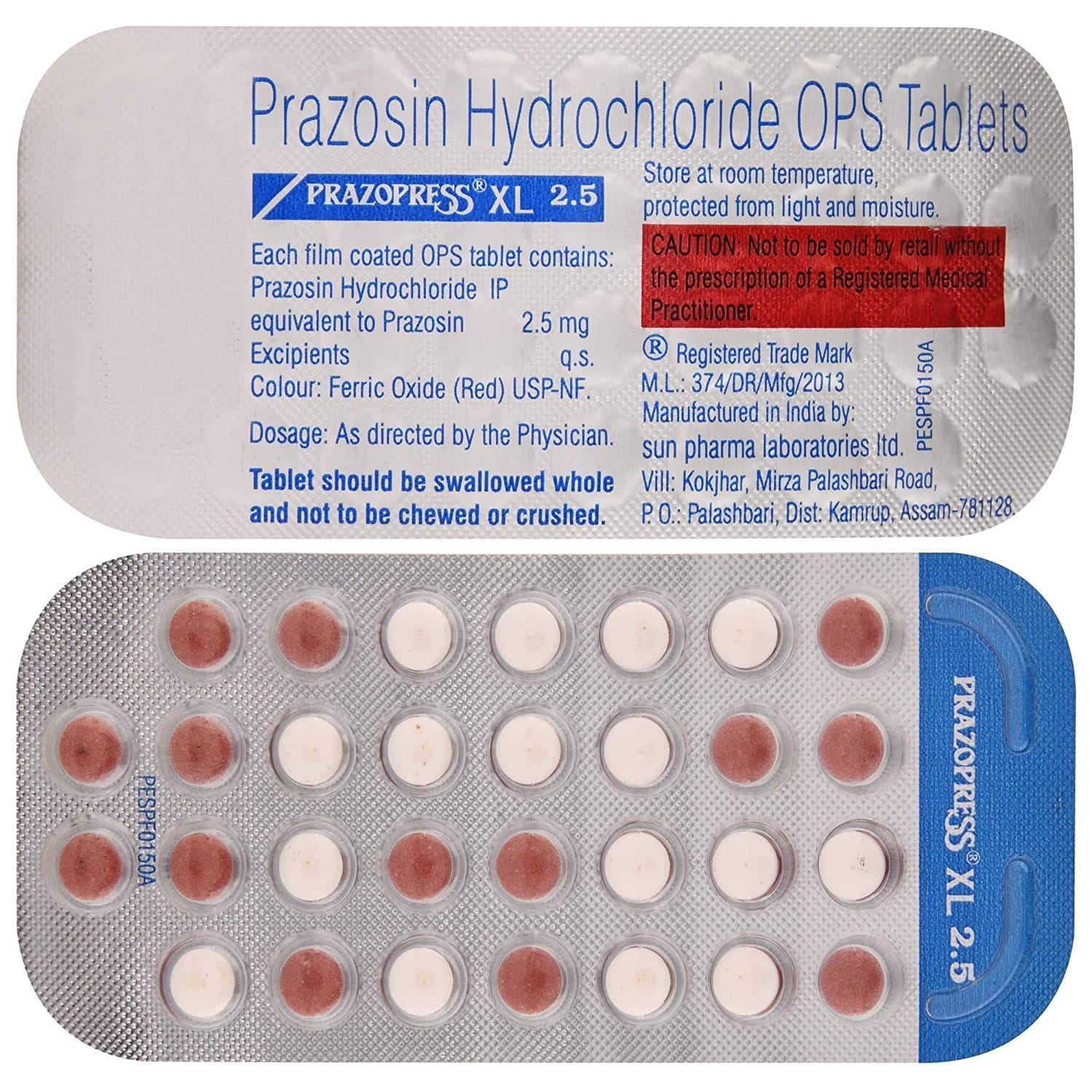

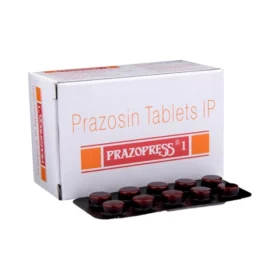
Prazopress sunt comprimate cu eliberare imediată de prazosină 1 mg de la Sun Pharma — blocantul original alfa-1 adrenergic (Minipress de la Pfizer, 1974). Utilizări moderne principale: coșmaruri asociate cu TSPT (dovezi din studii Raskind), hipertrofie benignă de prostată și hipertensiune rezistentă ca tratament adițional de linia a patra/cincea după ACEi/ARB + CCB + tiazidică + spironolactonă. “Fenomenul primei doze” — începeți întotdeauna la ora de culcare. Preocupările din clasa ALLHAT fac ca blocantele alfa să nu mai fie de primă linie în HTN.
✓ Verificat medical de Morgan Ellis — Cercetător farmaceutic · 8 ani de experiență · Ultima recenzie: mai 2026
⚡ Răspuns rapid — Ce este Prazopress?
Prazopress este un Comprimat de 1 mg Prazosină (cu eliberare imediată) de la Sun Pharma — un antagonist selectiv alfa-1 adrenergic (structură chinazolinică), acționând asupra receptori adrenergici alfa-1 postsinaptici pe mușchiul neted arterial și venos, precum și pe mușchiul neted prostatic/de la baza vezicii. Prazosin a fost introdus de Pfizer în 1974 sub denumirea Minipress — primul antagonist selectiv alfa-1 și modelul pentru întreaga clasă de alfa-blocante. Forma cu eliberare imediată a prazosinului a fost în mare parte înlocuită în hipertensiune de clase mai noi, dar rămâne important clinic pentru coșmaruri asociate tulburării de stres posttraumatic (PTSD) (off-label) și pentru cazuri selective de hiperplazie benignă de prostată (BPH). Timp de înjumătățire 2-3 ore (scurt — necesită administrare de două sau trei ori pe zi); debut 30-90 minute; concentrație plasmatică maximă 1-3 ore; durată 4-10 ore în funcție de doză. Indicații principale: coșmaruri asociate PTSD (off-label; utilizare modernă primară), hipertensiune rezistentă ca terapie adjunctă, hiperplazie benignă de prostată. Dozaj tipic: Hipertensiune arterială: începeți cu 0,5-1 mg la culcare pentru prima doză (“fenomenul primei doze” — vezi mai jos), apoi 1 mg de 2-3 ori pe zi, titrând până la 2-20 mg/zi în doze divizate. Nu este un antihipertensiv de primă intenție. STUDIUL ALLHAT a întrerupt ramura cu doxazosină din cauza excesului de insuficiență cardiacă, făcând ca recomandările moderne să rezerve alfa-blocantele ca agenți de linia a patra/cincea pentru HTN rezistent. Începeți întotdeauna prima doză la culcare — fenomenul “primei doze” provoacă hipotensiune ortostatică severă în primele ore. Nu este un antihipertensiv de primă linie (preocupări clasă ALLHAT) — rezervați pentru utilizarea pe locul patru/cinci, în special acolo unde HBP coexistă. Pentru majoritatea pacienților hipertensivi, tratamentul modern începe cu un inhibitor ACE/ARB, un blocant al canalelor de calciu, un tiazidic și spironolactonă înainte de a ajunge la un blocant alfa sau un agent cu acțiune centrală.
📦 Fiecare comandă este acoperită de politica noastră de Politica noastră de Reexpediere Garantată — dacă coletul dumneavoastră nu sosește în 20 de zile lucrătoare, îl relivrăm.
De ce să comanzi de la MedsBase
Medicamentele noastre generice sunt procurate de la producători certificați WHO-GMP și expediate la nivel mondial în ambalaje discrete și simple — fără denumirea medicamentului pe exteriorul coletului. Plățile cu cardul sunt procesate printr-un procesor reglementat (descrierile de pe extrasul de cont includ un procesor de plăți cu card reglementat — niciodată “MedsBase” sau numele vreunui medicament). Acceptăm și criptomonede și transferuri bancare SEPA. Fiecare comandă este susținută de Politica noastră de Asigurare pentru Relivrare.
Ce este Prazopress?
Prazopress este un comprimat oral de 1 mg Prazosină (eliberare imediată) de la Sun Pharma, furnizat în cutii de 30-90 de comprimate. Prazosin a fost introdus de Pfizer în 1974 sub denumirea Minipress — primul antagonist selectiv alfa-1 și modelul pentru întreaga clasă de alfa-blocante. Forma cu eliberare imediată a prazosinului a fost în mare parte înlocuită în hipertensiune de clase mai noi, dar rămâne important clinic pentru coșmaruri asociate tulburării de stres posttraumatic (PTSD) (off-label) și pentru cazuri selective de hiperplazie benignă de prostată (BPH).
Cum funcționează Prazosin (eliberare imediată)
Prazosin (eliberare imediată) acționează pe receptori adrenergici alfa-1 postsinaptici pe mușchiul neted arterial și venos, precum și pe mușchiul neted prostatic/de la baza vezicii. Efectele secundare:
- Vasodilatație arterială și venoasă — blocarea receptorilor alfa-1 pe mușchiul neted vascular reduce rezistența vasculară sistemică; dilatarea venoasă reduce preîncărcarea
- Reducerea tonusului mușchiului neted de la nivelul colului vezical și prostatic — îmbunătățește fluxul urinar în HBP (efectul clinic dominant pentru formele XL/cu acțiune prelungită)
- Profil lipidic îmbunătățit — reducere moderată a LDL și a trigliceridelor, ușoară creștere a HDL; distinct metabolic de tiazide și beta-blocante
- Sensibilitate la insulină îmbunătățită în unele studii — un argument pentru utilizarea alfa-blocantelor la pacienții hipertensivi cu sindrom metabolic sau diabet zaharat de tip 2
- Fără efect direct asupra reninei sau electroliților — potasiu, sodiu și creatinină neafectate (contrast cu diureticele și blocatele RAAS)
- Reflex tachycardia este atenuat în comparație cu vasodilatatoarele directe (hidralazină, minoxidil) din cauza unui feedback simpatic central, dar apare totuși la inițiere
- Blocarea alfa-1 centrală în locusul coeruleus este mecanismul propus pentru beneficiul în cazul coșmarurilor PTSD — reduce hiperactivarea noradrenergică în timpul somnului
Utilizări aprobate și bazate pe dovezi
- coșmaruri asociate PTSD (off-label; utilizare modernă primară), hipertensiune rezistentă ca terapie adjunctă, hiperplazie benignă de prostată
- Coșmaruri și tulburări de somn asociate PTSD (off-label) — utilizat pe scară largă; dovezi din studii Raskind RCT
- Hiperplazie benignă de prostată — prazosin cu eliberare imediată mai puțin convenabil decât formula XL
- Fenomenul Raynaud (off-label; dovezi mixte)
- Pregătire preoperatorie pentru feocromocitom — fenoxibenzamina este preferată; prazosin este o alternativă cu acțiune scurtă în unele protocoale
Dovezile din studiile pivotale: Studiul VA Cooperative (1982) — prazosin comparabil cu antihipertensivele standard în hipertensiune ușoară-moderată; validitate clinică stabilită. brațul cu doxazosină din ALLHAT (2000) — întrerupt cu 3 ani mai devreme din cauza unui risc excesiv de 25% de insuficiență cardiacă vs clortalidonă; interpretat ca o problemă de clasă pentru alpha-blocante în HTN. Studiile Raskind et al. pentru PTSD (2003, 2007, 2013) — prazosin 1-10 mg la culcare a redus visele traumatice și a îmbunătățit somnul în PTSD la veterani și civili. PACT (2018) — 304 de veterani, prazosin nu a depășit placebo-ul pentru PTSD în general, deși analizele subgrup au rămas susținătoare.
Doza Prazopress
Doza primară: Hipertensiune arterială: începeți cu 0,5-1 mg la culcare pentru prima doză (“fenomenul primei doze” — vezi mai jos), apoi 1 mg de 2-3 ori pe zi, titrând până la 2-20 mg/zi în doze divizate. Nu este un antihipertensiv de primă intenție. STUDIUL ALLHAT a întrerupt ramura cu doxazosină din cauza excesului de insuficiență cardiacă, făcând ca recomandările moderne să rezerve alfa-blocantele ca agenți de linia a patra/cincea pentru HTN rezistent.
Alte indicații: Vise traumatice în PTSD (off-label): 1 mg la culcare inițial, titrare cu 1 mg la fiecare 3-5 zile până la efect clinic. Doza efectivă tipică 2-10 mg la culcare; unii pacienți necesită 15-20 mg. Baza de dovezi: Studiile RCT Raskind și Peskind (2003-2013) au arătat reducere semnificativă a frecvenței viselor și îmbunătățire a arhitecturii somnului, deși studiul mai mare PACT din 2018 a fost negativ — entuziasmul a scăzut, dar utilizarea rămâne comună când CBT-I și psihoterapia focalizată pe traumă sunt inadecvate. Hiperplazie benignă de prostată: 1-2 mg de două sau trei ori pe zi; prazosin cu eliberare prelungită (XL) este în general preferat pentru HBP. Fenomenul Raynaud: 1-5 mg de două sau trei ori pe zi, off-label.
Administrare: se poate administra cu sau fără mâncare. Prima doză la ora de culcare. Dozele regulate la interval de 6-8 ore.
Program de monitorizare:
- Valori inițiale: tensiune arterială în decubit și ortostatism (documentați scăderea posturală), frecvență cardiacă, evaluare a simptomelor pentru amețeli/căderi, lista de medicamente (verificați agenții care interacționează).
- Săptămâna 1-2: repetare tensiune arterială (decubit și ortostatism), frecvență cardiacă, evaluare simptome. Ajustați doza în funcție de tensiune și tolerabilitate.
- Săptămâna 4-6: evaluați tensiunea arterială țintă; povara simptomatică; verificați răspunsul la simptomele HBP, dacă este cazul (IPSS).
- Continuu: control anual al tensiunii arteriale, istoric de căderi/sincopă, istoric de cataractă (alertă preoperatorie pentru iris flasc).
- Întrerupeți sau reduceți doza la: sincopă, căderi, priapism, identificarea irisului flasc, ejaculare retrogradă severă care afectează calitatea vieții.
Întrerupere: nu există sindrom de rebound. Alpha-blocantele pot fi întrerupte, dar așteptați-vă la o creștere a tensiunii arteriale dacă au contribuit semnificativ la control. Reîncepeți cu doza inițială (nu doza de întreținere anterioară) dacă reluați după o pauză de >1 săptămână — fenomenul primei doze revine.
Considerații practice pentru Prazopress
- “Fenomenul primei doze” — hipotensiune ortostatică severă, sincopă și tahicardie reflexă în primele 30-90 de minute după prima doză, în special la pacienții cu volum scăzut sau la cei care iau deja un diuretic sau beta-blocant. Întotdeauna începeți cu 0,5-1 mg la ora de culcare. Riscul scade rapid în prima săptămână pe măsură ce tonusul autonomic se adaptează.
- “Sindromul irisului flasc” (în timpul operației de cataractă) — informați oftalmologul despre orice istoric de tratament cu alfa-blocante. Poate provoca prolapsul irisului și mioza pupilară în timpul operației. Nu se rezolvă rapid după întreruperea medicamentului.
- Toleranță la efectul antihipertensiv se poate dezvolta în câteva luni — parțial motivul pentru care alfa-blocantele au pierdut popularitatea ca monoterapie pentru hipertensiune.
- Alcoolul potențează hipotensiunea ortostatică semnificativ — avertizați pacienții, în special la începutul tratamentului.
Efecte Secundare
Frecvente (>1%):
- Hipotensiune ortostatică și amețeli (în special în poziție verticală sau după dușuri calde)
- Oboseală, somnolență
- Dureri de cap
- Palpitații (tahicardie reflexă)
- Congestie nazală (blocare alfa a vaselor nazale)
- Greață, gură uscată
- Incontinență urinară la femei (rar; blocare alfa a tonusului vezical)
- Priapism — rar dar urgent. Căutați îngrijire medicală urgentă pentru erecții care durează >4 ore.
- Edem periferic
Puțin frecvente, dar clinic importante:
- Sincopă cu pierdere de cunoștință la prima doză sau la titrarea rapidă — administrați la ora de culcare; avertizați explicit pacientul.
- Priapism — trimitere urgentă la urolog pentru erecție >4 ore.
- Sindromul irisului flasc intraoperator — poate provoca complicații în timpul operației de cataractă; avertizați oftalmologul.
- Incontinență urinară paradoxală la femei (rară; blocarea alfa a tonusului colului vezical).
- Înrăutățirea insuficienței cardiace — preocupare de clasă din studiul ALLHAT; precauție la pacienții cu IC.
- Hipotenziune severă cu inhibitori PDE-5 (sildenafil, tadalafil, vardenafil) — mențineți un interval de 4-6 ore.
Contraindicații
- Hipersensibilitate cunoscută la chinazoline (prazosină, doxazosină, terazosină)
- Utilizarea concomitentă a inhibitorilor PDE-5 (sildenafil, tadalafil, vardenafil) fără un interval strict de 4-6 ore — hipotensiune severă aditivă
- Istoric de hipotensiune ortostatică, sincopă sau scădere severă a tensiunii arteriale posturale
- Stenoză aortică severă sau leziune valvulară obstructivă semnificativă
- Sarcină și alăptare (date limitate; se preferă metildopa sau labetalol)
Sarcina: evitat — date limitate privind sarcina pentru alpha-blocante. Treceți la metildopă, labetalol sau nifedipină pentru hipertensiunea în sarcină.
Alăptarea: date limitate; utilizați cu precauție. Treceți la un agent cu date mai bune privind alăptarea (labetalol, nifedipină, enalapril) acolo unde este posibil.
Interacțiuni medicamentoase
- Inhibitori PDE-5 (sildenafil, tadalafil, vardenafil) — CRITIC. Utilizarea combinată provoacă hipotensiune aditivă severă. Mențineți un interval de 4-6 ore între dozele de alpha-blocant și inhibitor PDE-5; tadalafilul în doză zilnică de 5 mg pentru BPH este contraindicaț cu alpha-blocante.
- Alte antihipertensive — scădere aditivă a TA. Începeți cu doze mici, titrați lent.
- Beta-blocante — tahicardia reflexă redusă poate masca hipoglicemia sau hemoragia acută. Utilizarea combinată nu este contraindicaț, dar poate necesita o doză inițială mai mică de alpha-blocant.
- CCB-uri non-dihidropiridinice (verapamil, diltiazem) — hipotensiune aditivă.
- Diuretice — depleția de volum potențiază hipotensiunea la prima doză. Suspendați diureticul în ziua primei doze de alpha-blocant dacă este posibil.
- Antidepresive triciclice — hipotensiune ortostatică aditivă.
- AINS — reduc efectul antihipertensiv (mai puțin decât cu tiazide/ACEi).
- Alcool — hipotensiune ortostatică aditivă marcată; avertizați pacienții.
Poziția Prazopress în ierarhia antihipertensivelor
| Nivel | Clasă / Exemple | Rol |
|---|---|---|
| Prima linie | Inhibitori ACE (ramipril), BRA (telmisartan), BCC (amlodipine), tiazide (indapamide, HCTZ) | Pornire tratament pentru HTA nou diagnosticată |
| Agent secundar/terțiar | Combinații ale celor de mai sus (IECA+BCC, BRA+tiazidă) | Când un singur agent este insuficient |
| Al patrulea agent (HTA rezistentă) | Spironolactonă (dovadă PATHWAY-2); beta-blocant; doxazosină | Dacă TA rămâne necontrolată pe o combinație de trei medicamente la doză maximă |
| Al cincilea agent | Alfa-blocante (prazosină, terazosin, doxazosin); agenți cu acțiune centrală | Adăugați dacă spironolactonul este inadecvat sau contraindicated; preferați alfa-blocante acolo unde coexistă HBP |
| Al cincilea / al șaselea agent | Agenți cu acțiune centrală (clonidină, moxonidină) | Adăugați pentru a aduce hipertensiunea rezistentă la țintă; monitorizați reboundul și sedarea |
| Linie de primă intenție în sarcină | Metildopă, labetalol, nifedipină | Hipertensiunea gestațională și hipertensiunea preexistentă în timpul sarcinii |
Depozitare
Depozitați Prazopress la temperaturi sub 25°C în ambalajul original blister. Păstrați departe de reach-ul copiilor.
Întrebări frecvente
De ce Prazopress nu este un medicament de primă linie pentru hipertensiune?
Studiul ALLHAT a oprit ramura de doxazosin cu trei ani mai devreme după ce a constatat un exces de 25% de insuficiență cardiacă în comparație cu clortalidona. Rezultatul a fost interpretat ca o preocupare pentru întreaga clasă de alfa-blocante. Ghidurile actuale plasează inhibitorii ACE, ARB, blocantele de canale de calciu și tiazidele ca tratamente de primă linie, rezervând alfa-blocantele ca agenți de a patra sau a cincea linie. Alfa-blocantele rămân opțiuni preferate de adăugare acolo unde hiperplazia benignă de prostată (BPH) coexista cu hipertensiunea — un singur medicament pentru două probleme.
Ce este “fenomenul primei doze” și cum îl pot evita?
Prima doză a oricărui alfa-blocant poate provoca hipotensiune ortostatică severă — tensiunea arterială scade la stație, uneori până la sincopă, în intervalul de 30-90 de minute după administrare. Riscul este cel mai mare la pacienții cu volum depletat (cei care iau deja diuretice) sau cei care iau beta-blocante. Pentru a minimiza riscul: luați prima doză la ora de culcare, rămâneți în pat pentru primele 2-3 ore, evitați alcoolul, omiteți doza de diuretic dacă este posibil în ziua 1 și titrați dozele săptămânal, nu zilnic. Riscul scade semnificativ în primele 7-10 zile pe măsură ce apare adaptarea autonomă.
Pot lua Prazopress cu alcool?
Consumul ușor și ocazional este de obicei tolerat. Consumul regulat sau excesiv amplifică semnificativ hipotensiunea ortostatică indusă de Prazopress — crește riscul de căderi, leșinuri și accidente. Pacienții cu risc crescut (vârstnici, antecedente de căderi, utilizare concomitentă de diuretice sau sedative) ar trebui să evite complet consumul de alcool în timpul tratamentului.
Prazosinul chiar ajută la coșmarurile din PTSD?
Pentru mulți pacienți, da — dar nu universal. Studiile Raskind și Peskind (RCT, 2003-2013) au demonstrat reducerea semnificativă a frecvenței coșmarurilor și îmbunătățirea arhitecturii somnului la doze de 2-10 mg la culcare. Studiul PACT din 2018, mai amplu, a avut rezultate negative, temperând entuziasmul, iar recomandările actuale VA/DOD sunt mai prudente decât în 2015. Mulți specialiști în PTSD continuă să utilizeze prazosin pentru coșmaruri traumatice când psihoterapia focalizată pe traumă și SSRI-urile de primă linie sunt insuficiente. Începeți cu 1 mg la culcare; titrați cu 1 mg la fiecare 3-5 zile până la efect clinic; doza efectivă tipică este de 2-10 mg la culcare.
Ce fac dacă uit o doză?
Luați medicamentul imediat ce vă amintiți, cu excepția cazului în care este aproape timpul pentru următoarea doză — în acest caz, omiteți doza uitată și reluați la ora programată. Nu luați o doză dublă. O singură doză omisă nu afectează semnificativ controlul tensiunii arteriale pe termen lung.
Pot întrerupe Prazopress dacă tensiunea mea este sub control?
Blocatorii alfa pot fi întreruși fără un protocol special de reducere treptată, dar tensiunea arterială va crește de obicei dacă au contribuit semnificativ la control. Dacă reluați tratamentul după o pauză de mai mult de 1 săptămână, reintroduceți la doza inițială (nu la doza de întreținere anterioară) — fenomenul primei doze revine după o întrerupere a administrării medicamentului.
Pot lua Prazopress în timpul sarcinii?
În general, nu. Antihipertensivele de elecție în sarcină sunt metildopa, labetalol și nifedipina — Prazopress nu este de primă linie în sarcină. Treceți la unul dintre acestea înainte de concepție sau imediat ce sarcina este confirmată, sub supraveghere specializată.
Unde pot cumpăra Prazopress online?
Puteți cumpăra Prazopress (1 mg prazosin, 30-90 comprimate) de la MedsBase cu ambalaj discret și livrare la nivel mondial.
Antihipertensive înrudite pe MedsBase
- Aldactone — Spironolactonă 25/50/100 mg (PATHWAY-2 linia a 4-a)
- Amlode — Amlodipină 5/10 mg (CCB)
- Clodict — Clonidina 100 mcg
- Minipress XL — Prazosină ER 2,5/5 mg (Pfizer)
- Prazopress XL — Prazosin ER 2,5/5 mg (Sun Pharma)
- Telma H — Telmisartan + HCTZ combinație
- Răsfoiți toate medicamentele pentru hipertensiune arterială
Mai multe opțiuni în medicamente pentru hipertensiune arterială
Clasificate în funcție de volumul recent de comenzi MedsBase — ce aleg alți clienți în această categorie.

| Concentrație | 1 mg |
|---|---|
| Cantitate | 30 Comprimate/s, 60 Comprimate/s, 90 Comprimate/s |
| Formă farmaceutică | Comprimat/e |
| Producător | Sun Pharma |
| Indicație | Hipertensiune arterială, boala Raynaud |
| Brand generic | Prazosin |
 Prazopress
Întrebări și răspunsuri
Prazopress
Produse similare







Recenzii
Nu există recenzii încă