








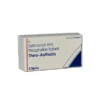
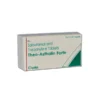
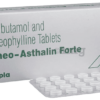
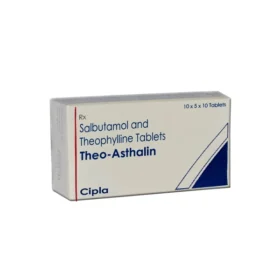
Theo-Asthalin
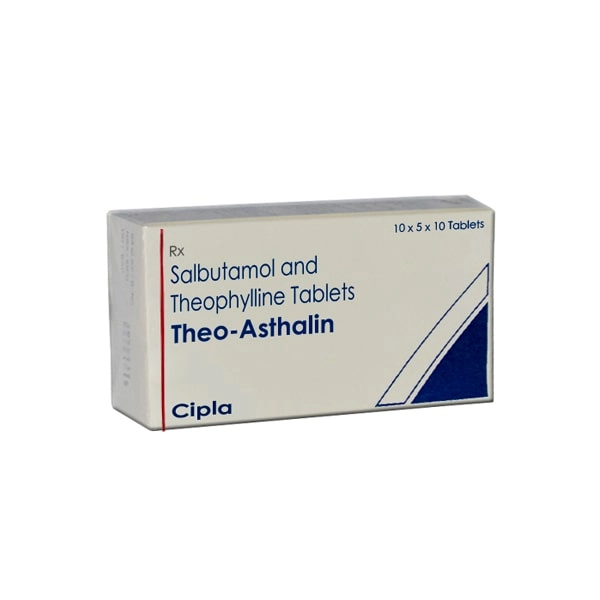
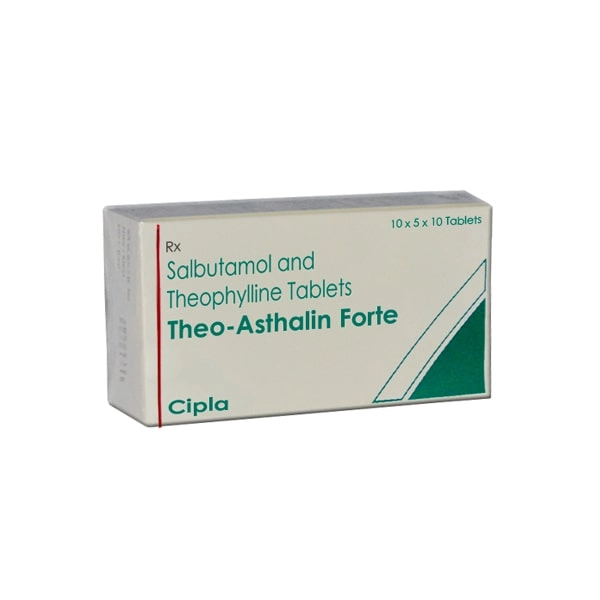
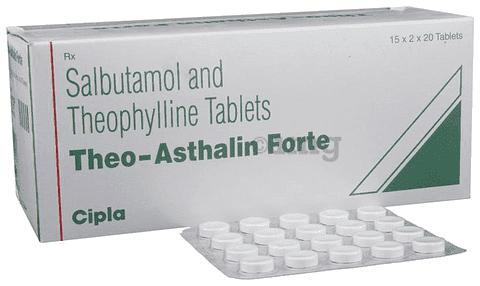
✅ Control eficient al simptomelor de astm
✅ Ușurare rapidă a bronhospasmului
✅ Funcție pulmonară îmbunătățită
✅ Îmbunătățirea calității vieții
Conține Salbutamol și Teofilină
✓ Verificat medical de Morgan Ellis — Cercetător farmaceutic · 8 ani de experiență · Ultima recenzie: mai 2026
⚡ Răspuns rapid — Ce este Theo-Asthalin?
Theo-Asthalin conține teofilină + salbutamol, un bronhodilatator metilxantinic cu efecte antiinflamatoare, utilizat ca terapie adjunctă în astmul cronic și BPOC. Teofilina acționează pe mai multe ținte — inhibarea fosfodiesterazei (creșterea cAMP), antagonismul receptorilor de adenozină și activarea HDAC2 (antiinflamator). Are un indice terapeutic îngust (concentrația țintă în ser 10–20 mg/L; toxicitate la peste 20) și numeroase interacțiuni medicamentoase, necesitând dozaj atent și (la unii pacienți) monitorizarea nivelului sanguin. Fiecare tabletă conține teofilină 100 mg + salbutamol 2 mg, fabricată de Cipla în fabrici certificate WHO-GMP.
📦 Fiecare comandă este acoperită de politica noastră de Politica noastră de Reexpediere Garantată — dacă coletul dumneavoastră nu sosește în 20 de zile lucrătoare, îl relivrăm.
De ce să comanzi de la MedsBase
Medicamentele noastre generice sunt procurate de la producători certificați WHO-GMP și expediate la nivel mondial în ambalaje discrete și simple — fără denumirea medicamentului pe exteriorul coletului. Plățile cu cardul sunt procesate printr-un procesor reglementat (descrierile de pe extrasul de cont includ un procesor de plăți cu card reglementat — niciodată “MedsBase” sau numele vreunui medicament). Acceptăm și criptomonede și transferuri bancare SEPA. Fiecare comandă este susținută de Politica noastră de Asigurare pentru Relivrare.
Ce este Theo-Asthalin?
Theo-Asthalin este un bronhodilatator metilxantinic oral. Metilxantinele sunt derivate din alcaloizi naturali (teofilina este dimetilxantina prezentă în ceai). Utilizarea lor a scăzut din anii 1990, pe măsură ce β2-agoniștii inhalatori și corticosteroidii au devenit tratamente de primă linie — dar ele păstrează un rol ca terapie adjunctă de a treia linie în astmul sever și BPOC.
Cum acționează Theo-Asthalin?
- Inhibarea fosfodiesterazei (PDE3, PDE4) — crește nivelul de AMP ciclic în mușchii netezi ai căilor respiratorii și în celulele inflamatorii; rezultatul net este bronhodilatația și reducerea eliberării de mediatorii.
- Antagonismul receptorilor de adenozină — blochează bronhoconstricția mediată de adenozină și eliberarea de mediatorii din celulele mast.
- Activarea HDAC2 (teofilina la niveluri serice scăzute 5–10 mg/L) — restabilește răspunsul la corticosteroizi în BPOC și astmul sever, unde rezistența la steroizi este parțial mediată de scăderea HDAC2.
- Contractilitatea diafragmatică — metilxantinele reduc oboseala diafragmatică, utile în BPOC cu limitare severă a fluxului de aer.
Utilizări și indicații
- Astm cronic sever — adăugare la terapie cu doze mari de ICS-LABA acolo unde este necesară bronhodilatație suplimentară
- Menținerea BPOC — adăugare la terapie cu LAMA-LABA sau terapie triplă
- Astm nocturn — forma de eliberare prelungită asigură bronhodilatație pe timpul nopții
- Apnee la prematuri (teofilină) — utilizare neonatală
- Cor pulmonale și hipertensiune pulmonară — adjunct
Doza Theo-Asthalin
| Pacient | Doza | Frecvență |
|---|---|---|
| Adulți | 1 tabletă | De trei până la patru ori pe zi |
| Copii >12 ani | 1 tabletă | De trei ori pe zi |
Efecte secundare ale Theo-Asthalin
- Greață, vărsături, dispepsie
- Dureri de cap
- Tremur
- Insomnie, agitație
- Tahicardie, palpitații
- Hipokaliemie ușoară la doze mari
Niveluri toxice (>20 mg/L) — urgență:
- Greață severă, vărsături persistente
- Aritmie cardiacă (fibrilație atrială, tahicardie supraventriculară)
- Criză epileptică (adesea fără avertisment)
- Hipotensiune, hiperglicemie, hipokaliemie, hipercalcemie
Avertismente și precauții
- Indice terapeutic îngust. Nivelul țintă în ser: 10–20 mg/L. Verificați concentrația sanguină la 5 zile după începerea tratamentului, după modificarea dozei, la introducerea unui nou medicament interactiv, după renunțarea la fumat și în timpul bolii/febrei (clearance-ul scade).
- Multe interacțiuni medicamentoase — consultați tabelul de interacțiuni. Majoritatea sunt metabolizate de CYP1A2; numeroși inhibitori și inductori modifică semnificativ nivelurile.
- Fumatul induce CYP1A2 și reduce nivelurile de teofilină cu ~50% — retitrați la încetarea fumatului.
- Boală cardiacă: utilizați cu precauție în aritmii, insuficiență cardiacă, hipertensiune severă.
- Hipertiroidism: clearance crescut plus efecte adrenergice exagerate.
- Sarcină și alăptare: de obicei evitat; utilizați doar dacă beneficiul este clar.
- Boală hepatică: reduceți doza — metilxantinele sunt metabolizate hepatic.
Contraindicații
- Hipersensibilitate la teofilină sau alte xantine (cafeină, teobromină)
- Boală ulceroasă peptică activă
- Tahiartmii necontrolate
- Insuficiență cardiacă severă (NYHA IV)
Interacțiuni medicamentoase
| Medicament interactiv | Efect | Ce să faceți |
|---|---|---|
| Ciprofloxacină, eritromicină, claritromicină, fluvoxamină | Inhibă CYP1A2 → crește nivelul teofilinei → toxicitate (greață, aritmii, convulsii) | Evitați sau reduceți doza de teofilină cu 50%; verificați nivelul seric |
| Cimetidină, alopurinol | Crește nivelul teofilinei | Reduceți doza; monitorizați nivelurile |
| Fenitoină, carbamazepină, rifampicină | Induc CYP — niveluri mai scăzute | Poate fi necesară o doză mai mare |
| Fumatul | Induce CYP1A2 — niveluri mai scăzute | Re-titrați doza la renunțarea la fumat |
| β-agoniști, diuretice | Hipokaliemie aditivă | Monitorizare potasiu |
Depozitare
- Depozitați la temperaturi sub 25°C într-un loc răcoros și uscat, departe de lumina directă a soarelui.
- Păstrați în ambalajul original până la utilizare pentru a proteja de umiditate și lumină.
- Nu utilizați după data de expirare tipărită pe blister.
- Păstrați la distanță de copii.
Alternative conexe pe MedsBase
- Asthalin Inhaler — salbutamol pentru ameliorarea simptomelor
- Budecort Inhaler — budesonide ICS pentru prevenție
- Inhalator Foracort — budesonidă + formoterol ICS-LABA
- Tiova Inhaler — tiotropium LAMA pentru BPOC
- Montair — comprimat montelukast LTRA
Întrebări frecvente
De ce să combini teofilina cu salbutamol?
Combinația oferă efect β2-agonist (bronhodilatare) plus efect metilxantinic (bronhodilatare suplimentară, antiinflamator, contractilitate diafragmatică) într-un singur comprimat — convenabil istoric pentru conformitate terapeutică.
Se mai folosește această combinație?
Mai rar decât componentele separate. Practica modernă preferă terapia inhalatorie (β2-agonist + CSI) față de combinațiile orale, atât pentru siguranță (expunere sistemică redusă) cât și pentru eficacitate.
Efectele adverse ale ambelor medicamente sunt aditive?
Da — tremor, tahicardie, cefalee, insomnie, hipokaliemie sunt amplificate de ambele componente. Monitorizați toleranța cardiovasculară.
Cât de repede începe să acționeze Theo-Asthalin?
Componenta de salbutamol începe în 15–30 minute; teofilina atinge concentrația stabilă în câteva zile.
Pot să o iau împreună cu inhalatorul meu?
Posibil — discutați cu medicul prescriptor. Combinarea β2-agoniștilor orali și inhalatori poate crește tremorul, tahicardia și hipokaliemia.
Va interacționa cu medicamentele mele pentru inimă?
Teofilina interacționează cu multe medicamente (consultați tabelul de interacțiuni). Spuneți întotdeauna medicului ce medicamente luați.
Este sigur în sarcină?
De obicei evitată; terapia inhalatorie este preferată.
Cât durează efectul fiecărui comprimat?
Ambele componente acționează 4–6 ore; dozarea se face de 3–4 ori pe zi.
Pot zdrobi comprimatul?
Comprimatele standard pot fi zdrobite; versiunile cu eliberare controlată nu pot fi. Verificați eticheta.
Alternative conexe
Alte produse din Afecțiuni cronice pe care clienții le vizualizează de asemenea:
Mai multe opțiuni în tratamentul astmului/BPOC
Clasificate în funcție de volumul recent de comenzi MedsBase — ce aleg alți clienți în această categorie.

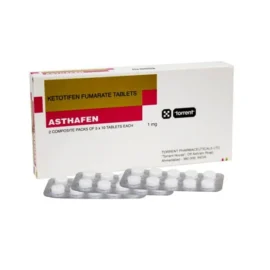

| Concentrație | 2mg + 100mg, 4mg + 200mg |
|---|---|
| Cantitate | 30 Comprimate/s, 60 Comprimate/s, 90 Comprimate/s |
| Formă farmaceutică | Comprimat/e |
| Producător | Cipla Inc |
| Indicație | Astm |
 Theo-Asthalin
Întrebări și răspunsuri
Theo-Asthalin
Produse similare

Recenzii
Nu există recenzii încă