









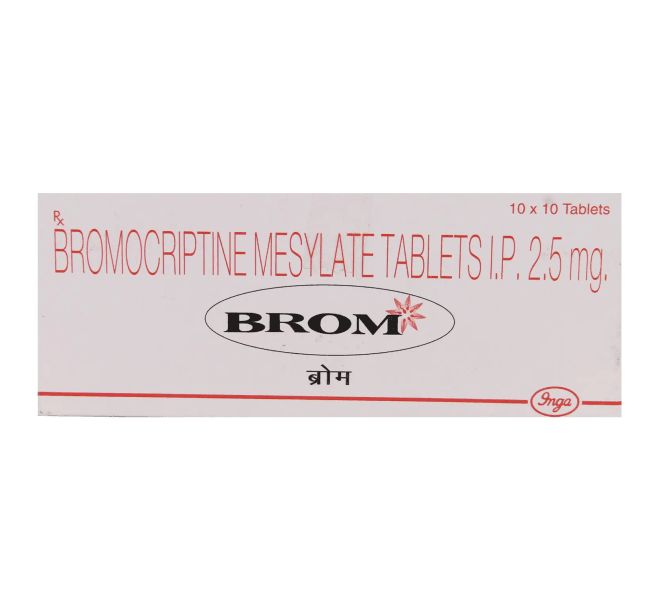
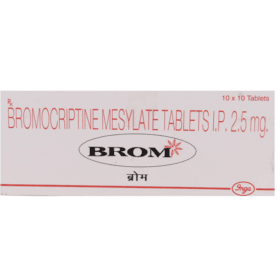
Brom
✅ Reglează nivelul hormonal
✅ Tratează hiperprolactinemia
✅ Gestionează tulburările menstruale
✅ Reduce dimensiunea tumorii pituitare
✅ Îmbunătățește fertilitatea
Brom conține Bromocriptină.
✓ Verificat medical de Morgan Ellis — Cercetător farmaceutic · 8 ani de experiență · Ultima recenzie: mai 2026
⚡ Răspuns rapid
Brom este un bromocriptine (2.5 mg) tabletă — un agonist dopaminerg derivat din ergot cu o indicație triplă: Boala Parkinson (în special ca terapie adjunctă atunci când apar fluctuații motorii la tratamentul cu levodopă), hiperprolactinemie (prolactina crescută care provoacă infertilitate, amenoree, galactoree sau testosteron scăzut), și acromegalie (exces de hormon de creștere). Acesta stimulează direct receptorii dopaminergici D2 și (în hipofiză) suprima secreția de prolactină. Important: agoniștii ergotici pot provoca fibroză valvulară cardiacă și fibroză pleurală/pericardială/retroperitoneală la utilizarea cronică în doze mari — o problemă care nu apare la agoniștii non-ergotici (ropinirol, pramipexol, piribedil). Screening-ul prin ecocardiogramă este recomandat pentru utilizatorii pe termen lung.
📦 Fiecare comandă este acoperită de politica noastră de Politica noastră de Reexpediere Garantată — dacă coletul dumneavoastră nu sosește în 20 de zile lucrătoare, îl relivrăm.
De ce să comanzi de la MedsBase
Medicamentele noastre generice sunt procurate de la producători certificați WHO-GMP și expediate la nivel mondial în ambalaje discrete și simple — fără denumirea medicamentului pe exteriorul coletului. Plățile cu cardul sunt procesate printr-un procesor reglementat (descrierile de pe extrasul de cont includ un procesor de plăți cu card reglementat — niciodată “MedsBase” sau numele vreunui medicament). Acceptăm și criptomonede și transferuri bancare SEPA. Fiecare comandă este susținută de Politica noastră de Asigurare pentru Relivrare.
Ce este Brom?
Brom este un comprimat oral care conține bromocriptină 2.5 mg. Bromocriptina este primul agonist dopaminergic derivat din ergot, comercializat din anii 1970 sub denumirea Parlodel. Are trei indicații clasice:
- Boala Parkinson — ameliorarea simptomatologică, singură sau ca adjuvant la levodopa.
- Hiperprolactinemie — prolactinom hipofizar, hiperprolactinemie idiopatică sau indusă de medicamente: cauzează amenoree, infertilitate, galactoree, hipogonadism.
- Acromegalie — inhibă secreția de hormon de creștere (mai puțin eficient decât analogii somatostatinei, dar util la unii pacienți).
Brom este fabricat într-o unitate certificată WHO-GMP și este bioechivalent cu marca originală la doza de 2.5 mg.
Cum funcționează Brom (Bromocriptină)?
Bromocriptina este un agonist direct al receptorilor D2 de dopamină cu antagonism slab D1, derivat din familia alcaloizilor ergot. Acțiunile sale:
- Creier (ganglioni bazali): mimează dopamina la nivelul receptorilor D2 striatali, compensând parțial pierderea neuronilor producători de dopamină în boala Parkinson.
- Celulele lactotrofe hipofizare: dopamina este principalul inhibitor al eliberării de prolactină. Bromocriptina stimulează receptorii D2 de pe aceste celule și oprește secreția de prolactină în câteva ore; cu tratament prelungit, poate reduce și dimensiunea prolactinoamelor.
- Somatotrofele hipofizare: în acromegalie, stimularea paradoxală a receptorilor D2 suprima eliberarea hormonului de creștere.
Deoarece bromocriptina este un ergot, se leagă și de receptorii serotoninici 5-HT2B de pe valvulele cardiace și țesutul conjunctiv — ceea ce explică efectele secundare fibrotice rare dar grave.
Cine Are Nevoie de Bromocriptină?
Boala Parkinson: istoric, un agonist dopaminergic de primă intență; majoritatea neurologilor preferă astăzi agonisti non-ergot (ropinirol, pramipexol) din cauza riscului de fibroză. Bromocriptina rămâne utilă când agoniiștii moderni sunt intolerabili, indisponibili sau prea scumpi, precum și ca adjuvant la levodopa la pacienții cu fluctuații.
Hiperprolactinemie/prolactinom: încă utilizat pe scară largă. Cabergolina este acum de obicei preferată (dozare de două ori pe săptămână, mai puține efecte gastrointestinale), dar bromocriptina rămâne eficientă și este opțiunea standard în sarcină datorită celor mai multe date de siguranță.
Acromegalie: linia a doua, în special pentru pacienții care nu tolerează sau nu-și permit analogii de somatostatină (octreotid, lanreotid).
Suprimarea lactației după mort fetală sau contraindicatii materne la alăptare: utilizat în trecut, dar acum rar recomandat din cauza cazurilor de accident vascular cerebral, hipertensiune și convulsii — măsurile nefarmacologice și cabergolina sunt de obicei preferate.
Neadecvat pentru: hipertensiune necontrolată, boală coronariană sau vasculară periferică severă, istoric de boli valvulare cardiace, utilizare curentă de alcaloizi ergot (ergotamină, metisergidă).
Doza și titrare
| Indicație | Doza inițială | Doză de întreținere | Note |
|---|---|---|---|
| Boala Parkinson | 1,25 mg de două ori pe zi cu mâncare (jumătate de comprimat de 2,5 mg) | 10–40 mg/zi în doze divizate; rareori până la 100 mg/zi | Creștere cu 2,5 mg/zi la fiecare 2–4 săptămâni |
| Hiperprolactinemie | 1,25 mg la culcare cu mâncare | 2,5–15 mg/zi; de obicei 5–7,5 mg | Titrați în funcție de nivelul prolactinei la fiecare 2–4 săptămâni |
| Acromegalie | 1,25–2,5 mg la ora de culcare | 20–30 mg/zi în doze divizate | Mai mare decât pentru prolactinom |
Luați cu mâncare. Întotdeauna înghițiți comprimatele cu mâncare pentru a reduce greața. Prima doză este recomandată să fie luată la ora de culcare.
- Fibroză valvulară cardiacă (regurgitare mitrală, aortică, tricuspidiană) — din cauza agonismului 5-HT2B.
- Efuziuni și fibroză pleurală și pericardică.
- Fibroză retroperitoneală — durere lombară, edem la picioare, obstrucție ureterală.
Pacienții care folosesc tratamentul pe termen lung (în special pacienții cu Parkinson care iau >30 mg/zi) ar trebui să beneficieze de un ecocardiogramă inițial și să o repete la fiecare 6–12 luni. Apariția de dispnee nouă, edem sau durere lombară necesită evaluare imediată.
Efecte Secundare Comune
Frecvente (>10%): grețuri, cefalee, amețeli, hipotensiune posturală, oboseală, congestie nazală, constipație.
Mai puțin frecvente: halucinații vizuale, confuzie (mai frecvente la pacienții vârstnici cu Parkinson), vasospasm degete/picioare (asemănător cu Raynaud), eritromelalgie (picioare roșii, dureroase, umflate), edem periferic, durere abdominală.
Rare dar grave: regurgitare valvulară cardiacă, fibroză pleurală/pericardială/retroperitoneală, accident vascular cerebral (în special la suprimarea lactației postpartum), convulsii, hipertensiune severă. Tulburări de control al impulsurilor — jocuri de noroc, hipersexualitate, mâncat compulsiv — pot apărea, deși mai rar decât la agoniiștii non-ergot.
Interacțiuni medicamentoase
- Alte alcaloizi ergot (ergotamină, metisergidă) — vasoconstricție aditivă, contraindicate.
- Inhibitori puternici ai CYP3A4 (claritromicină, eritromicină, ritonavir, ketoconazol, itraconazol) — cresc semnificativ nivelurile de bromocriptină. Evitați sau reduceți doza.
- Antagoniști dopaminergici (haloperidol, risperidon, metoclopramidă, proclorperazină) — antagonism farmacologic. Folosiți domperidon pentru grețuri în schimb.
- Antihipertensive — hipotensiune aditivă. Ridicați-vă încet.
- Alcool — pot amplifica efectele secundare; s-au raportat reacții de ruborire.
- Simpatomimetice, triptane — vasoconstricție teoretică aditivă; folosiți cu precauție.
Întrebări frecvente
De ce este bromocriptina utilizată pentru atât de multe afecțiuni diferite?
Toate cele trei indicații — boala Parkinson, hiperprolactinemia, acromegalie — sunt afecțiuni în care stimularea receptorului D2 de dopamină are efect terapeutic. În creier, ameliorază simptomele Parkinson; în hipofiză, inhibă eliberarea de prolactină (și, într-o măsură mai mică, a hormonului de creștere).
Se mai folosește Bromocriptina pentru boala Parkinson sau au fost înlocuite de medicamente mai noi?
Majoritatea neurologilor încep acum cu un agonist dopaminergic non-ergot (ropinirol, pramipexol, piribedil) pentru boala Parkinson, deoarece evită riscul de fibroză. Bromocriptina rămâne utilă atunci când agoniștii mai noi nu sunt disponibili, sunt intolerabili sau prea scumpi — și este încă folosită ca adjuvant la levodopa la unii pacienți cu fluctuații.
Cât de repede scade bromocriptina nivelul de prolactină?
În câteva ore de la prima doză, prolactina scade semnificativ. Suprimarea susținută necesită 1–2 săptămâni de administrare regulată. În cazul prolactinoamelor, reducerea tumorii este graduală — vizibilă la RMN după 3–6 luni, cu efect maxim la 12 luni.
Pot lua Bromocriptină în timpul sarcinii?
Pentru prolactinoame: bromocriptina are cel mai lung istoric de siguranță dintre toate medicamentele care scad prolactina în sarcină. Majoritatea specialiștilor o întrerup imediat ce sarcina este confirmată (la microadenoame), dar o continuă sub supraveghere atentă la macroprolactinoame, unde expansiunea tumorii în sarcină reprezintă un risc real. Discutați cu endocrinologul înainte de concepere. Datele despre cabergolină sunt de asemenea încurajatoare, dar mai recente.
De ce am nevoie de un ecocardiogram?
Bromocriptina se leagă de receptorii serotoninergici 5-HT2B de pe valvele cardiace — la utilizarea cronică în doze mari, acest lucru poate provoca fibroză valvulară (insuficiență mitrală, aortică, tricuspidiană). Riscul este dependent de doză și durată. Un ecocardiogramă de bază și repetarea anuală este standardul pentru pacienții cu Parkinson pe termen lung la doze > 30 mg/zi. Pentru tratamentul pe termen scurt al hiperprolactinemiei la doze de 5–7,5 mg/zi, riscul este foarte scăzut.
Ce fac dacă uit o doză?
Luați medicamentul imediat ce vă amintiți, cu excepția cazului în care este aproape de următoarea doză. Nu dublați doza. Sărirea unei doze de bromocriptină pentru hiperprolactinemie este puțin probabil să cauzeze probleme; sărirea mai multor zile poate permite revenirea prolactinei. Pentru Parkinson, sărirea dozelor poate agrava simptomele — dar nu dublați niciodată doza pentru a compensa.
Pot să opresc bromocriptina brusc?
Pentru boala Parkinson, nu — întreruperea bruscă a oricărui agent dopaminergic poate precipita un sindrom neuroleptic malign asemănător. Reduceți treptat doza pe parcursul a 1–2 săptămâni. Pentru hiperprolactinemie, prolactina poate reveni când medicamentul este oprit, așa că încercarea de întrerupere trebuie planificată cu verificări seriate ale prolactinei.
Poate bromocriptina provoca jocuri de noroc sau alte comportamente compulsive?
Da — deși mai rar decât agoniiștii non-ergotici. Spuneți neurologului dumneavoastră despre orice comportament compulsiv nou, cum ar fi cumpărăturile compulsive, jocurile de noroc, comportamentul sexual sau mâncatul compulsiv. Comportamentul se inversează de obicei la reducerea dozei.
Bromocriptina va afecta conducerea auto?
Mai ales în primele săptămâni, amețelile și somnolența (și rareori somnul de debut brusc) pot afecta conducerea. Evitați să conduceți până când nu ați fost pe o doză stabilă timp de cel puțin 2 săptămâni și vă simțiți alert.
Se mai folosește bromocriptina pentru a suprima lactația?
Se folosea, dar rapoartele rare de accident vascular cerebral postpartum, criză hipertensivă și convulsii au determinat majoritatea țărilor să renunțe la această indicație. Cabergolina (doză unică) este acum ergotul preferat pentru suprimația medicală a lactației acolo unde este indicat; măsurile nefarmacologice sunt de obicei de primă intenție.
Cum expediază MedsBase Bromocriptina?
Expediere la nivel mondial în ambalaje discrete de la un producător certificat WHO-GMP. Comprimatele sunt expediate în blistere originale sigilate. Urmăriți comanda din contul dumneavoastră MedsBase.
Depozitare
Păstrați la temperatura camerei (15–30°C / 59–86°F), protejat de căldură, umiditate și lumină directă. Păstrați în ambalajul original cu capacul bine închis. Depozitați în loc inaccesibil copiilor. Nu utilizați după data de expirare imprimată pe ambalaj.
Declinare de responsabilitate medicală
Această informație este furnizată în scop educațional și nu înlocuiește sfatul unui clinician calificat. Boala Parkinson și sindroamele parkinsoniene necesită îngrijire neurologică individualizată. Discutați toate medicamentele, suplimentele și afecțiunile preexistente cu medicul dvs. înainte de a începe, modifica sau întrerupe tratamentul. Nu întrerupeți brusc terapia dopaminergică — întreruperea bruscă poate precipita un sindrom similar neuroleptic malign.
Alternative conexe
Alte produse din Afecțiuni cronice pe care clienții le vizualizează de asemenea:
Mai multe opțiuni în tratamentul bolii Parkinson
Clasificate în funcție de volumul recent de comenzi MedsBase — ce aleg alți clienți în această categorie.
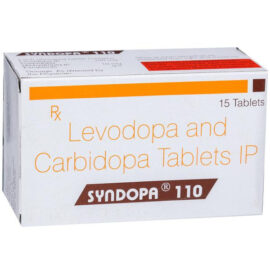
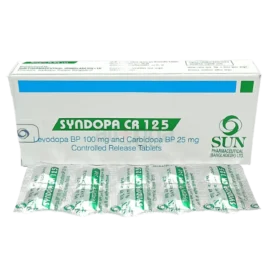

| Concentrație | 2.5 mg |
|---|---|
| Cantitate | 30 Comprimat/e, 60 Comprimat/e, 90 Comprimat/e, 180 Comprimat/e |
 Brom
Brom
Întrebări și răspunsuri
Brom
Produse similare

















Recenzii
Nu există recenzii încă