








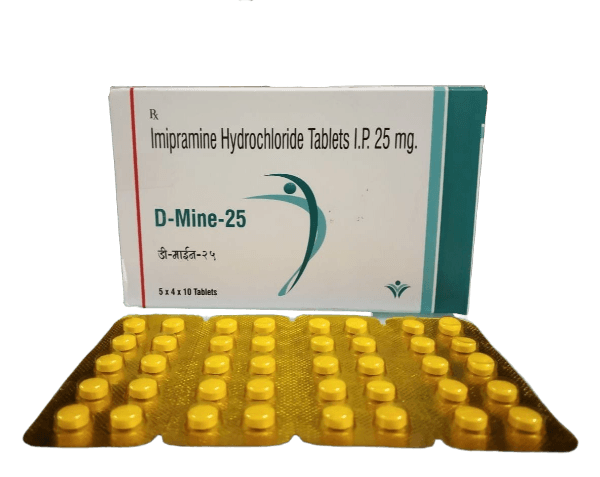
D-mine
✅ Reduce simptomele depresiei
✅ Îmbunătățește stabilitatea emoțională
✅ Diminuează nivelul de anxietate
✅ Îmbunătățește calitatea somnului
✅ Gestionează atacurile de panică
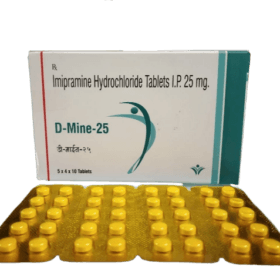
D-mine conține Imipramine.
✓ Verificat medical de Morgan Ellis — Cercetător farmaceutic · 8 ani de experiență · Ultima recenzie: mai 2026
⚡ Răspuns rapid — Ce este D-mine?
D-mine conține imipramine 25 mg de la un producător certificat WHO-GMP (Sun Pharma) — antidepresivul triciclic original, în uz clinic continuu din 1959. TCA amină terțiară: inhibarea recaptării serotoninei și norepinefrinei plus antagonism muscarinic, histamin H1, și alfa-1 (sursa efectelor secundare). În mare parte înlocuit de SSRI pentru depresia de primă linie, dar încă utilizat pentru: tulburare de panică (unul dintre cele mai dovedite TCA pentru aceasta), dureri neuropatice cronice în doze mici, și enureză nocturnă pediatrică (pipi în pat) pentru care are aprobare FDA. Toxicitate cardiacă în caz de supradoză — ECG inițial înainte de începerea tratamentului. Puternică încărcătură anticolinergică — nu este de primă intenție la adulții în vârstă.
📦 Fiecare comandă este acoperită de politica noastră de Politica noastră de Reexpediere Garantată — dacă coletul dumneavoastră nu sosește în 20 de zile lucrătoare, îl relivrăm.
De ce să comanzi de la MedsBase
Medicamentele noastre generice sunt procurate de la producători certificați WHO-GMP și expediate la nivel mondial în ambalaje discrete și simple — fără denumirea medicamentului pe exteriorul coletului. Plățile cu cardul sunt procesate printr-un procesor reglementat (descrierile de pe extrasul de cont includ un procesor de plăți cu card reglementat — niciodată “MedsBase” sau numele vreunui medicament). Acceptăm și criptomonede și transferuri bancare SEPA. Fiecare comandă este susținută de Politica noastră de Asigurare pentru Relivrare.
Ce este D-mine?
D-mine este un comprimat oral de clorhidrat de imipramină 25 mg fabricat de Sun Pharma. Imipramina (marca din SUA Tofranil) a fost sintetizată în 1948 și identificată ca primul antidepresiv eficient în 1957 — fundamentul psihofarmacologiei moderne. Este un antidepresiv triciclic cu structură de amină terțiară care inhibă recaptarea serotonină și norepinefrinei, blocând în același timp receptorii muscarinici, histaminici H1, și alfa-1. Acțiunile serotoninergice/noradrenergice conferă eficacitatea; blocajul receptorilor este responsabil pentru majoritatea efectelor adverse.
Indicații aprobate
- Tulburare depresivă majoră — linia a doua sau a treia după SSRI/SNRI
- Tulburare de panică — unul dintre cele mai studiate antidepresive triciclice; eficace, dar există alternative mai bine tolerate
- Enureză nocturnă la copii (pipilatul în pat) — aprobat de FDA pentru vârstele de 6+ ani când terapia comportamentală și desmopresina au eșuat
- Off-label: durere neuropatică cronică, fibromialgie, neuralgie post-herpetică, durere lombară cronică
Doza
| Indicație | Iniciați | Țintă | Note |
|---|---|---|---|
| TDM (adulți ambulatori) | 25–75 mg/zi la culcare | 100–200 mg/zi | Maximum 200 mg/zi în regim ambulator; până la 300 mg/zi în regim de spitalizare; titrare pe 2–4 săptămâni |
| TDM (vârstnici) | 10–25 mg la culcare | 25–100 mg/zi | Țintă mai scăzută; risc anticolinergic și ortostatic mai mare |
| Tulburare de panică | 10–25 mg la culcare × 1 săptămână | 75–200 mg/zi | Titrare lentă pentru a evita exacerbarea panică timpurie |
| Enureză infantilă (vârsta 6–12 ani) | 25 mg cu o oră înainte de culcare | 25–50 mg cu o oră înainte de culcare | Maximum 2,5 mg/kg/zi; reevaluare după 3 luni — recidive frecvente la întrerupere |
| Enureză infantilă (vârsta 12+) | 25 mg cu o oră înainte de culcare | 25–75 mg cu o oră înainte de culcare | Maximum 75 mg/zi; aceeași reevaluare |
Efecte Secundare (Încărcătura Anticolinergică Este Problema Principală)
Profilul efectelor adverse după mecanism
| Mecanism de acțiune | Efecte | Note |
|---|---|---|
| Anticolinergic (blocare muscarinică) | Gură uscată, constipație, retenție urinară, vedere încețoșată, tulburare cognitivă | Puternic — nu de primă intenție la vârstnici; precauție la BPH, glaucom, demență |
| H1 blocare | Sedare, creștere în greutate | Util când insomnia face parte din depresie; mai puțin util pe timp de zi |
| Blocare alfa-1 | Hipotenziune ortostatică, amețeli, căderi | Probleme deosebite la vârstnici; verificați TA în decubit/ortostatism |
| Cardiac (blocare canale de sodiu) | Prelungire QT și QRS, bloc AV | ECG inițial la pacienții >50 ani sau cu antecedente cardiace; mortal la supradoză — nu furnizați cantități mari pacienților cu risc acut de suicid |
| Serotonergic/noradrenergic | Transpirație, tremor, disfuncție sexuală | În general gestionabil |
| Altele | Prag scăzut de convulsii, manie paradoxală (la bipolari nediagnosticați) | Precauție la epilepsie, screening pentru tulburare bipolară înainte de inițiere |
Interacțiuni medicamentoase
Contraindicații absolute: IMAO (perioadă de eliminare de 14 zile), infarct miocardic recent, boală cardiacă severă necontrolată.
Risc cardiac: evitați medicamentele care prelungesc intervalul QT (citalopram > 20 mg, quetiapină, ziprasidon, ondansetron, metadonă, fluoroquinolone). Utilizați doze mai mici.
substrat CYP2D6: nivelurile plasmatice cresc cu inhibitorii puternici (paroxetină, fluoxetină, bupropion, chinidină). Utilizați doze mai mici.
Potențare anticolinergică: combinați cu precauție cu alte substanțe anticholinergice (difenhidramină, scopolamină, trihexifenidil, oxibutinină).
Sedare/hipotensiune ortostatică: alcool, benzodiazepine, opioide, blocante alfa.
Siguranță cardiacă și risc de supradoză
ATC sunt printre cele mai letale medicamente în caz de supradoză din cauza blocării canalelor de sodiu cardiace, care produce tahicardie cu complex larg, aritmii ventriculare și șoc cardiogen la doze de 5–10x cele terapeutice. ECG de bază este practica standard înainte de începerea tratamentului la pacienții peste 50 de ani sau cu factori de risc cardiac. Furnizați doar medicamente pentru 1–2 săptămâni la un moment dat pacienților cu risc semnificativ de suicid — o cantitate de 30 de zile de imipramină 25 mg este potențial letală.
Întrebări frecvente
Cât timp durează până începe să acționeze D-mine?
Răspunsul la starea de spirit în depresia majoră apare de obicei la 4–6 săptămâni. Răspunsul în tulburarea de panică la 4–8 săptămâni. Răspunsul în enureza la copii se observă de obicei în 1–2 săptămâni de la administrarea unei doze eficace.
Este D-mine mai sigur decât amitriptilina?
Imipramina și amitriptilina au profile similare. Nortriptilina (Primox pe acest site) și desipramina (TCA-uri amine secundare) sunt de obicei mai bine tolerate — cu efecte anticolinergice și sedative reduse — dacă este nevoie de un triciclic.
Pot copiii să ia în siguranță D-mine pentru enureză?
Da — imipramina a fost utilizată pentru enureza nocturnă pediatrică încă din anii 1960, cu aprobare FDA. Întotdeauna opțiunea de a treia linie după terapia comportamentală/alarmă și desmopresină. Riscul cardiac este scăzut la dozele standard pentru enureză, dar ECG-ul ar trebui verificat dacă doza depășește 75 mg/zi sau dacă există antecedente familiale de aritmie/moarte subită.
De ce TCA-urile nu mai sunt de prima linie pentru depresie?
Povara efectelor secundare (anticolinergice, sedare, ortostatism) și letalitatea în caz de supradoză au determinat trecerea la tratamentele de prima linie cu SSRI și SNRI încă din anii 1980. TCA-urile rămân utile pentru depresia refractară, durerea neuropatică și tulburarea de panică.
Va provoca D-mine creștere în greutate?
Da — TCA-urile provoacă o creștere semnificativă în greutate (5–10 kg sau mai mult în câteva luni) prin H1 stimularea apetitului. Acesta este unul dintre motivele principale pentru care pacienții trec la SSRI.
Pot să consum alcool în timp ce iau D-mine?
Evitați consumul excesiv de alcool — poate accentua sedarea, hipotensiunea ortostatică și poate scădea pragul convulsiv. Consumul moderat ocazional este de obicei tolerat, dar se recomandă prudență.
Ce se întâmplă dacă uit o doză?
Luați comprimatul imediat ce vă amintiți, cu excepția cazului când urmează doza următoare. Imipramina are o semiviață lungă, astfel încât omiterea unei doze rareori provoacă simptome de sevraj.
Este D-mine sigur în timpul sarcinii?
Date limitate — nu este tratament de primă intenție în sarcină. Antidepresivele din clasa SSR (preferabil sertralina) au un profil de siguranță mult mai bine documentat. Expunerea în trimestrul III al sarcinii a fost asociată cu simptome de sevraj la nou-născuți.
Poate fi D-mine combinat cu alte antidepresive?
În anumite cazuri — doze mici de antidepresive triciclice se pot adăuga la tratamentul cu SSR în depresia rezistentă, dar numai sub supraveghere medicală. Combinarea cu inhibitori de MAO este contraindicată.
Cum trebuie păstrat D-mine?
Păstrați la temperatură între 15–30 °C în ambalajul original blister, departe de umiditate și lumină directă. Păstrați strict la distanță de copii — supradozarea de antidepresive triciclice poate fi rapid letală.
Alternative conexe
Alte produse din Afecțiuni cronice pe care clienții le vizualizează de asemenea:
Mai multe opțiuni în tratamentul anxietății situaționale
Clasificate în funcție de volumul recent de comenzi MedsBase — ce aleg alți clienți în această categorie.
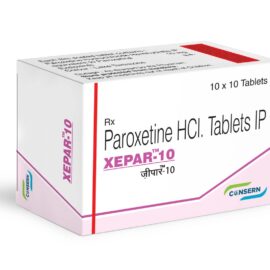
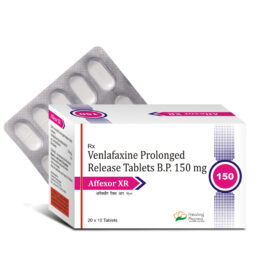
| Concentrație | 25 mg |
|---|---|
| Cantitate | 30 Comprimat/e, 60 Comprimat/e, 90 Comprimat/e, 180 Comprimat/e |
 D-mine
Întrebări și răspunsuri
D-mine
Produse similare



Recenzii
Nu există recenzii încă