







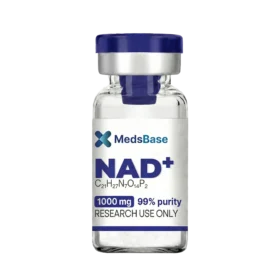
NAD⁺
✅ Sporește energia celulară
✅ Susține funcția mitocondrială
✅ Promovează echilibrul metabolic
✅ Stimulează repararea celulară
✅ Îmbunătățește căile de vitalitate
NAD⁺ conține compus peptidic sintetic.
✓ Verificat medical de Morgan Ellis — Cercetător farmaceutic · 8 ani de experiență · Ultima recenzie: mai 2026
Răspuns rapid — Ce este NAD+?
NAD+ (nicotinamidă adenină dinucleotidă) este o coenzimă fundamentală prezentă în fiecare celulă, esențială pentru metabolismul energetic, semnalizarea longevității prin calea sirtuinelor și repararea ADN-ului mediată de PARP. Nivelurile celulare de NAD+ scad semnificativ cu vârsta, făcându-l unul dintre cele mai studiate molecule în cercetarea longevității. Furnizat în flacoane liofilizate de la 100 mg până la 1000 mg, destinat exclusiv utilizării în cercetare de laborator.
📦 Fiecare comandă este acoperită de politica noastră de Politica noastră de Reexpediere Garantată — dacă coletul dumneavoastră nu sosește în 20 de zile lucrătoare, îl relivrăm.
| Specificații | Detaliu |
|---|---|
| Număr CAS | 53-84-9 |
| Formula moleculară | C21H27N7O14P2 |
| Greutate moleculară | 663.43 Da |
| Secvență | n/a (coenzimă dinucleotidă — nu este un peptid) |
| Formă | Pulbere liofilizată (sau așa cum este furnizat) |
| Puritate | ≥99% (verificat prin HPLC, COA la cerere) |
| Depozitare | Liofilizat: 2–8 °C (frigider) pentru stocul de lucru; −20 °C pentru stocarea pe termen lung a flacoanelor nedeschise. Reconstituit: 2–8 °C, utilizat în aproximativ 30 de zile. Protejați de lumină — NAD+ se oxidează ușor. Nu congelați și decongelați soluția reconstituită. |
| Solubilitate | Apă bacteriostatică (recomandată) sau apă sterilă pentru perioade mai scurte de utilizare |
| Utilizare în cercetare | Doar pentru utilizare în cercetare de laborator. Nu este destinat pentru uz diagnostic sau terapeutic uman sau veterinar. |
Ce este NAD+?
NAD+ (nicotinamide adenin dinucleotid) nu este strict un peptid — este o coenzimă dinucleotidică compusă din doi nucleotizi uniți prin grupele lor fosfat. Cu toate acestea, este cea mai intens studiată moleculă unică în literatura despre longevitate și îmbătrânirea celulară și este adesea furnizată de furnizorii de cercetare peptidică alături de compușii peptidici, pentru comoditatea cercetătorilor care lucrează la studii multifactoriale de îmbătrânire celulară.
NAD+ se găsește în fiecare celulă vie și funcționează ca substrat pentru trei familii majore de enzime: oxidoreductaze (metabolismul energetic), sirtuine (semnalizare de longevitate, silențiere a genelor) și PARP (răspuns la deteriorarea ADN-ului). Nivelurile celulare de NAD+ scad cu aproximativ 50% între vârsta de 30 și 70 de ani în majoritatea țesuturilor — “scăderea NAD+” — iar restabilirea acestei scăderi este o ipoteză centrală în comunitatea de cercetare a longevității (Yoshino, Baur & Imai, Cell Metab 2018).
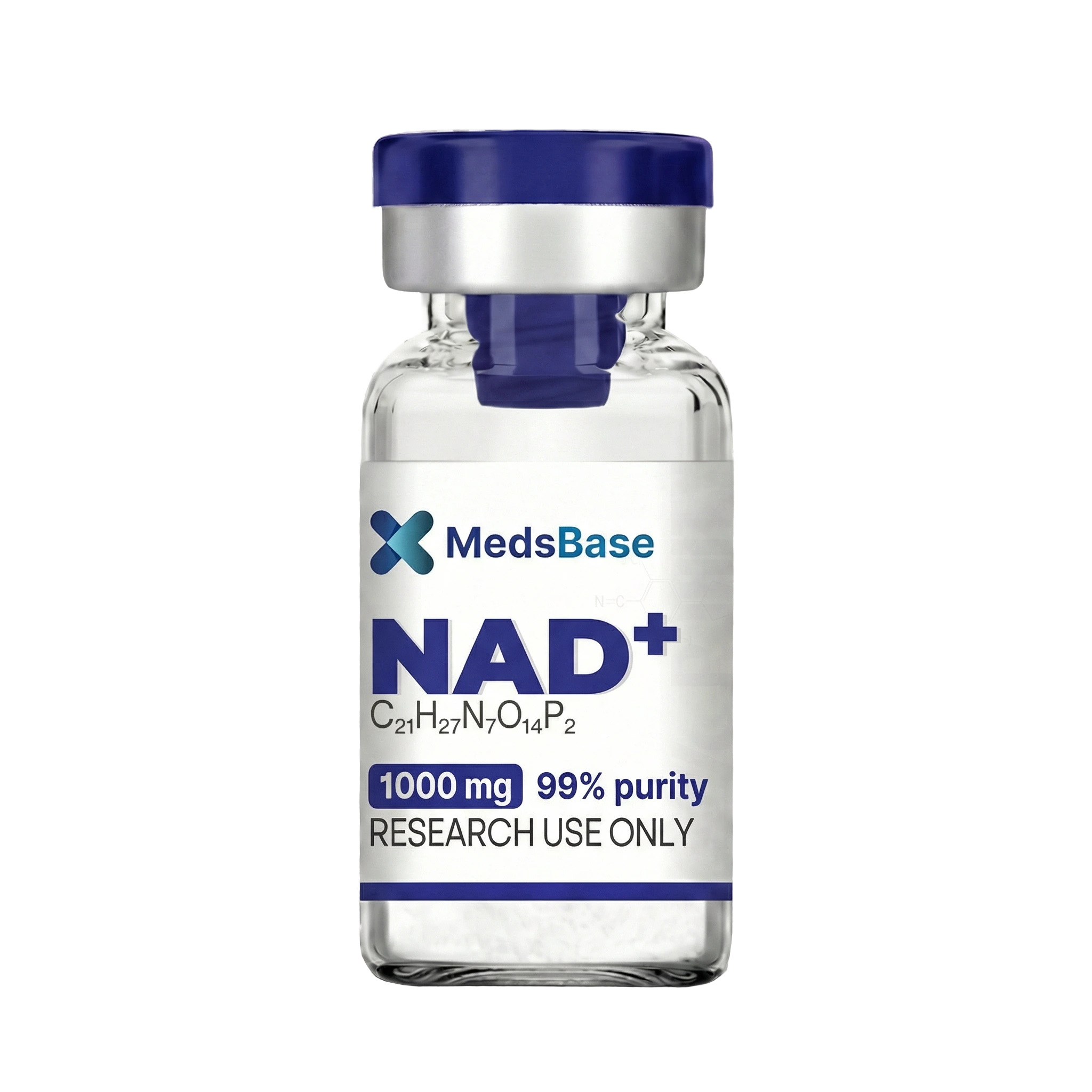
Greutate moleculară 663,4 Da, formulă empirică C21H27N7O14P2. Furnizat sub formă de pulbere liofilizată de înaltă puritate pentru reconstituire cu apă bacteriostatică. NAD+ este destinat doar pentru cercetare de laborator și nu este destinat pentru diagnostic sau terapie umană sau veterinară. Pentru mecanismul detaliat, contextul cercetărilor privind longevitatea și compușii precursoari alternativi (NR, NMN), consultați ghidul nostru complet Ghid de cercetare NAD+.
Mecanismul de acțiune — Trei căi esențiale
NAD+ participă în biologia celulară prin trei familii de enzime distincte din punct de vedere mecanic, dar interdependente:
- Coenzimă redox (metabolismul energetic) — NAD+ este purtătorul central de electroni în glicoliză, ciclul TCA și fosforilarea oxidativă. Fiecare pas care extrage energie din alimente transferă în cele din urmă electroni către NAD+ (formând NADH), care apoi determină sinteza ATP în mitocondrii. Fără NAD+ suficient, celulele nu pot produce energie eficient.
- Activarea sirtuinelor (semnalizarea longevității) — cele șapte sirtuine mamifere (SIRT1–SIRT7) sunt deacetilaze dependente de NAD+ care reglează silențierea genelor, răspunsul la stres, biogeneza mitocondrială și repararea ADN-ului. Când nivelurile de NAD+ scad, activitatea sirtuinelor scade, ceea ce reprezintă o legătură mecanică propusă între scăderea NAD+ și fenotipurile de îmbătrânire (Rajman, Chwalek & Sinclair, Cell Metab 2018).
- Repararea ADN mediată de PARP — familia de enzime poli(ADP-riboză) polimerază (PARP) utilizează NAD+ ca substrat pentru răspunsul la deteriorarea ADN-ului. Nivelurile scăzute de NAD+ înseamnă mai puțin substrat disponibil pentru repararea ADN-ului, creând un ciclu de feedback în care deteriorarea ADN-ului epuizează și mai mult NAD+.
Deoarece aceste trei căi ating împreună metabolismul energetic, reglarea genelor și întreținerea genomului, restabilirea NAD+ este investigată într-o gamă neobișnuit de largă de contexte de cercetare a îmbătrânirii celulare — de la sindromul metabolic la neurodegenerare și funcția musculară.
Aplicații de Cercetare Publicate
NAD+ este utilizat în contexte de cercetare de laborator care investighează:
- Cercetări privind longevitatea — activarea căii sirtuinelor și biomarkeri ai îmbătrânirii celulare în studiile de îmbătrânire la rozătoare (Yoshino et al., Cell Metab 2018)
- Funcția celulară energetică / mitocondrială — producția de ATP și biogeneza mitocondrială în cercetarea stresului celular
- Cercetare în neuroprotecție — modele de declin cognitiv și îmbătrânire neurologică în studiile pe rozătoare
- Sănătate metabolică — sensibilitate la insulină, homeostazie glucidică și cercetare pe sindromul metabolic
- Cercetare în repararea ADN-ului — activitatea căii PARP și menținerea genomului în modelele de deteriorare a ADN-ului
- Cercetare anti-îmbătrânire — markeri compuși ai îmbătrânirii celulare în multiple sisteme de țesut
- Cercetare comparativă a precursorilor — comparativ cu precursorii NR (ribozidă de nicotinamidă) și NMN (mononucleotidă de nicotinamidă) pentru a izola efectul direct-NAD+
Pentru un context mai larg despre peptidele de longevitate și îmbătrânire celulară, consultați stive de peptide pentru cercetarea metabolică și complet de peptide de cercetare.
Concentrații și doze disponibile
MedsBase stochează NAD+ în următoarele dimensiuni de flacoane liofilizate. Fiecare variantă este livrată în pachete de 10, 20 sau 30 de flacoane:
| Putere flacon | Caz de utilizare tipic | Dimensiuni pachet |
|---|---|---|
| 100 mg | Dozaj pilot sau protocoale de scurtă durată | 10, 20 sau 30 de flacoane |
| 500 mg | Concentrație standard pentru cercetare, susține protocoale de mai multe săptămâni | 10, 20 sau 30 de flacoane |
| 1000 mg | Cercetare extinsă, protocoale IV, preparare în vrac | 10, 20 sau 30 de flacoane |
NAD+ necesită doze absolute mai mari decât majoritatea peptidelor (grame în loc de micrograme) deoarece este o coenzimă care acționează la concentrații de tip pool celular, nu ca moleculă de semnalizare care acționează la concentrații de nivel receptor. Furnizat sub formă de pulbere liofilizată cu puritate HPLC de 99%+.
Cum se compară — NAD+ vs NR vs NMN
Trei molecule domină cercetările privind NAD+. Fiecare intră în aceeași cale de salvare, dar în puncte diferite:
| Criteriu | NAD+ | NR (Nicotinamide Riboside) | NMN (Nicotinamidă Mononucleotidă) |
|---|---|---|---|
| Rol | Coenzimă produs final (direct) | Precursor (oral) | Precursor (oral sau SC) |
| Cale de administrare | SC, IM, IV în cercetare | Oral în principal | Oral, SC |
| Doza tipică de cercetare | 50–1000 mg | 250–500 mg oral | 250–1000 mg oral/SC |
| Statut de reglementare | Doar pentru cercetare | Supliment alimentar FDA GRAS | Variabilă (acțiune recentă FDA) |
Cercetătorii aleg de obicei NAD+ direct în loc de precursorii săi atunci când doresc să ocolească ratele variabile de conversie enzimatică (unii precursorii se convertesc ineficient în anumite țesuturi) sau când au nevoie de o creștere rapidă a nivelului plasmatic. Precursorii sunt preferați în cercetările cu administrare orală pe termen lung.
Depozitare și reconstituire
Înainte de reconstituire: păstrați flacoanele liofilizate la frigider la 2–8 °C în ambalajul original, stabil până la 36 de luni. NAD+ este sensibil la lumină — păstrați ambalajul original din folie intact.
Procedura de reconstituire: injectați apă bacteriostatică pe peretele lateral al flaconului conform graficului de mai sus. Flacoanele NAD+ folosesc volume mai mari de reconstituire decât flacoanele cu peptide din cauza dozei absolute mai mari. Agitați ușor — nu primește, zgâlțâiți — și lăsați 5–10 minute pentru dizolvare completă.
După reconstituire: păstrați la frigider la 2–8 °C, protejat de lumină și folosiți în termen de 30 de zile. NAD+ reconstituit se poate degrada mai rapid decât peptidele — o schimbare de culoare de la galben la maro indică oxidare și ar trebui să determine eliminarea.
Întrebări frecvente
Pentru ce este folosit NAD+ în cercetare?
NAD+ este utilizat în cercetările de laborator care investighează îmbătrânirea celulară, activarea căii sirtuinei, funcția mitocondrială, repararea ADN-ului prin PARP, neuroprotecția și modelele de sănătate metabolică. Acesta este primește, aprobat de FDA pentru uz terapeutic și este vândut aici strict pentru uz în cercetări de laborator.
Este NAD+ o peptidă?
Nu. NAD+ este un coenzim dinucleotidic, nu o peptidă. Este furnizat în mod obișnuit prin furnizorii de cercetare cu peptide deoarece cercetătorii în domeniul longevității îl folosesc frecvent alături de protocoalele de cercetare cu peptide, iar ambele categorii împărtășesc formatul de reconstituire cu pulbere liofilizată și apă BAC.
Care este doza tipică de cercetare NAD+?
Protocoalele preclinice publicate variază foarte mult în funcție de contextul cercetării. Intervale comune: 50–100 mg SC/IM zilnic pentru cercetarea longevității, 250–500 mg pentru cercetarea energiei celulare și până la 1.000 mg în protocoalele de cercetare IV. Un flacon de 500 mg reconstituit cu 5,0 mL apă bacteriostatică produce 100 mg/mL — 50 de diviziuni pe o seringă U-100 furnizează 50 mg.
Este NAD+ aprobat de FDA?
Nu. NAD+ nu este un terapeutic aprobat de FDA. A fost studiat în contexte clinice (inclusiv în clinici de wellness cu “terapie NAD+” IV), dar nu a primit aprobare FDA pentru nicio indicație specifică. Tot NAD+ vândut de furnizori pentru uz exclusiv în cercetare este destinat investigațiilor de laborator.
Care este diferența dintre NAD+ și NR sau NMN?
NR (nicotinamide riboside) și NMN (nicotinamide mononucleotide) sunt precursoare pe care celulele le convertesc în NAD+ prin calea de salvare. NAD+ direct ocolește acest pas de conversie. Cercetătorii aleg NAD+ direct atunci când doresc să controleze precis nivelurile plasmatice; precursoarele sunt utilizate în cercetările cu dozare orală susținută unde conversia enzimatică este acceptabilă.
Cum ar trebui stocat NAD+?
Viale liofilizate: păstrate la frigider la 2–8 °C în ambalajul original, protejate de lumină. Stabile până la 36 de luni. Soluție reconstituită: păstrată la frigider la 2–8 °C, protejată de lumină, utilizată în termen de 30 de zile. NAD+ este mai sensibil la lumină și oxidare decât majoritatea peptidelor.
Cum reconstitui NAD+?
Urmați tabelul de reconstituire de mai sus. Adăugați apă bacteriostatică pe peretele lateral al vialei, amestecați ușor și lăsați 5–10 minute pentru dizolvare completă. NAD+ necesită volume mai mari de reconstituire decât peptidele din cauza dozei absolute mai mari. Nu primește, agitați.
NAD+ poate fi combinat cu peptide în cercetare?
Da. NAD+ este studiat frecvent împreună GHK-Cu (cercetare privind energia celulară), ipamorelin (cercetare privind axa metabolică) și alți peptizi pentru longevitate. Deoarece NAD+ acționează la nivel de coenzimă și nu la nivel de receptori, interacțiunile farmacologice cu peptizii sunt minime.
Ce doze stochează MedsBase?
MedsBase oferă NAD+ în flacoane liofilizate de 100 mg, 500 mg și 1000 mg. Fiecare concentrație este disponibilă în ambalaje de 10, 20 sau 30 de flacoane. Toate flacoanele sunt furnizate cu o puritate HPLC de 99%+ și un certificat de analiză la cerere.
NAD+ provoacă efecte secundare în cercetare?
Cel mai frecvent efect raportat în cercetare și utilizare clinică este o senzație de “furnicături” în timpul administrării intravenoase cu rate rapide de perfuzare — considerată un efect vascular tranzitoriu. Alte efecte secundare par minime la dozele tipice de cercetare. Deoarece NAD+ este o coenzimă endogenă, preocupările farmacologice sunt în general mai mici decât pentru compușii xenobiotici exogeni.
Care este timpul de înjumătățire biologic al NAD+?
NAD+ endogen are un timp de înjumătățire biologic de aproximativ 1–2 ore în majoritatea tipurilor de celule, variind semnificativ în funcție de țesut. În cercetările preclinice de administrare intravenoasă, NAD+ exogen este rapid preluat de țesuturi și convertit în metaboliți secundari (NADH, NAAD, ADPR). Forma liofilizată pentru reconstituire în laborator este utilizată în mod obișnuit în modelele de cercetare privind suplimentarea acută sau culturile celulare.
Cum se compară suplimentarea directă cu NAD+ cu NMN și NR în cercetare?
NMN (nicotinamid mononucleotid) și NR (nicotinamid ribozid) sunt precursoari ai NAD+ convertiți în NAD+ intracelular. Suplimentarea directă cu NAD+ este studiată pentru modelele de cercetare în care conversia precursorului poate fi limitată de rată. Toate cele trei abordări sunt domenii active de cercetare în longevitate și bioenergetică, cu profile diferite de biodisponibilitate și conversie metabolică.
Pot comanda NAD+ pentru transport internațional?
Da. MedsBase expediază NAD+ în întreaga lume prin rețeaua noastră dedicată de transport a peptizilor. Comenzile de NAD+ se califică pentru serviciul nostru independent de transport a peptizilor. Comenzile sunt expediate în ambalaje termoizolate, protejate de lumină, cu urmărire completă.
Alte peptide pentru cercetare în recuperare și performanță
- BPC-157 — Compus de protecție corporală — cercetare în recuperarea tendonilor, ligamentelor și intestinului
- TB-500 — Fragment de Thymosin Beta-4 — cercetare în recuperarea țesuturilor moi și vasculare
- Ipamorelin — Agonist selectiv de ghrelină — puls de hormon de creștere fără cortizol/prolactină
- CJC-1295 cu DAC — Analog GHRH cu timp de înjumătățire prelungit
- GHK-Cu — Peptid de cupru — cercetare în regenerarea pielii și a țesutului conjunctiv
Lectură suplimentară
📖 Aflați cercetarea din spatele acestei coenzime
Cititi ghidul nostru complet bazat pe dovezi: NAD+ — mecanism, cercetare privind longevitatea și știința onestă. Acoperă biologia sirtuinelor și PARP, ipoteza declinului NAD+, comparația precursorilor (NR/NMN), gamele de dozare din cercetările publicate, protocoalele de reconstituire și notele de siguranță.
Mai multe opțiuni în Peptide
Clasificate în funcție de volumul recent de comenzi MedsBase — ce aleg alți clienți în această categorie.
| Concentrație | 100 mg, 500 mg, 1000 mg |
|---|---|
| Cantitate | 10 Viale, 20 Viale, 30 Viale |
 NAD⁺
NAD⁺
Întrebări și răspunsuri
NAD⁺
Produse similare
Recenzii
Nu există recenzii încă