









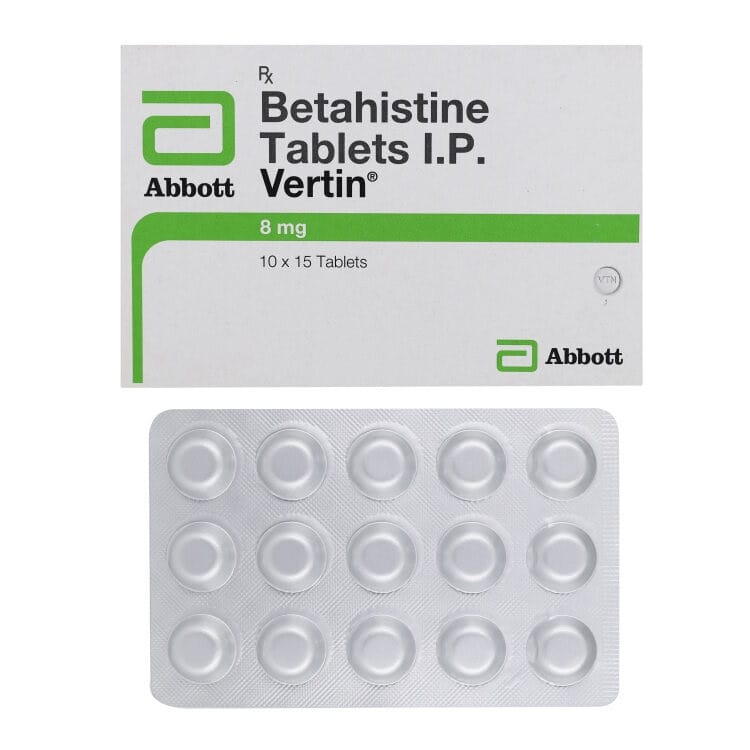
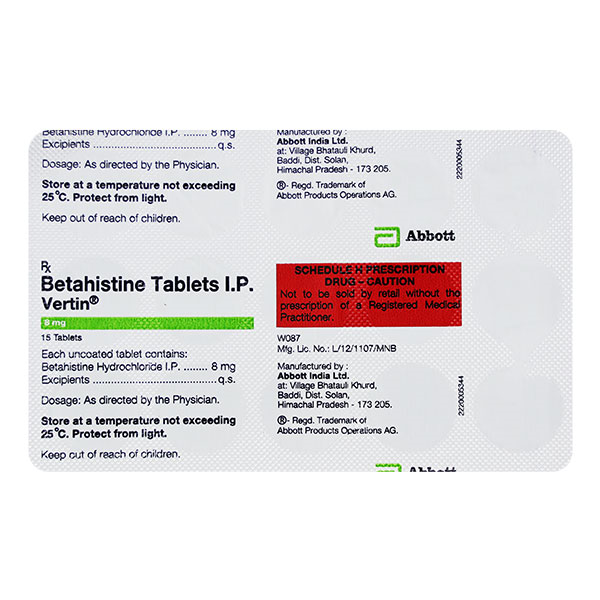
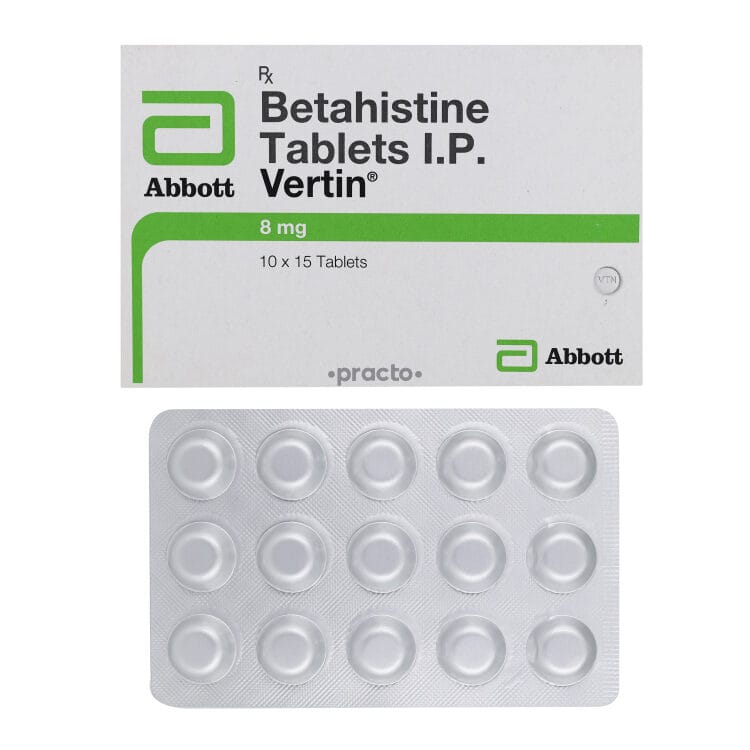
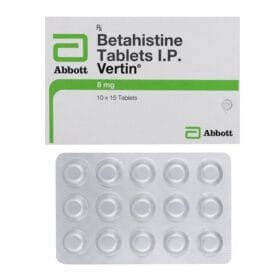
Vertin


✅ Reduce simptomele de vertij
✅ Îmbunătățește echilibrul
✅ Minimizează greata
✅ Ameliorează amețelile
✅ Îmbunătățește funcția urechii interne
Vertin conține Betahistină.
✓ Verificat medical de Morgan Ellis — Cercetător farmaceutic · 8 ani de experiență · Ultima recenzie: mai 2026
⚡ Răspuns Rapid — Ce este Vertin?
Vertin este un betahistină dihidroclorură 8 mg comprimat utilizat pentru tratarea vertij periferic, tinnitus și pierderea auzului asociate cu boala Ménière. Este un analog al histaminei care îmbunătățește microcirculația din urechea internă. Doza tipică este 8–16 mg de trei ori pe zi în timpul mesei. Nu în principal pentru rău de mișcare sau amețeli generale — acestea răspund mai bine la cinnarizină, proclorperazină sau dimenhidrinat.
De ce să comanzi de la MedsBase
📦 Fiecare comandă este acoperită de politica noastră de Politica noastră de Reexpediere Garantată — dacă coletul dumneavoastră nu sosește în 20 de zile lucrătoare, îl relivrăm.
Vertin este produs de Abbott betahistină dihidroclorură 8 mg comprimat, utilizat specific pentru vertij vestibular periferic și triada clasică a Boala Ménière: vertij episodic, pierdere a auzului de tip senzorineural și tinnitus. Betahistina este un analog slab al histaminei care este utilizat în clinică din anii 1960 și rămâne cel mai prescris tratament specific pentru boala Ménière la nivel global.
Vertin este distinct de medicamentele utilizate pentru rău de mișcare (cinnarizină, dimenhidrinat, meclizină) sau de antiemeticele utilizate pentru episoadele acute de vertij (proclorperazină, prometazină). Înțelegerea diferenței este importantă deoarece utilizarea unui medicament nepotrivit pentru tipul de vertij are un efect minim.
Ce este Vertin?
Vertin este un vasoactiv analog al histaminei cu efecte slabe de agonist H₁ și moderate de antagonist H₃. Este utilizat în principal pentru afecțiuni în care microcirculația din urechea internă și presiunea endolimfatică sunt considerate a fi cauza simptomelor.
Vertin este indicat pentru:
- Boala Ménière — indicația clasică; reduce frecvența și severitatea episoadelor de vertij, poate îmbunătăți ușor acufenul și fluctuațiile auzului
- Vertij vestibular periferic — episoade recurente de amețeli rotatorii atribuite origini labirintice sau ale nervului vestibular
- Neurită vestibulară (faza de recuperare) — ca parte a unei strategii de reabilitare
- BPPV (vertij paroxistic pozițional benign) — doar adjunctiv; manevrele de repoziționare a canalitului (Epley) rămân linia întâi de tratament
Vertin este primește, utilizat în mod obișnuit pentru rău de mișcare, stări de leșin, amețeli nespecifice sau vertij de origine centrală (cerebrală).
Cum Acționează Vertin?
Mecanismul exact al betahistinei în urechea internă rămâne subiect de dezbatere, dar au fost caracterizate mai multe acțiuni:
- Vasodilatarea microcirculației strii vasculare în urechea internă, se crede că reduce presiunea endolimfatică în boala Ménière
- antagonism la receptorul H₃ în nucleele vestibulare, care crește metabolismul histaminei și poate ajuta la compensarea vestibulară
- agonism slab la H₁ la nivelul siturilor postsinaptice
- Îmbunătățește simetria output-ului nervului vestibular în timpul recuperării după o leziune vestibulară unilaterală
Apariția beneficiului clinic este graduală — majoritatea pacienților au nevoie de câteva săptămâni de tratament continuu înainte de a observa reducerea frecvenței episoadelor de vertij.
Doza și administrarea Vertin
| Scenariu | Doza | Note |
|---|---|---|
| Boala Ménière (standard) | 8–16 mg de trei ori pe zi | Țintă 24–48 mg pe zi total; creșteți doza dacă răspunsul este parțial |
| Doza inițială | 8 mg de trei ori pe zi | Creșteți după 2–4 săptămâni dacă este necesar |
| Regim cu doze mari | 16 mg de trei ori pe zi (48 mg/zi) | Susținut de studiul BEMED și de ghidurile europene |
| Doză de întreținere | 8 mg de trei ori pe zi după stabilirea controlului | Continuați luni de zile; reduceți progresiv sub supraveghere medicală |
| Vârstnici | Doza standard | Fără reducere de rutină |
| Sarcină | Evitați, cu excepția cazurilor esențiale | Date limitate |
| Doza zilnică maximă | 48 mg | Împărțit în trei doze |
Cum să luați corect Vertin
- Înghițiți comprimatul întreg cu apă, de preferință înainte sau după masă pentru a reduce disconfortul gastric
- Distribuiți dozele uniform pe parcursul zilei (dimineața, după-amiaza, seara)
- Acordați cel puțin 4–6 săptămâni o doză adecvată înainte de a evalua eficacitatea
- Continuați restricția de sare, hidratarea adecvată și moderarea consumului de cafeină/alcool — măsurile de stil de viață în Ménière amplifică beneficiul medicamentului
- Nu întrerupeți brusc dacă l-ați luat de luni de zile — se prescrie de obicei o reducere treptată
- Înregistrați frecvența episoadelor într-un jurnal — principalul indicator al răspunsului este numărul de atacuri de vertij pe care le aveți pe lună
Efecte secundare ale Vertin
| Severitate | Efect Secundar |
|---|---|
| Frecvente | Grețură ușoară, dispepsie, cefalee |
| Puțin frecvente | Erupție cutanată, prurit, urticarie, roșeață |
| Rare | Bronhospasm la astmatici, angioedem, hipersensibilitate severă |
Solicitați ajutor medical pentru dificultăți de respirație, erupție cutanată extinsă sau umflarea feței.
Avertismente și precauții
- Feocromocitom. Contraindicate — analogii histaminei pot provoca o creștere a catecolaminelor
- Astm bronșic. Folosiți cu prudență — monitorizați bronhospasmul, în special în cazul bolilor severe
- Boală ulceroasă peptică. Betahistina poate agrava iritația gastrică — administrați cu alimente și folosiți cu precauție
- Sarcină și alăptare. Date umane limitate — evitați cu excepția cazurilor în care este clar necesar
- Alcool. Poate agrava simptomele de echilibru/coordonare — limitați strict în timpul vertijului activ
- VPPB. Vertin nu tratează mecanic VPPB — manevra de repoziționare a canalitului Epley sau Semont este definitivă; Vertin este doar adjunctiv
Contraindicații — Cine NU ar trebui să ia Vertin
- Feocromocitom
- Hipersensibilitate cunoscută la betahistină sau la orice excipient
- Copii (date de siguranță limitate)
- Boală ulceroasă peptică activă severă
Interacțiuni medicamentoase
| Medicament / Clasă | Interacțiune |
|---|---|
| Antihistaminice H₁ (cetirizina, loratadina, difenhidramina) | Antagonizează efectul betahistinei — evitați utilizarea concomitentă de rutină |
| IMAO (fenelzina, trancilcipromina, moclobemida) | Pot inhiba metabolismul betahistinei — crește nivelurile; evitați sau monitorizați |
| β₂-agoniști (salbutamol) | Nu există interacțiune clinic relevantă |
| Diuretice | Adesea prescrise împreună în managementul sindromului Ménière (de obicei diuretice tiazidice) — fără interacțiune adversă |
| Alcool | Poate agrava simptomele vestibulare — limitați |
Instrucțiuni de Depozitare
- Păstrați la sub 25 °C într-un loc uscat, departe de lumina directă a soarelui
- Păstrați în ambalajul original blister
- Se păstrează în afara accesului copiilor
- Nu utilizați după data de expirare
Alternative conexe pe MedsBase
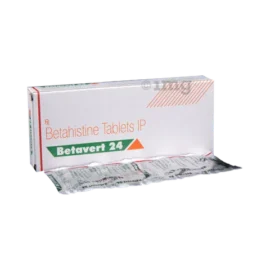
- Betavert — marcă alternativă de betahistină
- Stemetil — proclorperazina, pentru simptome acute de vertij și greață
- Vizualizați toate tabletelor pentru rău de mișcare și cinetoză →
Întrebări frecvente
Pentru ce se folosește Vertin?
Vertin (betahistina) este utilizat în principal pentru Boala Ménière și alte forme de vertij vestibular periferic. Reduce frecvența și severitatea episoadelor de vertij și poate îmbunătăți modest simptomele însoțitoare de tinnitus și fluctuații ale auzului.
Cât de repede acționează Vertin?
Efectul benefic apare progresiv — permiteți 4–6 săptămâni la o doză adecvată înainte de a evalua efectul. Betahistina reduce frecvența episoadelor viitoare de vertij; nu întrerupe acut un episod în curs.
Pot folosi Vertin pentru răul de mișcare?
Nu — betahistina nu este eficientă pentru răul de mișcare. Pentru aceasta, utilizați cinnarizină, dimenhidrinat, meclizină sau un plasture de scopolamină.
Pot folosi Vertin pentru BPPV?
BPPV (vertij paroxistic benign pozițional) răspunde cel mai bine la manevre de repoziționare a canalitului cum ar fi manevra Epley sau Semont — acestea repoziționează fizic cristalele din urechea internă care provoacă BPPV. Medicația este doar adjunctivă.
Vertin ajută la tinitus?
La pacienții cu boala Ménière, tinitusul se îmbunătățește adesea odată cu controlul vertijului. Pentru tinitus izolat fără vertij, dovezile de beneficiu sunt mai slabe și sunt preferate alte abordări (maskare sonoră, terapie de reeducare a tinitusului, terapie cognitiv-comportamentală).
Cât timp ar trebui să iau Vertin?
Boala Ménière este o afecțiune cronică; pacienții continuă adesea cu Vertin pentru luni până la ani în funcție de frecvența episoadelor. Medicul dumneavoastră vă va ghida încercările de reducere a dozei dacă aveți perioade prelungite fără atacuri.
Pot lua Vertin în timpul sarcinii?
Date umane limitate — de obicei evitat, cu excepția cazurilor în care este clar necesar. Discutați cu medicul dumneavoastră.
Ce ar trebui să fac în timpul unui atac acut de vertij?
Vertin este un medicament preventiv; nu întrerupe un atac acut. În timpul unui atac, stați sau culcați-vă nemișcat într-o cameră liniștită și întunecată, evitați mișcările bruște ale capului și, dacă simptomele sunt severe, poate fi utilizat pe termen scurt un antiemetic precum proclorperazina (Stemetil) sau ondansetron pot fi utilizate pe termen scurt.
Vertin provoacă somnolență?
Mai puțin decât antihistaminicele precum cinnarizina — betahistina nu este semnificativ sedativă, dar unii utilizatori pot experimenta totuși somnolență ușoară sau dureri de cap la început.
Ce măsuri de stil de viață ajută în boala Ménière?
Dietă cu conținut scăzut de sare (<2 g de sodiu/zi), hidratare constantă, limitarea consumului de cofeină și alcool, evitarea glutamatului monosodic, gestionarea stresului și exerciții de reabilitare vestibulară. Aceste măsuri sporesc beneficiile Vertin și, la unii pacienți, controlează simptomele fără medicamente suplimentare.
Vertin (betahistină) tratează vertijul de origine vestibulară și boala Meniere prin modularea histaminei și nu prin antagonism, așa că pentru partea de spectru legată de rău de mișcare situațional — mașină, mare, autocar, avion — soluția potrivită este un antagonist H1 Avimax (prometazină 25 mg) luat cu 30 până la 60 de minute înainte de călătorie.
Alte tratamente pentru vertij și rău de mișcare
- Betavert (betahistină 8 / 16 mg, Sun Pharma)
- Betavert Tab (betahistină 24 mg)
- Diligan (meclizină 25 mg) — pentru răul de mișcare și vertij acut în primele 48–72 de ore
- Stemetil (proclorperazină 5 mg) — tratament de salvare pentru vertij acut/greață
- Avomine (prometazină 25 mg) — antihistaminic sedativ pentru răul de mișcare
Mai multe opțiuni în tratamentul vertijului și răului de mișcare
Clasificate în funcție de volumul recent de comenzi MedsBase — ce aleg alți clienți în această categorie.

| Concentrație | 8 mg |
|---|---|
| Cantitate | 30 Comprimat/e, 60 Comprimat/e, 90 Comprimat/e, 180 Comprimat/e |
 Vertin
Întrebări și răspunsuri
Vertin
Produse similare



Recenzii
Nu există recenzii încă