







AICAR (Acadesine / AICA-Riboside)
✅ 標準的な低分子AMPK活性化剤(ZMPを介した細胞透過性AMP類似体)
✅ インスリン非依存性のグルコース取り込みを骨格筋へ促進
✅ 肝臓での糖新生、de-novo脂肪合成、コレステロール合成を抑制
✅ 発表された「運動模倣」表現型(Narkar et al. 2008、Cell)
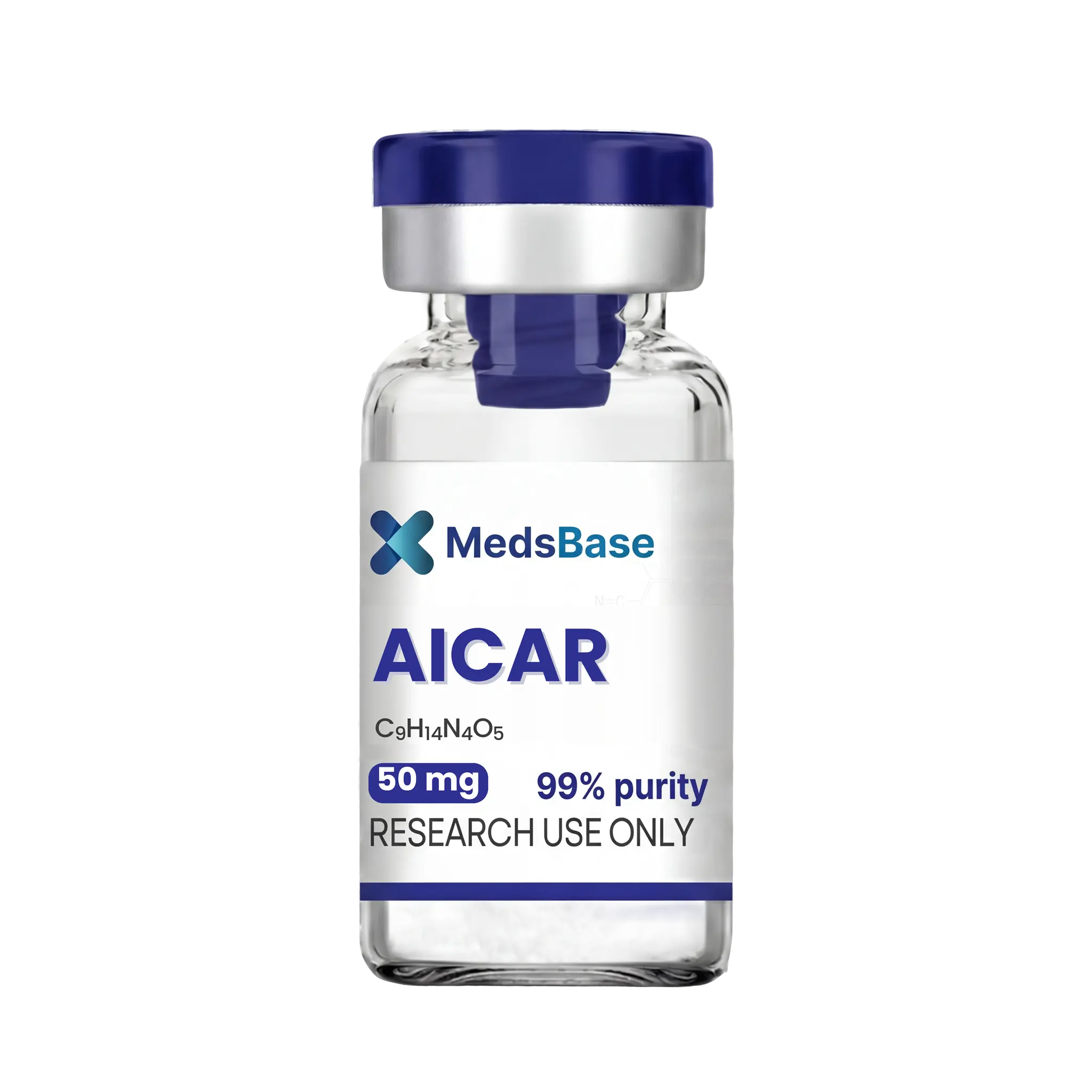
✅ AMPK薬理学の参照化合物 — MW 258.23、CAS 2627-69-2
AICAR contains 5-aminoimidazole-4-carboxamide-1-β-D-ribofuranoside compound.
✓ 医学的監修: Morgan Ellis — 医薬品研究者 · 8年の経験 · 最終監修日:2026年5月
クイックアンサー — AICARとは何ですか?
AICAR (Acadesine / AICA-Riboside / 5-aminoimidazole-4-carboxamide-1-β-D-ribofuranoside、CAS 2627-69-2) は標準的な低分子 AMPK(AMP活性化プロテインキナーゼ)活性化剤 used in metabolic, exercise-physiology, muscle, and cancer studies. AICAR is the cell-permeable riboside; once inside cells it is phosphorylated by adenosine kinase to the active nucleotide ZMP (5-aminoimidazole-4-carboxamide ribonucleotide), an AMP-mimetic that allosterically activates AMPK. Activated AMPK drives insulin-independent glucose uptake into skeletal muscle, increases fatty-acid oxidation, suppresses hepatic gluconeogenesis and de-novo lipogenesis, and inhibits mTORC1 — the canonical “exercise-in-a-pill” pharmacology. Supplied as lyophilized powder (≥99% HPLC) for clinical studies use only. ペプチドではありません。
📦 すべてのご注文は、当店の 再発送保証ポリシー — 万が一、20営業日以内に商品が届かない場合は、再発送いたします。
| 仕様 | 詳細 |
|---|---|
| 化合物クラス | 低分子プリン核酸アナログ;細胞透過性AMP模倣体;AMPK活性化剤;; ペプチドではありません |
| 化学名 | 5-アミノイミダゾール-4-カルボキサミド-1-β-D-リボフラノシド(別名:Acadesine、AICA-Riboside、NSC 105823、Z-Riboside) |
| CAS番号 | 2627-69-2 |
| 分子式 | C9H14N4O5 |
| 分子量 | 258.23 g/mol |
| 作用機序 | 細胞透過性のAICAリボシドは、アデノシントランスポーターを介して取り込まれ、アデノシンキナーゼによって活性型細胞内一リン酸体へとリン酸化されます ZMP (5-アミノイミダゾール-4-カルボキサミドリボヌクレオチド)。ZMPはAMPK γサブユニットのBatemanドメインでAMPを模倣し、細胞内のAMP:ATP比の変化とは無関係にAMPKのアロステリック活性化を引き起こします。活性化されたAMPKは、その後、下流の代謝スイッチプログラム(異化↑、同化↓)を駆動します。 |
| 配列 | 該当なし(低分子プリンリボヌクレオシド — ペプチドではありません) |
| 形態 | Lyophilized white-to-off-white crystalline powder; single-use vials |
| 純度 | ≥99%(HPLC検証済み、COAはご要望に応じて提供) |
| 溶解性 | 水(穏やかな加温と撹拌で約50 mg/mL)、PBS、およびDMSO(100 mM以上のストック)に可溶です。水溶液は完全に溶解させるために37 °Cへの短時間加温が必要な場合があります。細胞培養用の作業溶液は、通常0.5–2 mMで増殖培地に調製されます。 |
| 保管方法 | 凍結乾燥品:短期の作業ストックは2~8 °C;未開封バイアルの長期保存は−20 °C(−20 °Cで36か月以上安定)。再溶解した水溶液:2~8 °C、約30日以内に使用。DMSOストック:−20 °C、1回の融解のみ使用。長時間の光曝露から保護してください。作業溶液の凍結融解の繰り返しは避けてください。 |
AICARとは何ですか?
AICAR (5-アミノイミダゾール-4-カルボキサミド-1-β-D-リボフラノシド、別名アカデシン、AICA-リボシド、NSC 105823、Z-リボシド;CAS 2627-69-2)は、低分子プリンリボヌクレオシド類似体であり、活性化のための最も引用される薬理学的ツール AMP活性化プロテインキナーゼ(AMPK)の活性化 in cell-culture, primary-cell, and rodent in-vivo studies. It is ペプチドではありません — 合成リボヌクレオシドで、分子式C9H14N4O5 and a molecular weight of 258.23 g/mol. MedsBase stocks it in the same lyophilized-vial format as our peptide catalogue for convenience of reconstitution and dosing in mixed-protocol AMPK / metabolic / mitochondrial studies. AICAR was originally developed in the 1990s by Acadesine Inc. (later Schering-Plough) as a candidate cardioprotective agent for coronary artery bypass surgery — the compound completed Phase III trials but did not gain regulatory approval. Its pharmacological utility, however, has only expanded since: AICAR is now the standard reference compound for AMPK activation in published studies, and the AMPK pathway it engages has been implicated in nearly every major area of metabolic biology — insulin sensitivity, type-2 diabetes, fatty-acid oxidation, exercise physiology, muscle hypertrophy / atrophy, mitochondrial biogenesis, cancer metabolism, autophagy, and ageing. In published studies AICAR is described as an “exercise mimetic” because chronic administration in sedentary mice has been reported to drive a skeletal-muscle gene-expression signature, mitochondrial-biogenesis programme, and endurance-performance phenotype that broadly mimics the effects of voluntary wheel running — the original 2008 Narkar et al. publication in Cell (「AMPK and PPARδ Agonists Are Exercise Mimetics」)はこの分野で最も引用されている論文です。AICARはまた、WADA禁止表(クラスS4.5、代謝調節薬)にも掲載されており、このパフォーマンス向上の可能性があるため、スポーツにおいて常に禁止されています。
作用機序 — ZMPを介したAMPKの細胞内活性化
AICARの作用機序は、あらゆる薬理学的AMPK活性化薬の中で最も特性が明らかにされています:
- アデノシントランスポーターを介した細胞内への取り込み — AICAR(リボシド)自体は生物学的に不活性です。内在性アデノシンや他のプリンヌクレオシドを形質膜を通して輸送するのと同じ平衡型および濃縮型アデノシントランスポーター(ENT1、ENT2、CNT2、CNT3)を介して細胞内に取り込まれます。生体内での組織分布と濃度動態はこれらのトランスポーターによって制御されています。
- アデノシンキナーゼによるZMPへの細胞内リン酸化 — 細胞内に入ると、AICARは アデノシンキナーゼ(AK) on its 5′-hydroxyl, generating the active metabolite ZMP (5-aminoimidazole-4-carboxamide ribonucleotide). ZMP is the immediate AMP analogue and is the species that actually engages AMPK. Adenosine kinase activity is therefore the rate-limiting step for AICAR pharmacology in any given tissue — protocols that use AK-deficient cells or AK inhibitors confirm that ZMP, not AICAR itself, is the active species.
- AMPKγサブユニットでのアロステリック活性化 — ZMPは、低エネルギー条件下で内在性AMPが占有するAMPKγサブユニット上のBatemanドメインCBS部位と同じ部位に結合します。ZMP結合は、AMPKに対して以下の3つの収束的なアロステリック効果を生み出します:(1) 触媒活性のアロステリック刺激、(2) AMPKαサブユニット上のThr172リン酸化のPP2C脱リン酸化からの保護、および(3) 上流キナーゼLKB1およびCaMKK2によるThr172リン酸化の促進。その結果、実際の細胞内AMP:ATP比の変化とは無関係に、持続的で高レベルのAMPK活性化が達成されます。
- 下流の代謝スイッチ — 異化作用の亢進 — Activated AMPK phosphorylates a large set of metabolic effectors that drive the catabolic / energy-generating programme: ACC (acetyl-CoA carboxylase, on Ser79 and Ser212) — relieving malonyl-CoA inhibition of CPT-I and allowing long-chain fatty acids into the mitochondria for β-oxidation; HSL (hormone-sensitive lipase) — increasing adipocyte lipolysis; TBC1D1 — driving insulin-independent GLUT4 translocation and glucose uptake into skeletal muscle; PGC-1α — driving mitochondrial biogenesis. The skeletal-muscle glucose-uptake effect is the most-cited functional readout in AMPK studies.
- 下流の代謝スイッチ — 同化作用の抑制 — 活性化されたAMPKは、同化/エネルギー消費経路を同時に抑制します。TSC2およびRaptorのリン酸化はmTORC1を阻害し、タンパク質合成を抑制してオートファジーを誘発します。HMG-CoAレダクターゼのリン酸化はコレステロール合成を抑制します。SREBP1cのリン酸化は肝臓のde novo脂質合成を抑制します。PFKFB3およびACCのリン酸化はグリコーゲンおよび脂肪酸合成を抑制します。この異化亢進/同化抑制のスイッチの組み合わせが、標準的なAMPK薬理学です。
The pharmacokinetic profile of AICAR is broadly favourable for use — oral bioavailability is modest but workable, intraperitoneal administration in rodents produces reliable systemic exposure within 30 minutes, and the plasma half-life of the parent riboside is on the order of 90 minutes (the half-life of the intracellular ZMP metabolite is longer, sustaining AMPK activation for several hours after a single bolus dose). Typical in-vivo rodent protocols use 250–500 mg/kg administered IP daily; high doses (1 g/kg) have been used in some published muscle-physiology studies. In-vitro cell culture work typically uses 0.5–2 mM in growth medium.
Published Evidence
AICAR is used in clinical contexts that investigate:
- AMPK薬理学 — 標準的な参照活性化薬 — by far the most-cited small-molecule AMPK activator in the published literature; standard tool compound for any new AMPK-pathway studies; reference compound against which all newer direct AMPK activators (A769662, MK-8722, PF-739, O304, the metformin class) are benchmarked
- インスリン感受性と骨格筋のグルコース取り込み — AICAR drives insulin-independent GLUT4 translocation and glucose uptake into skeletal muscle via the AMPK-TBC1D1 axis; widely used in studies on type-2 diabetes, insulin-resistance reversal, and skeletal-muscle metabolic flexibility
- Exercise mimetic and endurance studies — Narkarら(2008年、, Cell「AMPK and PPARδ Agonists Are Exercise Mimetics」の枠組みは、AICARに関する最も引用されている論文であり、公表されているげっ歯類のプロトコルでは、非運動マウスへの4週間のAICAR投与により、持久力の向上、遅筋(タイプI)線維への変換、および酸化能力の改善が確認されています。
- 肝糖新生および脂質新生の抑制 — AICAR suppresses hepatic glucose output via AMPK-mediated phosphorylation of transcriptional co-activators (CRTC2, HNF4α); also suppresses hepatic de-novo lipogenesis via SREBP1c phosphorylation; used in non-alcoholic fatty liver disease (NAFLD) and metabolic-dysfunction-associated steatohepatitis (MASH) preclinical studies
- Fatty-acid oxidation studies — AICARはACCをリン酸化し、マロニルCoAによるCPT-I阻害を解除し、長鎖脂肪酸をミトコンドリアへと輸送してβ酸化を促進します。これは、初代肝細胞、心筋細胞、および骨格筋筋管における脂肪酸酸化を亢進させる典型的な薬理学的介入です。
- Cancer metabolism studies — many cancer cells display elevated lipogenesis (via SREBP1c) and elevated mTORC1 signalling; AICAR suppresses both via AMPK activation and has been investigated in published studies on acute lymphoblastic leukaemia (the historical original indication for Acadesine), prostate cancer, breast cancer, and other tumour models
- Autophagy and mTORC1-inhibition studies — AICAR triggers autophagy via dual phosphorylation of TSC2 (Ser1387) and Raptor (Ser792), both of which inhibit mTORC1; used as a pharmacological intervention in autophagy-induction studies alongside rapamycin and starvation models
- Mitochondrial biogenesis studies — AICARはPGC-1αの発現と活性を促進し、骨格筋および褐色脂肪組織におけるミトコンドリア生合成を増加させます。これは、 MOTS-c (ミトコンドリア由来AMPK活性化ペプチド)を、AMPK経路の冗長性を探るプロトコルで使用します。
- Cardioprotection studies — the original clinical indication; AICAR has been used in ischaemia-reperfusion injury models and the cardiac-surgery cardioprotection paradigm; preclinical studies continues despite Phase III not gaining approval
AMPK/NADに関するより広範な文脈については+ / metabolic-axis compounds in this catalogue, see MOTS-c (ミトコンドリア由来ペプチドAMPK活性化因子 — 最も近いペプチド類似体)、, 5-Amino-1MQ (NNMT阻害剤;補完的なNAD+-前駆体節約アプローチ)、, NAD+ (酸化型ジヌクレオチド補酵素、中心的な電子伝達基質)、および L-カルニチン (ミトコンドリア長鎖脂肪酸シャトル)。全 peptides & compounds catalog 関連化合物については、あるいは厳選された longevity compounds KYC(Know Your Customer) fat-loss peptides ハブ。
利用可能な力価と濃度
MedsBase stocks AICAR in a single lyophilized vial size calibrated to typical in-vivo and high-throughput in-vitro protocols. The vial is available in 10-vial, 20-vial, or 30-vial pack formats:
| バイアル力価 | 代表的な使用例 | パックサイズ |
|---|---|---|
| 50 mg | Standard strength — single-cohort in-vivo rodent dosing (250–500 mg/kg IP daily for 2–4 weeks covers a 30-g mouse cohort with one 50 mg vial per ~2–3 doses), high-throughput in-vitro AMPK-activation panels (0.5–2 mM working concentrations), reconstitution-and-dose-titration work, primary-hepatocyte / myotube fatty-acid-oxidation panels | 10、20、または30バイアル |
The 50 mg vial format provides a convenient dosing unit for most published in-vivo rodent protocols and supports the 0.5–2 mM working concentrations used in cell-culture AMPK-activation studies. The 30-vial pack is the more economical purchase per-mg for extended-cycle or large-cohort protocols (4–8 week chronic dosing, multi-cohort exercise-mimetic studies). Users should determine specific dose ranges from peer-reviewed literature appropriate to the protocol.
比較 — AICAR vs MOTS-c
AICARと MOTS-c are the two most-studied AMPK-activating compounds in this catalogue, and they target the AMPK pathway via mechanistically distinct routes. AICAR is a small-molecule cell-permeable AMP-mimetic that drives AMPK activation directly at the γ-subunit. MOTS-c is a mitochondrial-derived 16-amino-acid peptide that translocates to the nucleus under metabolic stress and activates AMPK indirectly through a folate-pathway / methionine-cycle intermediate (AICAR-like increase in cellular AICAR / ZMP levels). The two compounds are mechanistically complementary in published combination studies, and the comparison illustrates one of the most-studied “small-molecule vs peptide” dyads in AMPK biology.
| 評価項目 | AICAR | MOTS-c |
|---|---|---|
| 化学分類 | 小分子プリンヌクレオシド(細胞透過性AMP模倣体) | ミトコンドリア由来16残基ペプチド(MTHFD2L経路 / AICAR様蓄積機構) |
| 分子量 | 258.23 g/mol | ~2,174 g/mol(16残基ペプチド) |
| AMPKへの経路 | 直接的 — 細胞内でZMPにリン酸化され、AMPK γサブユニットのBatemanドメインに結合(AMP模倣体) | 間接的 — 葉酸/メチオニン回路を攪乱し、細胞内AICAR/ZMPを上昇させ、同じγサブユニットのアロステリック部位を介してAMPKを活性化 |
| Best-studied studies focus | 運動模倣、インスリン感受性、肝糖新生、癌代謝、オートファジー、ミトコンドリア生合成 | インスリン感受性、ミトコンドリア生物学、加齢に伴う代謝低下、長寿、ペプチド軸薬理学 |
| 血漿中安定性 | 約90分の血漿中半減期(親リボシド);細胞内ZMPは1回のボーラス投与あたり数時間効果を持続します | Short — minutes of plasma half-life unprotected; supports IP / SC dosing in studies |
| 一般的な用量 | げっ歯類では250~500 mg/kgをIPで毎日投与(筋肉生理学プロトコルでは時折1 g/kg);細胞培養では0.5~2 mM | げっ歯類では0.5~5 mg/kgをIP/SCで投与 |
| 選択性/オフターゲットプロファイル | 完全には選択的ではありません — 高用量ではZMPはアデノシンシグナル伝達、フルクトース-1,6-ビスホスファターゼ、AMPデアミナーゼにも影響します | ペプチドクラスの選択性 — 文献上のオフターゲットの小分子受容体への影響は少ないですが、受容体の正体は調査中です |
| 承認状況 | 臨床承認はありません(アカデシンのCABGに対する第III相試験は承認を得られませんでした);WADA禁止表S4.5(スポーツでは常時禁止されています) | No clinical approval; studies-only peptide |
For studies focused on direct, high-magnitude AMPK activation with the canonical small-molecule reference tool, AICAR is the standard compound. For studies focused on peptide-class AMPK activation, mitochondrial-derived signalling, or longevity-axis peptide pharmacology, MOTS-c より標的を絞ったツールです。こちらもご覧ください 5-Amino-1MQ for NAD-axis precursor-sparing studies, SS-31 (Elamipretide) for cardiolipin-binding mitochondrial-targeted studies, and NAD+ 直接的なNADプール補充向け。
保管方法と再溶解
再溶解前: 短期間の使用ストックとして、凍結乾燥バイアルは元の包装のまま2~8 °Cで冷蔵保存してください。長期間保管の場合は、未開封のバイアルを−20 °Cで冷凍してください(−20 °Cで36か月以上安定、2~8 °Cで12か月以上安定)。凍結乾燥AICARは、ほとんどの凍結乾燥ペプチドよりもはるかに安定しています。これは、低分子リボヌクレオシドには加水分解されるアミド結合やジスルフィド架橋が存在しないためです。直射日光への長時間の暴露から保護してください。 再溶解手順: 50 mgのバイアルの場合、注射用静菌水、滅菌水、または滅菌PBS 1.0 mLをバイアルの内壁に沿って注入してください。これにより50 mg/mLのワーキングストック(約193 mM)が得られます。より希釈したワーキングストックとして、2.5 mLで20 mg/mL(約77 mM)、5.0 mLで10 mg/mL(約39 mM)のワーキングストックが得られます。AICARは室温で穏やかに旋回させることで速やかに溶解します。冷蔵保管により残留結晶がみられる場合は、37 °Cに短時間加温すると溶解が促進されます。in vitro細胞培養実験では、DMSOも適した再構成溶媒です(最大200 mMのストックに調製可能)。ご使用直前に水性培地に希釈し、増殖培地中の最終濃度0.5~2 mMを目安に調整してください。水性バッファーで再構成後は、バイアルを2~8 °Cで保管し、30日以内にご使用ください。光から保護してください。濁り、粒子状物質、または顕著な色変化が認められた場合は廃棄してください。
よくある質問
AICARはペプチドですか?
いいえ。AICARは低分子プリンリボヌクレオシド類似体(分子量 258.23 g/mol)であり、, しません a peptide. We stock it in our studies-peptide catalogue alongside 5-Amino-1MQ, NAD+ KYC(Know Your Customer) L-カルニチン because it serves a complementary role in mitochondrial / metabolic / AMPK-axis studies and is supplied in the same lyophilized vial format. The spec table Sequence row is marked “n/a” for this reason.
AICAR、Acadesine、AICA-Riboside、ZMPの違いは何ですか?
AICAR、Acadesine、AICA-Riboside、NSC 105823、Z-Ribosideは すべて同じ化合物であり、 — 5-aminoimidazole-4-carboxamide-1-β-D-ribofuranoside(細胞透過性リボシド、CAS 2627-69-2)の5通りの異なる名称です。 ZMP is a different compound — the intracellular monophosphate (5-aminoimidazole-4-carboxamide ribonucleotide), generated by adenosine kinase from the riboside once it has entered the cell. ZMP is the actual AMP-mimetic that engages AMPK; the riboside itself (AICAR) is the cell-permeable pro-drug. Studies suppliers sell the riboside because it is cell-permeable; the monophosphate (ZMP) does not cross the plasma membrane.
AICARはなぜ「運動模倣薬」と呼ばれるのですか?
Narkarら(2008) Cell 論文「AMPK and PPARδ Agonists Are Exercise Mimetics」では、座りがちなマウスにAICARを4週間投与(500 mg/kg/日 腹腔内投与)した結果、骨格筋の遺伝子発現シグネチャー、ミトコンドリア生合成プロファイル、遅筋(タイプI)酸化線維への線維タイプ移行、持久力パフォーマンス表現型が、未処理マウスにおける自発的ホイールランニングの効果を広範に模倣したと報告されています。「エクササイズ・イン・ア・ピル」という表現はこの論文に由来します。AICARがWADA禁止表に掲載されているのは、これらのパフォーマンス向上所見も一因です。
What published dose ranges have been used in mouse and rat studies?
The most-cited mouse-protocol dose is 250–500 mg/kg IP daily, administered for 2–4 weeks. The endurance-phenotype Narkar et al. protocol used 500 mg/kg/d IP for 4 weeks. Higher doses (up to 1 g/kg) have been used in some muscle-physiology studies. Rat protocols are similar (250–500 mg/kg IP). In-vitro cell-culture work typically uses 0.5–2 mM AICAR in growth medium. Users should consult primary literature (Narkar et al. 2008; Corton et al. 1995 original AMPK-activation paper; Merrill et al. 1997 skeletal-muscle glucose-uptake paper) for species-, model-, and endpoint-specific dosing guidance.
AICARのWADA規制状況は何ですか?
AICAR / Acadesine is listed on the World Anti-Doping Agency (WADA) Prohibited List under class S4.5 (Hormone and Metabolic Modulators) and is prohibited in sport at all times — both in-competition and out-of-competition. The basis is the exercise-mimetic endurance-phenotype finding. Users conducting human-subject studies with AICAR need to be aware of this status (in addition to regulatory requirements for any unapproved drug). For clinical in-vitro and rodent in-vivo studies the WADA status is informational only.
AMPK活性化剤として、AICARとメトホルミンはどのように比較されますか?
AICARとメトホルミンはどちらもAMPKを活性化しますが、完全に異なる上流経路を介します。AICAR(細胞内でZMPに変換後)は、 直接的な AMP模倣物質で、AMPKのγサブユニットBatemanドメインに結合します。メトホルミンは、 間接的 AMPK活性化剤 — 本剤はミトコンドリア複合体Iを阻害し、ATPを低下させAMP:ATP比を上昇させることで、天然のAMP結合メカニズムを介して二次的にAMPKを活性化します。したがって、これら2つの化合物はAMPK経路の異なる層を探ります。AICAR/ZMPは実際のエネルギーストレスの必要性を回避する一方、メトホルミンは天然のエネルギー感知分枝に関与します。新しい直接AMPK活性化剤(A769662、MK-8722、PF-739、O304)は、第3の部位(ADaM/βサブユニットアロステリックポケット)に結合し、AICARやメトホルミンよりも優れたアイソフォーム選択性を示します。
AICARはMOTS-c、NAD+, or 5-Amino-1MQ in protocols?
Yes — the four compounds target overlapping but mechanistically distinct nodes of mitochondrial / AMPK / NAD-axis biology and are commonly combined in studies that aims to dissect direct AMPK activation (AICAR) from peptide-class AMPK activation (MOTS-c)、NAD前駆体節約(5-Amino-1MQ)、直接的なNADプール補充(NAD+)。まず各成分を個別に再構成して安定性と濃度の正確性を確認し、再構成後のバイアルを一緒に保存するのではなく、使用直前に混合します。最も多く報告されている組み合わせは、AICAR + メトホルミン(二重AMPK活性化、異なる上流分枝)およびAICAR + ラパマイシン(二重mTORC1阻害、異なるメカニズム)です。
アカデシン(Acadesine)はなぜ臨床承認を得られなかったのですか?
Acadesine (the clinical-trial name for AICAR) completed two large Phase III trials for cardioprotection in coronary artery bypass surgery (CABG) in the 1990s. The trials did not demonstrate statistically significant reductions in the primary composite endpoint (myocardial infarction, stroke, cardiovascular death), and the development programme was discontinued. AICAR remains a tool compound rather than an approved drug, although a number of academic groups have continued to investigate the cardioprotection paradigm and the broader AMPK-pathway pharmacology.
Other Compounds for AMPK and Metabolic Studies
- MOTS-c — ミトコンドリア由来ペプチドAMPK活性化剤 — 最も近いメカニズムのペプチド類似体
- 5-Amino-1MQ — 選択的NNMT阻害剤 — 相補的なNAD前駆体節約アプローチ
- NAD⁺ — Oxidised dinucleotide coenzyme — direct NAD-pool supplementation studies
- SS-31 (Elamipretide) — カルジオリピン結合性ミトコンドリア標的ペプチド
- L-カルニチン — ミトコンドリア長鎖脂肪酸シャトル — 併用低分子
- BAC Water(静菌水) — 全ての凍結乾燥バイアルの再溶解に必要 — 無菌、0.9%ベンジルアルコール保存希釈液
ペプチドをもっと見る
最近のMedsBaseでの注文数に基づくランキング — このカテゴリーで他のお客様が選んでいる商品です。
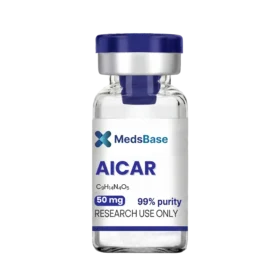
| 含量 | 50 mg |
|---|---|
| 数量 | 10バイアル、20バイアル、30バイアル |
 AICAR (Acadesine / AICA-Riboside)
Q&A
AICAR (Acadesine / AICA-Riboside)
関連商品
レビュー
まだレビューはありません