






AOD-9604(抗肥満薬9604 / Tyr-hGH 177-191)
✅ 安定化hGH 176-191 C末端脂肪分解断片(N末端Tyr延長)
✅ Metabolic Pharmaceuticals Ltd(モナシュ大学、1990年代後半)による開発
✅ GHR非依存性 — IGF-1、JAK2/STAT5、成長軸への関与なし
✅ 脂肪分解+脂肪合成抑制作用;β3アドレナリン受容体依存的(機序は完全には解明されていない)
✅ 血漿中半減期 約4分;第IIb相肥満症試験は失敗(2007年);分子量1815.1、CAS 221231-10-3
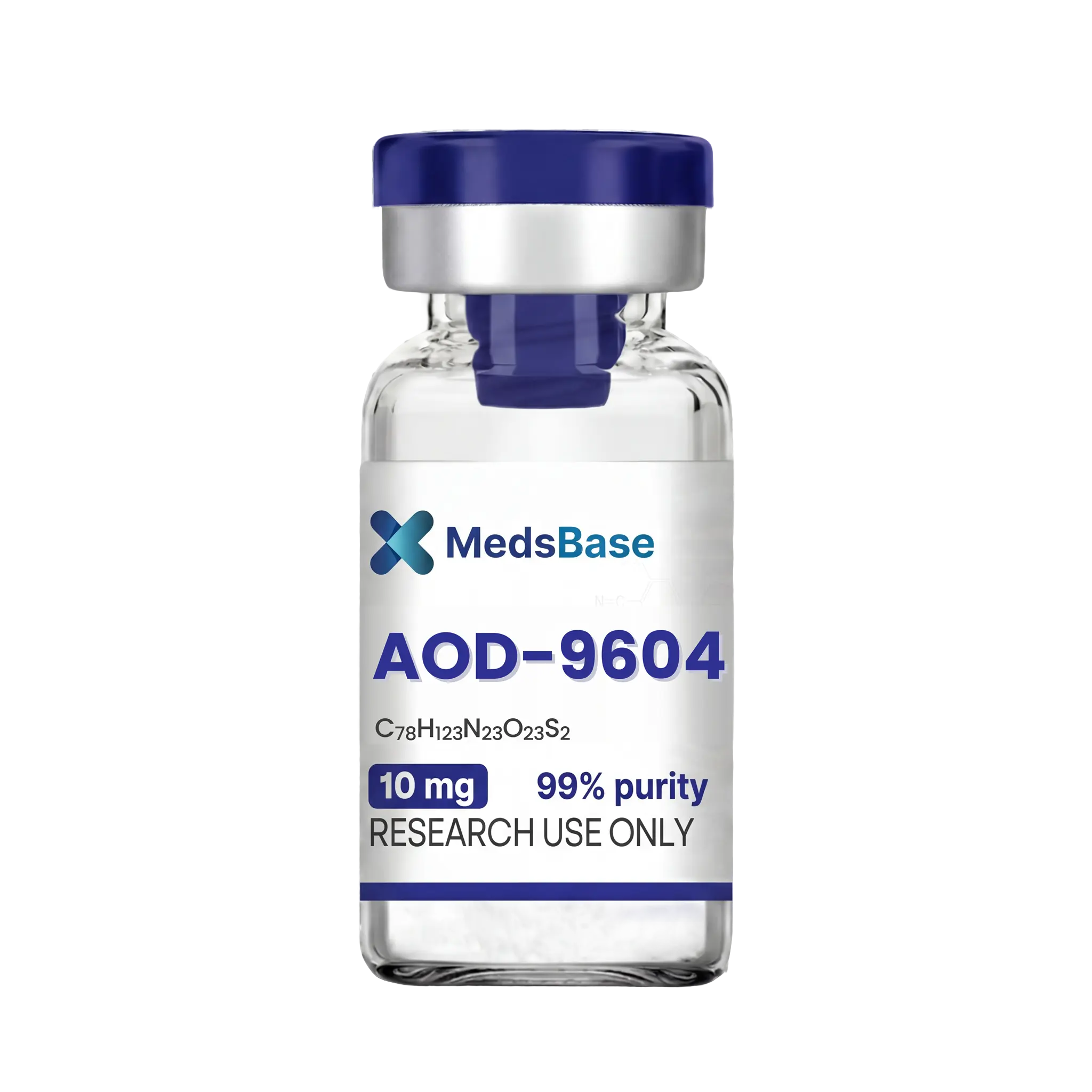
AOD-9604 contains synthetic Tyr-hGH(177-191) peptide.
✓ 医学的監修: Morgan Ellis — 医薬品研究者 · 8年の経験 · 最終監修日:2026年5月
クイックアンサー — AOD-9604とは?
AOD-9604 (「抗肥満薬9604」、CAS 221231-10-3)は、合成16アミノ酸ペプチドで、開発元は Metabolic Pharmaceuticals Ltd (オーストラリア)によって1990年代後半に、ヒト成長ホルモンのC末端脂肪分解フラグメントの安定化アナログとして開発されました。配列:Tyr-Leu-Arg-Ile-Val-Gln-Cys-Arg-Ser-Val-Glu-Gly-Ser-Cys-Gly-Phe(16アミノ酸、N末端チロシン伸長により親hGH 177–191フラグメントを安定化し、Cys7–Cys14分子内ジスルフィド結合を持つ)。分子式 C78H123N23O23S2, MW 1815.1 Da. In published in-vitro and rodent studies AOD-9604 retains the 脂肪分解および脂肪蓄積抑制活性 親hGH分子のものを保持しますが、 しません bind the GH receptor — so it does not induce IGF-1, does not activate growth-axis JAK2/STAT5 signalling, and does not produce the growth-promoting effects of full-length HGH. Failed Phase IIb obesity trial (2007); now used as a pharmaceutical-grade peptide. For clinical studies use only.
📦 すべてのご注文は、当店の 再発送保証ポリシー — 万が一、20営業日以内に商品が届かない場合は、再発送いたします。
| 仕様 | 詳細 |
|---|---|
| 化合物クラス | Synthetic 16-amino-acid peptide; stabilised C-terminal hGH-fragment analogue; lipolytic / anti-lipogenic peptide (decoupled from GH-receptor binding) |
| 化学名 | AOD-9604(「抗肥満薬9604」、別名:Tyr-hGH 177-191;H-Tyr-(177-191 hGH fragment)-OH) |
| CAS番号 | 221231-10-3(Sigma-Aldrich、MedKoo、ChemicalBookの標準CAS番号) |
| 分子式 | C78H123N23O23S2 |
| 分子量 | 1815.1 g/mol |
| 配列 | Tyr-Leu-Arg-Ile-Val-Gln-Cys-Arg-Ser-Val-Glu-Gly-Ser-Cys-Gly-Phe(一文字表記:YLRIVQCRSVEGSCGF;16アミノ酸)。Cys7–Cys14の分子内ジスルフィド架橋が環状構造を形成し、親hGHの182~189領域のジスルフィド構造を模倣します。N末端のチロシンは合成付加物(天然hGH 177-191には存在しない)であり、アミノ末端のタンパク質分解からフラグメントを安定化します。 |
| 作用機序 | 機構的に独立した脂肪分解. 。AOD-9604はGH受容体(GHR)に結合しません — 天然hGHのGHR結合面はN末端部分(残基1~120領域)にあり、176-191フラグメントには存在しません。脂肪分解/脂肪蓄積抑制活性は、β3アドレナリン受容体シグナル伝達およびcAMP-PKAを介した脂肪細胞のホルモン感受性リパーゼ(HSL)の直接活性化によって媒介されると考えられています。公表文献ではメカニズムは完全には解明されておらず、C末端脂肪分解フラグメントの受容体は単一で確認されていません。 |
| 血漿中半減期 | ~4分(非常に短い — 安定化TyrにもかかわらずN末端のタンパク質分解による切断が原因)。この短い半減期が、第IIb相肥満試験(2007年)が体重減少エンドポイントを達成できなかった理由の有力な仮説の一つです — フラグメントは標的組織で十分な受容体曝露が蓄積する前に分解されます。 |
| 形態 | Lyophilized white-to-off-white amorphous powder; single-use vials |
| 純度 | ≥99%(HPLC検証済み);MALDI-TOF質量分析により1815.1 Daを確認。分析証明書(COA)はご要望に応じて入手可能です。 |
| 溶解性 | 静菌水、滅菌水、PBS、および0.1%酢酸に≥5 mg/mLで可溶;in vitroストック調製のためDMSOに≥50 mg/mLで容易に溶解します。Cys7–Cys14ジスルフィド架橋はペプチドの立体構造を制約しますが、水溶性を妨げません。 |
| 保管方法 | 凍結乾燥品:短期使用の未開封ストックは2~8 °C、長期保存は−20 °C(−20 °Cで36か月以上安定、2~8 °Cで18か月以上安定)。再溶解後の水溶液:2~8 °Cで約30日以内に使用。遮光保存。再溶解液の凍結融解を繰り返さないこと。ジスルフィド結合は1回の凍結融解には安定ですが、繰り返すと遊離チオールのスクランブリングや部分的な凝集が生じるリスクがあります。 |
AOD-9604とは?
AOD-9604 (「Anti-Obesity Drug 9604」、CAS 221231-10-3)は、 Metabolic Pharmaceuticals Ltd がオーストラリア・メルボルンのモナシュ大学で1990年代後半より開発を開始した、16アミノ酸からなる合成ペプチドです。天然ヒト成長ホルモン(hGH)のC末端脂肪分解断片(残基177–191)に安定性を高めたアナログであり、アミノ末端の分解を遅らせるためにN末端にチロシンが付加されています。配列:Tyr-Leu-Arg-Ile-Val-Gln-Cys-Arg-Ser-Val-Glu-Gly-Ser-Cys-Gly-Phe(YLRIVQCRSVEGSCGF)。親hGHのCys182–Cys189分子内ジスルフィド結合が、断片の番号付けではCys7–Cys14として保持されています。分子量1815.1 g/mol、実験式C78H123N23O23S2. The pharmacological logic behind AOD-9604 is one of the cleanest examples of structure-function dissection in HGH peptide studies. Native full-length human growth hormone (191 amino acids) has at least two distinct biological activities: 成長促進/同化作用 (GH受容体、JAK2/STAT5シグナル伝達、および下流のIGF-1産生を介する)と、 脂肪分解/脂肪生成抑制作用 (mediated through a separate, incompletely-characterised mechanism that does not require GH-receptor engagement). The Monash group’s hypothesis was that the lipolytic activity is encoded in the C-terminal region of the molecule — and that a synthetic peptide encompassing just that region might retain the fat-mobilising activity while losing the growth-axis-engaging activity. This proved correct in published in-vitro and rodent studies: the 176–191 fragment retains lipolytic and anti-lipogenic activity in adipocyte culture and DIO mouse models, but does not bind GHR, does not activate JAK2/STAT5, and does not induce IGF-1. AOD-9604 progressed through multiple Phase I and Phase II clinical trials in the early-to-mid 2000s, culminating in a 28-week Phase IIb obesity trial (~500 patients) completed in 2007 by Metabolic Pharmaceuticals. The trial did not achieve its primary weight-loss endpoint, and the obesity-pharmacology development programme was discontinued. AOD-9604 subsequently entered the studies-peptide and unregulated-supplement markets, where it has remained one of the most-cited “fat-loss peptides” in non-clinical literature. The compound retains studies utility as the canonical pharmacological tool for studying GHR-decoupled lipolysis, the C-terminal hGH fragment biology, and the structure-function basis of HGH’s multiple activities. A note on nomenclature: AOD-9604 and “HGHフラグメント176-191” are often used interchangeably in the supplier and studies-peptide marketplace. Strictly, AOD-9604 (CAS 221231-10-3) is the Metabolic-Pharmaceuticals-developed analogue with the N-terminal Tyr stabilisation. “HGH Fragment 176-191” (CAS 66004-57-7 per some references) is the older, un-stabilised hGH 177–191 fragment that AOD-9604 was derived from. Both share the same YLRIVQCRSVEGSCGF amino-acid sequence in many supplier preparations — but the AOD-9604 designation specifically identifies the registered Metabolic-Pharmaceuticals compound. Users should consult the COA to confirm which form a given supplier batch corresponds to.
作用機序 — GHR非依存性脂肪分解
AOD-9604’s mechanism is among the most-discussed in HGH peptide studies:
- GH受容体結合の欠如 — 天然型hGHのGHR結合表面は、分子のN末端側半分(残基1~120領域)に含まれており、これはAOD-9604 / 176-191フラグメントには存在しません。その結果、AOD-9604は成長ホルモン受容体(GHR)に結合せず、JAK2/STAT5シグナル伝達を活性化せず、肝臓でのIGF-1産生を誘導せず、親 HGH 191AA 分子。これが決定的な β3アドレナリン受容体シグナル伝達(仮説) pharmacological property and the basis for AOD-9604’s studies utility as a lipolysis-axis-isolating tool.
- β3アドレナリン受容体シグナル伝達(仮説) — The leading mechanistic hypothesis for AOD-9604’s lipolytic activity is that it engages the β3-adrenergic receptor (ADRB3) on adipocytes, either directly as an allosteric modulator or via an intermediate pathway. Published in-vitro has demonstrated that AOD-9604’s lipolytic effect is blunted by β3-adrenergic antagonists, supporting the β3-AR hypothesis, although direct AOD-9604 / β3-AR binding has not been conclusively demonstrated in radioligand-binding assays. The mechanism remains incompletely characterised — a feature users should be aware of when interpreting published AOD-9604 results.
- ホルモン感受性リパーゼ(HSL)活性化 — AOD-9604は脂肪分解を促進することに加えて、培養脂肪細胞におけるde novo脂肪合成を抑制し、3T3-L1分化アッセイにおいてアセチルCoAカルボキシラーゼ(ACC)および脂肪酸合成酵素(FAS)の活性を低下させることが報告されています。この脂肪分解促進と脂肪合成抑制の複合プロファイルは、当初のMetabolic Pharmaceuticals社のプログラムが目指した標準的な「脂肪動員」薬理学です。
- 抗脂肪生成作用 — AOD-9604は、脂肪分解を促進することに加えて、培養脂肪細胞におけるデノボ脂肪合成を抑制することが報告されています。3T3-L1分化アッセイにおいて、acetyl-CoA carboxylase (ACC)およびfatty-acid synthase (FAS)の活性を低下させることが確認されています。この脂肪分解促進/脂肪合成抑制の組み合わせプロファイルは、当初のMetabolic-Pharmaceuticalsプログラムが作用標的として設計した、典型的な「脂肪動員」薬理作用です。
- Cartilage / osteoarthritis studies (secondary indication) — Following the failure of the obesity programme, AOD-9604 was repositioned for evaluation in osteoarthritis studies, with the hypothesis that chondroprotective effects of the parent hGH might be partially retained in the C-terminal fragment. Published in-vitro and small-animal has reported chondrocyte-protective effects, although no large clinical trial in this indication has been completed.
- 4分の半減期問題 — AOD-9604’s plasma half-life is approximately 4 minutes, driven by rapid amino-terminal proteolytic truncation despite the N-terminal Tyr stabilisation. This very short pharmacokinetic profile is one of the leading hypotheses for why the Phase IIb obesity trial did not achieve weight-loss endpoints — the fragment is degraded before sufficient receptor exposure can accumulate in target adipose tissue under once-daily SC dosing. Newer peptides that target the same lipolysis-axis biology with longer half-lives (modified hGH fragments with PEG-stabilisation, fragment-Fc fusion proteins) are in earlier-stage studies and not commercially available.
The combination of mechanistically clean GHR-decoupling and disappointing in-vivo half-life makes AOD-9604 a useful tool with a clear pharmacological story but a documented translational limitation. Published studies dosing in rodents is typically 100–1,000 µg/kg/d SC, with the higher end of this range used to overcome the short half-life by saturating clearance. In cell-culture work, micromolar concentrations are used because of the short biological half-life of the fragment in culture medium.
Published Evidence
AOD-9604 is used in clinical contexts that investigate:
- GHR脱共役脂肪分解薬理学 — the canonical tool for studying the lipolytic / anti-lipogenic activity of the C-terminal hGH fragment in isolation from GH-axis signalling; standard reference compound for any new “fat-loss-only” hGH-fragment studies
- Structure-function studies of HGH — AOD-9604 is one of the cleanest examples of pharmacological structure-function dissection of the multi-activity HGH molecule; used in published studies that maps the lipolytic-domain residues of native HGH
- Adipocyte biology and lipolysis studies — drives lipolysis in cultured 3T3-L1 and primary adipocyte preparations; used in studies on the regulation of adipocyte hormone-sensitive lipase, lipid droplet remodelling, and brown / beige adipocyte biology
- β3アドレナリン受容体薬理学(間接的) — AOD-9604’s β3-AR-dependence (in some published studies) makes it useful as an indirect probe of β3-AR-coupled lipolysis pathways, alongside direct β3-AR agonists (CL-316,243, mirabegron)
- Diet-induced obesity (DIO) rodent studies — published 4–8 week dosing protocols (100–1,000 µg/kg/d SC) in DIO mice and rats have been reported to reduce fat-mass without affecting lean-mass or IGF-1 levels; standard tool for the “lipolytic-only” component of fat-loss pharmacology
- Cartilage / chondrocyte studies — used in published in-vitro chondrocyte and small-animal osteoarthritis models for chondroprotective evaluation; secondary studies indication following the discontinuation of the obesity programme
- HGH 191AAおよびHGH Fragment 176-191との比較薬理 — 公開されたAOD-9604と全長HGHおよび非安定化176-191フラグメントとの直接比較試験では、異なるGHR結合性、IGF-1誘導性、脂肪分解プロファイルが明らかにされています;AOD-9604は、このスペクトラムにおいて「脂肪分解のみ、成長軸なし」の極端な位置にあります。
- Plasma-stability and protease-resistance studies — the 4-minute half-life makes AOD-9604 a useful reference compound for protease-resistance studies; newer modified analogues (PEG-stabilised, fragment-Fc fusion, alternative N-terminal cap modifications) are benchmarked against AOD-9604 in early-stage development studies
For broader context on HGH-axis and fat-loss peptides in this catalogue, see HGHフラグメント176-191 (非安定化親フラグメント — 直接比較)、, HGH 191AA (全長の親分子 — 比較薬理学のため), Tesamorelin (GHRHアナログ — 上流のHGH軸刺激)、, Sermorelin (GHRH 1-29アナログ)、および MOTS-c (ミトコンドリア由来代謝ペプチド)。全ラインナップを見る peptides & compounds catalog, 、または厳選された fat-loss peptides KYC(Know Your Customer) growth-hormone peptides ハブ。
利用可能な力価と濃度
MedsBase stocks AOD-9604 in three lyophilized vial sizes calibrated to typical in-vitro and in-vivo protocols. Each strength is available in 10-vial, 20-vial, or 30-vial pack formats:
| バイアル力価 | 代表的な使用例 | パックサイズ |
|---|---|---|
| 2 mg | in vitro細胞培養および短期のin vivo用量設定 — 3T3-L1脂肪細胞脂肪分解アッセイ、初代脂肪細胞薬理学、用量反応パネル、単一コホートマウス用量設定 | 10、20、または30バイアル |
| 5 mg | Standard mid-strength — diet-induced obesity rodent protocols (100–500 µg/kg/d SC for 4–8 weeks), chondrocyte / osteoarthritis studies, multi-cohort sample sizes | 10、20、または30バイアル |
| 10 mg | High-strength vial — extended-cycle / high-dose protocols (up to 1 mg/kg/d SC), large-cohort DIO studies, multi-arm structure-function comparisons; lowest per-mg cost | 10、20、または30バイアル |
All three strengths are the same chemical entity (lyophilized AOD-9604, ≥99% HPLC purity, MALDI-TOF mass-confirmed at 1815.1 Da). The 10 mg vial provides the lowest per-mg cost for large in-vivo protocols (a single 10 mg vial supports approximately 50 days of 200 µg/kg/d dosing in a 25-g mouse, or about 10 days at 1 mg/kg/d in a 30-g rat). Users should determine specific dose ranges from peer-reviewed literature appropriate to the protocol.
比較 — AOD-9604 vs HGH Fragment 176-191
AOD-9604および HGHフラグメント176-191 are the two HGH C-terminal fragment peptides in this catalogue, and they sit very close together on the structure-function spectrum. AOD-9604 is the Metabolic-Pharmaceuticals-developed analogue with the N-terminal tyrosine extension that adds protease-stability. The un-stabilised HGH Fragment 176-191 lacks the N-terminal Tyr and has a slightly shorter half-life in culture / in-vivo, but is otherwise mechanistically identical. The two compounds are often used interchangeably in supplier listings — the differentiation matters for rigorous pharmacology studies, less so for cell-culture stimulation work.
| 評価項目 | AOD-9604 | HGHフラグメント176-191 |
|---|---|---|
| CAS番号 | 221231-10-3 | 66004-57-7 |
| 配列(一文字表記) | YLRIVQCRSVEGSCGF(16アミノ酸;N末端Tyr安定化あり) | YLRIVQCRSVEGSCGF(16アミノ酸)またはLRIVQCRSVEGSCGF(15アミノ酸、非安定化)サプライヤーのバッチにより異なります;COAをご確認ください。 |
| 分子量 | 1815.1 g/mol | 1817.06 g/mol(16アミノ酸、商業グレード)または 1654 g/mol(15アミノ酸、未安定化) |
| 由来 | Metabolic Pharmaceuticals Ltd(オーストラリア、モナッシュ大学、1990年代後半) | Earlier academic studies-peptide preparation, pre-dating AOD-9604 |
| 血漿中半減期 | 約4分 | 約2~3分(より短く、プロテアーゼ安定性が低い) |
| GH受容体結合 | なし — GHR/JAK2/STAT5/IGF-1経路に関与しません。 | なし — 同様の特性;いずれもGHRから切り離された断片です。 |
| 臨床試験の履歴 | 第IIb相肥満試験(約500例、2007年)は主要評価項目を達成せず、プログラムは中止されました。 | 正式な臨床開発プログラムはありません。 |
| Best applications | 半減期がわずかに長いためin vivo研究でやや好まれ、構造-機能比較のための参照化合物として使用されます。 | 半減期の短さがあまり制限にならないin vitro細胞培養リポリシスアッセイ |
For studies focused on rigorous structure-function HGH-fragment pharmacology, AOD-9604 with its registered CAS / known origin is the cleaner reference. For exploratory in-vitro lipolysis work where the precise origin matters less, HGHフラグメント176-191 is the more economical option. For studies that needs the full HGH pharmacology including GH-receptor / IGF-1 axis engagement, see HGH 191AA.
保管方法と再溶解
再溶解前: 短期使用のワーキングストックには、凍結乾燥バイアルを元の包装のまま2~8 °Cで冷蔵保存してください。長期保存の場合は、未開封のバイアルを−20 °Cで凍結保存してください(−20 °Cで36か月以上安定、2~8 °Cで18か月以上安定)。Cys7–Cys14ジスルフィド架橋は凍結乾燥状態および短期の冷蔵保存中に安定です。光から保護してください。 再溶解手順: バイアルの側壁に沿って静菌水を注入してください(凍結乾燥ケーキに直接かけないでください)。2 mgバイアルでは、希釈液1.0 mLで2 mg/mLのワーキングストック、0.5 mLで4 mg/mLになります。5 mgバイアルでは、1.0 mLで5 mg/mL、2.5 mLで2 mg/mLになります。10 mgバイアルでは、1.0 mLで10 mg/mL(水性緩衝液中の実用的溶解度限界)、5.0 mLで2 mg/mLになります。AOD-9604は室温で穏やかに旋回させることで急速に溶解します — 通常15〜30秒以内です。再構成後は、バイアルを2~8 °Cで保存し、30日以内に使用してください。光から保護してください。 再構成済みの材料の凍結融解の繰り返しを避けてください — 凍結融解を繰り返すと、Cys7–Cys14ジスルフィドのスクランブリングと部分的凝集のリスクが累積します。濁り、粒子、または著しい色の変化が現れた場合は廃棄してください。
よくある質問
AOD-9604とHGH Fragment 176-191の違いは何ですか?
AOD-9604 (CAS 221231-10-3) is the Metabolic-Pharmaceuticals-developed registered compound with an N-terminal tyrosine extension that adds amino-terminal protease-stability to the parent hGH 177–191 fragment. “HGHフラグメント176-191” (CAS 66004-57-7 per some references) is the earlier, un-stabilised version of the same C-terminal hGH peptide. The two are often used interchangeably in the studies-peptide marketplace, but strictly the AOD-9604 designation identifies the Metabolic-Pharmaceuticals registered analogue with the stabilising Tyr. Both lack GHR binding and both retain the lipolytic activity of the parent hGH C-terminal region. Consult the COA to confirm which sequence form a given batch corresponds to.
AOD-9604はHGHと同じですか?
いいえ。AOD-9604はHGHの16アミノ酸の合成フラグメントで、C末端のリポリシス領域(残基176-191 + N末端Tyr)のみをカバーしています。ネイティブ HGH 191AA is the full-length 191-amino-acid protein. The most important pharmacological difference is that full-length HGH binds the growth hormone receptor (GHR) and activates the JAK2/STAT5/IGF-1 axis — driving the broad growth-promoting and metabolic effects of HGH — while AOD-9604 does NOT bind GHR and does NOT induce IGF-1. AOD-9604 retains only the lipolytic / anti-lipogenic activity of the parent molecule. The two compounds are therefore mechanistically distinct: HGH 191AA for full GH-axis pharmacology, AOD-9604 for lipolysis-only studies.
第IIb相肥満試験が失敗したのはなぜですか?
The 28-week Phase IIb obesity trial (~500 patients, completed by Metabolic Pharmaceuticals in 2007) did not achieve its primary weight-loss endpoint relative to placebo. The leading hypotheses in subsequent published analyses are: (1) the very short plasma half-life (~4 minutes) limits cumulative receptor exposure under once-daily SC dosing; (2) the lipolytic effect, while real in mechanistic in-vitro and acute in-vivo experiments, may not translate to net adipose-mass loss in the human metabolic context where compensatory anti-lipolytic signalling dominates over chronic dosing; (3) the in-vivo dose may have been insufficient to overcome the pharmacokinetic constraint. The compound was repositioned for osteoarthritis studies after the obesity programme was discontinued.
What published dose ranges have been used in rodent studies?
Published mouse and rat in-vivo protocols typically use 100–1,000 µg/kg/d SC, with most published work in the 200–500 µg/kg/d range for 4–8 weeks. The higher end of this range (up to 1 mg/kg/d) has been used in some publications to overcome the short half-life. In-vitro 3T3-L1 adipocyte assays typically use 1–10 µM. Users should consult primary literature (Ng et al. — Metabolic Pharmaceuticals studies; Heffernan et al. — adipocyte mechanism studies) for species-, model-, and endpoint-specific guidance.
AOD-9604のWADA規制上のステータスは何ですか?
AOD-9604 is not on the current WADA Prohibited List under its specific name. However, the broader S2 class (Peptide Hormones, Growth Factors, Related Substances and Mimetics) explicitly covers growth-hormone fragments and “GH-axis-related compounds,” and AOD-9604’s classification under this broader category has been the subject of regulatory discussion. Users conducting human-subject studies with AOD-9604 should consult the current WADA Prohibited List and applicable jurisdictional regulations directly rather than relying on the absence of a specific name from the list.
AOD-9604とミラベグロンのような直接的なβ3アドレナリン受容体作動薬との違いは何ですか?
ミラベグロンおよびCL-316,243は 直接的な β3アドレナリン受容体作動薬 — β3-ARのオルソステリック部位に結合し、Gs-cAMPシグナル伝達を活性化する低分子です。AOD-9604は(一部の公表研究において) 間接的 β3-AR engager (in some published studies) — the lipolytic activity is blunted by β3-AR antagonists, supporting β3-AR-dependence, but direct AOD-9604 / β3-AR binding has not been conclusively demonstrated. For studies that needs cleanly defined direct β3-AR pharmacology, mirabegron or CL-316,243 are the preferred tools. For studies that needs the broader “lipolytic-fragment-of-HGH” pharmacology with its incompletely-characterised mechanism, AOD-9604 is the canonical reference.
Can AOD-9604 be combined with HGH 191AA, GHRH analogues, or other lipolytic peptides in protocols?
可能です — AOD-9604は、完全長の HGH 191AA やGHRHアナログ(Tesamorelin, Sermorelin), and combinations are commonly used in published studies to dissect lipolytic-only contributions from broader GH-axis effects. The most-published combinations are AOD-9604 + HGH 191AA (testing whether the lipolytic component adds to or substracts from full HGH activity); AOD-9604 + MOTS-c (dual fat-loss studies, different mechanisms); AOD-9604 + a GHRH analogue (testing whether endogenous-pulsatile HGH release combined with the lipolytic fragment outperforms either alone). Reconstitute each separately and follow each compound’s specific storage rules.
AOD-9604の分子量が1815.1 Daと記載される場合と1817 Daと記載される場合があるのはなぜですか?
この不一致は、モノアイソトピック質量(1815.1 Da、各原子の最も存在比の高い同位体から計算)と平均分子量(1817.1 Da、各原子の天然同位体存在比で重み付けした平均質量から計算)の違いを反映しています。どちらも同じ分子に対して正しい値です。このサイズのペプチドでは、MALDI-TOF質量分析は通常モノアイソトピック質量を報告しますが、古い文献や一部のサプライヤーは平均質量を報告します。COAの目的では、1815.1 Daの数値がSigma-Aldrichの標準的な参照値です。
Other Peptides for HGH-Axis and Fat-Loss Studies
- HGHフラグメント176-191 — 安定化されていない親フラグメント — 直接的な機序の類縁体であり、GHR非依存性の脂肪分解が類似しています。
- HGH 191AA — 全長の親分子 — GH軸の関与を伴う比較薬理学のためのものです。
- Tesamorelin — GHRHアナログ — 上流のHGH軸刺激のためのものです。
- Sermorelin — GHRH 1-29 analogue — pituitary endogenous-HGH studies
- MOTS-c — Mitochondrial-derived metabolic peptide — alternative-mechanism fat-loss studies
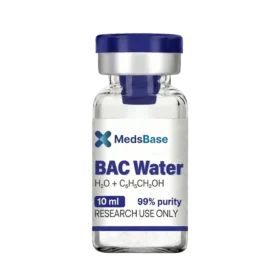
- BAC Water(静菌水) — 全ての凍結乾燥バイアルの再溶解に必要 — 無菌、0.9%ベンジルアルコール保存希釈液
ペプチドをもっと見る
最近のMedsBaseでの注文数に基づくランキング — このカテゴリーで他のお客様が選んでいる商品です。
| 含量 | 2 mg、5 mg、10 mg |
|---|---|
| 数量 | 10バイアル、20バイアル、30バイアル |
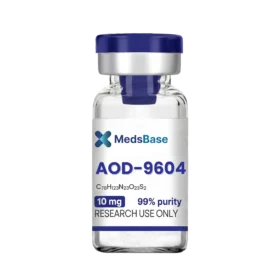 AOD-9604(抗肥満薬9604 / Tyr-hGH 177-191)
Q&A
AOD-9604(抗肥満薬9604 / Tyr-hGH 177-191)
関連商品
レビュー
まだレビューはありません