








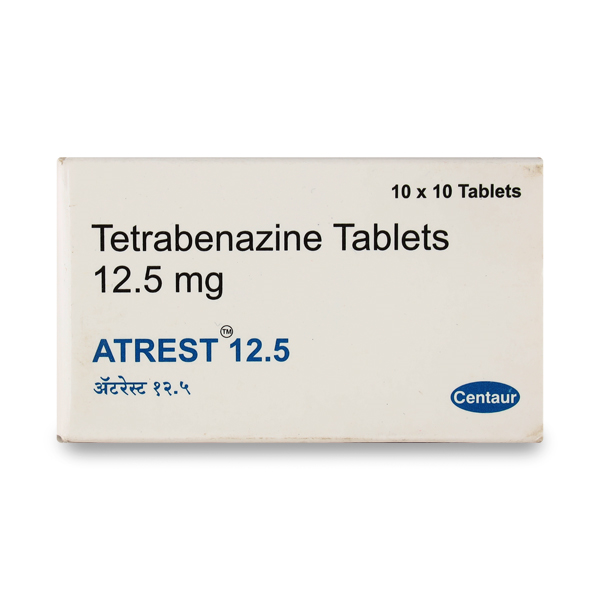
Atrest
✅ Zmniejsza ruchy mimowolne
✅ Kontroluje objawy pląsawicy
✅ Poprawia funkcje motoryczne
✅ Poprawia jakość życia
✅ Minimalizuje skurcze mięśni
Atrest zawiera Tetrabenazine.
✓ Zweryfikowany medycznie przez Morgan Ellis — Badacz farmaceutyczny · 8 lat doświadczenia · Ostatnia weryfikacja: maj 2026
⚡ Krótka odpowiedź — Czym jest Atrest?
Atrest to doustna tetrabenazine (12.5 mg) tabletka — inhibitor VMAT2 (pęcherzykowego transportera monoaminowego 2) specjalnie zatwierdzony do leczenia pląsawica związana z chorobą Huntingtona. Działa poprzez zmniejszanie poziomu dopaminy w zakończeniach nerwowych, redukując mimowolne ruchy wiercenia i szarpnięcia charakterystyczne dla pląsawicy Huntingtona. Dawka początkowa: 12,5 mg raz dziennie, zwiększana co tydzień o 12,5 mg do maksymalnie 37,5 mg/dawkę (75–100 mg/dobę), zawsze podzielona na 2–3 dawki. Pacjenci przyjmujący >50 mg/dobę wymagają genotypowania CYP2D6. Częste działania niepożądane: sedacja, akatyzja, depresja, parkinsonizm, bezsenność. Ostrzeżenie black-box: zwiększa ryzyko depresji i myśli samobójczych u pacjentów z chorobą Huntingtona — monitoruj nastrój uważnie.
📦 Każde zamówienie jest objęte naszą Polityka Gwarancji Ponownej Wysyłki — jeśli Twoja przesyłka nie dotrze w ciągu 20 dni roboczych, wysyłamy ją ponownie.
Dlaczego warto zamawiać z MedsBase
Nasze leki generyczne pochodzą od producentów posiadających certyfikat WHO-GMP i są wysyłane na cały świat w dyskretnym, zwykłym opakowaniu — bez nazwy leku na zewnątrz przesyłki. Płatności kartami są kierowane przez regulowanego procesora (opis wyciągu zawiera nazwę regulowanego procesora płatności — nigdy “MedsBase” ani żadnej nazwy leku). Akceptujemy również kryptowaluty i przelewy bankowe SEPA. Każde zamówienie jest objęte naszą Reshipment Assurance Policy.
Co to jest Atrest?
Atrest to tabletka doustna zawierająca tetrabenazynę 12,5 mg. Tetrabenazyna jest inhibitorem transportera monoaminowego pęcherzykowego typu 2 (VMAT2) — pierwszym lekiem zatwierdzonym specjalnie do leczenia pląsawica związana z chorobą Huntingtona.
Poprzez wyczerpywanie presynaptycznych zapasów dopaminy, tetrabenazyna zmniejsza mimowolne, taneczne ruchy (pląsawicę) charakterystyczne dla choroby Huntingtona, bez ryzyka późnej dyskinezji, jakie występuje przy tradycyjnych blokerach receptorów dopaminowych. Po raz pierwszy zastosowano ją w Europie w latach 70. XX wieku, a w 2008 roku uzyskała aprobatę FDA jako Xenazine. Atrest jest produkowany w zakładzie certyfikowanym przez WHO-GMP i jest bioekwiwalentny wobec oryginalnej marki w tej samej dawce.
Jak działa Atrest (Tetrabenazyna)?
Tetrabenazyna nieodwracalnie hamuje VMAT2, białko odpowiedzialne za pakowanie dopaminy, serotoniny i noradrenaliny do pęcherzyków synaptycznych. Blokując VMAT2, lek zmniejsza presynaptyczne zapasy monoamin – głównie dopaminy w jądrach podstawy. Nadmierna aktywność dopaminergiczna w prążkowiu jest główną przyczyną ruchów pląsawiczych w chorobie Huntingtona, więc zmniejszenie dostępności dopaminy dla receptorów postsynaptycznych bezpośrednio tłumi pląsawicę.
Lek jest intensywnie metabolizowany przez CYP2D6 do dwóch aktywnych metabolitów (α-HTBZ i β-HTBZ), które odpowiadają za większość efektu klinicznego. Słabi metabolizatorzy CYP2D6 mają znacznie wyższe stężenia w osoczu, dlatego przed przekroczeniem dawki 50 mg/dobę wymagane jest genotypowanie.
Dawkowanie i podawanie
| Tydzień | Dawka dobowa | Harmonogram |
|---|---|---|
| Tydzień 1 | 12.5 mg | Raz dziennie (rano) |
| Tydzień 2 | 25 mg | 12,5 mg dwa razy dziennie |
| Tydzień 3+ | 37,5–50 mg | Podzielone na 2–3 dawki |
| Maksymalnie | 75–100 mg/dzień* | *Wymagane genotypowanie CYP2D6 przy dawkach >50 mg/dzień |
Przyjmuj z posiłkiem lub bez. Pojedyncza dawka nie powinna przekraczać 37,5 mg. Jeśli leczenie zostanie przerwane na >5 dni, należy ponownie rozpocząć od dawki 12,5 mg.
Działania niepożądane
Częste (≥10%): senność, zmęczenie, bezsenność, depresja, akatyzja (niepokój ruchowy), lęk, nudności.
Poważne: parkinsonizm (zależny od dawki), złośliwy zespół neuroleptyczny (rzadki), wydłużenie QTc (unikać u pacjentów z wrodzonym zespołem długiego QT), dysfagia (zwiększone ryzyko zachłyśnięcia u pacjentów z chorobą Huntingtona).
Ostrzeżenia i środki ostrożności
- Depresja i myśli samobójcze — ostrzeżenie black-box FDA. Tetrabenazyna zwiększa ryzyko depresji oraz myśli/zachowań samobójczych u pacjentów z chorobą Huntingtona, u których już występuje wysokie podstawowe ryzyko samobójstwa (~5–10%). Przed rozpoczęciem leczenia należy ocenić stan depresyjny. Przerwać leczenie w przypadku nasilenia depresji lub pojawienia się myśli samobójczych.
- Zespół neuroleptyczny (NMS). Rzadko występuje, ale odnotowano przypadki. Należy podejrzewać NMS, jeśli u pacjenta wystąpi hipertermia, sztywność, zaburzenia świadomości i niestabilność autonomiczna. Natychmiast przerwać podawanie leku.
- Parkinsonizm. Deplecja dopaminy może powodować bradykinezję, sztywność, drżenie i upadki. Zależne od dawki — zmniejszyć dawkę, jeśli pojawią się objawy parkinsonizmu.
- Dysfagia. Tetrabenazyna może nasilać trudności w połykaniu, które już stanowią problem w chorobie Huntingtona. Zwiększa się ryzyko aspiracji. Monitorować i rozważyć ocenę przez logopedę.
- Wydłużenie odstępu QTc. W dawkach >50 mg/dobę tetrabenazyna wydłuża odstęp QT. Zaleca się monitorowanie EKG przy wyższych dawkach. Unikać łączenia z innymi lekami wydłużającymi QTc.
- Słabi metabolizatorzy CYP2D6. Tetrabenazyna jest intensywnie metabolizowana przez CYP2D6. Słabi metabolizatorzy mają wyższe stężenia w osoczu i zwiększone ryzyko toksyczności. Maksymalna dawka u słabych metabolizatorów CYP2D6 wynosi 50 mg/dobę (w porównaniu do 100 mg/dobę u szybkich metabolizatorów). Zaleca się genotypowanie CYP2D6 przed przekroczeniem dawki 50 mg/dobę.
- Niewydolność wątroby. Przeciwwskazane u pacjentów z zaburzeniami czynności wątroby (brak danych dotyczących dostosowania dawki).
- Prowadzenie pojazdów. Sedacja, akatyzja i parkinsonizm mogą upośledzać zdolność prowadzenia pojazdów. Unikać do czasu ustabilizowania dawki.
Przeciwwskazania — Kto NIE powinien przyjmować Atrest
- Aktywna tendencja samobójcza lub niewłaściwie leczona depresja
- Niewydolność wątroby
- Jednoczesne stosowanie z Inhibitory MAO (ryzyko przełomu nadciśnieniowego)
- Jednoczesne stosowanie z rezeryna (addytywne wyczerpanie dopaminy/serotoniny)
- Znana nadwrażliwość na tetrabenazynę lub jakikolwiek składnik pomocniczy
Interakcje lekowe
- Inhibitory MAO: Przeciwwskazane — ryzyko przełomu nadciśnieniowego. Odczekać ≥14 dni po odstawieniu MAOI przed rozpoczęciem tetrabenazyny.
- Silne inhibitory CYP2D6 (fluoksetyna, paroksetyna, chinidyna): Zwiększa ekspozycję na tetrabenazynę — wymagana redukcja dawki.
- Rezerpina: Przeciwwskazane — addytywne wyczerpanie monoamin. Odczekać ≥20 dni między podaniem leków.
- Antagoniści dopaminy (leki przeciwpsychotyczne, metoklopramid): Zwiększone ryzyko parkinsonizmu i akatyzji.
- Alkohol i leki depresyjne OUN: Wzmocniona sedacja — unikać lub stosować ostrożnie.
Instrukcja przechowywania
- Przechowywać w temperaturze pokojowej, 15–30°C. Chronić przed wilgocią.
- Przechowywać w oryginalnym opakowaniu do momentu użycia.
- Przechowywać w miejscu niedostępnym dla dzieci.
- Nie stosować po upływie terminu ważności.
Powiązane kategorie na MedsBase
- Przeglądaj wszystkie leki neurologiczne i przeciwpadaczkowe
- Przeglądaj leki psychiatryczne i na zdrowie psychiczne
Najczęściej zadawane pytania
Do czego stosuje się Atrest?
Atrest zawiera tetrabenazynę 12,5 mg i jest stosowany w leczeniu pląsawicy (mimowolnych ruchów) związanej z chorobą Huntingtona. Jest to pierwszy lek zatwierdzony specjalnie do tego wskazania. Może być również stosowany off-label w leczeniu dyskinezji późnych i innych hiperkinetycznych zaburzeń ruchowych.
Jak długo tetrabenazyna działa na redukcję pląsawicy?
Redukcja pląsawicy jest zazwyczaj zauważalna w ciągu 1–2 tygodnie od osiągnięcia dawki terapeutycznej podczas tytracji. Badanie TETRA-HD wykazało znaczną redukcję wyników pląsawicy po średniej dawce podtrzymującej ~50 mg/dzień przez 12 tygodni.
Dlaczego tetrabenazyna wymaga genotypowania CYP2D6?
Tetrabenazyna jest metabolizowana przez CYP2D6 do aktywnych metabolitów. Słabi metabolizatorzy (5–10% osób rasy kaukaskiej) mają znacznie wyższe stężenie leku i są bardziej narażeni na działania niepożądane. Genotypowanie jest wymagane przed przekroczeniem dawki 50 mg/dzień, aby ustalić bezpieczny pułap dawkowania.
Czy mogę nagle odstawić Atrest?
Nagłe odstawienie jest zazwyczaj dobrze tolerowane (pląsawica powraca, ale nie przekracza poziomu wyjściowego). Jednak jeśli przyjmowałeś lek przez miesiące, rozsądne jest stopniowe zmniejszanie dawki przez 1–2 tygodnie, aby monitorować zmiany nastroju. Jeśli przerwa trwa >5 dni, należy ponownie rozpocząć tytrację od 12,5 mg.
Jaka jest różnica między tetrabenazyną a deutetrabenazyną?
Deutetrabenazine (Austedo) to deuterowana forma — ta sama cząsteczka, w której atomy wodoru w kluczowych pozycjach zostały zastąpione deuterem. Spowalnia to metabolizm przez CYP2D6, co skutkuje dłuższym okresem półtrwania, niższymi szczytowymi stężeniami i dawkowaniem dwa razy dziennie zamiast trzech razy dziennie. Deutetrabenazine wykazuje również mniejsze ryzyko senności w badaniach klinicznych.
Czy tetrabenazyna powoduje parkinsonizm?
Tak — ponieważ zmniejsza poziom dopaminy, może wywoływać zależne od dawki objawy parkinsonizmu (bradykinezja, sztywność, drżenie). Objawy te zwykle ustępują po zmniejszeniu dawki. Celem jest znalezienie najniższej dawki, która odpowiednio kontroluje ruchy pląsawicze bez wywoływania parkinsonizmu.
Czy Atrest to to samo co Xenazine?
Oba preparaty zawierają tetrabenazynę. Xenazine to oryginalna marka produkowana przez Lundbeck. Atrest jest tabletką generyczną o tym samym składzie aktywnym, sile (12,5 mg) i biodostępności, ale w niższej cenie.
Czy tetrabenazynę można stosować w dyskinezie późnej?
Tetrabenazyna jest stosowana poza wskazaniami w dyskinezie późnej (TD) i wykazała korzyści w seriach przypadków oraz małych badaniach. Jednak, valbenazine (Ingrezza) i deutetrabenazine (Austedo) są specyficznie zatwierdzone przez FDA do leczenia TD i są generalnie preferowane.
Czy można pić alkohol podczas przyjmowania leku Atrest?
Alkohol nasila działanie sedacyjne i depresyjne na ośrodkowy układ nerwowy tetrabenazyny. Pogarsza również depresję — co jest istotnym problemem, biorąc pod uwagę ostrzeżenie w czarnej ramce. Unikaj alkoholu lub znacznie ogranicz jego spożycie.
Co powinienem zrobić, jeśli pominię dawkę?
Przyjmij pominiętą dawkę tak szybko, jak to możliwe, chyba że zbliża się czas przyjęcia kolejnej dawki. Nie przyjmuj podwójnej dawki. Jeśli pominięte dawki występują przez 5 lub więcej kolejnych dni, skontaktuj się z lekarzem — może być konieczne ponowne ustalenie dawki początkowej.
Czy Atrest wchodzi w interakcje z lekami przeciwdepresyjnymi?
SSRI i SNRI silnie hamujące CYP2D6 (fluoksetyna, paroksetyna) zwiększą poziom tetrabenazyny — konieczna jest modyfikacja dawki. Słabsze inhibitory CYP2D6 (sertralina, citalopram, escitalopram) są bezpieczniejszym wyborem, jeśli konieczne jest stosowanie leku przeciwdepresyjnego wraz z tetrabenazyną.
Powiązane alternatywy
Inne produkty w Choroby przewlekłe które klienci również przeglądają:
Więcej opcji w zakresie schorzeń neurologicznych i epilepsji
Ranking według liczby ostatnich zamówień MedsBase — co wybierają inni klienci w tej kategorii.



| Moc | 12.5 mg |
|---|---|
| Ilość | 10 tabletek, 30 tabletek, 60 tabletek, 90 tabletek, 180 tabletek |
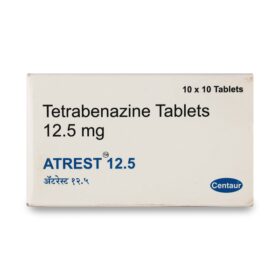 Atrest
Pytania i odpowiedzi
Atrest
Produkty powiązane











Opinie
Nie ma jeszcze opinii