







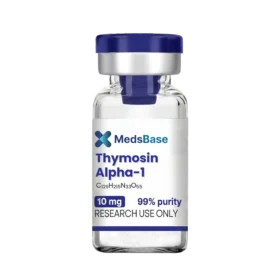
Tymozyna Alfa-1 (Tα1 / Tymalfazyna)
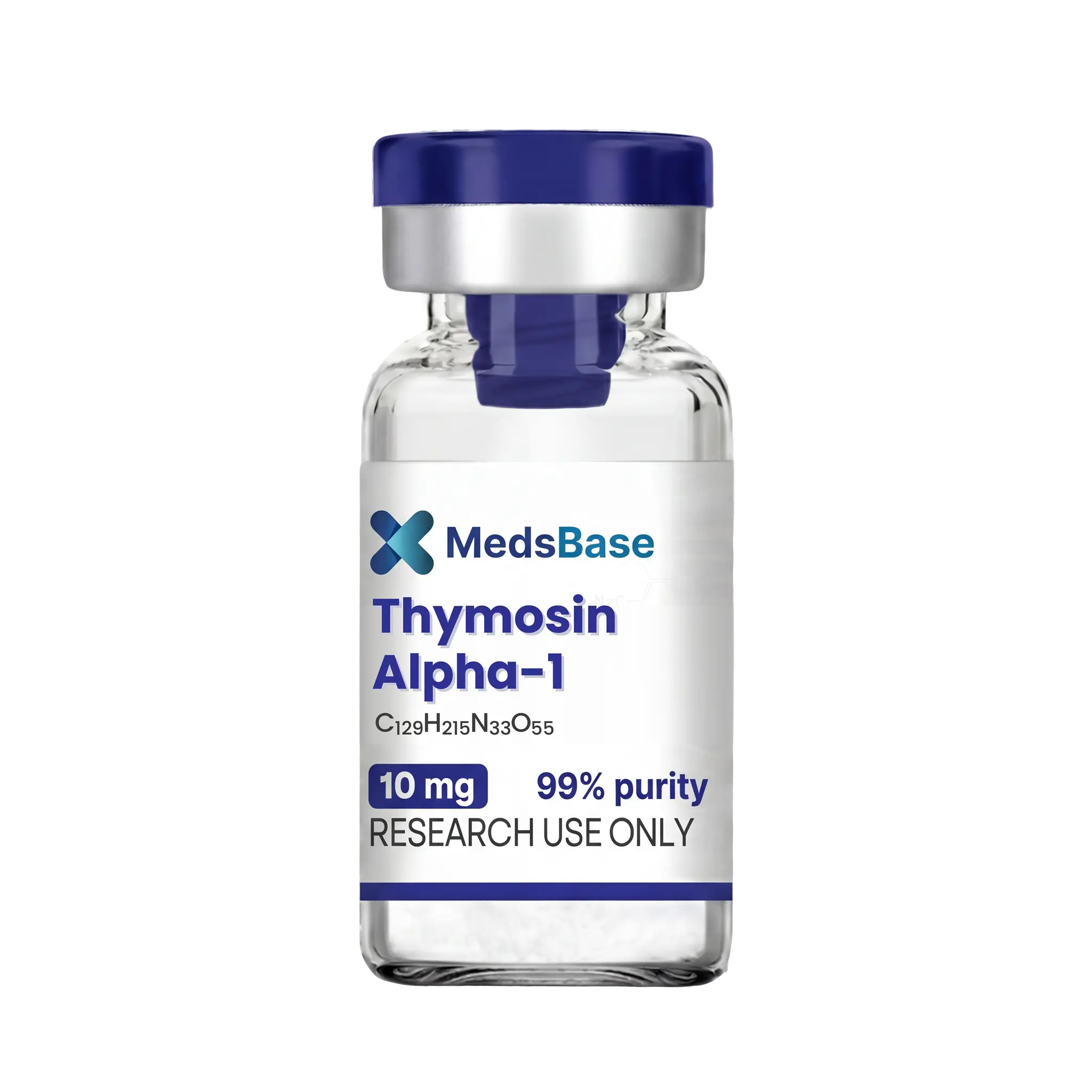
✅ Syntetyczny 28-aa peptyd N-acetylowany (reszty 2-29 protymozyny α)
✅ Agonista TLR9 + TLR2; dojrzewanie komórek T z polaryzacją Th1
✅ Zatwierdzony klinicznie (Zadaxin) w 35+ krajach dla HBV/HCV
✅ Zdefiniowany pojedynczy sekwencyjny peptyd — różny od wieloskładnikowego Thymalin
✅ CAS 62304-98-7 (wolny) / 62304-94-3 (octan); MW 3 108,3
Tymozyna Alfa-1 zawiera syntetyczny 28-aa immunomodulujący peptyd badawczy.
✓ Zweryfikowany medycznie przez Morgan Ellis — Badacz farmaceutyczny · 8 lat doświadczenia · Ostatnia weryfikacja: maj 2026
Krótka odpowiedź — co to jest tymozyna alfa-1?
Tymozyna Alfa-1 (Tα1; klinicznie Thymalfasin / Zadaxin) to syntetyczny 28-aminokwasowy peptyd (CAS 62304-98-7 wolna forma, 62304-94-3 octan; MW 3 108,3 g/mol) odpowiadający N-końcowym 28 resztom naturalnego prekursora protymozyny pochodzącego z grasicy. Sekwencja: Ac-Ser-Asp-Ala-Ala-Val-Asp-Thr-Ser-Ser-Glu-Ile-Thr-Thr-Lys-Asp-Leu-Lys-Glu-Lys-Lys-Glu-Val-Val-Glu-Glu-Ala-Glu-Asn-OH. Mechanizm: aktywuje TLR9 i TLR2 na komórkach dendrytycznych i makrofagach, indukuje dojrzewanie komórek T z polaryzacją Th1, zwiększa proliferację komórek CD4+ i CD8+ oraz wzmaga produkcję cytokin IFN-γ/IL-2. Zatwierdzony klinicznie w ponad 35 krajach (pod marką Zadaxin) w leczeniu przewlekłego wirusowego zapalenia wątroby typu B i C, stosowany również jako adiuwant wspomagający układ odpornościowy w badaniach onkologicznych. Wyłącznie do użytku laboratoryjnego. Zdefiniowany pojedynczy sekwencyjnie 28-aminokwasowy peptyd — różny od wieloskładnikowego Thymalin preparatu polipeptydowego.
📦 Każde zamówienie jest objęte naszą Polityka Gwarancji Ponownej Wysyłki — jeśli Twoja przesyłka nie dotrze w ciągu 20 dni roboczych, wysyłamy ją ponownie.
| Specyfikacja | Szczegóły |
|---|---|
| Klasa związku | Syntetyczny 28-aminokwasowy peptyd immunomodulujący (fragment N-końcowy protymozyny α); agonista TLR9/TLR2; zdefiniowany pojedynczy sekwencyjnie peptyd grasiczny |
| Nazwa chemiczna | Tymozyna Alfa-1 (synonimy: Tα1, Thymalfasin, Zadaxin) |
| Numer CAS | 62304-98-7 (wolny peptyd); 62304-94-3 (sól octanowa) |
| Sekwencja | Ac-Ser-Asp-Ala-Ala-Val-Asp-Thr-Ser-Ser-Glu-Ile-Thr-Thr-Lys-Asp-Leu-Lys-Glu-Lys-Lys-Glu-Val-Val-Glu-Glu-Ala-Glu-Asn-OH (28 aminokwasów; acetylacja N-końcowa; odpowiada resztom 2–29 protymozyny α) |
| Masa cząsteczkowa | 3 108,3 g/mol |
| Wzór cząsteczkowy | C129H215N33O55; MW 3108,32 g/mol (28-aa peptyd N-końcowo acetylowany, wolna grupa karboksylowa C-końca). |
| Mechanizm | Aktywuje TLR9 (receptor toll-podobny 9) na komórkach dendrytycznych i plazmacytoidalnych DC, z wtórnym TLR2 pobudzeniem. Efekty następczo: kaskada sygnałowa MyD88-IRAK-NF-κB; dojrzewanie komórek T z polaryzacją Th1; zwiększona proliferacja komórek CD4+ / CD8+; wzmożona produkcja IFN-γ i IL-2; aktywacja cytotoksyczności komórek NK; modulacja równowagi regulatorowych komórek T (Treg). Efekt netto to szerokie przywrócenie odporności / wzmocnienie odpowiedzi Th1. |
| Postać / Czystość / Przechowywanie | Liofilizowany biały do białego proszek, ≥99% HPLC. Przechowywać krótkoterminowo w 2–8 °C, długoterminowo w −20 °C. Po rekonstytucji: 2–8 °C, użyć w ciągu 30 dni. Unikać zamrażania-odmrażania. |
| Do celów badawczych | Wyłącznie do zastosowań laboratoryjnych. Zadaxin (kliniczny Tα1) jest zatwierdzony w 35+ krajach do leczenia przewlekłego HBV i HCV (niezatwierdzony przez FDA w USA). Nie znajduje się na Liście Substancji Zabronionych WADA. |
Mechanizm działania — aktywacja TLR9 / TLR2 + polaryzacja Th1
Tymozyna Alfa-1 to zdefiniowany sekwencyjnie immunomodulujący peptyd o dobrze scharakteryzowanym mechanizmie działania w opublikowanych badaniach:
- Agonizm TLR9 na komórkach dendrytycznych — Tα1 wiąże TLR9 (endosomalny receptor rozpoznający wzorce, normalnie aktywowany przez motywy CpG-DNA) na komórkach dendrytycznych i plazmacytoidalnych DC, uruchamiając sygnalizację MyD88 → IRAK → NF-κB. Powoduje to fenotyp dojrzewania DC ze zwiększoną ekspresją cząsteczek kostymulujących MHC klasy II, CD80, CD86.
- Wtórne pobudzenie TLR2 — Słabsze wiązanie TLR2 na makrofagach i komórkach DC przyczynia się do dodatkowej produkcji prozapalnych cytokin.
- Polarizacja dojrzewania komórek T w kierunku Th1 — Dojrzałe komórki DC aktywowane przez TLR9 indukują różnicowanie komórek CD4+ w kierunku Th1; IL-12 z aktywowanych komórek DC jest kluczowym sygnałem polarizującym Th1.
- Ekspansja komórek T CD4+ i CD8+ — W grupach leczonych Tα1 obserwuje się mierzalny wzrost krążących komórek CD4+ i CD8+ z normalizacją zmniejszonego stosunku CD4+/CD8+.
- Wzmożona cytotoksyczność komórek NK — Aktywacja komórek NK napędzana przez IL-12 prowadzi do zwiększonej produkcji IFN-γ i nasilonego niszczenia komórek nowotworowych/zakażonych wirusem.
- Modulacja komórek T regulatorowych (Treg) — Opublikowane badania dokumentują wpływ Tα1 na homeostazę Treg ze zmniejszoną proporcją FoxP3+ Treg w kontekstach przewlekłych infekcji.
Opublikowane zastosowania badawcze
- Badania nad przewlekłym HBV i HCV — najczęściej publikowane zastosowanie kliniczne; Zadaxin zatwierdzony w 35+ krajach dla tych wskazań
- Badania nad wsparciem immunologicznym w onkologii — stosowany w opublikowanych badaniach jako immunoadiuwant w protokołach leczenia czerniaka, raka wątrobowokomórkowego, raka płuca
- Badania nad HIV/gospodarzem z niedoborem odporności — ekspansja komórek T CD4+ w opublikowanych kontekstach badań nad HIV
- Badania nad modulacją odporności w sepsie/ciężkich zakażeniach — Tα1 był badany w kontekście odwracania immunoparaliżu w sepsie
- Farmakologia TLR9 — Tα1 jest jednym z kanonicznych peptydowych agonistów TLR9, obok CpG ODN
- Badania nad adiuwantami szczepionkowymi — Właściwości adiuwantu promującego odpowiedź Th1
W przypadku związanych z nimi peptydów badawczych zobacz Thymalin (wieloskładnikowy ekstrakt grasicy — klasa bioregulatorów Chawinsona), LL-37 (wrodzony peptyd przeciwdrobnoustrojowy), Epitalon (bioregulator szyszynkowy Chawinsona). Przeglądaj pełną katalog badań nad peptydami.
Dostępne mocowania
| Mocowanie fiolki | Rozmiary opakowań |
|---|---|
| 5 mg — standardowe badania; odpowiada wzorcowi wielkości fiolki klinicznej Zadaxin | 10, 20 lub 30 fiolek |
| 10 mg — badania z protokołem rozszerzonym lub wysoką dawką; najniższy koszt na mg | 10, 20 lub 30 fiolek |
Porównanie — tymozyna alfa-1 vs tymalina
Oba są peptydami odpornościowymi grasicy. Tymozyna alfa-1 to zdefiniowany pojedynczy peptyd o sekwencji 28 aminokwasów (CAS 62304-98-7) o dobrze scharakteryzowanym mechanizmie TLR9/TLR2. Thymalin jest wieloskładnikowy preparat polipeptydowy ekstrahowany z tkanki grasicy — zawierający wiele krótkich oligopeptydów, których poszczególne sekwencje nieznacznie różnią się między partiami. W badaniach wymagających zdefiniowanej sekwencji farmakologicznej, Thymosin Alpha-1 jest bardziej precyzyjnym narzędziem. W badaniach wymagających szerszego efektu klasy bioregulatorów Khavinsona preparatów z ekstraktu grasicy, Thymalin jest właściwym wyborem.
Przechowywanie i rekonstytucja
Przechowuj liofilizowane fiolki w temperaturze 2–8 °C krótkoterminowo, −20 °C długoterminowo. Rekonstytuuj wodą bakteriostatyczną (1,0 mL na fiolkę 5 mg → 5 mg/mL; 1,0 mL na fiolkę 10 mg → 10 mg/mL). Delikatnie wymieszaj. Przechowuj zrekonstytuowany preparat w temperaturze 2–8 °C, użyj w ciągu 30 dni.
FAQ
Jaka jest różnica między Thymosin Alpha-1 a Thymalin?
Thymosin Alpha-1 to zdefiniowany syntetyczny peptyd 28-aa o scharakteryzowanym mechanizmie TLR9/TLR2. Thymalin to wieloskładnikowy preparat z ekstraktu tkanki grasicy. Zobacz sekcję porównania powyżej.
Czy Thymosin Alpha-1 jest zatwierdzony przez FDA?
Zadaxin (kliniczny Thymalfasin) jest zatwierdzony w ponad 35 krajach (Chiny, Włochy, inne) w leczeniu przewlekłego HBV i HCV — ale NIE jest zatwierdzony przez FDA w USA.
Jakie zakresy dawek są stosowane w badaniach?
Kliniczne dawkowanie Zadaxinu to 1,6 mg podskórnie dwa razy w tygodniu przez 6 miesięcy w protokołach HCV/HBV. Badania in vivo na gryzoniach wykorzystują 50–200 µg/kg podskórnie. Stymulacja DC in vitro zazwyczaj używa 0,1–10 µg/mL.
Czy Thymosin Alpha-1 można łączyć z innymi peptydami immunologicznymi?
Tak — opublikowane badania obejmowały Tα1 + IFN-α (protokoły HCV), Tα1 + inhibitory punktów kontrolnych (badania onkologiczne) oraz Tα1 + Thymalin lub LL-37 do szerszej modulacji immunologicznej.
Inne peptydy badawcze dotyczące odporności/antybakteryjne
- Thymalin — Wieloskładnikowy preparat polipeptydów grasicy klasy Khavinson
- LL-37 (Cathelicidin) — Peptyd przeciwdrobnoustrojowy wrodzonej odporności
- Epitalon — Tetrapeptyd osi szyszynkowej Khavinsona
- Selank — Anksjolityk + rosyjski peptyd immunomodulujący
- BPC-157 — Pentadekapeptyd naprawiający tkanki
- BAC Water (Woda bakteriostatyczna) — Wymagany do rekonstytucji każdej liofilizowanej fiolki — sterylny rozcieńczalnik z 0,9% benzylowym alkoholem jako środkiem konserwującym
Więcej opcji w Peptydach
Ranking według liczby ostatnich zamówień MedsBase — co wybierają inni klienci w tej kategorii.
| Moc | 5 mg, 10 mg |
|---|---|
| Ilość | 10 fiolek, 20 fiolek, 30 fiolek |
 Tymozyna Alfa-1 (Tα1 / Tymalfazyna)
Pytania i odpowiedzi
Tymozyna Alfa-1 (Tα1 / Tymalfazyna)
Produkty powiązane
Opinie
Nie ma jeszcze opinii