







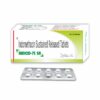
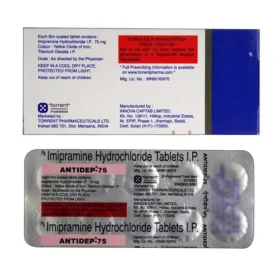
Antidep
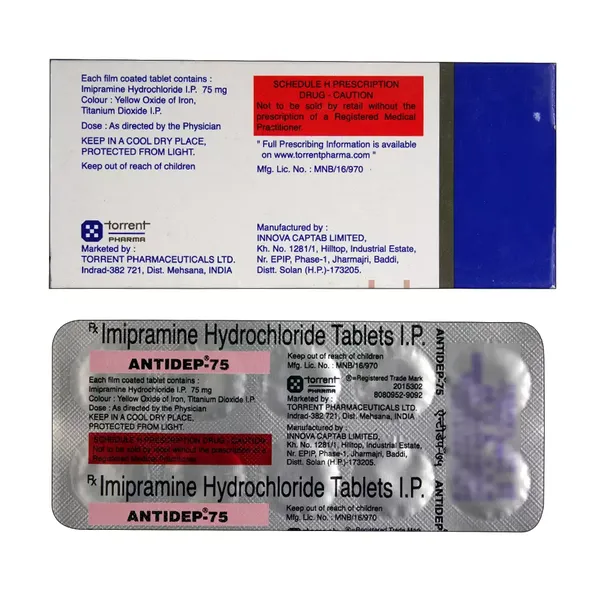
Antidep (Imipramină 25/75 mg) — TCA de primă generație pentru depresie, panică, enureză pediatrică ≥6 ani. TCA de referință — blocaj echilibrat al recaptării 5-HT/NA.
✓ Verificat medical de Morgan Ellis — Cercetător farmaceutic · 8 ani de experiență · Ultima recenzie: mai 2026
⚡ Răspuns rapid
Antidep (Imipramină 25 / 75 mg) este un antidepresiv triciclic. Utilizat pentru depresia majoră, tulburarea de panică și (în mod unic) enureza nocturnă pediatrică. Povara de tolerabilitate mai mare decât SSRI — linia a doua pentru majoritatea pacienților.
📦 Fiecare comandă este acoperită de politica noastră de Politica noastră de Reexpediere Garantată — dacă coletul dumneavoastră nu sosește în 20 de zile lucrătoare, îl relivrăm.
De ce să comanzi de la MedsBase
Antidep de la MedsBase este furnizat direct de la un producător certificat WHO-GMP în ambalaje simple și discrete. Fiecare comandă este acoperită de asigurarea noastră Politica noastră de Reexpediere Garantată — perioadă de livrare de 20 de zile lucrătoare sau retrimitem fără costuri suplimentare — și se califică pentru programul nostru de loialitate pentru clienți. Livrările sunt disponibile în majoritatea destinațiilor la nivel mondial.
Ce este Antidep și cum funcționează
Antidep este un comprimat care conține Imipramină, furnizat de Intas. Doze disponibile: 25 / 75 mg.
Imipramina a fost primul antidepresiv triciclic (Geigy, 1957) și rămâne un agent util pentru depresia majoră când ISRS-urile au eșuat, tulburarea de panică și — în mod unic — enureza nocturnă pediatrică (pipilatul în pat) când măsurile comportamentale au eșuat.
Antidepresivele triciclice blochează recaptarea serotoninei și noradrenalinei la nivelul transportorilor presinaptici, similar cu SSRI-urile și SNRI-urile. Dezavantajul lor de tolerabilitate provine din blocarea receptorilor off-target: muscarinic (efecte secundare anticolinergice), histaminergici H1 (sedare, creștere în greutate) și α1-adrenergici (hipotensiune ortostatică). De asemenea, blochează canalele rapide de sodiu în țesutul cardiac — baza atât pentru acțiunea lor analgezică, cât și pentru toxicitatea cardiacă în caz de supradoză.
Imipramina are cea mai echilibrată inhibare a recaptării serotonină-noradrenalină dintre TCA-uri și este referința istorică pentru noile agenți.
Indicații și dozaj
| Indicație | Doza inițială | Țintă | Maxim |
|---|---|---|---|
| Depresie majoră (adult) | 25–50 mg HS | 100–200 mg/zi | 300 mg |
| Tulburare de panică | 10 mg OD × 1 săpt. | 50–150 mg/zi | 200 mg |
| Enureză pediatrică (≥6 ani) | 1,0–1,5 mg/kg la culcare | 1,5–2,5 mg/kg la culcare | 2,5 mg/kg sau 75 mg, oricare este mai mic |
| Pacienți vârstnici | 10 mg HS | 30–50 mg/zi | în funcție de tolerabilitate |
Considerații importante de siguranță
TCA prelungesc QRS și QT, iar supradozarea este amenințătoare la viață — istoric, cea mai frecventă cauză a deceselor prin antidepresive. ECG de bază înainte de inițiere la pacienții cu boli cardiace cunoscute, sub terapie care prelungește QT sau la vârstnici. Nu începeți după infarct miocardic recent, anomalie de conducere, insuficiență cardiacă necompensată sau QT lung congenital. Limitați cantitățile dispuse la pacienții cu risc de suicid — raportul terapeutic-toxic este îngust.
Gură uscată, constipație, vedere încețoșată, dificultate la urinare, încetinire cognitivă — universale la doze terapeutice. Evitați la glaucom cu unghi îngust, HBP cu retenție semnificativă și demență. Combinați cu gumă de mestecat / pastile fără zahăr, fibre + lichide și emoliente fecale.
Toate antidepresivele poartă un avertisment FDA în cadou negru pentru creșterea gândurilor suicidare la pacienții sub 25 de ani — relevant mai ales pentru clomipramină în TOC la adolescenți.
Efecte secundare frecvente
- Anticolinergic: gură uscată, constipație, vedere încețoșată, dificultate la urinare.
- Sedare: în special doxepină și clomipramină; administrarea la ora de culcare ajută.
- Cardiovascular: hipotensiune ortostatică (blocare α1), tahicardie, prelungire a intervalelor de conducere.
- Metabolic: creștere în greutate (5–10 kg pe parcursul a 12 luni la mulți pacienți), creștere a apetitului.
- Sexual: libido scăzut, ejaculare întârziată (uneori utilizată clinic pentru ejaculare prematură), dificultăți de erecție.
- Interrupție tratament: reducere progresivă pe 4 săptămâni; întreruperea bruscă provoacă simptome asemănătoare gripei, tulburări digestive și tulburări de somn.
Interacțiuni medicamentoase
- MAOI — contraindicație absolută. Perioadă de eliminare de 14 zile în ambele direcții.
- SSRI / SNRI — risc serotoninergic aditiv; inhibarea CYP2D6 de fluoxetină și paroxetină crește nivelul TCA.
- Medicamente care prelungesc intervalul QT (azole, macrolide, amiodaronă, sotalol, metadonă, ondansetron, antipsihotice) — risc aditiv.
- Alte anticolinergice (oxibutinină, benztropină, antihistaminice, clozapină, olanzapină) — încărcare aditivă la adulții în vârstă.
- Depresante ale SNC — sedare aditivă.
- Tramadol, bupropion, fluoroquinolone — scădere a pragului convulsiv; risc aditiv de convulsii.
Sarcina, alăptare, pediatric
TCA sunt aprobate de FDA în sarcină categoria C. Expunerea în sarcină târzie poate produce sindrom de sevraj anticolinergic neonatal. Lactație: TCA trec în lapte matern în cantități mici; nortriptilina și imipramina sunt cele mai studiate. Pediatric: imipramina este autorizată de la vârsta de 6 ani (enureză) și clomipramina de la 10 ani (TOC); doxepina la adolescenți doar cu consult specializat.
Depozitare
Păstrați la 15–30 °C, departe de lumina directă a soarelui, în ambalajul original. Țineți departe de copii — ingestia pediatrică de TCA este o urgență medicală.
Întrebări frecvente
Cât durează până începe să actioneze Antidep?
TCA-urile arată de obicei beneficii în 2–4 săptămâni. Îmbunătățirile somnului și ale anxietății apar adesea în săptămâna 1; efectul antidepresiv se dezvoltă în 4–6 săptămâni.
De ce administrare la ora de culcare?
Doxepina, clomipramina și imipramina au toate efect sedativ. Administrarea la ora de culcare transformă sedația într-un beneficiu (somn) în loc de un efect secundar negativ (somnolență diurnă). De asemenea, reduce hipotensiunea ortostatică prin somnul în perioada de vârf.
Este Antidep sigur pentru persoanele în vârstă?
ATC-urile sunt pe lista Beers Criteria a medicamentelor potențial inadecvate pentru adulții în vârstă din cauza încărcăturii anticholinergice, a hipotensiunii ortostatice și a riscului cardiac. Nu sunt absolut contraindicate, dar sunt în general de a doua linie — ISRS/ISRSN sunt preferate, cu excepția cazurilor în care un beneficiu specific (de ex. durere, somn) depășește riscurile.
Pot consuma alcool în timp ce iau Antidep?
Alcoolul amplifică efectele sedative și ortostatice ale ATC-urilor. Limitați-vă la consum ocazional și moderat; evitați complet consumul excesiv. Combinația nu este de obicei periculoasă în moderație, dar se simte mai rău decât fiecare substanță luată separat.
Care este riscul de supradoză?
ATC-urile sunt printre cele mai letale clase de medicamente în caz de supradoză — colaps al conducției cardiace, convulsii și comă poate apărea la multipli relativ mici ai dozei terapeutice. Limitați cantitățile dispuse la pacienții cu risc de suicid. Dacă se suspectează supradozare, prezentați-vă imediat la urgențe — bicarbonatul de sodiu este antidotul pentru toxicitatea cardiacă, dar momentul administrării contează.
Antidep îmi va afecta capacitatea de a conduce?
Sedarea și afectarea timpului de reacție sunt frecvente în primele 1–2 săptămâni. Evitați condusul până când se cunoaște tolerabilitatea la stadiul stabil. Unii pacienți tolerează doze complete pe termen nedefinit fără afectarea condusului; alții rămân prea sedați chiar și la doze mici.
Poate fi Antidep combinat cu un SSRI?
În general, nu — combinația crește riscul de sindrom serotoninergic și nivelurile serice de TCA (în special cu fluoxetina și paroxetina). Combinația este uneori utilizată în TOC refractar sau depresie sub supraveghere specializată cu monitorizare terapeutică a medicamentului (TDM), niciodată empiric.
Cum reduc treptat doza de Antidep?
Reduceți cu aproximativ 25–50% din doză la fiecare 2 săptămâni. Sindromul de sevraj (denumit uneori “gripă TCA”) produce stare de indispoziție, tulburări gastrointestinale și tulburări de somn — gestionabile cu reducții mai lente ale dozei. Consultați medicul prescriptor înainte de întrerupere.
Antidep provoacă creșterea în greutate?
Da — majoritatea TCA-urilor provoacă o creștere semnificativă a greutății în 6–12 luni, adesea 5–10 kg. Doxepina și amitriptilina sunt cele mai problematice; nortriptilina mai puțin. Dacă aceasta este o preocupare majoră, menționați-o înainte de inițiere — un SSRI/SNRI poate fi o opțiune mai bună.
Antidep poate fi utilizat pentru dureri cronice?
Da — TCA-urile (în special amitriptilina, nortriptilina și imipramina) la doze mici (10–75 mg) sunt de primă intenție pentru neuropatia diabetică periferică, nevralgia post-herpetică și cefaleea cronică de tip tensional. Blocarea canalelor de sodiu este mecanismul dominant. Efectul analgezic este independent de efectul antidepresiv și apare mai devreme (1–2 săptămâni).
Alte Medicamente pentru Sănătatea Mintală
- Spectra (Doxepin TCA)
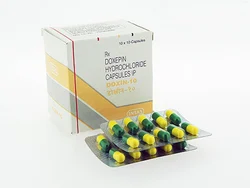
- Doxin (Doxepin TCA)
- Antidep (Imipramine TCA)
- Flunil (Fluoxetine SSRI)
- Duvanta (Duloxetine SNRI)
Mai multe opțiuni în Medicamente pentru Sănătatea Mintală și Psihiatrice
Clasificate în funcție de volumul recent de comenzi MedsBase — ce aleg alți clienți în această categorie.

| Concentrație | 75 mg |
|---|---|
| Cantitate | 30 comprimat/e, 60 comprimat/e, 90 comprimat/e, 180 comprimat/e |
 Antidep
Întrebări și răspunsuri
Antidep
Produse similare





Recenzii
Nu există recenzii încă