







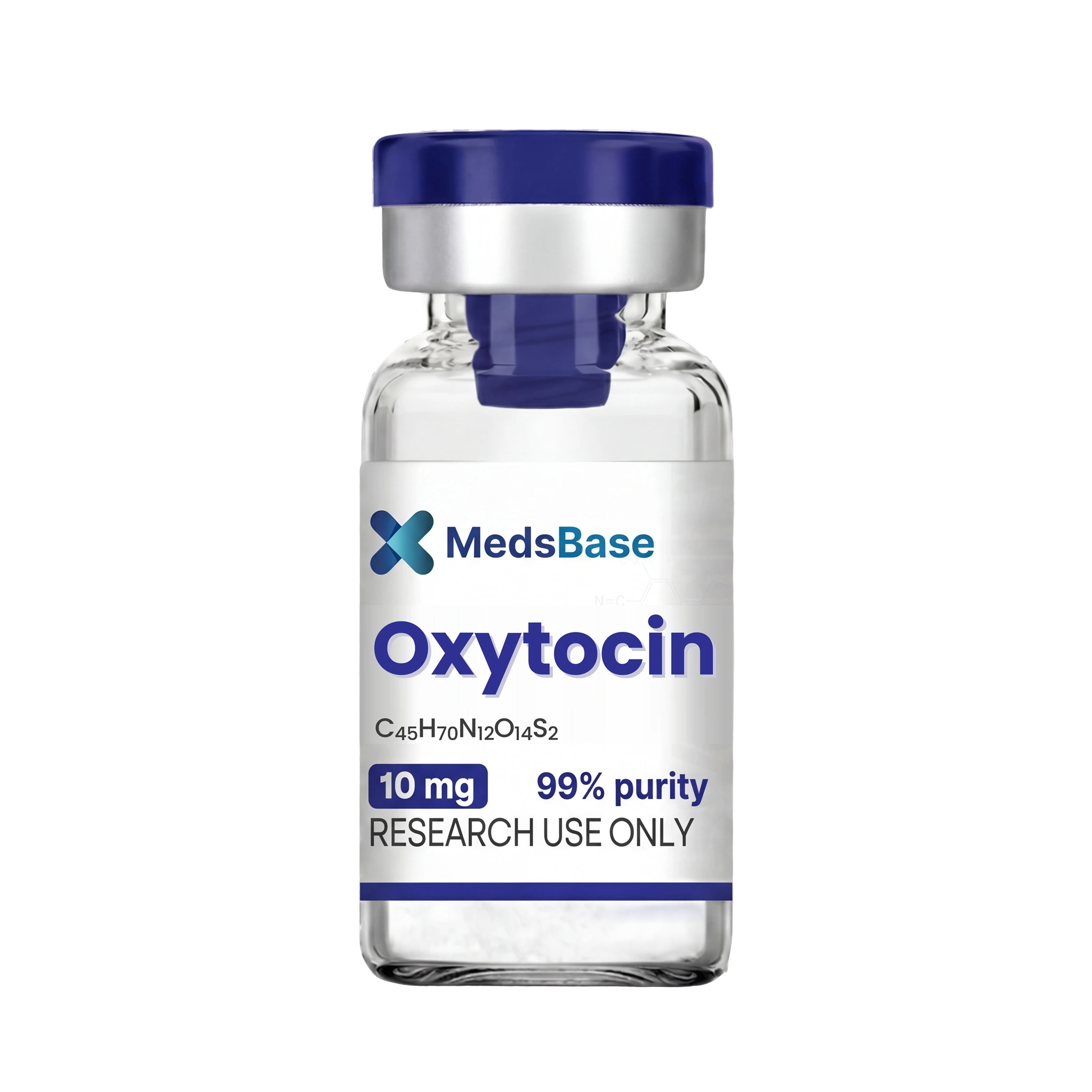
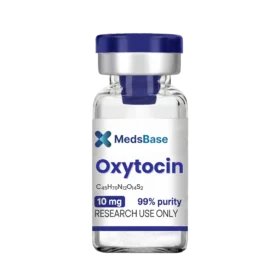
Oxytocin Acetate
✅ 9-aminosav ciklikus neuropeptid
✅ OXTR receptor agonist
✅ Szociális kötődés és affilitatív viselkedéskutatás
✅ Intranazálisan biohasznosítható peptid
✅ Acetát só formája — javított stabilitás
Oxytocin Acetate szintetikus peptidvegyületet tartalmaz.
✓ Orvosi ellenőrzés Morgan Ellis — Gyógyszerkutató · 8 év tapasztalat · Utolsó felülvizsgálat: 2026 május
Gyors válasz — Mi az Oxitocin Acetát?
Oxytocin Acetate az oxitocin acetát só formája, egy 9-aminosav ciklikus neuropeptid, amelynek egyetlen diszulfid hídja van a Cys1 és Cys6 között. Ez az egyik legrégebben és leginkább tanulmányozott neuropeptid a publikált kutatásokban, amely hipotalamikus hormonként (méhösszehúzódás, tejürítés) és központi neuromodulátorként is működik a szociális kötődés, bizalom és affilitatív viselkedés szabályozásában. 5 mg-os és 10 mg-os liofilizált üvegekben laboratóriumi kutatási célra elérhető.
📦 Minden rendelést fedez a Újraküldési Garancia — ha a csomagod nem érkezik meg 20 munkanapon belül, újraküldjük.
| Specifikáció | Részlet |
|---|---|
| CAS szám | 50-56-6 (oxytocin szabad bázis); acetát só formájában szállítva |
| Molekuláris képlet | C43H66N12O12S2 (szabad bázis; acetát só CH₃COOH elleniont ad)31007.19 Da (szabad bázis) |
| Molekulatömeg | Cys-Tyr-Ile-Gln-Asn-Cys-Pro-Leu-Gly-NH₂ |
| Szekvencia | Cys-Tyr-Ile-Gln-Asn-Cys-Pro-Leu-Gly-NH2 , 9 aminosav; intramolekuláris diszulfid híd Cys2, 9 aminosav; intramolekuláris diszulfid híd Cys16-reszidű makrociklus gyűrűt képez 3-reszidű C-terminális farokkal; C-terminusz amidált)6 Liofilizált acetát só (fehér vagy halványsárga por) |
| Forma | Liofilizált acetát só (fehér vagy sárgásfehér por) |
| Tisztaság | ≥99% (HPLC-vel ellenőrizve, COA igény szerint) |
| Tárolás | Liofilizált: 2–8 °C (hűtőszekrény) munkakészletként; −20 °C hosszú távú tárolásra lezáratlan üvegek esetén. Rekonstituált: 2–8 °C, használat ~30 napon belül. Védjük a fénytől. Ne fagyassza-válassza fel az újraállított oldatot. |
| Oldhatóság | Bakteriosztatikus víz (ajánlott) vagy steril víz rövidebb használati időkeretekhez. Kompatibilis intranazális hordozókkal készült kutatási formulációkkal. |
| Kutatási célra | Csak laboratóriumi kutatási célra. Nem használható humán vagy állatgyógyászati diagnosztikai vagy terápiás célra. |
az oxytocin acetát só formája, egy 9 aminosavból álló ciklikus neuropeptid, amelyet először Sir Henry Dale izolált 1906-ban, és Vincent du Vigneaud szintetizált kémiailag 1953-ban — ez volt az első teljes szintézissel előállított peptid hormon, amelyért du Vigneaud megkapta az 1955-ös kémiai Nobel-díjat. Az acetát elleniont kutatási célú liofilizálásnál használják, mert javítja a peptid hosszú távú stabilitását és vízoldékonyságát a szabad bázisú oxytocinhoz képest anélkül, hogy befolyásolná a farmakológiát — az acetát fiziológiás oldatban gyorsan disszociál.
Oxytocin Acetate Az oxytocin acetát-só formája, egy 9-aminosavból álló ciklikus neuropeptid, amelyet először Sir Henry Dale izolált 1906-ban, majd Vincent du Vigneaud szintetizált kémiailag 1953-ban – ez volt az első teljes szintézissel előállított peptidhormon, amelyért du Vigneaud megkapta az 1955-ös kémiai Nobel-díjat. Az acetát elleniont kutatói minőségű liofilizációban használják, mert javítja a peptid hosszú távú stabilitását és vízoldékonyságát a szabad bázisú oxytocinhoz képest anélkül, hogy befolyásolná a farmakológiát – az acetát gyorsan disszociál fiziológiás oldatban.
A jól karakterizált szekvencia CYIQNCPLG-NH2 . Az oxytocin nagy tisztaságú liofilizált por formájában kerül kiszerelésre, amelyet bakteriosztatikus vízzel kell rekonstituálni. A gyógyszeripari oxytocinot az FDA jóváhagyta injekciós szülészeti gyógyszerként (Pitocin, Syntocinon) a vajúdás indukálására és a szülés utáni vérzés kezelésére; az itt elérhető kutatási célú oxytocin acetát43H66N12O12S2. Az oxitocin nagy tisztaságú, liofilizált por formájában kerül forgalomba, amelyet baktériumölő vízzel kell feloldani. A gyógyszeripari oxitocin az FDA által jóváhagyott, injekcióban adható szülészeti gyógyszer (Pitocin, Syntocinon) a szülés indítására és a szülés utáni vérzés ellenőrzésére; az itt eladott kutatási célú oxitocin-acetát laboratóriumi kutatási célra szolgál és nincs engedélyezve az FDA által emberi vagy állati alkalmazásra. Kapcsolódó kispeptid CNS-kutatásokhoz lásd a Selank és PT-141 termékoldalainkra.
Hatásmechanizmus – Perifériás endokrin és központi neuromodulátor szerepek
Ami az oxitocint szokatlanná teszi a kutatási peptidok között, az az kettős identitása mint perifériás endokrin hormon és központi neuromodulátor is. Ugyanaz a molekula, különböző anatómiai területekről felszabadulva, alapvetően eltérő fiziológiai hatásokat vált ki:
- Perifériás endokrin felszabadulás – méh- és emlőhatások – Az oxitocint a szupraoptikus és paraventrikuláris hipotalamikus magok magnocelluláris neuronjaiban szintetizálják, és a hátsó agyalapi mirigyből kerül a szisztémás keringésbe. A perifériás oxitocin OXTR receptorokhoz kötődik a méh simaizomzatán (ösztönözve a szülés alatti összehúzódásokat) és az emlőalveolusok mioepiteliális sejtjein (indítva a tejkiürülési reflexet). A perifériás felezési idő rövid (~3–5 perc intravénásan) az oxitocináz és más peptidázok gyors lebontása miatt.
- Központi felszabadulás – társas, kötődési és stresszcsökkentő viselkedés – A parvocelluláris oxitocin neuronok külön populációja axonális úton vetődik az agy olyan területeire, mint az amygdala, a nucleus accumbens, a ventralis tegmentális terület és a prefrontális kéreg. A központi oxitocin-felszabadulás nem kerül a szisztémás keringésbe, és nem mérhető plazmatesztekkel. Publikált kutatások szerint modulálja a párkötődést, csoporthoz tartozást, bizalmat, félelemkioltást és stresszreakciót. A préri pockok párkötődésével kapcsolatos irodalom a központi oxitocin-jelátvitel kanonikus mechanisztikus adatbázisa.
- Receptorfarmakológia és jelátvitel — Az oxytocin egyetlen G-fehérjéhez kapcsolódó receptorra (OXTR) hat, amely elsősorban a Gαq/11 a foszfolipáz C és IP aktiválásához3, valamint a simaizomsejtekben az intracelluláris kalciumfelszabadulásban. Az OXTR jelátvitel az idegrendszerben összetettebb, és magában foglalja a Gα-t és a simaizomsejtekben lévő intracelluláris kalciumfelszabadulást. Az agyban az OXTR-jelátvitel összetettebb, és magában foglalja a Gα a GABAergikus interneuronok csatolása, modulációja és a közeli rokonságban álló vazopresszin V1a receptorral való keresztbeszélgetés. A szelektív OXTR agonistákat és antagonistákat széles körben használják a jelenkori kutatásokban az oxitocin és a vazopresszin viselkedésre gyakorolt hatásainak szétválasztására.
Az orrnyálkahártyán keresztüli beadási útvonal az egyik leggyakrabban említett kutatási szállítási módszer, mert mérhető központi idegrendszeri hatásokat produkál a társas viselkedésre anélkül, hogy a perifériás plazma oxitocinszintet fiziológiailag jelentős szintre emelné. A pontos mechanizmus, amelyen keresztül az orrnyálkahártyán keresztül beadott oxitocin eléri a központi idegrendszeri részlegeket – legyen szó szagló- és trigeminusideg-transzportról, rostacslemez-diffúzióról vagy perifériás visszacsatoló jelről – továbbra is aktív kutatási kérdés. A viselkedési hatások annyira reprodukálhatóak, hogy az orrnyálkahártyán keresztüli beadás vált az emberi és rágcsáló oxitocin-viselkedéskutatás szabványos útvonalává.
Közzétett kutatási alkalmazások
Az Oxytocin Acetate laboratóriumi kutatási célokra használható, amelyek vizsgálják:
- Szociális viselkedés és párkapcsolati kötődés — préri pocok partnerpreferencia-tesztek, partnerpreferencia kialakulása monogám és poligám pocokoknál, szociális felismerési paradigmák rágcsálóknál (Insel & Hulihan, Behav Neurosci 1995; Young & Wang, Nat Neurosci 2004)
- Autizmus spektrum és szociális kogníció kutatása — preklinikai modellek szociális deficit fenotípusokra, OXTR variáns kohorttanulmányok, intranazális oxitocin viselkedésvégpontok; az oxitocin klinikai kutatás egyik legaktívabb területe
- Bizalom és együttműködés viselkedéskutatás — bizalomjáték gazdasági paradigmák, együttműködési döntéshozatal bizonytalanság mellett; csoporton belüli vs csoporton kívüli torzítás moduláció
- Stressz, szorongás és félelemkioltás — amygdala-függő félelemkondicionálás, stressz-indukált HPA-tengely aktiváció, kortizolválasz moduláció publikált kutatásokban
- Anyai viselkedés és szülői gondoskodás — utószülési anyai viselkedés indukálás rágcsálóknál, apai gondoskodás kutatása monogám pocok fajoknál, alloparentális viselkedés
- Reproduktív fiziológia kutatás — méhösszehúzódás vizsgálatok, emlő myoepithelialis sejt kutatás, szülés és vajúdás mechanizmus tanulmányok
- Sebgyógyulás és szövetregeneráció — OXTR expresszió bőrfibroblasztokon és keratinocytákon; feltörekvő kutatások lokális oxitocin jelátvitelről bőrseb gyógyulásban
- Összehasonlító neuropeptid kutatás — benchmarkolás vazopresszinhez (közeli rokon 9-aminosav ciklusos neuropeptid egy aminosav eltéréssel) és más kis CNS-aktív peptidhez mint pl. Selank.
A szélesebb kontextusért, hogy az oxitocin hol helyezkedik el a kispeptid neuromodulátor térképén, lásd Selank (anxiolitikus heptapeptid), PT-141 (CNS-aktív melanokortin agonista), és Semax (nootrop heptapeptid). Böngéssze a teljes kutatási peptidek katalógust kapcsolódó vegyületekért.
Elérhető erősségek és koncentrációk
MedsBase stocks Oxytocin Acetate in two lyophilized vial sizes calibrated to typical research protocol lengths. Each strength is available in 10-vial, 20-vial, or 30-vial pack formats with full reconstitution guidance:
| Ampulla erőssége | Tipikus kutatási felhasználási eset | Csomagméret |
|---|---|---|
| 5 mg | Standard kutatási erősség, intranasális hordozó formuláció, viselkedési teszt protokollok | 10, 20 vagy 30 ampulla |
| 10 mg | Hosszú távú kutatások, legalacsonyabb mg-enkénti költség, több kohortos viselkedéstudományos vizsgálatok | 10, 20 vagy 30 ampulla |
Mindkét erősség ugyanolyan kémiai formájú (liofilizált acetát-só por, 99%+ HPLC tisztaság). Mivel az oxitocin kutatási dózistartománya alacsony mikrogramm/beadagolás tartományban van, egyetlen 5 mg-os üveg sok hétnyi viselkedéstudományos kutatást támogat a tipikus intranasális dózisok mellett (24 IU ≈ 40 mcg/beadagolás humán kutatásban, a rágcsálók dózisa alacsonyabb skálázással).
Összehasonlítás — Oxitocin Acetát vs Selank
Az oxitocin és Selank mindkettje kis molekulasúlyú, központi idegrendszerre ható peptide, amelyet viselkedés- és hangulattengely-kutatásban használnak, de különböző receptorokat és viselkedési területeket céloznak meg. Néha összehasonlítják őket a kutatásban, mert mindkettje intranasálisan biohasznosítható, és mindkettő mérhető viselkedési hatást produkál publikált rágcsáló- és humán tanulmányokban, annak ellenére, hogy szerkezetileg és farmakológiailag nem kapcsolódnak egymáshoz.
| Kritérium | Oxytocin Acetate | Selank |
|---|---|---|
| Hossz | 9 aminosav (ciklikus nonapeptide) | 7 aminosav (lineáris heptapeptide) |
| Szerkezet | Diszulfid-híddal összekötött makrociklus | Lineáris amidált C-terminussal |
| Elsődleges receptor | OXTR (G-protein-kapcsolt) | Nem klasszikus (GABA-moduláció, BDNF) |
| Viselkedési jel | Szociális kötődés, bizalom, affillatív viselkedés | Anxiolitikus, stressztűrés |
| Tipikus kutatási adag (intranazális) | 24–40 IU (~40–65 mcg) | 300–900 mcg |
| Plazma felezési idő | ~3–5 perc (IV) | ~15–30 perc (intranazális) |
| Jóváhagyott klinikai alkalmazás | Vajúdás indukálása, szülés utáni vérzés | Anxiolitikum (csak Oroszországban) |
A viselkedéskutatási stackeléshez a két peptid nem átfedő mechanizmusú (az oxitocin a saját GPCR-jén keresztül hat; a Selank a GABA/BDNF-moduláción keresztül), így a közös alkalmazás farmakológiailag nem redundáns. A stressz és szociális viselkedés együttes végpontjait vizsgáló kutatási protokollok néha mindkét ágat alkalmazzák.
Tárolás és rekonstitúció
Rekonstitúció előtt: A liofilizált üvegeket rövid távú használati készletként 2–8 °C-on hűtve, eredeti csomagolásban tároljuk. Hosszú távú tároláshoz, nyitás előtt −20 °C-on fagyasztjuk. A liofilizált oxitocin-acetát hűtve akár 24 hónapig, −20 °C-on akár 36 hónapig stabil. Kerüljük a liofilizált por fagyasztási-olvadási ciklusait. Az acetát-só formája higroszkópusan stabilabb, mint a szabad bázis, de az üvegeket mégis védjük a légköri páratartalomtól.
Rekonstitúciós eljárás: injektáljon baktériosztatikus vizet a peptid flakon oldalfalán (ne közvetlenül a liofilizált masszára). Egy 5 mg-os flakon esetén 5,0 mL baktériosztatikus víz 1 mg/mL munkakoncentrációt eredményez; 0,04 mL 40 mcg kutatási adagot (~24 IU) szolgáltat. Óvatosan keverje körbe – ne nem Rázza meg — és várjon 2–5 percet a teljes oldódásért. A helyesen rekonstituált oldatnak tiszta és színtelennek kell lennie. Intranasális hordozóval készült kutatási formulációk esetén a rekonstituált oldat átvihető egy kalibrált orrspray palackba, amely adagonként ~100 µL-t juttat ki.
Rekonstitúció után: tárolja hűtve 2–8 °C között és használja fel 30 napon belül az optimális stabilitás érdekében. Ne fagyassza le az újrakonstitált oldatot – a fagyasztási-olvadási ciklusok károsítják a peptid integritását és megzavarják a Cys1–Cys6 diszulfid kötést. Dobja el minden olyan flakont, amelyben homályosság, csapadék vagy színeződés figyelhető meg.
Gyakran Ismételt Kérdések
Mire használják az Oxytocin Acetátot a kutatásban?
Az Oxytocin Acetátot laboratóriumi kutatásokban használják társas viselkedés és párkötődés, autizmus spektrum és szociális kogníció, bizalom és együttműködési paradigmák, stressz és félelem kioltása, anyai és szülői gondoskodás, reproduktív fiziológia, valamint sebgyógyulás vizsgálatára. Az egyik leginkább tanulmányozott neuropeptid a szakirodalomban, és a kanonikus OXTR-tengely kutatási vegyületként szolgál. Az itt eladott kutatási minőségű oxytocin acetát nem az FDA jóváhagyta nem klinikai humán használatra, és kizárólag laboratóriumi kutatásra szolgál.
Mi a különbség az oxytocin acetát és a szabad bázisú oxytocin között?
Az acetát ellenion nem módosítja a farmakológiát – fiziológiás oldatban gyorsan disszociál. Az acetát sót a kutatási minőségű peptid liofilizálásában használják, mert javítja a peptid hosszú távú stabilitását, csökkenti a higroszkópiás jellegét és javítja a vízoldhatóságot a szabad bázisú oxytocinhoz képest. Az oxytocin minden publikált viselkedési és endokrin hatása az acetát sóra is érvényes azonos oxytocin tartalom mellett.
Miben különbözik az Oxytocin a Selanktól?
Mindkettő kis méretű, központi idegrendszerre ható peptid, amelyet viselkedéskutatásban használnak, de különböző receptorokat és viselkedési területeket céloznak meg. Az oxytocin egy 9-aminosavból álló, diszulfid híddal összekötött makrociklus peptid, amely az OXTR G-fehérje-kapcsolt receptorhoz kötődik, elsősorban társas kötődés és bizalom paradigmákban mutat kutatási jelet. A Selank egy 7-aminosavból álló lineáris heptapeptid, amely GABA moduláción és BDNF expresszión keresztül hat, elsősorban anxiolitikus és stresszreziliencia kutatási jelet mutat. A kettő farmakológiailag nem kapcsolódik egymáshoz.
Mi az oxytocin tipikus kutatási adagja?
A publikált humán intranazális kutatási protokollok általában 24–40 IU-t használnak alkalmanként (1 IU ≈ 1,7 mcg, tehát 24 IU ≈ 40 mcg). A rágcsálók adagjai alacsonyabbak abszolút tömegben, de magasabbak mg/kg-ban. Egy 5 mg-os flakon 5,0 mL baktériosztatikus vízzel újrakonstitálva 1 mg/mL-t eredményez – 40 mcg 0,04 mL-enként.
Az Oxytocin Acetát FDA által jóváhagyott?
A gyógyszeripari injekcióhoz való oxytocin (Pitocin, Syntocinon) FDA által jóváhagyott meghatározott szülészeti indikációkra – szülésindukció, szülés utáni vérzés kontrollja és tejleadás elősegítése – GMP szabványok szerint gyártott, jóváhagyott gyógyszeripari gyártók által. Az itt eladott kutatási minőségű oxytocin acetát külön termék, amely kizárólag laboratóriumi kutatásra szolgál, és nem az FDA jóváhagyta humán vagy állatgyógyászati használatra az említett szülészeti indikációkon kívül.
Hogyan kell tárolni az Oxytocin Acetátot?
Liofilizált flakonok: 2–8 °C-on hűtve tároljuk rövid távú használati készletként, vagy −20 °C-on hosszú távú tárolásra záratlan flakonok esetében. Rekonstituált oldat: 2–8 °C-on hűtve tároljuk, 30 napon belül felhasználjuk. A rekonstituált oldatot ne fagyasszuk le — a fagyasztás-olvasztás ciklusok károsítják a peptidet és megbontják a diszulfidhidat. Mindig védjük a közvetlen fénytől.
Hogyan rekonstituáljam az Oxytocin Acetate-ot?
Kövesse a fenti rekonstitúciós eljárást. Adjon hozzá bakteriosztatikus vizet a flakon oldalfalán (ne közvetlenül a liofilizált porra), óvatosan keverje körbe, és várjon 2–5 percet a teljes oldódásig. Ne nem megrázhatjuk a flakont — az erős rázás megbontja a diszulfidkötést. A helyesen rekonstituált oldat tiszta és színtelen. Egy 5 mg-os flakon + 5,0 mL oldószer esetén a munkakonzcentráció 1 mg/mL.
Milyen erősségű készítményeket tart készleten a MedsBase?
MedsBase carries Oxytocin Acetate in 5 mg and 10 mg lyophilized vials. Each strength is available in 10-vial, 20-vial, or 30-vial pack sizes. All vials are supplied at 99%+ HPLC purity with a certificate of analysis available on request.
Alkalmazható-e az oxytocin intranazális úton kutatási célból?
Igen — az intranazális alkalmazás az oxytocin viselkedéstudományi kutatásokban leggyakrabban említett beadási mód. Az intranazális oxytocin mérhető központi idegrendszeri hatást fejt ki társas viselkedésre, bizalomra és stresszválaszra anélkül, hogy perifériás plazmaoxytocin-szintet fiziológiailag jelentős mértékben emelné. A pontos központi idegrendszeri hatásmechanizmus még aktív kutatási téma (szagló- és trigeminális idegi transzport, cribriform lemez diffúzió vagy perifériás visszacsatolás). Szubkután és intracerebroventricularis beadási útvonalak is dokumentáltak rágcsálókutatásokban.
Mi az oxytocin felezési ideje?
Közzétett kutatások szerint az oxytocin plazmafelezési ideje kb. 3–5 perc intravénás beadás után. A rövid perifériás felezési idő az oxytocináz (más néven ciszteinil-aminopeptidáz) és más peptidázok gyors metabolizálásának köszönhető. Az intranazális beadást követő viselkedési hatások tovább tartanak a plazmakiürülésnél, mivel a központi oxytocin kompartmentek elkülönülnek a perifériás keringéstől.
Miért fontos a diszulfidhíd?
A Cys1–Cys6 diszulfidkötés rögzíti az oxytocint a receptorhoz kötődéshez szükséges ciklikus konformációba. A diszulfidkötés redukálódása inaktív lineáris formává alakítja az oxytocint — ezért kerüljük a rekonstituálás során az erős rázást és a fagyasztás-olvasztás ciklusokat, amelyek megbontják a hidat és csökkentik a peptid aktivitását. A közeli rokon neuropeptid, a vazopresszin ugyanilyen diszulfidhíd-szerkezettel rendelkezik, csupán egyetlen aminosavban tér el a 3. pozícióban (vazopresszinben Phe, oxytocinban Ile).
Az oxitocin mellékhatásokat okozhat a kutatásban?
Az oxitocin-kutatásban a legkonzisztensebb megfigyelés a viselkedési hatások dózisfüggősége — a válasz nem monoton magas dózisoknál, és nagyon nagy dózisok paradox hatásokat is okozhatnak. Az akut perifériás hatások közé tartozhat a méhösszehúzódás (fontos terhességi kutatási modellekben) és enyhe vazoaktív hatások szuprafiziológiai dózisoknál. A hosszú távú viselkedéskutatások környezetfüggő hatásokat jelentettek — például a csoporton belüli affinitás növekedése kísérhető csoporton kívüli előítélet növekedésével egyes szociális-kognitív paradigmákban.
Mennyi idő alatt mutatja az oxitocin a hatásait preklinikai kutatásban?
Az akut viselkedési hatások a szociális felismerésre, partnerpreferenciára és bizalomjáték-paradigmákra észlelhetők 30–60 percen belül intranazális adagolás után emberi és rágcsálókutatásban. A perifériás hatások (méhösszehúzódás, tejürítés) másodperceken belül jelentkeznek intravénás adagolás után, az OXTR és a PLC/IP3/Ca2+ jelátviteli úthoz való közvetlen kapcsolódás miatt.
Rendelhetek oxitocin-acetátot nemzetközi szállításra?
Igen. A MedsBase világszerte szállít oxitocin-acetátot a dedikált peptid szállítási hálózatunkon keresztül. A kizárólag peptidet tartalmazó rendelések jogosultak az önálló peptid szállítási szolgáltatásunkra. Minden rendelés hőmérséklet-kontrollált csomagolásban kerül kiszállításra, teljes nyomkövetéssel, és a Újraküldési Garancia.
Egyéb peptidék az idegrendszeri, viselkedési és affektív kutatáshoz
- Selank — Anxiolitikus heptapeptid tuftsin analóg — GABA/BDNF stressz-reziliencia kutatás
- Semax — Orosz fejlesztésű nootrop heptapeptid — melanokortin és dopaminerg moduláció
- PT-141 (Bremelanotide) — Melanokortin receptor agonist — központi idegrendszerre ható kis peptid szexuális viselkedéskutatáshoz
- Epitalon — AEDG tobozmirigy-tetrapeptid — hosszú élet és cirkadián kutatás
- BPC-157 — Body Protection Compound — szövetregenerációs kutatáshoz
További olvasnivaló
📖 Fedezze fel a központi idegrendszerre ható kutatási peptideket
Böngéssze a teljes kutatási peptidek katalógust, további kapcsolódó vegyületekkel, mint például Selank anxiolitikus GABA-tengely kutatáshoz, Semax nootrop melanokortin-tengely kutatáshoz, és PT-141 melanokortin szexuális viselkedéskutatáshoz.
További lehetőségek a Peptidek között
Rangsorolva a MedsBase legutóbbi rendelési adatai alapján — hogy ebben a kategóriában más vásárlók mit választanak.
| Erősség | 5 mg, 10 mg |
|---|---|
| Mennyiség | 10 üveg, 20 üveg, 30 üveg |
 Oxytocin Acetate
Kérdések és válaszok
Oxytocin Acetate
Kapcsolódó termékek

Vélemények
Még nincsenek vélemények