







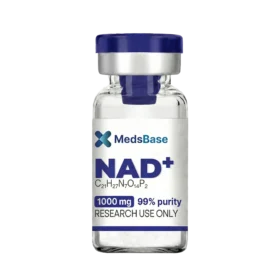
NAD⁺
✅ Fokozza a sejtes energiatermelést
✅ Támogatja a mitokondriumok működését
✅ Elősegíti az anyagcsere egyensúlyát
✅ Serkenti a sejtek regenerációját
✅ Javítja az életerő útjait
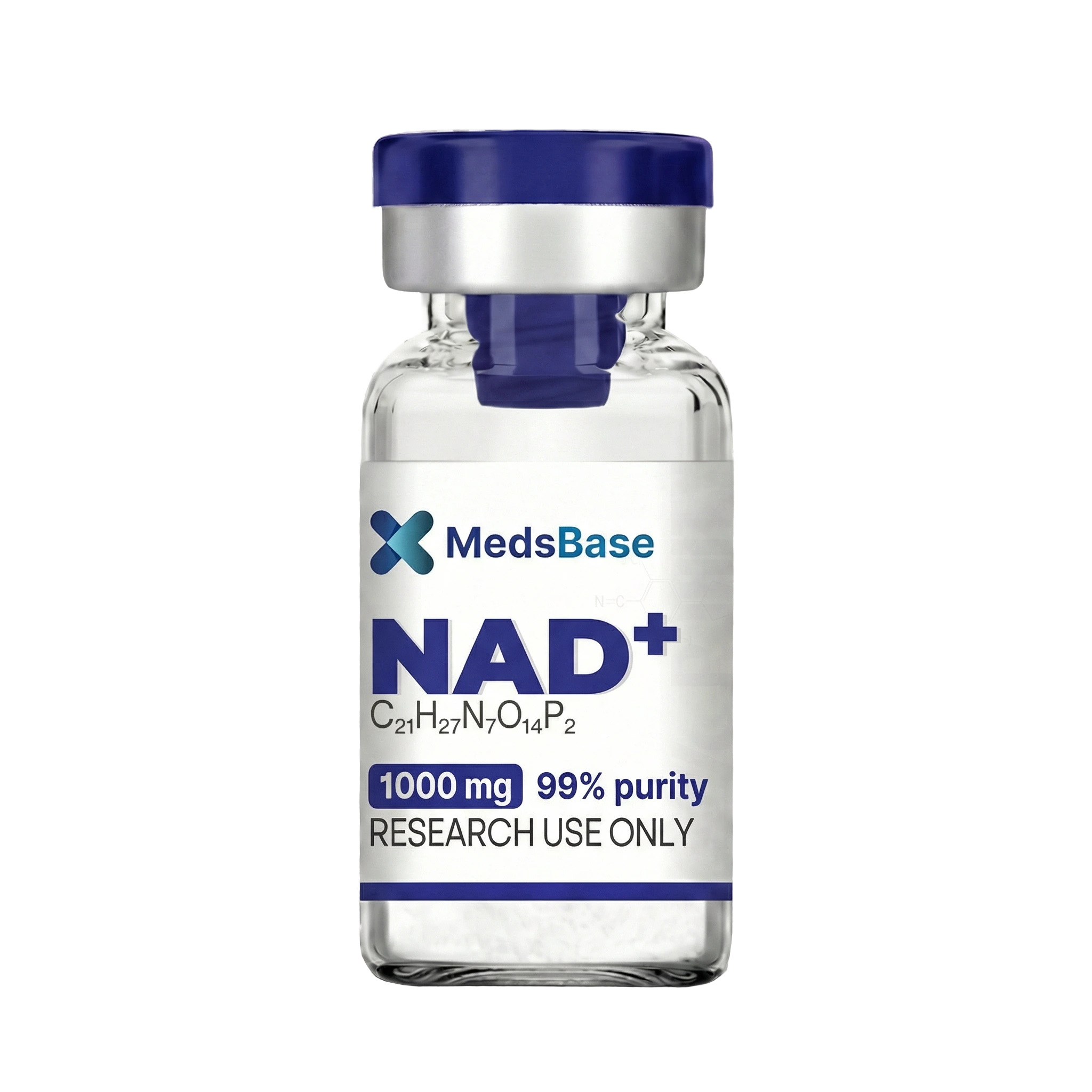
NAD⁺ szintetikus peptidvegyületet tartalmaz.
✓ Orvosi ellenőrzés Morgan Ellis — Gyógyszerkutató · 8 év tapasztalat · Utolsó felülvizsgálat: 2026 május
Gyors válasz — Mi az NAD+?
NAD+ (nikotinamid-adenin-dinukleotid) alapvető koenzim, amely minden sejtben megtalálható, kulcsszerepet játszik az energiaanyagcserében, a sirtuin-útvonalon keresztüli hosszévőségi jelátvitelben és a PARP-mediált DNS-javításban. Az NAD+ sejtszintje jelentősen csökken az életkor előrehaladtával, ezért az egyik leginkább vizsgált molekula a hosszévőségkutatásban. 100 mg-tól 1000 mg-ig terjedő, liofilizált ampullákban kapható, kizárólag laboratóriumi kutatási célra.
📦 Minden rendelést fedez a Újraküldési Garancia — ha a csomagod nem érkezik meg 20 munkanapon belül, újraküldjük.
| Specifikáció | Részlet |
|---|---|
| CAS szám | 53-84-9 |
| Molekuláris képlet | C21H27N7O14P2 |
| Molekulatömeg | 663,43 Da |
| Szekvencia | n/a (dinukleotid koenzim – nem peptid) |
| Forma | Liofilizált por (vagy a szállított formában) |
| Tisztaság | ≥99% (HPLC-vel ellenőrizve, COA igény szerint) |
| Tárolás | Liofilizált: 2–8 °C (hűtőszekrény) munkakészletként; −20 °C hosszú távú tárolásra lezáratlan üvegek esetén. Rekonstituált: 2–8 °C, használat ~30 napon belül. Védje a fénytől – az NAD könnyen oxidálódik. Ne fagyassza-váltsa ki a rekonstituált oldatot.+ Mi az NAD+?. |
| Oldhatóság | Baktériumstatikus víz (ajánlott) vagy steril víz rövidebb használatra |
| Kutatási célra | Csak laboratóriumi kutatási célra. Nem használható humán vagy állatgyógyászati diagnosztikai vagy terápiás célra. |
(nikotinamid-adenin-dinukleotid) szigorúan véve nem peptid – két nukleotidból álló dinukleotid koenzim, amelyek foszfátcsoportjaikon keresztül kapcsolódnak egymáshoz. Azonban ez a legszélesebb körben vizsgált molekula a hosszú élet és a sejtes öregedés szakirodalmában, és gyakran peptid-kutató beszállítók által kerül forgalomba, a peptidvegyületek mellett, a többtényezős sejtes öregedési tanulmányokon dolgozó kutatók kényelmét szolgálva.
NAD+ A (nikotinamid-adenin-dinukleotid) szigorúan véve nem peptid – dinukleotid koenzim, amely két nukleotidból áll, foszfátcsoportjaikon keresztül összekapcsolva. Ez azonban a legszélesebb körben kutatott egyetlen molekula a hosszú élet és a sejtöregedés szakirodalmában, és gyakran peptid-kutatási beszállítókon keresztül kerül forgalomba peptid vegyületek mellett, hogy megkönnyítse a többtényezős sejtöregedési tanulmányokon dolgozó kutatók munkáját.
Az NAD+ minden élő sejtben megtalálható és három fő enzimcsalád szubsztrátjaként funkcionál: (energiametabolizmus), szirtuinok, (hosszú élet jelátvitel, géncsendesítés), és (hosszú életet elősegítő jelátvitel, géncsend) és (DNS-károsodásra adott válasz). A sejtes NAD+ szintje körülbelül 50%-kal csökken 30 és 70 éves kor között a legtöbb szövetben – az „NAD+ csökkenés” –, és ennek a csökkenésnek a helyreállítása központi hipotézis a hosszú élet kutatási közösségében (Yoshino, Baur & Imai, Cell Metab 2018). Molekulatömeg 663,4 Da, empirikus képlet C. Magas tisztaságú liofilizált por formájában kapható, amelyet bakteriosztatikus vízzel rekonstituálhatunk. Az NAD+.
Molekulatömeg 663,4 Da, empirikus képlet C21H27N7O14P2. Nagy tisztaságú, liofilizált por formájában szállítva, amelyet bakteriosztatikus vízzel kell rekonstituálni. A NAD+ laboratóriumi kutatási célra szolgál és nem szándékoznak emberi vagy állatgyógyászati diagnózisra vagy terápiára használni. A mélyebb mechanizmusért, a hosszú élettartam-kutatási összefüggésekért és az alternatív először-forduló vegyületekért (NR, NMN) tekintse meg teljes NAD+ kutatási útmutatónkat.
Hatásmechanizmus – Három Alapvető Út
Az NAD+ három mechanikailag különböző, de egymástól függő enzimes családon keresztül vesz részt a sejtbiológiában:
- Redox koenzim (energiametabolizmus) – Az NAD+ a központi elektronhordozó a glikolízisben, a TCA-ciklusban és az oxidatív foszforilációban. Minden olyan lépés, amely energiát nyer ki az élelemből, végül elektronokat ad át az NAD+-nak (NADH keletkezésével), amely ezután az ATP szintézist hajtja a mitokondriumokban. Elegendő NAD+ nélkül a sejtek nem tudnak hatékonyan energiát termelni.
- Sirtuin aktiváció (hosszú élettartam-jelátvitel) – a hét emlős-sirtuin (SIRT1–SIRT7) NAD+-függő deacetilázok, amelyek a gének elhallgatását, stresszválaszt, mitokondrium-biogenezist és DNS-javítást szabályozzák. Amikor az NAD+ szintje csökken, a sirtuin aktivitás is csökken, ami az egyik javasolt mechanisztikus kapcsolat az NAD+ csökkenése és az öregedési fenotípusok között (Rajman, Chwalek & Sinclair, Cell Metab 2018).
- PARP-mediált DNS-javítás – a poli(ADP-ribóz) polimeráz (PARP) enzimcsalád az NAD+-t használja szubsztrátként a DNS-károsodásra adott válaszban. Az NAD+ szintjének csökkenése kevesebb elérhető szubsztrátot jelent a DNS-javításhoz, visszacsatolási hurkot hozva létre, ahol a DNS-károsodás tovább csökkenti az NAD+ szintjét.
Mivel ez a három út együtt érinti az energiametabolizmust, a génszabályozást és a genomkarbantartást, az NAD+ helyreállítását szokatlanul széles körű sejtes öregedési kutatási kontextusokban vizsgálják – a metabolikus szindrómától a neurodegenerációig az izomfunkcióig.
Közzétett kutatási alkalmazások
Az NAD+-t laboratóriumi kutatási kontextusokban használják, amelyek vizsgálják:
- Hosszú élettartam-kutatás – sirtuin-út aktiváció és sejtes öregedési biomarkerek rágcsáló öregedési tanulmányokban (Yoshino et al., Cell Metab 2018)
- Sejtes energia / mitokondrium-funkció — ATP-termelés és mitokondriális biogenezis sejti stressz kutatásban
- Neuroprotektív kutatás — kognitív hanyatlás és neurológiai öregedési modellek rágcsálótanulmányokban
- Anyagcseregészség — inzulinérzékenység, glükózhomeosztázis és metabolikus szindróma kutatás
- DNS-javítás kutatás — PARP-útvonal aktivitás és genomkarbantartás DNS-károsodási modellekben
- Anti-aging kutatás — összetett sejtelöregedési markerek több szövetrendszerben
- Összehasonlító prekurzor kutatás — az NR (nikotinamid-ribozid) és NMN (nikotinamid-mononukleotid) prekurzorok mellett, hogy izolálják a közvetlen NAD+-hatást
Általánosabb összefüggések a hosszú élet és a sejtes öregedés peptidjeiről lásd peptid keverékek anyagcsere-kutatáshoz valamint a teljes kutatási peptidek katalógust.
Elérhető erősségek és koncentrációk
A MedsBase NAD+-t a következő liofilizált ampulla méretekben kínálja. Minden változat 10, 20 vagy 30 ampullás csomagolásban szállítható:
| Ampulla erőssége | Tipikus felhasználási terület | Csomagméret |
|---|---|---|
| 100 mg | Pilot dózis vagy rövid távú protokollok | 10, 20 vagy 30 ampulla |
| 500 mg | Standard kutatási erősség, többhetes protokollokhoz alkalmas | 10, 20 vagy 30 ampulla |
| 1000 mg | Kiterjesztett kutatás, intravénás protokollok, tömeges előkészítés | 10, 20 vagy 30 ampulla |
Az NAD+ nagyobb abszolút dózisokat igényel, mint a legtöbb peptid (grammok mikrogrammok helyett), mivel koenzimként működik sejtszintű koncentrációban, nem pedig receptor-szintű jelzőmolekulaként. Liofilizált por formájában, 99%+-os HPLC tisztaságban szállítjuk.
Összehasonlítás — NAD+ vs NR vs NMN
Három molekula dominálja az NAD+ kutatási területét. Mind ugyanabba a salvage útvonalba kerül, de különböző belépési pontokon:
| Kritérium | NAD+ | NR (Nikotinamid-ribozid) | NMN (Nikotinamid-mononukleotid) |
|---|---|---|---|
| Szerep | Végtermék koenzim (közvetlen) | Előfutár (orális) | Előfutár (orális vagy SC) |
| Alkalmazási mód | SC, IM, IV kutatási célra | Főleg orális | Orális, SC |
| Tipikus kutatási adag | 50–1000 mg | 250–500 mg orális | 250–1000 mg orális/SC |
| Jogi állapot | Csak kutatási célra | FDA GRAS étrend-kiegészítő | Változó (friss FDA intézkedés) |
A kutatók általában a közvetlen NAD+-t részesítik előnyben az előfutárokkal szemben, ha el akarják kerülni a változó enzimatikus konverziós rátákat (egyes előfutárok hatékonytalanul alakulnak át bizonyos szövetekben), vagy ha gyors plazmaszint-emelkedésre van szükségük. Az előfutárokat a tartós adagolású orális beadású kutatásokban részesítik előnyben.
Tárolás és rekonstitúció
Rekonstitúció előtt: a liofilizált ampullákat eredeti csomagolásban 2–8 °C hőmérsékleten hűtőben tároljuk, akár 36 hónapig stabilak maradnak. A NAD+ fényérzékeny — az eredeti fóliás csomagolást hagyjuk érintetlenül.
Rekonstitúciós eljárás: fertőtlenítő vizet az ampulla oldalfalánál lassan juttassunk be a fenti táblázat szerint. A NAD+ ampullák nagyobb rekonstitúciós térfogatot igényelnek, mint a peptid ampullák, a nagyobb abszolút dózis miatt. Óvatosan keverjük körbe — ne nem rázzuk — és hagyjunk 5–10 percet a teljes oldáshoz.
Rekonstitúció után: hűtőben tároljuk 2–8 °C között, fénytől védve, és 30 napon belül használjuk fel. A rekonstituált NAD+ gyorsabban lebomolhat, mint a peptidek — a sárgás-barnás színváltozás oxidációra utal, és azonnali elvetést indokol.
Gyakran Ismételt Kérdések
Mire használják a NAD+-t a kutatásban?
A NAD+-t laboratóriumi kutatásokban használják sejtes öregedés, szirtuin-útvonal aktiválás, mitokondriális funkció, PARP által mediált DNS-javítás, neuroprotekció és metabolikus egészség modellek vizsgálatára. Terápiás célra nem FDA által jóváhagyott, de itt kizárólag laboratóriumi kutatási célra értékesítjük.
A NAD+ peptid?
Nem. A NAD+ dinukleotid koenzim, nem peptid. Gyakran peptid-kutató beszállítókon keresztül kapható, mert a hosszú élet kutatásában gyakran használják peptid kutatási protokollok mellett, és mindkét kategória megosztja a liofilizált por-BAC víz rekonstitúciós formátumot.
Mi a tipikus NAD+ kutatási dózis?
A publikált preklinikai protokollok jelentősen eltérhetnek a kutatási kontextustól függően. Gyakori tartományok: 50–100 mg SC/IM naponta az élettartam-kutatásban, 250–500 mg a sejtes energia-kutatásban, és akár 1000 mg IV kutatási protokollokban. Egy 500 mg-os flakon, amelyet 5,0 mL bakteriosztatikus vízzel rekonstituálnak, 100 mg/mL koncentrációt eredményez — 50 osztás egy U-100 fecskendőn 50 mg-nak felel meg.
Az NAD+ FDA által jóváhagyott?
Nem. Az NAD+ nem FDA által jóváhagyott terápiás szer. Klinikai kontextusban vizsgálták (beleértve az IV “NAD+ terápia” wellness klinikákat), de nem kapott FDA jóváhagyást egyetlen konkrét indikációra sem. Az összes NAD+, amelyet csak kutatási célra forgalmazó beszállítók árulnak, laboratóriumi vizsgálatokra szolgál.
Miben különbözik az NAD+ az NR-től vagy az NMN-től?
Az NR (nikotinamid-ribozid) és az NMN (nikotinamid-mononukleotid) előanyagok , amelyeket a sejtek az NAD+-vá alakítanak a salvage útvonalon keresztül. A közvetlen NAD+ kihagyja ezt az átalakítási lépést. A kutatók közvetlen NAD+-t választanak, amikor pontosan szeretnék szabályozni a plazmaszintet; az előanyagokat tartós szájon át adagolású kutatásokhoz használják, ahol az enzimatikus átalakítás elfogadható.
Hogyan kell tárolni az NAD+-t?
Liofilizált flakonok: 2–8 °C-on hűtve, eredeti csomagolásban, fénytől védve. Akár 36 hónapig stabil. Rekonstituált oldat: 2–8 °C-on hűtve, fénytől védve, 30 napon belül használd fel. Az NAD+ érzékenyebb a fényre és az oxidációra, mint a legtöbb peptid.
Hogyan rekonstituáljam az NAD+-t?
Kövesse a fenti rekonstituciós táblázatot. Adjon bakteriosztatikus vizet a flakon oldalfalán lefelé, óvatosan keverje össze, és várjon 5–10 percet a teljes oldódásra. Az NAD+ nagyobb rekonstituciós térfogatot igényel, mint a peptidok, a nagyobb abszolút dózis miatt. Ne nem rázza.
Össze lehet-e kombinálni az NAD+-t peptidokkal a kutatásban?
Igen. Az NAD+-t gyakran vizsgálják együtt GHK-Cu (sejtes energia-kutatás), ipamorelin (anyagcsere-tengely kutatás) és egyéb hosszú életet elősegítő peptid. Mivel az NAD+ koenzim szinten működik, nem pedig receptorokon, a gyógyszerek kölcsönhatása a peptidekkel minimális.
Milyen erősségű készítményeket tart készleten a MedsBase?
A MedsBase NAD+-t kínál 100 mg, 500 mg és 1000 mg-es liofilizált ampullákban. Minden erősség elérhető 10, 20 vagy 30 ampullás csomagolásban. Az összes ampulla 99%+-os HPLC tisztaságú, analízisigazolással rendelkezik igény esetén.
Kutatási körülmények között az NAD+ mellékhatásokat okoz?
A kutatásban és klinikai használatban leggyakrabban jelentett hatás az intravénás adagolás során fellépő “flushing” érzés, gyors infúziós sebesség mellett – ez átmeneti érhatásnak tekinthető. Más nem célzott hatások tipikus kutatási dózisoknál minimálisnak tűnnek. Mivel az NAD+ endogén koenzim, a farmakológiai aggályok általában alacsonyabbak, mint exogén xenobiotikumok esetében.
Mi az NAD+ biológiai felezési ideje?
Az endogén NAD+ biológiai felezési ideje legtöbb sejtben körülbelül 1–2 óra, jelentős eltérésekkel szövetenként. Preklinikai intravénás adagolási kutatásokban a külsőleg beadott NAD+ gyorsan felvételre kerül a szövetek által, és lebomlik lejjebb lévő metabolitokká (NADH, NAAD, ADPR). A laboratóriumi rekonstitúcióra szánt liofilizált formát általában akut pótlásra vagy sejtkultúrás kutatási modellekben használják.
Hogyan hasonlít a közvetlen NAD+ pótlás az NMN-hez és NR-hez kutatásban?
Az NMN (nikotinamid-mononukleotid) és az NR (nikotinamid-ribozid) NAD+ prekurzorok, amelyek intracellulárisan NAD+-vá alakulnak. A közvetlen NAD+ pótlást olyan kutatási modellekben vizsgálják, ahol a prekurzor átalakulás sebessége korlátozó tényező lehet. Mindhárom megközelítés aktív területe a hosszú élet és a bioenergetika kutatásának, különböző biohasznosíthatósági és anyagcsere-átalakulási profilokkal.
Rendelhetek NAD+-t nemzetközi szállításra?
Igen. A MedsBase világszerte szállít NAD+-t dedikált peptid szállítási hálózatunkon keresztül. Az NAD+ rendelések jogosultak önálló peptid szállítási szolgáltatásunkra. A rendelések hőmérséklet-kontrollált, fényvédő csomagolásban érkeznek, teljes nyomkövetéssel.
Egyéb peptidok a regeneráció és teljesítmény kutatásához
- BPC-157 — Testvédő vegyület — ín, szalag, bél regenerációs kutatás
- TB-500 — Thymosin Beta-4 fragmentum — lágy szövetek és érrendszer regenerációs kutatás
- Ipamorelin — Szelektív ghrelin agonist — tiszta GH impulzus kortizol/prolaktin nélkül
- CJC-1295 DAC-val — GHRH analóg meghosszabbított felezési idővel
- GHK-Cu — Rézpeptid — bőr és kötőszövet regenerációs kutatás
További olvasnivaló
📖 Ismerd meg a koenzim mögött álló kutatást
Olvasd el teljes, bizonyítékokon alapuló útmutatónkat: NAD+ — működési mechanizmus, hosszú élet kutatás és a tudományos tények. Tartalmazza a szirtuin és PARP biológiát, az NAD+ csökkenés hipotézisét, a prekurzorok összehasonlítását (NR / NMN), publikált kutatási dózistartományokat, rekonstitúciós protokollokat és biztonsági megjegyzéseket.
További lehetőségek a Peptidek között
Rangsorolva a MedsBase legutóbbi rendelési adatai alapján — hogy ebben a kategóriában más vásárlók mit választanak.
| Erősség | 100 mg, 500 mg, 1000 mg |
|---|---|
| Mennyiség | 10 üveg, 20 üveg, 30 üveg |
 NAD⁺
NAD⁺
Kérdések és válaszok
NAD⁺
Kapcsolódó termékek
Vélemények
Még nincsenek vélemények