







B7-33 (Analog łańcucha B relaksyny z biasem RXFP1)
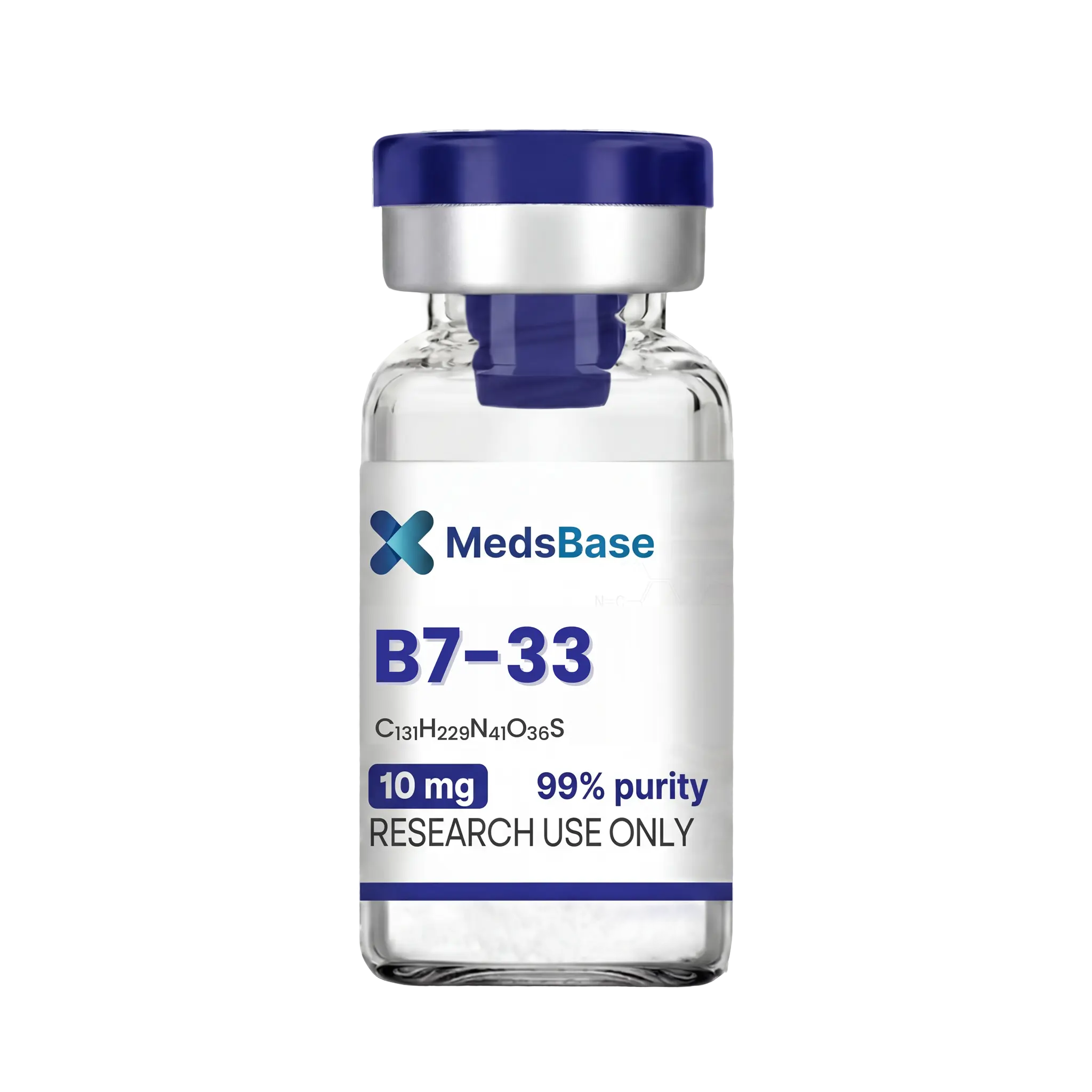
✅ Syntetyczny analog 33-aa jednoułańcuchowej relaksyny-B
✅ Selektywny agonista RXFP1 — działanie przeciwzwłóknieniowe przez ERK1/2 bez prokancerogennej sygnalizacji cAMP
✅ Hossain/Howe (Florey Institute) 2017 Nat Commun opracowali alternatywę dla Serelaxin
✅ Badania dotyczące włóknienia serca, nerek, wątroby i płuc; modele stanu przedrzucawkowego
✅ ~MW 3,800 Da; opublikowane dawkowanie u myszy 25-50 µg/kg/d SC
B7-33 zawiera syntetyczny 33-aa analog łańcucha B relaksyny do badań peptydowych.
✓ Zweryfikowany medycznie przez Morgan Ellis — Badacz farmaceutyczny · 8 lat doświadczenia · Ostatnia weryfikacja: maj 2026
Szybka odpowiedź — Czym jest B7-33?
B7-33 to syntetyczny 33-aminokwasowy jednołańcuchowy analog peptydowy łańcucha B relaksyny opracowany przez Hossaina, Howe'a i współpracowników z Florey Institute (Melbourne, Australia) i opublikowany w Nature Communications (2017). Podczas gdy naturalna relaksyna-2 (klasyczny hormon leczący włóknienie, klinicznie Serelaxin) jest dwułańcuchowym peptydem połączonym mostkami disiarczkowymi A/B, który aktywuje zarówno receptory RXFP1 (przeciwzwłóknieniowe), jak i RXFP2 (pro-przeżyciowe komórek nowotworowych), B7-33 jest selektywnym agonistą RXFP1 — konstrukcja jednoniciowa typu B, selektywnie oddziałująca na szlak sygnałowy przeciwzwłóknieniowy RXFP1 (szlak ERK1/2 → zwiększona ekspresja MMP-2 → degradacja ECM), przy jednoczesnym unikaniu pronowotworowego szlaku cAMP przez RXFP1, co przyczyniło się do wycofania Serelaksyny. Opublikowane zastosowania badawcze: niewydolność serca, zwłóknienie wątroby/nerek/płuc/serca, stan przedrzucawkowy. Wyłącznie do zastosowań laboratoryjnych.
📦 Każde zamówienie jest objęte naszą Polityka Gwarancji Ponownej Wysyłki — jeśli Twoja przesyłka nie dotrze w ciągu 20 dni roboczych, wysyłamy ją ponownie.
| Specyfikacja | Szczegóły |
|---|---|
| Klasa związku | Syntetyczny 33-aa analog jednoniciowy łańcucha B relaksyny; selektywny agonista receptora RXFP1 (szlak przeciwzwłóknieniowy ERK, ze zmniejszonym sygnałem pro-survivalowym cAMP) |
| Nazwa chemiczna | B7-33 (analog łańcucha B relaksyny 7-33 ze stabilizującymi modyfikacjami; Hossain i in. 2017 Nat Commun) |
| Numer CAS | Peptyd do badań — brak powszechnie zarejestrowanego pojedynczego CAS; identyfikacja na podstawie opublikowanej sekwencji i COA dostawcy |
| Wzór cząsteczkowy | Jednoniciowy 33-resztowy analog łańcucha B — przybliżony MF C pochodzący z sekwencji164H252N50O45S2; opublikowana MW ~3,728 Da (Hossain & Bathgate 2015, J Med Chem). |
| Długość sekwencji / MW | 33 aminokwasy pochodzące z łańcucha B H2-relaksyny z modyfikacjami N- i C-końcowymi dla rozpuszczalności/stabilności; MW ~3,800 Da |
| Mechanizm | Selektywny agonista RXFP1. Selektywnie aktywuje ERK1/2 → zwiększenie ekspresji MMP-2/MMP-9 → szlak degradacji kolagenu/przebudowy macierzy zewnątrzkomórkowej (przeciwzwłóknieniowa gałąź sygnalizacji RXFP1), przy jednoczesnym ograniczonym zaangażowaniu szlaku sygnalizacji RXFP1 zależnego od cAMP (szlak powiązany z niepożądanymi zdarzeniami sercowymi Serelaksyny i pro-surwiwalowym efektem na komórki nowotworowe, który komplikował rozwój kliniczny relaksyny). |
| Postać / Czystość / Przechowywanie | Liofilizowany biały do kremowego proszek, ≥99% HPLC. Przechowywać w 2–8 °C krótkoterminowo, −20 °C długoterminowo (≥36 miesięcy). Po rekonstytucji: 2–8 °C, użyć w ciągu 30 dni. |
| Do celów badawczych | Do użytku wyłącznie w badaniach laboratoryjnych. Nie znajduje się na Liście Substancji Zabronionych WADA. Związek badany w fazie przedklinicznej. |
Mechanizm działania — selektywne pobudzanie RXFP1 (ERK bez cAMP)
B7-33 został zaprojektowany przez grupę Hossain/Howe/Bathgate z Instytutu Florey jako odpowiedź na “problem Serelaksyny”. Serelaksyna (rekombinowana ludzka relaksyna-2) ukończyła badania III fazy w ostrym niewydolności serca, ale nie uzyskała aprobaty FDA — częściowo z powodu mieszanych sygnałów bezpieczeństwa sercowo-naczyniowego, przypisywanych podwójnej sygnalizacji RXFP1 (przeciwzwłóknieniowy szlak ERK korzystny; szlak cAMP potencjalnie proarytmiczny i pro-surwiwalowy dla komórek nowotworowych).
Hipoteza projektowa B7-33: sam łańcuch B (łańcuch odpowiedzialny za wiązanie RXFP1) może zostać przekształcony w stabilny peptyd jednoniciowy, który aktywuje tylko przeciwzwłóknieniowy szlak ERK1/2/MMP sygnalizacji RXFP1, pomijając pronowotworowy/proarytmiczny szlak zależny od cAMP. Opublikowana w 2017 roku praca w Nature Communications potwierdziła to: B7-33 wywołuje mierzalną aktywację RXFP1-ERK1/2, ale minimalne podwyższenie cAMP — zdefiniowane jako selektywne pobudzanie. W opublikowanych modelach mysich zwłóknienia serca, nerek i stanu przedrzucawkowego, B7-33 wykazał równoważną lub większą skuteczność przeciwzwłóknieniową w porównaniu z naturalną relaksyną, bez powikłań związanych z cAMP.
Opublikowane zastosowania badawcze
- Farmakologia selektywnego agonisty RXFP1 — kanoniczny przykład selektywnego pobudzania szlaków receptorowych w literaturze dotyczącej inżynierii peptydów
- Badania zwłóknienia serca — modele kardiomiopatii niedokrwiennej i nadciśnieniowej; pomiary odkładania kolagenu i przebudowy ECM
- Badania zwłóknienia nerek/wątroby/płuc — zwiększenie ekspresji MMP-2/9 i degradacja ECM w przewlekłych modelach zwłóknienia
- Badania stanu przedrzucawkowego — opublikowane w modelach ciężarnych myszy; oś relaksyny jest kluczowo zaangażowana w hemodynamiczną adaptację w w prawidłowej ciąży
- Badania przedkliniczne w niewydolności serca — alternatywa dla Serelaxin w badaniach kliniczno-translacyjnych, gdzie korzystniejszy jest profil sygnalizacji skośnej
- Badania nad ostrym uszkodzeniem nerek — badania nad ochroną kanalików nerkowych z udziałem RXFP1
Szerszy kontekst można znaleźć w powiązanych peptydach badawczych: BPC-157 (naprawa tkanek), TB-500 (rekonwalescencja), GHK-Cu (remodelowanie skóry i tkanki łącznej). Przeglądaj pełną katalog badań nad peptydami.
Dostępne mocowania
| Mocowanie fiolki | Rozmiary opakowań |
|---|---|
| 2 mg — standard protokołu badawczego dla farmakologii RXFP1 in vitro i krótkotrwałych badań in vivo | 10, 20 lub 30 fiolek |
| 10 mg — rozszerzone modele włóknienia z przewlekłym dawkowaniem, wielokohortowe wielkości próbek; najniższy koszt na mg | 10, 20 lub 30 fiolek |
Przechowywanie i rekonstytucja
Liofilizowane, przechowywanie krótkoterminowe 2–8 °C, długoterminowe −20 °C. Rekonstytuować wodą bakteriostatyczną (1,0 mL na fiolkę 2 mg → 2 mg/mL; 1,0 mL na fiolkę 10 mg → 10 mg/mL). Unikać zamrażania i rozmrażania.
FAQ
Czym B7-33 różni się od Serelaxin / naturalnej relaksyny-2?
Naturalna relaksyna-2 to dwułańcuchowy peptyd (A + B) połączony mostkami disiarczkowymi, który aktywuje obie szlaki sygnałowe w dalszej części RXFP1 — przeciwzwłóknieniową gałąź ERK i proprzeżyciową gałąź cAMP. Serelaxin to rekombinowana naturalna relaksyna-2; nie przeszedł fazy III w ostrym niewydolnieniu serca częściowo z powodu niekorzystnych sygnałów szlaku cAMP. B7-33 to jednoniciowy analog tylko z łańcuchem B, który selektywnie angażuje przeciwzwłóknieniową gałąź ERK bez sygnału szlaku cAMP.
Czy B7-33 był w badaniach klinicznych?
B7-33 pozostaje związkiem badawczym na etapie przedklinicznym; do tej pory nie przeprowadzono formalnych badań klinicznych fazy I/II na ludziach.
Jakie zakresy dawek są stosowane w badaniach?
Opublikowane protokoły in-vivo na myszach stosują 25–50 µg/kg podskórnie codziennie przez 2–4 tygodnie. Prace in-vitro na hodowlach komórkowych wykorzystują stężenia nanomolarne.
Inne peptydy badawcze do naprawy tkanek / przeciwzwłóknieniowe
- BPC-157 — Piętnastopeptydowy związek badawczy do naprawy tkanek
- TB-500 — Fragment tymozyny Beta-4, regeneracja
- GHK-Cu — Trójpeptyd wiążący miedź, remodelowanie skóry / tkanki łącznej
- Mieszanka GLOW — Stos BPC-157 + GHK-Cu + TB-500
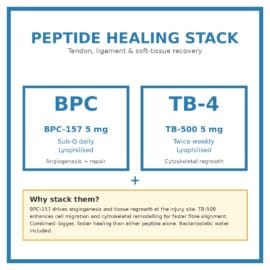
- Peptydowy zestaw regeneracyjny — Pakiet BPC-157 + TB-500
- BAC Water (Woda bakteriostatyczna) — Wymagany do rekonstytucji każdej liofilizowanej fiolki — sterylny rozcieńczalnik z 0,9% benzylowym alkoholem jako środkiem konserwującym
Więcej opcji w Peptydach
Ranking według liczby ostatnich zamówień MedsBase — co wybierają inni klienci w tej kategorii.
| Moc | 2 mg, 10 mg |
|---|---|
| Ilość | 10 fiolek, 20 fiolek, 30 fiolek |
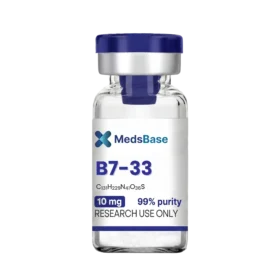 B7-33 (Analog łańcucha B relaksyny z biasem RXFP1)
Pytania i odpowiedzi
B7-33 (Analog łańcucha B relaksyny z biasem RXFP1)
Produkty powiązane

Opinie
Nie ma jeszcze opinii