







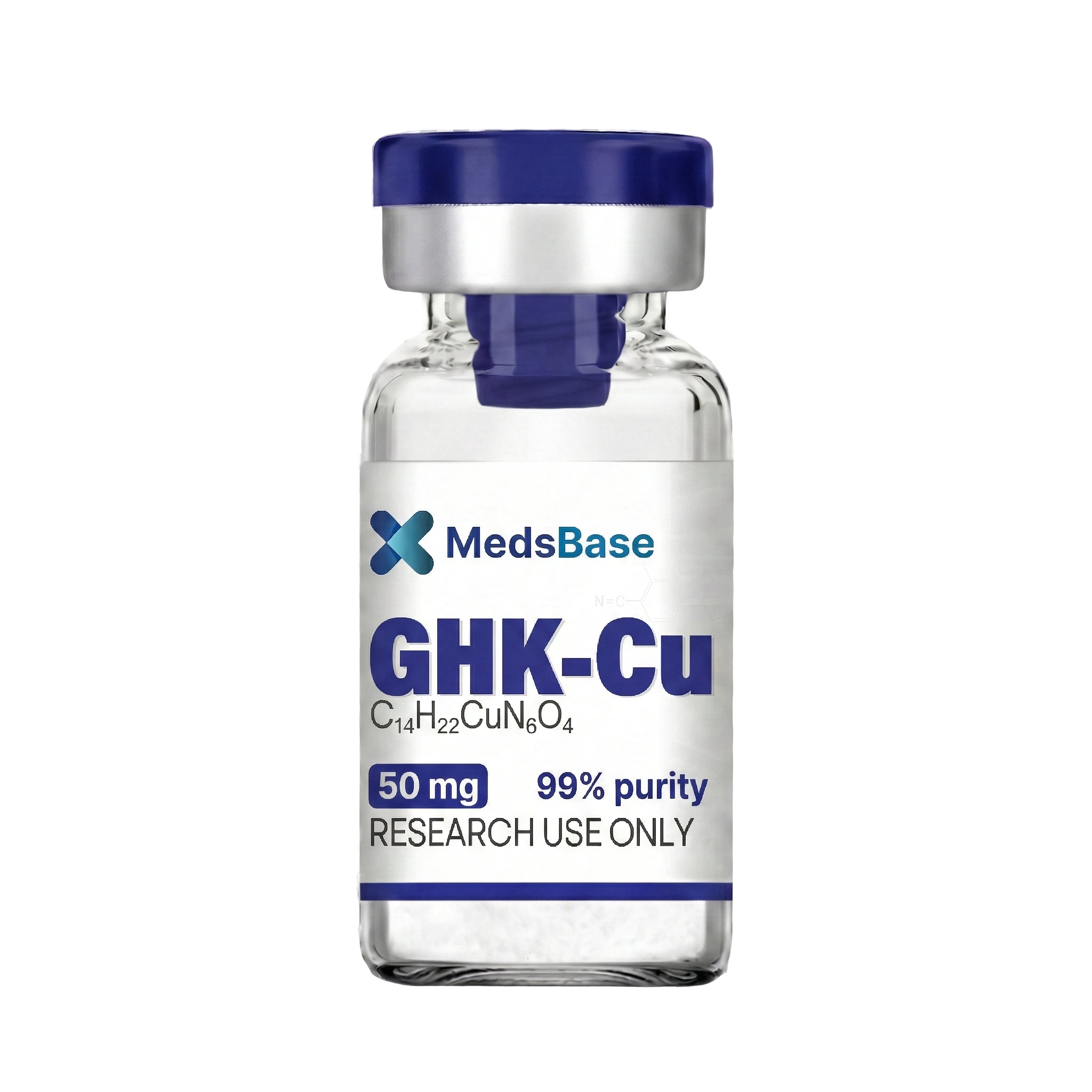
GHK-Cu
✅ Wspomaga regenerację skóry
✅ Zwiększa syntezę kolagenu
✅ Wspiera zdrowie mieszków włosowych
✅ Poprawia elastyczność skóry
✅ Wspomaga regenerację tkanek
GHK-Cu zawiera syntetyczny związek peptydowy.
✓ Zweryfikowany medycznie przez Morgan Ellis — Badacz farmaceutyczny · 8 lat doświadczenia · Ostatnia weryfikacja: maj 2026
Szybka odpowiedź — czym jest GHK-Cu?
GHK-Cu jest naturalnie występującym tripeptydem (glicylo-L-histydylo-L-lizyna) skompleksowanym z miedzią (Cu2+). W opublikowanych badaniach stymuluje syntezę kolagenu, aktywuje fibroblasty, przyspiesza gojenie ran i moduluje ekspresję około 4000 ludzkich genów w kierunku młodszego profilu ekspresji. Dostarczany w liofilizowanych fiolkach po 50 mg wyłącznie do zastosowań laboratoryjnych.
📦 Każde zamówienie jest objęte naszą Polityka Gwarancji Ponownej Wysyłki — jeśli Twoja przesyłka nie dotrze w ciągu 20 dni roboczych, wysyłamy ją ponownie.
| Specyfikacja | Szczegóły |
|---|---|
| Numer CAS | 49557-75-7 (GHK wolny) · 89030-95-5 (kompleks Cu²⁺) |
| Wzór cząsteczkowy | · GHK-Cu: C14H24N6O4 CuN14H22GHK: 340.38 Da · GHK-Cu complex: 403.92 Da6O4 |
| Masa cząsteczkowa | GHK: 340.38 Da · GHK-Cu complex: 403.92 Da |
| Sekwencja | Gly-His-Lys (związany z Cu²⁺) |
| Postać | Liofilizowany proszek (lub w formie dostarczonej) |
| Czystość | ≥99% (zweryfikowane HPLC, COA na życzenie) |
| Przechowywanie | Liofilizowany: 2–8°C (lodówka) dla zapasu roboczego; −20°C do długotrwałego przechowywania nieotwartych fiolek. Roztwór po rekonstytucji: 2–8°C, użyj w ciągu ~30 dni. Chronić przed światłem. Nie zamrażaj i nie rozmrażaj roztworu po rekonstytucji. |
| Rozpuszczalność | Woda bakteriostatyczna (zalecana) lub sterylna woda do krótszych okresów użytkowania |
| Do celów badawczych | Wyłącznie do użytku laboratoryjnego. Nie do stosowania w diagnostyce lub terapii u ludzi i zwierząt. |
Co to jest GHK-Cu?
GHK-Cu to naturalnie występujący kompleks tripeptydowo-miedziowy, odkryty przez Lorena Pickarta w 1973 roku podczas badań nad czynnikiem przeciwstarzeniowym w osoczu ludzkim. Sekwencja trzech aminokwasów - glicylo-L-histydylo-L-lizyna (GHK) - ma wysokie powinowactwo do jonów miedzi (Cu2+), a powstały kompleks GHK-Cu to biologicznie aktywna forma występująca w osoczu, ślinie i moczu — jej stężenie spada średnio z 200 ng/mL w wieku 20 lat do poniżej 80 ng/mL w wieku 60 lat.
Peptyd ma masę cząsteczkową około 340 Da (wolny GHK) lub 402 Da jako kompleks miedziowy, z empirycznym wzorem C14H23GHK: 340.38 Da · GHK-Cu complex: 403.92 Da6O4. Dostarczany jest jako liofilizowany proszek o wysokiej czystości, charakterystyczny dla kompleksów miedziowych jasnoniebieski kolor. GHK-Cu jest tylko do użytku laboratoryjnego i nie jest przeznaczony do diagnostyki lub terapii u ludzi i zwierząt. Więcej informacji na temat mechanizmu działania, analizy genomowej i podsumowań badań naukowych można znaleźć w naszym pełnym przewodniku badawczym GHK-Cu.
Mechanizm działania — nośnik miedzi i regulator genów
Mechanizm działania GHK-Cu jest niezwykle szeroki, ponieważ ten tripeptyd działa zarówno jako nośnik miedzi (transportujący Cu2+ do wnętrza komórek) oraz jako regulator ekspresji genów oddziałujący na tysiące celów. W literaturze naukowej dominują trzy główne szlaki mechanistyczne:
- Transport miedzi — GHK wiąże Cu2+ z wysokim powinowactwem i dostarcza je przez błony komórkowe. Miedź jest kofaktorem dla lizyloksydazy (enzymu odpowiedzialnego za usieciowanie kolagenu i elastyny), dysmutazy ponadtlenkowej oraz oksydazy cytochromowej C. Mechanizm dostarczania miedzi jest unikalną cechą odróżniającą GHK-Cu od peptydów niemiedziowych.
- Aktywacja fibroblastów i synteza kolagenu — GHK-Cu zwiększa ekspresję kolagenu typu I i III, dekoriny oraz glikozaminoglikanów w badaniach na fibroblastach skóry. Stanowi to podstawę mechanistyczną dla obserwowanych efektów w badaniach nad skórą, gojeniem ran i tkanką łączną.
- Modulacja ekspresji genów — Genomowa analiza Pickarta z 2010 roku zidentyfikowała GHK jako modulator około 4000 ludzkich genów, z efektem netto przesuwającym wzorce ekspresji w kierunku bardziej młodzieńczego profilu. Dotknięte grupy genów obejmują szlaki naprawy DNA, obrony antyoksydacyjnej i odpowiedzi na stres.
Ponieważ te trzy mechanizmy działają w wielu typach tkanek, GHK-Cu było badane w kontekstach naukowych obejmujących dermatologię, gojenie ran, biologię ekspresji genów oraz badania nad przeżywalnością neuronów. Związek ten jest wyjątkowo dobrze tolerowany przy typowych dawkach badawczych.
Opublikowane zastosowania badawcze
GHK-Cu jest stosowany w kontekstach badań laboratoryjnych dotyczących:
- Regeneracji skóry i fotostarzenia — synteza kolagenu typu I i III, grubość skóry właściwej, badania głębokości zmarszczek w modelach ludzkich i gryzoni (Pickart, J Biomater Sci Polym 2008)
- Badań mieszków włosowych — aktywacja komórek macierzystych mieszków włosowych i badania cyklu włosowego w modelach gryzoni
- Gojenia ran — naprawa skóry właściwej, badania przewlekłych i cukrzycowych ran (Pickart et al., Biomed Res Int 2015)
- Badań przeciwutleniających i chelatacji żelaza — redukcja ROS, ochrona przed peroksydacją lipidów w modelach stresu oksydacyjnego komórek
- Badań ekspresji genów — analizy całego transkryptomu wykazują modulację około 4 000 ludzkich genów
- Badań neuronalnych — badania wypustek neuronowych i neuroprotekcji w modelach komórkowych OUN
- Badań stosowania w połączeniu — często stosowany w połączeniu z BPC-157 i TB-500 w badaniach nad regeneracją tkanki łącznej. Zobacz najlepsze peptydy do regeneracji mięśni w kontekście klastrowym.
Dostępne mocowania
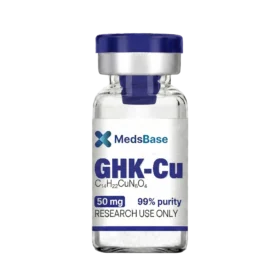
MedsBase oferuje GHK-Cu w pojedynczych fiolkach liofilizowanych o mocy 50 mg. Każda wersja jest dostępna w opakowaniach zawierających 10, 20 lub 30 fiolek wraz z pełnymi wytycznymi dotyczącymi rekonstytucji:
| Mocowanie fiolki | Typowe zastosowanie | Rozmiary opakowań |
|---|---|---|
| 50 mg | Standardowa moc badawcza — wspiera protokoły 1–3 mg dziennie przez 2–4 tygodnie na fiolkę | 10, 20 lub 30 fiolek |
Fiolka 50 mg odzwierciedla typowe zastosowanie w protokołach badawczych — 1–3 mg na podanie, 1–2 razy dziennie lub 3–5 razy w tygodniu. Pojedyncza fiolka 50 mg wystarcza na około 16–50 podań w zależności od protokołu. Dostarczana jako liofilizowany proszek o czystości HPLC ≥99%.
Porównanie — GHK-Cu a inne peptydy gojące
GHK-Cu, BPC-157, oraz TB-500 to trzy najczęściej cytowane peptydy w badaniach nad gojeniem. Każdy działa poprzez odmienne mechanizmy, dlatego często są łączone, a nie zastępowane:
| Kryterium | GHK-Cu | BPC-157 | TB-500 |
|---|---|---|---|
| Długość | 3 aminokwasy + miedź | 15 aminokwasów | 43 aminokwasy |
| Główny mechanizm | Transport miedzi + regulacja genów | VEGF + NO + receptor GH | Wiązanie G-aktyny, angiogeneza |
| Najsilniejszy sygnał badawczy | Skóra, włosy, kolagen, ekspresja genów | Ścięgna, więzadła, bariera jelitowa | Mięsień sercowy, ogólnoustrojowy, naczyniowy |
| Typowa dawka badawcza | 1–3 mg dziennie lub 3–5 razy w tygodniu | 250–500 mcg 1–2 razy dziennie | 2–2,5 mg dwa razy w tygodniu |
Aby uzyskać szerszy kontekst dotyczący peptydów, zobacz katalog peptydów badawczych.
Przechowywanie i rekonstytucja
Przed rekonstytucją: przechowuj liofilizowane fiolki w lodówce w temperaturze 2–8°C w oryginalnym opakowaniu. Stabilne do 36 miesięcy. Liofilizowany GHK-Cu ma charakterystyczny jasnoniebieski kolor wynikający z kompleksu miedzi.
Procedura rekonstytucji: wstrzyknij wodę bakteriostatyczną wzdłuż ścianki fiolki z peptydem. Roztwór powinien być przejrzysty, jasnoniebieski — kolor charakterystyczny dla kompleksu Cu2+ delikatnie wstrząśnij — nie otrzymuje, przechowuje, nie ma dostępu ani wglądu w dane osobowe przekazywane przez Ciebie dostawcy płatności. Proces weryfikacji odbywa się w całości na platformie dostawcy i podlega jego własnej polityce prywatności oraz standardom bezpieczeństwa. potrząsaj — i odczekaj 2–5 minut do całkowitego rozpuszczenia.
Po rekonstytucji: przechowuj w lodówce w temperaturze 2–8°C i zużyj w ciągu 30 dni. Jasnoniebieski kolor powinien się utrzymywać; utrata koloru może wskazywać na dysocjację kompleksu miedziowego. Wyrzuć, jeśli roztwór jest mętny lub zmienił kolor (brązowy/zielony).
Najczęściej zadawane pytania
Do czego stosuje się GHK-Cu w badaniach?
GHK-Cu jest stosowany w badaniach laboratoryjnych dotyczących regeneracji skóry, biologii mieszków włosowych, gojenia ran, syntezy kolagenu, modulacji ekspresji genów oraz szlaków antyoksydacyjnych. Jest otrzymuje, przechowuje, nie ma dostępu ani wglądu w dane osobowe przekazywane przez Ciebie dostawcy płatności. Proces weryfikacji odbywa się w całości na platformie dostawcy i podlega jego własnej polityce prywatności oraz standardom bezpieczeństwa. zatwierdzony przez FDA i sprzedawany tutaj wyłącznie do celów badań laboratoryjnych.
Dlaczego GHK-Cu ma niebieski kolor?
Niebieski kolor jest charakterystyczny dla kompleksu miedzi(II)-GHK. Jon Cu2+ koordynuje się z pierścieniem imidazolowym histydyny i zdeprotonowanymi azotami amidowymi tripeptydu, co powoduje charakterystyczne jasnoniebieskie widmo absorpcyjne. Prawidłowo przygotowany roztwór GHK-Cu powinien być klarowny i jasnoniebieski.
Jaka jest typowa dawka GHK-Cu w badaniach?
Opublikowane protokoły przedkliniczne zazwyczaj stosują 1–3 mg na podanie, podawane raz dziennie lub 3–5 razy w tygodniu w cyklach trwających 4–8 tygodni. Fiolka 50 mg rozpuszczona w 5,0 mL wody bakteriostatycznej daje stężenie 10 mg/mL — 10 podziałek na strzykawce U-100 odpowiada 1 mg.
Czy GHK-Cu jest zatwierdzone przez FDA?
Nie. GHK-Cu nie jest zatwierdzone przez FDA, EMA ani żaden inny organ regulacyjny do stosowania terapeutycznego. Jest szeroko stosowane w kosmetykach do pielęgnacji skóry jako składnik, ale iniekcyjna forma badawcza sprzedawana tutaj jest przeznaczona wyłącznie do badań laboratoryjnych.
Jak należy przechowywać GHK-Cu?
Liofilizowane fiolki: przechowywane w lodówce w temperaturze 2–8 °C w oryginalnym opakowaniu, stabilne do 36 miesięcy. Roztwór po rozpuszczeniu: przechowywany w lodówce w temperaturze 2–8 °C, należy zużyć w ciągu 30 dni. Niebieski kolor powinien utrzymywać się przez cały okres przechowywania — utrata koloru może wskazywać na dysocjację peptydu i miedzi.
Jak rozpuścić GHK-Cu?
Postępuj zgodnie z powyższą tabelą rozpuszczania. Dodaj wodę bakteriostatyczną wzdłuż ścianki fiolki, delikatnie zamieszaj i odczekaj 2–5 minut do całkowitego rozpuszczenia. Roztwór powinien być klarowny i jasnoniebieski. Nie otrzymuje, przechowuje, nie ma dostępu ani wglądu w dane osobowe przekazywane przez Ciebie dostawcy płatności. Proces weryfikacji odbywa się w całości na platformie dostawcy i podlega jego własnej polityce prywatności oraz standardom bezpieczeństwa. wstrząsaj fiolką.
Czy GHK-Cu można łączyć z BPC-157 lub TB-500?
Tak. GHK-Cu jest często podawany razem z BPC-157 i/lub TB-500 w badaniach dotyczących tkanki łącznej, gojenia ran i regeneracji skóry, ponieważ ich mechanizmy są komplementarne. GHK-Cu dostarcza miedź i sygnalizację ekspresji genów; BPC-157 zwiększa regulację czynników wzrostu; TB-500 zapewnia systemową angiogenezę.
Czy wstrzykiwalny GHK-Cu różni się od kosmetycznego GHK-Cu do stosowania miejscowego?
Sam peptyd jest tą samą cząsteczką. Formuły kosmetyczne mają na celu wchłanianie przez skórę przy niskich stężeniach (zwykle 0,1–1%); formy do wstrzykiwania dostarczają znacznie wyższe dawki systemowo poprzez iniekcję podskórną do badań laboratoryjnych. Nasz produkt to forma do badań, a nie kosmetyk.
Jakie mocowania oferuje MedsBase?
MedsBase oferuje GHK-Cu w liofilizowanych fiolkach po 50 mg, dostępnych w opakowaniach po 10, 20 lub 30 fiolek. Wszystkie fiolki mają czystość HPLC 99%+ i są dostarczane z certyfikatem analizy dostępnym na życzenie.
Czy GHK-Cu powoduje skutki uboczne w badaniach?
Opublikowane badania przedkliniczne wykazały czysty profil bezpieczeństwa przy typowych dawkach badawczych. Dostarczanie miedzi jest ściśle regulowane przez endogenne białka transportowe organizmu, co prawdopodobnie przyczynia się do niskiego sygnału poza celem. Brak jest danych dotyczących długoterminowego bezpieczeństwa u ludzi.
Jaki jest okres półtrwania GHK-Cu?
GHK-Cu to mały kompleks tripeptydowo-miedziowy, którego szacowany okres półtrwania wolnego peptydu w osoczu wynosi poniżej 30 minut. Jednak GHK wykazuje silne powinowactwo do kolagenu, fibronectyny i innych białek macierzy zewnątrzkomórkowej, co skutecznie wydłuża jego lokalny czas przebywania w tkankach znacznie poza pomiary okresu półtrwania w osoczu.
W jaki sposób GHK-Cu działa inaczej niż peptydy sekretagogowe hormonu wzrostu?
W przeciwieństwie do analogów GHRP lub GHRH, GHK-Cu działa głównie poprzez modulację ekspresji genów. Badania mikromacierzowe wykazały, że GHK aktywuje lub hamuje ponad 4000 ludzkich genów, w tym te odpowiedzialne za syntezę kolagenu, obronę antyoksydacyjną, regenerację nerwów i szlaki przeciwzapalne. Tak szerokie działanie genomowe odróżnia go od receptorowo-specyficznych peptydów, takich jak BPC-157 czy Ipamorelin.
Czy mogę zamówić GHK-Cu z dostawą międzynarodową?
Tak. MedsBase wysyła GHK-Cu na cały świat z naszej dedykowanej sieci wysyłkowej peptydów. Zamówienia zawierające wyłącznie peptydy kwalifikują się do naszej specjalnej usługi wysyłkowej. Przesyłki są wysyłane w opakowaniach termicznych z pełnym śledzeniem.
GHK-Cu jest najczęściej stosowany razem z dedykowanymi peptydami naprawczymi tkanek do pracy na głębszych warstwach; połącz z naszym Peptydowy Zestaw Regeneracyjny (BPC-157 5 mg + TB-500 5 mg + woda bakteriostatyczna) dla warstwy angiogenezy + cytoszkieletu, która uzupełnia efekty kolagenowe i antyoksydacyjne GHK-Cu.
Inne Peptydy do Badań nad Regeneracją i Wydolnością
- BPC-157 — Związek Ochronny dla Tkanek — badania nad regeneracją ścięgien, więzadeł i jelit
- TB-500 — Fragment Tymozyny Beta-4 — badania nad regeneracją tkanek miękkich i naczyń
- Ipamorelina — Selektywny agonista greliny — czysty impuls GH bez kortyzolu/prolaktyny
- CJC-1295 z DAC — Analog GHRH o przedłużonym okresie półtrwania
- IGF-1 LR3 — analog Long-R3 IGF-1 — badania anaboliczne/regeneracyjne
Dalsze Materiały
📖 Poznaj badania stojące za tym peptydem
Przeczytaj nasz kompleksowy, oparty na dowodach przewodnik: GHK-Cu — mechanizm, analiza genomowa i perspektywy. Obejmuje chemię miedzi, badania ekspresji genów Pickarta, typowe zakresy dawek badawczych, protokoły rekonstytucji, rozważania dotyczące stosowania w kombinacjach oraz uwagi dotyczące bezpieczeństwa.
Więcej opcji w Peptydach
Ranking według liczby ostatnich zamówień MedsBase — co wybierają inni klienci w tej kategorii.
| Moc | 50 mg |
|---|---|
| Ilość | 10 fiolek, 20 fiolek, 30 fiolek |
 GHK-Cu
Pytania i odpowiedzi
GHK-Cu
Produkty powiązane
Opinie
Nie ma jeszcze opinii