








Calcirol
✅ Crește nivelul de vitamina D
✅ Întărește oasele
✅ Susține absorbția calciului
✅ Îmbunătățește funcția imunitară
✅ Promovează sănătatea generală
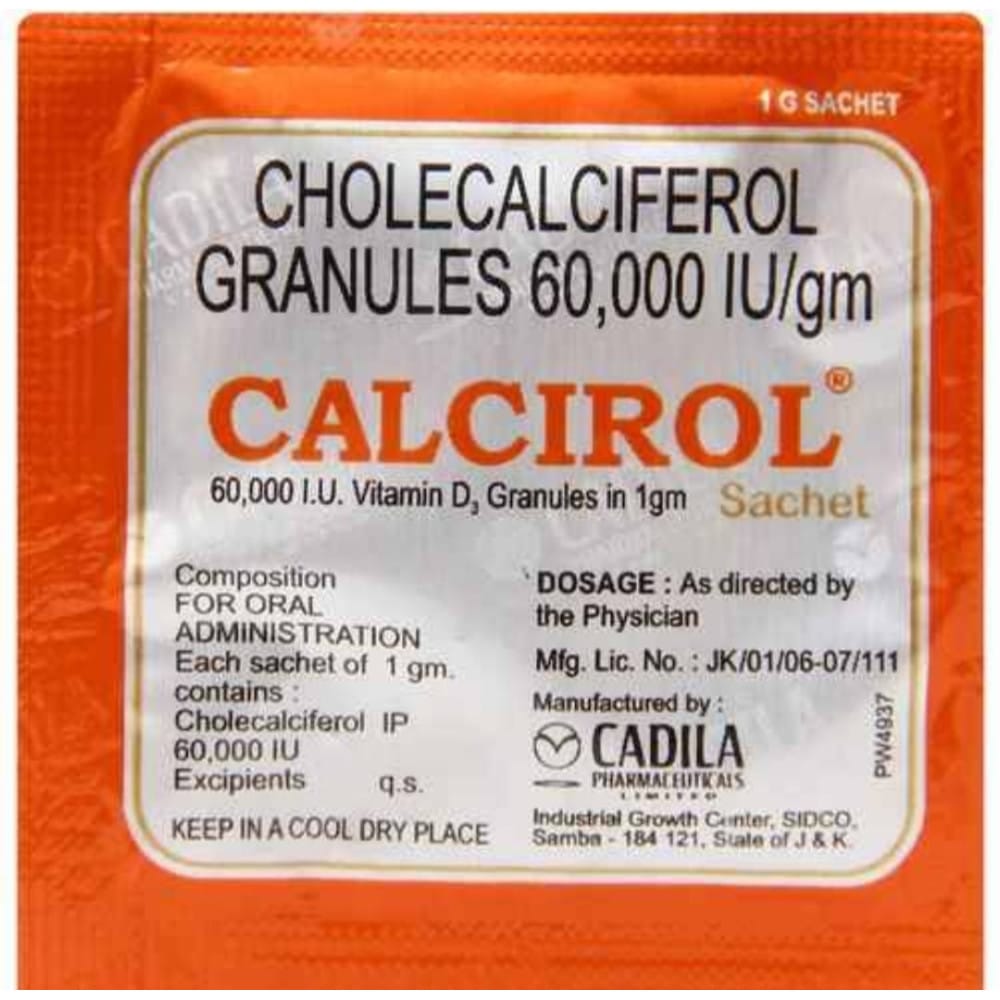
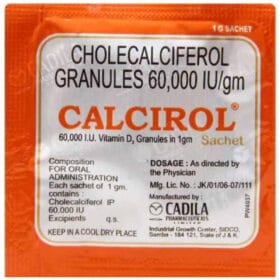
Calcirol Sachet conține Cholecalciferol.
✓ Verificat medical de Morgan Ellis — Cercetător farmaceutic · 8 ani de experiență · Ultima recenzie: mai 2026
Răspuns rapid
Calcirol (colecalciferol 60.000 UI pliculeț oral (Cipla)) este vitamina D3 în doze mari utilizată pentru tratarea și prevenirea deficienței de vitamina D. Regimul standard este un pliculeț de 60.000 IU săptămânal timp de 8 săptămâni (faza de încărcare), apoi un pliculeț lunar pentru menținere.
- Colecalciferol oral în doze mari — 60.000 IU pe pliculeț, granule dispersate în lapte sau apă
- Producător certificat WHO-GMP (Cipla)
- Doza de încărcare: 1 pliculeț/săptămână × 8 săptămâni; menținere: 1 pliculeț/lună
- Livrare discretă la nivel mondial · acoperită de Politica de Asigurare pentru Relivrare
📦 Fiecare comandă este acoperită de politica noastră de Politica noastră de Reexpediere Garantată — dacă coletul dumneavoastră nu sosește în 20 de zile lucrătoare, îl relivrăm.
Fiecare comandă este acoperită de politica noastră de Politica noastră de Reexpediere Garantată.
De ce să comanzi de la MedsBase
Calcirol este procurat de la un producător certificat WHO-GMP. Fiecare comandă este livrată în ambalaje discrete, fără marcă la nivel mondial și este acoperită de Politica noastră de Asigurare pentru Relivrare. Plătiți în siguranță cu cardul de credit, transfer bancar SEPA sau criptomonedă. Consultați Peste 1.400 de recenzii verificate ale clienților.
Ce este Calcirol?
Calcirol este colecalciferol oral în doze mari (vitamina D3) furnizat sub formă de pliculețe cu granule de 60.000 IU de către Cipla. Este cel mai utilizat regim de încărcare cu vitamina D din subcontinentul indian și funcționează la fel de bine în orice populație cu deficiență documentată. Colecalciferolul este aceeași moleculă pe care pielea o sintetizează din 7-dehidrocolesterol la expunerea la UV-B; este hidroxilat la 25-hidroxivitamina D în ficat și la 1,25-dihidroxivitamina D (calcitriol) în rinichi.
Indicații
- Deficiență de vitamina D (serum 25-OH-D < 20 ng/ml sau < 50 nmol/l)
- Insuficiență de vitamina D (20–30 ng/ml sau 50–75 nmol/l)
- Osteomalacie la adulți și rahitism la copii (supraveghere specializată)
- Tratament adjuvant pentru osteoporoză alături de bisfosfonați și calciu
- Sarcina și alăptarea în caz de deficiență documentată (doză de întreținere mai mică după doza de încărcare)
- Post-chirurgie bariatrică malabsorbție
- Tratament anticonvulsivant pe termen lung (fenitoina, carbamazepina, fenobarbitalul induc catabolismul vitaminei D)
| Populație/nivel | Încărcare | Doză de întreținere | Re-verificare |
|---|---|---|---|
| Adulți, deficiență (<20 ng/ml) | 1 plic (60.000 UI) săptămânal × 8 săptămâni | 1 plic lunar | 12 săptămâni după încărcare |
| Adulți, insuficiență (20–30 ng/ml) | 1 pliculeț săptămânal × 4 săptămâni | 1 plic lunar | 12 săptămâni |
| Sarcină (deficit) | 1 pliculeț săptămânal × 4–8 săptămâni (sub îndrumare obstetrică) | 1.000–2.000 UI/zi sau 1 pliculeț lunar | Repetare la 24–28 de săptămâni |
| Vârstnici (prevenirea căderilor și a fracturilor) | Adesea omiteți doza de încărcare; începeți tratamentul de întreținere | 800–2.000 UI/zi sau 1 pliculeț lunar | Anual |
| Bariatric/malabsorbție cronică | Deseori sunt necesare doze mai mari (specialist) | Titrare de către specialist | 12 săptămâni |
| Deficit sever cu rahitism/osteomalacie | Supraveghere specializată; se poate considera administrare IM depot | Titrare de către specialist | Titrare de către specialist |
Cum se administrează
Turnați conținutul pliculețului într-un pahar cu lapte sau apă, amestecați și beți. Este recomandat să luați suplimentul în timpul celei mai mari mese care conține grăsimi din zi — vitamina D este liposolubilă și absorbția este semnificativ mai bună în prezența grăsimilor în masă.
Administrarea susținută peste 4.000 UI/zi (limita superioară sigură din UE) fără monitorizarea nivelului de 25-OH-D poate provoca hipercalcemie (anorexie, greață, poliurie, pietre renale, calcifi care tisulară). Regimul Calcirol săptămânal apoi lunar se menține mult sub această limită; problemele apar când pacienții iau din greșeală un plic zilnic sau combină mai multe suplimente cu vitamina D. Verificați din nou nivelul de 25-OH-D la 12 săptămâni după începerea tratamentului și la fiecare 6–12 luni în faza de menținere.
Efecte secundare
La doze standard, Calcirol este excepțional de bine tolerat. La doze cumulative mari sau cu monitorizare neglijată:
- Hipercalcemia — greață, anorexie, constipație, poliurie, polidipsie, confuzie (rar la dozaj corect)
- Hipercalciurie — poate precipita formarea de pietre renale
- Calcificarea țesuturilor moi la niveluri toxice susținute
Interacțiuni medicamentoase
- Diuretice tiazidice — potențează riscul de hipercalcemie; monitorizați calciul
- Anticonvulsivante (fenitoină, carbamazepină, fenobarbital) — stimulează catabolismul vitaminei D, pot fi necesare doze mai mari
- Glucocorticoizi — antagonizează acțiunea vitaminei D; utilizatorii pe termen lung de steroizi au adesea nevoie de doze mai mari
- Colestiramină, orlistat, ulei mineral — reduc absorbția vitaminelor liposolubile; administrați la interval de 4 ore
- Digoxină — hipercalcemia crește riscul de toxicitate a digoxinului
Contraindicații
- Hipercalcemia de orice cauză
- Hipervitaminoză D
- Sarcoidoză activă sau alte boli granulomatoase (1-α-hidroxilarea extra-renală poate provoca hipercalcemie severă)
- Insuficiență renală severă (folosiți alfacalcidol — vezi Alphadol — sau calcitriol în schimb)
Depozitare
Păstrați la sub 25°C. Păstrați în loc uscat. Folosiți imediat după deschiderea pliculețului.
Întrebări frecvente
De ce 60.000 UI și nu o tabletă zilnică de 1.000 UI?
Ambele funcționează. Încărcarea săptămânală cu 60.000 UI atinge nivelul optim de 25-OH-D mai rapid (de obicei până în săptămâna 8 față de 3–6 luni pentru 1.000 UI zilnice) și conformitatea este mult mai bună — un pliculeț săptămânal este mai greu de uitat decât o tabletă zilnică. După încărcare, alegerea este una de preferință: pliculeț lunar sau 1.000–2.000 UI zilnice.
Trebuie să iau calciu cu Calcirol?
Doar dacă aportul de calciu din dietă este scăzut sau se tratează osteoporoza. Suplimentarea cu vitamina D este suficientă pentru a corecta deficiența la majoritatea pacienților cu aport adecvat de calciu (>700 mg/zi din lactate, legume verzi, tofu, sardine).
Cât de repede voi începe să mă simt mai bine?
Dacă simptomele (oboseală, dureri osoase, slăbiciune musculară) se datorează unei deficiențe confirmate, așteptați-vă la o îmbunătățire parțială la 4–6 săptămâni și la beneficiul complet până la 12 săptămâni. Mulți pacienți cu oboseală nespecifică NU au simptome cauzate de deficiență — verificați mai întâi nivelul înainte de a presupune.
Pot lua Calcirol în timpul sarcinii?
Da, în caz de deficiență documentată sub îndrumarea obstetrică. Vitamina D în timpul sarcinii susține dezvoltarea osoasă fetală, reduce riscul de diabet gestațional și este sigură în doze de până la 4.000 UI/zi. Evitați dozele mari de încărcare fără supraveghere.
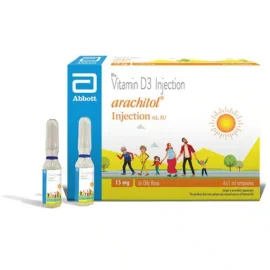
Cum diferă Calcirol de injectia Arachitol 6L?
Calcirol este administrat oral (plicuri cu granule, 60.000 UI pe doză, săptămânal). Injectia Arachitol 6L este intramusculară (6.00.000 UI = 600.000 UI pe doză, injectare unică anuală în cazuri severe de deficiență selectate). Depoul IM este rezervat pentru malabsorbție severă, adherență foarte slabă sau când este necesară încărcare rapidă.
Cum diferă de Alphadol (alfacalcidol)?
Calcirol este colecalciferol — precursorul care necesită activare hepatică și renală. Alphadol este alfacalcidol — pre-activat prin omiterea etapei de 1-α-hidroxilare renală. Alphadol este utilizat în boala renală cronică unde rinichiul nu poate activa colecalciferolul; toți ceilalți folosesc Calcirol.
Care este nivelul țintă al 25-OH-D?
Majoritatea ghidurilor recomandă 30–50 ng/ml (75–125 nmol/l). Peste 50 ng/ml nu au beneficii dovedite suplimentare. Peste 100 ng/ml se apropie de toxicitate și ar trebui să determine reducerea dozei.
Este sigură administrarea pe termen lung?
Da, la doze de întreținere cu monitorizare periodică a 25-OH-D. Mulți pacienți cu expunere limitată la soare (latitudine înaltă, ocupații în interior, îmbrăcăminte modestă, piele închisă) au nevoie de suplimentare pe viață. Regimul Calcirol săptămânal apoi lunar este confortabil de menținut timp de ani.
Previne Calcirol COVID-19?
Nu. Afirmația din perioada inițială a pandemiei conform căreia suplimentarea cu vitamina D previne COVID-19 nu a fost confirmată de studii randomizate. Corectarea deficienței este benefică datorită avantajelor dovedite (os, mușchi, prevenirea căderilor); suplimentarea pacienților care nu au deficiență nu aduce niciun beneficiu.
Pot copiii să ia Calcirol?
Da, sub supraveghere pediatrică în caz de deficiență documentată sau rahitism. Dozarea se face în funcție de greutate și este mai mică decât la adulți. Profilaxia de rutină la copiii sănătoși este de obicei 400 IU/zi de la naștere (conform recomandărilor UK/WHO), nu folosind pliculețe cu doze mari.
Alte Vitamine & Minerale
- Calcirol — colecalciferol 60.000 IU plic
- Arachitol 6L Injectabil — colecalciferol 600.000 UI IM depozit
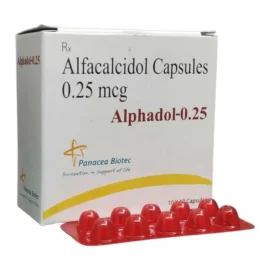
- Alphadol — alfacalcidol pentru deficiențe asociate BCR
- Cipcal — carbonat de calciu + vitamina D
- Topcal M — calciu + magneziu + vitamina D
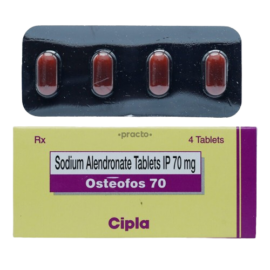
- Osteofos — acid alendronic pentru osteoporoză
Declinare de responsabilitate medicală
Mai multe opțiuni în Vitamine și Minerale
Clasificate în funcție de volumul recent de comenzi MedsBase — ce aleg alți clienți în această categorie.
| Concentrație | 1 g |
|---|---|
| Cantitate | 5 Pliculețe, 10 Pliculețe, 15 Pliculețe, 30 Pliculețe |
 Calcirol
Întrebări și răspunsuri
Calcirol
Produse similare


Recenzii
Nu există recenzii încă