







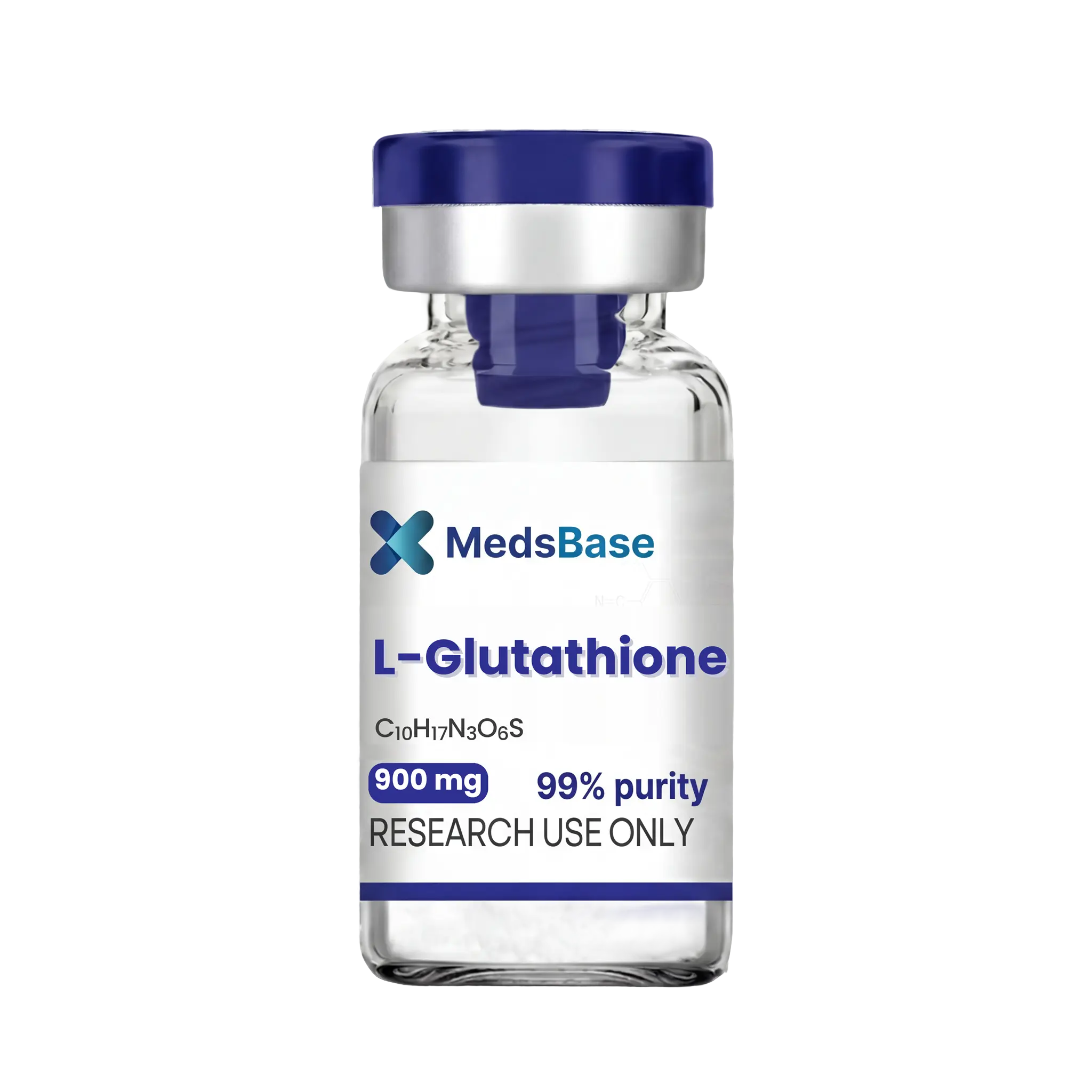
L-Glutathione (zredukowany/GSH) do iniekcji — klasa badawcza
✅ γ-Glutamylotripeptyd (γ-Glu-Cys-Gly) — główny niebiałkowy tiol komórkowy
✅ Substrat GPx (redukcja nadtlenków) + ko-substrat GST (koniugacja ksenobiotyków) + bufor stanu redoks
✅ Unikalne wiązanie γ-peptydowe — odporne na peptydazy; rozcinane tylko przez γ-GT
✅ Kanoniczny związek referencyjny w badaniach nad antyoksydacyjną obroną komórkową
✅ Liofilizowana postać zredukowana klasy USP; CAS 70-18-8, MW 307,32
L-Glutation (postać zredukowana / GSH) zawiera związek badawczy γ-glutamylocysteinyloglicynowy tripeptyd.
✓ Zweryfikowany medycznie przez Morgan Ellis — Badacz farmaceutyczny · 8 lat doświadczenia · Ostatnia weryfikacja: maj 2026
Krótka odpowiedź — czym jest glutation (GSH)?
L-Glutathione (zredukowany; GSH) to tripeptyd γ-glutamyl-cysteinyl-glicyna (γ-Glu-Cys-Gly), CAS 70-18-8, wzór cząsteczkowy C10H17N3O6S, masa cząsteczkowa 307,32 g/mol. GSH jest najobficiej występującym niebiałkowym tiolem komórkowym (stężenie wewnątrzkomórkowe w zakresie milimolowym) i kanonicznym związkiem referencyjnym w badaniach nad antyoksydacyjną obroną komórkową. Unikalne wiązanie γ-peptydowe pomiędzy γ-karboksylem glutaminianu a grupą aminową cysteiny (w przeciwieństwie do standardowego wiązania α-peptydowego) sprawia, że GSH jest odporny na działanie typowych peptydaz — tylko γ-glutamylotransferaza (γ-GT) może je rozłożyć. Komórki wykorzystują GSH jako główny donor elektronów w reakcji redukcji nadtlenku wodoru katalizowanej przez peroksydazę glutationową, jako ko-substrat sprzęgania w detoksykacji ksenobiotyków katalizowanej przez transferazę glutationową-S oraz jako bufor statusu redoks kontrolujący równowagę tiolowo-disulfidową białek. Dostarczany tutaj jako liofilizowany proszek klasy USP wyłącznie do zastosowań laboratoryjnych.
📦 Każde zamówienie jest objęte naszą Polityka Gwarancji Ponownej Wysyłki — jeśli Twoja przesyłka nie dotrze w ciągu 20 dni roboczych, wysyłamy ją ponownie.
| Specyfikacja | Szczegóły |
|---|---|
| Klasa związku | γ-Glutamylowy tripeptyd; pierwszorzędowy niebiałkowy tiolowy antyoksydant komórkowy; małocząsteczkowy peptyd badawczy (z wiązaniem γ, odporny na peptydazy) |
| Nazwa chemiczna | L-Glutathione, zredukowany (γ-L-Glutamyl-L-cysteinyl-glicyna; synonimy: GSH, kwas glutationowy wolny, zredukowany glutation) |
| Numer CAS | 70-18-8 (zredukowana forma GSH); pokrewne: 27025-41-8 (utleniona forma dimeryczna GSSG, nie dostarczana tutaj) |
| Wzór cząsteczkowy | C10H17N3O6S |
| Masa cząsteczkowa | 307.32 g/mol (kwas wolny) |
| Sekwencja | γ-L-glutamylo-L-cysteinyloglicyna (γ-Glu-Cys-Gly). Zwróć uwagę na wiązanie γ-peptydowe wiązanie między łańcuchem bocznym γ-COOH glutaminianu a grupą α-aminową cysteiny, a nie standardowe wiązanie peptydowe α. To niestandardowe połączenie sprawia, że GSH jest odporny na typowe α-peptydazy — tylko γ-glutamylotransferaza (γ-GT) je rozcina, co jest etapem limitującym szybkość w zewnątrzkomórkowej degradacji i recyklingu GSH. |
| Mechanizm | Trzy główne funkcje komórkowe. (1) Donor elektronów dla peroksydazy glutationowej (rodzina GPx) — 2 GSH + H2O2 → GSSG + 2 H2O, kanoniczna reakcja redukcji nadtlenku wodoru w komórce; GSSG jest następnie redukowany z powrotem do 2 GSH przez reduktazę glutationową zależną od NADPH. (2) Ko-substrat dla transferazy glutationowo-S- (Rodzina GST) — sprzęga GSH z elektrofilowymi ksenobiotykami i endogennymi substratami, generując wydalane konjugaty kwasu merkapturowego (centralna wątrobowa ścieżka detoksykacji). (3) Bufor statusu redoks — stosunek GSH:GSSG (zwykle ~100:1 w zdrowych komórkach) kontroluje równowagę tiolowo-disiarczkową białek poprzez wymianę mediowaną przez tioredoksynę i glutaredoksynę, regulując tysiące aktywności białek wrażliwych na redoks. |
| Postać | Liofilizowany biały do kremowego krystaliczny proszek; jednorazowe fiolki do badań. Silnie higroskopijny — natychmiast ponownie zamykaj fiolki po każdym pobraniu, aby uniknąć wchłaniania wilgoci. |
| Czystość | ≥99% (zweryfikowane HPLC, COA na życzenie); miareczkowanie potwierdza ≥98% formy zredukowanej GSH (≤2% zawartości utlenionego GSSG). Referencja klasy USP. |
| Rozpuszczalność | Woda 20 mg/mL; PBS (pH 7,2) 10 mg/mL — łatwo rozpuszczalny przy dostarczonych stężeniach w fiolkach. Grupa tiolowa (-SH) sprawia, że GSH jest wrażliwy na utlenianie przez powietrze — przygotuj świeże roztwory robocze z liofilizowanej fiolki i używaj w ciągu 24 godzin, jeśli to możliwe. DMSO jest odpowiednim rozpuszczalnikiem pomocniczym do przygotowania zapasów do hodowli komórkowej (do 100 mg/mL) i zapewnia dodatkową ochronę przed utlenianiem przez powietrze. |
| Przechowywanie | Liofilizowany: 2–8 °C w oryginalnym zamkniętym opakowaniu do krótkotrwałego przechowywania zapasów roboczych; −20 °C do długotrwałego przechowywania nieotwartych fiolek (stabilność ≥36 miesięcy w −20 °C; ≥18 miesięcy w 2–8 °C). Zrekonstytuowane roztwory wodne: 2–8 °C, używaj w ciągu ~7 dni (utlenianie do GSSG przez powietrze jest czynnikiem ograniczającym). Chronić przed światłem. Unikaj wielokrotnego zamrażania i rozmrażania zrekonstytuowanych roztworów — kumulacyjne cykle przyspieszają utlenianie GSH → GSSG. |
| Do celów badawczych | Wyłącznie do użytku laboratoryjnego. Nie do diagnostyki lub terapii u ludzi i zwierząt. Glutation nie znajduje się na Liście Substancji Zakazanych WADA. Jest zatwierdzony jako iniekcja kliniczna w niektórych jurysdykcjach (Włochy/Japonia/Korea/Filipiny jako Tationil i podobne nazwy handlowe) w hepatologii i stanach stresu oksydacyjnego; materiał badawczy dostarczany tutaj jest przeznaczony wyłącznie do użytku laboratoryjnego i różni się od tych preparatów klinicznych. |
Co to jest L-Glutathione (zredukowany/GSH)?
L-Glutathione (forma zredukowana, GSH) jest najobficiej występującym niebiałkowym tiolem komórkowym w biologii eukariotycznej — obecny w milimolowych stężeniach wewnątrzkomórkowych (1–10 mM w większości typów komórek; do 10 mM w hepatocytach) i służący jako główny molekularny bufor dla statusu redoks komórkowego. Strukturalnie jest to tripeptyd glutaminianu, cysteiny i glicyny (γ-Glu-Cys-Gly), CAS 70-18-8, wzór molekularny C10H17N3O6S, masa cząsteczkowa 307,32 g/mol.
Charakterystyczną cechą strukturalną glutationu jest jego wiązanie γ-peptydowe. Standardowe peptydy są połączone poprzez wiązania α-peptydowe między α-karboksylem jednego aminokwasu a α-aminą następnego. W glutationie wiązanie między glutaminianem a cysteiną jest nietypowe: powstaje między γ-karboksylem łańcucha bocznego glutaminianu a α-aminą cysteiny. To niestandardowe połączenie jest molekularną podstawą odporności glutationu na powszechne komórkowe peptydazy — tylko γ-glutamylotransferaza (γ-GT, GGT, EC 2.3.2.2) rozpoznaje i rozszczepia wiązanie γ. W efekcie glutation jest wyjątkowo stabil stabilny w cytoplazmie komórkowej, gdzie w przeciwnym razie byłby szybko degradowany przez aktywność α-peptydaz, a degradacja zewnątrzkomórkowa mediowana przez γ-GT jest etapem limitującym tempo recyklingu glutationu.
Glutation jest syntetyzowany w dwóch zależnych od ATP etapach przez enzymy enzymy cytoplazmatyczne glutaminian-cysteina ligaza (GCL) — która tworzy wiązanie γ-glutamyl-cysteina — oraz syntetaza glutationu (GSS) — która dodaje C-końcową glicynę. GCL jest enzymem limitującym tempo i jest hamowany przez sprzężenie zwrotne przez sam glutation, zapewniając autoregulację poziomów glutationu w komórce. Dostępność cysteiny jest drugim głównym czynnikiem limitującym tempo — dlatego N-acetylocysteina (NAC), prolek cysteiny, jest kanoniczną interwencją kliniczną zwiększającą syntezę glutationu w kontekstach stresu oksydacyjnego i detoksykacji (podstawa aprobaty NAC dla przedawkowania paracetamolu i innych wskazań klinicznych).
Glutation występuje w komórkach w dwóch przekształcających się wzajemnie dwóch formach: forma zredukowana (GSH) z wolną grupą tiolową (-SH) oraz forma utleniona (GSSG) gdzie dwie cząsteczki GSH są połączone mostkiem disiarczkowym. Stosunek GSH:GSSG (zwykle ~100:1 w zdrowych komórkach, spadający do 10:1 lub mniej pod wpływem stresu oksydacyjnego) jest kanonicznym biomarkerem redoks komórkowym. GSSG jest redukowany z powrotem do 2 GSH przez reduktaza glutationowa (GR, GSR), flawoenzym zależny od NADPH — łączący system redoks GSH z dostępnością NADPH i ostatecznie ze szlakiem pentozofosforanowym. Dlatego zaburzenie szlaku pentozofosforanowego (niedobór G6PD, dostępność glukozo-6-fosforanu) upośledza funkcjonowanie systemu GSH i wywołuje oksydacyjne uszkodzenia komórek.
Dostarczany tutaj materiał badawczy to zredukowana forma GSH, dostarczana jako liofilizowany proszek do rekonstytucji i użycia w protokołach badawczych wraz z katalogiem peptydów.
Mechanizm działania — trzy główne role komórkowe
Biologiczny mechanizm GSH to suma trzech głównych ról komórkowych, które są dobrze scharakteryzowane w opublikowanej biochemii:
- Substrat peroksydazy glutationowej (GPx) — redukcja nadtlenku wodoru i nadtlenków lipidowych — Najczęściej cytowana rola GSH. Rodzina GPx (GPx1–8, z selenozależną GPx1 jako najobficiej występującą) katalizuje reakcję 2 GSH + ROOH → GSSG + ROH + H2O, redukując nadtlenek wodoru i nadtlenki lipidowe odpowiednio do wody i alkoholi. Jest to podstawowa obrona komórki przed reaktywnymi formami tlenu generowanymi przez oddychanie mitochondrialne, aktywność oksydazy NADPH i inne procesy oksydacyjne. GPx4 to specyficzna izoforma, która katalizuje redukcję nadtlenków lipidowych i jest celem molekularnym, którego utrata funkcji wywołuje ferroptozę — szlak ferroptozy, zależnej od żelaza śmierci komórkowej, który stał się głównym przedmiotem badań w dziedzinie onkologii i chorób neurodegeneracyjnych.
- Glutathione-S-transferase (GST) ko-substrat — koniugacja ksenobiotyków i endobiotyków — Rodzina GST (członkowie cytosoliczni, mikrosomalni i mitochondrialni; ~20 izoform GST u człowieka) katalizuje koniugację GSH z substratami elektrofilowymi poprzez grupę tiolową GSH, generując addukty GSH-S-sprzężone, które są następnie przetwarzane przez γ-GT i dipeptydazy do kwasów merkapturowych i wydalane. Jest to centralny szlak detoksykacji fazy II w wątrobie i innych tkankach, przetwarzający szerokie spektrum ksenobiotyków (metabolity leków, chemikalia środowiskowe, produkty metabolizmu cytochromu P450 fazy I), endogennych elektrofilów (4-hydroksynonenal, akroleina z peroksydacji lipidów) i reaktywnych pośredników (NAPQI z paracetamolu, podstawa terapii NAC w przedawkowaniu paracetamolu).
- Bufor statusu redoks — regulacja równowagi tiolowo-disulfidowej białek — Stosunek GSH:GSSG w komórce ustala równowagę termodynamiczną dla stanu redoks białek poprzez wymianę mediowaną przez tioredoksynę i glutaredoksynę. Tysiące białek komórkowych ma wrażliwe na redoks reszty cysteinowe, których stan tiolowo-disulfidowy jest regulowany przez tę równowagę — w tym kluczowe czynniki transkrypcyjne (NF-κB, AP-1, Nrf2, p53), kinazy sygnałowe (PTP, PTEN), maszynerię apoptozy (kaspazy) i enzymy metaboliczne (dehydrogenaza aldehydu 3-fosfoglicerynowego i inne). Buforowanie redoks przez GSH nie jest więc tylko obroną antyoksydacyjną, ale mechanizmem regulacyjnym sygnalizacji — fakt ten wyłonił się w opublikowanych badaniach w ciągu ostatnich dwóch dekad i jest jednym z najczęściej cytowanych uzasadnień stosowania GSH w protokołach badawczych wykraczających poza prostą suplementację antyoksydantów.
- Zasób cysteiny i międzyorganowy transport aminokwasów — GSH działa jako stabilna tkankowo, przepuszczalna dla transportu rezerwa cysteiny — aminokwasu limitującego syntezę nowych białek oraz dalszą syntezę GSH. Cysteina w postaci wolnej jest metabolicznie niestabilna (ulega samoutlenianiu do cystyny, może generować H2S, etc.), więc organizm utrzymuje pulę cysteiny głównie w postaci GSH i transportuje cysteinę między narządami (zwłaszcza wątroba → nerki, wątroba → inne tkanki) jako GSH, które jest następnie przetwarzane z powrotem na cysteinę przez γ-GT w tkance docelowej.
- — Poza rolami enzymatycznymi, GSH bezpośrednio reaguje z rodnikiem hydroksylowym, rodnikiem nadtlenkowym i reaktywnymi formami azotu poprzez grupę tiolową. Ilościowo przyczynia się to w mniejszym stopniu do całkowitej obrony antyoksydacyjnej niż mechanizm mediowany przez GPx, ale jest ważne w przedziałach i warunkach, gdzie systemy enzymatyczne są nasycone lub nieobecne (pozakomórkowe GSH w płynie wyściełającym płuca, GSH w świetle jelita itp.). — Poza rolami enzymatycznymi, GSH bezpośrednio reaguje z rodnikiem hydroksylowym, rodnikiem nadtlenkowym i reaktywnymi formami azotu poprzez grupę tiolową. Ilościowo ma to mniejszy udział w całkowitej obronie antyoksydacyjnej niż mechanizm enzymatyczny z udziałem GPx, ale jest ważne w przedziałach i warunkach, gdzie systemy enzymatyczne są nasycone lub nieobecne (pozakomórkowe GSH w płynie wyściełającym płuca, GSH w świetle jelita itp.).
Profil farmakokinetyczny iniekcyjnego GSH jest dobrze scharakteryzowany: podanie dożylne powoduje szybką dystrybucję systemową ze szczytowym stężeniem w osoczu osiąganym w ciągu minut, jednak okres półtrwania w osoczu jest krótki (~10–15 minut) z powodu szybkiego rozkładu katalizowanego przez γ-GT do cysteinyloglicyny i późniejszej resyntezy lub dalszego rozkładu w tkankach docelowych. Krótki czas przebywania w osoczu jest jednym z powodów, dla których codzienne lub dwukrotne w ciągu dnia protokoły dawkowania dożylnego są powszechne w opublikowanych badaniach nad GSH. Przepuszczalność błon komórkowych dla niezmienionego GSH jest niska – komórki głównie importują składowe aminokwasy i resyntetyzują GSH wewnątrzkomórkowo. Dlatego doustne GSH ma słabą biodostępność, a preparaty iniekcyjne (lub alternatywnie NAC jako prolek cysteiny) są wymagane do skutecznego dostarczania do tkanek w opublikowanych badaniach.
Opublikowane zastosowania badawcze
Komórkowa obrona antyoksydacyjna — kanoniczny związek referencyjny
- Komórkowa obrona antyoksydacyjna — kanoniczny związek referencyjny — zdecydowanie najczęściej cytowany przeciwutleniacz komórkowy w publikacjach naukowych; standardowy związek referencyjny w badaniach nad nowymi interwencjami antyoksydacyjnymi; molekularny złoty standard w analizie statusu redoks komórek
- Badania nad redukcją nadtlenku wodoru i nadtlenków lipidowych — bezpośredni substrat GPx; stosowany w opublikowanych badaniach nad farmakologią izoform GPx, analizą szlaków metabolizmu nadtlenków oraz integracją układów redoks GSH z tioredoksyną i peroksyredoksynami
- Badania nad ferroptozą — redukcja lipidowych nadtlenków przez GPx4 jest kluczowym mechanizmem zapobiegającym ferroptozie; GSH i interwencje w szlaku jego syntezy (BSO, erastyna, RSL3) to standardowe narzędzia w badaniach nad indukcją/hamowaniem ferroptozy w kontekście nowotworów, neurodegeneracji i uszkodzeń niedokrwienno-reperfuzyjnych
- Badania nad detoksykacją fazy II i koniugacją ksenobiotyków — substrat GST dla centralnego szlaku detoksykacji wątrobowej; stosowany w badaniach nad metabolizmem leków, narażeniem na chemikalia środowiskowe, hepatotoksycznością indukowaną paracetamolem (wychwytywanie NAPQI) oraz szerszą farmakologią koniugacji kwasów merkapturowych
- Badania nad sygnalizacją redoks białkowych tioli — stosunek GSH:GSSG kontroluje równowagę tiolowo-disulfidową tysięcy białek komórkowych; stosowany w badaniach nad czynnikami transkrypcyjnymi wrażliwymi na redoks (Nrf2, NF-κB, AP-1), regulacją kinaz (PTP, PTEN) oraz szerszym “redoksomem” komórkowym”
- Badania nad dysfunkcją mitochondrialną i starzeniem — poziom GSH w mitochondriach zmniejsza się z wiekiem i w wielu modelach chorób; opublikowane badania wykorzystują egzogenny GSH i interwencje w jego szlaku do badania wpływu redoks mitochondrialnego na starzenie, neurodegenerację i choroby metaboliczne
- Hepatologia i badania nad uszkodzeniem wątroby — GSH występuje w największej ilości w hepatocytach (stężenie 5–10 mM); stosowany w opublikowanych badaniach nad alkoholową chorobą wątroby, NAFLD/MASH, modelami wirusowego zapalenia wątroby oraz przedawkowaniem paracetamolu/lekowym uszkodzeniem wątroby
- Hematologia i badania nad erytrocytami — GSH w erytrocytach stanowi główną obronę przed oksydacyjną hemolizą; stosowany w badaniach nad niedoborem G6PD, anemią sierpowatą, farmakologią oksydacyjnej hemolizy
- Badania nad redoks w nowotworach i chemoprotekcją — wiele leków chemioterapeutycznych generuje ROS jako część swojego mechanizmu działania, a komórki nowotworowe często mają podwyższony poziom GSH; opublikowane badania wykorzystują GSH i interwencje w jego szlaku do analizy biologii redoks w chemioterapii
Szerszy kontekst dotyczący związków badawczych kofaktorów komórkowych i redoks/antyoksydantów w tym katalogu można znaleźć w B12 (cyjanokobalamina) (małocząsteczkowy kofaktor wspomagający badania — cykl metylacji), L-Karnityna (mitochondrialny transporter kwasów tłuszczowych — małocząsteczkowy związek wspomagający), NAD⁺ (bezpośrednia suplementacja puli dinukleotydów — transport elektronów redoks), 5-Amino-1MQ (oszczędzanie osi NAD poprzez inhibicję NNMT) oraz SS-31 (Elamipretide) (peptyd antyoksydacyjny ukierunkowany na mitochondria, wiążący kardiolipinę). Przeglądaj pełny asortyment katalog peptydów i związków badawczych, lub zobacz przygotowane zestawy związków do badań nad długowiecznością hub.
Dostępne mocowania i stężenia
MedsBase stocks Glutathione in three lyophilized vial sizes calibrated to typical research-protocol dose ranges. Each strength is available in 10-vial, 20-vial, or 30-vial pack formats:
| Mocowanie fiolki | Typowy przypadek użycia w badaniach | Rozmiary opakowań |
|---|---|---|
| 600 mg | Standardowe stężenie badawcze — protokoły dla początkujących, panele obrony antyoksydacyjnej in vitro, prace nad titracją dawek, titracja w pojedynczych kohortach mysich; wygodne do rekonstytucji w stężeniach roboczych 100–200 mg/mL | 10, 20 lub 30 fiolek |
| 900 mg | Średnie stężenie — przedłużone protokoły dawkowania u gryzoni in vivo, protokoły badań dożylnych, wielkości prób dla wielu kohort, badania modelowe w hepatologii/stresie oksydacyjnym | 10, 20 lub 30 fiolek |
| 1500 mg | Wysokie stężenie badawcze — protokoły z zakresem dawek translacyjno-klinicznych (włoskie dawkowanie Tationil IV w badaniach hepatologicznych wynosi 600–2400 mg/d), duże badania metaboliczne kohortowe, prace porównawcze wieloramienne; najniższy koszt na mg | 10, 20 lub 30 fiolek |
Wszystkie trzy mocne strony są tą samą jednostką chemiczną (liofilizowana zredukowana postać L-glutationu, ≥99% czystości HPLC, potwierdzona miareczkowaniem zawartość formy zredukowanej w jakości USP). Fiolka 1500 mg zapewnia najniższy koszt na miligram dla protokołów badań kliniczno-translacyjnych. Badacze powinni określić konkretne zakresy dawek na podstawie recenzowanej literatury odpowiedniej dla protokołu.
Porównanie — Glutation vs NAD⁺
Glutation i NAD⁺ to dwa najlepiej zbadane małocząsteczkowe związki redoks/koenzymy w tym katalogu, które znajdują się na połączonych, ale mechanistycznie odrębnych gałęziach biologii redoks komórkowego. GSH jest główną komórkową obroną antyoksydacyjną małą cząsteczką — obecną w stężeniach milimolowych i redukującą nadtlenki poprzez mechanizm substratu GPx. NAD⁺ jest głównym komórkowym transportem elektronów koenzymem — redukowalnym do NADH dla transportu elektronów w glikolizie/cyklu TCA/β-oksydacji oraz substratem dla sirtuin i PARP. Oba systemy są ze sobą powiązane: NADPH (wytwarzany z NAD poprzez szlak pentozofosforanowy) jest ekwiwalentem redukującym, który regeneruje GSH z GSSG poprzez reduktazę glutationową. Badania dotyczące biologii redoks komórkowego często manipulują obiema pulami i porównują konsekwencje.
| Kryterium | Glutation (GSH) | NAD⁺ |
|---|---|---|
| Klasa chemiczna | γ-Glutamylotripeptyd (γ-Glu-Cys-Gly) | Dinukleotydowy koenzym (adenina + nikotynamid + difosforan) |
| Masa cząsteczkowa | 307,32 g/mol | 663.43 g/mol |
| Rola komórkowa | Obrona antyoksydacyjna — substrat GPx (redukcja nadtlenków), ko-substrat GST (koniugacja ksenobiotyków), bufor statusu redoks | Koenzym transportu elektronów — substrat dla β-oksydacji, glikolizy, TCA; substrat dla sirtuin i PARP |
| Stężenie komórkowe | 1–10 mM (milimolarny — najobficiej występujący niebiałkowy tiol) | ~0,3–1 mM (pula NAD, zakres mikromolarny do wysokich µM) |
| Najlepiej przebadany obszar badawczy | Obrona antyoksydacyjna, ferroptoza, detoksyfikacja fazy II, sygnalizacja redoks, hepatologia, uszkodzenie wywołane paracetamolem | Biologia sirtuin, długowieczność, starzenie komórkowe, regulacja redoks osi NAD |
| Stabilność w osoczu | Krótki — okres półtrwania ~10–15 min (rozpad zewnątrzkomórkowy mediowany przez γ-GT) | Bardzo krótki — minuty (szybko utlenia się i degraduje w roztworze) |
| Połączenie | NADPH (pochodzący z NAD) regeneruje GSH z GSSG za pośrednictwem reduktazy glutationowej | Połączenie NADPH wiąże pulę NAD z zdolnością redukcyjną systemu GSH |
| Zastosowanie kliniczne | Zatwierdzony do iniekcji we Włoszech/Japonii/Korei (Tationil i podobne; hepatologia, stres oksydacyjny) | Nie zatwierdzony jako lek kliniczny; związek wyłącznie do badań |
Dla badań skupionych na obronie antyoksydacyjnej komórki, ferroptozie, detoksyfikacji fazy II lub sygnalizacji redoks, Glutation jest kanonicznym związkiem referencyjnym. Dla badań skupionych na biologii sirtuin, biochemii osi długowieczności lub regulacji redoks zależnej od NAD, NAD⁺ jest bardziej ukierunkowanym narzędziem. Oba związki są powszechnie podawane łącznie w badaniach dotyczących zintegrowanej odpowiedzi systemu redoks komórki na stres oksydacyjny, starzenie lub dysfunkcję mitochondrialną.
Przechowywanie i rekonstytucja
Przed rekonstytucją: przechowuj liofilizowane fiolki w lodówce w temperaturze 2–8 °C w oryginalnym zamkniętym opakowaniu. Do długotrwałego przechowywania zamrażaj nieotwarte fiolki w temperaturze −20 °C (stabilność ≥36 miesięcy w −20 °C; ≥18 miesięcy w 2–8 °C). Liofilizowany GSH jest silnie higroskopijny — natychmiast ponownie zamykaj fiolki po każdym pobraniu, aby uniknąć wchłaniania wilgoci (co przyspiesza utlenianie GSH → GSSG). Chronić przed światłem.
Procedura rekonstytucji: Wstrzyknąć sterylną wodę, wodę bakteriostatyczną lub PBS (pH 7,2) wzdłuż ścianki fiolki (nie bezpośrednio na liofilizowany proszek). Dla fiolki 600 mg, 6,0 mL rozpuszczalnika daje roztwór roboczy 100 mg/mL; 3,0 mL daje 200 mg/mL. Dla fiolki 900 mg, 9,0 mL daje 100 mg/mL; 4,5 mL daje 200 mg/mL. Dla fiolki 1500 mg, 7,5 mL daje roztwór 200 mg/mL; 15 mL daje 100 mg/mL. GSH rozpuszcza się szybko przy delikatnym mieszaniu w temperaturze pokojowej.
Kluczowe dla rekonstytuowanego GSH: grupa tiolowa (-SH) jest wrażliwa na utlenianie przez powietrze — rekonstytuowane roztwory stopniowo utleniają się do formy GSSG, nawet przechowywane w lodówce. Przygotowuj roztwory robocze bezpośrednio z liofilizowanych fiolek, jeśli to możliwe, lub używaj w ciągu 7 dni od rekonstytucji przechowywanych w lodówce. Do długotrwałego przechowywania rekonstytuowanego materiału dodaj chelatory (1 mM EDTA) aby spowolnić utlenianie katalizowane przez metale, przechowuj w atmosferze obojętnej (argon lub azot) lub użyj rozpuszczalnika DMSO (który zapewnia dodatkową ochronę). Nie zamrażaj i rozmrażaj wielokrotnie. Odrzuć jeśli pojawi się wyraźna zmiana koloru (żółty/brązowy) lub wytrącenie.
Najczęściej zadawane pytania
Jaka jest różnica między zredukowaną (GSH) a utlenioną (GSSG) formą glutationu?
GSH to forma zredukowana z wolną grupą tiolową (-SH) na reszcie cysteinowej — biologicznie aktywna forma działająca jako przeciwutleniacz komórkowy. GSSG to utleniona forma dimeryczna, gdzie dwie cząsteczki GSH są połączone mostkiem disiarczkowym między siarkami cystein — forma zużyta, która musi być ponownie zredukowana do 2 GSH przez reduktazę glutationową. Stosunek GSH:GSSG w komórce (zwykle ~100:1 w zdrowych komórkach, spadający do 10:1 lub mniej pod wpływem stresu oksydacyjnego) jest kluczowym biomarkerem statusu redoks komórki. Dostarczamy formę zredukowaną GSH; badacze potrzebujący specyficznie GSSG powinni skonsultować się z dedykowanymi dostawcami.
Dlaczego GSH ma wiązanie γ-peptydowe zamiast normalnego wiązania α-peptydowego?
Niestandardowe wiązanie γ-peptydowe między γ-COOH glutaminianu a α-NH cysteiny2 nadaje glutationowi odporność na działanie peptydaz komórkowych. Standardowe α-peptydazy komórkowe (aminopeptydazy, karboksypeptydazy) rozpoznają tylko wiązania α-peptydowe i nie mogą rozciąć wiązania γ. Tylko γ-glutamylotransferaza (γ-GT, GGT) rozpoznaje i rozcina wiązanie γ — a γ-GT jest enzymem limitującym tempo degradacji GSH, eksprymowanym głównie na powierzchni apikalnej komórek nabłonkowych (nerki, drogi żółciowe itp.). To niestandardowe połączenie jest więc kluczowe dla stabilnego, wewnątrzkomórkowego nagromadzenia glutationu w stężeniach milimolowych.
Dlaczego biodostępność doustna GSH jest niska?
Niezmienione GSH jest słabo wchłaniane przez nabłonek jelitowy z powodu: (1) wiązanie γ-peptydowe uniemożliwia rozpoznanie przez standardowe transportery di-/tri-peptydów PEPT1/PEPT2, które absorbują inne tripeptydy; (2) aktywność γ-GT na granicy szczoteczkowej degraduje większość doustnie podanego GSH do jego składowych aminokwasów przed absorpcją; (3) uwolniona cysteina jest następnie w dużej mierze zużywana przez enterocyty do pierwszego przejścia resyntezy GSH. Dlatego netto biodostępność doustna niezmienionego GSH jest bardzo niska, co jest powodem, dla którego iniekcyjne preparaty lub N-acetylocysteina (NAC, prolek cysteiny) są preferowane w badaniach interwencyjnych mających na celu zwiększenie poziomu GSH w organizmie.
Jakie opublikowane zakresy dawek były stosowane w badaniach?
Dawkowanie GSH dożylnego w protokołach badawczych zwykle obejmuje 600–1200 mg na dawkę, codziennie lub 2–3×/tydzień, przez 4–12 tygodni w badaniach na ludziach (odzwierciedlając zakres dawek zatwierdzonego produktu Tationil we Włoszech wynoszący 600–2400 mg/d). Badania in vivo na gryzoniach wykorzystują 50–150 mg/kg IV/IP, odzwierciedlając zakres dawek, który zapewnia wiarygodne podwyższenie poziomu GSH w organizmie pomimo krótkiego okresu półtrwania w osoczu. Protokoły in vitro w hodowlach komórkowych zwykle wykorzystują 0,5–10 mM w pożywce hodowlanej (komórki pobierają cysteinę z GSH i resyntetyzują wewnątrzkomórkowe GSH). Badacze powinni konsultować literaturę podstawową odpowiednią dla konkretnego zastosowania.
Dlaczego okres półtrwania GSH w osoczu jest tak krótki?
Aktywność γ-GT w osoczu szybko rozcina wiązanie γ-peptydowe krążącego GSH do cysteinyloglicyny, która jest następnie dalej rozcinana przez dipeptydazy do cysteiny + glicyny. Połączony kaskad γ-GT + dipeptydaz nadaje niezmienionemu krążącemu GSH okres półtrwania w osoczu wynoszący tylko ~10–15 minut. Dlatego w protokołach badań klinicznych stosuje się wielokrotne codzienne dawkowanie zamiast pojedynczych wysokich dawek bolusowych, oraz dlatego N-acetylocysteina (NAC) — która jest pobierana w niezmienionej postaci i wykorzystywana do wewnątrzkomórkowej syntezy GSH — jest czasem preferowana jako dłużej działająca alternatywa źródła cysteiny w badaniach mających na celu zwiększenie poziomu GSH w komórkach.
Czy GSH można łączyć z B12, NAC lub innymi związkami redoks/koenzymowymi w protokołach badawczych?
Tak — GSH jest mechanistycznie powiązany z wieloma innymi związkami redoks komórkowymi i koenzymowymi. Typowe kombinacje w protokołach badawczych obejmują: GSH + NAC (równoległe strategie źródła cysteiny — GSH jako niezmieniony tripeptyd, NAC jako prolek cysteiny — aby porównać drogi suplementacji GSH pozakomórkowego vs wewnątrzkomórkowego); GSH + B12 (badania neurologiczne związane ze stresem oksydacyjnym i cyklem metylacji); GSH + NAD⁺ (zintegrowana analiza puli redoks); GSH + SS-31 (badania redoks ukierunkowane na mitochondria). Rekonstytuuj każdy z osobna tuż przed użyciem i dodawaj oddzielnie, zamiast przechowywać razem zrekonstytuowane roztwory.
Jak to badawcze GSH porównuje się z preparatami klinicznymi takimi jak Tationil?
Tationil (oraz podobne markowe preparaty kliniczne dostępne we Włoszech/Japonii/Korei/Filipinach) to zredukowana forma L-glutationu zatwierdzona jako iniekcyjny preparat kliniczny do wskazań hepatologicznych i związanych ze stresem oksydacyjnym. Badawcze GSH dostarczane tutaj to ta sama zredukowana forma L-glutationu o czystości ≥99% w HPLC, dostarczana bez etykiety do użytku klinicznego i przeznaczona wyłącznie do badań laboratoryjnych. Badacze poszukujący GSH do użytku klinicznego powinni pozyskać go przez kliniczny łańcuch dostaw; badacze poszukujący materiału badawczego do protokołów laboratoryjnych in vitro i in vivo mogą używać materiału dostarczanego tutaj.
Czy GSH znajduje się na Liście Zakazanej WADA?
Nie. Glutation nie znajduje się na Liście Zakazanej WADA. Jest to naturalnie występujący komórkowy przeciwutleniacz tripeptydowy obecny w stężeniach milimolowych w każdej komórce jądrzastej — dlatego nie podlega regulacyjnym ograniczeniom dotyczącym wydolności sportowej.
Inne małocząsteczkowe związki towarzyszące badaniom
- B12 (cyjanokobalamina) — Koenzym kobalaminowy — towarzysz badań nad cyklem metylacji
- L-Karnityna — Mitochondrialny szlak kwasów tłuszczowych — najbliższy małocząsteczkowy analog towarzyszący badaniom
- NAD⁺ — Utleniony dinukleotydowy koenzym — bezpośrednie badania puli NAD / transportu elektronów
- 5-Amino-1MQ — Inhibitor NNMT — oszczędzanie prekursorów osi NAD, buforowanie puli metylacji
- SS-31 (Elamipretide) — Peptyd antyoksydacyjny ukierunkowany na mitochondria, wiążący kardiolipinę
- BAC Water (Woda bakteriostatyczna) — Wymagany do rekonstytucji każdej liofilizowanej fiolki — sterylny rozcieńczalnik z 0,9% benzylowym alkoholem jako środkiem konserwującym
Więcej opcji w Peptydach
Ranking według liczby ostatnich zamówień MedsBase — co wybierają inni klienci w tej kategorii.
| Moc | 600 mg, 900 mg, 1500 mg |
|---|---|
| Ilość | 10 fiolek, 20 fiolek, 30 fiolek |
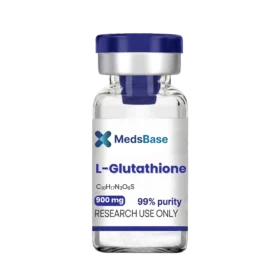 L-Glutathione (zredukowany/GSH) do iniekcji — klasa badawcza
Pytania i odpowiedzi
L-Glutathione (zredukowany/GSH) do iniekcji — klasa badawcza
Produkty powiązane
Opinie
Nie ma jeszcze opinii