







HMG (Gonadotropină Menopauză Umană / Menotropină) — Grad de cercetare
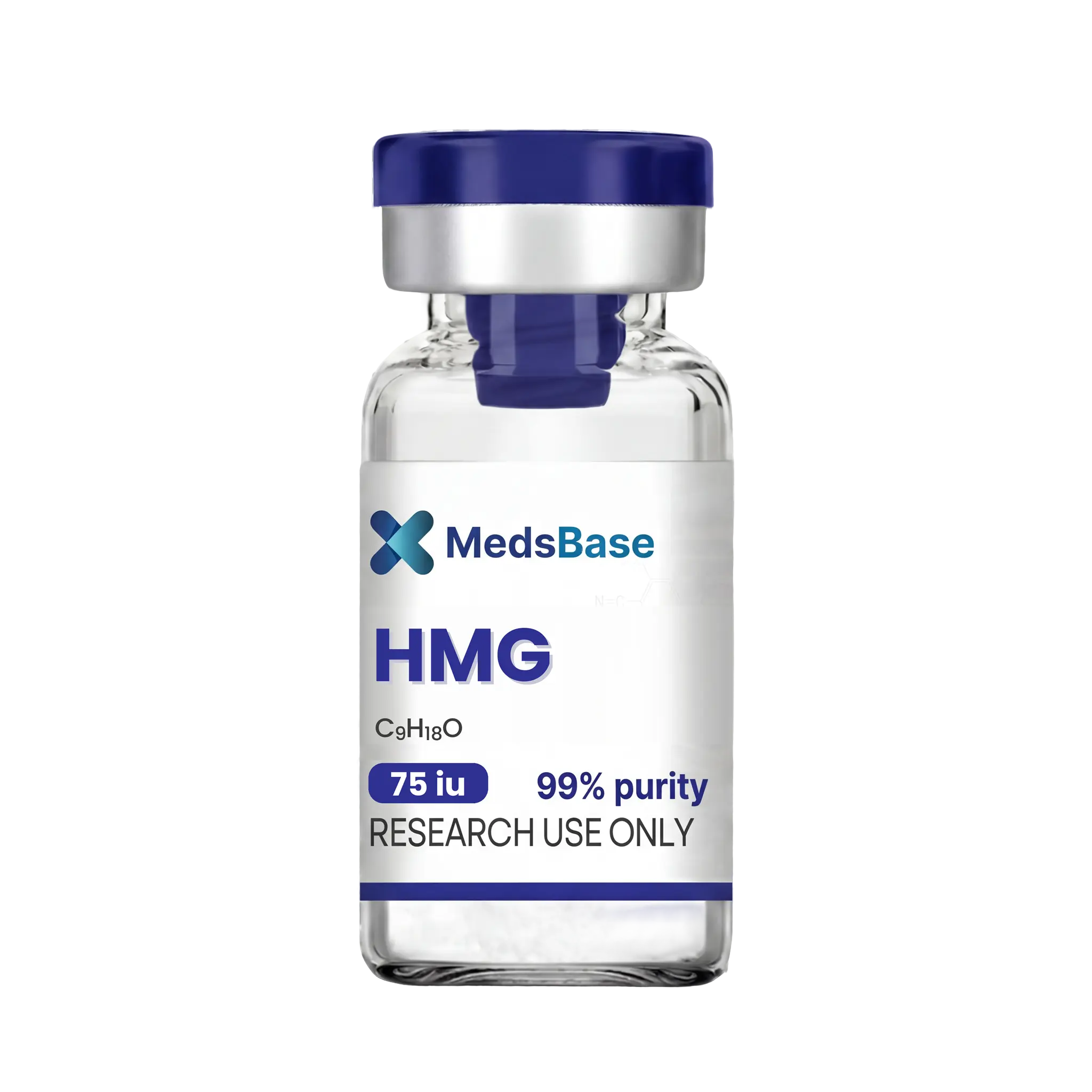
✅ Preparat glicoproteic dual LH + FSH — raport de bioactivitate 1:1 (75 IU fiecare)
✅ Agonist dual canonic al receptorilor LHCGR + FSHR pentru gonadotropine
✅ Menotropină extrasă din urină postmenopauză (CAS 61489-71-2)
✅ Modelul celulelor două-gonadotropine două — activează Leydig+Sertoli sau teca+granuloasă
✅ Instrument standard pentru cercetarea inducției spermatogenezei și stimulării ovariene
HMG (Grad de Cercetare) conține gonadotropină menopauză umană extrasă din urină (menotropină).
✓ Verificat medical de Morgan Ellis — Cercetător farmaceutic · 8 ani de experiență · Ultima recenzie: mai 2026
Răspuns rapid — Ce este HMG (grad de cercetare)?
HMG (Gonadotropină menopauză umană, cunoscută și sub denumirea de menotropină; CAS 61489-71-2) este o preparare glicoproteinică hormonală derivată din urină, care conține activitate biologică egală de LH și FSH (75 UI LH + 75 UI FSH pe flacon, raportul standard 1:1). Purificată din urina femeilor postmenopauzale — al căror aport de gonadotropine hipofizare este natural crescut datorită absenței inhibiției prin feedback negativ — hMG este agonistul canonic dual LHCGR + FSHR în farmacologia endocrină și instrumentul de referință pentru protocoalele care necesită simultan steroidogeneză în celulele Leydig / celulele theca (partea LH) și acțiune în celulele Sertoli / celulele granulosa (partea FSH). Materialul de grad de cercetare furnizat este glicoforma extrasă din urină cu o puritate ≥99% prin HPLC. Doar pentru uz în cercetare de laborator. Distinct de preparatele clinice de menotropină (Menopur, Menogon, Repronex).
📦 Fiecare comandă este acoperită de politica noastră de Politica noastră de Reexpediere Garantată — dacă coletul dumneavoastră nu sosește în 20 de zile lucrătoare, îl relivrăm.
| Specificații | Detaliu |
|---|---|
| Clasă de compuși | Preparat hormonal glicoproteic — amestec fix 1:1 de activitate biologică LH și FSH; agonist dual al receptorului LH/CG (LHCGR) + receptorului FSH (FSHR); preparat hormonal peptidic |
| Denumire chimică | Gonadotropină Menopauză Umană (Menotropină; preparat extras din urină; sinonime: hMG, urofollitropină-cu-LH, gonadotropină menopauză) |
| Număr CAS | 61489-71-2 (preparat mixt menotropină / hMG) |
| Componente Active | LH (hormon luteinizant, heterodimer ~30 kDa; α 92 aa + β 121 aa, glicozilat) — 75 UI pe flacon; FSH (hormon foliculostimulant, heterodimer ~30 kDa; α 92 aa + β 111 aa, glicozilat) — 75 UI pe flacon. Subunitatea α este comună între LH, FSH, HCG și TSH; subunitățile β conferă specificitate receptorilor. Ambele gonadotropine sunt extins glicozilate la N și O. |
| Raport de Bioactivitate | Activitate LH:FSH = 1:1 (raportul standard hMG de la standardizarea potenței la sfârșitul anilor 1990; ambele activități măsurate prin bioanaliză WHO conform standardelor internaționale de referință) |
| Co-Purificare HCG (relevanță pentru cercetare) | O caracteristică a preparatelor hMG derivate din urină: analizele de compoziție publicate raportează că aproximativ 95% din bioactivitatea mediată de receptorul LH in-vivo este atribuită urmelor de HCG copurificate din urina postmenopauză (Wolfenson et al. 2005 și alții). HCG și LH se leagă de același LHCGR cu afinitate similară, dar HCG are o timp de înjumătățire de 33–37 h față de ~20 min pentru LH — astfel încât chiar și cantități mici de HCG domină semnalul in-vivo echivalent LH. Cercetătorii ar trebui să țină cont de acest aspect atunci când compară hMG cu preparatele de LH recombinant pur (Luveris). |
| Mecanism de acțiune | Agonism dublu GPCR. LHCGR (Cuplare Gs, celule Leydig/teca/granuloasă/corp galben) → cascadă cAMP-PKA-StAR-CYP17A1 → biosinteză androgenă. FSHR (Cuplare Gs, celule Sertoli la bărbați/celule granuloase la femei) → cascadă cAMP-PKA-CYP19A1/aromatază → susținere spermatogeneză (bărbat) sau conversie androgen-în-estrogen + maturare foliculară (femelă). Activarea dublă este cea care diferențiază hMG de preparatele cu LH pur (Luveris/rLH) sau FSH pur (Gonal-F/Puregon/rFSH). |
| Secvență | Preparat mixt — atât LH cât și FSH sunt glicoproteine heterodimerice. Subunitatea α (comună) ~92 aa, identică la LH/FSH/HCG/TSH. Subunitatea β LH ~121 aa, subunitatea β FSH ~111 aa. Secvențele complete disponibile pe UniProt: LHβ (P01229), FSHβ (P01225), GPHα (P01215). |
| Formula moleculară | Preparat mixt de glicoproteine extrase din urină — FSH (α 92aa + β 111aa) + LH (α 92aa + β 121aa) heterodimeri în raport de bioactivitate ~1:1. Fără formulă moleculară unică datorită modelului eterogen de glicozilare din preparat. |
| Timp de înjumătățire plasmatic | Activitate FSH: timp de înjumătățire terminal ~30–40 h (determinat de sialilare, similar altor hormoni glicoproteici). Activitate LH în hMG: nominal ~10–20 h (dar în practică determinată de fracțiunea HCG copurificată cu timp de înjumătățire 33–37 h — vezi nota despre copurificarea HCG mai sus). |
| Formă | Pudră liofilizată albă până la alb-gălbuie amorfa cu matrice stabilizatoare de manitol sau lactoză; flacoane de unică folosință pentru cercetare |
| Puritate | ≥99% (verificat HPLC); testarea biologică WHO confirmă activitatea LH și FSH la 75 IU fiecare conform etichetei. Certificat de analiză disponibil la cerere. |
| Solubilitate | Reconstituiți în apă bacteriostatică la 1,0 mL pe flacon → 75 IU LH + 75 IU FSH pe mL soluție de lucru; alte diluții conform protocolului. Praful se dizolvă rapid prin învârtire ușoară. Nu agitați; nu vortexați — amestecarea cu forță mare disociază heterodimerii α/β ai ambelor componente LH și FSH. |
| Depozitare | Liofilizat: 2–8 °C nedesfăcut pentru stoc de lucru pe termen scurt; −20 °C pentru stocare pe termen lung (stabil ≥36 luni la −20 °C; ≥18 luni la 2–8 °C). Reconstituit: 2–8 °C, utilizați în ~30 de zile. Protejați de lumină. Nu înghețați materialul reconstituit — ciclurile de înghețare-dezghețare disociază heterodimerii α/β ai LH și FSH și distrug bioactivitatea. |
| Utilizare în cercetare | Doar pentru uz în cercetare de laborator. Nu este destinat pentru uz diagnostic sau terapeutic uman sau veterinar. hMG / menotropina se află pe Lista Interzisă a Agenției Mondiale Anti-Doping (WADA) (clasa S2, Hormoni Peptidici, Factori de Creștere și Substanțe Asemănătoare) și este interzisă în orice moment pentru sportivii de sex masculin. Cercetătorii care lucrează cu subiecți umani ar trebui să fie conștienți de acest statut regulator. |
Ce este HMG (Menotropina)?
HMG — Gonadotropina Menopauzală Umană, cunoscută și sub numele de menotropină (CAS 61489-71-2) — este o preparare de glicoproteine hormonale derivate din urină, care conține cantități egale de bioactivitate LH (hormon luteinizant) și FSH (hormon folliculostimulant), standardizate la 75 UI fiecare pe flacon. Este purificată prin cromatografie pe schimb ionic și filtrare pe gel din urina combinată a femeilor postmenopauzale, care au o producție natural crescută de gonadotropine hipofizare (LH și FSH tipic 50–100+ mIU/mL fiecare) din cauza pierderii inhibiției prin feedback negativ ovarian care însoțește menopauza.
Termenul “menopauzal” din nume se referă la această sursă: urina postmenopauzală este cea mai concentrată sursă naturală de LH și FSH disponibilă pentru purificare la scară industrială, iar hMG este produsă din această sursă din anii 1960 (preparatul original Pergonal dezvoltat de Cesare Serono). Rafinarea compozițională a hMG a evoluat semnificativ de-a lungul deceniilor — preparatele mai vechi aveau rapoarte LH:FSH foarte variabile și sarcini semnificative de impurități proteice; preparatele moderne (baza materialului nostru de grad de cercetare) sunt standardizate la 75:75 UI bioactivitate pe flacon cu o puritate ≥99% prin HPLC.
hMG este instrumentul farmacologic canonic cu dublă gonadotropină. În timp ce HCG activează selectiv LHCGR, LH pur (recombinant Luveris) activează selectiv LHCGR la o semi-viață fiziologică, iar FSH pur (recombinant Gonal-F / Puregon) activează selectiv FSHR, hMG activează ambele receptori simultan într-un raport fix 1:1. Cei doi receptori sunt exprimați pe populații diferite de celule din gonade — LHCGR pe celulele Leydig / celulele tecale / granulosa luteinizată / corpul galben; FSHR pe celulele Sertoli / granulosa murală — astfel încât activarea dublă produce un stimul gonadotropin complet fiziologic care imită mai bine producția hipofizară endogenă din mijlocul ciclului decât fiecare receptor activat separat.
O nuanță relevantă pentru cercetare: copurificarea HCG. Analizele compoziționale publicate ale preparatelor hMG derivate din urină raportează că cea mai mare parte a bioactivității receptorului LH in-vivo este de fapt atribuită urmelor de HCG copurificate din urina postmenopauzală — aproximativ 95% din bioactivitatea mediată de receptorul LH conform unor analize (Wolfenson et al., 2005). Acest lucru se datorează faptului că HCG și LH se leagă de același LHCGR cu afinitate similară, dar HCG are o semi-viață plasmatică de 33–37 ore față de ~20 de minute ale LH, astfel încât chiar și cantități mici de HCG domină semnalul cumulativ echivalent LH in-vivo. Aceasta este una dintre motivele pentru care hMG produce o stimulare susținută a celulelor Leydig în ciuda faptului că “activitatea LH” nominală a LH în sine este de scurtă durată. Pentru protocoalele de cercetare în care această distincție contează (farmacologia LH pură vs semnalul mixt LH contaminat cu HCG), LH recombinant (Luveris) este instrumentul mai curat; pentru protocoalele în care activarea dublă LHCGR + FSHR într-un raport fiziologic 1:1 este scopul, hMG este referința canonică.
Mecanismul de acțiune — Activare dublă LHCGR + FSHR
Mecanismul hMG este suma dublă a celor două activități componente, ambele bine caracterizate în farmacologia endocrină:
- LH (și HCG co-purificat) → activare LHCGR — Componenta LH (și urmele de HCG care co-purifică din urina postmenopauzală) se leagă de receptorul LH/CG pe celulele Leydig (teste) și celulele tecale / granuloase / luteale (ovar). Cuplarea Gs crește cAMP, activează PKA, stimulează transportul mitochondrial de colesterol mediat de StAR și induce enzimele steroidogene CYP11A1 / CYP17A1 / 3β-HSD / 17β-HSD — conducând la biosinteza de novo de testosteron (la bărbați) sau androstenedionă (la femei).
- FSH → activare FSHR — Componenta FSH se leagă de receptorul FSH pe celulele Sertoli (teste) și celulele granuloase murale (ovar). FSHR este totodată cuplat la Gs, dar programul său downstream este distinct: în celulele Sertoli, activarea FSHR stimulează producția de proteină de legare a androgenilor (ABP), inhibina B și programul de susținere structurală necesar spermatogenezei; în celulele granuloase, activarea FSHR stimulează CYP19A1 (aromataza), convertind androgenii derivați din celulele tecale în estrogeni și promovează maturarea foliculară prin stadii antral și preovulatoriu.
- Modelul combinat două celule-două gonadotropine — Cadrul endocrin clasic. În testele masculine, celulele Leydig stimulate de LH produc testosteron, care difuzează în celulele Sertoli adiacente, unde proteina de legare a androgenilor indusă de FSH și mașinaria metabolică a celulelor Sertoli îl convertesc în micromediul cu testosteron intratesticular ridicat necesar spermatogenezei. În ovarul feminin, celulele tecale stimulate de LH produc androgeni, care difuzează în celulele granuloase adiacente, unde aromataza indusă de FSH îi convertește în estrogeni. Modelul două celule-două gonadotropine este cadrul canonic, iar hMG este instrumentul farmacologic canonic pentru activarea simultană a ambelor componente.
- Desensibilizarea receptorilor și tahifilaxia — Atât LHCGR cât și FSHR suferă desensibilizare mediată de arrestină după expunere prelungită la agonist. Dozele repetate mari de hMG pot produce downregulare a receptorilor — un fenomen bine documentat în cercetarea farmacologică a gonadotropinelor relevante pentru protocoalele de dozare cronică.
- Feedback hipotalamo-hipofizar — Ca și în cazul HCG, producția gonadală de steroizi indusă de hMG dă feedback hipotalamusului și hipofizei pentru a suprima secreția endogenă de GnRH și LH/FSH. În contextul cercetării de suprimare HPG (înlocuire testosteron, expunere la AAS, antagonism farmacologic GnRH), hMG ocolește blocada hipotalamo-hipofizară acționând direct la nivelul receptorilor gonadali — păstrând simultan atât funcția celulelor Leydig (partea LH) cât și funcția de susținere a celulelor Sertoli / spermatogenezei (partea FSH), ceea ce diferențiază hMG de protocoalele cu HCG pur în acest context de cercetare.
Profilul farmacocinetic al hMG reflectă în general cel al componentelor sale: activitatea FSH persistă cu o timp de înjumătățire terminal de 30–40 h, activitatea echivalentă LH este dominată de HCG co-purificat cu timp de înjumătățire lung (33–37 h), iar preparatul combinat produce o stimulare duală susținută a gonadotropinelor pe doză de 24–72 h. Dozarea tipică în protocoalele de cercetare este de 75–225 UI SC zilnic în cercetarea pe rozătoare sau subiecți umani — echivalent cu 1–3 flacoane de concentrație 75 UI.
Aplicații de Cercetare Publicate
hMG este utilizat în contexte de cercetare de laborator care investighează:
- Farmacologia gonadotropinelor — referința canonică duală a receptorilor — agonistul dual LHCGR + FSHR cel mai citat în cercetarea publicată despre gonadotropine; compusul de referință standard pentru disecția semnalizării gonadotropine doar LH vs doar FSH vs combinate
- Cercetarea inducției spermatogenezei — în modelele animale de hipogonadism hipogonadotropic, hMG (cu sau fără supliment de HCG) este instrumentul canonic pentru inducerea spermatogenezei prin restabilirea atât a producției de testosteron din celulele Leydig, cât și a susținerii FSH din celulele Sertoli; ciclul standard de protocol de cercetare este de 75–150 UI subcutanat de trei ori pe săptămână timp de 6–24 de luni în cercetarea clinic-translațională
- Cercetare privind stimularea ovariană la femei — instrumentul fundamental istoric al cercetării de fertilizare in vitro; hMG stimulează dezvoltarea foliculară prin stadiiile antral și preovulatoriu în protocoalele publicate de inducere a ovulației, fiind de obicei combinat cu HCG ca declanșator al ovulației; utilizat pe scară largă în cercetarea sindromului ovarelor polichistice (PCOS), infertilității neexplicate și a tehnologiilor de reproducere asistată
- Cercetare pe modelul celulelor gonadotrope duble — cadrul canonic al farmacologiei steroidogenezei gonadale; hMG este instrumentul standard pentru activarea simultană a ambelor jumătăți ale modelului; cercetările publicate pe culturi mixte Sertoli-Leydig și teca-granuloasă utilizează hMG pentru a reproduce stimulul fiziologic dual al receptorilor
- Cercetare privind suprima-recuperarea axei HPG — în modelele de cercetare publicate unde LH/FSH endogen a fost suprimat (prin testosteron exogen, expunere la AAS sau antagonism GnRH), hMG păstrează atât funcția celulelor Leydig, cât și a celulelor Sertoli prin activarea directă a receptorilor gonadali — diferențiindu-se de protocoalele cu doar HCG care păstrează doar funcția LH și riscă atrofia celulelor Sertoli
- Farmacologie comparativă vs LH pur / FSH pur / HCG — comparațiile publicate cap la cap între hMG vs LH recombinat (Luveris), FSH recombinat (Gonal-F / Puregon), HCG recombinat (Ovidrel) și diverse combinații sunt extinse; hMG este referința mixtă 1:1 derivată din urină față de care toate acestea sunt evaluate
- Dezvoltarea foliculară și biologia celulelor granuloase — publicată în cultura foliculară ex-vivo și cercetările pe celule granulozare primare utilizează hMG pentru a stimula simultan producția de androgeni din celulele tecale și inducția aromatazei în celulele granulozare — cel mai relevant stimul fiziologic disponibil în condiții in-vitro
- Biologia corpului luteu — activarea susținută a LHCGR prin componenta LH (și HCG co-purificat) menține funcția corpului luteu și producția de progesteron; utilizată în cercetările privind faza luteală și tranziția luteo-placentară
Pentru un context mai larg privind peptidele de cercetare ale axei HPG și ale sistemului reproducător din acest catalog, consultați HCG (Gonadotropina Corionică Umană) (agonist pur al LHCGR — comparație directă; doar activitate LH), Kisspeptină-10 (agonistul Kiss1R hipotalamic upstream — stimulează pulsatilitatea endogenă a GnRH), PT-141 (Bremelanotide) (farmacologia receptorilor de melanocortină — cercetare privind funcția sexuală), și Oxitocină Acetat (hormon peptidic din hipofiza posterioară). Parcurgeți întregul catalog de peptide și compuși de cercetare.
Concentrații și doze disponibile
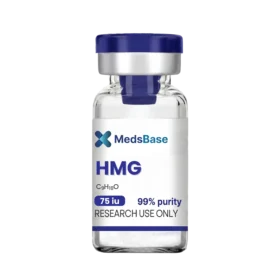
MedsBase stocks HMG (urinary-extracted menotropin) in a single lyophilized vial strength calibrated to the standard 1:1 LH:FSH bioactivity unit. The vial is available in 10-vial, 20-vial, or 30-vial pack formats:
| Putere flacon | Caz tipic de utilizare în cercetare | Dimensiuni pachet |
|---|---|---|
| 75 IU LH + 75 IU FSH | Doza standard de cercetare (doza de referință internațională) — stimulare duală cu gonadotropine într-o singură doză, protocoale de inducție a spermatogenezei (75–225 IU SC de trei ori pe săptămână), cercetare privind stimularea ovariană, stimulare în co-cultură de două celule cu două gonadotropine, farmacologie comparativă vs preparate recombinante de LH pur și FSH pur | 10, 20 sau 30 de flacoane |
The 75:75 IU vial is the international-reference dose unit and the format used in essentially all published gonadotropin research and clinical practice. Multiple-vial dosing (150 IU, 225 IU per administration) is standard for higher-dose protocols. The 30-vial pack is the more economical purchase per-IU for extended-cycle or multi-cohort protocols.
Cum se compară — HMG vs HCG
HCG și hMG sunt cele două preparate de gonadotropine derivate din urină din acest catalog, și acționează asupra sistemului de receptori ai gonadotropinelor în moduri mecanistice distincte. HCG este un pur agonist al receptorului LH/CG — activare exclusivă a celulelor Leydig / celulelor tecale. hMG este dublu preparat LH + FSH — activează simultan ambele componente ale modelului celular cu două gonadotropine. Alegerea între ele în cercetare depinde de necesitatea protocolului de activare exclusivă pe partea LH sau combinată LH + FSH.
| Criteriu | HMG (Menotropină) | HCG |
|---|---|---|
| Compoziție | Amestec fix 1:1: LH 75 UI + FSH 75 UI pe flacon (+ urme de HCG care domină semnalul LH-echivalent in vivo) | HCG pur (extras din urină) — o singură glicoproteină |
| Receptori activați | LHCGR și FSHR — activare dublă a receptorilor de gonadotropine | numai LHCGR — receptor unic |
| Sursă | Urină postmenopauză | Urină de femei gravide (uHCG) sau celule CHO recombinante (rHCG) |
| Cele mai bune aplicații de cercetare | Inducerea spermatogenezei (păstrează funcția celulelor Sertoli), stimularea foliculară ovariană, cercetarea modelului celular cu două gonadotropine, farmacologie cu receptori duali | Stimulare exclusivă a celulelor Leydig, declanșarea ovulației (simulare a exploziei LH), cercetare privind recuperarea suprimerii HPG specifice celulelor Leydig, farmacologie LHCGR |
| Timp de înjumătățire în plasmă | FSH ~30–40 h; activitatea LH-echivalentă dominată de HCG copurificat (33–37 h) | 33–37 h (fază terminală) |
| Doza tipică de cercetare | 75–225 UI SC (1–3 flacoane) pe administrare; 3×/săptămână în protocoale cronice | 500–5.000 UI SC/IM (bolus unic); 250–500 UI/zi în protocoale cronice |
| Unitate de dozare în flacon | 75 UI bioactivitate (doza unitară internațională de referință) | 5.000 sau 10.000 UI bioactivitate |
| Statut WADA | Interzis în orice moment la sportivii de sex masculin (S2 — Hormoni peptidici) | Interzis în orice moment la sportivii de sex masculin (S2 — Hormoni peptidici); excepție pentru sportivele de sex feminin |
Pentru cercetări axate pe activarea duală LHCGR + FSHR, inducerea spermatogenezei sau modelul canonic cu două celule și doi gonadotropini, hMG este compusul de referință standard. Pentru cercetări axate pe stimularea exclusiv a celulelor Leydig, declanșarea ovulației sau farmacologia specifică LHCGR a HCG, HCG este instrumentul mai direcționat. Vezi și Kisspeptină-10 pentru cercetarea pulsativității Kiss1R/GnRH hipotalamice ascendente.
Depozitare și reconstituire
Înainte de reconstituire: păstrați flacoanele liofilizate la frigider la 2–8 °C în ambalajul original pentru stocul de lucru pe termen scurt. Pentru depozitarea pe termen lung, înghețați flacoanele nedeschise la −20 °C (stabil ≥36 luni la −20 °C; ≥18 luni la 2–8 °C). Tortul liofilizat este stabilizat cu manitol sau lactoză și este relativ tolerant la expunerea scurtă la temperatura camerei în timpul manipulării, dar trebuie returnat prompt la refrigerare. Protejați de lumină.
Procedura de reconstituire: pentru fiecare flacon de 75 UI, injectați 1,0 mL de apă bacteriostatică pe peretele lateral al flaconului (nu direct pe tortul liofilizat) — aceasta produce un stoc de lucru de 75 UI LH + 75 UI FSH pe mL. Pentru protocoalele de cercetare care necesită concentrații mai mari (combinarea mai multor flacoane pentru o doză unică mai mare), reconstituiți 2–3 flacoane cu același 1,0 mL total de diluant pentru a obține 150–225 UI/mL. Învârtiți ușor pentru a dizolva — nu agitați, nu vortexați. Amestecarea cu forță mare disociază heterodimerii α/β atât ai componentelor LH, cât și FSH și distruge bioactivitatea gonadotropin-receptor. Tortul liofilizat bazat pe manitol se dizolvă de obicei în 30–60 de secunde cu învârtire ușoară.
Reguli critice de depozitare pentru materialul reconstituit: odată reconstituit, păstrați la 2–8 °C și utilizați în 30 de zile. Nu înghețați hMG reconstituit — ciclurile de înghețare-dezghețare disociază heterodimerii α/β ai LH și FSH (aceeași constrângere fizico-chimică ca și HCG) și distrug ireversibil bioactivitatea. Protejați de lumină. Aruncați dacă apar turbiditate, particule sau schimbare marcată de culoare. Pentru protocoalele de cercetare care necesită mai multe alicote, pregătiți alicotele la momentul reconstituirii și depozitați-le separat la 2–8 °C în loc să le înghețați.
Întrebări frecvente
Care este diferența dintre HMG și HCG?
HCG este un agonist pur al receptorului LH/CG — o singură hormonă glicoproteică (CAS 9002-61-3) care se leagă și activează doar LHCGR pe celulele Leydig/teca/granuloasă/luteale. hMG este un amestec 1:1 de bioactivitate LH și FSH — hormoni glicoproteici distincți (CAS combinat 61489-71-2) care se leagă atât de LHCGR (partea LH), cât și de FSHR (partea FSH). Consecința clinică și de cercetare este că hMG produce o stimulare duală a receptorilor care implică ambele jumătăți ale modelului celular două-gonadotropină (Leydig + Sertoli la bărbați; teca + granuloasă la femei), în timp ce HCG produce o stimulare unică a receptorului LHCGR.
Ce este copurificarea HCG în hMG și de ce contează pentru cercetare?
Analizele de compoziție publicate ale preparatelor hMG derivate din urină raportează că aproximativ 95% din bioactivitatea mediată de receptorul LH in-vivo se datorează de fapt urmelor de HCG copurificate din urina postmenopauzală, mai degrabă decât LH însuși (Wolfenson et al., 2005). Acest lucru se datorează faptului că HCG și LH se leagă de același LHCGR cu afinitate similară, dar HCG are o timp de înjumătățire plasmatic de 33–37 h față de ~20 min pentru LH — astfel încât chiar și cantități mici de HCG copurificat domină semnalul cumulativ echivalent LH in-vivo. Pentru protocoalele de cercetare în care această distincție contează (de exemplu, comparând farmacologia LH pură cu semnalul mixt LH contaminat cu HCG), LH recombinat (Luveris) este instrumentul mai curat. Pentru protocoalele în care activarea duală LHCGR + FSHR într-un raport fix de 1:1 este obiectivul, hMG este referința canonică.
De ce este hMG obținut din urina femeilor postmenopauzale?
Femeile postmenopauzale pierd inhibiția prin feedback negativ ovarian asupra axei hipotalamo-hipofizare, ceea ce crește dramatic producția de LH și FSH hipofizare — nivelurile serice tipice de LH și FSH postmenopauzale sunt de 50–100+ mIU/mL fiecare, cu un ordin de mărime mai mari decât valorile premenopauzale. Ambele hormoni sunt apoi eliminați renal în urină într-o formă concentrată. Urina colectată de la femei postmenopauzale este, prin urmare, cea mai concentrată sursă naturală de LH + FSH pentru extracția la scară industrială. Industria hMG a fost construită pe această idee în anii 1960 (Pergonal a fost preparatul original Serono) și continuă și astăzi, deși o mare parte a pieței clinice s-a orientat către preparate recombinante de LH pură și FSH pură.
Ce game de doze publicate au fost utilizate în cercetare?
Utilizarea în protocoale de cercetare cu doză unică este în mod tipic de 75–225 UI SC pe administrare (1–3 flacoane de concentrație 75 UI), cu administrare de 3 ori/săptămână sau zilnică în protocoale cronice. Protocoalele de inducere a spermatogenezei în cercetarea publicată despre hipogonadismul hipogonadotropic utilizează în mod tipic 75–150 UI de 3 ori/săptămână timp de 6–24 de luni în combinație cu HCG (HCG oferă stimulare suplimentară a celulelor Leydig). Protocoalele de cultură in-vitro a celulelor Sertoli sau granulosa utilizează în mod tipic 1–10 UI/mL în mediul de creștere. Cercetătorii ar trebui să consulte literatura primară adecvată pentru specia, modelul și obiectivul studiat.
Care este diferența dintre hMG și FSH recombinat pur (Gonal-F / Puregon)?
FSH recombinat pur (follitropin alfa / Gonal-F; follitropin beta / Puregon; produs în celule CHO din ADNc clonat al subunităților α și β ale FSH) conține doar activitate biologică FSH — fără LH, fără HCG. hMG conține atât activitate biologică LH cât și FSH într-un raport de 1:1 (plus urme de HCG). Pentru protocoalele de cercetare care necesită activare pură a FSHR izolată de semnalizarea LHCGR, FSH recombinat este instrumentul corect. Pentru protocoalele care necesită activare duală combinată a receptorilor în raport fiziologic, hMG este instrumentul corect. Studii comparative publicate în cercetarea de stimulare ovariană au comparat cele două cu rezultate echivalente în dezvoltarea foliculară, dar cu profile subtil diferite de răspuns la estradiol (hMG tinde să producă nivele ușor mai mari de estradiol la mijlocul ciclului datorită substratului androgen furnizat de componenta LH pentru aromataza celulelor granuloase).
De ce nu poate fi hMG reconstituit înghețat?
Același motiv ca și pentru HCG — atât LH cât și FSH sunt heterodimeri formati din două subunități asociate ne-covalent (α + β fiecare). Interacțiunea α/β este stabilă în tortul liofilizat (fără apă care să perturbe interacțiunea) și stabilă în soluție apoasă refrigerată la 2–8 °C (cinetica disocierii este lentă la temperaturi joase). Dar formarea cristalelor de gheață în timpul înghețării separă fizic subunitățile, iar acestea se reasociază doar ineficient la decongelare. Rezultatul este că hMG înghețat și decongelat păstrează o fracțiune mare de imunoreactivitate dar pierde o fracțiune mare de activitate biologică. hMG liofilizat poate fi înghețat și este stabil la −20 °C; hMG reconstituit nu poate.
Care este statutul regulator WADA al hMG?
hMG / menotropină este pe Lista de Substante Interzise a Agenției Mondiale Anti-Doping (WADA) în clasa S2 (Hormoni Peptidici, Factori de Creștere, Substanțe Asemănătoare și Mimetici). Este interzisă în orice moment — atât în competiție cât și în afara competiției — pentru sportivii de sex masculin. Cercetătorii care efectuează cercetare pe subiecți umani cu hMG trebuie să fie conștienți de acest statut regulator. Pentru cercetarea de laborator in-vitro și cercetarea in-vivo pe rozătoare, statutul WADA este doar informativ.
Cum se compară acest hMG de grad de cercetare cu preparatele clinice de marcă (Menopur, Menogon, Repronex)?
Preparatele clinice de marcă sunt menotropină extrasă din urină (Menopur, Menogon, Repronex; preparatul istoric Pergonal a fost în mare parte discontinuat) ambalate sub diferite SKU-uri ale producătorilor pentru uz clinic în tehnologii de reproducere asistată. hMG de grad de cercetare furnizat aici este același preparat extras din urină cu o puritate ≥99% prin HPLC, furnizat fără etichetă pentru uz clinic și destinat exclusiv cercetării de laborator. Cercetătorii care caută menotropină pentru uz clinic ar trebui să o obțină printr-un lanț de aprovizionare clinic; cercetătorii care caută material de grad de cercetare pentru farmacologie receptor in-vitro, lucru in-vivo pe rozătoare sau alte aplicații de laborator pot utiliza materialul furnizat aici.
Poate fi hMG combinat cu HCG, Kisspeptin-10 sau testosteron în protocoale de cercetare?
Da — aceste compuși țintesc diferite niveluri ale axei HPG și sunt frecvent combinați în cercetările publicate. Cele mai studiate combinații sunt hMG + HCG (protocolul clinic și de cercetare standard pentru inducția spermatogenezei în modelele de hipogonadism hipogonadotropic — hMG asigură suport pe partea FSH, iar HCG suplimentar stimulează partea LH); hMG + Kisspeptină-10 (disecție upstream + downstream — kisspeptina stimulează GnRH endogen în timp ce hMG asigură stimulare gonadică directă); hMG + testosteron exogen (pentru cercetarea de recuperare a suprresiei HPG, unde testosteronul suprinde LH/FSH endogen iar hMG ocolește suprresia acționând direct la nivel gonadic). Reconstituiți fiecare separat și urmați regulile specifice de depozitare — nici hMG, nici HCG nu trebuie congelați după reconstituire.
Alte Peptide de Cercetare pentru Axa HPG și Cercetarea Reproductivă
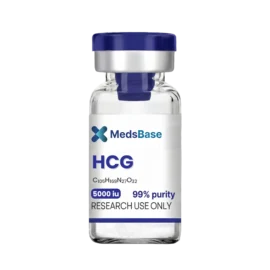
- HCG (Gonadotropina Corionică Umană) — Agonist pur al receptorului LH/CG — comparație directă; activitate exclusiv pe partea LH
- Kisspeptină-10 — Agonist Kiss1R hipotalamic — regulator upstream al axei HPG, influențează pulsatilitatea GnRH
- PT-141 (Bremelanotide) — Agonist al receptorului melanocortină-4 — cercetare în funcția sexuală
- Oxitocină Acetat — Nonapeptidă hipofizară posterioară — cercetare reproductivă și de legătură socială
- Tesamorelin — Analog GHRH — axă endocrină diferită, frecvent studiată împreună
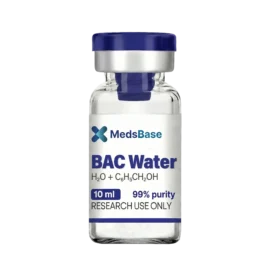
- Apă BAC (Apă bacteriostatică) — Necesar pentru reconstituirea oricărui flacon liofilizat — diluent steril, conservat cu 0,9% alcool benzilic
Mai multe opțiuni în Peptide
Clasificate în funcție de volumul recent de comenzi MedsBase — ce aleg alți clienți în această categorie.
| Concentrație | 75 IU |
|---|---|
| Cantitate | 10 Viale, 20 Viale, 30 Viale |
 HMG (Gonadotropină Menopauză Umană / Menotropină) — Grad de cercetare
Întrebări și răspunsuri
HMG (Gonadotropină Menopauză Umană / Menotropină) — Grad de cercetare
Produse similare
Recenzii
Nu există recenzii încă