







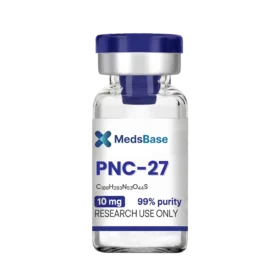
PNC-27 (Peptid Chimeric cu Țintire pe Membrană p53-HDM2)
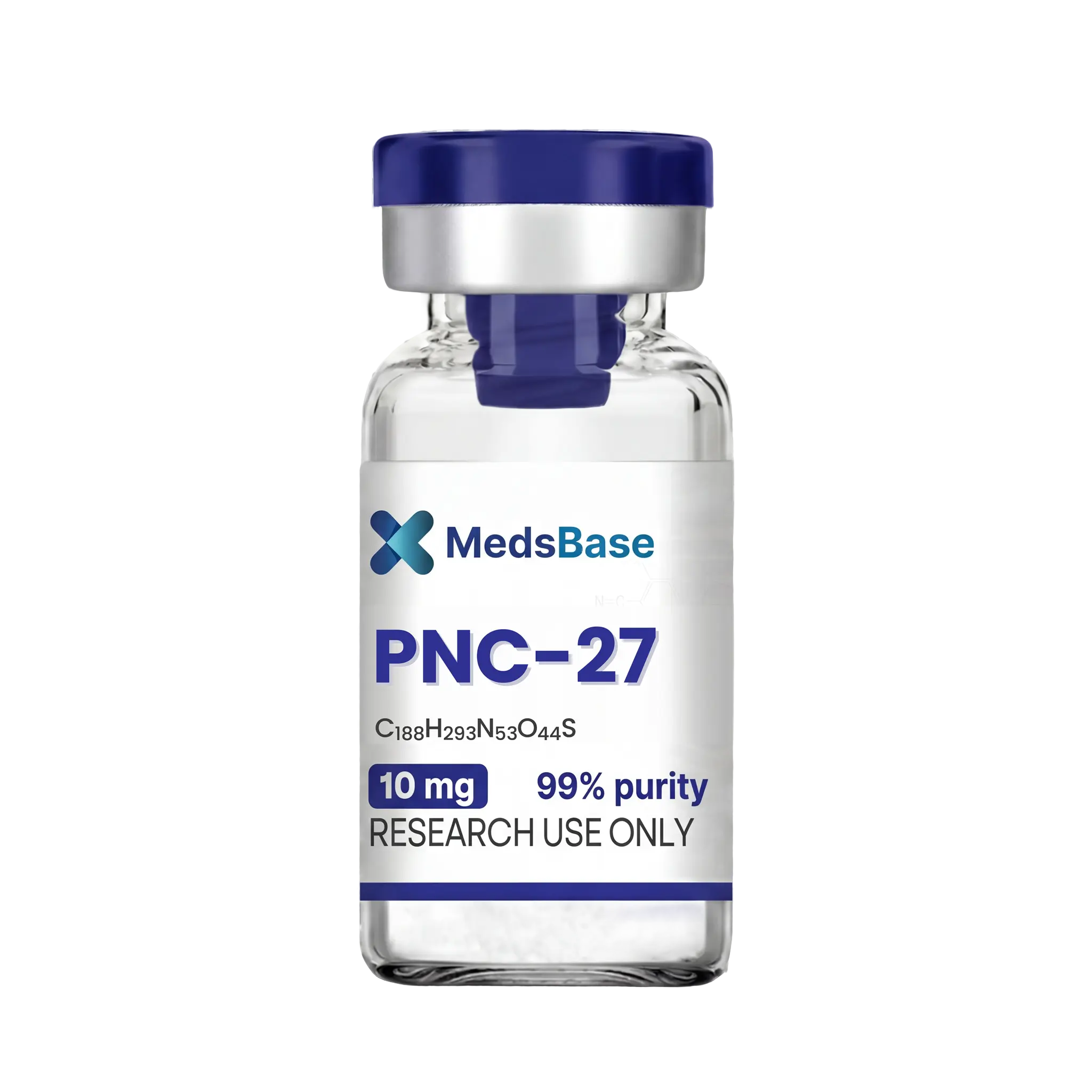
✅ Peptid chimeric de ~32-aa — helix de legare HDM2 p53(12-26) + peptid de rezidență membranară
✅ Se leagă de HDM2 de suprafață anormală a celulelor canceroase → liză membranară (nu apoptoză clasică)
✅ Ucidere necrotică selectivă a celulelor tumorale; cruță celulele normale (fără HDM2 de suprafață)
✅ Activ în tumori cu mutație p53 unde inhibitorii de tip nutlin eșuează
✅ Bowne/Pinto/Michl design chimeric de peptide Albert Einstein; MW ~3,800 Da
PNC-27 conține peptide de cercetare chimeric sintetic p53-HDM2.
✓ Verificat medical de Morgan Ellis — Cercetător farmaceutic · 8 ani de experiență · Ultima recenzie: mai 2026
Răspuns rapid — Ce este PNC-27?
PNC-27 este un peptid chimeric sintetic (~32 de aminoacizi) dezvoltat la Albert Einstein College of Medicine (Bowne, Pinto, Michl, Rauschmayer, Brower et al.) care îmbină două domenii funcționale: un helix de legare HDM2 derivat din reziduurile 12–26 ale domeniului de transactivare p53 (secvența PPLSQETFSDLWKLL) și un peptid de reședință membranară (MRP) adăugat pentru a ancora și perturba membranele plasmatice ale celulelor canceroase. Premisa mecanicistă este că HDM2 (omologul uman al MDM2) este exprimat anormal pe suprafața membranei plasmatice a celulelor canceroase — nu doar în nucleu unde degradează normal p53. PNC-27 se leagă de HDM2 expus la suprafață, domeniul MRP perturbă apoi stratul lipidic, iar celulele canceroase suferă liză membranară rapidă și moarte celulară necrotică. Publicat în modele de cancer pancreatic, leucemie, cancer de sân și alte tumori. Pentru utilizare exclusivă în cercetare de laborator. Peptid chimeric care perturbă membranele țintite pe tumori.
📦 Fiecare comandă este acoperită de politica noastră de Politica noastră de Reexpediere Garantată — dacă coletul dumneavoastră nu sosește în 20 de zile lucrătoare, îl relivrăm.
| Specificații | Detaliu |
|---|---|
| Clasă de compuși | Peptid chimeric sintetic ~32-aa; peptid terapeutic disruptiv de membrană cu țintă tumorală; chimera helix de legare HDM2 + peptid rezident în membrană (MRP) |
| Denumire chimică | PNC-27 (Peptide Nuclear Construct 27; sinonime: chimera p53-MRP, construct p53(12-26)-MRP) |
| Număr CAS | Peptid chimeric de grad cercetăresc — nu are un singur număr CAS canonic; identificare prin secvența publicată și certificatul de analiză (COA) al furnizorului |
| Secvență | Helix de legare HDM2 la capătul N-terminal (reziduuri 12–26 de transactivare p53): PPLSQETFSDLWKLL; linker; peptid rezident în membrană la capătul C-terminal (MRP, secvența variază ușor între referințele publicate — cercetătorii trebuie să consulte COA pentru secvența exactă a lotului). Total ~32 aminoacizi. |
| Greutate moleculară | ~3.800 Da (în funcție de secvența exactă MRP) |
| Formula moleculară | Peptid chimeric ~32-reziduuri — formulă moleculară aproximativă derivată din secvență173H278N52O43; greutate moleculară publicată ~3.800 Da (în funcție de linkerul peptidului rezident în membrană; consultați COA-ul lotului). |
| Mecanism de acțiune | Liză selectivă a membranei celulelor tumorale. (1) PNC-27 se leagă de HDM2 pe membrana plasmatică a celulelor canceroase. Celulele normale exprimă HDM2 doar în nucleu (unde ubiquitinează și degradează p53 pentru a controla nivelurile acestuia); celulele canceroase exprimă anormal HDM2 pe suprafața celulară — un marker specific tumoral. (2) După legare, domeniul peptidului rezident în membrană (MRP) se inserează în bilayerul lipidic. (3) Multimerizarea moleculelor de PNC-27 legate creează pori în membrană → moarte celulară necrotică rapidă în minute sau ore. Mecanismul este liza necrotică a membranei (NU apoptoza clasică) — diferențiind PNC-27 de peptidele anticancerosoase care acționează pe calea caspelor. |
| Selectivitate pentru Celule Tumorale | Cercetările publicate au demonstrat ucidere selectivă a celulelor canceroase în adenocarcinom pancreatic, leucemii AML și ALL, cancer de sân, cancer de prostată, melanom și alte modele tumorale — cu respectarea celulelor normale de control care nu exprimă HDM2 la suprafață. |
| Formă | Pudră liofilizată albă până la alb-gălbuie; flacoane de unică folosință pentru cercetare |
| Puritate | ≥99% (verificat prin HPLC, COA la cerere); confirmat prin MALDI-TOF la greutatea moleculară specifică chimerei |
| Depozitare | Liofilizat: 2–8 °C pe termen scurt, −20 °C pe termen lung. Reconstituit: 2–8 °C, utilizat în 30 de zile. Evitați ciclurile repetate de înghețare-dezghețare. |
| Utilizare în cercetare | Pentru utilizare exclusiv în cercetare de laborator. Nu este destinat pentru diagnostic sau terapie umană sau veterinară. PNC-27 este un instrument de cercetare preclinică care nu a intrat în dezvoltare clinică formală. Nu se află pe Lista Interzisă WADA. |
Mecanism de acțiune — Liză membranară țintită pe HDM2
PNC-27 a fost dezvoltat de grupul Bowne / Pinto / Michl / Rauschmayer de la Albert Einstein College of Medicine ca exemplu de design de peptide chimerice aplicate în oncologie — combinând un domeniu de țintire tumorală (helicea de legare HDM2 derivată din p53) cu un domeniu ucigaș generic (peptidul de rezidență membranară). Logica designului:
- HDM2 ca marker de suprafață specific tumoral — Bowne, Michl și colaboratorii au descoperit că HDM2 (omologul uman al MDM2, în mod normal o E3 ligază nucleară care ubiquitinează p53 pentru degradare) este exprimat anormal pe suprafața membranei plasmatice a aproape tuturor liniilor de celule canceroase testate, dar nu și pe celulele normale corespunzătoare. Acest lucru face din HDM2 membranar un marker de suprafață aproape universal al celulelor canceroase.
- Helicea p53(12-26) ca ligand de legare HDM2 — Reziduurile 12–26 din domeniul de transactivare p53 (PPLSQETFSDLWKLL) formează o α-helice care reprezintă interfața naturală de legare HDM2; HDM2 captează în mod normal această helice pentru a ubiquitina p53. PNC-27 împrumută această helice ca domeniu de ghidare. Peptidul se leagă de HDM2 în același loc țintit de inhibitorii moleculari mici HDM2 de tip nutlin, dar cu geometria naturală a helicei p53.
- Peptidul de rezidență membranară (MRP) ca domeniu ucigaș — Odată ancorat la HDM2 de suprafață, domeniul MRP C-terminal se inserează în stratul lipidic. Geometria amfipatică a MRP, plus oligomerizarea moleculelor de PNC-27 legate pe suprafața celulei canceroase, produce pori transmembranari în câteva minute.
- Moartea celulară necrotică — Formarea porilor provoacă pierdere rapidă a integrității membranei, liză osmotică și moarte celulară necrotică — distinctă de cascada lentă apoptotică declanșată de inhibitorii clasici HDM2 moleculari mici (care acționează prin stabilizarea p53 pentru a permite apoptoza mediată de p53). Mecanismul necrotic al PNC-27 este rapid (minute până la ore) și nu depinde de p53 funcțional în celula tumorală — ceea ce îl face potențial util în tumori cu mutații p53 unde inhibitorii de tip nutlin sunt inactivi.
- Protecția celulelor normale — Celulele normale nu au HDM2 de suprafață (HDM2 este în mod normal doar nuclear), astfel încât PNC-27 nu are un loc de ancorare pe celulele normale și nu produce liză semnificativă a membranei. Cercetările publicate au demonstrat această selectivitate în comparații pereche de celule canceroase vs. normale pe multiple tipuri de tumori.
Aplicații de Cercetare Publicate
- Proiectarea medicamentelor oncologice peptidice chimerice — exemplu canonic de chimera domeniu de orientare + domeniu ucigaș aplicată cancerului (alături de Adipotide/FTPP în aceeași paradigmă)
- Cercetare în cancerul pancreatic — cel mai publicat tip de tumoare pentru lucrările privind eficacitatea PNC-27 (adenocarcinomul pancreatic are niveluri ridicate de HDM2 și este în mod convențional greu de tratat)
- Cercetare în leucemie — cercetare pe linii celulare de LMA și LLA; combinație cu chimioterapice convenționale
- Cercetare în cancerul cu mutație p53 — spre deosebire de inhibitorii HDM2 de tip nutlin (care necesită p53 funcțional), PNC-27 este activ mecanic în tumori cu mutație p53 — instrument util pentru acel subset
- Cercetare biologică HDM2 de suprafață — legarea PNC-27 este unul dintre testele canonice pentru detectarea HDM2 de suprafață în biologia celulelor canceroase
- Farmacologia mortii celulare necrotică vs apoptotică — compus de referință util pentru disecția lizei membranare vs cascada de caspase în cercetarea mortii celulare
Pentru un context mai larg privind peptidele chimerice care disruptează membranele țintite pe tumori, consultați Adipotide/FTPP (chimera vascular-țintită pentru pierderea grăsimii prin apoptoză — aceeași paradigmă de direcționare+ucidere aplicată țesutului adipos). Vezi și BPC-157 (peptid de recuperare), TB-500 (peptid de recuperare), și întregul catalogul de peptide.
Concentrații disponibile
| Putere flacon | Dimensiuni pachet |
|---|---|
| 5 mg — protocoale de cercetare inițiale, titrarea dozei în culturi de celule tumorale | 10, 20 sau 30 de flacoane |
| 10 mg — protocoale extinse, cercetare pe xenografturi murine cu cohorte mari; cel mai mic cost pe mg | 10, 20 sau 30 de flacoane |
Depozitare și reconstituire
Depozitați flacoanele liofilizate la 2–8 °C; congelați nedesfăcute la −20 °C pentru stocare pe termen lung. Reconstituiți cu apă bacteriostatică (1,0 mL per flacon de 5 mg → 5 mg/mL; 1,0 mL per flacon de 10 mg → 10 mg/mL). Agitați ușor. Depozitați soluția reconstituită la 2–8 °C, utilizați în 30 de zile. Evitați ciclurile repetate de îngheț-dezgheț. Domeniul MRP amfipatic poate prezenta spumă tranzitorie la reconstituirea inițială — lăsați să se stabilizeze înainte de utilizare.
Întrebări frecvente
Cum diferă PNC-27 de inhibitorii HDM2 cu moleculă mică precum nutlin?
Inhibitorii HDM2 cu moleculă mică (nutlin-3, idasanutlin, MI-77301) concurează cu p53 pentru același site de legare nuclear-HDM2 — stabilizând p53 pentru a permite apoptoza ulterioară. Ei necesită p53 funcțional în tumoră pentru a acționa. PNC-27 acționează complet diferit: se leagă de suprafața HDM2 (exprimat anormal pe celulele canceroase) și declanșează liză necrotică a membranei fără a necesita p53 funcțional. PNC-27 este astfel activ în tumorile cu mutație p53 unde inhibitorii de tip nutlin nu sunt.
Ce game de doze publicate au fost utilizate în cercetare?
Testele de citotoxicitate pe celule tumorale in vitro utilizează în mod obișnuit 1–50 µM PNC-27 în mediu de cultură. Cercetările pe xenografturi murine au folosit 5–20 mg/kg administrare intraperitoneală, zilnic sau la două zile, timp de 2–4 săptămâni. Cercetătorii ar trebui să consulte lucrările publicate de Bowne, Pinto, Michl, Rauschmayer pentru îndrumări specifice protocolului.
Este PNC-27 în studii clinice?
PNC-27 rămâne un compus de cercetare preclinică; niciun studiu clinic uman formal de fază I/II/III nu a fost finalizat până în prezent. Continuă să fie menționat ca exemplul canonic al proiectării de medicamente peptidice chimerice țintite pe suprafața HDM2.
Poate fi PNC-27 combinat cu chimioterapia în cercetare?
Da — cercetările publicate au examinat PNC-27 în combinație cu gemcitabină (cancer pancreatic), citarabină (LMA) și alte chimioterapice convenționale, cu citotoxicitate în general aditivă sau super-aditivă raportată.
Alte Peptide Chimerice/Țintite de Cercetare
- Adipotide/FTPP — Chimeră de apoptoză țintită vascular (homing în țesutul adipos + D(KLAKLAK)₂ ucigaș) — aceeași paradigmă homing+ucigaș
- BPC-157 — Pentadecapeptidă de recuperare și reparare tisulară
- TB-500 — Fragment de Timozină Beta-4, recuperare tisulară moale
- GHK-Cu — Tripeptidă legatoare de cupru, cercetare în domeniul pielii și țesutului conjunctiv
- Catalog complet de peptide
- Apă BAC (Apă bacteriostatică) — Necesar pentru reconstituirea oricărui flacon liofilizat — diluent steril, conservat cu 0,9% alcool benzilic
Mai multe opțiuni în Peptide
Clasificate în funcție de volumul recent de comenzi MedsBase — ce aleg alți clienți în această categorie.

| Concentrație | 5 mg, 10 mg |
|---|---|
| Cantitate | 10 Viale, 20 Viale, 30 Viale |
 PNC-27 (Peptid Chimeric cu Țintire pe Membrană p53-HDM2)
Întrebări și răspunsuri
PNC-27 (Peptid Chimeric cu Țintire pe Membrană p53-HDM2)
Produse similare



Recenzii
Nu există recenzii încă