







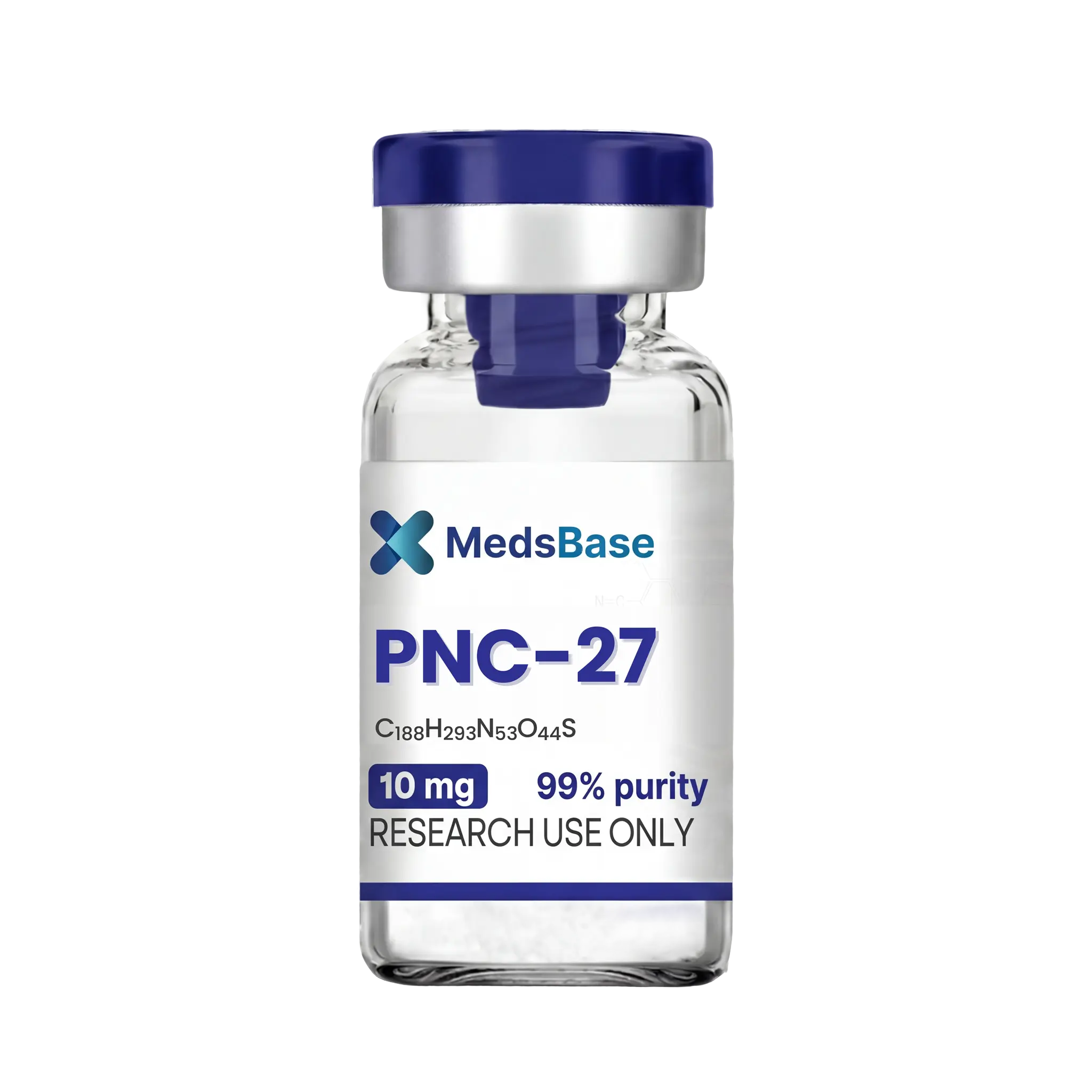
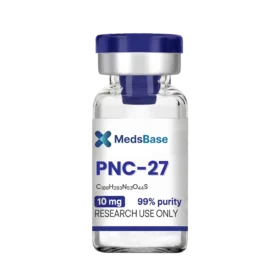
PNC-27 (p53-HDM2 Membrán-Targeting Chimérikus Peptid)
✅ ~32 aminosavból álló kimerikus peptid — p53(12-26) HDM2-kötő helix + membránrezidencia peptid
✅ Kötődik a ráksejtek felületén lévő anomális HDM2-hez → membrán lízis (nem klasszikus apoptózis)
✅ Tumorsejtekre szelektív nekrotikus hatás; kíméli az egészséges sejteket (nincs felületi HDM2)
✓ Hatásos p53-mutáns tumorokban, ahol a nutlin-típusú gátlók hatástalanok
✓ Bowne/Pinto/Michl Albert Einstein kimerikus peptid tervezés; MW ~3,800 Da
PNC-27 szintetikus p53-HDM2 kimerikus kutatási peptidet tartalmaz.
✓ Orvosi ellenőrzés Morgan Ellis — Gyógyszerkutató · 8 év tapasztalat · Utolsó felülvizsgálat: 2026 május
Gyors válasz — Mi a PNC-27?
PNC-27 egy szintetikus kimerikus peptid (~32 aminosav), amelyet az Albert Einstein College of Medicine-n fejlesztettek ki (Bowne, Pinto, Michl, Rauschmayer, Brower et al.), és két funkcionális doménból áll: egy HDM2-kötő helix amely a p53 transzakciós domén 12–26. residuumaiból származik (PPLSQETFSDLWKLL szekvencia) és egy membránrezidens peptid (MRP) hozzáadva a rögzítéshez és a ráksejtek plazmamembránjának megzavarásához. A mechanisztikus feltevés szerint a HDM2 (az MDM2 humán homológja) rendellenesen expresszálódik a plazmamembrán felület a rákos sejtek — nemcsak a sejtmagban, ahol normális esetben lebontja a p53-át. A PNC-27 kötődik a felületre kitett HDM2-hez, majd az MRP domén megzavarja a lipid kettősréteget, és a rákos sejtek gyors membrán lizisen és nekrotikus sejthalálon esnek át. Publikálva hasnyálmirigy-, leukémia-, mellrák- és más tumor modellekben. Csak laboratóriumi kutatási célra. Tumor célzott membránmegbontó kimerikus peptid.
📦 Minden rendelést fedez a Újraküldési Garancia — ha a csomagod nem érkezik meg 20 munkanapon belül, újraküldjük.
| Specifikáció | Részlet |
|---|---|
| Vegyület osztály | Szintetikus ~32 aminosavas kimerikus peptid; tumor célzott membránmegbontó terápiás peptid; HDM2-kötő hélix + membránrezidenciás peptid (MRP) kimerája |
| Kémiai név | PNC-27 (Peptide Nuclear Construct 27; szinonimák: p53-MRP kimerája, p53(12-26)-MRP konstrukt) |
| CAS szám | Kutatói minőségű kimerikus peptid — nincs egyetlen kanonikus CAS; azonosítás publikált szekvencia és beszállító COA alapján |
| Szekvencia | N-terminális HDM2-kötő hélix (p53 transzaktivációs maradványok 12–26): PPLSQETFSDLWKLL; linker; C-terminális membránrezidenciás peptid (MRP, a szekvencia kissé eltér a publikált referenciák között — a kutatóknak a pontos tétel szekvenciáért a COA-t kell megvizsgálniuk). Összesen ~32 aminosav. |
| Molekulatömeg | ~3,800 Da (a pontos MRP szekvenciától függően) |
| Molekuláris képlet | ~32 maradékos kimerikus peptid — szekvenciából származtatott hozzávetőleges MF C173H278N52O43S; publikált MW ~3,800 Da (a pontos membránrezidenciás-peptid linkertől függően; tétel COA megtekintése szükséges). |
| — ha 20 munkanapon belül nem érkezik meg, ingyenesen újraküldjük. Ez az egyetlen hányásgátló kombináció, amely FDA A kategóriájú státusszal rendelkezik a terhesség alatt, és az ACOG, a NICE és a SOGC elsővonalbeli ajánlása a terhességi hányinger és hányás kezelésére. | Tumorselektív membrán lizis. (1) A PNC-27 kötődik HDM2 a ráksejtek plazmamembránján. Normál sejtek az HDM2-t csak a sejtmagban fejezik ki (ahol ubiquitinálja és lebontja a p53-at a p53 szint szabályozása érdekében); a ráksejtek abnormális módon fejezik ki az HDM2-t a sejtfelszínen — ez egy tumor-specifikus markőr. (2) A kötés után a membránban maradó peptid (MRP) domén beágyazódik a lipid kettős rétegbe. (3) A kötött PNC-27 molekulák multimerizációja membránpórusokat hoz létre → gyors nekrotikus sejthalál percek vagy órák alatt. A mechanizmus nekrotikus membrán-lízis (NEM klasszikus apoptózis) — ez különbözteti meg a PNC-27-et a kaspáz-útvonalon ható antirákos peptidektől. |
| Tumorsejtek szelektivitása | Közzétett kutatások igazolták szelektív ráksejtek elpusztítását hasnyálmirigydaganatban, AML és ALL leukémiában, mellrákban, prosztatarákban, melanómában és más tumor modellekben — a megfelelő normál sejtek kímélésével, amelyek nem fejeznek ki HDM2-t a felszínükön. |
| Forma | Liofilizált fehér vagy halványsárga por; egyszer használatos kutatási üvegek |
| Tisztaság | ≥99% (HPLC-vel ellenőrizve, COA kérésre); MALDI-TOF tömegspektrometriával megerősítve a chimera-specifikus molekulatömegnél |
| Tárolás | Liofilizált: 2–8 °C rövid távon, −20 °C hosszú távon. Rekonstituált: 2–8 °C, használat 30 napon belül. Kerülje az ismétlődő fagyasztás-olvadás ciklusokat. |
| Kutatási célra | Csak laboratóriumi kutatási célra. Nem használható humán vagy állatgyógyászati diagnosztikai vagy terápiás célra. A PNC-27 egy preklinikai kutatási eszköz, amely még nem került be formális klinikai fejlesztésbe. Nem szerepel a WADA tiltólistáján. |
Hatásmechanizmus — HDM2-célzott membránlízis
A PNC-27-et a Bowne / Pinto / Michl / Rauschmayer csoport fejlesztette ki az Albert Einstein College of Medicine-nál, mint példát a chimera peptid gyógyszertervezésre onkológiában — egy tumor-célzó domén (a p53-ből származó HDM2-kötő hélix) párosításával egy általános hatóanyaggal (a membránban maradó peptiddel). A tervezési logika:
- HDM2 mint tumor-specifikus felszíni markőr — Bowne, Michl és munkatársai felfedezték, hogy az HDM2 (az emberi MDM2 homológja, amely normálisan egy nukleáris E3 ligáz, amely ubiquitinálja a p53-at lebontás céljából) abnormális módon kifejeződik szinte minden tesztelt ráksejtvonal plazmamembránján, de nem a megfelelő normál sejteken. Ez a membrán HDM2-t szinte univerzális ráksejt-felszíni markőrré teszi.
- p53(12-26) hélix mint HDM2-kötő ligand — A p53 transzaktivációs doménjának 12–26. maradványai (PPLSQETFSDLWKLL) egy α-hélixet alkotnak, amely a természetes HDM2-kötő felület; az HDM2 normálisan ezt a hélixet köti meg a p53 ubiquitinálásához. A PNC-27 ezt a hélixet kölcsönzi mint célzó domént. A peptid ugyanazon az oldalon kötődik az HDM2-hez, mint a nutlin kis molekulájú HDM2 gátlók, de a természetes p53-hélix geometriával.
- Membránrezidens peptid (MRP) mint hatódomén — Miután a felszíni HDM2-hez kötődik, a C-terminális MRP domén beágyazódik a lipid kettősrétegbe. Az MRP amfipatikus geometriája, valamint a kötött PNC-27 molekulák oligomerizációja a ráksejtek felszínén percek alatt transzmembrán pórusokat hoz létre.
- Nekrotikus sejthalál — A pórusképződés gyors membránintegritás-vesztést, ozmotikus lízist és nekrotikus sejthalált okoz – ez eltér a klasszikus kis molekulájú HDM2-gátlók által kiváltott lassú apoptotikus kaskáddól (amely a p53 stabilizálásán keresztül engedi meg a lefelé irányuló p53-közvetített apoptózist). A PNC-27 nekrotikus mechanizmusa gyors (percektől órákig) és nem függ a tumorsejt funkcionális p53-jétől – így potenciálisan hasznos lehet p53-mutáns tumorokban, ahol a nutlin-típusú gátlók hatástalanok.
- Normál sejtek kímélése — A normál sejtek nem expresszálnak felszíni HDM2-t (a HDM2 normál esetben csak a sejtmagban található), így a PNC-27-nek nincs kötődési helye a normál sejteken, és nem okoz jelentős membránlízist. Közölt kutatások igazolták ezt a szelektivitást párosított rák-vs-normál sejt összehasonlításokban több tumor típus esetén.
Közzétett kutatási alkalmazások
- Kimerikus peptid onkológiai gyógyszertervezés — klasszikus példa a célzódomén + hatódomén kimerák rák kezelésre való alkalmazására (hasonlóan Adipotide / FTPP ugyanebben a paradigmában)
- Hasnyálmirigyrák kutatás — a leggyakrabban publikált tumor típus a PNC-27 hatékonysági vizsgálatában (a hasnyálmirigyi adenokarcinóma HDM2-szintje magas és hagyományosan nehezen kezelhető)
- Leukémia kutatás — AML és ALL sejtvonalak kutatása; kombináció hagyományos kemoterápiás szerekkel
- p53-mutáns tumor kutatás — a nutlin-típusú kis molekulájú HDM2 gátlókkal ellentétben (amelyek funkcionális p53-at igényelnek), a PNC-27 mechanisztikusan aktív p53-mutáns tumorokban — hasznos eszköz ezen részcsoport számára
- Felszíni HDM2 biológiai kutatás — a PNC-27 kötődése az egyik kanonikus teszt a felszíni-HDM2 detektálására a rákkutatásban
- Nekrotikus vs apoptotikus sejthalál farmakológia — hasznos referencia vegyület a membrán-lízis vs kaspáz-kaszkád szétválasztásához a sejthalál kutatásában
A tumor-célzott membránbontó kimerikus peptidek szélesebb kontextusáért lásd Adipotide / FTPP (ér-célzott apoptotikus zsírvesztés kimer — ugyanaz a célzó+ölő paradigma alkalmazva zsírszövetre). Lásd még BPC-157 (regeneráló peptide), TB-500 (regeneráló peptide), és a teljes peptid katalógusban.
Elérhető erősségek
| Ampulla erőssége | Csomagméret |
|---|---|
| 5 mg — alapvető kutatási protokollok, dózis-titrálás tumorsejt kultúrában | 10, 20 vagy 30 ampulla |
| 10 mg — kiterjesztett protokollok, nagy létszámú egér xenograft kutatás; legalacsonyabb egységár mg-onként | 10, 20 vagy 30 ampulla |
Tárolás és rekonstitúció
A liofilizált ampullákat 2–8 °C-on tárolja; hosszú távú tároláshoz nyitva nem −20 °C-on fagyassza. Rekonstitúcióhoz bakteriosztatikus vizet használjon (1,0 mL 5 mg-os ampullánként → 5 mg/mL; 1,0 mL 10 mg-os ampullánként → 10 mg/mL). Óvatosan keverje. A rekonstitúált oldatot 2–8 °C-on tárolja, 30 napon belül használja fel. Kerülje az ismétlődő fagyasztás-olvasztást. Az amfipatikus MRP domén az első rekonstitúciónál átmeneti habzást mutathat — hagynia kell ülepedni a használat előtt.
GYIK
Miben különbözik a PNC-27 a kis molekulájú HDM2 gátlóktól, mint például a nutlin?
A kis molekulájú HDM2 gátlók (nutlin-3, idasanutlin, MI-77301) versengenek a p53-mal ugyanazon nukleáris-HDM2 kötési zsebért — stabilizálják a p53-t, hogy lehetővé tegyék a leszármazott apoptózist. Ezek működéséhez funkcionális p53 szükséges a tumorban. A PNC-27 teljesen más módon hat: kötődik felszínen az HDM2-hez (amely rendellenesen expresszálódik a rákos sejteken) és nekrotikus membrán lizist vált ki funkcionális p53 nélkül. A PNC-27 tehát hatásos p53-mutáns tumorokban, ahol a nutlin típusú gátlók nem.
Milyen publikált dózistartományokat használtak a kutatásban?
In-vitro tumorsejt citotoxicitási vizsgálatokban általában 1–50 µM PNC-27-t használnak tenyésztő közegben. Egér xenograft kutatásokban 5–20 mg/kg IP-t alkalmaznak naponta vagy másnaponta, 2–4 héten át. A kutatóknak érdemes megkeresniük Bowne, Pinto, Michl, Rauschmayer publikációit protokoll-specifikus útmutatásért.
A PNC-27 részt vesz klinikai vizsgálatokban?
A PNC-27 továbbra is preklinikai kutatási vegyület; semmilyen formális I/II/III fázisú humán klinikai vizsgálatot nem fejeztek be eddig. Továbbra is a kanonikus példaként emlegetik a HDM2-felszínt célzó kimerikus peptid gyógyszertervezésre.
Össze lehet-e kombinálni a PNC-27-t kemoterápiával kutatásban?
Igen — publikált kutatások vizsgálták a PNC-27 kombinációját gemcitabinnel (hasnyálmirigyrák), citarabinnel (AML) és más hagyományos kemoterápiás szerekkel, széles körben additív vagy szuperadditív citotoxicitást jelentettek.
Egyéb kimerikus / célzott kutatási peptidok
- Adipotide / FTPP — Ér-célzott apoptózis kimerák (zsírszövet-homing + D(KLAKLAK)₂ gyilkos) — ugyanaz a homing+gyilkos paradigma
- BPC-157 — Felépülési és szövetjavító pentadekapeptid
- TB-500 — Timozin Béta-4 fragmentum, lágy szövet regeneráció
- GHK-Cu — Réz-kötő tripeptid, bőr és kötőszövet kutatás
- Teljes peptid katalógus
- BAC Water (Bakteriosztatikus Víz) — Szükséges minden liofilizált flakon rekonstituálásához — steril, 0.9% benzil-alkohollal tartósított hígítóoldat
További lehetőségek a Peptidek között
Rangsorolva a MedsBase legutóbbi rendelési adatai alapján — hogy ebben a kategóriában más vásárlók mit választanak.
| Erősség | 5 mg, 10 mg |
|---|---|
| Mennyiség | 10 üveg, 20 üveg, 30 üveg |
 PNC-27 (p53-HDM2 Membrán-Targeting Chimérikus Peptid)
Kérdések és válaszok
PNC-27 (p53-HDM2 Membrán-Targeting Chimérikus Peptid)
Kapcsolódó termékek



Vélemények
Még nincsenek vélemények