






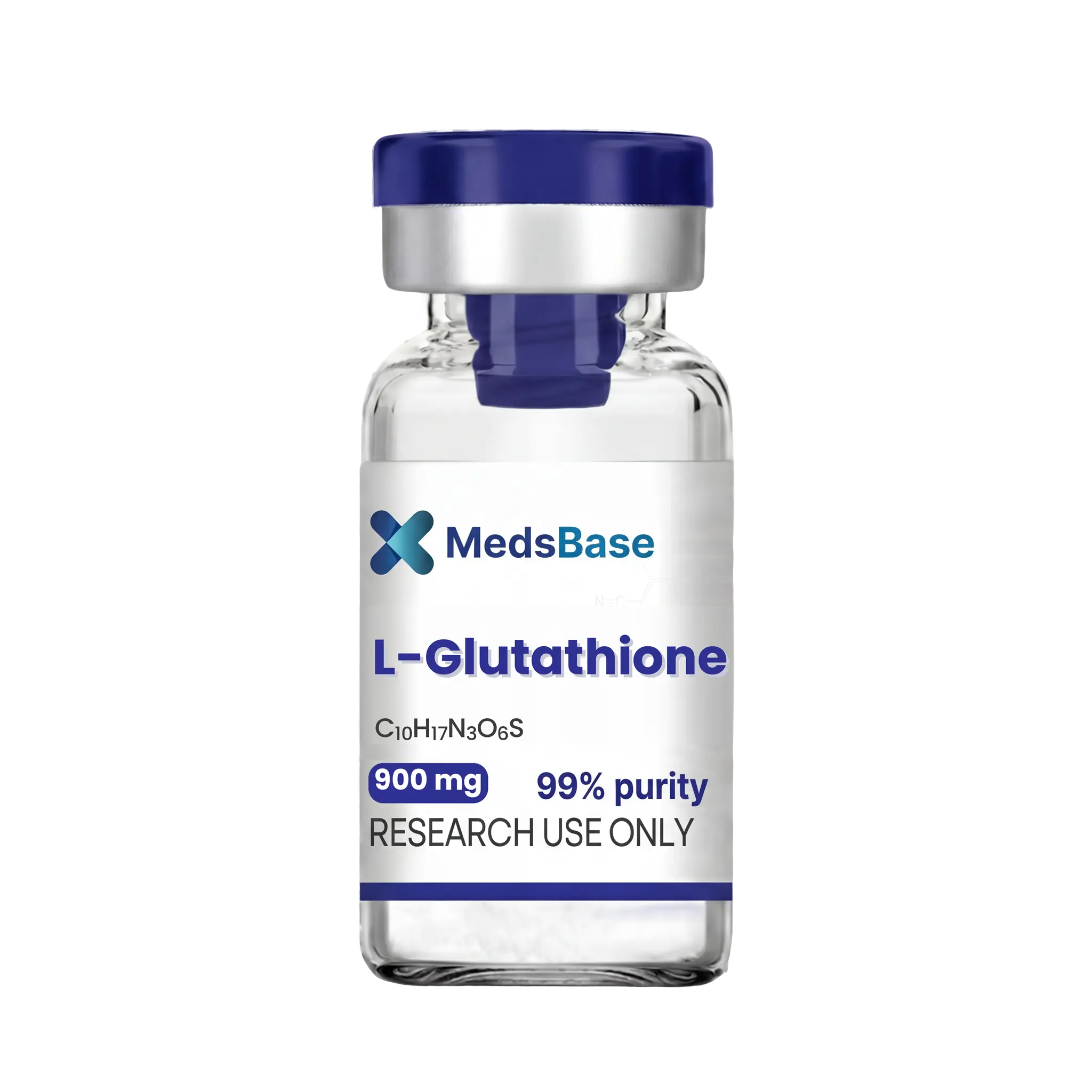
L-Glutathione (Reduced / GSH) Injectable — Pharmaceutical Grade
✅ γ-グルタミルトリペプチド(γ-Glu-Cys-Gly)— 主要な細胞内非タンパク質チオール
✅ GPx基質(過酸化物還元)+GST補助基質(異物抱合)+酸化還元状態緩衝
✅ ユニークなγ-ペプチド結合 — ペプチダーゼ耐性; γ-GTのみが切断
✅ Canonical reference compound for cellular antioxidant defence studies
✅ 凍結乾燥USPグレード還元型; CAS 70-18-8, MW 307.32
L-グルタチオン(還元型/GSH) contains the γ-glutamyl-cysteinyl-glycine tripeptide compound.
✓ 医学的監修: Morgan Ellis — 医薬品研究者 · 8年の経験 · 最終監修日:2026年5月
クイックアンサー — グルタチオン(GSH)とは何ですか?
L-グルタチオン(還元型; GSH) は、トリペプチドであるγ-グルタミル-システイニル-グリシン(γ-Glu-Cys-Gly)、CAS 70-18-8、分子式 C10H17N3O6S, MW 307.32 g/mol. GSH is the most abundant non-protein cellular thiol (millimolar intracellular concentrations) and the canonical reference compound for cellular antioxidant defence studies. The unique γ-ペプチド結合 between glutamate’s γ-carboxyl and cysteine’s amino group (rather than the standard α-peptide bond) makes GSH resistant to common peptidases — only γ-glutamyltransferase (γ-GT) can cleave it. Cells use GSH as the primary electron donor for glutathione peroxidase-mediated hydrogen-peroxide reduction, as the conjugating co-substrate for glutathione-S-transferase-mediated xenobiotic detoxification, and as the redox-status buffer that controls protein thiol-disulfide equilibrium. Supplied here as lyophilized USP-grade powder for clinical studies use only.
📦 すべてのご注文は、当店の 再発送保証ポリシー — 万が一、20営業日以内に商品が届かない場合は、再発送いたします。
| 仕様 | 詳細 |
|---|---|
| 化合物クラス | γ-Glutamyl tripeptide; primary cellular non-protein thiol antioxidant; small-molecule peptide (γ-linked, peptidase-resistant) |
| 化学名 | L-グルタチオン、還元型(γ-L-グルタミル-L-システイニル-グリシン; 別名: GSH、グルタチオン遊離酸、還元型グルタチオン) |
| CAS番号 | 70-18-8(還元型GSH); 関連物質: 27025-41-8(酸化型GSSG二量体、こちらでは供給されません) |
| 分子式 | C10H17N3O6S |
| 分子量 | 307.32 g/mol(遊離酸) |
| 配列 | γ-L-グルタミル-L-システイニル-グリシン(γ-Glu-Cys-Gly)。その γ-ペプチド結合 グルタミン酸のγ-COOH側鎖とシステインのα-アミノ基の間で、標準的なα-ペプチド結合ではなく。この非標準的な結合が、GSHを一般的なα-ペプチダーゼに対して耐性にしている理由です — γ-グルタミルトランスフェラーゼ(γ-GT)のみがこれを切断し、これが細胞外でのGSH分解と再利用の律速段階となります。 |
| 作用機序 | 細胞における3つの主要な役割. (1) グルタチオンペルオキシダーゼへの電子供与体 (GPxファミリー) — 2 GSH + H2O2 → GSSG + 2 H2O, 標準的な細胞内過酸化水素還元反応; その後GSSGはNADPH依存性グルタチオン還元酵素により2つのGSHに還元されます。(2) グルタチオン-S-トランスフェラーゼの補助基質 (GSTファミリー) — 親電子性の異物および内在性基質にGSHを抱合し、排泄可能なメルカプツール酸抱合体を生成します(肝臓の主要な解毒経路)。(3) 酸化還元状態の緩衝剤 — GSH:GSSG比(正常細胞では通常約100:1)は、チオレドキシンおよびグルタレドキシンを介した交換によりタンパク質のチオール-ジスルフィド平衡を制御し、数千もの酸化還元感受性タンパク質の活性を調節します。 |
| 形態 | Lyophilized white-to-off-white crystalline powder; single-use vials. 非常に吸湿性が高い — 水分吸収を避けるため、各抜き取り後は速やかにバイアルを再封してください。 |
| 純度 | ≥99%(HPLC検証済み、COAはご要望に応じて提供);滴定により≥98%が還元型GSHであることを確認(酸化型GSSG含量≤2%)。USPグレード参照品。 |
| 溶解性 | 水 20 mg/mL;PBS(pH 7.2) 10 mg/mL — 提供されたバイアル濃度では容易に溶解します。チオール(-SH)基のため、GSHは空気酸化に感受性があります — 凍結乾燥バイアルから用時に調製し、可能であれば24時間以内に使用してください。DMSOは細胞培養ストック調製の適切な共溶媒であり(最大100 mg/mL)、空気酸化に対する追加の保護を提供します。 |
| 保管方法 | 凍結乾燥品:短期作業用ストックは元の密封包装で2~8℃;未開封バイアルの長期保管は−20℃(−20℃で≥36か月、2~8℃で≥18か月安定)。再構成水溶液:2~8℃、約7日以内に使用(空気酸化によるGSSGへの変化が制限因子です)。光から保護してください。 再構成した溶液の凍結融解の繰り返しは避けてください。 —累積サイクルはGSH→GSSGの酸化を加速します。 |
L-グルタチオン(還元型 / GSH)とは何ですか?
L-グルタチオン(還元型、GSH) は、真核生物において最も豊富な非タンパク質性細胞チオールであり、ミリモル濃度(ほとんどの細胞種で1~10 mM、肝細胞では最大10 mM)で細胞内に存在し、細胞の酸化還元状態のマスターバッファーとして機能します。構造的にはグルタミン酸、システイン、グリシンからなるトリペプチド(γ-Glu-Cys-Gly)で、CAS番号 70-18-8、分子式C10H17N3O6S, molecular weight 307.32 g/mol. The defining structural feature of glutathione is its γ-ペプチド結合. 。標準的なペプチドは、あるアミノ酸のα-カルボキシル基と次のアミノ酸のα-アミノ基との間のα-ペプチド結合によって連結されています。グルタチオンでは、グルタミン酸とシステインの間の結合は非定型であり、グルタミン酸の γ-カルボキシル基 of glutamate’s side chain and the α-amino of cysteine. This non-standard linkage is the molecular basis for glutathione’s resistance to common cellular peptidases — only γ-glutamyltransferase (γ-GT, GGT, EC 2.3.2.2) recognises and cleaves the γ-bond. As a result, glutathione is uniquely stable in the cellular cytosol where it would otherwise be rapidly degraded by α-peptidase activity, and γ-GT-mediated extracellular degradation is the rate-limiting step of glutathione recycling. Glutathione is synthesised in two ATP-dependent steps by the cytosolic enzymes グルタミン酸-システインリガーゼ(GCL) —この酵素はγ-グルタミル-システイン結合を形成します—、そして グルタチオン合成酵素(GSS) — which adds the C-terminal glycine. GCL is the rate-limiting enzyme and is feedback-inhibited by glutathione itself, providing autoregulation of cellular glutathione levels. Cysteine availability is the other major rate-limiting input — which is why N-acetylcysteine (NAC), a cysteine prodrug, is the canonical clinical intervention for boosting cellular glutathione synthesis in oxidative-stress and detoxification contexts (the basis of NAC’s approval for paracetamol overdose and other clinical indications). Glutathione exists in cells in two interconverting forms: the 還元型(GSH) 遊離チオール(-SH)基を持ち、 酸化型(GSSG) 2つのGSH分子がジスルフィド結合で連結されたものです。 GSH:GSSG比(健康な細胞では通常約100:1、酸化ストレス下では10:1以下に低下)は、標準的な細胞酸化還元バイオマーカーです。 GSSGは、以下の酵素によって2分子のGSHに還元されます: グルタチオンレダクターゼ(GR、GSR), an NADPH-dependent flavoenzyme — connecting the GSH redox system to NADPH availability and ultimately to the pentose phosphate pathway. This is why pentose-phosphate-pathway disruption (G6PD deficiency, glucose-6-phosphate availability) impairs GSH-system function and triggers oxidative cell damage. The pharmaceutical-grade material supplied here is the reduced GSH form, supplied as lyophilized powder for reconstitution and protocol use alongside the peptide catalogue.
作用機序 — 3つの主要な細胞内役割
GSHの生物学的メカニズムは、公表された生化学研究で十分に特性が明らかにされている3つの主要な細胞内役割の総体です:
- グルタチオンペルオキシダーゼ(GPx)の基質 — 過酸化水素および脂質過酸化物の還元 — GSHの最も引用される役割です。GPxファミリー(GPx1~8、セレン依存性GPx1が最も豊富)は以下の反応を触媒します 2 GSH + ROOH → GSSG + ROH + H2O, 、過酸化水素と脂質ヒドロペルオキシドをそれぞれ水とアルコールに還元します。これは、ミトコンドリア呼吸、NADPHオキシダーゼ活性、その他の酸化プロセスによって生成される活性酸素種に対する細胞の主要な防御機構です。GPx4は脂質ヒドロペルオキシドの還元を触媒する特定のアイソフォームであり、その機能喪失が引き金となる分子標的です フェロトーシス — the iron-dependent regulated cell death pathway that has become a major focus of recent cancer-studies and neurodegenerative-disease studies.
- グルタチオン-S-トランスフェラーゼ(GST)の共基質 — 生体異物および内在性物質の抱合 — GSTファミリー(細胞質、ミクロソーム、ミトコンドリアメンバー;約20のヒトGSTアイソフォーム)は、GSHチオール基を介したGSHの求電子性基質への抱合を触媒し、GSH-S-抱合体付加物を生成します。これはその後、γ-GTおよびジペプチダーゼによってメルカプツール酸へと処理され、排泄されます。これは肝臓およびその他の組織における中心的な第II相解毒経路であり、広範な生体異物(薬物代謝物、環境化学物質、第I相シトクロムP450代謝産物)、内在性求電子物質(4-ヒドロキシノネナール、脂質過酸化によるアクロレイン)、および反応性中間体(パラセタモールによるNAPQI、パラセタモール過剰摂取時のNAC療法の基盤)を処理します。
- 酸化還元状態の緩衝剤 — タンパク質チオール-ジスルフィド平衡の調節 — The cellular GSH:GSSG ratio sets the thermodynamic equilibrium for protein-thiol redox state via thioredoxin- and glutaredoxin-mediated exchange. Thousands of cellular proteins have redox-sensitive cysteine residues whose thiol-disulfide state is regulated by this equilibrium — including key transcription factors (NF-κB, AP-1, Nrf2, p53), signalling kinases (PTPs, PTEN), apoptosis machinery (caspases), and metabolic enzymes (glyceraldehyde-3-phosphate dehydrogenase, others). GSH-mediated redox buffering is therefore not just an antioxidant defence but a signalling regulatory mechanism — a fact that has emerged in published studies over the past two decades and is one of the most-cited rationales for the use of GSH in protocols beyond simple antioxidant supplementation.
- システイン貯蔵庫および臓器間アミノ酸輸送 — GSHは、組織内で安定し輸送可能なシステインの貯蔵庫として機能します。システインは新しいタンパク質合成およびさらなるGSH合成の律速アミノ酸です。遊離型のシステインは代謝的に不安定であり(シスチンへの自動酸化、H2Sの生成など)、そのため体内は主にGSHとしてシステインプールを維持し、臓器間(特に肝臓→腎臓、肝臓→他の組織)でGSHとしてシステインを輸送し、標的組織でγ-GTによってシステインに戻されます。
- 直接的なラジカル消去 — 酵素的な役割に加え、GSHはチオール基を介してヒドロキシルラジカル、ペルオキシルラジカル、活性窒素種と直接反応します。量的には、この経路は酵素的なGPx介在メカニズムよりも総抗酸化防御への寄与は小さいものの、酵素系が飽和状態にあるか存在しない区画や条件下(肺胞被覆液中の細胞外GSH、腸管内腔のGSHなど)では重要です。
The pharmacokinetic profile of injectable GSH is well-characterised: IV administration produces rapid systemic distribution with peak plasma concentrations within minutes, but plasma half-life is short (~10–15 minutes) due to rapid γ-GT-mediated breakdown to cysteinylglycine and subsequent re-synthesis or further breakdown at target tissues. The brief plasma residence is one of the reasons why daily or twice-daily IV dosing protocols are common in published GSH studies. Cell-membrane permeability of intact GSH is low — cells primarily import the constituent amino acids and re-synthesise GSH intracellularly. This is why oral GSH is poorly bioavailable and why injectable preparations (or alternatively NAC as a cysteine prodrug) are required for effective tissue delivery in published studies.
Published Evidence
GSH is used in clinical contexts that investigate:
- 細胞の抗酸化防御 — 標準的な参照化合物 — by far the most-cited cellular antioxidant in the published literature; standard reference compound for any new antioxidant intervention studies; the molecular gold standard for cellular redox-status analysis
- Hydrogen peroxide and lipid peroxide reduction studies — direct GPx substrate; used in published studies on GPx isoform pharmacology, peroxide-handling pathway dissection, and the integration of GSH with thioredoxin and peroxiredoxin redox systems
- Ferroptosis studies — GPx4-mediated lipid-hydroperoxide reduction is the gatekeeper of ferroptosis; GSH and its synthesis-pathway interventions (BSO, erastin, RSL3) are the canonical tools for ferroptosis induction / suppression studies in cancer, neurodegeneration, and ischaemia-reperfusion contexts
- Phase II detoxification and xenobiotic-conjugation studies — GST substrate for the central liver-detoxification pathway; used in studies on drug-metabolite handling, environmental-chemical exposure, paracetamol-induced hepatotoxicity (NAPQI scavenging), and the broader pharmacology of mercapturic-acid conjugation
- Protein-thiol redox signalling studies — the GSH:GSSG ratio controls thiol-disulfide equilibrium of thousands of cellular proteins; used in studies on redox-sensitive transcription factors (Nrf2, NF-κB, AP-1), kinase regulation (PTPs, PTEN), and the broader cellular “redoxome”
- Mitochondrial dysfunction and ageing studies — mitochondrial GSH levels decline with age and in many disease models; published studies uses exogenous GSH and GSH-pathway interventions to probe mitochondrial-redox contributions to ageing, neurodegeneration, and metabolic disease
- Hepatology and liver-injury studies — GSH is most abundant in hepatocytes (5–10 mM concentration); used in published studies on alcoholic liver disease, NAFLD/MASH, viral hepatitis models, and paracetamol-overdose / drug-induced liver injury
- Hematology and erythrocyte studies — erythrocyte GSH is the major defence against oxidative haemolysis; used in studies on G6PD deficiency, sickle-cell disease, oxidative haemolysis pharmacology
- Cancer redox and chemoprotection studies — many chemotherapeutic drugs generate ROS as part of their mechanism, and tumour cells often have elevated GSH levels; published studies uses GSH and GSH-pathway interventions to dissect chemotherapy redox biology
For broader context on cellular cofactor and redox / antioxidant compounds in this catalogue, see B12(シアノコバラミン) (small-molecule companion cofactor — methylation cycle), L-カルニチン (ミトコンドリア脂肪酸シャトル — 補助低分子), NAD⁺ (直接的なジヌクレオチドプール補充 — 酸化還元電子伝達), 5-Amino-1MQ (NNMT阻害によるNAD軸温存)、および SS-31 (Elamipretide) (カルジオリピン結合性ミトコンドリア標的抗酸化ペプチド)。すべての peptides & compounds catalog, 、または厳選された longevity compounds ハブ。
利用可能な力価と濃度
MedsBase stocks Glutathione in three lyophilized vial sizes calibrated to typical protocol dose ranges. Each strength is available in 10-vial, 20-vial, or 30-vial pack formats:
| バイアル力価 | 代表的な使用例 | パックサイズ |
|---|---|---|
| 600 mg | Standard strength — entry-level protocols, in-vitro antioxidant-defence panels, dose-titration work, single-cohort murine titration; convenient for reconstitution at 100–200 mg/mL working stocks | 10、20、または30バイアル |
| 900 mg | Mid-strength — extended in-vivo rodent dosing protocols, IV-protocols, multi-cohort sample sizes, hepatology / oxidative-stress model studies | 10、20、または30バイアル |
| 1500 mg | High-strength vial — clinical-translational dose-range protocols (Italian Tationil IV dosing is 600–2400 mg/d for hepatology studies), large-cohort metabolic studies, multi-arm comparator work; lowest per-mg cost | 10、20、または30バイアル |
All three strengths are the same chemical entity (lyophilized L-glutathione reduced form, ≥99% HPLC purity, USP-grade titration-confirmed reduced-form content). The 1500 mg vial provides the lowest per-mg cost for clinical-translational protocols. Users should determine specific dose ranges from peer-reviewed literature appropriate to the protocol.
比較 — グルタチオン vs NAD⁺
グルタチオンと NAD⁺ は、このカタログで最も研究されている低分子細胞レドックス/補酵素化合物の2つであり、それらは、細胞レドックス生物学の関連はあるが機構的に異なる分岐に位置しています。GSHは主要な 細胞抗酸化防御 低分子 — ミリモル濃度で存在し、GPx基質機構を介して過酸化物を還元します。NAD⁺は主要な 細胞電子伝達 coenzyme — reducible to NADH for electron transport in glycolysis / TCA cycle / β-oxidation, and substrate for sirtuins and PARPs. The two systems are interconnected: NADPH (made from NAD via the pentose phosphate pathway) is the reducing equivalent that regenerates GSH from GSSG via glutathione reductase. Studies that probes cellular redox biology often manipulates both pools and compares the consequences.
| 評価項目 | グルタチオン(GSH) | NAD⁺ |
|---|---|---|
| 化学分類 | γ-グルタミルトリペプチド(γ-Glu-Cys-Gly) | ジヌクレオチド補酵素(アデニン+ニコチンアミド+ジホスフェート) |
| 分子量 | 307.32 g/mol | 663.43 g/mol |
| 細胞における役割 | 抗酸化防御 — GPx基質(過酸化物還元)、GST共基質(生体異物抱合)、酸化還元状態バッファー | 電子伝達補酵素 — β酸化、解糖系、TCA回路の基質;サーチュインおよびPARPの基質 |
| 細胞内濃度 | 1~10 mM(ミリモル — 最も豊富な非タンパク質チオール) | 約0.3~1 mM(NADプール、マイクロモルから高µM) |
| Best-studied studies focus | 抗酸化防御、フェロトーシス、第II相解毒、酸化還元シグナル伝達、肝臓学、パラセタモール誘発性損傷 | サーチュイン生物学、長寿、細胞老化、NAD軸の酸化還元調節 |
| 血漿中安定性 | 短い — 約10~15分の半減期(γ-GTによる細胞外分解) | 非常に短時間 — 数分(溶液中で急速に酸化・分解されます) |
| 関連性 | NADPH(NAD由来)はグルタチオンレダクターゼを介してGSSGからGSHを再生します | NADPHの関連性は、NADプールとGSH系の還元能力を結びつけます |
| 臨床使用 | イタリア/日本/韓国で承認された注射剤(Tationilなど;肝臓病学、酸化ストレス) | Not approved as a clinical therapeutic; studies-only compound |
For studies focused on cellular antioxidant defence, ferroptosis, Phase II detoxification, or redox signalling, Glutathione is the canonical reference compound. For studies focused on sirtuin biology, longevity-axis biochemistry, or NAD-dependent redox regulation, NAD⁺ is the more targeted tool. The two compounds are commonly co-administered in studies that probes the integrated cellular-redox-system response to oxidative stress, ageing, or mitochondrial dysfunction.
保管方法と再溶解
再溶解前: 凍結乾燥バイアルは、未開封のまま2~8°Cで冷蔵保存してください。長期保存の場合は、未開封のバイアルを-20°Cで凍結保存してください(-20°Cで36か月以上安定;2~8°Cで18か月以上)。凍結乾燥GSHは 非常に吸湿性が高い — 吸湿を避けるため、各回の抜き取り後は速やかにバイアルを再封してください(GSH → GSSGへの酸化を促進します)。光から保護してください。 再溶解手順: バイアルの側壁に沿って、滅菌水、注射用静菌水、またはPBS(pH 7.2)を注入します(凍結乾燥ケーキに直接かけないでください)。600 mgバイアルの場合、希釈液6.0 mLで100 mg/mLの作業原液が得られます;3.0 mLでは200 mg/mLです。900 mgバイアルの場合、9.0 mLで100 mg/mL;4.5 mLで200 mg/mLです。1500 mgバイアルの場合、7.5 mLで200 mg/mL原液;15 mLで100 mg/mLです。GSHは室温で穏やかに旋回させると速やかに溶解します。 再構成GSHにおいて重要な点: チオール(-SH)基は 空気酸化に敏感です — 再溶解した溶液は冷蔵下でも徐々に酸化型(GSSG)へと酸化されます。可能な限り凍結乾燥バイアルから用時調製し、再溶解後は冷蔵で7日以内にご使用ください。再溶解した材料を長期保存する場合は、金属触媒による酸化を遅延させるためにキレート剤(1 mM EDTA)を添加するか、不活性雰囲気下(アルゴンまたは窒素パージ)で保存するか、DMSO共溶媒(追加の保護効果あり)を使用してください。凍結融解を繰り返さないでください。顕著な色調変化(黄色/褐色)や沈殿が認められた場合は廃棄してください。
よくある質問
還元型グルタチオン(GSH)と酸化型グルタチオン(GSSG)の違いは何ですか?
GSH is the reduced form with a free thiol (-SH) group on its cysteine residue — the biologically active form that serves as the cellular antioxidant. GSSG is the oxidised dimer form where two GSH molecules are linked through their cysteine sulfurs by a disulfide bridge — the spent form that needs to be re-reduced to 2 GSH by glutathione reductase. The cellular GSH:GSSG ratio (typically ~100:1 in healthy cells, dropping to 10:1 or lower under oxidative stress) is the canonical biomarker of cellular redox status. We supply the reduced GSH form; users requiring GSSG specifically should consult dedicated suppliers.
GSHが通常のα-ペプチド結合ではなくγ-ペプチド結合を持つのはなぜですか?
グルタミン酸のγ-COOHとシステインのα-NH2 との間の非標準的なγ-ペプチド結合こそが、グルタチオンに細胞内ペプチダーゼ耐性を付与しています。標準的な細胞内α-ペプチダーゼ(アミノペプチダーゼ、カルボキシペプチダーゼ)はα-ペプチド結合のみを認識し、γ-結合を切断できません。γ-グルタミルトランスフェラーゼ(γ-GT、GGT)のみがγ-結合を認識・切断します。そしてγ-GTはGSH分解の律速酵素であり、主に上皮細胞(腎臓、胆道など)の頂端膜表面に発現しています。したがって、この非標準的な結合は、グルタチオンがミリモル濃度で細胞内に安定して蓄積するために不可欠です。
GSHの経口バイオアベイラビリティが低いのはなぜですか?
Intact GSH is poorly absorbed across the intestinal epithelium because: (1) the γ-peptide bond prevents recognition by the standard PEPT1 / PEPT2 di-/tri-peptide transporters that absorb other tripeptides; (2) γ-GT activity at the brush border degrades much of the orally-administered GSH to its constituent amino acids before absorption; (3) the cysteine that is liberated is then largely consumed by enterocyte first-pass GSH re-synthesis. The net oral bioavailability of intact GSH is therefore very low, which is why injectable preparations or N-acetylcysteine (NAC, a cysteine prodrug) are preferred for systemic GSH-boosting studies interventions.
What published dose ranges have been used in studies?
Injectable IV GSH protocol dosing typically uses 600–1200 mg per dose, daily or 2–3×/week, for 4–12 weeks in human-subject studies (mirroring the Italian Tationil approved-product dose range of 600–2400 mg/d). Rodent in-vivo work uses 50–150 mg/kg IV / IP, mirroring the dose range that produces reliable systemic GSH elevation despite the short plasma half-life. In-vitro cell-culture protocols typically use 0.5–10 mM in growth medium (cells take up cysteine from GSH and re-synthesise intracellular GSH). Users should consult primary literature appropriate to the specific application.
GSHの血漿中半減期が非常に短いのはなぜですか?
Plasma γ-GT activity rapidly cleaves the γ-peptide bond of circulating GSH to cysteinylglycine, which is then further cleaved by dipeptidases to cysteine + glycine. The combined γ-GT + dipeptidase cascade gives intact circulating GSH a plasma half-life of only ~10–15 minutes. This is why repeated daily dosing is used in clinical-protocols rather than single high-dose bolus regimens, and why N-acetylcysteine (NAC) — which is taken up intact and used for intracellular GSH synthesis — is sometimes preferred as a longer-acting cysteine-source alternative for cellular GSH boosting studies.
Can GSH be combined with B12, NAC, or other redox / cofactor compounds in protocols?
Yes — GSH is mechanistically connected to many other cellular-redox and cofactor compounds. Common protocol combinations include: GSH + NAC (parallel cysteine-source strategies — GSH as the intact tripeptide, NAC as the cysteine prodrug — to compare extracellular vs intracellular GSH-supplementation routes); GSH + ビタミンB12 (oxidative-stress-related neurology and methylation-cycle studies); GSH + NAD⁺ (統合的な酸化還元プールの解析); GSH + SS-31 (mitochondrial-targeted redox studies). Reconstitute each separately just before use and add separately rather than co-storing reconstituted solutions.
How does this pharmaceutical-grade GSH compare with clinical preparations like Tationil?
Tationil (and similar branded clinical preparations available in Italy / Japan / Korea / Philippines) is reduced-form L-glutathione approved as a clinical injectable for hepatology and oxidative-stress indications. The pharmaceutical-grade GSH supplied here is the same reduced-form L-glutathione at ≥99% HPLC purity, supplied without a clinical-use label and intended for clinical studies only. Users seeking clinical-use GSH should obtain it through a clinical supply chain; users seeking pharmaceutical-grade material for in-vitro and in-vivo clinical protocols can use the material supplied here.
GSHはWADA禁止リストに掲載されていますか?
いいえ。グルタチオンはWADA禁止リストには掲載されていません。グルタチオンは、すべての有核細胞にミリモル濃度で存在する天然の細胞内抗酸化トリペプチドであり、したがって運動パフォーマンスに関する規制の対象とはなりません。
Other Small-Molecule Companion Compounds
- B12(シアノコバラミン) — Cobalamin coenzyme — methylation-cycle companion
- L-カルニチン — Mitochondrial fatty-acid shuttle — closest small-molecule companion analogue
- NAD⁺ — Oxidised dinucleotide coenzyme — direct NAD-pool / electron-transport studies
- 5-Amino-1MQ ― NNMT阻害剤 ― NAD軸前駆体温存、メチル化プールの緩衝作用
- SS-31 (Elamipretide) ― カルジオリピン結合性ミトコンドリア標的抗酸化ペプチド
- BAC Water(静菌水) — 全ての凍結乾燥バイアルの再溶解に必要 — 無菌、0.9%ベンジルアルコール保存希釈液
ペプチドをもっと見る
最近のMedsBaseでの注文数に基づくランキング — このカテゴリーで他のお客様が選んでいる商品です。
| 含量 | 600 mg, 900 mg, 1500 mg |
|---|---|
| 数量 | 10バイアル、20バイアル、30バイアル |
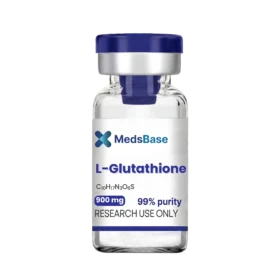 L-Glutathione (Reduced / GSH) Injectable — Pharmaceutical Grade
Q&A
L-Glutathione (Reduced / GSH) Injectable — Pharmaceutical Grade
関連商品

レビュー
まだレビューはありません