







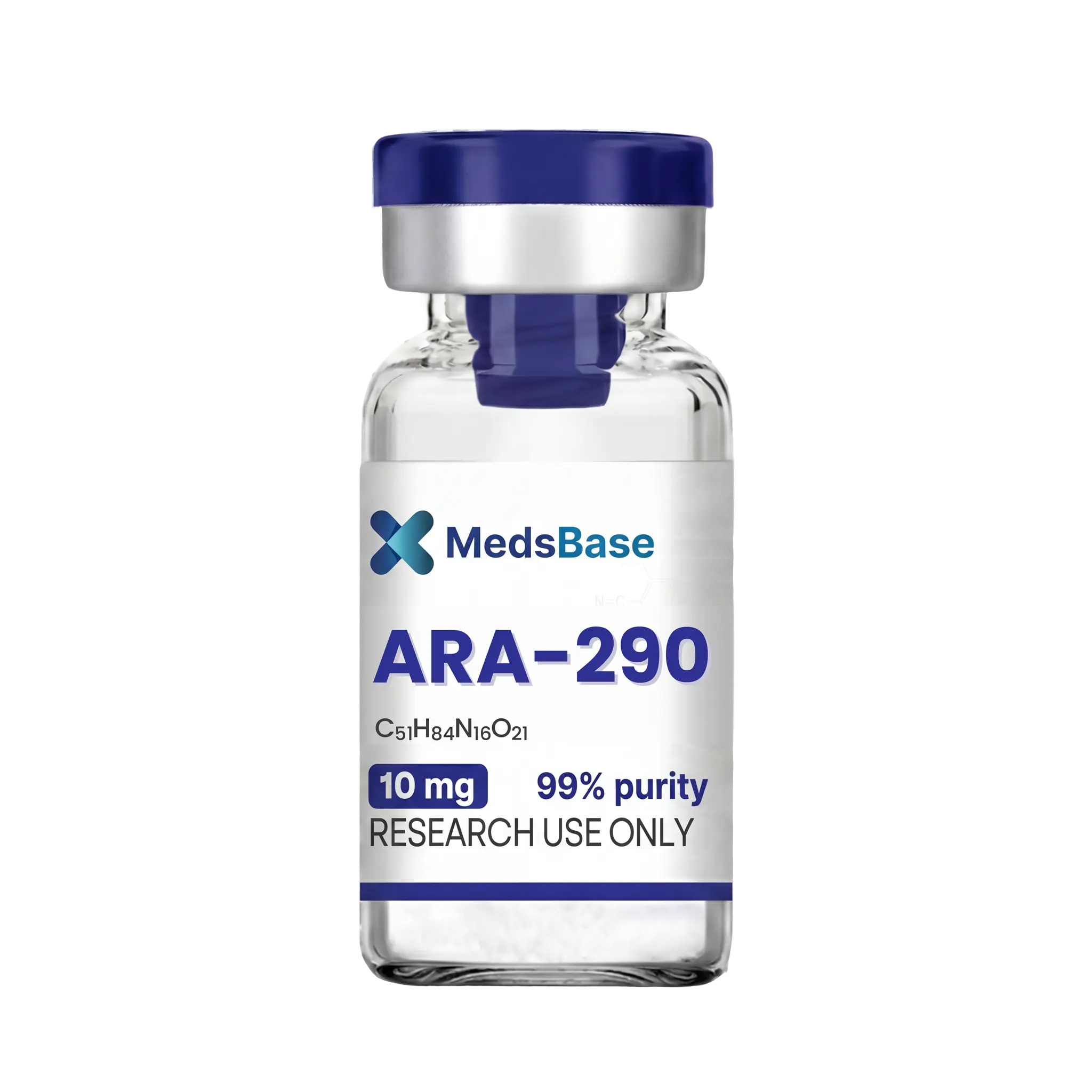
ARA-290 (Cibinetyd)
✅ Nieerytropoetyczny peptyd 11-aminokwasowy pochodzący z EPO
✅ Agonista wrodzonego receptora naprawczego (EPOR + CD131)
✅ Działa przeciwzapalnie, neuroprotekcyjnie i stymuluje sygnalizację naprawy tkanek
✅ Nie powoduje wzrostu hematokrytu (kluczowa cecha projektowa w porównaniu z pełnym EPO)
✅ Status leku sierocego dla neuropatii małych włókien związanej z sarkoidozą
ARA-290 zawiera syntetyczny związek peptydowy.
✓ Zweryfikowany medycznie przez Morgan Ellis — Badacz farmaceutyczny · 8 lat doświadczenia · Ostatnia weryfikacja: maj 2026
Krótka odpowiedź — co to jest ARA-290?
ARA-290 (cibinetide; Helix B Surface Peptide, HBSP) to syntetyczny peptyd składający się z 11 aminokwasów, pochodzący z helisy B erytropoetyny (EPO). Zaprojektowany przez Brinesa i Ceramiego w celu oddzielenia efektów cytoprotekcyjnych EPO od efektów erytropoetycznych, ARA-290 wiąże się z wrodzonym receptorem naprawczym (IRR) — heterokompleksem receptora EPO i receptora beta-wspólnego (CD131) — i wyzwala sygnalizację przeciwzapalną, przeciwapoptotyczną i naprawy tkanek bez zwiększania masy czerwonych krwinek. Opracowany przez Araim Pharmaceuticals; posiada status leku sierocego dla neuropatii małych włókien związanej z sarkoidozą. Dostępny w postaci liofilizowanych fiolek 10 mg wyłącznie do badań laboratoryjnych.
📦 Każde zamówienie jest objęte naszą Polityka Gwarancji Ponownej Wysyłki — jeśli Twoja przesyłka nie dotrze w ciągu 20 dni roboczych, wysyłamy ją ponownie.
| Specyfikacja | Szczegóły |
|---|---|
| Numer CAS | 1208243-50-8 (cibinetide) |
| Typ | Nieerytropoetyczny syntetyczny peptyd 11-aminokwasowy pochodzący z helisy B ludzkiej erytropoetyny (Helix B Surface Peptide, HBSP); agonista wrodzonego receptora naprawczego (IRR); kody rozwojowe ARA-290 / cibinetide (Araim Pharmaceuticals) |
| Wzór cząsteczkowy | C51H84N16O21 |
| Masa cząsteczkowa | ~1,257.4 Da |
| Sekwencja | H-pyroGlu-Glu-Gln-Leu-Glu-Arg-Ala-Leu-Asn-Ser-Ser-OH (pyrEEQLERALNSS) — liniowa sekwencja 11-resztowa odpowiadająca wodno-eksponowanej powierzchni helisy B ludzkiej erytropoetyny. N-końcowa glutamina spontanicznie cyklizuje się do pirogutaminianu (zgodnie z opublikowaną masą cząsteczkową 1,257.4 Da). C-koniec to wolny kwas; brak mostka disiarczkowego, brak acylacji kwasem tłuszczowym, brak PEGylacji. |
| Postać | Proszek liofilizowany (biały do kremowego) |
| Czystość | ≥99% (zweryfikowane HPLC, COA na życzenie) |
| Przechowywanie | Liofilizat: 2–8 °C (lodówka) dla zapasu roboczego; −20 °C do długotrwałego przechowywania nieotwartych fiolek. Roztwór po rekonstytucji: 2–8 °C, użyć w ciągu ~14–28 dni. Chronić przed światłem. Unikać wielokrotnego zamrażania i rozmrażania roztworu po rekonstytucji. |
| Rozpuszczalność | Woda bakteriostatyczna (zalecana) lub woda sterylna. Wysoka rozpuszczalność; niemodyfikowany 11-mer rozpuszcza się szybko przy delikatnym mieszaniu. |
| Do celów badawczych | Wyłącznie do użytku laboratoryjnego. Nie do stosowania w diagnostyce lub terapii u ludzi i zwierząt. |
Co to jest ARA-290?
ARA-290 (cibinetide) to 11-aminokwasowy liniowy syntetyczny peptyd odpowiadający wystawionej na działanie wody powierzchni helisy B ludzkiej erytropoetyny (EPO) — regionowi cząsteczki EPO, który nie jest zaangażowany w wiązanie klasycznego homodimerycznego receptora EPO (EPOR2), który stymuluje produkcję czerwonych krwinek. ARA-290 został zaprojektowany przez Michaela Brinesa i Anthony'ego Cerami z Araim Pharmaceuticals w celu rozdzielenia dwóch farmakologicznie odrębnych aktywności EPO, które historycznie były powiązane w jednej cząsteczce: erytropoeza (efekt podwyższający hematokryt, który ogranicza zastosowanie EPO jako środka ochrony tkanek ze względu na ryzyko zakrzepowo-zatorowe) i ochrona tkanek (efekty przeciwzapalne, antyapoptotyczne i wspomagające naprawę, mediowane przez odrębny receptor heteromeryczny).
Ograniczając sekwencję peptydową do powierzchni helisy B, ARA-290 zachowuje powinowactwo do wrodzonego receptora naprawczego (IRR) — heterokompleksu składającego się z podjednostki receptora EPO (EPOR) i receptora beta-wspólnego (βcR, CD131; wspólnej podjednostki sygnałowej receptorów GM-CSF, IL-3 i IL-5) — jednocześnie eliminując wiązanie z EPOR2 homodimerem odpowiedzialnym za erytropoezę. Efektem netto jest peptyd, który wywołuje cytoprotekcyjne, przeciwzapalne i neuroprotekcyjne efekty EPO w tkankach, bez podwyższania hematokrytu ani niosąc ryzyka zakrzepowo-zatorowego i nadciśnieniowego, które ograniczają terapeutyczne zastosowanie EPO.
ARA-290 ma krótki okres półtrwania w osoczu wynoszący około 2 minut — cząsteczka jest szybko eliminowana — ale efekt biologiczny utrzymuje się przez 24–72 godziny dzięki aktywacji kaskad sygnałowych cytoprotekcji (JAK2/STAT3, PI3K/Akt, zwiększenie ekspresji białek z rodziny Bcl-2 o działaniu antyapoptotycznym). Ten profil farmakokinetyczny jest charakterystyczny dla peptydów wyzwalanych przez receptor, gdzie czas trwania efektu jest określany przez kinetykę kaskady sygnałowej, a nie przez utrzymujące się stężenie w osoczu. ARA-290 otrzymała status leku sierocego w Stanach Zjednoczonych i Unii Europejskiej dla neuropatii włókien małych związanej z sarkoidozą i była oceniana w wielu badaniach klinicznych fazy 2 w neuropatii cukrzycowej i bólu neuropatycznym związanym z sarkoidozą. Nie jest nie jest zatwierdzony zatwierdzona do stosowania terapeutycznego u ludzi przez FDA, EMA, MHRA ani żaden inny główny organ regulacyjny. Badawcza wersja ARA-290 sprzedawana tutaj jest dostarczana tylko do użytku laboratoryjnego i nie jest przeznaczony do podawania ludziom lub zwierzętom.
Mechanizm działania — agonizm receptora naprawy wrodzonej bez erytropoezy
To, co wyróżnia ARA-290 pod względem farmakologicznym, to fakt, że aktywuje ona cytoprotekcyjną część szlaku sygnałowego erytropoetyny, omijając część erytropoetyczną. W opublikowanych badaniach udokumentowano trzy mechanizmy:
- Agonizm receptora naprawy wrodzonej (IRR) — heterokompleks EPOR + βcR / CD131 — W warunkach zapalenia lub uszkodzenia niedokrwiennego komórki tkankowe zwiększają ekspresję receptora beta-wspólnego (βcR, CD131) i tworzą heterokompleks z receptorem EPO (EPOR). Ten heterokompleks IRR jest molekularnym celem ARA-290. Wiązanie wywołuje fosforylację JAK2 i aktywację szlaków STAT3 / STAT5 / PI3K-Akt, prowadząc do zwiększenia ekspresji białek antyapoptotycznych (Bcl-2, Bcl-xL), supresji produkcji prozapalnych cytokin (TNF-α, IL-1β, IL-6) i uruchomienia programów naprawy tkanek. Ponieważ IRR jest lokalnie zwiększany w miejscach uszkodzenia lub zapalenia, a nie konstytutywnie ekspresjonowany, ARA-290 działa jako agonist o ograniczonym kontekście, aktywujący sygnały naprawy dokładnie tam, gdzie są potrzebne.
- Brak wiązania z homodimerycznym EPOR2 — brak erytropoezy — Klasyczny receptor erytropoetyczny na progenitorach erytroidowych szpiku kostnego jest homodimerem dwóch podjednostek EPOR bez udziału CD131. ARA-290 ma znikome powinowactwo do tego homodimeru, dlatego wielokrotne podawanie w badaniach klinicznych nie powoduje wykrywalnych zmian w stężeniu hemoglobiny, hematokrycie ani liczbie retikulocytów. Jest to kluczowa cecha projektowa, która odróżnia ARA-290 od pełnej długości EPO i wcześniejszych zmodyfikowanych analogów EPO (darbepoetyna, CERA), które zachowały aktywność erytropoetyczną.
- Efekty przeciwzapalne i naprawy tkanek w dalszych etapach szlaku — W badaniach przedklinicznych i klinicznych ARA-290 zmniejsza produkcję prozapalnych cytokin przez aktywowane makrofagi, obniża wyniki bólu neuropatycznego w modelach neuropatii włókien małych, przyspiesza gojenie ran rogówki, zmniejsza uszkodzenie niedokrwienno-reperfuzyjne w modelach nerkowych i sercowych oraz poprawia kontrolę glikemii w przedklinicznych modelach cukrzycy typu 2. Szerokość efektu odzwierciedla szeroką dystrybucję tkankową IRR w warunkach zapalnych, a nie mechanizm specyficzny dla tkanki.
Krótki okres półtrwania w osoczu (~2 minuty) połączony z utrzymującym się efektem biologicznym (24–72 godziny) oznacza, że protokoły badawcze ARA-290 zazwyczaj stosują dawkowanie codzienne lub co drugi dzień pomimo szybkiej eliminacji cząsteczkowej — czas trwania farmakodynamiczny jest określany przez kaskadę sygnałową w dalszych etapach szlaku, a nie przez obecność w osoczu. Podskojna administracja jest standardową drogą badawczą i drogą stosowaną w rozwoju klinicznym.
Opublikowane zastosowania badawcze
ARA-290 jest stosowana w kontekstach badań laboratoryjnych dotyczących:
- Badania nad neuropatią cukrzycową i neuropatią małych włókien — ocena gęstości włókien nerwowych rogówki, gęstość włókien nerwowych wewnątrznaskórkowych (IENFD), ocena bólu neuropatycznego; główne wskazanie w badaniach klinicznych, z wynikami fazy 2 w neuropatii cukrzycowej typu 2 wykazującymi poprawę regeneracji włókien nerwowych i ocen bólu
- Neuropatia małych włókien związana z sarkoidozą — wskazanie, dla którego ARA-290 posiada status leku sierocego w USA i UE; badania przedkliniczne i fazy 2 w modelach zapalenia ziarniniakowego
- Badania nad bólem neuropatycznym — neuropatia obwodowa wywołana chemioterapią, neuropatia pooperacyjna, mechanistyczna analiza szlaków bólu zależnych od IRR
- Badania nad uszkodzeniem niedokrwienno-reperfuzyjnym — modele niedokrwienno-reperfuzyjne nerkowe, sercowe i mózgowe; charakterystyka efektów antyapoptotycznych i przeciwzapalnych
- Badania nad zapaleniem i odpornością wrodzoną — polaryzacja makrofagów, testy supresji cytokin, analiza szlaków sygnałowych zależnych i niezależnych od IRR
- Badania metaboliczne w cukrzycy typu 2 — kontrola glikemii, ochrona komórek beta, porównanie z mechanizmami uwrażliwiającymi na insulinę
- Badania nad gojeniem ran rogówki i okulistyczne — tempo zamykania się ran nabłonka rogówki, regeneracja włókien nerwowych w rogówce (jednej z najgęściej unerwionych tkanek i czułego wskaźnika naprawy zależnej od IRR)
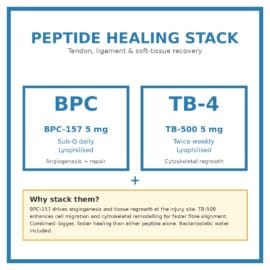
Szerszy kontekst dotyczący pokrewnych peptydów przeciwzapalnych i naprawy tkanek można znaleźć w BPC-157 (peptyd pochodzący z żołądka, naprawa tkanek MSK/GI), TB-500 (fragment tymozyny beta-4, szerokie działanie naprawcze tkanek), oraz KPV (trójpeptyd przeciwzapalny pochodzący z α-MSH). Przeglądaj pełną katalog peptydów badawczych w poszukiwaniu powiązanych związków.
Dostępne mocowania i stężenia
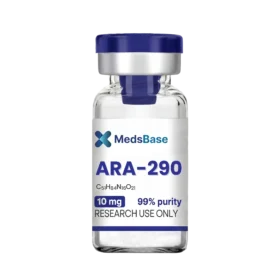
MedsBase stocks ARA-290 in 10 mg lyophilized vials calibrated to typical research protocol lengths. Available in 10-vial, 20-vial, or 30-vial pack formats with full reconstitution guidance:
| Mocowanie fiolki | Typowy przypadek użycia w badaniach | Rozmiary opakowań |
|---|---|---|
| 10 mg | Standardowa moc badawcza — wielotygodniowe protokoły w zakresie neuropatii cukrzycowej, niedokrwienia-reperfuzji, naprawy rogówki i modeli zapalnych; najniższy koszt na mg | 10, 20 lub 30 fiolek |
Dawki z fazy klinicznej 2 w opublikowanych badaniach wynoszą 4 mg podskórnie dziennie w przypadku neuropatii cukrzycowej i neuropatii związanej z sarkoidozą, więc pojedyncza fiolka 10 mg jakości badawczej stanowi wielodniowy zapas dawkowania klinicznie równoważnego dla prac in vivo. ARA-290 dostarczany jest jako niezmodyfikowany liniowy 11-mer — bez łańcucha acylowego, bez PEGylacji, bez mostka disiarczkowego, a rekonstytucja jest prosta w porównaniu z dłuższymi lub zmodyfikowanymi peptydami.
Porównanie — ARA-290 vs BPC-157
ARA-290 i BPC-157 są stosowane w badaniach nad naprawą tkanek i działaniem przeciwzapalnym, ale oba peptydy celują w całkowicie różne mechanizmy molekularne. ARA-290 jest agonistą wrodzonego receptora naprawczego pochodzącego z EPO, który aktywuje sygnalizację cytoprotekcyjną JAK2/STAT3. BPC-157 to syntetyczny 15-aminokwasowy stabilny pentadekapeptyd żołądkowy pochodzący z fragmentu białka BPC ludzkiego soku żołądkowego, działający poprzez złożony mechanizm wieloszczeblowy, w tym modulację syntazy tlenku azotu, zwiększenie ekspresji VEGF i cross-talk receptorów czynników wzrostu.
| Kryterium | ARA-290 | BPC-157 |
|---|---|---|
| Pochodzenie | Helisa B ludzkiej erytropoetyny (HBSP) | Fragment białka BPC z ludzkiego soku żołądkowego |
| Długość | 11 aminokwasów | 15 aminokwasów |
| Receptor / cel | Wrodzony receptor naprawczy (EPOR + βcR / CD131) | Wielościeżkowy: syntaza NO, VEGF, interakcja czynników wzrostu |
| Główna tkanka badana | Nerw obwodowy, rogówka, tkanka niedokrwienna, tkanka zapalna | Ścięgno, więzadło, błona śluzowa jelit, mięsień |
| Efekt erytropoetyczny | Brak (kluczowa cecha projektu) | N/D (nie jest peptydem szlaku EPO) |
| Okres półtrwania w osoczu | ~2 minuty (efekt utrzymuje się 24–72 godziny) | ~30 minut (biodostępność doustna wykazana w badaniach przedklinicznych) |
| Rozwój kliniczny | Faza 2 (neuropatia cukrzycowa, SFN w sarkoidozie); status leku sierocego | Tylko przedkliniczne (brak badań klinicznych u głównych regulatorów) |
| Modyfikacja | Niemodyfikowany liniowy 11-mer | Niemodyfikowany liniowy 15-mer (stabilna sól octanowa lub argininowa) |
W badaniach skupiających się na neuropatycznym bólu, regeneracji nerwów obwodowych lub cytoprotekcji mediowanej przez IRR, ARA-290 jest docelowym peptydem referencyjnym. W badaniach skupiających się na naprawie ścięgien/więzadeł mięśniowo-szkieletowych lub gojeniu błony śluzowej przewodu pokarmowego, BPC-157 pozostaje bardziej szeroko badaną opcją. Oba peptydy są czasami łączone w protokołach badawczych, które mają na celu rekrutację komplementarnych szlaków naprawczych zarówno w tkance OUN/nerwów obwodowych, jak i tkance łącznej. Zobacz także TB-500 (fragment tymozyny beta-4, szerokie benchmarkowanie naprawy tkanek) i KPV (trójpeptyd przeciwzapalny pochodzący z α-MSH).
Przechowywanie i rekonstytucja
Przed rekonstytucją: przechowuj liofilizowane fiolki w lodówce w temperaturze 2–8 °C w oryginalnym opakowaniu jako krótkoterminowy zapas roboczy. Długoterminowe przechowywanie nieotwartych fiolek należy przeprowadzać w zamrażarce w temperaturze −20 °C. Liofilizowany ARA-290 jest stabilny w lodówce do 24 miesięcy i w temperaturze −20 °C do 36 miesięcy. Unikaj cykli zamrażania-rozmrażania liofilizowanego proszku. ARA-290 jest niemodyfikowanym liniowym peptydem bez mostka disiarczkowego lub łańcucha acylowego, więc obchodzenie się z nim jest prostsze w porównaniu ze strukturalnie złożonymi peptydami, takimi jak cagrilintide lub semaglutide.
Procedura rekonstytucji: wstrzyknij wodę bakteriostatyczną wzdłuż ścianki fiolki (nie bezpośrednio na liofilizowany proszek). Dla fiolki 10 mg, 2,0 mL wody bakteriostatycznej daje stężenie robocze 5 mg/mL — 0,08 mL dostarcza 400 mcg (dawka 1 mg wymaga 0,2 mL); 0,8 mL dostarcza klinicznie równoważną dawkę badawczą 4 mg. Delikatnie zamieszaj — nie wstrząsaj energicznie, ponieważ pienienie wprowadza powietrze i może denaturować łańcuchy peptydowe. Pozwól proszkowi całkowicie się rozpuścić (zwykle <1 minuta dla ARA-290) przed pobraniem. Po rekonstytucji przechowuj fiolkę w temperaturze 2–8 °C i użyj w ciągu 14–28 dni. Chroń przed światłem. Wyrzuć, jeśli pojawi się zmętnienie, cząstki stałe lub zmiana koloru.
Najczęściej zadawane pytania
Czy ARA-290 jest analogiem EPO? Czy podnosi hematokryt?
ARA-290 pochodzi z helisy B erytropoetyny, ale jest zaprojektowany specjalnie, aby otrzymuje, przechowuje, nie ma dostępu ani wglądu w dane osobowe przekazywane przez Ciebie dostawcy płatności. Proces weryfikacji odbywa się w całości na platformie dostawcy i podlega jego własnej polityce prywatności oraz standardom bezpieczeństwa. podnosić hematokryt. Klasyczny efekt erytropoetyczny EPO jest mediowany przez homodimeryczny receptor EPO (EPOR2) na progenitorach erytroidowych szpiku kostnego. ARA-290 wiąże się z heteromerycznym receptorem naprawy wrodzonej (EPOR + βcR/CD131) i ma znikome powinowactwo do EPOR2. Opublikowane badania fazy 2 nie wykazują zmian w hemoglobinie, hematokrycie lub liczbie retikulocytów po wielokrotnym podawaniu.
Co to jest wrodzony receptor naprawczy (IRR)?
Wrodzony receptor naprawczy to heterokompleks składający się z podjednostki receptora EPO (EPOR) i receptora beta-wspólnego (βcR, znanego również jako CD131 — wspólnej podjednostki sygnałowej receptorów GM-CSF, IL-3 i IL-5). IRR jest lokalnie regulowany w górę w tkankach poddanych stresowi, uszkodzonych lub zapalnych, a nie eksprymowany konstytutywnie, dlatego ARA-290 działa jako sygnał naprawy tkankowej ograniczony kontekstowo, a nie jako agonist ogólnoustrojowy.
Dlaczego ARA-290 jest również nazywany cibinetydem?
ARA-290 to kod rozwojowy nadany przez Araim Pharmaceuticals (oryginalnego dewelopera). Cibinetide to międzynarodowa niezastrzeżona nazwa farmaceutyczna (INN) nadana później dla celów badań klinicznych i regulacyjnych. Obie nazwy odnoszą się do tego samego 11-aminokwasowego peptydu (CAS 1208243-50-8).
Dlaczego okres półtrwania w osoczu jest tak krótki w porównaniu z czasem trwania efektu?
ARA-290 ma okres półtrwania w osoczu wynoszący około 2 minut — peptyd jest szybko usuwany z krążenia — ale efekt biologiczny utrzymuje się przez 24–72 godziny dzięki aktywacji szlaków sygnałowych JAK2/STAT3, PI3K/Akt oraz antyapoptotycznych białek z rodziny Bcl-2. Ten profil farmakokinetyczny jest typowy dla peptydów wyzwalających receptory, gdzie czas trwania jest określany przez kinetykę kaskady sygnałowej, a nie przez utrzymujące się stężenie w osoczu.
Jak ARA-290 wypada w porównaniu z BPC-157 w badaniach nad naprawą tkanek?
Oba peptydy są wykorzystywane w badaniach nad naprawą tkanek, ale celują w różne mechanizmy i różne tkanki. ARA-290 działa poprzez wrodzony receptor naprawczy (EPOR + CD131) i jest najlepiej scharakteryzowany w badaniach dotyczących nerwów obwodowych, rogówki i tkanek niedokrwiennych. BPC-157 działa poprzez wieloszlakowy mechanizm obejmujący modulację syntazy tlenku azotu i zwiększenie ekspresji VEGF, i jest najlepiej scharakteryzowany w badaniach dotyczących ścięgien, więzadeł, błony śluzowej jelit i mięśni. Niektóre protokoły łączą oba peptydy, aby wykorzystać komplementarne szlaki naprawcze.
Co to jest neuropatia małych włókien związana z sarkoidozą i dlaczego ARA-290 ma status leku sierocego w tym wskazaniu?
Sarkoidoza to ziarniniakowa choroba zapalna, która u znacznej części pacjentów wywołuje wyniszczającą neuropatię małych włókien (SFN). ARA-290 posiada status leku sierocego FDA USA i EMA UE w leczeniu SFN związanej z sarkoidozą, co odzwierciedla rzadkość wskazania i brak innych ukierunkowanych terapii. Status sierocy wspiera badania kliniczne, ale nie stanowi zatwierdzenia — ARA-290 pozostaje w fazie badawczej w momencie pisania tego tekstu.
Jaka jest standardowa dawka badawcza ARA-290?
Opublikowane badania kliniczne fazy 2 stosowały 2–4 mg podskórnie dziennie w neuropatii cukrzycowej i SFN związanej z sarkoidozą. Badania przedkliniczne na zwierzętach wykorzystywały szersze zakresy dawek w zależności od modelu i tkanki. Badacze powinni określić zakresy dawek na podstawie recenzowanej literatury odpowiedniej dla swojego konkretnego protokołu.
Czy ARA-290 wymaga specjalnego postępowania ze względu na modyfikacje disiarczkowe lub acylowe?
Nie. ARA-290 to niemodyfikowany liniowy peptyd 11-aminokwasowy bez mostka disiarczkowego, acylacji kwasem tłuszczowym ani PEGylacji. Rekonstytucja i postępowanie są proste — delikatne mieszanie rozpuszcza liofilizowany proszek w ciągu ~1 minuty. Dla porównania, strukturalnie złożone peptydy takie jak cagrilintide (łańcuch acylowy + mostek disiarczkowy), semaglutyd (łańcuch acylowy) czy peptydy klasy insuliny wymagają dłuższej stabilizacji podczas rekonstytucji.
Więcej opcji w Peptydach
Ranking według liczby ostatnich zamówień MedsBase — co wybierają inni klienci w tej kategorii.
| Moc | 10 mg |
|---|---|
| Ilość | 10 fiolek, 20 fiolek, 30 fiolek |
 ARA-290 (Cibinetyd)
Pytania i odpowiedzi
ARA-290 (Cibinetyd)
Produkty powiązane

Opinie
Nie ma jeszcze opinii