







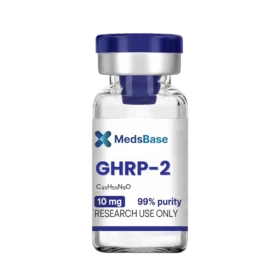
GHRP-2 Acetat
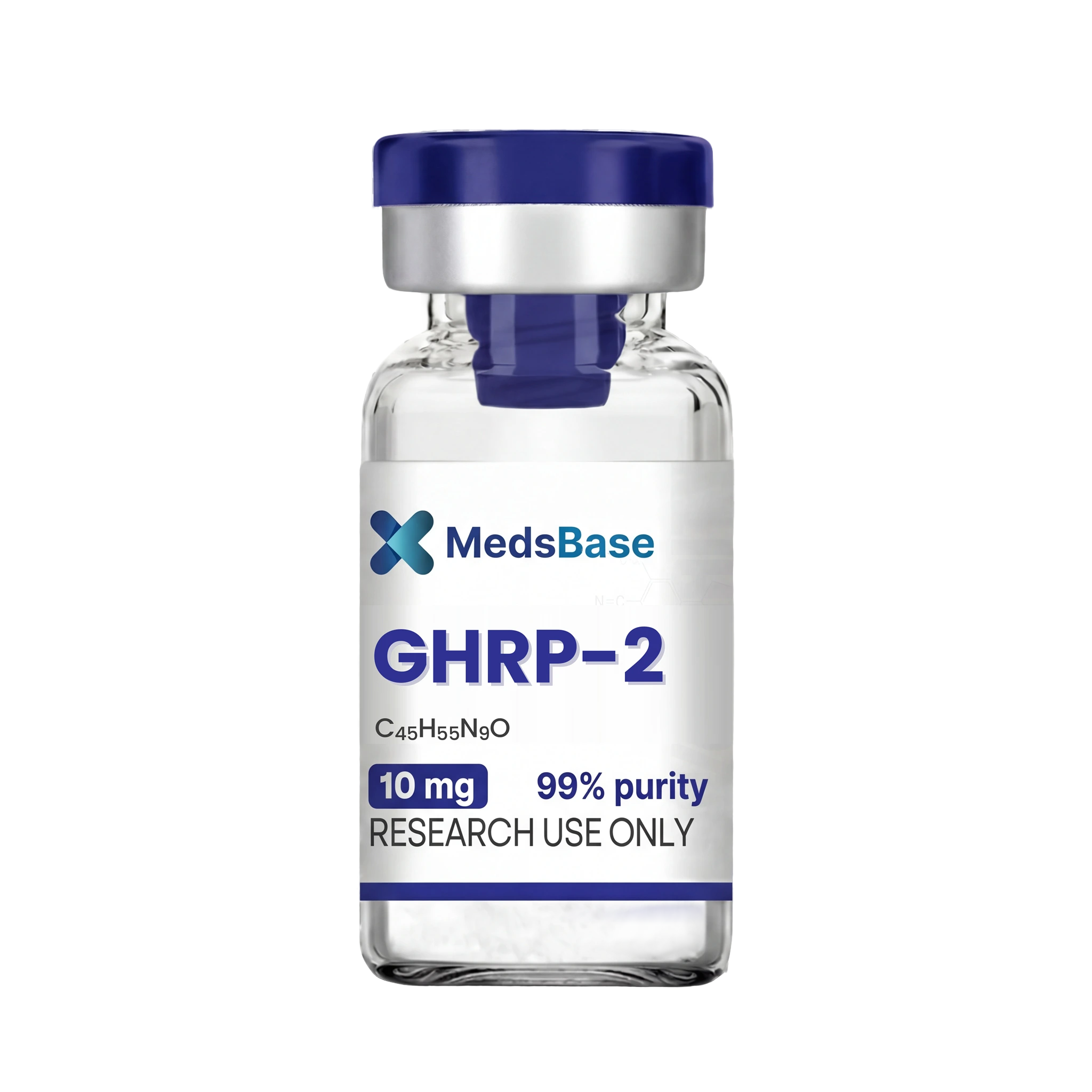
✅ Cel mai potent hexapeptid GHS de prima generație
✅ Agonist al receptorului GHS-R1a/ghrelină
✅ Puls GH mai clar decât GHRP-6
✅ Semnal de apetit mai mic decât GHRP-6
✅ Aprobat ca Pralmorelin în Japonia pentru diagnosticarea deficienței de GH
GHRP-2 Acetat conține compus peptidic sintetic.
✓ Verificat medical de Morgan Ellis — Cercetător farmaceutic · 8 ani de experiență · Ultima recenzie: mai 2026
Răspuns rapid — Ce este GHRP-2 Acetat?
GHRP-2 Acetat (denumit și Pralmorelin sau KP-102) este un hexapeptid sintetic cu 6 aminoacizi, secretagog de hormon de creștere, și cel mai potent membru de prima generație al seriei GHRP pe bază de mg. Acționează pe receptorul secretagog de hormon de creștere (GHS-R1a) — același receptor ca ghrelina endogenă și ca GHRP-6 — producând eliberare pulsatorie de hormon de creștere cu un semnal de apetit mai mic decât GHRP-6, dar cu un profil similar de cortizol/prolactină. Furnizat în flacoane liofilizate de 5 mg și 10 mg, destinat exclusiv cercetărilor de laborator.
📦 Fiecare comandă este acoperită de politica noastră de Politica noastră de Reexpediere Garantată — dacă coletul dumneavoastră nu sosește în 20 de zile lucrătoare, îl relivrăm.
| Specificații | Detaliu |
|---|---|
| Număr CAS | 158861-67-7 (baza liberă GHRP-2); furnizat sub formă de sare de acetat |
| Formula moleculară | C45H55N9O6 (bază liberă; sarea de acetat adaugă contraionul CH3COOH) |
| Greutate moleculară | 817.97 Da (baza liberă) |
| Secvență | D-Ala-D-2-Nal-Ala-Trp-D-Phe-Lys-NH2 (6 aminoacizi; conține D-Ala pe poziția 1, D-2-naftilalanină pe poziția 2 și D-Phe pe poziția 5 pentru stabilitate proteolitică; amidat la capătul C). Cunoscut și sub denumirea de Pralmorelin / KP-102. |
| Formă | Sare de acetat liofilizată (pudră albă până la alb-gălbuie) |
| Puritate | ≥99% (verificat prin HPLC, COA la cerere) |
| Depozitare | Liofilizat: 2–8°C (frigider) pentru stocul de lucru; −20°C pentru depozitarea pe termen lung a vialelor nefolosite. Reconstituit: 2–8°C, utilizat în ~30 de zile. Protejați de lumină. Nu înghețați-decongelați soluția reconstituită. |
| Solubilitate | Apă bacteriostatică (recomandată) sau apă sterilă pentru perioade mai scurte de utilizare |
| Utilizare în cercetare | Doar pentru utilizare în cercetare de laborator. Nu este destinat pentru uz diagnostic sau terapeutic uman sau veterinar. |
Ce este GHRP-2 Acetat?
GHRP-2 (Peptid eliberator de hormon de creștere 2), cunoscut și sub denumirea de Pralmorelin sau prin codul său original de dezvoltare KP-102, este un hexapeptid sintetic cu 6 aminoacizi și unul dintre membrii canonici de prima generație ai clasei de peptide secretagoge de hormon de creștere (GHS). A fost dezvoltat la scurt timp după GHRP-6 în același program de relație structură-activitate Bowers de la Universitatea Tulane, cu accent pe creșterea potenței pe mg în raport cu compusul părinte, păstrând în același timp profilul selectiv al receptorului GHS-R1a. Contraionul de acetat este utilizat în liofilizarea de grad de cercetare deoarece îmbunătățește stabilitatea pe termen lung a peptidei și solubilitatea în apă fără a altera farmacologia.
Secvența bine caracterizată este D-Ala-D-2-Nal-Ala-Trp-D-Phe-Lys-NH2, greutate moleculară 817,97 Da, formulă empirică C45H55N9O6. Inovația structurală față de GHRP-6 este introducerea D-2-naftilalaninăi (D-2-Nal) pe poziția 2 în loc de D-Trp — inelul naftilic mai lipofilic crește afinitatea pentru GHS-R1a și produce aproximativ de 2–3 ori mai multă activitate de eliberare a hormonului de creștere pe mg în cercetările publicate. Cele două substituții cu aminoacizi D (D-Ala pe poziția 1, D-Phe pe poziția 5) conferă rezistență la proteaze. De remarcat că în Japonia GHRP-2 (sub denumirea de Pralmorelin Hidroclorură / GHRP Kaken) a fost aprobat ca agent de diagnostic intravenos pentru un singur utilizat în testarea deficienței de hormon de creștere la adulți — unul dintre puținele peptide GHS care au obținut vreo formă de aprobare clinică. GHRP-2 rămâne neaprobat de FDA, EMA, MHRA sau orice alt regulator occidental pentru utilizare terapeutică. Acetatul de GHRP-2 de calitate de cercetare vândut aici este furnizat destinat doar pentru cercetare de laborator și nu este destinat administrării umane sau veterinare.
Mecanism de acțiune — Agonism al receptorului GHS-R1a cu potență sporită
Ceea ce face GHRP-2 distinct din punct de vedere mecanic în rândul secretagogelor de hormon de creștere de prima generație este combinația dintre afinitate ridicată pentru GHS-R1a cu o perioadă de înjumătățire plasmatică relativ scurtă, producând un puls de hormon de creștere mai clar și mai reproductibil în cercetările publicate:
- Agonismul receptorului GHS-R1a pe somatotrofi — GHRP-2 se leagă de receptorul de tip 1a al secretagogului de hormon de creștere (GHS-R1a, receptorul ghrelin) de pe somatotrofii hipofizari anteriori. Activarea receptorului se cuplează la Gαq/11 și fosfolipaza C, crescând calciul intracelular și declanșând exocitoză veziculelor care conțin hormon de creștere. Substituția D-2-Nal pe poziția 2 produce aproximativ de 2–3 ori mai mare ocupare a receptorului la doze echivalente comparativ cu GHRP-6 în testele de legare cu radioligand, ceea ce se traduce într-un puls mai mare de hormon de creștere pe unitate de doză.
- Suprimarea tonusului de somatostatină — La fel ca alte GHRP-uri, GHRP-2 acționează atât la nivelul somatotrofilor, cât și al neuronilor hipotalamici care eliberează somatostatină. Prin suprimarea inhibiției tonice a somatostatinei simultan cu stimularea eliberării somatotrofile, peptidul produce un puls mai mare de GH decât ar prezice doar stimularea directă a hipofizei. Această acțiune duală este mecanismul canonic al clasei GHRP și stă la baza sinergiei cu analogii GHRH descriși mai jos.
- Sinergie cu agoniiștii receptorului GHRH — Căile GHS-R și GHRH-R converg intracelular dar folosesc sisteme diferite de mesageri secundari (PLC/IP3/Ca2+ vs adenilat ciclază/cAMP/PKA), astfel încât GHRP-2 și analogii GHRH produc eliberare aditivă sau sinergică de GH atunci când sunt combinați. Protocolul de cercetare canonic împerechează GHRP-2 cu un analog GHRH precum Sermorelin sau CJC-1295 cu DAC pentru un stimul de cercetare pulsatoriu maxim de GH. Provocarea “GHRP-2 + GHRH” este, de asemenea, baza utilizării clinice japoneze a Pralmorelinului în testarea diagnostică a deficienței de GH.
GHRP-2 produce un semnal de apetit mai mic decât GHRP-6 în cercetări comparative pe rozătoare și umane — substituția D-2-Nal la poziția 2 reduce, dar nu elimină activitatea orexigenă moștenită de la agonismul receptorului de ghrelină. Semnalele de cortizol și prolactină rămân prezente la niveluri comparabile cu GHRP-6, care este principalul factor de confuzie relevant pentru cercetare pe care noii analogi selectivi pentru receptor (Ipamorelin) au fost concepuți să elimine. Timpul de înjumătățire plasmatic este de aproximativ 15–20 de minute — mai scurt decât GHRP-6 (~30–60 min) — ceea ce produce un puls de GH mai clar și mai reproductibil, dar necesită dozare mai frecventă pentru protocoale de cercetare cu stimul susținut.
Aplicații de Cercetare Publicate
GHRP-2 este utilizat în contexte de cercetare de laborator care investighează:
- Farmacologia axei hormonului de creștere — dinamica pulsatorie a GH, răspunsul la doză al somatotrofilor, teste comparative de potență GHS; referință pentru GHS de primă generație cu potență ridicată în literatura publicată despre axa GH (Bowers, J Clin Endocrinol Metab; Ghigo et al., J Clin Endocrinol Metab)
- Cercetare diagnostică a deficienței de GH — teste de stimulare cu GHRP-2 pentru deficiența de GH la adulți (cazul clinic japonez), teste combinate de provocare GHRP-2 + GHRH, caracterizarea rezervelor somatotrofile în modele preclinice
- Cercetare privind funcția hipofizară — teste de rezervă de GH, hipertrofie/hiperplazie somatotrofilă, cercetare a mecanismului de acțiune pentru noi secretagogi de GH
- Cercetare privind cașexia și sindromul de depleție — modele de cahexie la rozătoare cu tumori, deșeuri asociate BPOC, sarcopenie legată de îmbătrânire; semnalul de apetit mai mic decât GHRP-6 face ca GHRP-2 să fie util atunci când aportul alimentar este un factor de confuzie
- Farmacologia axei ghrelină — semnal de apetit redus, dar nenul; braț de cercetare util pentru separarea apetitului mediat de GHS-R de efectele axei GH
- Cercetare comparativă a GHS — evaluare comparativă directă cu GHRP-6 (fratele de primă generație), Ipamorelin (de a treia generație selectiv pentru receptor), hexarelin și molecule mici activ oral GHS precum MK-677
- Cercetare combinată GHRP + GHRH — protocolul canonic “GHRP-2 + GHRH” sinergic pentru stimul maxim de cercetare a pulsului GH, asociind GHRP-2 cu Sermorelin sau CJC-1295 cu DAC.
Pentru un context mai larg privind locul GHRP-2 în peisajul peptidelor axei de creștere, consultați GHRP-6 ca fratele de prima generație, Ipamorelin ca analogul nou selectiv pentru receptor și CJC-1295 cu DAC ca partenerul canonic sinergic GHRH. Răsfoiți întregul de peptide de cercetare pentru compuși înrudiți.
Concentrații și doze disponibile
MedsBase stocks GHRP-2 Acetate in two lyophilized vial sizes calibrated to typical research protocol lengths. Each strength is available in 10-vial, 20-vial, or 30-vial pack formats with full reconstitution guidance:
| Putere flacon | Caz tipic de utilizare în cercetare | Dimensiuni pachet |
|---|---|---|
| 5 mg | Concentrație standard pentru cercetare — protocoale scurte de puls de GH, studii pe o singură cohortă | 10, 20 sau 30 de flacoane |
| 10 mg | Protocoale cu ciclu extins, studii pe cohorte multiple, cel mai mic cost pe miligram | 10, 20 sau 30 de flacoane |
Ambele concentrații sunt aceeași formă chimică (pudră liofilizată de acetat, puritate HPLC 99%+). Flacoanele cu mg mai mari necesită volume mai mici de reconstituire pe unitate de doză, ceea ce este util atunci când cercetătorii doresc să minimizeze volumul de injecție în protocoalele pentru rozătoare. Deoarece gamele de doze GHRP-2 sunt în regimul de 100–500 mcg pe administrare, un singur flacon de 5 mg susține multe săptămâni de cercetare la doze tipice.
Cum se compară — GHRP-2 vs GHRP-6
GHRP-2 și GHRP-6 sunt cele două secreteagoge canonic de prima generație hexapeptide ale hormonului de creștere din programul laboratorului Bowers. Acestea au același receptor (GHS-R1a) și aceeași arhitectură hexapeptidică cu șase reziduuri, diferind în principal prin aminoacidul de la poziția 2 — D-2-naftilalanină în GHRP-2 versus D-triptofan în GHRP-6. Această singură substituție explică majoritatea diferențelor farmacologice observate în cercetările publicate.
| Criteriu | GHRP-2 (Pralmorelin) | GHRP-6 |
|---|---|---|
| Lungime | 6 aminoacizi (hexapeptidă) | 6 aminoacizi (hexapeptidă) |
| Reziduu la poziția 2 | D-2-naftilalanină (D-2-Nal) | D-triptofan (D-Trp) |
| Potență pe miligram | ~2–3× mai potent | Potență de bază de primă generație |
| Semnal de apetit | Redusă (încă prezentă, mai mică decât GHRP-6) | Puternică (efect orexigen similar ghrelinei) |
| Cortizol / prolactină | Creșteri modeste (comparabile cu GHRP-6) | Creșteri modeste |
| Timp de înjumătățire în plasmă | ~15–20 min | ~30–60 min |
| Doza tipică de cercetare | 100–500 mcg, 1–3x pe zi | 50–300 mcg, 1–3 ori pe zi |
| Utilizare clinică | Test de diagnostic pentru deficiența de GH (doar în Japonia) | Niciunul aprobat în nicio parte a lumii |
Pentru cercetările în care stimularea apetitului face parte din obiectivul principal (modele de cachexie, studii privind consumul de alimente), GHRP-6 este alegerea convențională deoarece semnalul orexigen este mai puternic. Pentru cercetările în care confuzia apetitului este o preocupare, dar tolerabilitatea cortizolului/prolactinei este acceptabilă, GHRP-2 produce un puls de GH mai clar cu mai puțină interferență în comportamentul alimentar. Pentru farmacologia cea mai curată a axei GH, unde cortizolul și prolactina trebuie controlate, Ipamorelin (analog selectiv de generația a treia) este alternativa selectivă la receptor.
Depozitare și reconstituire
Înainte de reconstituire: depozitați flacoanele liofilizate la frigider la 2–8 °C în ambalajul original pentru stocul de lucru pe termen scurt. Pentru depozitarea pe termen lung nedeschisă, congelați la −20 °C. Acetatul de GHRP-2 liofilizat este stabil la refrigerare pentru până la 24 de luni și la −20 °C pentru până la 36 de luni. Evitați ciclurile de îngheț-dezgheț pe pulberea liofilizată.
Procedura de reconstituire: injectați apa bacteriostatică pe peretele lateral al flaconului de peptide (nu direct pe tortul liofilizat). Pentru un flacon de 5 mg, 2,0 mL de apă bacteriostatică oferă o concentrație de lucru de 2,5 mg/mL — 0,04 mL oferă o doză de cercetare de 100 mcg; 0,1 mL oferă 250 mcg. Învârtiți ușor — nu primește, zgâlțâiți — și așteptați 2–5 minute pentru dizolvare completă. O soluție reconstituită corect ar trebui să fie limpede și incoloră.
După reconstituire: Păstrați la frigider la 2–8 °C și utilizați în termen de 30 de zile pentru stabilitate optimă. Nu congelați soluția reconstituită — ciclurile de îngheț-dezgheț degradează integritatea peptidelor. Eliminați orice flacon care prezintă tulbureală, precipitat sau decolorare.
Întrebări frecvente
Pentru ce este utilizat GHRP-2 în cercetare?
GHRP-2 este utilizat în cercetările de laborator care investighează axa hormonului de creștere, dinamica eliberării pulsatile a GH, caracterizarea răspunsului la doza somatotrofă, protocoalele de diagnostic pentru deficiența de GH, farmacologia axei ghrelină, modele de cachexie și sindrom de depleție, și protocoale combinate de eliberare sinergică a GH cu GHRP + GHRH. Este cel mai potent peptid de cercetare GHS de prima generație pe bază de mg. GHRP-2 de calitate de cercetare vândut aici este primește, aprobat de FDA (cu excepția indicației de diagnostic în Japonia) și este furnizat strict pentru utilizare în cercetări de laborator.
Cum diferă GHRP-2 de GHRP-6?
Ambele sunt hexapeptide secretagoge de hormon de creștere de prima generație care acționează pe același receptor GHS-R1a, dar diferă prin aminoacidul de la poziția 2 — D-2-naftilalanină în GHRP-2 versus D-triptofan în GHRP-6. Această singură substituție face ca GHRP-2 să fie de aproximativ 2–3× mai potent pe bază de mg și produce un semnal de apetit mai mic. Ambele peptide păstrează semnalul modest de cortizol/prolactină pe care noii analogi selectivi la receptor (cum ar fi Ipamorelin) au fost concepuți să-l elimine. Timpul de înjumătățire plasmatic este mai scurt pentru GHRP-2 (~15–20 min) față de GHRP-6 (~30–60 min).
Care este diferența dintre GHRP-2 și Pralmorelin?
Sunt același compus sub nume diferite. “GHRP-2” este denumirea din literatura de cercetare; “Pralmorelin” este numele internațional neproprietar (INN); “KP-102” a fost codul original de dezvoltare al Kaken Pharmaceutical. Compusul a fost aprobat în Japonia sub numele Pralmorelin ca test de diagnostic intravenos pentru o singură utilizare pentru deficiența de hormon de creștere la adulți — singura aprobare reglementară de tip occidental a oricărui peptid din seria GHRP până în prezent.
Care este doza tipică de cercetare GHRP-2?
Protocoalele preclinice publicate utilizează de obicei 100–500 mcg pe administrare, administrate subcutanat de 1–3 ori pe zi pentru cicluri de cercetare de 2–12 săptămâni. Un flacon de 5 mg reconstituit cu 2,0 mL apă bacteriostatică produce 2,5 mg/mL — 0,04 mL egal cu 100 mcg, 0,1 mL egal cu 250 mcg. Doza pentru testul de diagnostic japonez este de 100 mcg intravenos ca o singură administrare.
Este GHRP-2 aprobat de FDA?
Nu. GHRP-2 nu este aprobat de FDA, EMA, MHRA sau de orice alt regulator occidental pentru utilizare terapeutică sau diagnostică umană. Este aprobat în Japonia sub denumirea de Pralmorelin Hidroclorid / GHRP Kaken ca agent de diagnostic intravenos pentru un singur utilizare, destinat testării deficienței de hormon de creștere la adulți. Tot GHRP-2 vândut de furnizori pentru uz exclusiv în cercetare în afara Japoniei este destinat investigațiilor de laborator și nu trebuie administrat persoanelor umane.
Cum trebuie depozitat GHRP-2 Acetat?
Flacoane liofilizate: refrigerate la 2–8 °C pentru stocul de lucru pe termen scurt, sau la −20 °C pentru stocarea pe termen lung a flacoanelor nedeschise. Soluția reconstituită: refrigerată la 2–8 °C, de utilizat în 30 de zile. Nu înghețați soluția reconstituită — ciclurile de înghețare-dezghețare degradează peptida. Protejați de lumina directă în permanență.
Cum se reconstituie GHRP-2?
Urmați procedura de reconstituire de mai sus. Adăugați apă bacteriostatică pe peretele lateral al flaconului (nu direct pe tortul liofilizat), amestecați ușor și lăsați 2–5 minute pentru dizolvare completă. Nu primește, Agitați flaconul. O soluție reconstituită corect este limpede și incoloră. Pentru un flacon de 5 mg + 2,0 mL diluent, concentrația de lucru este de 2,5 mg/mL.
Ce doze stochează MedsBase?
MedsBase carries GHRP-2 Acetate in 5 mg and 10 mg lyophilized vials. Each strength is available in 10-vial, 20-vial, or 30-vial pack sizes. All vials are supplied at 99%+ HPLC purity with a certificate of analysis available on request.
De ce este GHRP-2 mai potent decât GHRP-6?
Diferența structurală constă în aminoacidul de pe poziția 2 a hexapeptidei — D-2-naftilalanină în GHRP-2 versus D-triptofan în GHRP-6. Inelul naftil este mai lipofil și ușor mai mare decât inelul indol al triptofanului, producând o legare mai strânsă la buzunarul hidrofob al receptorului GHS-R1a. Testele de legare cu radioligandi arată o ocupare a receptorului de aproximativ 2–3 ori mai mare la doze echivalente, ceea ce se traduce într-un puls mai mare de hormon de creștere pe unitate de doză în cercetările preclinice și clinice publicate.
Poate fi GHRP-2 asociat cu un analog GHRH în cercetare?
Da — acesta este protocolul canonic sinergic pentru pulsul de hormon de creștere și baza testului clinic japonez de diagnostic al deficienței de hormon de creștere. GHRP-2 activează GHS-R1a (PLC/IP3/Ca2+ Cauzează GHRP-6 efecte secundare în cercetare? Sermorelin sau CJC-1295 cu DAC activează GHRH-R (semnalizarea adenilil ciclază/cAMP/PKA). Cele două căi converg asupra somatotrofilor dar utilizează sisteme diferite de mesageri secundari, producând eliberare aditivă sau sinergică de GH atunci când sunt combinate.
Provoacă GHRP-2 efecte secundare în cercetare?
Principalele efecte țintă sunt eliberarea hormonului de creștere și (modesta) stimulare a apetitului. Efectele secundare includ creșteri modeste ale cortizolului și prolactinei — principalul factor de confuzie relevant pentru studiile curate ale axei hormonului de creștere — comparabile ca amploare cu cele ale GHRP-6. Sunt raportate reacții tranzitorii de flushing sau locale la locul injectării. La doze mari, pot fi observate efecte mediate de GHS-R asupra funcției cardiace și a tensiunii arteriale. Semnalul cortizol/prolactină este principalul motiv pentru care au fost dezvoltați analogi selectivi de nouă generație, cum ar fi Ipamorelin.
Care este timpul de înjumătățire al GHRP-2?
În cercetarea preclinică și clinică, GHRP-2 are un timp de înjumătățire plasmatic de aproximativ 15–20 de minute după administrare subcutanată sau intravenoasă — ușor mai scurt decât GHRP-6 (~30–60 min). Timpul de înjumătățire mai scurt produce un puls mai clar și mai reproductibil de hormon de creștere, util pentru diagnostic și cercetarea răspunsului la doză, dar necesită administrări mai frecvente pentru protocoalele de cercetare cu stimulare susținută.
Cât durează până apar efectele GHRP-2 în cercetarea preclinică?
Pulsurile acute de hormon de creștere sunt detectabile în 10–20 de minute după administrare subcutanată sau intravenoasă și ating maximul în 30–45 de minute — un debut mai rapid decât GHRP-6 datorită afinității mai mari pentru GHS-R1a. Efectele de stimulare a apetitului asupra consumului de alimente sunt mai mici și se dezvoltă mai încet decât în cazul GHRP-6. Efectele descendente asupra producției de IGF-1 și semnalizării la nivel tisular al axei hormonului de creștere se acumulează pe o perioadă de 1–4 săptămâni de administrare regulată.
Pot comanda GHRP-2 pentru livrare internațională?
Da. MedsBase expediază GHRP-2 în întreaga lume prin rețeaua noastră dedicată de expediere peptide. Comenzile care conțin doar peptide beneficiază de serviciul nostru separat de expediere peptide. Toate comenzile sunt expediate în ambalaje cu control termic, cu urmărire completă și sunt acoperite de Politica noastră de Reexpediere Garantată.
Alte Peptide pentru Cercetarea Axei de Creștere, Eliberare de GH și Anabolice
- GHRP-6 — Frate hexapeptid de primă generație — semnal de apetit mai puternic, timp de înjumătățire mai lung
- Ipamorelin — Pentapeptid selectiv GHS de a treia generație — puls curat de GH fără cortizol/prolactină
- CJC-1295 cu DAC — Analog GHRH cu acțiune prelungită — partener canonic sinergic GHRH
- Sermorelin — Analog GHRH(1-29) cu acțiune mai scurtă — cercetarea pulsului natural de GH
- IGF-1 LR3 — Analog IGF-1 recombinat cu arginină lungă — downstream pe axa GH/IGF
Lectură suplimentară
📖 Explorați panorama peptidelor pe axa GH
Răsfoiți întreaga de peptide de cercetare, cu compuși înrudiți pe axa GH, inclusiv GHRP-6 pentru cercetarea pe fratele de primă generație, Ipamorelin pentru cercetarea GHS selectivă la receptor, și CJC-1295 cu DAC pentru cercetarea GHRH cu acțiune prelungită.
Mai multe opțiuni în Peptide
Clasificate în funcție de volumul recent de comenzi MedsBase — ce aleg alți clienți în această categorie.
| Concentrație | 5 mg, 10 mg |
|---|---|
| Cantitate | 10 Viale, 20 Viale, 30 Viale |
 GHRP-2 Acetat
Întrebări și răspunsuri
GHRP-2 Acetat
Produse similare
Recenzii
Nu există recenzii încă