







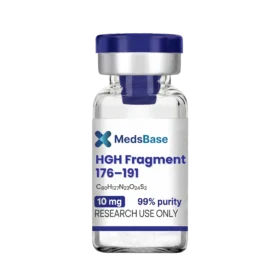
Frammento HGH 176-191
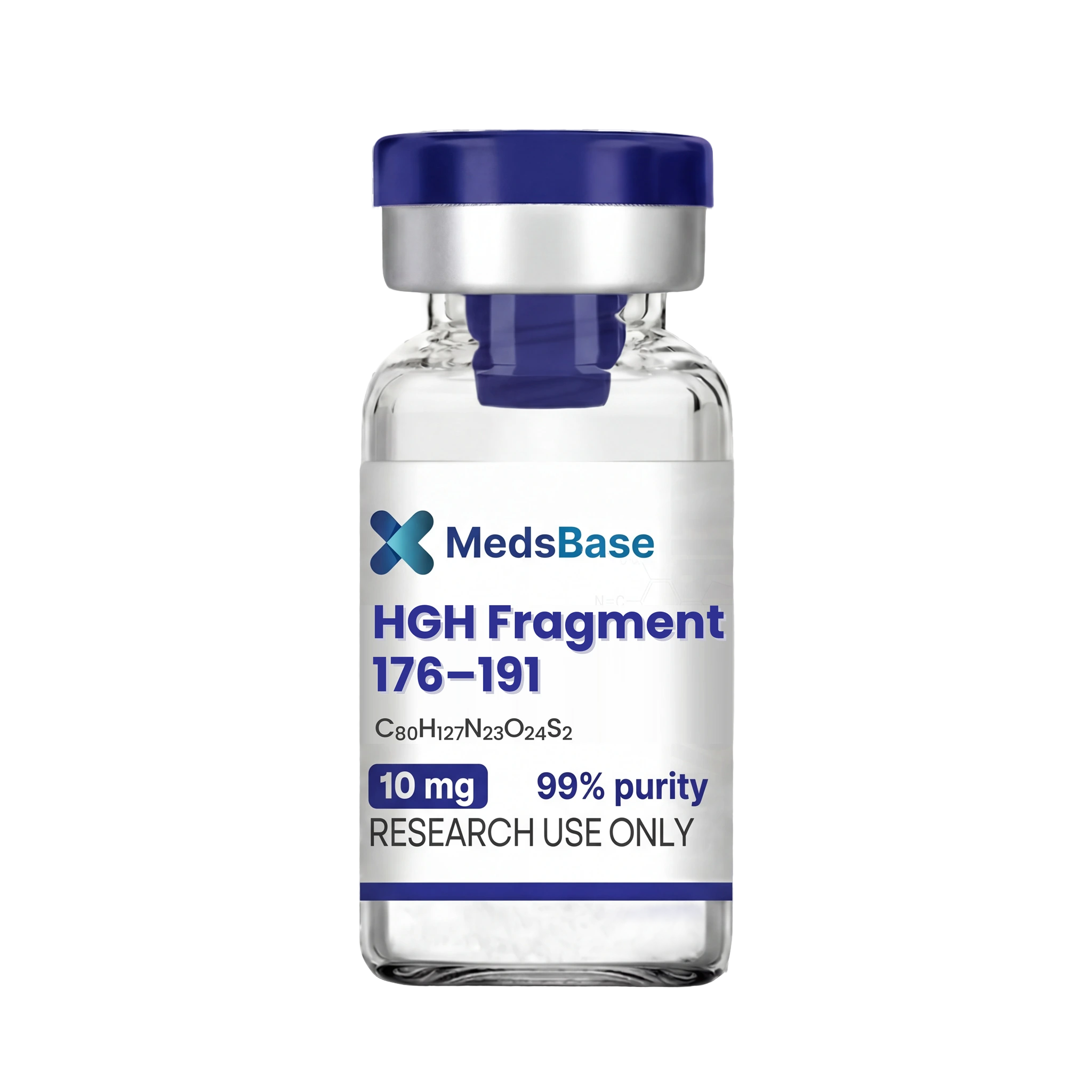
✅ Frammento C-terminale a 16-aa dell'ormone della crescita umano
✅ Mantiene l'attività lipolitica, nessun legame con il recettore dell'GH
✅ Nessuna induzione di IGF-1 o effetti promotori della crescita
✅ Lipolysis-only tool (distinct from AOD9604)
✅ Purezza ≥99% HPLC, COA disponibile su richiesta
Frammento HGH 176-191 contiene composto peptidico sintetico.
✓ Revisionato da esperti medici Morgan Ellis — Ricercatore Farmaceutico · 8 anni di esperienza · Ultima revisione: maggio 2026
Risposta rapida — Cos'è il frammento HGH 176-191?
Frammento HGH 176-191 è un peptide sintetico di 16 amminoacidi corrispondente ai residui C-terminali 176-191 dell' ormone della crescita umano. In published studies it retains the lipolytic (fat-mobilising) and glucose-modulating activity of the parent HGH molecule but lacks GH-receptor binding affinity and therefore does not activate IGF-1 production, chondrocyte signalling, or any of the growth-promoting effects of full-length HGH. Sequence: YLRIVQCRSVEGSCGF. Supplied in 5–15 mg lyophilized vials.
📦 Ogni ordine è coperto dalla nostra Politica di Garanzia di Rispedizione — se il tuo pacco non arriva entro 20 giorni lavorativi, lo rispediamo.
| Specifiche | Dettaglio |
|---|---|
| Numero CAS | 66004-57-7 (Frammento HGH 176-191; distinto da AOD9604 CAS 221231-10-9) |
| Formula Molecolare | C78H125N23O23S2 |
| Peso molecolare | 1817.06 Da |
| Sequenza | Tyr-Leu-Arg-Ile-Val-Gln-Cys-Arg-Ser-Val-Glu-Gly-Ser-Cys-Gly-Phe (YLRIVQCRSVEGSCGF, 16 amminoacidi; posizioni 176–191 dell'ormone della crescita umano nativo, conservando il ponte disolfuro Cys182–Cys189 della molecola parentale) |
| Forma | Polvere liofilizzata (da bianca a biancastra) |
| Purezza | ≥99% (verificato con HPLC, COA disponibile su richiesta) |
| Conservazione | Liofilizzato: 2–8 °C (frigorifero) per lo stock di lavoro; −20 °C per lo stoccaggio a lungo termine di flaconcini non aperti. Ricostituito: 2–8 °C, utilizzare entro ~30 giorni. Proteggere dalla luce. Non congelare e scongelare la soluzione ricostituita. |
| Solubilità | Acqua batteriostatica (consigliata) o acqua sterile per finestre d'uso più brevi |
Cos'è il Frammento HGH 176-191?
Frammento HGH 176-191 is a 16-amino-acid synthetic peptide corresponding to the C-terminal residues 176 through 191 of native human growth hormone. The fragment was identified through structure-function studies on HGH conducted at Monash University in the 1990s, when investigators systematically truncated and modified the HGH molecule to map the regions responsible for each of its multiple biological activities. The 176-191 region proved to retain the lipolytic (fat-mobilising) and antilipogenic activity of full-length HGH while completely losing the GH-receptor-binding domain that resides in the N-terminal portion of the parent molecule. The well-characterised sequence is YLRIVQCRSVEGSCGF with the native Cys182–Cys189 intramolecular disulfide bridge preserved (these become Cys7–Cys14 within the fragment numbering). Molecular weight 1817.06 Da, empirical formula C78H125N23O23S2. Il Frammento HGH 176-191 è strutturalmente e farmacologicamente distinto da AOD9604 — an analog developed by Metabolic Pharmaceuticals that adds an N-terminal tyrosine substitution (creating Tyr-HGH 177-191) and modifies the disulfide bridge. AOD9604 has its own CAS (221231-10-9) and pharmacological profile and should not be confused with the unmodified 176-191 fragment supplied here. HGH Fragment 176-191 is supplied as a high-purity lyophilized powder for reconstitution with bacteriostatic water. The fragment is dalla FDA, EMA, MHRA o da qualsiasi altro importante regolatore per uso terapeutico umano. Il DSIP di grado di ricerca venduto qui è fornito by the FDA, EMA, MHRA, or any other major regulator for human therapeutic use. For the full-length parent molecule, see our HGH 191AA pagina prodotto.
Meccanismo d'azione — Attività lipolitica senza legame al recettore GH
Ciò che rende meccanicamente distintivo il frammento HGH 176-191 è la separazione della lipolisi dalla segnalazione dell'asse della crescita — one of the cleanest examples of structure-function dissection in peptide pharmacology studies:
- Assenza di legame al recettore GH — La superficie di legame al recettore GH dell'HGH nativo è contenuta nella porzione N-terminale della molecola (regione residui 1-120), non nel frammento C-terminale 176-191. Di conseguenza, il frammento HGH 176-191 NON si lega al recettore dell'ormone della crescita (GHR), NON attiva la segnalazione JAK2/STAT5, NON induce la produzione epatica di IGF-1 e NON produce alcuno degli effetti promuoventi la crescita, stimolanti i condrociti o contro-regolatori dell'insulina della molecola HGH 191AA molecule. This is the defining negative pharmacological property and the basis for its studies utility as a lipolysis-axis-isolating tool.
- Attività lipolitica preservata — Published studies has documented that HGH Fragment 176-191 retains the fat-mobilising activity of full HGH at adipocytes. The exact molecular target underlying the lipolytic effect remains an active studies question; proposed mechanisms include direct action on adipocyte beta-3 adrenergic receptors, modulation of hormone-sensitive lipase, and altered fatty-acid oxidation kinetics. The lipolytic signal is preferentially observed in visceral adipose tissue depots in some published rodent studies, paralleling but mechanistically distinct from the Tesamorelin visceral-adiposity signal.
- Attività antilipogenica — In addition to stimulating fat mobilisation, HGH Fragment 176-191 suppresses lipogenic gene expression in adipocyte study models — reducing the rate of new fat storage in parallel with increasing fat mobilisation. The two effects produce a net negative-fat-balance signal in adipose tissue.
The structure-function-decoupling property is the principal scientific reason HGH Fragment 176-191 has remained in active studies despite never reaching regulatory approval as a stand-alone therapeutic. It is a useful tool for users who want to study HGH’s lipolytic effects independently from its growth-promoting effects — a separation that is impossible to achieve with full-length HGH or with GH secretagogues that drive endogenous full-length GH release. Plasma half-life is short (~30 minutes); subcutaneous administration is the standard administration route.
Published Evidence
HGH Fragment 176-191 is used in clinical contexts that investigate:
- Farmacologia della lipolisi degli adipociti — caratterizzazione del meccanismo lipolitico isolato, studi sull'interazione con il recettore adrenergico beta-3, attivazione della lipasi ormono-sensibile, cinetica della mobilizzazione degli acidi grassi
- Obesity and body-composition studies — preclinical DIO rodent models, body-composition (DEXA/MRI), regional adipose-tissue depot effects (visceral vs subcutaneous), lipolysis-without-growth-axis-confound studies designs
- HGH structure-function studies — dissezione meccanicistica dei domini di attività promotori della crescita vs lipolitici all'interno dell'HGH nativo; il frammento 176-191 dell'HGH come strumento canonico “solo lipolisi”, con HGH 191AA come comparatore di attività completa
- Lipogenic gene-expression studies — differenziazione degli adipociti, formazione delle gocce lipidiche, interazioni con le vie PPARγ e SREBP-1
- Visceral adiposity studies — confronti diretti con Tesamorelin as the GHRH-axis visceral-fat-reducing tool; published interest in dissecting GH-receptor-dependent vs GH-receptor-independent visceral-fat-loss mechanisms
- Glucose homeostasis studies — unlike full-length HGH, HGH Fragment 176-191 does not produce the insulin-counter-regulatory effects observed with parent HGH; published studies uses this difference to dissect direct GH glycaemic effects
- Comparative HGH-axis studies — benchmarking rispetto a HGH 191AA (precursore a lunghezza intera), Tesamorelin (analogo del GHRH per il grasso viscerale), e Sermorelin / CJC-1295 (stimolatori dell'asse GHRH).
For broader context on where HGH Fragment 176-191 fits within the growth-axis and adipose-tissue studies landscape, see HGH 191AA come peptide precursore a lunghezza intera, Tesamorelin per l'approccio all'adiposità viscerale tramite l'asse GHRH, e Sermorelin + CJC-1295 con DAC for endogenous GH-pulse support. Browse the full catalogo peptidi per composti correlati.
Concentrazioni e Dosaggi Disponibili
MedsBase stocks HGH Fragment 176-191 in three lyophilized vial sizes calibrated to typical protocol lengths. Each strength is available in 10-vial, 20-vial, or 30-vial pack formats with full reconstitution guidance:
| Dosaggio per Flaconcino | Caso d'Uso Tipico | Dimensioni della Confezione |
|---|---|---|
| 5 mg | Short protocols, pilot dosing, single-cohort lipolysis studies | 10, 20 o 30 fiale |
| 10 mg | Standard strength, multi-week protocols | 10, 20 o 30 fiale |
| 15 mg | Protocolli a ciclo esteso, costo per mg più basso, studi su coorti multiple | 10, 20 o 30 fiale |
All three strengths are the same chemical form (lyophilized powder, 99%+ HPLC purity). Higher-mg vials require smaller reconstitution volumes per unit dose, which is useful when users want to minimise injection volume in rodent protocols.
Come si confronta — Frammento HGH 176-191 vs HGH 191AA
Frammento HGH 176-191 e HGH 191AA are a structure-function decoupled pair — the fragment is literally a piece of the full-length parent. Comparing them isolates the GH-receptor-binding activity (present in full-length, absent in fragment) from the lipolytic activity (present in both). The comparison is one of the cleanest mechanistic dissections available in current growth-axis studies.
| Criterio | Frammento HGH 176-191 | HGH 191AA (a lunghezza completa) |
|---|---|---|
| Lunghezza | 16 aminoacidi (~1,8 kDa) | 191 aminoacidi (~22 kDa) |
| Legame al recettore GH | No (il dominio di legame è N-terminale) | Sì (molecola a lunghezza completa) |
| Induzione IGF-1 | Nessuno | Induzione epatica sostanziale |
| Attività lipolitica | Sì (conservata) | Sì (attività completa del genitore) |
| Effetti promotori della crescita | Nessuno | Sostanziali (peptide anabolico canonico) |
| Effetto contro-regolatorio dell'insulina | No | Sì (resistenza insulinica transitoria) |
| Emivita plasmatica | ~30 minuti | ~3–5 ore |
| Uso clinico approvato | Nessuno | Multiple indicazioni (Genotropin, Humatrope, ecc.) |
| Dosaggio tipico | 200–500 mcg, 1–3 volte al giorno | 1–8 UI per somministrazione |
For studies interested in isolated lipolysis pharmacology without the confound of GH-receptor-driven growth and metabolic effects, HGH Fragment 176-191 is the canonical “lipolysis-only” tool. For studies investigating the full GH/IGF axis or comparing with secretagogue-driven endogenous GH release, HGH 191AA is the appropriate full-length reference. Many published studies designs use both in parallel arms to dissect which HGH effects depend on GH-receptor signalling vs which arise from the C-terminal lipolytic mechanism.
Conservazione e ricostituzione
Prima della ricostituzione: conservare i flaconcini liofilizzati refrigerati a 2–8 °C nella confezione originale per lo stock di lavoro a breve termine. Per lo stoccaggio a lungo termine non aperto, congelare a −20 °C. Il frammento HGH 176-191 liofilizzato è stabile sotto refrigerazione fino a 24 mesi e a −20 °C fino a 36 mesi. Evitare cicli di congelamento-scongelamento sulla polvere liofilizzata. Come altri peptidi con ponti disolfuro, l'attività del frammento dipende dal legame intatto Cys182–Cys189 (numerazione del frammento Cys7–Cys14) — una manipolazione che interrompe il disolfuro degrada l'attività. Procedura di ricostituzione: iniettare acqua batteriostatica lungo la parete laterale del flaconcino del peptide (non direttamente sul panetto liofilizzato). Per un flaconcino da 5 mg, 2,0 mL di acqua batteriostatica producono una concentrazione di lavoro di 2,5 mg/mL — 0,04 mL forniscono 100 mcg; 0,1 mL forniscono 250 mcg; 0,2 mL forniscono 500 mcg. Agitare delicatamente — non not scuotere — e attendere 2–5 minuti per la completa dissoluzione. Una soluzione ricostituita correttamente dovrebbe essere chiara e incolore. Dopo la ricostituzione: conservare refrigerato a 2–8 °C e utilizzare entro 30 giorni per una stabilità ottimale. Non congelare la soluzione ricostituita — i cicli di congelamento-scongelamento degradano l'integrità del peptide e possono interrompere il legame disolfuro. Scartare qualsiasi flaconcino che presenti torbidità, precipitato o scolorimento.
Domande frequenti
What is HGH Fragment 176-191 used for in studies?
HGH Fragment 176-191 is used in studies investigating isolated adipocyte lipolysis pharmacology, obesity and body-composition regulation without growth-axis confound, HGH structure-function dissection, lipogenic gene-expression regulation, regional adipose-tissue depot effects, and comparative GH-axis vs lipolysis-only studies designs. It is the canonical “lipolysis-only” peptide derived from native HGH. The pharmaceutical-grade HGH Fragment 176-191 sold here is not FDA-approved and is supplied strictly for clinical studies use only.
In cosa differisce il frammento HGH 176-191 dall'HGH 191AA?
Il frammento HGH 176-191 è composto da soli 16 amminoacidi — la porzione C-terminale dell'HGH completo a 191 amminoacidi. Questo frammento manca del dominio di legame al recettore GH (che si trova nella porzione N-terminale della molecola originale), quindi NON si lega al GHR, NON induce IGF-1 e NON produce alcuno degli effetti promotori della crescita o contro-regolatori dell'insulina dell'HGH completo. Conserva solo l'attività lipolitica e antilipogenica. HGH 191AA è la molecola originale a lunghezza completa con attività sia lipolitica CHE sul sistema della crescita.
In cosa differisce il frammento HGH 176-191 dall'AOD9604?
Si tratta di composti distinti that are frequently confused. HGH Fragment 176-191 (CAS 66004-57-7) is the unmodified C-terminal fragment of native HGH. AOD9604 (CAS 221231-10-9) is a modified analog developed by Metabolic Pharmaceuticals — specifically, AOD9604 adds an N-terminal tyrosine substitution producing Tyr-HGH 177-191, with engineered changes to the disulfide bridge for improved stability and oral bioavailability studies. The two have related but distinct pharmacology. This product is the unmodified 176-191 fragment, not AOD9604.
What is the typical HGH Fragment 176-191 dose?
Published preclinical protocols typically use 200–500 mcg per administration, given subcutaneously 1–3 times daily for 4–12 week cycles. A 5 mg vial reconstituted with 2.0 mL bacteriostatic water yields 2.5 mg/mL — 0.04 mL equals 100 mcg, 0.2 mL equals 500 mcg.
Il frammento HGH 176-191 è approvato dalla FDA?
No. HGH Fragment 176-191 is not approved by the FDA, EMA, MHRA, or any other major regulator for human therapeutic use. The related compound AOD9604 was investigated in clinical trials for obesity but did not achieve regulatory approval.
Come deve essere conservato il frammento HGH 176-191?
Flaconcini liofilizzati: refrigerati a 2–8 °C per scorte di lavoro a breve termine, o −20 °C per lo stoccaggio a lungo termine di flaconcini non aperti. Soluzione ricostituita: refrigerata a 2–8 °C, utilizzare entro 30 giorni. Non congelare la soluzione ricostituita — i cicli di congelamento-scongelamento degradano il peptide e possono interrompere il ponte disolfuro essenziale Cys182–Cys189. Proteggere sempre dalla luce diretta.
Come si ricostituisce il frammento HGH 176-191?
Seguire la procedura di ricostituzione sopra indicata. Aggiungere acqua batteriostatica lungo la parete laterale del flaconcino (non direttamente sulla polvere liofilizzata), agitare delicatamente e attendere 2-5 minuti per la completa dissoluzione. Non not Agitare delicatamente il flaconcino — un'agitazione vigorosa può interrompere il legame disolfuro. Una soluzione correttamente ricostituita è limpida e incolore. Per un flaconcino da 5 mg + 2,0 mL di diluente, la concentrazione di lavoro è di 2,5 mg/mL.
Quali dosaggi sono disponibili su MedsBase?
MedsBase carries HGH Fragment 176-191 in 5 mg, 10 mg, and 15 mg lyophilized vials. Each strength is available in 10-vial, 20-vial, or 30-vial pack sizes. All vials are supplied at 99%+ HPLC purity with a certificate of analysis available on request.
Perché il frammento HGH 176-191 non influisce sull'IGF-1?
The GH-receptor-binding surface of native human growth hormone is located in the N-terminal portion of the 191-amino-acid molecule, not in the C-terminal 176–191 region. Because the fragment lacks the receptor-binding domain, it cannot activate the GH receptor; without GHR activation, the downstream JAK2/STAT5 signalling cascade that drives hepatic IGF-1 transcription is not engaged. This structural-functional decoupling is the principal scientific reason the fragment retains studies interest as a lipolysis-isolating tool.
Da dove deriva l'attività lipolitica se non dal legame al recettore GH?
The exact molecular target of HGH Fragment 176-191’s lipolytic action remains an active studies question. Proposed mechanisms include direct interaction with adipocyte beta-3 adrenergic receptors, modulation of hormone-sensitive lipase activity, and altered fatty-acid oxidation kinetics in adipose tissue. The fragment also suppresses lipogenic gene expression, suggesting it acts on multiple adipocyte-specific pathways simultaneously. Published studies continues to characterise the exact receptor or binding-site target.
Does HGH Fragment 176-191 cause side reported effects?
Published preclinical studies has documented a notably clean safety profile at typical doses, with the main on-target effect being lipolysis. The absence of GH-receptor binding means none of the GH-axis side effects observed with full-length HGH (transient insulin resistance, joint discomfort, sodium retention, mitogenic signalling) are present. Long-term human safety data is limited because the unmodified fragment has not undergone modern regulatory review (though the related AOD9604 has been investigated more extensively in clinical trials).
Qual è l'emivita del frammento HGH 176-191?
In preclinical studies, HGH Fragment 176-191 has a plasma half-life of approximately 30 minutes following subcutaneous administration — shorter than full-length HGH (~3–5 hours) due to the smaller molecular size and absence of albumin-binding modifications. The short half-life means typical protocols use multiple daily administrations or continuous-release formulations for sustained-exposure work.
How long does HGH Fragment 176-191 take to show effects in preclinical studies?
Acute effects on adipocyte lipolysis and fatty-acid mobilisation are detectable within hours of administration. Body-composition effects in DIO rodent models typically become statistically significant after 2–4 weeks of regular dosing and continue to accrue through 8–12 weeks of continuous administration. The kinetics are similar to other adipose-tissue-targeted compounds.
Posso ordinare il frammento HGH 176-191 per la spedizione internazionale?
Sì. MedsBase spedisce il frammento HGH 176-191 in tutto il mondo dalla nostra rete dedicata di spedizione di peptidi. Gli ordini contenenti solo peptidi si qualificano per il nostro servizio di spedizione autonomo per peptidi. Tutti gli ordini vengono spediti in imballaggi a temperatura controllata con tracciamento completo e sono coperti dal nostro Politica di Garanzia di Rispedizione.
Other Peptides for Adipose, Growth-Axis, and Body-Composition Studies
- HGH 191AA — Ormone della crescita umano ricombinante a lunghezza completa — la molecola genitore di questo frammento
- Tesamorelin — GHRH analog — visceral adipose-tissue studies; FDA-approved for HIV-associated lipodystrophy
- CJC-1295 con DAC — Long-acting GHRH analog — endogenous GH-pulse support
- Sermorelin — GHRH(1-29) analog — short-acting GHRH use
- Ipamorelin — Selective growth hormone secretagogue — clean GH pulse studies
Approfondimenti
📖 Explore the HGH-axis studies landscape
Sfoglia l'intera catalogo peptidi, con composti correlati all'asse della crescita inclusi HGH 191AA (precursore a lunghezza intera), Tesamorelin (analogico del GHRH per l'adiposità viscerale), Sermorelin e CJC-1295 con DAC for endogenous-pulse studies.
Altre opzioni in Peptidi
Classificate in base al volume di ordini recenti su MedsBase — ciò che scelgono altri clienti in questa categoria.
| Dosaggio | 5 mg, 10 mg, 15 mg |
|---|---|
| Quantità | 10 Flaconcini, 20 Flaconcini, 30 Flaconcini |
 Frammento HGH 176-191
Domande e risposte
Frammento HGH 176-191
Prodotti correlati
Recensioni
Non ci sono ancora recensioni