







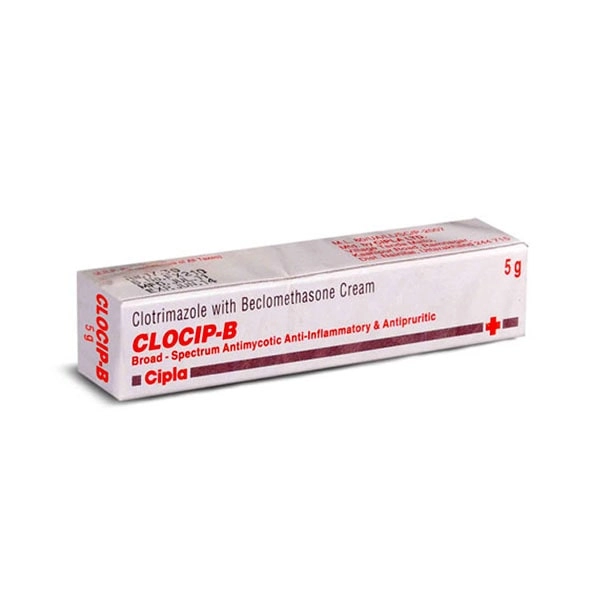
Clocip B Cream
✅ Θεραπεύει μυκητιασικές δερματικές λοιμώξεις
✅ Ανακουφίζει τον κνησμό και τη φλεγμονή
περιέχει Κλοτριμαζόλη και Μπεκλομεθαζόνη
✓ Ιατρικά ελεγμένο από Morgan Ellis — Ερευνητής Φαρμακευτικής · 8 χρόνια εμπειρία · Τελευταία αναθεώρηση: Μάιος 2026
⚡ Γρήγορη Απάντηση — Τι είναι το Clocip B Cream;
Clocip B Cream είναι μια τοπική κρέμα διπλής δράσης που συνδυάζει κλοτριμαζόλη 1% (αντιμυκητιακό) και βεκομεθαζόνη διπροπιονική 0.025% (κορτικοστεροειδές). Χρησιμοποιείται για τη θεραπεία μυκητιακές δερματικές λοιμώξεις που συνοδεύονται από φλεγμονή — τινέα (δερματομύκητας, πόδι αθλητή, δερματίτιδα της βουβωνικής χώρας), Candida intertrigo και φλεγμονώδης σμηγματορροϊκή δερματίτιδα. Εφαρμόστε μια λεπτή στρώση στην πληγείσα περιοχή δύο φορές την ημέρα. Χρήση μόνο για σύντομο χρονικό διάστημα (συνήθως 2 εβδομάδες)· μεγαλύτερες περιόδοι κινδυνεύουν με λεπτότητα δέρματος λόγω στεροειδών.
📦 Κάθε παραγγελία καλύπτεται από την Πολιτική Εγγύησης Επαναποστολής — εάν το δέμα σας δεν φτάσει εντός 20 εργάσιμων ημερών, το επαναποστέλλουμε.
Γιατί να παραγγείλετε από τη MedsBase
Τα γενόσημα φάρμακά μας προέρχονται από κατασκευαστές που πιστοποιούνται από την WHO-GMP και αποστέλλονται παγκοσμίως σε διακριτική, απλή συσκευασία — χωρίς όνομα φαρμάκου στο εξωτερικό του δέματος. Οι πληρωμές με κάρτα δρομολογούνται μέσω ρυθμισμένου επεξεργαστή (οι περιγραφές εκκαθάρισης περιλαμβάνουν ρυθμισμένο επεξεργαστή πληρωμών με κάρτα — ποτέ “MedsBase” ή οποιοδήποτε όνομα φαρμάκου). Γίνονται δεκτές και πληρωμές με κρυπτονομίσματα και τραπεζική μεταφορά SEPA. Κάθε παραγγελία καλύπτεται από την Πολιτική Επαναποστολής Εξασφαλίσεώς μας.
Clocip B Cream είναι τοπική κρέμα συνδυασμού που περιέχει δύο συμπληρωματικά ενεργά συστατικά: clotrimazole 1% w/w, ένα ευρέος φάσματος αντιμυκητιασικό της ομάδας των ιμιδαζολικών, και διπροπιονική βεκλομεθαζόνη 0.025% w/w, ένα μετρίου δυναμικότητας τοπικό κορτικοστεροειδές. Προμήθευται σε βολικό σωληνάριο για εξωτερική χρήση, σχεδιασμένο για μυκητιασικές καταστάσεις του δέρματος όπου φαγούρα, ερυθρότητα και φλεγμονή είναι σημαντικά παράλληλα με την ίδια τη μόλυνση.
Η συνδυαστική προσέγγιση επιλύει ένα κοινό κλινικό πρόβλημα: οι καθαρές αντιμυκητιακές κρέμες θεραπεύουν τον μύκητα αλλά αφήνουν τη φλεγμονή να ηρεμήσει από μόνη της, κάτι που μπορεί να διαρκέσει μέρες. Οι καθαροί στεροειδείς ηρεμούν τη φλεγμονή αλλά μπορεί να επιδεινώσουν μια αντιμετωπίσιμη μυκητιασική λοίμωξη. Ο συνδυασμός και των δύο προσφέρει γρήγορη ανακούφιση των συμπτωμάτων συν ενεργή θεραπεία, γι' αυτό το Clocip B και παρόμοιοι συνδυασμοί είναι μεταξύ των πιο συνταγογραφούμενων δερματολογικών προϊόντων παγκοσμίως.
Τι είναι η κρέμα Clocip B;
Το Clocip B είναι ένα συνταγογραφούμενο τοπικό συνδυαστικό προϊόν που χρησιμοποιείται για φλεγμονώδεις μυκητιασικές δερματικές παθήσεις. Περιέχει:
- Clotrimazole 1% — ένα αντιμυκητιακό της ομάδας των ιμιδαζολών ενεργό κατά των δερματοφύτων (Trichophyton, Microsporum, Epidermophyton), ζυμομυκήτων (Candida albicans), και Malassezia furfur
- Beclomethasone dipropionate 0.025% — ένας τοπικός κορτικοστεροειδής μέτριας ισχύος που μειώνει την ερυθρότητα, τον κνησμό, τον πρηξιμό και την απολέπιση
Το Clocip B Cream συνήθως συνταγογραφείται για:
- Tinea corporis (δερματομυκητίαση του σώματος)
- Tinea cruris (δερματομυκητίαση της βουβωνικής χώρας)
- Tinea pedis (δερματομυκητίαση των ποδιών)
- Tinea manuum (δερματομυκητίαση των χεριών)
- Candidal intertrigo — μυκητιασική λοίμωξη στις δερματικές πτυχές (κάτω από τα στήθη, τη βουβωνική χώρα, τις μασχάλες)
- Φλεγμονώδης σεβορροϊκή δερματίτιδα όπου μια Malassezia υποψιάζεται ότι είναι συστατικό
- Δερματίτιδα από πάνα με υπερανάπτυξη κανδιντίασης — μόνο σύντομες θεραπείες, υπό παιδιατρική επίβλεψη
Πώς λειτουργεί η Κρέμα Clocip B;
Οι δύο ενεργές ουσίες στοχεύουν την μυκητιασική λοίμωξη και την φλεγμονώδη αντίδραση παράλληλα:
- Clotrimazole αναστέλλει το μυκητιακό ένζυμο κυτοχρώματος P450 14-α-απομεθυλάση. Αυτό εμποδίζει τη μετατροπή της λανοστερόλης σε εργοστερόλη — το κύριο στερόλιο των μυκητιακών κυτταρικών μεμβρανών. Το αποτέλεσμα είναι μια διαταραγμένη, διαρροϊκή μυκητιακή μεμβράνη και θάνατος του κυττάρου
- Διπροπιονική βεκλομεθαζόνη δεσμεύει ενδοκυτταρικούς υποδοχείς γλυκοκορτικοειδών, μετακινείται στον πυρήνα και καταστέλλει τη μεταγραφή των προ-φλεγμονωδών κυτοκινών, χημειοκινών και μορίων προσκόλλησης. Κλινικά, αυτό μεταφράζεται σε ταχεία μείωση του κνησμού, της ερυθρότητας και του οιδήματος
- Η έναρξη της αντιμυκητιακής δράσης είναι σταδιακή — αναμένεται κλινική βελτίωση σε 1–2 εβδομάδες. Η αντιφλεγμονώδης ανακούφιση συνήθως γίνεται αισθητή εντός 24–48 ωρών
Χρήσεις και ενδείξεις
- Φλεγμονώδεις μυκητιασικές λοιμώξεις (tinea) — ειδικά όταν η αρχική θεραπεία με μόνο αντιμυκητιασικό έχει αποτύχει ή όταν η φλεγμονή είναι έντονη
- Candidal intertrigo σε δερματικές πτυχές
- Εξωτερική ωτίτιδα με μυκητιασικό συστατικό — υπό ιατρική επίβλεψη, μόνο στον εξωτερικό ακουστικό πόρο
- Εκζεματοποιημένες μυκητιασικές λοιμώξεις — σύντομη θεραπεία για να ηρεμήσει τη φλεγμονή ενώ το αντιμυκητιασικό εξαλείφει τον οργανισμό
Δοσολογία και Εφαρμογή της Κρέμας Clocip B
| Ενδείξεις | Εφαρμογή | Διάρκεια |
|---|---|---|
| Tinea corporis / cruris / manuum | Λεπτό στρώμα δύο φορές ημερησίως | 2 εβδομάδες· συνεχίστε για 1 εβδομάδα μετά την εξάλειψη |
| Tinea pedis (ποδιά του αθλητή) | Λεπτό στρώμα δύο φορές ημερησίως σε καθαρά, ξηρά πόδια | Έως 4 εβδομάδες |
| Candidal intertrigo | Λεπτό στρώμα δύο φορές ημερησίως, διατηρήστε την περιοχή ξηρή | 1–2 εβδομάδες |
| Εφαρμογή στο πρόσωπο | Περιορισμένη εφαρμογή, μία φορά ημερησίως | Μέγιστη διάρκεια 5–7 ημερών — κίνδυνος στεροειδούς ροδόχρου |
| Παιδιατρική χρήση (εκτός ετικέτας) | Λεπτό στρώμα μία φορά ημερησίως υπό ειδικευμένη επίβλεψη | Μόνο 3–5 ημέρες στις πτυχές του δέρματος |
| Μέγιστη περιοχή θεραπείας | Αποφύγετε την εφαρμογή σε >10% της επιφάνειας του σώματος | Υψηλότερη συστητική απορρόφηση στεροειδών |
| Μέγιστη διάρκεια | Μην χρησιμοποιείτε για περισσότερο από 2 εβδομάδες χωρίς επανεξέταση | Η παρατεταμένη χρήση συνεπάγεται κίνδυνο στεροειδικής ατροφίας |
Πώς να Εφαρμόσετε Σωστά την Κρέμα Clocip B
- Πλύνετε και στεγνώστε τοποθετημένο δέρμα προσεκτικά πριν από κάθε εφαρμογή
- Εφαρμόστε μια λεπτή στρώση — μια ποσότητα στο μέγεθος μπιζελιού καλύπτει περίπου την επιφάνεια μιας παλάμης. Περισσότερο δεν σημαίνει καλύτερο
- Τρίψτε μέχρι να απορροφηθεί· μην καλύπτετε με σφιχτούς επίδεσμους (αυξάνει την απορρόφηση του στεροειδούς)
- Πλύνετε τα χέρια μετά την εφαρμογή (εκτός αν τα χέρια είναι η περιοχή θεραπείας)
- Συνεχίστε για 1 εβδομάδα μετά την ορατή εξάλειψη για την πρόληψη υποτροπής
- Κάντε δεν απλώστε στο πρόσωπο, την βουβωνική χώρα ή τις πτυχές του δέρματος για περισσότερες από 5–7 ημέρες χωρίς ιατρική αξιολόγηση
- Κάντε δεν καλύψτε με πλαστικούς επίδεσμους ή πάνες — η απόφραξη ενισχύει την απορρόφηση των στεροειδών και μπορεί να προκαλέσει συστημικές επιπτώσεις σε βρέφη
- Εάν τα συμπτώματα επιδεινωθούν ή δεν βελτιωθούν εντός 2 εβδομάδων, διακόψτε και συμβουλευτείτε το γιατρό σας — το πρόβλημα μπορεί να μην είναι μυκητιασικό
Παρενέργειες της Κρέμας Clocip B
Οι σύντομες θεραπείες (1–2 εβδομάδες) συνήθως ανέχονται καλά. Οι περισσότερες παρενέργειες σχετίζονται με το κορτικοστεροειδές συστατικό και εμφανίζονται με παρατεταμένη ή ακατάλληλη χρήση.
| Βαρύτητα | Παρενέργεια |
|---|---|
| Συχνές (≥1 στους 100) | Ήπιο κάψιμο ή τσούξιμο στην πρώτη εφαρμογή, ξηρό δέρμα, παροδική ερυθρότητα |
| Ασυνήθιστες | Επαφής δερματίτιδα, κνησμός, υποχρωματικότητα σε χρωματισμένο δέρμα |
| Με παρατεταμένη χρήση (>2 εβδομάδες ή μεγάλες περιοχές) | Ατροφία του δέρματος (λεπτό δέρμα), τηλεγγειεκτασίες, ραβδώσεις (στίγματα), ακνεοειδές εξάνθημα, περιορική δερματίτιδα, στεροειδής ροδόχρους |
| Σπάνιες | Αλλεργική δερματίτιδα επαφής από κλοτριμαζόλη ή βοηθητικές ουσίες, κρυφή μυκητιασική λοίμωξη (“tinea incognito”), συστημική απορρόφηση με καταστολή των επινεφριδίων (ισχυρό στεροειδές, απόφραξη μεγάλων περιοχών, βρέφη) |
Διακόψτε και ζητήστε ιατρική αξιολόγηση εάν η περιοχή γίνει ορατά πιο λεπτή, αναπτυχθούν ραβδώσεις, επιδεινωθεί μετά από 2 εβδομάδες χρήσης ή εάν αναπτυχθεί ισχυρό εξάνθημα αλλεργικού τύπου.
Προειδοποιήσεις και προφυλάξεις
- Δεν προορίζεται για βακτηριακές ή ιογενείς δερματικές λοιμώξεις. Το Clocip B δεν περιέχει αντιβακτηριακό ή αντιιικό συστατικό. Μην το χρησιμοποιείτε σε αμυγδαλίτιδα, έρπητα, ανεμοβλογιά ή ιογενείς κονδυλώσεις
- Χρήση στο πρόσωπο. Αυστηρά βραχυπρόθεσμη χρήση (≤7 ημέρες) — η παρατεταμένη χρήση προκαλεί στεροειδή ροδόχρωση και περιστοματική δερματίτιδα
- Δερματικές πτυχές και γεννητική περιοχή. Αυτές είναι φυσικές αποφρακτικές ζώνες και ενισχύουν την απορρόφηση των στεροειδών — κρατήστε τις θεραπείες σύντομες
- Βρέφη και μικρά παιδιά. Ο υψηλότερος λόγος επιφάνειας δέρματος προς σωματικό βάρος σημαίνει μεγαλύτερη συστηματική απορρόφηση. Χρησιμοποιείστε μόνο υπό παιδιατρική επίβλεψη
- Εγκυμοσύνη/θηλασμός. Η βραχυπρόθεσμη χρήση σε μικρές περιοχές θεωρείται γενικά ασφαλής· αποφύγετε την εφαρμογή στην περιοχή του στήθους κατά τον θηλασμό
- Tinea incognito. Όταν η tinea αντιμετωπίζεται μόνο με στεροειδή, μπορεί να φαίνεται βελτιωμένη αλλά συνεχίζει να εξαπλώνεται κάτω από την στεροειδή κάλυψη. Η προσθήκη κλοτριμαζόλης σε αυτόν τον συνδυασμό μειώνει αυτόν τον κίνδυνο, αλλά αν τα όρια του εξανθήματος συνεχίζουν να προχωρούν, η διάγνωση πρέπει να επανεξεταστεί
- Επαφή με μάτια. Δεν προορίζεται για οφθαλμική χρήση· πλύνετε ενδελεχώς σε περίπτωση τυχαίας επαφής με μάτια
Αντενδείξεις — Ποιος ΔΕΝ Πρέπει να Χρησιμοποιεί την Κρέμα Clocip B
- Υπερευαισθησία στην κλοτριμαζόλη, την βεκλομεθαζόνη ή οποιοδήποτε βοηθητικό συστατικό
- Τουβερκουλώδεις, συφιλιτικές ή ιογενείς δερματικές λοιμώξεις (ανεμοβλογιά, έρπητα απλού, εμβολιασμός)
- Ροζατσέα και περιστοματική δερματίτιδα — τα στεροειδή προκαλούν ή επιδεινώνουν αυτές τις καταστάσεις
- Κοινή ακμή — τα στεροειδή προκαλούν ακνεοειδείς εκδηλώσεις
- Ελκωμένο δέρμα ή ανοιχτές πληγές
- Χρήση κάτω από αποφρακτικά επίδεσμα χωρίς ιατρική επίβλεψη
Αλληλεπιδράσεις Φαρμάκων
Η τοπική κλοτριμαζόλη και βεκλομεθαζόνη έχουν ελάχιστη συστηματική απορρόφηση σε κανονική χρήση, επομένως κλινικά σημαντικές φαρμακολογικές αλληλεπιδράσεις είναι σπάνιες.
| Παράγοντας | Αλληλεπίδραση |
|---|---|
| Άλλα τοπικά κορτικοστεροειδή | Μην συνδυάζετε — πρόσθετες στεροειδείς επιδράσεις και επιταχυνόμενη ατροφία |
| Τοπικά αντιβιοτικά (αν χρειάζεται) | Μπορεί να χρησιμοποιηθεί παράλληλα εάν υπάρχει δευτερογενής βακτηριακή λοίμωξη, αλλά σε ξεχωριστές εφαρμογές |
| Αλοιφή τακρολιμίου ή πιμεκρολιμίου | Μην εφαρμόζετε ταυτόχρονα· χρησιμοποιήστε χωριστά ή σύμφωνα με ειδικές οδηγίες |
| Οκλυσικά επίδεσμα | Ενισχύει τη διείσδυση των στεροειδών — αποφύγετε εκτός αν συνταγογραφηθεί |
| Συστημικά αζολικά μεγάλης επιφάνειας (κετοκοναζόλη) | Καμία κλινικά σχετική αλληλεπίδραση με τοπικό κλοτριμαζόλη |
Ενημερώστε το γιατρό σας για όλα τα τοπικά προϊόντα που χρησιμοποιείτε πριν ξεκινήσετε το Clocip B, συμπεριλαμβανομένων καλλυντικών, ενυδατικών κρεμάτων και χωρίς συνταγή στεροειδών.
Τι να Κάνετε σε Περίπτωση Υπερδοσολογίας
Η υπερδοσολογία τοπικής χρήσης (υπερβολική εφαρμογή ή κατά λάθος κατάποση) είναι απίθανο να προκαλέσει οξεία τοξικότητα με το περιεχόμενο ενός σωλήνα. Η παρατεταμένη χρήση σε μεγάλες επιφάνειες μπορεί να προκαλέσει συστημικές επιδράσεις στεροειδών — καταστολή των επινεφριδίων, χαρακτηριστικά Cushing. Εάν ένα μικρό παιδί καταπιεί την κρέμα, ζητήστε ιατρική συμβουλή.
Οδηγίες Αποθήκευσης
- Αποθηκεύστε σε θερμοκρασία κάτω από 30°C σε ξηρό μέρος, μακριά από άμεση ηλιακή ακτινοβολία
- Κλείστε καλά το σωλήνα μετά τη χρήση
- Μην καταψύχετε
- Κρατήστε μακριά από παιδιά και κατοικίδια
- Απορρίψτε οποιαδήποτε αχρησιμοποίητη κρέμα 6 μήνες μετά το πρώτο άνοιγμα ακόμα κι αν το προϊόν παραμένει
Σχετικές Εναλλακτικές Λύσεις στο MedsBase
Ψάχνετε για σχετικές αντιμυκητιακές ή τοπικές επιλογές;
- Clocip — κλοτριμαζόλη 1% μόνη της, όταν η φλεγμονή δεν είναι έντονο χαρακτηριστικό
- Κρέμα Betnovate-N — βεταμεθαζόνη + νεομυκίνη για φλεγμονώδεις βακτηριακές δερματικές λοιμώξεις
- Περιήγηση σε όλες τις θεραπείες κατά μυκήτων →
Συχνές Ερωτήσεις
Για τι χρησιμοποιείται η κρέμα Clocip B;
Η κρέμα Clocip B είναι μια τοπική αντιμυκητιακή + κορτικοστεροειδής που χρησιμοποιείται για μυκητιασικές λοιμώξεις του δέρματος με έντονη φλεγμονή — συμπεριλαμβανομένης της τρίχας (δερματομυκητίαση, αθλητικό πόδι, κνησμός αθλητή), καντιντιάσης intertrigo και φλεγμονώδης σεβορροϊκής δερματίτιδας.
Πόσο γρήγορα δρα η κρέμα Clocip B;
Η αντιφλεγμονώδης επίδραση (φαγούρα, ερυθρότητα) συνήθως γίνεται αισθητή εντός 24–48 ωρών. Η αντιμυκητιακή επίδραση παίρνει περισσότερο χρόνο — αναμένεται ορατή εξάλειψη σε 1–2 εβδομάδες.
Είναι το Clocip B το ίδιο με το Clocip;
Όχι. Clocip περιέχει μόνο κλοτριμαζόλη — ένα αντιμυκητιακό χωρίς στεροειδές. Το Clocip B προσθέτει διπροπιονική βεκλομεθαζόνη για ταχύτερη ανακούφιση των συμπτωμάτων. Χρησιμοποιήστε το Clocip όταν η φλεγμονή είναι ήπια· χρησιμοποιήστε το Clocip B όταν η φαγούρα και η ερυθρότητα είναι έντονες.
Μπορώ να χρησιμοποιήσω την κρέμα Clocip B στο πρόσωπό μου;
Μόνο βραχυπρόθεσμα (≤5–7 ημέρες) και με μέτρο. Το δέρμα του προσώπου απορροφά τα στεροειδή γρηγορότερα και είναι επιρρεπές σε στεροειδή ροδόχρωση και περιστοματική δερματίτιδα με παρατεταμένη χρήση.
Μπορώ να χρησιμοποιήσω το Clocip B στο παιδί μου;
Η χρήση σε παιδιά πρέπει να γίνεται υπό ιατρική επίβλεψη. Η μικρότερη αναλογία επιφάνειας σώματος προς βάρος σημαίνει υψηλότερη συστημική απορρόφηση των στεροειδών. Μπορεί να συνταγογραφηθούν σύντομες θεραπείες (3–5 ημερών) στις πτυχές του δέρματος, αλλά δεν πρέπει να εφαρμόζονται κάτω από πάνες ή οκλυσικά επίδεσμα.
Πόσο καιρό μπορώ να χρησιμοποιώ την κρέμα Clocip B;
Οι τυπικές θεραπείες διαρκούν 2 εβδομάδες. Εάν τα συμπτώματα παραμένουν μετά τις 2 εβδομάδες, διακόψτε τη χρήση και συμβουλευτείτε γιατρό — ίσως χρειαστεί επανεξέταση της διάγνωσης. Η συνεχής χρήση πέραν των 4 εβδομάδων κινδυνεύει με ατροφία του δέρματος, τηλεγγειεκτασίες και ακμή που προκαλείται από στεροειδή.
Μπορώ να χρησιμοποιήσω το Clocip B για ακμή;
Όχι. Το στεροειδές συστατικό μπορεί να προκαλέσει ή να επιδεινώσει την ακμή, τη ροδόχροα και τη δερματίτιδα γύρω από το στόμα. Το Clocip B δεν είναι κατάλληλο για τη θεραπεία της ακμής.
Μπορώ να χρησιμοποιήσω το Clocip B κάτω από πάνα ή οκλυσικό επίδεσμα;
Όχι χωρίς ιατρική συμβουλή. Η οκλυσία αυξάνει δραματικά την απορρόφηση των στεροειδών, γεγονός που είναι ιδιαίτερα επικίνδυνο σε βρέφη και σε μεγάλες επιφάνειες εφαρμογής. Χρησιμοποιήστε μόνο τυπικό ανοιχτό επίδεσμα.
Θα θεραπεύσει το Clocip B μια βακτηριακή λοίμωξη του δέρματος;
Όχι — κανένα από τα ενεργά συστατικά δεν είναι αντιβακτηριακό. Αν έχετε πυώδη έκζεμα ή μολυσμένο έκζεμα με βακτηριακή συμμετοχή, απαιτείται ένα συνδυασμένο αντιβιοτικό (π.χ. Κρέμα Betnovate-N ή ένα ξεχωριστό αντιβιοτικό) αντί αυτού.
Τι γίνεται αν το εξάνθημά μου επιστρέψει μετά τη διακοπή του Clocip B;
Οι επαναλαμβανόμενες μυκητιασικές λοιμώξεις συχνά υποδηλώνουν μια δεξαμενή (αθλητικό πόδι που επαναλαμβάνεται από μολυσμένα παπούτσια, καντιντιάση από επίμονη υγρασία). Αντιμετωπίστε την πηγή: διατηρήστε την περιοχή καθαρή και ξηρή, αλλάξτε υποδήματα, θεραπεύστε όλα τα επηρεαζόμενα μέλη του νοικοκυριού και σκεφτείτε μια μακρύτερη θεραπεία ή εναλλαγή σε ένα από του στόματος αντιμυκητιασικό (π.χ. τερβιναφίνη, φλουκοναζόλη).
Σχετικές Εναλλακτικές
Άλλα προϊόντα σε Υγεία Ανδρών που οι πελάτες εξετάζουν επίσης:
Περισσότερες επιλογές στη Θεραπεία της Καντιντιάσης για Άνδρες
Ταξινομημένα σύμφωνα με τον όγκο παραγγελιών στο MedsBase — τι επιλέγουν άλλοι πελάτες σε αυτήν την κατηγορία.
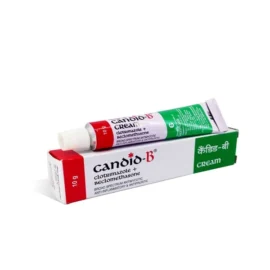
| Ισχύς | 0.025% και 1% |
|---|---|
| Ποσότητα | 1 Tube/s, 3 Tube/s, 6 Tube/s |
| Φαρμακευτική Μορφή | Κρέμες |
| Κατασκευαστής | Cipla Inc |
| Θεραπεία | Δερματικές λοιμώξεις |
| Γενόσημη μάρκα | Clotrimazole |
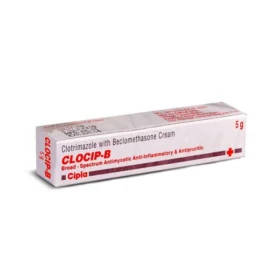 Clocip B Cream
Ερωτήσεις & Απαντήσεις
Clocip B Cream
Σχετικά προϊόντα



Κριτικές
Δεν υπάρχουν ακόμη κριτικές