







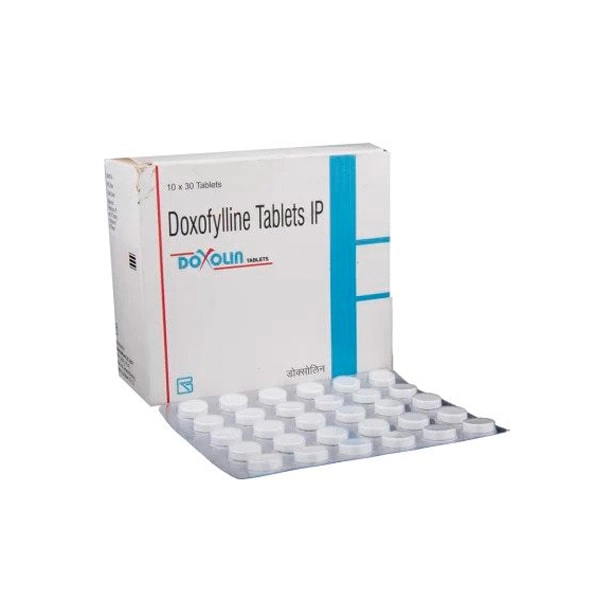
Doxolin


✅ Διαχείριση συμπτωμάτων άσθματος
✅ Βολική μορφή δισκίου
✅ Εύκολη χορήγηση
✅ Βελτιωμένη αναπνευστική άνεση
Περιέχει Doxofylline
✓ Ιατρικά ελεγμένο από Morgan Ellis — Ερευνητής Φαρμακευτικής · 8 χρόνια εμπειρία · Τελευταία αναθεώρηση: Μάιος 2026
⚡ Γρήγορη απάντηση — Τι είναι το Doxolin;
Doxolin περιέχει doxofylline, ένα μεθυλοξανθινικός βρογχοδιασταλτικός με αντιφλεγμονώδη αποτελέσματα, χρησιμοποιείται ως συμπληρωματική θεραπεία για χρόνιο άσθμα και ΧΑΠ. Το Doxofylline είναι μια νεότερη μεθυλοξανθίνη με παρόμοια αποτελεσματικότητα με τη θεοφυλλίνη αλλά με ευρύτερο περιθώριο ασφαλείας — λιγότερες καρδιακές, γαστρεντερικές και ΚΝΣ παρενέργειες. Δεν απαιτείται τακτική παρακολούθηση επιπέδων φαρμάκου. Η δόση είναι 400 mg μία ή δύο φορές ημερησίως. Κάθε δισκίο περιέχει 400 mg, κατασκευασμένη από Zydus Cadila σε εγκαταστάσεις πιστοποιημένες από WHO-GMP.
📦 Κάθε παραγγελία καλύπτεται από την Πολιτική Εγγύησης Επαναποστολής — εάν το δέμα σας δεν φτάσει εντός 20 εργάσιμων ημερών, το επαναποστέλλουμε.
Γιατί να παραγγείλετε από τη MedsBase
Τα γενόσημα φάρμακά μας προέρχονται από κατασκευαστές που πιστοποιούνται από την WHO-GMP και αποστέλλονται παγκοσμίως σε διακριτική, απλή συσκευασία — χωρίς όνομα φαρμάκου στο εξωτερικό του δέματος. Οι πληρωμές με κάρτα δρομολογούνται μέσω ρυθμισμένου επεξεργαστή (οι περιγραφές εκκαθάρισης περιλαμβάνουν ρυθμισμένο επεξεργαστή πληρωμών με κάρτα — ποτέ “MedsBase” ή οποιοδήποτε όνομα φαρμάκου). Γίνονται δεκτές και πληρωμές με κρυπτονομίσματα και τραπεζική μεταφορά SEPA. Κάθε παραγγελία καλύπτεται από την Πολιτική Επαναποστολής Εξασφαλίσεώς μας.
Τι είναι το Doxolin;
Η Doxolin είναι ένας από του στόματος μεθυλοξανθινικός βρογχοδιασταλτικός παράγοντας. Οι μεθυλοξανθίνες προέρχονται από φυσικούς αλκαλοειδείς (η θεοφυλλίνη είναι η διμεθυλοξανθίνη που υπάρχει στο τσάι). Η χρήση τους έχει μειωθεί από τη δεκαετία του 1990 καθώς οι εισπνεόμενοι β2-αγωνιστές και οι κορτικοστεροειδές έγιναν πρώτη γραμμή — αλλά διατηρούν έναν ρόλο ως τρίτης γραμμής συμπληρωματική θεραπεία σε δύσκολο άσθμα και ΧΑΠ.
Πώς Λειτουργεί η Doxolin;
- Αναστολή φωσφοδιεστεράσης (PDE3, PDE4) — αυξάνει την κυκλική AMP στον λείο μυ των αεραγωγών και στα φλεγμονώδη κύτταρα· το τελικό αποτέλεσμα είναι βρογχοδιαστολή και μειωμένη απελευθέρωση μεσολαβητών.
- Ανταγωνισμός υποδοχέων αδενοσίνης — αποκλείει τη βρογχοσύσπαση που μεσολαβείται από την αδενοσίνη και την απελευθέρωση μεσολαβητών από τα μαστοκύτταρα.
- Ενεργοποίηση HDAC2 (θεοφυλλίνη σε χαμηλά επίπεδα ορού 5–10 mg/L) — αποκαθιστά την ανταπόκριση στα κορτικοστεροειδή σε ΧΑΠ και σοβαρό άσθμα όπου η ανθεκτικότητα στα στεροειδή μεσολαβείται εν μέρει από μειωμένη HDAC2.
- Συστολική ικανότητα διαφράγματος — οι μεθυλοξανθίνες μειώνουν την κόπωση του διαφράγματος, χρήσιμες σε ΧΑΠ με σοβαρό περιορισμό ροής αέρα.
Χρήσεις και ενδείξεις
- Σοβαρό χρόνιο άσθμα — προσθήκη σε υψηλή δόση ICS-LABA όπου απαιτείται επιπλέον βρογχοδιαστολή
- Συντήρηση ΧΑΠ — προσθήκη σε LAMA-LABA ή τριπλή θεραπεία
- Νυχτερινό άσθμα — η συντηρητικής αποδέσμευσης φόρμουλα παρέχει νυχτερινή βρογχοδιαστολή
- Απνοέα της ωρίμανσης (θεοφυλλίνη) — χρήση σε νεογνά
- Ασθενείς με δυσανεξία στη θεοφυλλίνη — καλύτερα ανεκτή εναλλακτική
Δοσολογία Doxolin
| Ασθενής | Δόση | Συχνότητα |
|---|---|---|
| Ενήλικες — αρχική | 200 mg | Τρεις φορές ημερησίως — πρώτες 7 ημέρες |
| Ενήλικες — συντήρηση | 400 mg | Μία ή δύο φορές την ημέρα |
| Ηλικιωμένοι/ηπατική νόσος | Μισή δόση | Μία ή δύο φορές την ημέρα |
Παρενέργειες Doxolin
- Ναυτία, εμετοί, δυσπεψία
- Κεφαλαλγία
- Τρόμος
- Αϋπνία, ανησυχία
- Ήπια παλμοί (λιγότερο από τη θεοφυλλίνη)
- Ήπια υποκαλιαιμία σε υψηλές δόσεις
Σοβαρό — διακόψτε και ζητήστε βοήθεια:
- Σοβαροί παλμοί ή αρρυθμία
- Συνεχόμενος εμετός
- Σοβαρή αλλεργική αντίδραση
Προειδοποιήσεις και προφυλάξεις
- Δεν απαιτείται τακτική παρακολούθηση επιπέδων στο αίμα — ευρύτερο περιθώριο ασφαλείας σε σύγκριση με τη θεοφυλλίνη.
- Πολλές αλληλεπιδράσεις φαρμάκων — δείτε τον πίνακα αλληλεπιδράσεων. Το μεγαλύτερο μέρος μεταβολίζεται από το CYP1A2· πολλοί αναστολείς και επαγωγείς αλλάζουν σημαντικά τα επίπεδα.
- Κάπνισμα επαγωγή του CYP1A2 και μείωση των επιπέδων θεοφυλλίνης κατά ~50% — επαναπροσαρμογή δόσης μετά τη διακοπή του καπνίσματος.
- Καρδιακή νόσος: χρήση με προσοχή σε αρρυθμίες, καρδιακή ανεπάρκεια, σοβαρή υπέρταση.
- Υπερθυρεοειδισμός: αυξημένη κάθαρση και ενισχυμένες αδρενοεργικές επιδράσεις.
- Εγκυμοσύνη και θηλασμός: γενικά αποφεύγεται· χρησιμοποιείται μόνο εάν το όφελος είναι σαφές.
- Ηπατική νόσος: μείωση δόσης — οι μεθυλοξανθίνες μεταβολίζονται ηπατικά.
Αντενδείξεις
- Υπερευαισθησία στη δοξοφυλλίνη ή σε άλλες ξανθίνες (καφεΐνη, θεοβρωμίνη)
- Ενεργό πεπτικό έλκος
- Ανεξέλεγκτες ταχυαρρυθμίες
- Σοβαρή καρδιακή ανεπάρκεια (NYHA IV)
Αλληλεπιδράσεις Φαρμάκων
| Φάρμακο αλληλεπίδρασης | Αποτέλεσμα | Τι να κάνετε |
|---|---|---|
| Σιπροφλοξασίνη, ερυθρομυκίνη, κλαριθρομυκίνη, φλουβοξαμίνη | Αναστολή CYP1A2 → αύξηση θεοφυλλινικών επιπέδων → τοξικότητα (ναυτία, αρρυθμία, σπασμοί) | Αποφύγετε ή μειώστε τη δόση θεοφυλλίνης κατά 50%. Ελέγξτε τα επίπεδα στο ορό |
| Σιμετιδίνη, αλλοπουρινόλη | Αύξηση θεοφυλλινικών επιπέδων | Μείωση δόσης. Παρακολούθηση επιπέδων |
| Φαινυτοΐνη, καρβαμαζεπίνη, ριφαμπικίνη | Ενεργοποίηση CYP — χαμηλότερα επίπεδα | Μπορεί να απαιτείται υψηλότερη δόση |
| Κάπνισμα | Ενεργοποιεί το CYP1A2 — χαμηλότερα επίπεδα | Επαναπροσαρμογή δόσης μετά τη διακοπή του καπνίσματος |
| β-αγωνιστές, διουρητικά | Προσθετική υποκαλιαιμία | Παρακολουθήστε τα επίπεδα καλίου |
Αποθήκευση
- Αποθήκευση κάτω από 25°C σε δροσερό, ξηρό μέρος μακριά από άμεσο ηλιακό φως.
- Διατηρήστε στην αρχική συσκευασία μέχρι τη χρήση για προστασία από υγρασία και φως.
- Μην χρησιμοποιείτε μετά την ημερομηνία λήξης που αναγράφεται στην ταινία.
- Μην αφήνετε σε μέρη προσβάσιμα από παιδιά.
Σχετικές Εναλλακτικές Λύσεις στο MedsBase
- Asthalin Inhaler — σαλβουταμόλη για άμεση ανακούφιση
- Budecort Inhaler — βουδεσονοίδη ICS για πρόληψη
- Foracort Inhaler — βουδεσονοίδη + φορμοτερόλη ICS-LABA
- Tiova Inhaler — τιοτροπίου LAMA για ΧΑΠ
- Montair — ταμπλέτα montelukast LTRA
Συχνές Ερωτήσεις
Πώς διαφέρει η δοξοφυλλίνη από τη θεοφυλλίνη;
Η δοξοφυλλίνη είναι μια νεότερη μεθυλοξανθίνη (εισήχθη τη δεκαετία του 1990) με παρόμοια αποτελεσματικότητα βρογχοδιασταλτικής δράσης και ευρύτερο περιθώριο ασφαλείας. Οι καρδιακές, γαστρεντερικές και ΚΝΣ παρενέργειες είναι λιγότερο συχνές, δεν απαιτείται τακτική παρακολούθηση επιπέδων στο αίμα και έχει λιγότερες φαρμακολογικές αλληλεπιδράσεις.
Γιατί να προτιμηθεί η δοξοφυλλίνη έναντι της θεοφυλλίνης;
Καλύτερη ανοχή, απλούστερο σχήμα δοσολογίας (χωρίς παρακολούθηση επιπέδων), λιγότερες αλληλεπιδράσεις. Ιδιαίτερα χρήσιμη σε ηλικιωμένους ασθενείς και σε όσους δεν ανέχονταν τη θεοφυλλίνη.
Πόσο γρήγορα δρα η Doxolin;
Η βρογχοδιαστολή ξεκινά εντός 1 ώρας· πλήρης επίδραση σε ημέρες.
Είναι η Doxolin σκεύασμα ανακούφισης;
Όχι — είναι θεραπεία ελέγχου. Διατηρήστε ένα SABA (Asthalin, Levolin) για οξείες επιδείξεις.
Μπορώ να πάρω Doxolin μαζί με το ICS μου;
Ναι — η δοξοφυλλίνη συνήθως προστίθεται σε συνδυασμό με ICS ή ICS-LABA όταν απαιτείται επιπλέον βρογχοδιαστολή.
Ποιες είναι οι συχνές παρενέργειες;
Ναυτία, ήπιο πονοκέφαλο, τρόμος, αϋπνία. Γενικά πιο ήπια από τη θεοφυλλίνη σε ισοδύναμη βρογχοδιαστολή.
Είναι το Doxolin ασφαλές κατά την εγκυμοσύνη;
Περιορισμένα δεδομένα· προτιμάται η εισπνεόμενη θεραπεία.
Μπορούν τα παιδιά να πάρουν Doxolin;
Χρήση με προσοχή· συνιστάται εποπτεία ειδικού σε παιδιατρική χρήση.
Πώς συγκρίνεται το Doxolin με το roflumilast (Rofaday);
Και τα δύο είναι στοματικά παράγοντες μη-βρογχοδιασταλτικής κατηγορίας με αντιφλεγμονώδεις επιδράσεις. Το roflumilast είναι ειδικά για σοβαρή ΧΑΠ με χρόνια βρογχίτιδα. Το Doxofylline έχει ευρύτερη χρήση σε άσθμα και ΧΑΠ ως συμπληρωματικό βρογχοδιασταλτικό.
Σχετικές Εναλλακτικές
Άλλα προϊόντα σε Χρόνιες Παθήσεις που οι πελάτες εξετάζουν επίσης:
Περισσότερες επιλογές στη θεραπεία Άσθματος/ΧΑΠ
Ταξινομημένα σύμφωνα με τον όγκο παραγγελιών στο MedsBase — τι επιλέγουν άλλοι πελάτες σε αυτήν την κατηγορία.


| Ισχύς | 400 mg |
|---|---|
| Ποσότητα | 30 Δισκία, 60 Δισκία, 90 Δισκία |
| Φαρμακευτική Μορφή | Δισκία |
| Κατασκευαστής | Zydus Cadila Pharma |
| Θεραπεία | Πρόληψη άσθματος, Χρόνια αποφρακτική πνευμονοπάθεια (ΧΑΠ) |
| Γενόσημη μάρκα | Λεβοσαλβουταμόλη + Ιπρατρόπιο |
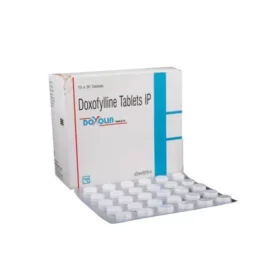 Doxolin
Ερωτήσεις & Απαντήσεις
Doxolin
Σχετικά προϊόντα


Κριτικές
Δεν υπάρχουν ακόμη κριτικές