







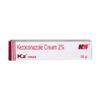
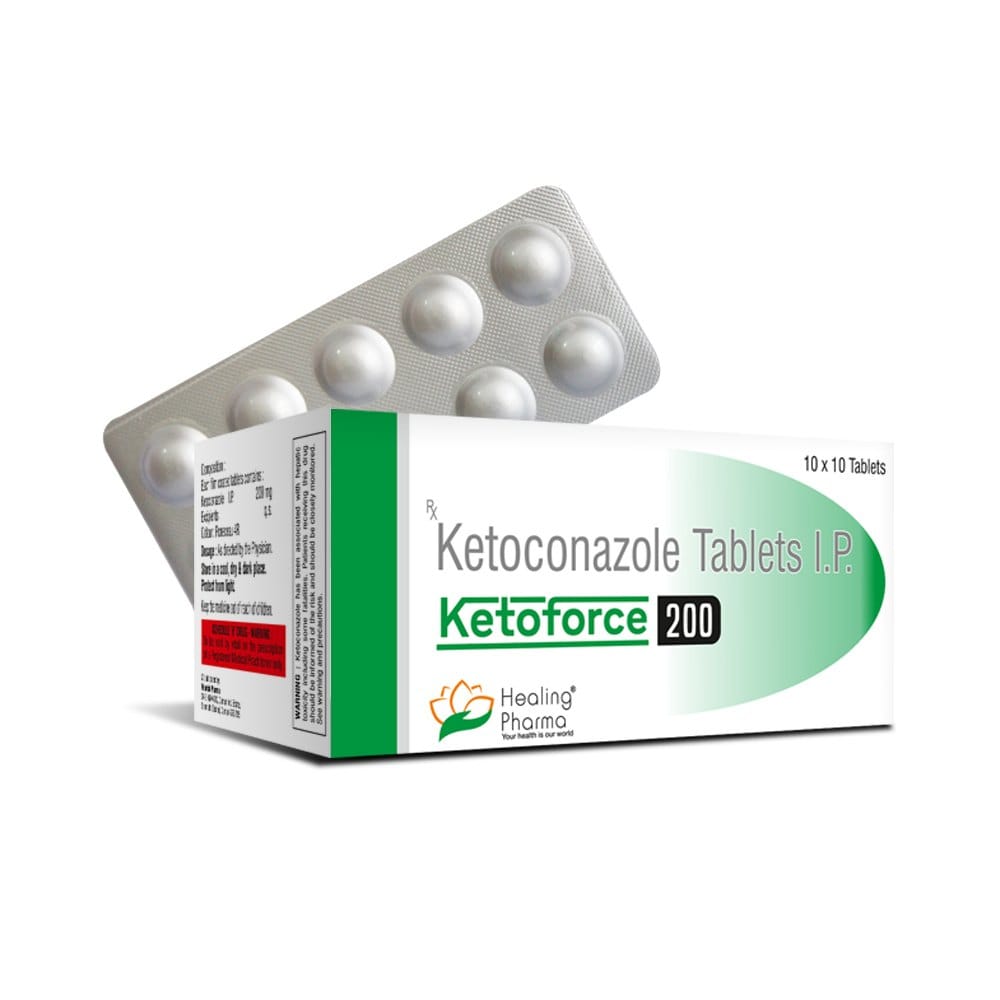
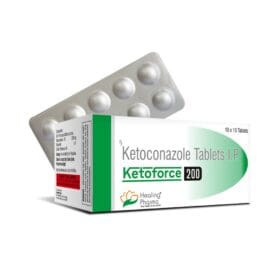
Ketoforce
✅ Καταπολεμά τις μυκητιασικές λοιμώξεις
✅ Ανακουφίζει τη δερματική ερεθισμό
✅ Θεραπεύει την πιτυρίδα αποτελεσματικά
✅ Προάγει την υγεία της τριχοφυΐας
✅ Εύκολη τοπική εφαρμογή
Το Ketoforce περιέχει Κετοκοναζόλη.
✓ Ιατρικά ελεγμένο από Morgan Ellis — Ερευνητής Φαρμακευτικής · 8 χρόνια εμπειρία · Τελευταία αναθεώρηση: Μάιος 2026
💡 Γρήγορη Απάντηση
Το Ketoforce είναι κρέμα με κετοκοναζόλη 2% w/w — ένα αντιμυκητιακό ιμιδαζόλιο ενεργό κατά των δερματοφύτων (tinea pedis, cruris, corporis), Candida (δερματική καντιντίαση) και Malassezia (ποικιλόχρωμη πιτυρίαση, σεβορροϊκή δερματίτιδα). Εφαρμόστε μία ή δύο φορές ημερησίως για 2–4 εβδομάδες. Η τοπική χρήση δεν επηρεάζεται από τους περιορισμούς της FDA/EMA για την από του στόματος κετοκοναζόλη — ελάχιστη συστημική απορρόφηση από άθικτο δέρμα, χωρίς κίνδυνο ηπατοτοξικότητας. Ιδιαίτερα χρήσιμο για σεβορροϊκή δερματίτιδα (πρόσωπο, τριχοφυΐα, σώμα) όπου η αντιμυκητιακή δράση συνδυάζεται με αντιφλεγμονώδη δράση.
WHO-GMP
πιστοποιημένος κατασκευαστής
📦 Κάθε παραγγελία καλύπτεται από την Πολιτική Εγγύησης Επαναποστολής — εάν το δέμα σας δεν φτάσει εντός 20 εργάσιμων ημερών, το επαναποστέλλουμε.
Γιατί να παραγγείλετε από τη MedsBase
Τα γενόσημα φάρμακά μας προέρχονται από κατασκευαστές που πιστοποιούνται από την WHO-GMP και αποστέλλονται παγκοσμίως σε διακριτική, απλή συσκευασία — χωρίς όνομα φαρμάκου στο εξωτερικό του δέματος. Οι πληρωμές με κάρτα δρομολογούνται μέσω ρυθμισμένου επεξεργαστή (οι περιγραφές εκκαθάρισης περιλαμβάνουν ρυθμισμένο επεξεργαστή πληρωμών με κάρτα — ποτέ “MedsBase” ή οποιοδήποτε όνομα φαρμάκου). Γίνονται δεκτές και πληρωμές με κρυπτονομίσματα και τραπεζική μεταφορά SEPA. Κάθε παραγγελία καλύπτεται από την Πολιτική Επαναποστολής Εξασφαλίσεώς μας.
Διακριτική συσκευασία
απλό φάκελο
Παγκόσμια αποστολή
στις περισσότερες χώρες
🔍 Γιατί να παραγγείλετε το Ketoforce από τη MedsBase
- πιστοποιημένο από τη WHO-GMP κατασκευαστή — προέρχεται από ρυθμιζόμενη εγκατάσταση, ολοκληρωμένη συσκευασία με αριθμό παρτίδας και ημερομηνία λήξης.
- Διακριτική συσκευασία — απλό φάκελο, χωρίς όνομα φαρμάκου στο εξωτερικό.
- Παγκόσμια αποστολή στις περισσότερες χώρες με Reshipment Assurance.
- Πόντοι αφοσίωσης — 1 πόντος ανά $1 που ξοδεύετε (εξαιρούνται τα πεπτίδια/αποστολή)· 100 πόντους = $5 έκπτωση στην επόμενη παραγγελία σας.
Χρήσεις
Το Ketoforce (κρέμα με κετοκοναζόλη 2% w/w, Brinton Pharma) είναι ένα ευρέος φάσματος τοπικό ιμιδαζόλιο. Συχνές ενδείξεις:
| Ενδείξεις | Τρόπος χρήσης |
|---|---|
| Tinea pedis (ποδιά του αθλητή) | Μία φορά ημερησίως × 6 εβδομάδες (περισσότερο από άλλα αζόλια για δερματοφύτες) |
| Tinea cruris (μυκητιασική δερματίτιδα της βουβωνικής χώρας) | Μία φορά την ημέρα × 2–4 εβδομάδες |
| Tinea corporis (δερματομυκητίαση) | Μία φορά την ημέρα × 3–4 εβδομάδες |
| Δερματική καντιντίαση | Μία ή δύο φορές την ημέρα × 2 εβδομάδες |
| Πιτυρίαση ερυθροπεταλία | Μία φορά την ημέρα × 2–3 εβδομάδες |
| Σεβοροϊκή δερματίτιδα (πρόσωπο, σώμα, θώρακας) | Μία φορά την ημέρα × 2–4 εβδομάδες· πρόληψη επιδείνωσης 1–2 φορές την εβδομάδα |
Για σεβοροϊκή δερματίτιδα της κεφαλής / πιτυρίδα, χρησιμοποιήστε σαμπουάν κετοκοναζόλης 2% (ξεχωριστό προϊόν) αντί της κρέμας.
Πώς να κάνετε αίτηση
- Πλύνετε και στεγνώστε καλά το δέρμα πριν από την εφαρμογή.
- Εφαρμόστε μια λεπτή στρώση στο προσβεβλημένο δέρμα και σε 2 cm του γύρω υγιούς δέρματος.
- Για την τίνεα των ποδιών, θεραπεύστε και τις τέσσερις περιοχές των ποδιών — μεταξύ των δακτύλων, τις πατούσες, τις πλευρές και τις καμάρες — ακόμα κι αν μόνο μία φαίνεται να είναι προσβεβλημένη.
- Συνεχίστε τη θεραπεία για 1 εβδομάδα μετά την εξαφάνιση των συμπτωμάτων.
- Για τη δερματίτιδα σεβόρροιας, ξεκινήστε εκ νέου την θεραπεία στα πρώτα σημάδια εμφάνισης· η εβδομαδιαία συντήρηση αποτρέπει την υποτροπή.
Πώς λειτουργεί
Η κετοκοναζόλη αναστέλλει το μυκητιακό CYP51, μπλοκάροντας τη βιοσύνθεση της εργοστερόλης. Η τοπική απορρόφηση από ακέραιο δέρμα είναι < 1% — πολύ χαμηλή για να προκαλέσει ηπατοτοξικότητα ή ορμονικές επιδράσεις που περιορίζουν τη χορήγηση από το στόμα. Η κετοκοναζόλη έχει επιπλέον αντιφλεγμονώδη δράση μέσω της αναστολής της 5-λιποξυγενάσης, η οποία συμβάλλει στην ισχυρή της επίδραση στη δερματίτιδα σεβόρροιας.
Παρενέργειες
- Συχνά (5–10%) — ήπιο τσούξιμο ή καύση κατά την εφαρμογή, ξηρότητα, ήπια ερυθρότητα.
- Ασυνήθιστα — επαφής δερματίτιδα (αληθινή αλλεργία ή αντίδραση στο όχημα), αίσθηση λιπαρότητας του δέρματος.
- Σπάνια — σοβαρή αλλεργία επαφής με κνησμό και εκροή· διακόψτε και συμβουλευτείτε.
Εγκυμοσύνη & θηλασμός
Η τοπική κετοκοναζόλη θεωρείται χαμηλού κινδύνου κατά την εγκυμοσύνη και τον θηλασμό λόγω αμελητέας συστημικής απορρόφησης. Αποφύγετε την εφαρμογή στο στήθος κατά τον θηλασμό (ή πλύνετε καλά πριν από το θηλασμό). Για σπασμένο ή εκτεταμένα φλεγμονώδες δέρμα, προτιμήστε την κλοτριμαζόλη.
Συχνές Ερωτήσεις
Γιατί ο δερματολόγος μου προτιμά την κετοκοναζόλη έναντι της κλοτριμαζόλης για την πιτυρίδα ή τη σεβόρροια του προσώπου;
Η κετοκοναζόλη έχει διπλή δράση — σκοτώνει τη Malassezia (τη ζύμη που προκαλεί τη δερματίτιδα σεβόρροιας) ΚΑΙ έχει αντιφλεγμονώδη επίδραση μέσω της αναστολής της 5-λιποξυγενάσης. Η κλοτριμαζόλη έχει μόνο την αντιμυκητιακή επίδραση. Για τη δερματίτιδα σεβόρροιας, η κετοκοναζόλη προσφέρει ταχύτερη και πληρέστερη απόκριση.
Είναι η Ketoforce ασφαλής παρόλο που η από του στόματος κετοκοναζόλη έχει μαύρη κουτάλα;
Ναι — οι περιορισμοί της FDA / EMA στην από του στόματος κετοκοναζόλη ισχύουν λόγω ηπατοτοξικότητας από συστημική έκθεση. Η τοπική απορρόφηση από ακέραιο δέρμα είναι < 1% — πολύ κάτω από το όριο για συστημικές επιδράσεις. Τα τοπικά σαμπουάν και οι κρέμες με κετοκοναζόλη παραμένουν ευρέως χρησιμοποιούμενα και ασφαλή.
Μπορώ να το χρησιμοποιήσω στο πρόσωπό μου;
Ναι — το πρόσωπο είναι μια συχνή περιοχή για δερματίτιδα σεβόρροιας (φρύδια, ρινικές πτυχές, πίσω από τα αυτιά). Εφαρμόστε μια λεπτή στρώση μία φορά την ημέρα· συνήθως εξαφανίζεται σε 2 εβδομάδες. Αποφύγετε τα μάτια — πλύνετε αν μπει.
Γιατί η τίνεα των ποδιών μου χρειάζεται 6 εβδομάδες κρέμας;
Η κετοκοναζόλη είναι μυκητοκτόνο έναντι των δερματοφυτών, αλλά η συνιστώμενη διάρκεια θεραπείας είναι συντηρητικά μεγάλη. Πολλές οδηγίες δέχονται μια συντομότερη θεραπεία με κρέμα τερβιναφίνης (1% × 1 εβδομάδα) ή κλοτριμαζόλης (1% × 2–4 εβδομάδες) για την τίνεα ποδός. Για τη σεβοροϊκή δερματίτιδα συγκεκριμένα, η κετοκοναζόλη έχει ταχύτερη έναρξη δράσης.
Είναι η Ketoforce το ίδιο με την κρέμα Nizoral;
Ναι — το Nizoral είναι η αρχική μάρκα της Janssen για την κρέμα κετοκοναζόλης. Η Ketoforce περιέχει την ίδια ενεργή ουσία (κετοκοναζόλη 2%), κατασκευασμένη από τη Brinton Pharma σύμφωνα με τα πρότυπα WHO-GMP. Βιοισοδύναμη.
Γιατί επιστρέφει η πιτυρίδα μου όταν σταματάω το σαμπουάν;
Η σεβοροϊκή δερματίτιδα είναι μια χρόνια επαναλαμβανόμενη κατάσταση που προκαλείται από την ατομική ευαισθησία στο Malassezia και σε φλεγμονώδεις παράγοντες (άγχος, κρύος καιρός, ανοσοκαταστολή). Η συντήρηση είναι το κλειδί — το σαμπουάν ή η κρέμα κετοκοναζόλης μια ή δύο φορές την εβδομάδα τη διατηρεί υπό έλεγχο.
Μπορώ να χρησιμοποιήσω ταυτόχρονα κρέμα κετοκοναζόλης και κρέμα στεροειδών;
Τα προϊόντα συνδυασμού βραχυπρόθεσμης χρήσης (κετοκοναζόλη + υδροκορτιζόνη) χρησιμοποιούνται μερικές φορές για φλεγμονώδη σεβοροϊκή δερματίτιδα ή εκτεταμένη διαδερμική μυκητίαση. Χρησιμοποιήστε το στεροειδές μόνο για λίγες ημέρες — η μακροπρόθεσμη χρήση στεροειδών στο πρόσωπο προκαλεί ατροφία και επαναλαμβανόμενες εμφυλίσεις.
Τι είναι καλύτερο για τη σεβοροϊκή δερματίτιδα του σώματος, σαμπουάν ή κρέμα κετοκοναζόλης;
Για το στήθος, την πλάτη, το τριχωτό της κεφαλής — το σαμπουάν κετοκοναζόλης 2% είναι πιο πρακτικό (αφρώστε, αφήστε 5 λεπτά, ξεπλύνετε). Για το πρόσωπο, το λαιμό, τις μασχάλες, την βουβωνική χώρα — η κρέμα είναι καλύτερα ανεκτή. Χρησιμοποιήστε και τα δύο εάν έχετε εμπλοκή και στο σώμα και στο πρόσωπο.
Θα θεραπεύσει τις λευκές κηλίδες στην πλάτη μου;
Εάν η αιτία είναι η pityriasis versicolor (υπερανάπτυξη Malassezia), ναι — ο μύκητας εξαφανίζεται σε 2–3 εβδομάδες. Η ανάκτηση της χρωστικής είναι πιο αργή· οι κηλίδες μπορεί να χρειαστούν μήνες για να επανακτήσουν το χρώμα τους, ειδικά με έκθεση στον ήλιο. Χρησιμοποιήστε SPF στις πληγείσες περιοχές ενώ η χρωστική ομαλοποιείται.
Πρέπει να το χρησιμοποιήσω σε σπασμένο ή υγρό δέρμα;
Όχι — εφαρμόστε μόνο σε καθαρό, ξηρό, ακέραιο δέρμα. Η υγρή ή ραγισμένη τίνεα μπορεί να χρειαστεί 1–2 ημέρες πάστας ψευδαργύρου / υγρής ξήρανσης ή σιδερόφαρμα για να ηρεμήσει πριν από την τοπική θεραπεία. Εάν η βλάβη είναι έντονα φλεγμονώδης και ραγισμένη, συμβουλευτείτε έναν κλινικό.
Αποθήκευση
Αποθηκεύστε σε θερμοκρασία 15–25 °C, μακριά από θερμότητα και άμεση ηλιακή ακτινοβολία. Κλείστε καλά το καπάκι. Κρατήστε μακριά από παιδιά. Απορρίψτε 6 μήνες μετά το άνοιγμα. Μην χρησιμοποιείτε μετά την ημερομηνία λήξης.
Άλλα Αντιμυκητιασικά Φάρμακα που μπορεί να σας ενδιαφέρουν
Εάν η Ketoforce δεν είναι διαθέσιμη, εδώ είναι οι εναλλακτικές — η ίδια μόριο από διαφορετικό κατασκευαστή, συν άλλα τοπικά αντιμυκητιακά.
- Terbicip Cream (τερβιναφίνη 1%) — Το πιο ισχυρό τοπικό για αθλητικό πόδι, πορεία 1–2 εβδομάδων.
- Lulibet XL Cream (λουλικοναζόλη 1%) — Νεότερης γενιάς ιμιδαζόλη, πορεία 1 εβδομάδας για κρούρις/κορπόρις.
- Clocip (clotrimazole 1% κρέμα) — Ευρέος φάσματος, OTC πρότυπο, ασφαλές στην εγκυμοσύνη.
- Keto Cream (ketoconazole 2%) — Καλύτερο για δερματίτιδα σεβορροϊκή (Malassezia).
- Zimig (τερβιναφίνη 250 mg από του στόματος) — Προχωρήστε σε από του στόματος θεραπεία όταν η τοπική αποτυγχάνει ή για εκτεταμένη νόσο.
Περισσότερες επιλογές στην κατηγορία Αντιμυκητιασικά
Ταξινομημένα σύμφωνα με τον όγκο παραγγελιών στο MedsBase — τι επιλέγουν άλλοι πελάτες σε αυτήν την κατηγορία.
| Ισχύς | 200 mg |
|---|---|
| Ποσότητα | 30 δισκία, 60 δισκία, 90 δισκία, 180 δισκία |
 Ketoforce
Ερωτήσεις & Απαντήσεις
Ketoforce
Σχετικά προϊόντα




Κριτικές
Δεν υπάρχουν ακόμη κριτικές