







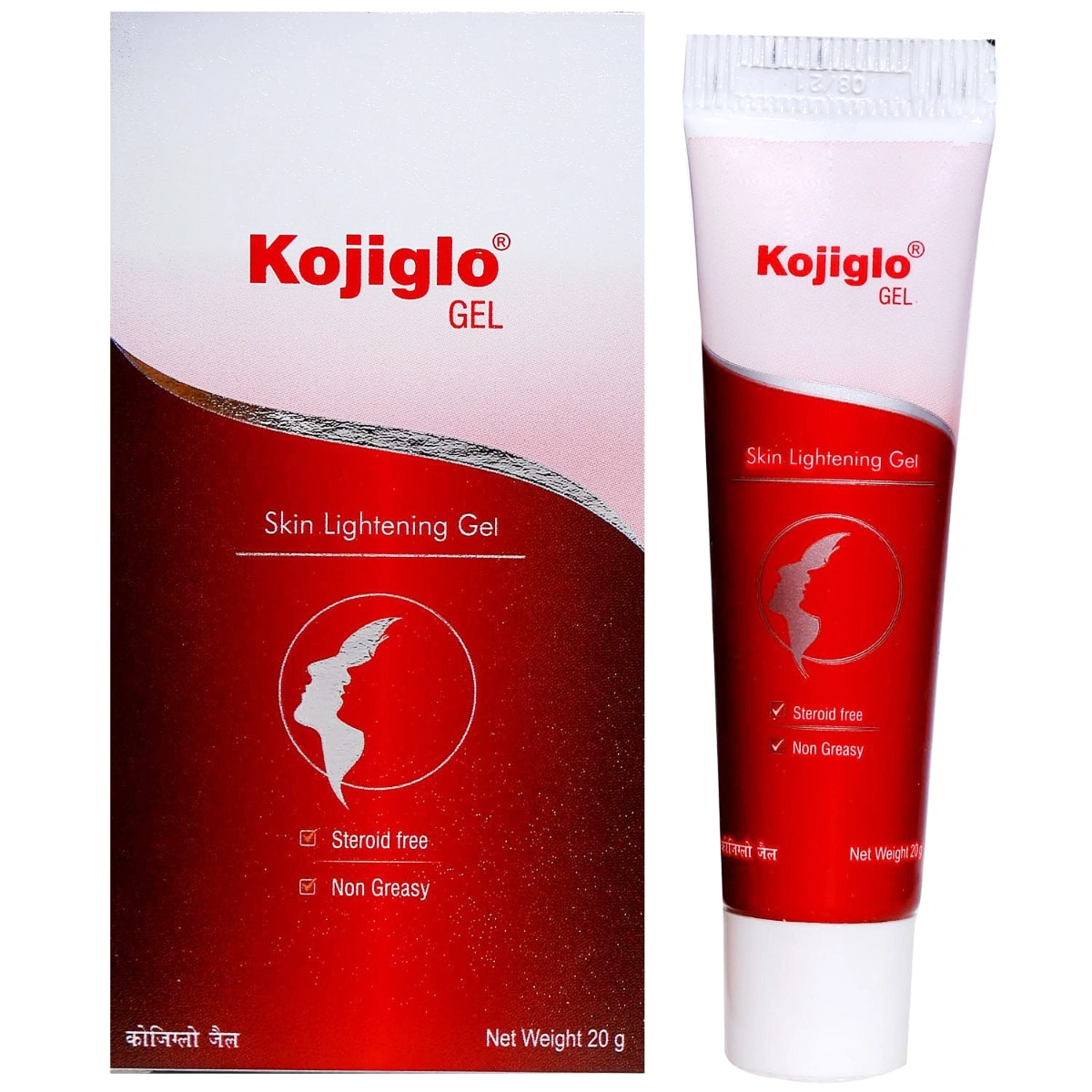
Kojiglo Gel
✅ Φωτίζει τον τόνο του δέρματος
✅ Μειώνει την υπερχρωμάτωση
✅ Προάγει την ενυδάτωση του δέρματος
✅ Εξομαλύνει την υφή του δέρματος
✅ Περιέχει Kojic Acid
Το Kojiglo Gel περιέχει Kojic Acid.
✓ Ιατρικά ελεγμένο από Morgan Ellis — Ερευνητής Φαρμακευτικής · 8 χρόνια εμπειρία · Τελευταία αναθεώρηση: Μάιος 2026
⚡ Γρήγορη Απάντηση — Τι είναι το Kojiglo Gel;
Kojiglo Gel είναι κοϊκό οξύ 2% τοπικό αποχρωματικό γελ από τη Glenmark, που χρησιμοποιείται για μέλασμα, μεταφλεγμονώδη υπερχρωμάτωση (PIH), ηλιακές λεντιγίνες (ηλιακές κηλίδες), και άλλες μορφές υπερχρωμάτωσης του δέρματος. Το kojic acid είναι ένα φυσικό μυκητιακό μεταβολίτη που αναστέλλει την τυροσινάση — το περιοριστικό ένζυμο στη σύνθεση της μελανίνης — παρέχοντας σταδιακή, ομοιόμορφη ελάφρυνση του δέρματος σε 8–12 εβδομάδες. Εφαρμόστε μια λεπτή στρώση σε σκούρες κηλίδες μία ή δύο φορές την ημέρα; · η καθημερινή χρήση ευρέος φάσματος SPF 50+ το πρωί είναι απαραίτητη για τη διατήρηση των αποτελεσμάτων. Το kojic acid είναι μια πιο ήπια εναλλακτική λύση από την υδροκινόνη — κατάλληλη για ασθενείς ευαίσθητους στην υδροκινόνη, όσους θέλουν να αποφύγουν τον περιορισμό της FDA στην OTC υδροκινόνη ή όσους επιθυμούν μια θεραπεία συντήρησης μετά από έναν κύκλο υδροκινόνης ή Kligman-triple. Συχνότερες παρενέργειες: ήπια ερεθισμός, επαφής δερματίτιδα (3–5% των χρηστών) — κάντε δοκιμή επαφής πριν από τη χρήση στο πρόσωπο.
📦 Κάθε παραγγελία καλύπτεται από την Πολιτική Εγγύησης Επαναποστολής — εάν το δέμα σας δεν φτάσει εντός 20 εργάσιμων ημερών, το επαναποστέλλουμε.
Γιατί να παραγγείλετε από τη MedsBase
Τα γενόσημα φάρμακά μας προέρχονται από κατασκευαστές που πιστοποιούνται από την WHO-GMP και αποστέλλονται παγκοσμίως σε διακριτική, απλή συσκευασία — χωρίς όνομα φαρμάκου στο εξωτερικό του δέματος. Οι πληρωμές με κάρτα δρομολογούνται μέσω ρυθμισμένου επεξεργαστή (οι περιγραφές εκκαθάρισης περιλαμβάνουν ρυθμισμένο επεξεργαστή πληρωμών με κάρτα — ποτέ “MedsBase” ή οποιοδήποτε όνομα φαρμάκου). Γίνονται δεκτές και πληρωμές με κρυπτονομίσματα και τραπεζική μεταφορά SEPA. Κάθε παραγγελία καλύπτεται από την Πολιτική Επαναποστολής Εξασφαλίσεώς μας.
Τι είναι το Kojiglo Gel;
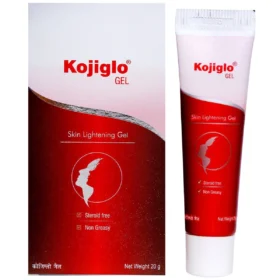
Το Kojiglo Gel είναι ένα τοπικό αποχρωματικό γελ από τη Glenmark που περιέχει κοϊκό οξύ 2%. Έρχεται σε σωληνάριο 20 g. Το κοϊκό οξύ (5-υδροξυ-2-(υδροξυμεθυλ)-4H-πυραν-4-όνη) είναι μια φυσική ένωση που αρχικά απομονώθηκε από Aspergillus oryzae, τον μύκητα που χρησιμοποιείται για την παραγωγή σάκε και σόγιας σάλτσας στην παραδοσιακή ιαπωνική ζύμωση. Χρησιμοποιείται ως τοπικό αποχρωματικό μέσο στη δερματολογία από τη δεκαετία του 1980 και είναι ευρέως διαθέσιμο παγκοσμίως είτε ως παρασκευάσματα με συνταγή είτε σε κοσμητοφαρμακευτικά χωρίς ιατρική συνταγή.
Πώς Λειτουργεί το Κοϊκό Οξύ;
Το κοϊκό οξύ προκαλεί ελαφρύνωση του δέρματος μέσω τριών συμπληρωματικών μηχανισμών:
- Αναστολή της τυροσινάσης — το κοϊκό οξύ δεσμεύει το χαλκό στο ενεργό κέντρο της τυροσινάσης, το περιοριστικό ένζυμο στη βιοσύνθεση της μελανίνης. Λιγότερη δραστηριότητα τυροσινάσης σημαίνει λιγότερη μελανίνη που παράγεται από τα μελανοκύτταρα.
- Αντιοξειδωτική δράση — το κοϊκό οξύ εξουδετερώνει τα ελεύθερα ριζικά που παράγονται από την έκθεση σε UV, μειώνοντας έμμεσα την UV-εξαρτώμενη διέγερση των μελανοκυττάρων.
- Μέτρια αντιβακτηριακή και αντιμυκητιακή δράση — χρήσιμη σε ασθενείς των οποίων η υπερχρωμάτωση σχετίζεται με ήπιες φλεγμονώδεις καταστάσεις του δέρματος.
Σε σύγκριση με την υδροκινόνη (το αναφερόμενο αποχρωστικό μέσο), το κοϊκό οξύ είναι περίπου 10 φορές λιγότερο δραστικό ανά ποσοστό — αλλά καλύτερα ανεκτό, με πολύ χαμηλότερο ποσοστό επαφής δερματίτιδας και ουσιαστικά μηδενικό κίνδυνο εξωγενούς οχρονώσεως (τη μη αναστρέψιμη γαλαζογκρίζα αποχρωματισμό που περιορίζει τη μακροπρόθεσμη χρήση υδροκινόνης).
Η ορατή ελάφρυνση εμφανίζεται συνήθως μετά από 4–8 εβδομάδες; · μέγιστη επίδραση σε 3–6 μήνες συνεπή καθημερινή χρήση και αυστηρή προστασία SPF.
Χρήσεις και ενδείξεις
- Μέλασμα (χλόασμα) — συμμετρικές καφέ κηλίδες στα μάγουλα, το μέτωπο, το πάνω χείλος, συχνά ορμονικά προκαλούμενες· ιδιαίτερα χρήσιμο για ασθενείς με ευαίσθητο δέρμα που δεν ανέχονται την υδροκινόνη
- Μεταφλεγμονώδης υπερχρωσία (PIH) μετά από ακμή, έκζεμα ή εγκαύματα — ειδικά σε δέρμα Fitzpatrick III–VI όπου η PIH είναι πιο εμφανής
- Ηλιακές λεντιγίνες (ηλιακές κηλίδες, κηλίδες ηλικίας)
- Φακίδες (εφηλίδες) — μέτρια επίδραση
- Συντηρητική θεραπεία μετά από κύκλο υδροκινόνης ή τριπλής Kligman — πιο ήπια από την HQ για απεριόριστη χρήση
- Εγκυμοσύνη και θηλασμός — συνήθως χρησιμοποιείται ως η ασφαλέστερη αποχρωστική επιλογή όταν η HQ είναι αντενδεικτική (αν και οι τοπικές ρετινοειδείς πρέπει να αποφεύγονται)
Το Kojiglo Gel είναι δεν για: βαθιά δερματική μελάσμα (λέιζερ ή χημικό πέπλωμα), κατεστραμμένο ή εκζεματώδες δέρμα, ή ως υποκατάστατο ηλιακής προστασίας.
Δοσολογία και Τρόπος Εφαρμογής του Kojiglo Gel
Το Kojiglo Gel διατίθεται σε σωληνάριο 20 g με 2% κοϊκό οξύ.
Πώς να Εφαρμόσετε Σωστά το Kojiglo Gel
- Πλύνετε απαλά με ένα ήπιο καθαριστικό χωρίς αφρό, στη συνέχεια στεγνώστε με ελαφρές πιέσεις. Περιμένετε 10–15 λεπτά.
- Πρώτα δοκιμή ευαισθησίας — εφαρμόστε μια μικρή ποσότητα στην εσωτερική πλευρά του αντιβραχίου για 24–48 ώρες πριν από τη χρήση στο πρόσωπο. Το κοϊκό οξύ προκαλεί δερματίτιδα επαφής στο 3–5% των χρηστών.
- Εφαρμόστε μια λεπτή στρώση μόνο στις σκούρες κηλίδες — όχι σε όλο το πρόσωπο. Αποφύγετε το γύρω υγιές δέρμα για να αποτρέψετε την εμφάνιση οριογραμμών.
- Αποφύγετε τα μάτια, τις γωνίες του στόματος, τα χείλη, τις βλεννογόνους μεμβράνες, τα βλέφαρα.
- Μία ή δύο φορές την ημέρα — ξεκινήστε με μία φορά την ημέρα (συνήθως το βράδυ), αυξήστε σε δύο φορές την ημέρα εάν ανεκτό.
- Ημερήσια εφαρμογή ευρέος φάσματος SPF 50+ το πρωί είναι απαραίτητη — η έκθεση σε UV αναιρεί την επίδραση του κοϊκού οξέος μέσα σε λίγες ημέρες. Εφαρμόστε ξανά κάθε 2–3 ώρες σε εξωτερικούς χώρους. Φοράτε πλατύγυρο καπέλο. Αποφύγετε εντελώς τα σολάριουμ.
- Διάρκεια θεραπείας — το κοϊκό οξύ μπορεί να χρησιμοποιηθεί συνεχώς για 3–6 μήνες, έπειτα διακοπή 4–8 εβδομάδων πριν την επανάληψη. Η μακροπρόθεσμη χρήση είναι γενικά αποδεκτή, αλλά η συντήρηση γίνεται καλύτερα με διαλείπουσα παρά συνεχή εφαρμογή.
- Σταματήστε αμέσως αν εμφανίζεται επίμονο τσούξιμο, δερματίτιδα επαφής ή επαναφορά του σκούρου χρώματος.
Παρενέργειες του Kojiglo Gel
Συχνές (ήπιες, εξασθενούν σε 1–2 εβδομάδες):
- Ήπιο τσούξιμο, καύση ή μουδιάσμα κατά την εφαρμογή — ειδικά την πρώτη εβδομάδα
- Ερυθρότητα (ήπια ερυθρότητα) των περιοχών που υποβάλλονται σε θεραπεία
- Ήπια ξηρότητα ή ξεφλούδισμα
- Ήπια φωτοευαισθησία — τονίζεται ο κανόνας SPF-50+
Λιγότερο συχνά αλλά σημαντικά:
- Δερματίτιδα επαφής (3–5% των χρηστών) — εξεζητημένη αντίδραση στο σημείο εφαρμογής. Σταματήστε και αλλάξτε παρασκεύασμα.
- Παρατεταμένη ερυθρότητα ή μεταφλεγμονώδης υπερχρωμάτωση που προκαλείται παραδόξως από ερεθισμό — μειώστε τη συχνότητα ή σταματήστε προσωρινά
Σε αντίθεση με την υδροκινόνη, το κοϊκό οξύ δεν προκαλεί εξωγενή οχρόνωση (τη μη αναστρέψιμη γαλαζογκριζωπή αποχρωματισμό). Αυτό είναι το κύριο πλεονέκτημα ασφάλειας για μακροχρόνια χρήση.
Αντενδείξεις και προειδοποιήσεις
- Υπερευαισθησία στο κοϊκό οξύ
- Ενεργό έκζεμα, δερματίτιδα ή τραυματισμένο δέρμα στην περιοχή που θα θεραπευτεί — θεραπεύστε πρώτα τη φλεγμονή
- Ενεργός έρπης χειλέων (κρυολόγημα) — αναβάλετε μέχρι να επιλυθεί
- Παιδιά <12 — δεν συνιστάται γενικά· εάν χρειαστεί, απαιτείται επίβλεψη από παιδοδερματολόγο
- Εγκυμοσύνη και θηλασμός — η τοπική κοϊκικό οξύ έχει ελάχιστη συστημική απορρόφηση και θεωρείται γενικά ασφαλής· χρησιμοποιείται συνήθως ως το αποχρωστικό μέσο πρώτης επιλογής όταν η υδροκινόνη είναι αντενδειγμένη
Αλληλεπιδράσεις Φαρμάκων
Η τοπική κοϊκικό οξύ έχει ελάχιστη συστημική απορρόφηση και καμία κλινικά σημαντική συστημική αλληλεπίδραση με φάρμακα. Τοπικές αλληλεπιδράσεις που απαιτούν διαχείριση:
- Άλλα τοπικά αποχρωστικά μέσα (υδροκινόνη, αρβουτίνη, τρετινοΐνη, αζελαϊκό οξύ) — μπορούν να συνδυαστούν με καθοδήγηση δερματολόγου για συνεργιστικό αποτέλεσμα, αλλά αυξάνουν τον κίνδυνο ερεθισμού· εισάγετε ένα κάθε φορά
- Τοπικές ρετινοειδείς ουσίες (τρετινοΐνη, αδαπαλένη, ταζαροτένη) — συνδυάζονται συχνά· εφαρμόζονται σε διαφορετικές ώρες της ημέρας (ρετινοειδές το βράδυ, κοϊκικό οξύ το πρωί) για ελαχιστοποίηση του ερεθισμού
- Χημικά πιλίνγκ και μικροδερματοεκτίναξη — διακόψτε την κοϊκικό οξύ για 1–2 εβδομάδες πριν και μετά τη διαδικασία για μείωση του κινδύνου ερεθισμού μετά τη θεραπεία
- SPF / αντηλιακά — υποχρεωτικό συνοδευτικό προϊόν
Πώς συγκρίνεται το Kojiglo Gel με εναλλακτικές λύσεις
| Παράγοντας | Ισχύς | Αξιοσημείωτο χαρακτηριστικό |
|---|---|---|
| Κοϊκικό οξύ 2% (Kojiglo Gel) | Ηπιό–μέτριο | Πιο ήπιο από την HQ· ασφαλές για μακροχρόνια χρήση· χωρίς κίνδυνο οχρόνωσης |
| Υδροκινόνη 4% (Eukroma) | Ισχυρό (χρυσό πρότυπο) | Περιορισμένη από την FDA (ειδικευμένη χρήση)· μέγιστο 4–6 μήνες· κίνδυνος οχρονώσεως |
| Τριπλό Kligman (Melacare, Triluma) | Ισχυρότερο | Υδροκινόνη + τρετινοΐνη + στεροειδές· για μέτριες έως σοβαρές μελανώσεις· κύκλος 8-επί/8-εκτός |
| Συνδυασμός Υδροκινόνης και Κοϊκού οξέος (Eukroma-KJ) | Μέτριο–ισχυρό | Συνδυάζει την ισχύ της υδροκινόνης με την ανεκτικότητα του κοϊκού οξέος |
| Αζελαϊκό οξύ 15–20% | Μέτριο | Ασφαλής εναλλακτική κατά την εγκυμοσύνη· αντιφλεγμονώδης |
| Νιασιναμίδη 4–5% | Ήπια | Χωρίς συνταγή· πολύ ήπια· μακροπρόθεσμη καλλυντική χρήση |
Αποθήκευση και Διάρκεια Ζωής
Φυλάξτε το Kojiglo Gel κάτω από 25°C στην πρωτότυπη συσκευασία, μακριά από άμεση ηλιακή ακτινοβολία (το κοϊκό οξύ είναι ευαίσθητο στο φως). Κλείστε καλά το καπάκι μετά από κάθε χρήση. Φυλάξτε σε απρόσιτο στα παιδιά. Χρησιμοποιήστε εντός της προθεσμίας που ορίζει ο κατασκευαστής μετά το άνοιγμα (συνήθως 6 μήνες) ή πριν από την ημερομηνία λήξης, όποιο έρθει πρώτο.
Συχνές Ερωτήσεις
Είναι το κοϊκό οξύ ασφαλέστερο από την υδροκινόνη;
Ναι — το κοϊκό οξύ είναι πιο ήπιο, έχει πολύ χαμηλότερο ποσοστό επαφής δερματίτιδας και πρακτικά μηδενικό κίνδυνο εξωγενούς οχρονώσεως (η μη αναστρέψιμη γαλαζογκριζωπή αποχρωματισμός που περιορίζει τη μακροπρόθεσμη χρήση της υδροκινόνης). Το τίμημα είναι ότι το κοϊκό οξύ είναι περίπου 10 φορές λιγότερο δραστικό ανά ποσοστό — τα αποτελέσματα αργούν περισσότερο και είναι πιο μετριόφιλα. Για ήπιες έως μέτριες μελανώσεις ή PIH, το κοϊκό οξύ είναι συχνά η σωστή επιλογή. Για σοβαρές μελανώσεις, η υδροκινόνη ή το τριπλό Kligman είναι πιο αποτελεσματικά.
Πόσο καιρό μέχρι να δω αποτελέσματα;
Η ορατή αποχρωματισμός εμφανίζεται συνήθως μετά από 4–8 εβδομάδες συνεχούς καθημερινής εφαρμογής και αυστηρής χρήσης αντηλιακού SPF. Η μέγιστη επίδραση παρατηρείται σε 3–6 μήνες. Εάν δεν υπάρχει ορατή βελτίωση μετά από 12 εβδομάδες, η μετάβαση σε ένα ισχυρότερο παράγοντα (υδροκινόνη ή τριπλό συνδυασμό Kligman υπό ιατρική επίβλεψη) μπορεί να είναι κατάλληλη.
Μπορώ να χρησιμοποιήσω το Kojiglo Gel κατά τη διάρκεια της εγκυμοσύνης;
Η τοπική κοϊκό οξύ έχει ελάχιστη συστημική απορρόφηση και γενικά θεωρείται ασφαλής κατά τη διάρκεια της εγκυμοσύνης και του θηλασμού. Χρησιμοποιείται συχνά ως το αποχρωματικό μέσο επιλογής κατά την εγκυμοσύνη, όταν η υδροκινόνη (να αποφεύγεται στην εγκυμοσύνη) και οι τοπικές ρετινοειδείς (να αποφεύγονται στην εγκυμοσύνη) είναι αντενδείκτες. Πάντα να επιβεβαιώνετε με τον μαιευτήρα ή δερματολόγο σας πριν ξεκινήσετε οποιαδήποτε τοπική θεραπεία κατά τη διάρκεια της εγκυμοσύνης.
Μπορώ να συνδυάσω την κοϊκό οξύ με βιταμίνη C ή νιασιναμίδη;
Ναι — η κοϊκό οξύ συνδυάζεται καλά με τοπική βιταμίνη C (L-ασκορβικό οξύ 10–20%) και νιασιναμίδη (4–5%) για ενισχυμένη αποχρωματική και αντιοξειδωτική επίδραση. Εφαρμόστε σε διαφορετικές ώρες για να ελαχιστοποιήσετε τις αλληλεπιδράσεις λόγω pH: βιταμίνη C το πρωί κάτω από αντηλιακό SPF, νιασιναμίδη και κοϊκό οξύ το βράδυ.
Θα αποχρωματίσει η κοϊκό οξύ όλο μου το πρόσωπο εάν αγγίξει υγιή δέρμα;
Η κοϊκό οξύ στοχεύει αποτελεσματικά στις ενεργές θέσεις μελανοκυττάρων — αποχρωματίζει τις κηλίδες πιο αποτελεσματικά από τις περιοχές του κανονικού δέρματος. Μπορεί να προκύψει κάποιος αποχρωματισμός του γύρω κανονικού δέρματος με παρατεταμένη εκτεταμένη χρήση, δημιουργώντας μια ελαφριά οριογραμμή γύρω από τις θεραπευόμενες κηλίδες. Για να το ελαχιστοποιήσετε αυτό, εφαρμόστε μόνο στις σκούρες κηλίδες, όχι σε όλο το πρόσωπο.
Γιατί χρειάζομαι αντηλιακό SPF αν χρησιμοποιώ κοϊκό οξύ το βράδυ;
Η έκθεση στα UV διεγείρει τα μελανοκύτταρα να παράγουν περισσότερη μελανίνη, αναιρώντας την επίδραση της κοϊκό οξύ σε λίγες μέρες. Χωρίς καθημερινή χρήση ευρέος φάσματος αντηλιακού SPF 50+, η κοϊκό οξύ (και οποιοδήποτε άλλο αποχρωματικό μέσο) είναι ουσιαστικά ανίσχυρη. Το αντηλιακό δεν είναι προαιρετικό· είναι η κύρια θεραπεία — το αποχρωματικό μέσο είναι το συμπλήρωμα.
Είναι το Kojiglo Gel μόνιμη λύση για τη μέλασμα;
Κανένα αποχρωματικό παράγοντα δεν είναι μόνιμη λύση για τη μέλασμα — η υποκείμενη τάση για υπερπαραγωγή μελανίνης παραμένει. Με συνεπή χρήση SPF, ορμονική σταθερότητα και διαλείπουσα συντηρητική θεραπεία, τα αποτελέσματα μπορούν να διατηρηθούν για χρόνια. Η διακοπή της θεραπείας Ή η διακοπή του SPF θα επιτρέψει σταδιακά την επιστροφή της μέλασμα.
Πού μπορώ να παραγγείλω το Kojiglo Gel online;
Μπορείτε να παραγγείλετε το Kojiglo Gel από το MedsBase σε τυπικές συσκευασίες (σωληνάριο 20 g). Οι παραγγελίες αποστέλλονται παγκοσμίως με διακριτική συσκευασία.
Σχετικές Εναλλακτικές
Άλλα προϊόντα σε Γενική Υγεία που οι πελάτες εξετάζουν επίσης:
Περισσότερες επιλογές στην κατηγορία Ομορφιά & Φροντίδα Δέρματος
Ταξινομημένα σύμφωνα με τον όγκο παραγγελιών στο MedsBase — τι επιλέγουν άλλοι πελάτες σε αυτήν την κατηγορία.


| Ισχύς | 20 g |
|---|---|
| Ποσότητα | 1 Σωληνάριο/ς, 2 Σωληνάρια/ς, 3 Σωληνάρια/ς, 6 Σωληνάρια/ς |
 Kojiglo Gel
Ερωτήσεις & Απαντήσεις
Kojiglo Gel
Σχετικά προϊόντα


Κριτικές
Δεν υπάρχουν ακόμη κριτικές