







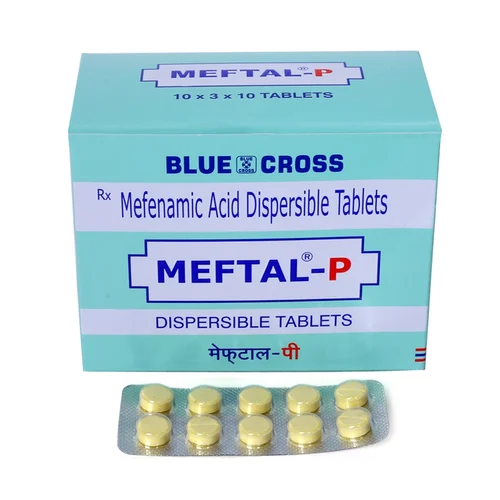
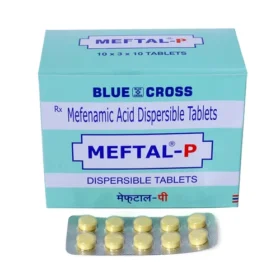
Meftal-P
✅ Ανακουφίζει τον εμμηνορρυσικό πόνο
✅ Μειώνει γρήγορα τον πυρετό
✅ Ανακουφίζει τον πονοκέφαλο
✅ Απαλύνει τους μυϊκούς κράμπες
✅ Διαχειρίζεται τον οδοντικό πόνο
Το Meftal-P περιέχει Mefenamic Acid.
✓ Ιατρικά ελεγμένο από Morgan Ellis — Ερευνητής Φαρμακευτικής · 8 χρόνια εμπειρία · Τελευταία αναθεώρηση: Μάιος 2026
⚡ Γρήγορη απάντηση — Τι είναι το Meftal-P;
Meftal-P είναι ταμπλέτα μεφεναμικού οξέος 100 mg — η παιδιατρική ή χαμηλή δόση αυτού του NSAID κλάσης φεναμάτων. Χρησιμοποιείται για πυρετό, ήπιο έως μέτριο πόνο και εμμηνορρυσικό πόνο. Στα παιδιά, η δόση είναι βασισμένη στο βάρος (~6,5 mg/kg τρεις φορές ημερησίως); · οι ενήλικες συνήθως παίρνουν 2 έως 3 ταμπλέτες (200–300 mg) τρεις φορές ημερησίως. Πάρτε με τροφή. Το μεφεναμικό οξύ έχει ιδιαίτερα ισχυρή αποδεικτική βάση για πρωτογενή δυσμηνόρροια (πόνος κατά την εμμήνου ρύση), όπου είναι μεταξύ των πιο αποτελεσματικών NSAIDs.
📦 Κάθε παραγγελία καλύπτεται από την Πολιτική Εγγύησης Επαναποστολής — εάν το δέμα σας δεν φτάσει εντός 20 εργάσιμων ημερών, το επαναποστέλλουμε.
Γιατί να παραγγείλετε από τη MedsBase
Τα γενόσημα φάρμακά μας προέρχονται από κατασκευαστές που πιστοποιούνται από την WHO-GMP και αποστέλλονται παγκοσμίως σε διακριτική, απλή συσκευασία — χωρίς όνομα φαρμάκου στο εξωτερικό του δέματος. Οι πληρωμές με κάρτα δρομολογούνται μέσω ρυθμισμένου επεξεργαστή (οι περιγραφές εκκαθάρισης περιλαμβάνουν ρυθμισμένο επεξεργαστή πληρωμών με κάρτα — ποτέ “MedsBase” ή οποιοδήποτε όνομα φαρμάκου). Γίνονται δεκτές και πληρωμές με κρυπτονομίσματα και τραπεζική μεταφορά SEPA. Κάθε παραγγελία καλύπτεται από την Πολιτική Επαναποστολής Εξασφαλίσεώς μας.
Meftal-P 100 mg είναι ένα δισκίο μεφενάμικο οξύ, ένα μη επιλεκτικό NSAID της χημικής κατηγορίας των φεναμάτων. Η δόση των 100 mg είναι το παιδιατρικό δισκίο σε πολλές αγορές· χρησιμοποιείται επίσης σε πολλαπλές δόσεις σε ενήλικες όταν προτιμάται μια χαμηλή αρχική δόση ή λεπτή τιτλοδότηση. Η υψηλής δόσης μορφή για ενήλικες είναι το δισκίο Meftal 250 mg και 500 mg.
Το μεφενάμικο οξύ είναι αξιοσημείωτο για τη δραστική του επίδραση στην πρωτογενή δυσμηνόρροια (περιόδους πόνου). Ο μηχανισμός πόνου της δυσμηνόρροιας προκαλείται από την παραγωγή προσταγλανδινών στη μήτρα, και το μεφενάμικο οξύ μπλοκάρει τόσο τη σύνθεση προσταγλανδινών (αναστολή COX) όσο και τη δράση των προσταγλανδινών στον υποδοχέα — ένας διπλός μηχανισμός που του δίνει ένα ελαφρύ πλεονέκτημα έναντι της ιβουπροφαίνης σε ορισμένες συγκριτικές δοκιμές για δυσμηνόρροια.
Για τι χρησιμοποιείται το Meftal-P;
- Πυρετός σε παιδιά (παιδιατρική χρήση, δόση βάσει βάρους)
- Ήπιος έως μέτριος πόνος σε παιδιά και ενήλικες — πονοκέφαλος, οδοντικός πόνος, μυοσκελετικός πόνος, πόνος μετά από εμβολιασμό
- Πρωτοπαθής δυσμηνόρροια — περιόδους πόνου (ενήλικες· χρησιμοποιήστε το δισκίο 500 mg σε υψηλότερες δόσεις)
- Μενορραγία — βαρύς εμμηνορρυσιακός πόνος, για τη μείωση τόσο του όγκου αιμορραγίας όσο και του πόνου
- Μετατραυματικός πόνος μαλακών ιστών σε μεγαλύτερα παιδιά
- Ιδιοπαθής νεανική αρθρίτιδα — εποπτεία ειδικού
Χορήγηση Meftal-P
- Παιδιά ≥ 6 μηνών έως 14 ετών: περίπου 6,5 mg/kg ανά δόση, τρεις φορές την ημέρα, μετά το φαγητό. Για παιδί 15 kg, αυτό αντιστοιχεί σε ένα δισκίο 100 mg τρεις φορές την ημέρα. Μέγιστη διάρκεια θεραπείας: 7 ημέρες.
- Εφήβους και ενήλικες: 200–300 mg (2–3 δισκία) τρεις φορές την ημέρα μετά το φαγητό, μέγιστη διάρκεια 7 ημέρες για οξείς ενδείξεις. Για δυσμηνόρροια, συνήθως προτιμάται το δισκίο Meftal υψηλότερης δόσης 250 ή 500 mg.
- Ηλικιωμένοι: η χαμηλότερη αποτελεσματική δόση· το μεφενάμικο οξύ είναι πιο επιρρεπές σε γαστρεντερικές και νεφρικές παρενέργειες σε ηλικιωμένους ασθενείς.
Να λαμβάνεται πάντα με φαγητό ή γάλα. Καταπιείται ολόκληρο με νερό. Τα δισκία Meftal-P είναι αρκετά μικρά ώστε συνήθως μπορούν να χωριστούν στη μέση για παιδιατρική δοσολογία βάσει βάρους, εάν είναι απαραίτητο. Για πολύ μικρά παιδιά, η παιδιατρική αναστολή είναι συχνά πιο βολική.
Πώς Λειτουργεί το Μεφενάμικο Οξύ;
Το μεφενάμικο οξύ είναι ένας μη εκλεκτικός αναστολέας κυκλοοξυγενάσης (αποκλείει τόσο την COX-1 όσο και την COX-2), μειώνοντας τη σύνθεση προσταγλανδινών σε θέσεις φλεγμονής, τραυματισμού και μέσα στη μήτρα. Σε αντίθεση με άλλα ΜΣΑΦ, το μεφενάμικο οξύ έχει επίσης άμεση ανταγωνιστική δράση στους υποδοχείς προσταγλανδινών — γεγονός που συμβάλλει στην ιδιαίτερη αποτελεσματικότητά του στον πόνo της περιόδου και σε πόνους που σχετίζονται με τη μήτρα.
Γαστρεντερική ασφάλεια. Το Meftal-P (ή το συστατικό του ΜΣΑΦ) φέρει πραγματικό κίνδυνο γαστρίτιδας, πεπτικού έλκους και ανώτερης γαστρεντερικής αιμορραγίας. Ο κίνδυνος είναι μεγαλύτερος σε ασθενείς άνω των 65 ετών, σε όσους έχουν προηγούμενη ιστορία έλκους και σε όσους λαμβάνουν ταυτόχρονα χαμηλές δόσεις ασπιρίνης, κορτικοστεροειδή, SSRI ή αντιπηκτικά. Λαμβάνεται με φαγητό, στην χαμηλότερη αποτελεσματική δόση για το συντομότερο λογικό χρονικό διάστημα, και συμβουλευτείτε το γιατρό σας σχετικά με την προσθήκη αναστολέα αντλίας πρωτονίων (ομεπραζόλη, παντοπραζόλη) για θεραπείες πάνω από 2–4 εβδομάδες.
Ποιος Δεν Πρέπει να Λάβει Meftal-P;
- Γνωστή υπερευαισθησία στο μεφενάμικο οξύ ή σε οποιοδήποτε ΜΣΑΦ
- Ενεργό πεπτικό έλκος ή ιστορία γαστρεντερικής αιμορραγίας
- Εξάρσεις φλεγμονώδους νόσου του εντέρου (το μεφεναμικό οξύ συνδέεται ειδικά με διάρροια και εξάρσεις κολίτιδας)
- Σοβαρή καρδιακή ανεπάρκεια, καθιερωμένη ισχαιμική καρδιοπάθεια
- Σοβαρή ηπατική ή νεφρική δυσλειτουργία
- Τρίτο τρίμηνο της εγκυμοσύνης
- Άσθμα, κνίδωση ή αγγειοοίδημα που προκαλείται από ασπιρίνη ή ΜΣΑΦ
Παρενέργειες
- Συχνές: διάρροια (ειδικά χαρακτηριστική του μεφεναμικού οξέος — περισσότερο από άλλα ΜΣΑΦ), δυσπεψία, ναυτία, κοιλιακός πόνος, κεφαλαλγία, ζάλη, εξάνθημα
- Ασυνήθιστες: πεπτικό έλκος, γαστρεντερική αιμορραγία, αύξηση ενζύμων ήπατος, μειωμένη νεφρική λειτουργία, αυξημένη αρτηριακή πίεση
- Σπάνιες αλλά σοβαρές: σοβαρή κολίτιδα, αιμολυτική αναιμία, οξεία νεφρική βλάβη, σύνδρομο Stevens-Johnson, σπασμοί (ειδικά σε υπερδοσολογία)
Διακόψτε αμέσως το μεφεναμικό οξύ εάν εμφανιστεί επίμονη ή αιματηρή διάρροια — αυτή είναι μια γνωστή δυσμενής αντίδραση που δεν επιλύεται πάντα με τη συνέχιση της θεραπείας.
Παραγγελία & Παράδοση
Η MedsBase προσφέρει παγκόσμια αποστολή για κάθε παραγγελία. Οι παραγγελίες αποστέλλονται σε διακριτική συσκευασία και φτάνουν σε συσκευασίες με εμπορικό σήμα του κατασκευαστή. Εάν το προτιμώμενο μέγεθος συσκευασίας σας δεν είναι διαθέσιμο, επικοινωνήστε με την υποστήριξη πελατών για εκτίμηση χρόνου παράδοσης.
Ιατρική αποποίηση ευθυνών. Οι πληροφορίες σε αυτή τη σελίδα παρέχονται μόνο για γενική ενημέρωση. Δεν αποτελούν υποκατάστατο συμβουλών από τον γιατρό ή τον φαρμακοποιό σας. Συμβουλευτείτε έναν καταξιωμένο επαγγελματία υγείας πριν ξεκινήσετε, διακόψετε ή αλλάξετε τη θεραπεία, ειδικά αν έχετε ιστορικό έλκους, καρδιακής νόσου, νεφρικής νόσου, άσθματος, ηπατικής νόσου ή είστε έγκυος.
Συχνές Ερωτήσεις
Για τι χρησιμοποιείται το Meftal-P;
Το Meftal-P (μεφεναμικό οξύ 100 mg) χρησιμοποιείται για πυρετό, ήπιο έως μέτριο πόνο και εμμηνορρυσικό πόνο. Στα παιδιά είναι ένα φάρμακο για πυρετό και πόνο που βασίζεται στο βάρος· στους ενήλικες χρησιμοποιείται σε δόσεις 2–3 δισκίων ή, πιο συχνά, χρησιμοποιείται το Meftal υψηλότερης δόσης 250/500 mg.
Είναι το Meftal-P μόνο για παιδιά;
Όχι — η δόση των 100 mg χαρακτηρίζεται ως παιδιατρική, αλλά χρησιμοποιείται και σε ενήλικες όταν προτιμάται λεπτή προσαρμογή δόσης ή χαμηλή δόση. Για τη δυσμηνόρροια και τον πόνο σε ενήλικες, το δισκίο Meftal 250 ή 500 mg είναι συνήθως πιο πρακτικό.
Πώς διαφέρει το μεφεναμικό οξύ από την ιβουπροφαίνη;
Και τα δύο είναι μη επιλεκτικά ΜΣΑΦ. Το μεφεναμικό οξύ έχει ένα ελαφρύ πλεονέκτημα στη δυσμηνόρροια επειδή μπλοκάρει επίσης άμεσα τους υποδοχείς προσταγλανδινών. Είναι πιο επιρρεπές σε διάρροια ως παρενέργεια και συνήθως χρησιμοποιείται για συντομότερες περιόδους από την ιβουπροφαίνη.
Πώς δίνω το Meftal-P σε ένα παιδί;
Η δόση είναι περίπου 6,5 mg ανά κιλό σωματικού βάρους, 3 φορές την ημέρα, μετά το φαγητό, για έως και 7 ημέρες. Ένα παιδί 15 kg λαμβάνει περίπου ένα δισκίο 100 mg τρεις φορές την ημέρα. Πάντα επιβεβαιώστε με παιδίατρο και χρησιμοποιήστε ζυγαριά — μην εκτιμάτε το βάρος.
Μπορώ να δώσω Meftal-P με άδειο στομάχι;
Όχι — πάντα δίνετε μετά το φαγητό ή το γάλα. Το μεφεναμικό οξύ με άδειο στομάχι συχνά προκαλεί άμεση δυσπεψία.
Γιατί το Meftal-P προκαλεί διάρροια σε κάποιους ανθρώπους;
Το μεφεναμικό οξύ έχει μια συγκεκριμένη, σχετικά κοινή σχέση με τη διάρροια που δεν υπάρχει στον ίδιο βαθμό με άλλα ΜΣΑΦ. Ο μηχανισμός δεν είναι πλήρως κατανοητός αλλά πιθανώς σχετίζεται με επιδράσεις στις εντερικές προσταγλανδίνες. Η επίμονη ή αιματηρή διάρροια είναι λόγος διακοπής.
Πόσο καιρό πρέπει να παίρνω Meftal-P;
Σύντομες περιόδους (έως 7 ημέρες) για οξύ πόνο ή πυρετό. Για δυσμηνόρροια, συνήθως 2–3 ημέρες ανά εμμηνορροϊκό κύκλο.
Είναι το Meftal-P ασφαλές στην εγκυμοσύνη;
Αποφύγετε μετά τις 20 εβδομάδες· αντενδείκνυται στο τρίτο τρίμηνο. Χρήση στις πρώτες εβδομάδες της εγκυμοσύνης μόνο με ιατρική συμβουλή· η παρακεταμόλη είναι πρώτης γραμμής.
Μπορεί το παιδί μου να πάρει παρακεταμόλη και Meftal-P μαζί;
Ναι. Λειτουργούν σε διαφορετικές οδούς και μπορούν να εναλλάσσονται ή να συνδυάζονται σε σωστά ζυγισμένες παιδιατρικές δόσεις. Αυτή είναι κοινή πρακτική για υψηλό επίμονο πυρετό σε παιδιά υπό παιδιατρική επίβλεψη.
Μπορούν οι ενήλικες να χρησιμοποιήσουν το Meftal-P για εμμηνορροϊκές κράμπες;
Ναι, αν και το δισκίο Meftal 250 ή 500 mg είναι συνήθως πιο βολικό για ενήλικες δόσεις. Στα 100 mg, μια τυπική αρχική δόση για ενήλικες είναι 2 δισκία (200 mg) τρεις φορές την ημέρα για τις πρώτες 2–3 ημέρες ενός κύκλου.
Τι να κάνετε εάν ένα παιδί κάνει εμετό μετά τη λήψη του Meftal-P;
Εάν ο εμετός εμφανιστεί εντός 30 λεπτών από τη λήψη της δόσης, επαναλάβετε τη δόση μία φορά. Εάν ο εμετός εμφανιστεί μετά από 30 λεπτά, μην επαναλάβετε τη δόση — η μεγαλύτερη απορρόφηση έχει ήδη γίνει. Εάν ο εμετός είναι συνεχής, επικοινωνήστε με τον παιδίατρο σας.
Σχετικές Εναλλακτικές
Άλλα προϊόντα σε Χρόνιες Παθήσεις που οι πελάτες εξετάζουν επίσης:
- Voveran Emulgel
- Baclof Liquid (Baclofen Oral Solution 5 mg/5 ml) — Ανακούφιση από σπαστικότητα
- Valance
- Glynase Xl
- Loratin
Περισσότερες επιλογές σε Φάρμακα για τον Πόνο
Ταξινομημένα σύμφωνα με τον όγκο παραγγελιών στο MedsBase — τι επιλέγουν άλλοι πελάτες σε αυτήν την κατηγορία.
| Ισχύς | 100 mg |
|---|---|
| Ποσότητα | 30 δισκία, 60 δισκία, 90 δισκία, 180 δισκία |
 Meftal-P
Ερωτήσεις & Απαντήσεις
Meftal-P
Σχετικά προϊόντα




Κριτικές
Δεν υπάρχουν ακόμη κριτικές