








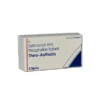
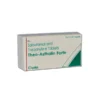
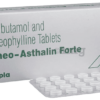
Theo-Asthalin
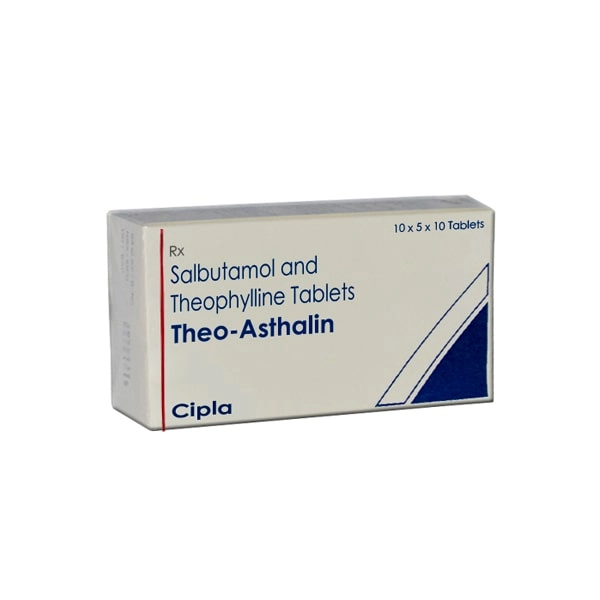
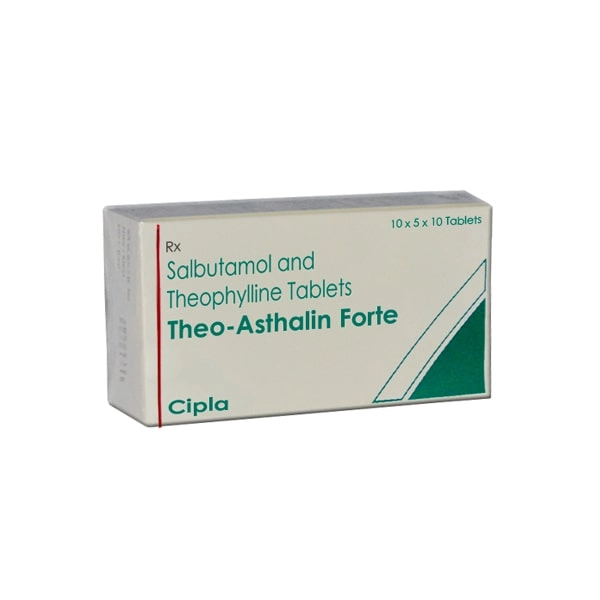
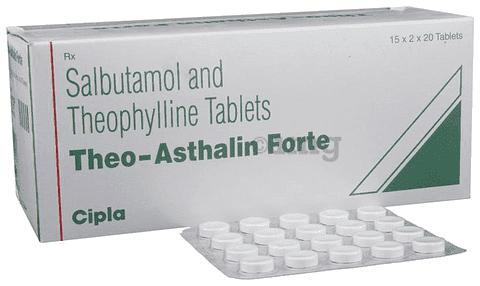
✅ Αποτελεσματικός έλεγχος των συμπτωμάτων άσθματος
✅ Γρήγορη ανακούφιση από βρογχοσπασμό
✅ Βελτιωμένη πνευμονική λειτουργία
✅ Βελτιωμένη ποιότητα ζωής
Περιέχει Salbutamol και Theophylline
✓ Ιατρικά ελεγμένο από Morgan Ellis — Ερευνητής Φαρμακευτικής · 8 χρόνια εμπειρία · Τελευταία αναθεώρηση: Μάιος 2026
⚡ Γρήγορη απάντηση — Τι είναι το Theo-Asthalin;
Theo-Asthalin περιέχει theophylline + salbutamol, ένα μεθυλοξανθινικός βρογχοδιασταλτικός με αντιφλεγμονώδη αποτελέσματα, χρησιμοποιείται ως συμπληρωματική θεραπεία για χρόνιο άσθμα και ΧΑΠ. Η θεοφυλλίνη δρα σε πολλαπλούς στόχους — αναστολή φωσφοδιεστεράσης (αύξηση cAMP), ανταγωνισμός υποδοχέων αδενοσίνης και ενεργοποίηση HDAC2 (αντιφλεγμονώδης). Έχει ένα στενό θεραπευτικό εύρος (στόχος ορού 10–20 mg/L; τοξικότητα από 20+) και πολλές φαρμακολογικές αλληλεπιδράσεις, απαιτώντας προσεκτική δοσολογία και (σε ορισμένους ασθενείς) παρακολούθηση επιπέδων στο αίμα. Κάθε δισκίο περιέχει θεοφυλλίνη 100 mg + σαλβουταμόλη 2 mg, κατασκευασμένη από Cipla σε εγκαταστάσεις πιστοποιημένες από WHO-GMP.
📦 Κάθε παραγγελία καλύπτεται από την Πολιτική Εγγύησης Επαναποστολής — εάν το δέμα σας δεν φτάσει εντός 20 εργάσιμων ημερών, το επαναποστέλλουμε.
Γιατί να παραγγείλετε από τη MedsBase
Τα γενόσημα φάρμακά μας προέρχονται από κατασκευαστές που πιστοποιούνται από την WHO-GMP και αποστέλλονται παγκοσμίως σε διακριτική, απλή συσκευασία — χωρίς όνομα φαρμάκου στο εξωτερικό του δέματος. Οι πληρωμές με κάρτα δρομολογούνται μέσω ρυθμισμένου επεξεργαστή (οι περιγραφές εκκαθάρισης περιλαμβάνουν ρυθμισμένο επεξεργαστή πληρωμών με κάρτα — ποτέ “MedsBase” ή οποιοδήποτε όνομα φαρμάκου). Γίνονται δεκτές και πληρωμές με κρυπτονομίσματα και τραπεζική μεταφορά SEPA. Κάθε παραγγελία καλύπτεται από την Πολιτική Επαναποστολής Εξασφαλίσεώς μας.
Τι είναι το Theo-Asthalin;
Το Theo-Asthalin είναι ένας από του στόματος μεθυλοξανθινικός βρογχοδιασταλτικός παράγοντας. Οι μεθυλοξανθίνες προέρχονται από φυσικούς αλκαλοειδείς (η θεοφυλλίνη είναι η διμεθυλοξανθίνη που υπάρχει στο τσάι). Η χρήση τους έχει μειωθεί από τη δεκαετία του 1990 καθώς οι εισπνεόμενες β2-αγωνιστές και οι κορτικοστεροειδές έγιναν πρώτη γραμμή — αλλά διατηρούν ρόλο ως τρίτης γραμμής συμπληρωματικής θεραπείας σε δύσκολα άσθματα και ΧΑΠ.
Πώς λειτουργεί το Theo-Asthalin;
- Αναστολή φωσφοδιεστεράσης (PDE3, PDE4) — αυξάνει την κυκλική AMP στον λείο μυ των αεραγωγών και στα φλεγμονώδη κύτταρα· το τελικό αποτέλεσμα είναι βρογχοδιαστολή και μειωμένη απελευθέρωση μεσολαβητών.
- Ανταγωνισμός υποδοχέων αδενοσίνης — αποκλείει τη βρογχοσύσπαση που μεσολαβείται από την αδενοσίνη και την απελευθέρωση μεσολαβητών από τα μαστοκύτταρα.
- Ενεργοποίηση HDAC2 (θεοφυλλίνη σε χαμηλά επίπεδα ορού 5–10 mg/L) — αποκαθιστά την ανταπόκριση στα κορτικοστεροειδή σε ΧΑΠ και σοβαρό άσθμα όπου η ανθεκτικότητα στα στεροειδή μεσολαβείται εν μέρει από μειωμένη HDAC2.
- Συστολική ικανότητα διαφράγματος — οι μεθυλοξανθίνες μειώνουν την κόπωση του διαφράγματος, χρήσιμες σε ΧΑΠ με σοβαρό περιορισμό ροής αέρα.
Χρήσεις και ενδείξεις
- Σοβαρό χρόνιο άσθμα — προσθήκη σε υψηλή δόση ICS-LABA όπου απαιτείται επιπλέον βρογχοδιαστολή
- Συντήρηση ΧΑΠ — προσθήκη σε LAMA-LABA ή τριπλή θεραπεία
- Νυχτερινό άσθμα — η συντηρητικής αποδέσμευσης φόρμουλα παρέχει νυχτερινή βρογχοδιαστολή
- Απνοέα της ωρίμανσης (θεοφυλλίνη) — χρήση σε νεογνά
- Καρδία πνευμονική και πνευμονική υπέρταση — συμπληρωματική
Δοσολογία Theo-Asthalin
| Ασθενής | Δόση | Συχνότητα |
|---|---|---|
| Ενήλικες | 1 δισκίο | Τρεις έως τέσσερις φορές ημερησίως |
| Παιδιά >12 έτη | 1 δισκίο | Τρεις φορές την ημέρα |
Παρενέργειες του Theo-Asthalin
- Ναυτία, εμετοί, δυσπεψία
- Κεφαλαλγία
- Τρόμος
- Αϋπνία, ανησυχία
- Ταχυκαρδία, παλμοί
- Ήπια υποκαλιαιμία σε υψηλές δόσεις
Τοξικά επίπεδα (>20 mg/L) — έκτακτη ανάγκη:
- Σοβαρή ναυτία, επίμονος εμετός
- Καρδιακή αρρυθμία (κολπική μαρμαρυγή, υπερκοιλιακή ταχυκαρδία)
- Σπασμοί (συχνά χωρίς προειδοποίηση)
- Υποτασία, υπεργλυκαιμία, υποκαλιαιμία, υπερκαλσιαιμία
Προειδοποιήσεις και προφυλάξεις
- Στενό θεραπευτικό εύρος. Στόχος ορού 10–20 mg/L. Ελέγξτε το επίπεδο στο αίμα 5 ημέρες μετά την έναρξη, μετά από αλλαγή δόσης, με νέο φάρμακο που αλληλεπιδρά, με διακοπή του καπνίσματος και κατά τη διάρκεια ασθένειας/πυρετού (η κάθαρση μειώνεται).
- Πολλές αλληλεπιδράσεις φαρμάκων — δείτε τον πίνακα αλληλεπιδράσεων. Το μεγαλύτερο μέρος μεταβολίζεται από το CYP1A2· πολλοί αναστολείς και επαγωγείς αλλάζουν σημαντικά τα επίπεδα.
- Κάπνισμα επαγωγή του CYP1A2 και μείωση των επιπέδων θεοφυλλίνης κατά ~50% — επαναπροσαρμογή δόσης μετά τη διακοπή του καπνίσματος.
- Καρδιακή νόσος: χρήση με προσοχή σε αρρυθμίες, καρδιακή ανεπάρκεια, σοβαρή υπέρταση.
- Υπερθυρεοειδισμός: αυξημένη κάθαρση και ενισχυμένες αδρενοεργικές επιδράσεις.
- Εγκυμοσύνη και θηλασμός: γενικά αποφεύγεται· χρησιμοποιείται μόνο εάν το όφελος είναι σαφές.
- Ηπατική νόσος: μείωση δόσης — οι μεθυλοξανθίνες μεταβολίζονται ηπατικά.
Αντενδείξεις
- Υπερευαισθησία στη θεοφυλλίνη ή άλλες ξανθίνες (καφεΐνη, θεοβρωμίνη)
- Ενεργό πεπτικό έλκος
- Ανεξέλεγκτες ταχυαρρυθμίες
- Σοβαρή καρδιακή ανεπάρκεια (NYHA IV)
Αλληλεπιδράσεις Φαρμάκων
| Φάρμακο αλληλεπίδρασης | Αποτέλεσμα | Τι να κάνετε |
|---|---|---|
| Σιπροφλοξασίνη, ερυθρομυκίνη, κλαριθρομυκίνη, φλουβοξαμίνη | Αναστολή CYP1A2 → αύξηση θεοφυλλινικών επιπέδων → τοξικότητα (ναυτία, αρρυθμία, σπασμοί) | Αποφύγετε ή μειώστε τη δόση θεοφυλλίνης κατά 50%. Ελέγξτε τα επίπεδα στο ορό |
| Σιμετιδίνη, αλλοπουρινόλη | Αύξηση θεοφυλλινικών επιπέδων | Μείωση δόσης. Παρακολούθηση επιπέδων |
| Φαινυτοΐνη, καρβαμαζεπίνη, ριφαμπικίνη | Ενεργοποίηση CYP — χαμηλότερα επίπεδα | Μπορεί να απαιτείται υψηλότερη δόση |
| Κάπνισμα | Ενεργοποιεί το CYP1A2 — χαμηλότερα επίπεδα | Επαναπροσαρμογή δόσης μετά τη διακοπή του καπνίσματος |
| β-αγωνιστές, διουρητικά | Προσθετική υποκαλιαιμία | Παρακολουθήστε τα επίπεδα καλίου |
Αποθήκευση
- Αποθήκευση κάτω από 25°C σε δροσερό, ξηρό μέρος μακριά από άμεσο ηλιακό φως.
- Διατηρήστε στην αρχική συσκευασία μέχρι τη χρήση για προστασία από υγρασία και φως.
- Μην χρησιμοποιείτε μετά την ημερομηνία λήξης που αναγράφεται στην ταινία.
- Μην αφήνετε σε μέρη προσβάσιμα από παιδιά.
Σχετικές Εναλλακτικές Λύσεις στο MedsBase
- Asthalin Inhaler — σαλβουταμόλη για άμεση ανακούφιση
- Budecort Inhaler — βουδεσονοίδη ICS για πρόληψη
- Foracort Inhaler — βουδεσονοίδη + φορμοτερόλη ICS-LABA
- Tiova Inhaler — τιοτροπίου LAMA για ΧΑΠ
- Montair — ταμπλέτα montelukast LTRA
Συχνές Ερωτήσεις
Γιατί να συνδυάσετε θεοφυλλίνη με σαλβουταμόλη;
Ο συνδυασμός προσφέρει β2 αγωνισμό (βρογχοδιαστολή) συν μεθυλοξανθινικό αποτέλεσμα (επιπλέον βρογχοδιαστολή, αντιφλεγμονώδες, συστολικότητα διαφράγματος) σε ένα δισκίο — ιστορικά βολικό για τη συμμόρφωση.
Χρησιμοποιείται ακόμα αυτός ο συνδυασμός;
Λιγότερο συχνά από τα ξεχωριστά συστατικά. Η σύγχρονη πρακτική προτιμά την εισπνεόμενη θεραπεία (β2 αγωνιστής + ICS) έναντι των στοματικών συνδυασμών, τόσο για ασφάλεια (μικρότερη συστημική έκθεση) όσο και για αποτελεσματικότητα.
Είναι οι παρενέργειες και των δύο φαρμάκων αθροιστικές;
Ναι — ο τρόμος, η ταχυκαρδία, ο πονοκέφαλος, η αϋπνία και η υποκαλιαιμία ενισχύονται και από τα δύο συστατικά. Παρακολουθήστε την καρδιαγγειακή ανοχή.
Πόσο γρήγορα αρχίζει να δρα το Theo-Asthalin;
Το συστατικό σαλβουταμόλ αρχίζει σε 15–30 λεπτά· η θεοφυλλίνη φτάνει σε σταθερή κατάσταση σε ημέρες.
Μπορώ να το πάρω μαζί με τον εισπνευστήρα μου;
Πιθανόν — συζητήστε με τον ιατρό σας. Η συνδυασμένη χρήση από του στόματος και εισπνευστήρα β2-αγωνιστών μπορεί να αυξήσει τον τρόμο, την ταχυκαρδία και την υποκαλιαιμία.
Θα αλληλεπιδράσει με τα φάρμακα της καρδιάς μου;
Η θεοφυλλίνη αλληλεπιδρά με πολλά φάρμακα (δείτε τον πίνακα αλληλεπιδράσεων). Πάντα ενημερώστε τον γιατρό σας για ό,τι παίρνετε.
Είναι ασφαλές στην εγκυμοσύνη;
Γενικά αποφεύγεται· προτιμάται η εισπνευστήρια θεραπεία.
Πόσο διαρκεί κάθε δισκίο;
Και τα δύο συστατικά διαρκούν 4–6 ώρες· δόση 3–4 φορές την ημέρα.
Μπορώ να θρυμματίσω το δισκίο;
Τα τυπικά δισκία μπορούν να θρυμματιστούν· οι ελεγχόμενης απελευθέρωσης εκδόσεις όχι. Ελέγξτε την ετικέτα.
Σχετικές Εναλλακτικές
Άλλα προϊόντα σε Χρόνιες Παθήσεις που οι πελάτες εξετάζουν επίσης:
Περισσότερες επιλογές στη θεραπεία Άσθματος/ΧΑΠ
Ταξινομημένα σύμφωνα με τον όγκο παραγγελιών στο MedsBase — τι επιλέγουν άλλοι πελάτες σε αυτήν την κατηγορία.

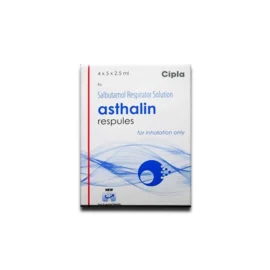
| Ισχύς | 2mg + 100mg, 4mg + 200mg |
|---|---|
| Ποσότητα | 30 Δισκία, 60 Δισκία, 90 Δισκία |
| Φαρμακευτική Μορφή | Δισκία |
| Κατασκευαστής | Cipla Inc |
| Θεραπεία | Άσθμα |
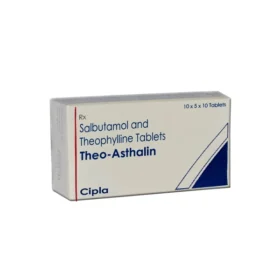 Theo-Asthalin
Ερωτήσεις & Απαντήσεις
Theo-Asthalin
Σχετικά προϊόντα


Κριτικές
Δεν υπάρχουν ακόμη κριτικές