







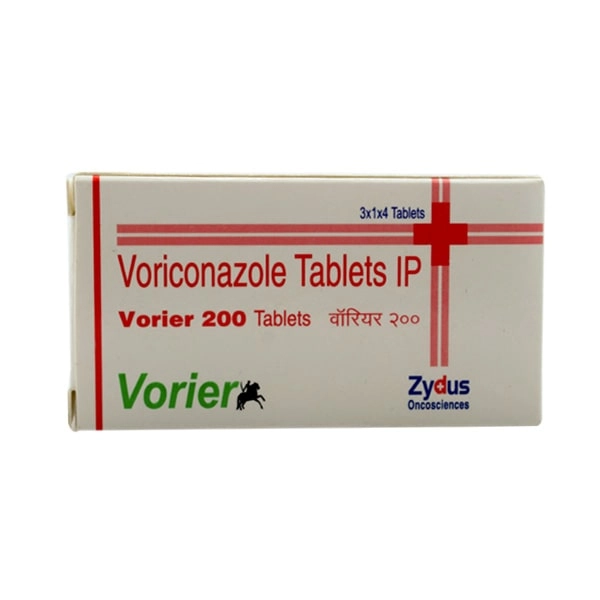
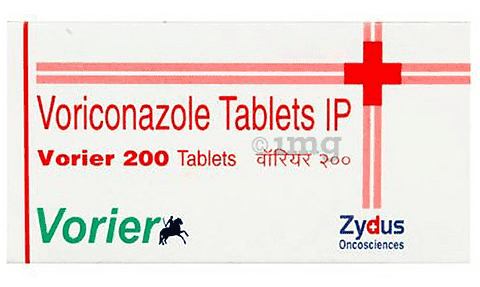
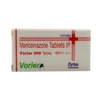
Vorier
✅ Γρήγορη ανακούφιση από μυκητιασικές λοιμώξεις
✅ Αποτελεσματική εξάλειψη μυκήτων
✅ Επιβεβαιωμένο και αξιόπιστο από ειδικούς
✅ Καλά ανεκτό, με κοινές παρενέργειες
✅ Βολική χορήγηση δόσης
Το Vorier περιέχει Βορικοναζόλη
✓ Ιατρικά ελεγμένο από Morgan Ellis — Ερευνητής Φαρμακευτικής · 8 χρόνια εμπειρία · Τελευταία αναθεώρηση: Μάιος 2026
💡 Γρήγορη Απάντηση
Το Vorier είναι δισκίο στοματικής χορήγησης βορικοναζόλης 200 mg — ένα τριαζολικό δεύτερης γενιάς και το θεραπεία πρώτης γραμμής για εισβολική ασπεργίλλωση. Καλύπτει επίσης Candida (συμπεριλαμβανομένων ορισμένων στελεχών ανθεκτικών στη φλουκοναζόλη), Scedosporium, Fusarium. Ειδικό φάρμακο που χορηγείται σε νοσοκομείο — απαιτείται TDM (ελάχιστη συγκέντρωση 1–5,5 mg/L), υποχρεωτική βασική οφθαλμολογική εξέταση (συχνές οπτικές διαταραχές) και συχνή παρακολούθηση ηπατικών ενζύμων. Πολύπλοκη φαρμακοκινητική: μη γραμμική (πολυμορφισμός CYP2C19), ισχυρός αναστολέας CYP3A4, φωτοευαισθησία → κίνδυνος καρκίνου δέρματος σε μακροχρόνια χρήση.
WHO-GMP
πιστοποιημένος κατασκευαστής
📦 Κάθε παραγγελία καλύπτεται από την Πολιτική Εγγύησης Επαναποστολής — εάν το δέμα σας δεν φτάσει εντός 20 εργάσιμων ημερών, το επαναποστέλλουμε.
Γιατί να παραγγείλετε από τη MedsBase
Τα γενόσημα φάρμακά μας προέρχονται από κατασκευαστές που πιστοποιούνται από την WHO-GMP και αποστέλλονται παγκοσμίως σε διακριτική, απλή συσκευασία — χωρίς όνομα φαρμάκου στο εξωτερικό του δέματος. Οι πληρωμές με κάρτα δρομολογούνται μέσω ρυθμισμένου επεξεργαστή (οι περιγραφές εκκαθάρισης περιλαμβάνουν ρυθμισμένο επεξεργαστή πληρωμών με κάρτα — ποτέ “MedsBase” ή οποιοδήποτε όνομα φαρμάκου). Γίνονται δεκτές και πληρωμές με κρυπτονομίσματα και τραπεζική μεταφορά SEPA. Κάθε παραγγελία καλύπτεται από την Πολιτική Επαναποστολής Εξασφαλίσεώς μας.
Διακριτική συσκευασία
απλό φάκελο
Παγκόσμια αποστολή
στις περισσότερες χώρες
🔒 Γιατί να παραγγείλετε το Vorier από τη MedsBase
- πιστοποιημένο από τη WHO-GMP κατασκευαστή — προέρχεται από ρυθμιζόμενη εγκατάσταση, ολοκληρωμένη συσκευασία με αριθμό παρτίδας και ημερομηνία λήξης.
- Διακριτική συσκευασία — απλό φάκελο, χωρίς όνομα φαρμάκου στο εξωτερικό.
- Παγκόσμια αποστολή στις περισσότερες χώρες με Reshipment Assurance.
- Πόντοι αφοσίωσης — 1 πόντος ανά $1 που ξοδεύετε (εξαιρούνται τα πεπτίδια/αποστολή)· 100 πόντους = $5 έκπτωση στην επόμενη παραγγελία σας.
Χρήσεις & ενδείξεις
Το Vorier (βορικοναζόλη 200 mg, Glenmark) είναι ένα ειδικό αντιμυκητιασικό — πρώτης γραμμής για εισβολική ασπεργίλλωση (η μελέτη Herbrecht 2002 NEJM το καθιέρωσε), και επιλογή για εισβολική καντιδίαση, λοιμώξεις από Scedosporium και Fusarium, οισοφαγική καντιδίαση ανθεκτική στη φλουκοναζόλη, και πυρετική ουδετεροπενία σε επιλεγμένες περιπτώσεις. Δεν είναι φάρμακο πρώτης γραμμής για κολπική μυκητίαση, στοματική μυκητίαση ή ονυχομυκητίαση — χρησιμοποιήστε φλουκοναζόλη ή τερμπινάφινη για αυτές.
| Ενδείξεις | Τυπικό σχήμα θεραπείας |
|---|---|
| Εισβολική ασπεργίλλωση | IV φορτίο 6 mg/kg q12h × 24 h, έπειτα 4 mg/kg q12h IV; ή από του στόματος 200 mg q12h (≥ 40 kg) / 100 mg q12h (< 40 kg) |
| Καντιδαιμία (μη ουδετεροπενική) | Ίδια δοσολογία — τουλάχιστον 14 ημέρες μετά την πρώτη αρνητική καλλιέργεια αίματος |
| Οισοφαγική καντιδίαση (ανθεκτική στη φλουκοναζόλη) | 200 mg q12h × 14–21 ημέρες |
| Λοίμωξη από Scedosporium / Fusarium | 200 mg q12h, διάρκεια με βάση την ανταπόκριση |
| Εμπειρική θεραπεία σε πυρετική ουδετεροπενία | 200 mg q12h |
Πώς να πάρετε
- Λαμβάνεται 1 ώρα πριν ή 1 ώρα μετά το γεύμα — το φαγητό μειώνει την απορρόφηση κατά ~22%.
- Καταπιείτε ολόκληρο με νερό.
- Η δοσολογία φόρτωσης είναι κρίσιμη — χωρίς αυτήν, η σταθερή κατάσταση επιτυγχάνεται σε 5–7 ημέρες.
- Θεραπευτική παρακολούθηση φαρμάκου (ελάχιστη συγκέντρωση 1–5,5 mg/L) την 5η–7η ημέρα και μετά από αλλαγή δοσολογίας.
Πώς λειτουργεί
Το βορικοναζόλη αναστέλλει τον μυκητιακό CYP51 με μεγαλύτερη συγγένεια από το φλουκοναζόλη, επεκτείνοντας την κάλυψη σε Aspergillus και τα περισσότερα μη-albicans Candida. Η φαρμακοκινητική είναι μη γραμμική σε ενήλικες — μικρές αλλαγές στη δοσολογία προκαλούν μεγάλες αλλαγές στη συγκέντρωση. CYP2C19 πολυμορφισμός: οι αργοί μεταβολιστές (15% των Ασιατών, 3% των Λευκών) έχουν 4 φορές υψηλότερες συγκεντρώσεις· οι υπερταχείς μεταβολιστές μπορεί να μην φτάσουν θεραπευτικά επίπεδα. Αυτός είναι ο λόγος που η TDM είναι υποχρεωτική.
Παρενέργειες & παρακολούθηση
| Συχνότητα | Επιδράσεις |
|---|---|
| Πολύ συχνά | Οπτικές διαταραχές — θολή όραση, φωτοψίες, αλλαγή στην αντίληψη χρωμάτων (~30%, ειδικά την πρώτη εβδομάδα, αναστρέψιμη) |
| Συχνά | Εξάνθημα, ναυτία, έμετος, κοιλιακός πόνος, διάρροια, περιφερικό οίδημα, πυρετός, αυξημένες ενζυμικές δοκιμασίες ηπατικής λειτουργίας |
| Ασυνήθιστες | Φωτοευαισθησία / φωτοτοξικότητα, ψευδαισθήσεις, σύγχυση, υποκαλιαιμία |
| Σπάνια αλλά σοβαρή | Ηπατοτοξικότητα (συμπεριλαμβανομένης θανατηφόρας ηπατίτιδας), επιμήκυνση QT / torsades, SJS/TEN, περιόστιτιδα (μακροπρόθεσμα — συσσώρευση φθορίου), καρκίνος δέρματος τύπου squamous-cell (μακροπρόθεσμη φωτοευαισθησία) |
Αλληλεπιδράσεις φαρμάκων — εκτεταμένες
Το βορικοναζόλη μεταβολίζεται από τα CYP2C19, CYP2C9, CYP3A4 — και είναι ο ίδιος ισχυρός αναστολέας και των τριών. Κύριες ανησυχίες:
| Φάρμακο | Αποτέλεσμα | Δράση |
|---|---|---|
| Ριφαμπικίνη / ριφαβουτίνη / καρβαμαζεπίνη / φαινοβαρβιτάλη | Ισχυρή επαγωγή → μη ανιχνεύσιμο βορικοναζόλη | Αντενδεικνύεται |
| Βάλσαμο του Αγίου Ιωάννη | Ίδιο επαγωγικό αποτέλεσμα | Αντενδεικνύεται |
| Sirolimus | 8× αύξηση — σοβαρή τοξικότητα | Αντενδεικνύεται |
| Πιμοζίδη / κινιδίνη / τερφενταδίνη / σισαπρίδη | Επέκταση QT | Αντενδεικνύεται |
| Εργοταλικά αλκαλοειδή | Αγγειοσυστολή → εργοτισμός | Αντενδεικνύεται |
| Τακρολιμους / κυκλοσπορίνη | 2–3× αύξηση | Μείωση δόσης· παρακολούθηση ελάχιστης συγκέντρωσης |
| Βαρφαρίνη | Αύξηση INR | Παρακολούθηση INR στενά |
| Στατίνες (σιμβαστατίνη, ατορβαστατίνη) | Κίνδυνος ραβδομυόλυσης | Διακοπή ή εναλλαγή σε πραβαστατίνη |
| Φαινυτοΐνη | Αμφίδρομη — τα επίπεδα βορικοναζόλης μειώνονται, τα επίπεδα φαινυτοΐνης αυξάνονται | Αποφύγετε· εάν χρησιμοποιηθεί, αυξήστε τη βορικοναζόλη 100% και παρακολουθήστε τη φαινυτοΐνη |
| Ομεπραζόλη / εσομεπραζόλη | Αύξηση επιπέδων PPI· μέτρια επίδραση στη βορικοναζόλη | Μείωση της δόσης PPI στο μισό |
| Μεθαδόνη, οπιοειδή | Αυξημένη καταστολή ΚΝΣ | Μείωση της δόσης οπιοειδούς |
Υποχρεωτική παρακολούθηση
- Θεραπευτική παρακολούθηση φαρμάκων — επίπεδο πλάσματος στη βάση την ημέρα 5–7 και μετά από κάθε αλλαγή δόσης. Στόχος 1,0–5,5 mg/L (σε ορισμένα εργαστήρια 2,0–5,5 για εισβολική ασπεργίλλωση).
- Λειτουργία του ήπατος — αρχική μέτρηση, στη συνέχεια εβδομαδιαία για 2–4 εβδομάδες, και μετά μηνιαία κατά τη διάρκεια της θεραπείας.
- Οπτική λειτουργία — βασική οφθαλμολογική εξέταση εάν αναμένεται θεραπεία > 28 ημέρες.
- Νεφρική λειτουργία — η ενδοφλέβια μορφή περιέχει κυκλοδεξτρίνη· αποφεύγεται σε CrCl < 50 εκτός εάν το όφελος υπερτερεί σαφώς του κινδύνου (η από του στόματος μορφή είναι ασφαλής).
- Δέρμα / δερματολογία — ετήσια αξιολόγηση σε μακροπρόθεσμη θεραπεία.
Αντενδείξεις
- Ταυτόχρονη χρήση ριφαμπικίνης, ριφαμπουτίνης, καρβαμαζεπίνης, φαινοβαρβιτάλης, St John’s wort.
- Ταυτόχρονη χρήση πιμοζίδης, κινιδίνης, τερφεναδίνης, κισαπρίδης, εργοτικών αλκαλοειδών, σιρολιμούς.
- Εγκυμοσύνη (τερατογένεια).
- Σοβαρή ηπατική δυσλειτουργία.
- Υπερευαισθησία σε άλλα αζολικά.
Εγκυμοσύνη & θηλασμός
Η βορικοναζόλη είναι τερατογόνο σε ζώα και αντενδείκνυται κατά την εγκυμοσύνη, εκτός σε περιπτώσεις συστημικών μυκωσιών που απειρούν τη ζωή. Απαιτείται αποτελεσματική αντισύλληψη. Η έκκριση στο μητρικό γάλα είναι άγνωστη — προτιμούνται εναλλακτικές λύσεις κατά τον θηλασμό.
Συχνές Ερωτήσεις
Βλέπω αναλαμπές φωτός όταν παίρνω βορικοναζόλη — είναι φυσιολογικό;
Ναι — οι οπτικές διαταραχές (φωτοψία, θολή όραση, αλλαγή στην αντίληψη των χρωμάτων) εμφανίζονται σε ~30% των ασθενών, συνήθως μέσα στις πρώτες 2 ώρες από τη λήψη και υποχωρούν μέσα σε ημέρες έως εβδομάδες ακόμη και με τη συνέχιση της θεραπείας. Αποφύγετε την οδήγηση τη νύχτα μέχρι να εξασφαίσετε ότι η επίδραση έχει εξαφανιστεί. Εάν είναι σοβαρές ή επίμονες, ζητήστε θεραπευτική φαρμακολογική παρακολούθηση (TDM) — τα υψηλά επίπεδα φαρμάκου στο αίμα επιδεινώνουν τα συμπτώματα.
Γιατί όλοι ανησυχούν τόσο για την κατάσταση του CYP2C19 μου;
Η βορικοναζόλη μεταβολίζεται από το CYP2C19. Οι αργοί μεταβολιστές (15% των Ασιατών, 3% των Καυκάσιων) έχουν 4 φορές μεγαλύτερη έκθεση σε τυπικές δόσεις → τοξικότητα. Οι υπερταχείς μεταβολιστές μπορεί να μην φτάσουν σε θεραπευτικά επίπεδα → αποτυχία θεραπείας. Η φαρμακογενετική δοκιμασία ή απλώς η θεραπευτική φαρμακολογική παρακολούθηση (TDM) την 5η–7η ημέρα λύνει αυτό το πρόβλημα.
Μπορώ να αλλάξω από ενδοφλέβια σε στοματική βορικοναζόλη;
Ναι — μόλις ο ασθενής σταθεροποιηθεί και ανέχεται την στοματική χορήγηση. Η στοματική βιοδιαθεσιμότητα είναι ~96% σε ενήλικες, οπότε η δόση παραμένει η ίδια (200 mg κάθε 12 ώρες για ενήλικες ≥ 40 kg).
Ποιο αντηλιακό πρέπει να χρησιμοποιώ;
Ευρέος φάσματος SPF 50+ τουλάχιστον, καθημερινά, ακόμα και σε συννεφιασμένες μέρες. Επαναφέρετε κάθε 2 ώρες όταν βρίσκεστε έξω. Ρούχα με προστασία UV με μακριά μανίκια για παρατεταμένη έκθεση. Αποφύγετε εντελώς τα σολάριουμ.
Τι είναι η ‘περιοστίτιδα’ και η ‘τοξικότητα φθορίου’;
Η βορικοναζόλη περιέχει φθόριο. Η μακροπρόθεσμη θεραπεία (μήνες) μπορεί να προκαλέσει επώδυνη περιοστίτιδα με αυξημένη αλκαλική φωσφατάση και φθόριο ορού. Η σπινθηρογραφία οστών δείχνει πρόσληψη. Επιλύεται με τη διακοπή. Νέο ανεξήγητο οστικό πόνο κατά τη μακροπρόθεσμη θεραπεία — μετρήστε αλκαλική φωσφατάση και φθόριο ορού.
Είναι η βορικοναζόλη το ίδιο με το Vfend;
Ναι — το Vfend είναι το πρωτότυπο εμπορικό σήμα της Pfizer. Το Vorier περιέχει την ίδια ενεργή ουσία, κατασκευασμένη από τη Glenmark σύμφωνα με τα πρότυπα WHO-GMP. Βιοισοδύναμα.
Γιατί ο ειδικός μου στην ονυχομυκητίαση δεν χρησιμοποιεί βορικοναζόλη;
Η βορικοναζόλη είναι δεσμευμένη για εισχωρητικές συστηματικές μυκητιάσεις. Για τη μυκητιασική μόλυνση νυχιών (η κοινή αιτία), η τεριμπιναφίνη 250 mg/ημέρα × 12 εβδομάδες είναι πρώτης γραμμής — καλύτερο ποσοστό θεραπείας, λιγότερες αλληλεπιδράσεις, πολύ φθηνότερη. Η βορικοναζόλη θα χρησιμοποιηθεί μόνο για ασυνήθιστους μύκητες (Scedosporium, Fusarium) που επιβεβαιώνονται σε καλλιέργεια.
Τι γίνεται αν έχω ηπατίτιδα με βορικοναζόλη;
Διακόψτε τη βορικοναζόλη αν AST/ALT > 5× ULN, ή οποιαδήποτε αύξηση + συμπτώματα (ικτέρος, σκούρα ούρα, πόνος στο δεξιό υπχωριο). Αλλάξτε σε εναλλακτική (κασποφουνγίνη / μικαφουνγίνη / αμφοτερικίνη Β / ποσακοναζόλη / ισαβουκοναζόλη ανάλογα με την ένδειξη). Επαναπρόκληση μερικές φορές δυνατή σε χαμηλότερη δόση με στενή παρακολούθηση.
Μπορώ να πάρω βορικοναζόλη με PPIs;
Η βορικοναζόλη αναστέλλει το CYP2C19, αυξάνοντας τα επίπεδα ομεπραζόλης και εσομεπραζόλης κατά ~2×. Μειώστε τη δόση του PPI στο μισό αν συνεχίσετε. Η παντοπραζόλη και η ραβεπραζόλη επηρεάζονται λιγότερο. Η αλληλεπίδραση δεν αλλάζει σημαντικά τα επίπεδα βορικοναζόλης.
Τι είναι το TDM και γιατί κάθε εβδομάδα στην αρχή;
Θεραπευτική παρακολούθηση φαρμάκων — μέτρηση της ελάχιστης συγκέντρωσης βορικοναζόλης στο πλάσμα. Στόχος 1–5,5 mg/L. Κάτω από 1: κίνδυνος αποτυχίας θεραπείας. Πάνω από 5,5: ηπατοτοξικότητα, εγκεφαλοπάθεια, οπτικά προβλήματα. Ο πολυμορφισμός CYP2C19 καθιστά τη δόση-απόκριση απρόβλεπτη, επομένως η παρακολούθηση είναι απαραίτητη για εισβολική ασπεργίλλωση.
Αποθήκευση
Αποθηκεύστε τα δισκία στους 15–30 °C στην αρχική συσκευασία. Προστατέψτε από το φως. Μην χρησιμοποιείτε μετά την ημερομηνία λήξης. Φυλάξτε μακριά από παιδιά.
Άλλα Αντιμυκητιασικά Φάρμακα που μπορεί να σας ενδιαφέρουν
Το βορικοναζόλη είναι εξειδικευμένη θεραπεία. Παρατίθενται παρακάτω — η ίδια μόριο από διαφορετικό κατασκευαστή, καθώς και θεραπείες πρώτης γραμμής για τις κοινές ενδείξεις όπου το βορικοναζόλη είναι υπερβολικό.
- Zocon (φλουκοναζόλη 150 mg) — Θεραπεία πρώτης γραμμής για μη-Aspergillus Candida· καλή ανοχή.
- Sporanox (itraconazole 100 mg) — Για διμορφικές μυκώσεις + μη-Aspergillus μύκητες.
- Zimig (τερβιναφίνη 250 mg) — Δερματοφυτική μόλυνση νυχιών/δέρματος (όχι εισβολικοί μύκητες).
- Clocip (κλοτριμαζόλη 1%) — Τοπική θεραπεία για Candida, δερματοφυτική τρίχα.
- Loceryl (αμορολφίνη 5%) — Τοπικό βερνίκι νυχιών για ήπια ονυχομυκητίαση.
Περισσότερες επιλογές στην κατηγορία Αντιμυκητιασικά
Ταξινομημένα σύμφωνα με τον όγκο παραγγελιών στο MedsBase — τι επιλέγουν άλλοι πελάτες σε αυτήν την κατηγορία.
| Ισχύς | 200 mg |
|---|---|
| Ποσότητα | 28 Δισκία, 56 Δισκία, 84 Δισκία |
| Φαρμακευτική Μορφή | Δισκία |
| Κατασκευαστής | Zydus Pharma |
| Θεραπεία | Σοβαρές μυκητιασικές λοιμώξεις |
| Γενόσημη μάρκα | Fluconazole |
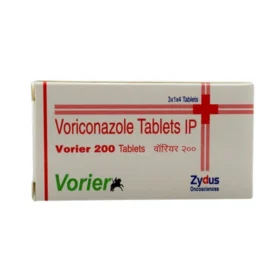 Vorier
Ερωτήσεις & Απαντήσεις
Vorier
Σχετικά προϊόντα

Κριτικές
Δεν υπάρχουν ακόμη κριτικές