








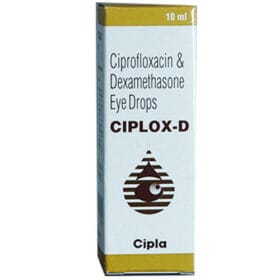
Ciplox-D Eye Drops
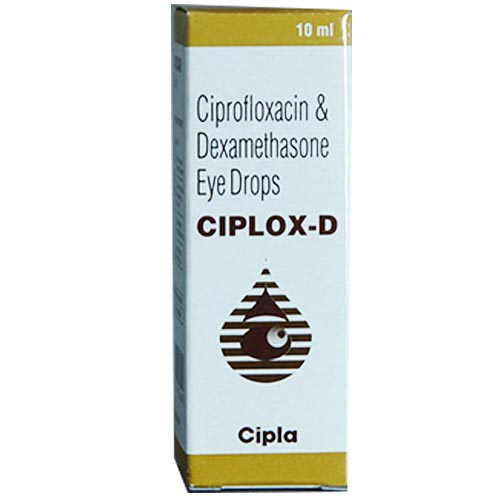
Ciplox-D (ciprofloxacin 0.3% + dexamethasone 0.1%) — φθοροκινολόνη + στεροειδές οφθαλμικές σταγόνες. Βακτηριακή κοινιουγκτιβίτη με σημαντική φλεγμονή. Αποφύγετε σε ιογενή ή μυκητιακή κερατίτιδα.
✓ Ιατρικά ελεγμένο από Morgan Ellis — Ερευνητής Φαρμακευτικής · 8 χρόνια εμπειρία · Τελευταία αναθεώρηση: Μάιος 2026
⚡ Γρήγορη Απάντηση — Τι είναι οι Οφθαλμικές Σταγόνες Ciplox-D;
Οι Οφθαλμικές Σταγόνες Ciplox-D συνδυάζουν το Ciprofloxacin HCl 0.3% (μια φθοροκινολόνη 2ης γενιάς) με το Dexamethasone 0.1% (ένα κορτικοστεροειδές) για βακτηριακές λοιμώξεις του ματιού με σημαντική φλεγμονή. Χρησιμοποιείται μετά από επέμβαση καταρράκτη, σε βακτηριακή βλεφαροκοινιουγκτιβίτη με έντονη ερυθρότητα και σε επιλεγμένες μεταχειρουργικές θεραπείες. Αποφύγετε σε ιογενή, μυκητιακή ή αμοιβαδική κερατίτιδα.
📦 Κάθε παραγγελία καλύπτεται από την Πολιτική Εγγύησης Επαναποστολής — εάν το δέμα σας δεν φτάσει εντός 20 εργάσιμων ημερών, το επαναποστέλλουμε.
Γιατί να παραγγείλετε από τη MedsBase
Οι Οφθαλμικές Σταγόνες Ciplox-D προέρχονται από έναν κατασκευαστή πιστοποιημένο από την WHO-GMP και αποστέλλονται παγκοσμίως σε απλή, διακριτική συσκευασία. Κάθε παραγγελία καλύπτεται από την Πολιτική Εγγύησης Επαναποστολής — εάν δεν έχει φτάσει μετά από 20 εργάσιμες ημέρες, το ξαναστέλνουμε χωρίς επιπλέον κόστος. Υποστηρίζεται από πάνω από 1,400 επαληθευμένες κριτικές πελατών.
Τι είναι οι Οφθαλμικές Σταγόνες Ciplox-D;
Οι Οφθαλμικές Σταγόνες Ciplox-D κατασκευάζονται από την Cipla — ένα στείρο σταθερό συνδυασμό του Ciprofloxacin HCl 0.3% και του Dexamethasone 0.1% σε μια μόνο οφθαλμική λύση. Ο διπλός μηχανισμός εξολοθρεύει τα ευαίσθητα βακτηριακά παθογόνα ενώ καταστέλλει τη φλεγμονώδη αντίδραση που συμβάλλει στην ερυθρότητα, τον οίδημα και τη δυσφορία. Προορίζεται για περιπτώσεις όπου επιβεβαιώνεται τόσο βακτηριακή λοίμωξη όσο και κλινικά σημαντική φλεγμονή.
Πώς Λειτουργεί
Το Ciprofloxacin HCl αναστέλλει την βακτηριακή DNA γυράση (τοποϊσομεράση II) και την τοποϊσομεράση IV, τα ένζυμα που υπερελίσσουν και ξεελίσσουν το βακτηριακό DNA κατά την αντιγραφή και την επισκευή. Χωρίς λειτουργικά ένζυμα, το βακτηριακό χρωμόσωμα θραύεται και το κύτταρο πεθαίνει. Το Ciprofloxacin παραμένει ιδιαίτερα δραστικό έναντι του Pseudomonas aeruginosa και των περισσότερων Gram-αρνητικών οφθαλμικών παθογόνων. Το Dexamethasone δεσμεύει ενδοκυτταρικούς γλυκοκορτικοειδείς υποδοχείς και καταστέλλει τη μεταγραφή των προφλεγμονωδών κυτοκινών, μειώνοντας τη μετακίνηση των λευκοκυττάρων, την τριχοειδική διαπερατότητα και τον ιστικό οίδημα.
Ενδείξεις
- Βακτηριακή κοινιουνκτιβίτιδα με σημαντική φλεγμονή — βλεννώδης-πυώδης έκκριση συν έντονη ερυθρότητα/οίδημα
- Βακτηριακή βλεφαροκοινιουνκτιβίτιδα
- Μεταχειρουργικά κατάρρακτη — αντιβιοτική προφύλαξη σε συνδυασμό με στεροειδές για έλεγχο της φλεγμονής
- Καθεστώτα μετά από μεταμόσχευση κερατοειδούς — υπό ειδικευμένη ιατρική επίβλεψη
- Βακτηριακή κερατίτιδα με οίδημα κερατοειδούς — μόνο σε ειδικευμένο περιβάλλον· συνδυασμός μόνο μετά από καλλιέργεια/διάγνωση
Χορήγηση
| Ενδείξεις | Δόση |
|---|---|
| Βακτηριακή επισθηματοσυγγοίτιδα με φλεγμονή | 1–2 σταγόνες κάθε 4 ώρες ενώ είστε ξύπνιοι για 7–10 ημέρες |
| Σοβαρή φλεγμονή (πρώτες 24–48 ώρες) | 1–2 σταγόνες κάθε 2 ώρες, στη συνέχεια μειώστε σταδιακά |
| Μεταχειρουργικά κατάρρακτη | 1 σταγόνα QID για 7 ημέρες, στη συνέχεια σταδιακή μείωση επί 2–4 εβδομάδες σύμφωνα με τον χειρουργό |
| Βακτηριακή κερατίτιδα (ειδικός) | Σύμφωνα με τις οδηγίες· ενδέχεται να απαιτείται συχνή χορήγηση |
Η σταδιακή μείωση είναι απαραίτητη — η απότομη διακοπή των στεροειδών μπορεί να προκαλέσει υποτροπή φλεγμονής. Η διάρκεια της θεραπείας καθορίζεται από τον οφθαλμίατρο που την συνταγογραφεί· η συνηθισμένη συνολική έκθεση είναι 7–14 ημέρες, με μεγαλύτερες θεραπείες να διατηρούνται για την ανάρρωση μετά από χειρουργική επέμβαση και να αξιολογούνται τακτικά.
Παρενέργειες
Σχετικά με τα στεροειδή: αυξημένη ενδοφθάλμια πίεση (αντίδραση στα στεροειδή — συνήθως εμφανίζεται μετά από 2+ εβδομάδες θεραπείας· περίπου 30% του πληθυσμού είναι ‘αντιδραστικοί στα στεροειδή’), οπίσθια υποθυλακική καταρράκτη με παρατεταμένη χρήση, καθυστερημένη επούλωση τραυμάτων του κερατοειδούς/επιπεφυκότος, δευτερογενής λοίμωξη από ανοσοκαταστολή (ειδικά μυκητιασική και ερπητική).
Σχετικά με τα αντιβιοτικά: τσούξιμο ή καύση κατά τη χρήση (πιο συχνό), υπεραιμία της επισκληρίδας, κρούστας στα βλέφαρα, αίσθημα ξένου σώματος, φωτοφοβία, λευκή κρυσταλλική εναπόθεση στην κερατοειδή (ένα αναγνωρισμένο χαρακτηριστικό της κυπροφλοξασίνης — εξαφανίζεται με τη διακοπή).
Αλλεργικές αντιδράσεις: σπάνια αλλά έχουν αναφερθεί. Διακόψτε τη χρήση εάν εμφανιστεί εξάνθημα, σοβαρός κνησμός ή πρήξιμο των βλεφάρων.
Ειδοποιήσεις & Αντενδείξεις
- Κερατίτιδα από απλό έρπητα (δενδριτικό / γεωγραφικό έλκος) — απόλυτη
- Μυκητιασική κερατίτιδα — απόλυτη
- Ανεμοβλογιά, εμβολιασμός, μυκοβακτηριακή ή αμοιβαδική νόσος του ματιού — απόλυτη
- Υπερευαισθησία σε φθοροκινολόνες ή στο κορτικοστεροειδές
- Παιδιά — μόνο με ειδικευμένη επίβλεψη και παρακολούθηση ενδοφθάλμιας πίεσης
- Εγκυμοσύνη / θηλασμός — συζητήστε με τον ιατρό· η τοπική απορρόφηση είναι ελάχιστη αλλά τα στεροειδή ανήκουν στην Κατηγορία C
- Γλαύκωμα ανοιχτής γωνίας — σχετική αντίθεση· παρακολουθήστε στενά την ενδοφθάλμια πίεση
- Παρατεταμένη χρήση πέραν των 14 ημερών — αυξάνει όλους τους παραπάνω κινδύνους
- Φορά επαφών — διακόψτε τη χρήση τους για τη διάρκεια της θεραπείας
Αποθήκευση
Αποθηκεύστε σε θερμοκρασία 15–25°C προστατευμένο από το φως. Ανακινήστε πριν από κάθε χρήση εάν πρόκειται για σuspension. Μην αγγίζετε την άκρη του σταγονόμετρου στο μάτι, το βλέφαρο ή οποιαδήποτε επιφάνεια. Απορρίψτε 28 ημέρες μετά το πρώτο άνοιγμα.
Συχνές Ερωτήσεις
Πότε είναι η σωστή επιλογή τα σταγόνες για τα μάτια Ciplox-D;
Βακτηριακή οφθαλμική λοίμωξη όπου η φλεγμονή συμβάλλει σημαντικά στα συμπτώματα — κλασικά μετά από επέμβαση καταρράκτη, μετά από μεταμόσχευση κερατοειδούς ή σημαντικά φλεγμονώδης βακτηριακή κοκκυίτιδα που επιβεβαιώνεται από τον ιατρό σας. Εάν δεν είστε σίγουροι αν η λοίμωξη είναι βακτηριακή, η μονοθεραπεία με αντιβιοτικό είναι ασφαλέστερη.
Γιατί να μην συνδυάζουμε πάντα ένα αντιβιοτικό με στεροειδές;
Τα στεροειδή καλύπτουν τα σημάδια της λοίμωξης και επιταχύνουν τις ιογενείς και μυκητιακές νόσους του κερατοειδούς. Η προσθήκη στεροειδούς σε ένα ελκύδιο ηπιακού έρπητα ή μυκητιακή κερατίτιδα μπορεί να προκαλέσει τύφλωση του ματιού μέσα σε λίγες ημέρες. Πάντα επιβεβαιώστε πρώτα τη βακτηριακή διάγνωση.
Τι είναι η στεροειδής απόκριση;
Περίπου το 30% του πληθυσμού έχει γενετική προδιάθεση να αναπτύξει αυξημένη ενδοφθάλμια πίεση όταν εκτίθεται σε τοπικά στεροειδή. Η εμφάνιση συνήθως γίνεται μετά από 2+ εβδομάδες θεραπείας. Ο οφθαλμίατρος σας θα πρέπει να ελέγξει την ενδοφθάλμια πίεση εάν χρησιμοποιείτε τοπικό στεροειδές για περισσότερο από 2 εβδομάδες.
Πόσο καιρό μπορώ να χρησιμοποιώ τα σταγόνες για τα μάτια Ciplox-D;
Οι περισσότερες θεραπείες διαρκούν 7–14 ημέρες. Τα σχήματα μετά από επέμβαση καταρράκτη μπορεί να εκτείνονται έως και 4 εβδομάδες με σταδιακή μείωση. Η αορίστου διάρκειας χρήση κρύβει κινδύνους για καταρράκτη, γλαύκωμα και ευκαιριακές λοιμώξεις. Πάντα να υπάρχει ένα καθορισμένο σημείο λήξης με οφθαλμολογικό έλεγχο.
Τι γίνεται αν η όρασή μου χειροτερεύσει κατά τη θεραπεία;
Σταματήστε και ζητήστε επανεξέταση από οφθαλμίατρο την ίδια ημέρα. Η επιδείνωση με αντιβιοτικό+στεροειδές είναι ένα σημαντικό σημάδι για μη διαγνωσμένη κερατίτιδα από έρπητα, μύκητα ή αμοιβάδα.
Είναι ασφαλή τα σταγόνες για τα μάτια Ciplox-D κατά την εγκυμοσύνη;
Η τοπική απορρόφηση είναι ελάχιστη, αλλά το στεροειδές συστατικό έχει κατηγορία C. Συζητήστε με τον ιατρό σας· συνήθως είναι δυνατή η χρήση με σύντομα σχήματα όταν υπάρχει σαφής ενδείξει.
Μπορούν τα παιδιά να χρησιμοποιούν τα σταγόνων οφθαλμών Ciplox-D;
Μόνο υπό ειδικευμένη επίβλεψη με παρακολούθηση ενδοφθάλμιας πίεσης. Τα παιδιά είναι ιδιαίτερα ευάλωτα σε στεροειδή-προκαλούμενη καταρράκτη και γλαύκωμα.
Τι είναι η λευκή ίζημα που βλέπω στο μάτι;
Ένα αναγνωρίσιμο χαρακτηριστικό της κυπροφλοξασίνης — το φάρμακο κρυσταλλώνεται στην επιφάνεια του κερατοειδούς σε ορισμένους ασθενείς. Είναι αβλαβές και εξαφανίζεται μόλις ολοκληρωθεί η θεραπεία. Αν συσσωρευτεί σημαντικά, ο οφθαλμολόγος σας μπορεί να σας αλλάξει σε ένα διαφορετικό φθοροκινολόνη.
Τι γίνεται αν φοράω φακούς επαφής;
Αφήστε τις φακούς επαφής κατά τη διάρκεια της θεραπείας και για τουλάχιστον 24 ώρες μετά την εξαφάνιση των συμπτωμάτων. Η ανοσοκαταστολή από τα στεροειδή καθιστά τη μικροβιακή κερατίτιδα από φακούς επαφής ιδιαίτερα επικίνδυνη.
Τι γίνεται αν έχω ιστορικό ιού απλού έρπητα;
Αποκαλύψτε αυτό ξεκάθαρα στον ιατρό σας. Τα στεροειδή μπορούν να επαναπυροδοτήσουν τον αδρανή ιό του έρπητα και να μετατρέψουν μικρές εξάρσεις σε απειλητική για την όραση κερατίτιδα. Ένα διαφορετικό σχήμα μόνο με αντιβιοτικό είναι ασφαλέστερο.
Άλλα Φάρμακα για τη Φροντίδα των Ματιών
Οι πελάτες που βλέπουν αυτό το προϊόν εξετάζουν επίσης αυτές τις εναλλακτικές λύσεις στην Φροντίδα Ματιών ποικιλία μας:
- Pred Forte (πρεδνιζολόνη οξικό)
- FML Eye Drop (φθορομεθολόνη)
- Lotepred Eye Drop (λοτεπρεδνόλη)
- Acular LS (κετορολάκη)
- Megabrom (bromfenac)
Ιατρική Αποποίηση Ευθύνης
Οι πληροφορίες σε αυτή τη σελίδα προορίζονται μόνο για εκπαιδευτικούς σκοπούς και δεν αποτελούν υποκατάστατο ιατρικής συμβουλής από έναν προσόντα οφθαλμίατρο ή οπτομετρία. Οι παθήσεις των ματιών μπορούν να απειλήσουν γρήγορα την όραση — η ξαφνική απώλεια όρασης, ο σοβαρός πόνος ή το τραύμα αποτελούν οφθαλμολογική έκτακτη ανάγκη. Συμβουλευτείτε πάντα έναν επαγγελματία φροντίδας των ματιών πριν ξεκινήσετε, διακόψετε ή αλλάξετε οποιαδήποτε θεραπεία.
Περισσότερες επιλογές στη Φροντίδα Ματιών
Ταξινομημένα σύμφωνα με τον όγκο παραγγελιών στο MedsBase — τι επιλέγουν άλλοι πελάτες σε αυτήν την κατηγορία.
| Ισχύς | 10 ml |
|---|---|
| Ποσότητα | 1 Φιαλίδα, 2 Φιαλίδες, 3 Φιαλίδες, 6 Φιαλίδες |
 Ciplox-D Eye Drops
Ερωτήσεις & Απαντήσεις
Ciplox-D Eye Drops
Σχετικά προϊόντα





Κριτικές
Δεν υπάρχουν ακόμη κριτικές