







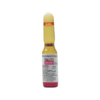
Εγχύση Methycobal

✅ Ενισχύει τη νευρική λειτουργία
✅ Ενισχύει τα ερυθρά αιμοσφαίρια
✅ Ανακουφίζει τον νευρικό πόνο
✅ Βελτιώνει τη νευρική αγωγιμότητα
✅ Θεραπεύει την έλλειψη βιταμίνης B12
✓ Ιατρικά ελεγμένο από Morgan Ellis — Ερευνητής Φαρμακευτικής · 8 χρόνια εμπειρία · Τελευταία αναθεώρηση: Μάιος 2026
Γρήγορη Απάντηση — Τι είναι η Ένεση Methycobal;
Η ένεση Methycobal περιέχει μεκοβαλαμίνη 500 mcg — μια ενεργή, βιοδιαθέσιμη μορφή της βιταμίνης B12. Συνταγογραφείται για περιφερική νευροπάθεια, νευρογενή πόνο σε διαβητικούς, αναιμία από έλλειψη βιταμίνης B12 και νευρικές παθήσεις όπου το σώμα δεν μπορεί να απορροφήσει αποτελεσματικά την από του στόματος B12. Παράγεται από την Eisai και χορηγείται ενδομυϊκά ή ενδοφλέβια από επαγγελματία υγείας.
📦 Κάθε παραγγελία καλύπτεται από την Πολιτική Εγγύησης Επαναποστολής — εάν το δέμα σας δεν φτάσει εντός 20 εργάσιμων ημερών, το επαναποστέλλουμε.
Γιατί να παραγγείλετε από τη MedsBase
Τα γενόσημα φάρμακά μας προέρχονται από κατασκευαστές που πιστοποιούνται από την WHO-GMP και αποστέλλονται παγκοσμίως σε διακριτική, απλή συσκευασία — χωρίς όνομα φαρμάκου στο εξωτερικό του δέματος. Οι πληρωμές με κάρτα δρομολογούνται μέσω ρυθμισμένου επεξεργαστή (οι περιγραφές εκκαθάρισης περιλαμβάνουν ρυθμισμένο επεξεργαστή πληρωμών με κάρτα — ποτέ “MedsBase” ή οποιοδήποτε όνομα φαρμάκου). Γίνονται δεκτές και πληρωμές με κρυπτονομίσματα και τραπεζική μεταφορά SEPA. Κάθε παραγγελία καλύπτεται από την Πολιτική Επαναποστολής Εξασφαλίσεώς μας.
Τι είναι η Ένεση Methycobal;
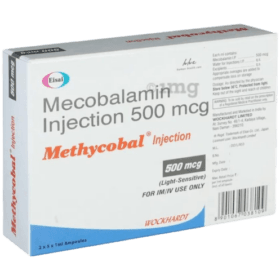
Η ένεση Methycobal είναι ένα στειρό υδατικό διάλυμα της μεκοβαλαμίνης 500 mcg ανά αμπούλα, την ενεργή, συνενζυμική μορφή της βιταμίνης B12. Παράγεται από την Eisai Pharmaceuticals και διαφέρει από τις πιο συνηθισμένες παρασκευές κυανοκοβαλαμίνης, καθώς η μεκοβαλαμίνη μπορεί να χρησιμοποιηθεί άμεσα από το νευρικό σύστημα χωρίς να χρειάζεται περαιτέρω χημική μετατροπή στο ήπαρ. Αυτό την καθιστά την προτιμώμενη μορφή B12 σε ασθενείς με νευρική βλάβη, διαβητική νευροπάθεια ή παθήσεις που επηρεάζουν τον μεταβολισμό της B12.
Η ένεση παρέχεται σε κεχριμπαρένια αμπούλα 1 ml προστατευμένη από το φως. Το διάλυμα έχει βαθύ κόκκινο χρώμα — αυτό είναι φυσιολογικό και αντανακλά το άτομο κοβάλτιου στο κέντρο του μορίου κοβαλαμίνης. Το Methycobal χορηγείται ενδομυϊκά ή, σε νοσοκομειακή περίπτωση, ενδοφλέβια.
Χρήσεις της Ένεσης Methycobal
- Περιφερική νευροπάθεια — μούδιασμα, μυρμήγκιασμα, αίσθημα καύσου και πόνο στα χέρια και τα πόδια από νευρική βλάβη διαφόρων αιτιών.
- Διαβητική περιφερική νευροπάθεια — μία από τις πιο συχνές ενδείξεις· η μεκοβαλαμίνη υποστηρίζει την επισκευή της μυελίνης και τη νευρική αγωγιμότητα.
- Αναιμία από έλλειψη βιταμίνης B12 — μεγαλοβλαστική αναιμία που προκαλείται από ανεπαρκή πρόσληψη ή απορρόφηση B12 (περνικιώδης αναιμία, εντερική κακή απορρόφηση).
- Νευραλγία μετά από έρπητα — επίμονος νευρογενής πόνος μετά από ζωστήρα.
- Νευροπάθειες από διατροφικές αιτίες — σχετιζόμενες με αλκοόλ, διατροφική ανεπάρκεια ή αυστηρή χορτοφαγική διατροφή χωρίς συμπληρώματα.
- Πάρεση του Bell και διαταραχές του προσθίου νεύρου — ως συμπληρωματική θεραπεία στην τυπική αγωγή.
Πώς λειτουργεί το Methycobal
Η μεκοβαλαμίνη είναι συνπαράγοντας για δύο ένζυμα κρίσιμα για τη νευρολογική και αιματολογική λειτουργία. Το πρώτο, μεθιονινική συνθάση, μετατρέπει την ομοκυστεΐνη σε μεθειονίνη — τον πρόδρομο της S-αδενοσιλ-μεθειονίνης (SAM), του καθολικού μεθυλοδότη του οργανισμού. Η SAM είναι απαραίτητη για τη σύνθεση της μυελίνης, την παραγωγή νευροδιαβιβαστών και τη μεθυλίωση του DNA. Το δεύτερο, μεθυλομαλονυλ-CoA μετατάση, εμπλέκεται στον μεταβολισμό των λιπαρών οξέων που απαιτείται για υγιείς νευρικές ίνες.
Όταν τα περιφερικά νεύρα υποστούν βλάβη (όπως στον διαβήτη ή σε τραυματισμό), η συμπλήρωση με μηκοβαλαμίνη παρέχει τις πρώτες ύλες για την αναγέννηση της μυελίνης. Κλινικές μελέτες δείχνουν βελτίωση στην ταχύτητα διέγερσης των νεύρων, μείωση των νευροπαθητικών συμπτωμάτων και μετρήσιμη αύξηση στην πυκνότητα των νευρικών ινών μετά από παρατεταμένη θεραπεία με μηκοβαλαμίνη.
Δοσολογία και Χορήγηση
Η τυπική ενήλικα δόση της ένεσης Methycobal είναι 500 mcg (ένα αμπουλάκι) τρεις φορές την εβδομάδα, που χορηγείται ενδομυϊκά ή ενδοφλεβίως. Η δόση μπορεί να προσαρμοστεί ανάλογα με την ένδειξη, τη σοβαρότητα και την απόκριση:
| Κατάσταση | Δόση |
|---|---|
| Περιφερική νευροπάθεια | 500 mcg ΕΜ/ΕΦ 3 φορές την εβδομάδα, με μείωση καθώς βελτιώνονται τα συμπτώματα |
| Αναιμία από έλλειψη Β12 (αρχική φάση) | 500 mcg ΕΜ καθημερινά για 2 εβδομάδες, έπειτα 3 φορές την εβδομάδα μέχρι την ομαλοποίηση |
| Συντηρητική θεραπεία | 500 mcg ΕΜ κάθε 1–3 μήνες |
Πώς να χρησιμοποιήσετε την ένεση Methycobal
Η Methycobal πρέπει να χορηγείται από εξειδικευμένο επαγγελματία υγείας. Το αμπουλάκι ελέγχεται (το βαθύ κόκκινο χρώμα είναι φυσιολογικό· απορρίπτεται εάν έχει ξεθωριάσει ή είναι θολό), το διάλυμα αντλείται σε ένα αποστειρωμένο σύριγγο και η ένεση γίνεται αργά — συνήθως στον δελτοειδή ή γλουτιαίο μυ για ΕΜ, ή μέσω περιφερικής φλέβας για ΕΦ. Το διάλυμα πρέπει να χρησιμοποιηθεί αμέσως μετά το άνοιγμα και να προστατεύεται από άμεσο φως κατά τη διάρκεια της προετοιμασίας.
Παρενέργειες της ένεσης Methycobal
- Συχνές: ήπιος πόνος ή αίσθημα ζέστης στο σημείο της ένεσης· πονοκέφαλος· ναυτία· περιστασιακή απώλεια όρεξης.
- Ασυνήθιστες: ήπιο εξάνθημα· διάρροια· ζάλη· παροδική αύξηση της αρτηριακής πίεσης.
- Σπάνια: αναφυλακτική αντίδραση (σπάνια με βιταμίνη Β12 — ζητήστε άμεση ιατρική βοήθεια εάν εμφανιστούν σημάδια)· ερυθρότητα· μυϊκές κράμπες.
Η μηκοβαλαμίνη θεωρείται γενικά μεταξύ των ασφαλέστερων ενέσιμων φαρμάκων επειδή είναι μια φυσικά υπάρχουσα βιταμίνη· σοβαρές παρενέργειες είναι σπάνιες ακόμη και σε αυξημένες δόσεις.
Προφυλάξεις και προειδοποιήσεις
- Υπερευαισθησία: αντενδείκνυται σε ασθενείς με γνωστή αλλεργία στη κοβαλαμίνη ή κοβάλτιο.
- Εγκυμοσύνη και θηλασμός: γενικά ασφαλής σε φυσιολογικές δόσεις — η Β12 είναι απαραίτητη θρεπτική ουσία. Χρήση υπό ιατρική επίβλεψη.
- Κληρονομική οπτική νευροπάθεια Leber (LHON): χρήση με προσοχή· η Β12 μπορεί να επιταχύνει τη βλάβη του οπτικού νεύρου σε αυτή τη σπάνια γενετική πάθηση.
- Μακροχρόνια έκθεση σε υδράργυρο: θεωρητικός κίνδυνος παραγωγής μεθυλυδραργύρου — σχετικό μόνο σε περιβάλλοντα βιομηχανικής έκθεσης.
Αλληλεπιδράσεις Φαρμάκων
Πολλά φάρμακα μειώνουν την απορρόφηση ή αξιοποίηση της βιταμίνης Β12 και μπορεί να απαιτούν συμπλήρωση μεκοβαλαμίνης: μετφορμίνη (συχνά προκαλεί έλλειψη Β12 με μακροχρόνια χρήση), αναστολείς αντλίας πρωτονίων (ομεπραζόλη, παντοπραζόλη), ανταγωνιστές Η2 (ρανιτιδίνη, φαμοτιδίνη), κολχικίνη, χλωραμφενικόλη, και αμινογλυκοσίδες. Η αναισθησία με νιτρώδες οξύ εξαντλεί τη B12 και μπορεί να προκαλέσει συμπτώματα ελλείμματος σε ήδη ευάλωτους ασθενείς.
Αποθήκευση
Αποθηκεύστε το Methycobal Injection σε θερμοκρασία ίση ή κάτω από 25 °C, προστατευμένο από το φως — το κεχριμπαρένιο φιαλίδιο είναι σχεδιασμένο για αυτόν τον σκοπό. Μην το ψύχετε εκτός εάν ορίζεται από τον κατασκευαστή. Απορρίψτε εάν το διάλυμα φαίνεται ξεθωριασμένο, θολό ή αποχρωματισμένο. Κρατήστε μακριά από παιδιά.
Συχνές Ερωτήσεις
Γιατί το Methycobal προτιμάται έναντι των συνηθισμένων δισκίων βιταμίνης B12;
Η από του στόματος απορρόφηση της B12 απαιτεί ενδογενή παράγοντα στο στομάχι και συχνά παρεμποδίζεται σε ηλικιωμένους ασθενείς, σε ασθενείς με κακοήθεια αναιμία ή σε μακροχρόνιους χρήστες μετφορμίνης ή αναστολέων αντλίας πρωτονίων. Η ένεση παρακάμπτει εντελώς το έντερο, παρέχοντας 100% της δόσης. Επιπλέον, η μεκοβαλαμίνη είναι η ενεργή μορφή — δεν απαιτεί μετατροπή από το ήπαρ όπως συμβαίνει με την κυανοκοβαλαμίνη — έτσι αρχίζει να δρα αμέσως.
Πόσο γρήγορα ανακουφίζει το Methycobal τον νευρικό πόνο;
Οι περισσότεροι ασθενείς με περιφερική νευροπάθεια αρχίζουν να παρατηρούν μειωμένο μουδιάσμα και καύση εντός 2–4 εβδομάδων από την έναρξη της θεραπείας. Αντικειμενικές βελτιώσεις στις μελέτες αγωγιμότητας των νεύρων εμφανίζονται συνήθως μετά από 8–12 εβδομάδες. Το μέγιστο όφελος συχνά απαιτεί 3–6 μήνες συνεχούς θεραπείας.
Είναι ασφαλές το Methycobal για μακροχρόνια χρήση;
Ναι. Η βιταμίνη B12 δεν έχει καθιερωμένο ανώτατο όριο τοξικότητας επειδή η περίσσεια εκκρίνεται στα ούρα. Η μακροχρόνια χρήση (μήνες έως χρόνια) για χρόνια νευροπάθεια ή επιβεβαιωμένα ελαττώματα απορρόφησης είναι καλά ανεκτή.
Μπορώ να πάρω Methycobal με metformin;
Ναι — και μάλιστα το metformin είναι ένας από τους πιο συνηθισμένους λόγους για έλλειψη B12. Οι ασθενείς που λαμβάνουν metformin μακροπρόθεσμα (περισσότερο από 2 χρόνια) συνήθως προσφέρεται συμπλήρωμα B12. Το Methycobal και το metformin δεν αλληλεπιδρούν άμεσα.
Βοηθά το Methycobal στη διαβητική νευροπάθεια;
Η μεκοβαλαμίνη συνταγογραφείται ευρέως ως συμπληρωματική θεραπεία στη διαβητική περιφερική νευροπάθεια. Δεν αντικαθιστά τον γλυκαιμικό έλεγχο — η αυστηρή διαχείριση της σακχάρου στο αίμα παραμένει η πιο σημαντική παρέμβαση — αλλά παρέχει συμπτωματική ανακούφιση και υποστηρίζει την επισκευή των νεύρων πάνω από την τυπική φροντίδα του διαβήτη.
Ποια είναι η διαφορά μεταξύ μεκοβαλαμίνης και κυανοκοβαλαμίνης;
Και οι δύο είναι μορφές βιταμίνης B12. Η κυανοκοβαλαμίνη είναι η συνθετική μορφή που χρησιμοποιείται στα περισσότερα συμπληρώματα χωρίς συνταγή και απαιτεί μετατροπή στο ήπαρ. Η μεκοβαλαμίνη (η ενεργή μορφή στο Methycobal) είναι άμεσα χρησιμοποιήσιμη από το νευρικό σύστημα και προτιμάται για νευροπάθεια και νευρολογικές ενδείξεις.
Μπορώ να πάρω Methycobal από το στόμα αντί για την ένεση;
Διατίθενται δισκία μεκοβαλαμίνης από το στόμα, αλλά έχουν περιορισμένη βιοδιαθεσιμότητα σε ασθενείς με προβλήματα απορρόφησης. Η ένεση προτιμάται για καθιερωμένη έλλειψη, διαγνωσμένη νευροπάθεια ή όταν απαιτείται γρήγορη διόρθωση. Ο γιατρός σας μπορεί να σας συμβουλέψει εάν η συντήρηση από το στόμα είναι κατάλληλη μόλις διορθωθεί η έλλειψη.
Σχετικές Εναλλακτικές
Άλλα προϊόντα σε Χρόνιες Παθήσεις που οι πελάτες εξετάζουν επίσης:
Περισσότερες επιλογές σε φάρμακα για Διαβήτη
Ταξινομημένα σύμφωνα με τον όγκο παραγγελιών στο MedsBase — τι επιλέγουν άλλοι πελάτες σε αυτήν την κατηγορία.

| Ισχύς | 500 mcg |
|---|---|
| Ποσότητα | 5x1ml Φιαλίδια, 10x1ml Φιαλίδια, 20x1ml Φιαλίδια, 30x1ml Φιαλίδια |
 Εγχύση Methycobal
Ερωτήσεις & Απαντήσεις
Εγχύση Methycobal
Σχετικά προϊόντα

Κριτικές
Δεν υπάρχουν ακόμη κριτικές