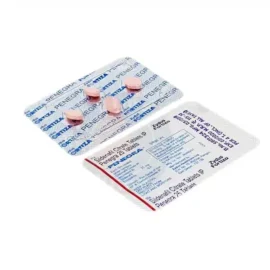
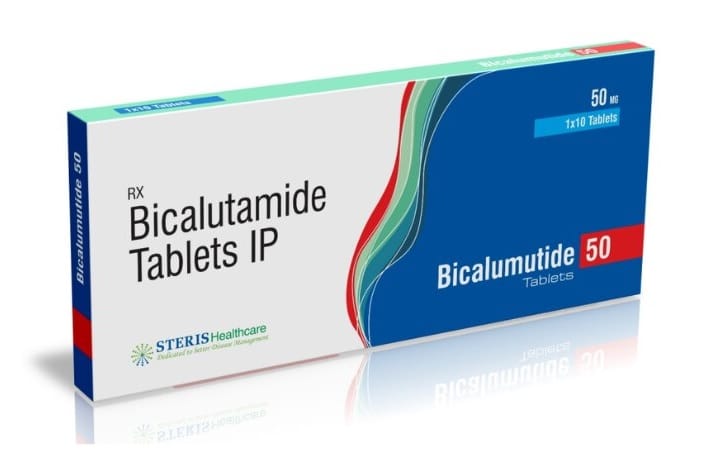
Μπικαλουμιτίδη
✅ Θεραπεύει τον καρκίνο του προστάτη
✅ Αποκλείει τις ανδρικές ορμόνες
✅ Επιβραδύνει την ανάπτυξη του όγκου
✅ Βελτιώνει τα ποσοστά επιβίωσης
✅ Μειώνει τα συμπτώματα του καρκίνου
Το Bicalumutide περιέχει Bicalutamide.
✓ Ιατρικά ελεγμένο από Morgan Ellis — Ερευνητής Φαρμακευτικής · 8 χρόνια εμπειρία · Τελευταία αναθεώρηση: Μάιος 2026
⚡ Γρήγορη απάντηση — Τι είναι το Bicalumutide;
Μπικαλουμιτίδη είναι ένα δισκώριο από τη Cipla που περιέχει bicalutamide 50 mg — ένα μη στεροειδές ανταγωνιστή των υποδοχέων ανδρογόνων (αντι-ανδρογόνο) χρησιμοποιείται για προηγμένο ή μεταστατικό καρκίνο του προστάτη. Τυπικός ρόλος: σε συνδυασμό με έναν αγωνιστή LHRH (goserelin, leuprorelin) για συνδυασμένη ανδρογονική αναστολή (CAB). Τυπική δοσολογία: 50 mg μία φορά την ημέρα (με LHRH αγωνιστή) ή 150 mg μία φορά την ημέρα (μονοθεραπεία). Κύριες παρενέργειες: γυναικομαστία και ευαισθησία στα στήθη (συχνές), εφίδρωση, ηπατοτοξικότητα (υποχρεωτική παρακολούθηση LFT), μειωμένη λίμπιντο, σπάνια διάχυτη πνευμονίτιδα. Υποχρεωτικά: βασικές + μηνιαίες LFT για τους πρώτους 4 μήνες, έπειτα περιοδικά.
📦 Κάθε παραγγελία καλύπτεται από την Πολιτική Εγγύησης Επαναποστολής — εάν το δέμα σας δεν φτάσει εντός 20 εργάσιμων ημερών, το επαναποστέλλουμε.
Τι είναι το Bicalumutide;
Το Bicalumutide είναι ένα δισκίο για από του στόματος από τη Cipla που περιέχει bicalutamide 50 mg. Η Bicalutamide είναι ένα μη στεροειδές αντι-ανδρογόνο που ανταγωνιστικά αποκλείει τον ανδρογόνο υποδοχέα στα κύτταρα του καρκίνου του προστάτη, αναστέλλοντας την πολλαπλασιαστική επίδραση της τεστοστερόνης και της διυδροτεστοστερόνης (DHT). Χρησιμοποιείται σε προηγμένο ή μεταστατικό καρκίνο του προστάτη, σχεδόν πάντα σε συνδυασμό με έναν LHRH αγωνιστή (γοσερελίνη, λευπρορελίνη, τριπτορελίνη) για συνδυασμένη ανδρογόνο αποκλεισμό (CAB).
Πώς λειτουργεί το Bicalumutide;
Η ανάπτυξη του καρκίνου του προστάτη οφείλεται στην σηματοδότηση του ανδρογόνου υποδοχέα. Η τυπική θεραπεία καταστολής ανδρογόνων (ADT) καταστέλλει την ωοθηκική παραγωγή ανδρογόνων μέσω LHRH αγωνιστών. Ωστόσο, οι επινεφρίδες συνεχίζουν να παράγουν ~10% των συνολικών ανδρογόνων του σώματος, και το υπολειπόμενο σήμα είναι αρκετό για να προκαλέσει πρόοδο της νόσου σε πολλούς ασθενείς. Το Bicalumutide αποκλείει τον ίδιο τον ανδρογόνο υποδοχέα, έτσι ώστε τα υπολειπόμενα επινεφριδικά ανδρογόνα δεν μπορούν να σηματοδοτήσουν — παρέχοντας πληρέστερη καταστολή ανδρογόνων.
- Ανταγωνιστής του ανδρογόνου υποδοχέα — δεσμεύει τον AR και εμποδίζει την τεστοστερόνη / DHT από το να τον ενεργοποιήσει.
- Μεγάλος χρόνος ημιζωής (~6 ημέρες) — δόση μία φορά την ημέρα από του στόματος.
- Χρησιμοποιείται για την πρόληψη του “φλεγμονώδους όγκου” όταν ξεκινάτε θεραπεία με LHRH αγωνιστή — η αρχική αύξηση της τεστοστερόνης που προκαλείται από το LHRH μπορεί προσωρινά να επιδεινώσει την νόσο, και η προθεραπεία με αντι-ανδρογόνο αποκλείει αυτό το φαινόμενο.
Χρήσεις και ενδείξεις
- Συνδυασμένη ανδρογόνη αναστολή (CAB) σε προχωρημένο ή μεταστατικό καρκίνο του προστάτη (με LHRH αγωνιστή)
- Πρόληψη φλεγμονώδους όγκου κατά την έναρξη θεραπείας με LHRH αγωνιστή (2–4 εβδομάδες προθεραπεία)
- Μονοθεραπεία 150 mg/ημέρα σε τοπικά προχωρημένο μη μεταστατικό καρκίνο του προστάτη (εναλλακτική λύση στον LHRH αγωνιστή για ασθενείς που προτιμούν τη διατήρηση της σεξουαλικής λειτουργίας)
- Μετά τη βιοχημική υποτροπή ως μέρος διαλείπουσας ή συνεχούς ανδρογόνης στέρησης
Δοσολογία Bicalumutide και τρόπος χορήγησης
Τυπική δόση: 50 mg μία φορά την ημέρα (με LHRH αγωνιστή) ή 150 mg μία φορά την ημέρα (μονοθεραπεία).
- Μία φορά την ημέρα την ίδια ώρα κάθε μέρα. Με ή χωρίς τροφή.
- Καταπιείτε ολόκληρο με νερό.
- Υποχρεωτική παρακολούθηση: βασικές εξετάσεις ηπατικής λειτουργίας (AST, ALT) και PSA. Επανάληψη εξετάσεων ηπατικής λειτουργίας μηνιαίως για τους πρώτους 4 μήνες, στη συνέχεια κάθε 3–6 μήνες. PSA κάθε 3 μήνες. Διακοπή και διερεύνηση εάν AST/ALT > 3× το ανώτερο όριο κανονικού.
- Πρόληψη προ-LHRH-αγωνιστή όγκου-φλεγμονής: Ξεκινήστε Bicalumutide 2–4 εβδομάδες πριν από την έναρξη του LHRH αγωνιστή, συνεχίστε για τουλάχιστον 1 μήνα μετά.
- Μην διακόψετε χωρίς οδηγία ογκολόγου.
Παρενέργειες Bicalumutide
Συχνές:
- Γυναικομαστία και ευαισθησία στα στήθη (40–70% με μονοθεραπεία· λιγότερο με CAB)
- Εφίδρωση
- Μειωμένη λίμπιντο και στυτική δυσλειτουργία
- Κούραση, ασθένεια
- Διάρροια (ειδικά με flutamide)
- Ήπια γαστρεντερική ενόχληση
Σημαντικό — υποχρεωτική παρακολούθηση:
- Ηπατοτοξικότητα — μπορεί να είναι σοβαρές και απρόβλεπτες. Διακοπή άμεσα για ίκτερο, σκούρα ούρα, σοβαρή κόπωση ή AST/ALT > 3× ULN. Οι περισσότερες περιπτώσεις εμφανίζονται μέσα στους πρώτους 4 μήνες.
- Σπάνια διάμεση πνευμονίτιδα — νεοεμφανές βήχα, δύσπνοια
Σπάνια: αιμολυτική αναιμία, φωτοευαισθησία, σοβαρές δερματικές αντιδράσεις.
Προειδοποιήσεις και προφυλάξεις
- Εγκυμοσύνη και θηλασμός: δεν ισχύει (μόνο για άνδρες) αλλά τα αντι-ανδρογόνα είναι εμβρυοτοξικά εάν ληφθούν κατά λάθος κατά τη διάρκεια της εγκυμοσύνης.
- Λειτουργία ήπατος: υποχρεωτικές μηνιαίες δοκιμές ηπατικής λειτουργίας για τους πρώτους 4 μήνες. Διακοπή για AST/ALT > 3× ULN.
- Διαβήτης: μπορεί να επιδεινώσει τον γλυκαιμικό έλεγχο.
- Καρδιαγγειακά: Η ADT γενικά σχετίζεται με αυξημένα καρδιαγγειακά συμβάντα. Βελτιστοποιήστε τους τροποποιήσιμους παράγοντες κινδύνου.
- Προφύλαξη γυναικομαστίας: χαμηλή δόση ταμοξιφένης 10–20 mg/ημέρα ή προληπτική ακτινοθεραπεία του μαστού μειώνει την επίπτωση (ειδικός).
- Οδήγηση: προσοχή — η κόπωση και το ζάλη μπορεί να επηρεάσουν την οδήγηση.
Αλληλεπιδράσεις Φαρμάκων
| Συνδυάζεται με | Αποτέλεσμα | Τι να κάνετε |
|---|---|---|
| Βαρφαρίνη και άλλα κουμαρινικά αντιπηκτικά | Σημαντική αύξηση INR — κίνδυνος αιμορραγίας | Ελέγξτε το INR εβδομαδιαίως αρχικά. Μειώστε τη δόση της βαρφαρίνης κατά 30–50%. |
| CYP3A4 αναστολείς (μικρή επίδραση) | Αυξήστε τα επίπεδα bicalutamide | Παρακολούθηση για ηπατοτοξικότητα. |
| Αγωνιστές LHRH (γοσερελίνη, λευπρορελίνη) | Τυπικός συνδυασμός — συνδυασμένη ανδρογόνος αναστολή | Τυπικό σχήμα CAB. |
| Αλκοόλ | Προσθετική ηπατοτοξικότητα | Περιορίστε την κατανάλωση αλκοόλ κατά τη διάρκεια της θεραπείας. |
Αποθήκευση
- Αποθηκεύστε σε θερμοκρασία δωματίου, 15–25°C, στην αρχική συσκευασία.
- Κρατήστε μακριά από παιδιά, γυναίκες και κατοικίδια — οι αντι-ανδρογόνοι είναι εμβρυοτοξικοί.
Σχετικές Εναλλακτικές Λύσεις στο MedsBase
Άλλα φάρμακα ογκολογίας που διατίθενται παράλληλα με αυτό το προϊόν:
Περιηγηθείτε σε όλα τα αντικαρκινικά φάρμακα →
Συχνές Ερωτήσεις
Γιατί το Bicalumutide συνήθως συνδυάζεται με έναν LHRH αγωνιστή;
Οι LHRH αγωνιστές (goserelin, leuprorelin) καταστέλλουν την παραγωγή ανδρογόνων από τους όρχεις, αλλά οι επινεφρίδιοι συνεχίζουν να παράγουν ~10% των ανδρογόνων του σώματος που μπορούν να προκαλέσουν ανάπτυξη καρκίνου του προστάτη. Το Bicalumutide μπλοκάρει τον υποδοχέα ανδρογόνων, ώστε τα επινεφριδιακά ανδρογόνα να μην μπορούν να σηματοδοτήσουν. Ο συνδυασμός ονομάζεται συνδυασμένη ανδρογόνο αποκλεισμό (CAB) και παρέχει βαθύτερη καταστολή των ανδρογόνων σε σύγκριση με τον αγωνιστή LHRH μόνο σε προχωρημένη νόσο.
Τι είναι το “φλεγμονή όγκου” και γιατί το Bicalumutide το αποτρέπει;
Όταν ξεκινά η θεραπεία με LHRH αγωνιστή, η υπόφυση αρχικά διεγείρεται και η τεστοστερόνη αυξάνεται για 1–2 εβδομάδες πριν αρχίσει η υποκατάσταση. Σε ασθενείς με σημαντικό φορτίο νόσου (μεταστάσεις στα οστά, ουρική αποκλεισμός, κίνδυνος συμπίεσης νωτιαίου μυελού), αυτή η προσωρινή αύξηση της τεστοστερόνης μπορεί να επιδεινώσει τα συμπτώματα οξέως. Η έναρξη του Bicalumutide 2–4 εβδομάδες πριν από τον LHRH αγωνιστή μπλοκάρει τον υποδοχέα και αποτρέπει τη φλεγμονή.
Πώς διαχειρίζεται η γυναικομαστία;
Η ευαισθησία των μαστών και η γυναικομαστία επηρεάζουν το 40–70% των ασθενών που λαμβάνουν μονοθεραπεία με μπικαλουταμίδη σε υψηλότερες δόσεις. Επιλογές πρόληψης: χαμηλή δόση ταμοξιφένης 10–20 mg/ημέρα (περισσότερες ενδείξεις) ή προληπτική ακτινοθεραπεία μαστού ως μία δόση 8–12 Gy πριν την έναρξη της αντι-ανδρογόνου θεραπείας. Συζητήστε με τον ογκολόγο πριν την έναρξη εάν υπάρχουν σημαντικές αισθητικές ανησυχίες.
Ποιες εξετάσεις αίματος χρειάζομαι;
Υποχρεωτικά: βασικές εξετάσεις ηπατικής λειτουργίας (AST, ALT) και PSA. Στη συνέχεια εξετάσεις ηπατικής λειτουργίας μηνιαίως για τους πρώτους 4 μήνες, στη συνέχεια κάθε 3–6 μήνες. PSA κάθε 3 μήνες. Διακόψτε αμέσως το Bicalumutide και επικοινωνήστε με τον ογκολόγο σας εάν AST/ALT > 3× ULN, ή σε περίπτωση ίκτερου, σκούρου ούρων ή σοβαρής κόπωσης.
Μπορώ να πίνω αλκοόλ με Bicalumutide;
Περιορίστε το αλκοόλ — τόσο το αλκοόλ όσο και το bicalutamide είναι ηπατοτοξικά και ο συνδυασμός τους ενισχύει τον κίνδυνο σοβαρής ηπατικής βλάβης από φάρμακα. Περιστασιακές μικρές ποσότητες είναι συνήθως ανεκτές· η βαριά ή ημερήσια κατανάλωση αλκοόλ θα πρέπει να αποφεύγεται κατά τη διάρκεια της θεραπείας.
Bicalumutide vs flutamide vs enzalutamide — ποια είναι η διαφορά;
Και τα τρία είναι από του στόματος αντι-ανδρογόνα για τον καρκίνο του προστάτη. Bicalutamide: μια φορά την ημέρα, καλά ανεκτό, τυπική επιλογή πρώτης γενιάς. Flutamide: τρεις φορές την ημέρα, μεγαλύτερος κίνδυνος διάρροιας και ηπατοτοξικότητας — σε μεγάλο βαθμό αντικαταστάθηκε από το bicalutamide. Enzalutamide: δεύτερης γενιάς, πιο ισχυρό, χρησιμοποιείται για τη νόσο ανθεκτική στην ευνουχισμό (αφού αποτύχει η CAB) — δείτε Μπντένζα.
Θα επηρεάσει το Bicalumutide την καρδιά μου;
Η μονοθεραπεία με αντι-ανδρογόνα έχει ελάχιστη άμεση καρδιαγγειακή επίδραση, αλλά η ευρύτερη θεραπεία καταστολής των ανδρογόνων (LHRH αγωνιστής + αντι-ανδρογόνο) σχετίζεται με αυξημένα καρδιαγγειακά συμβάντα, συμπεριλαμβανομένου του εμφράγματος και του εγκεφαλικού. Βελτιστοποιήστε τους παράγοντες καρδιαγγειακού κινδύνου: έλεγχος της πίεσης, στατίνη σε περίπτωση υπερλιπιδαιμίας, διακοπή του καπνίσματος, άσκηση, διαχείριση βάρους.
Μπορώ να σταματήσω το Bicalumutide αν το PSA παραμείνει χαμηλό;
Συζητήστε με τον ογκολόγο σας. Σε ορισμένες διαλείπουσες πρωτοκόλλους CAB, η CAB διακόπτεται όταν το PSA καταστέλλεται κάτω από το όριο και συνεχίζεται όταν το PSA αυξηθεί — αυτό μπορεί να μειώσει τις παρενέργειες χωρίς να θυσιάσει την επιβίωση. Ποτέ μην σταματάτε μονομερώς — η παρακολούθηση του PSA και ο χρόνος επανεκκίνησης είναι κρίσιμα.
Γιατί να παραγγείλετε από τη MedsBase
Κάθε παρτίδα προέρχεται από ένα πιστοποιημένο από τη WHO-GMP κατασκευαστή. Οι παραγγελίες αποστέλλονται σε απλά, ασήμαντα πακέτα από τους συνεργάτες μας στην εκπλήρωση και καλύπτονται από την Πολιτική Εγγύησης Επαναποστολής: εάν ένα δέμα δεν φτάσει εντός 20 εργάσιμων ημερών, στέλνουμε μια δωρεάν επαναποστολή, χωρίς ερωτήσεις.
Σχετικές Εναλλακτικές
Άλλα προϊόντα σε Χρόνιες Παθήσεις που οι πελάτες εξετάζουν επίσης:
Περισσότερες επιλογές στην ουροδόχο κύστη και τον προστάτη
Ταξινομημένα σύμφωνα με τον όγκο παραγγελιών στο MedsBase — τι επιλέγουν άλλοι πελάτες σε αυτήν την κατηγορία.
| Ισχύς | 50 mg |
|---|---|
| Ποσότητα | 10 δισκία, 30 δισκία, 60 δισκία, 90 δισκία, 180 δισκία |
Ερωτήσεις & Απαντήσεις
 Μπικαλουμιτίδη
Σχετικά προϊόντα