









Quinin 300

✅ Ανακούφιση από συμπτώματα ελονοσίας
✅ Μείωση πυρετού
✅ Εξάλειψη παρασίτων
✅ Βελτιωμένη ανάρρωση
✅ Πρόληψη υποτροπής
Το Quinin περιέχει θειικό κινίνο.
✓ Ιατρικά ελεγμένο από Morgan Ellis — Ερευνητής Φαρμακευτικής · 8 χρόνια εμπειρία · Τελευταία αναθεώρηση: Μάιος 2026
Γρήγορη απάντηση
Quinin 300 περιέχει θειικό κινίνο 300 mg (East African Pharmaceuticals (ή γενόσημο 300 mg)). Είναι δευτερογενής από του στόματος θεραπεία για χλωροκινό-ανθεκτική μη περίπλοκη ελονοσία P. falciparum — ιστορικά συνδυαζόταν με δοξυκυκλίνη, τετρακυκλίνη ή κλινδαμυκίνη για να συντομευτεί η θεραπεία και να μειωθεί η υποτροπή. Οι σύγχρονες κατευθυντήριες οδηγίες του ΠΟΥ προτιμούν θεραπεία συνδυασμού αρτεμισινίνης (ACT) όπου είναι διαθέσιμο· η κινίνη παραμένει σε επιλεγμένες χρήσεις όπου τα ACT δεν είναι διαθέσιμα, είναι αντενδεικνύμενα ή έχουν αποτύχει. Τυπική θεραπευτική δόση: 650 mg κάθε 8 ώρες για 3–7 ημέρες με δοξυκυκλίνη 100 mg δύο φορές την ημέρα για 7 ημέρες. Η ομάδα παρενεργειών (“κινχονισμός” — εμβοές, πονοκέφαλος, ναυτία, ζάλη, θολή όραση) είναι συχνή και περιορίζει τη δόση. ΟΧΙ για κράμπες ανησυχητικών ποδιών (προειδοποίηση μαύρου κουτιού FDA από το 2010 για αυτή την εκτός ετικέτας χρήση). ΜΗΝ χρησιμοποιείτε χωρίς ιατρική επίβλεψη.
🛡️ Κάθε παραγγελία καλύπτεται από την Πολιτική Εγγύησης Επαναποστολής — εάν το δέμα σας δεν φτάσει εντός 20 εργάσιμων ημερών, πραγματοποιούμε δωρεάν επαναποστολή μέσω courier EMS ή ITPS.
Γιατί να παραγγείλετε από τη MedsBase
Το Quinin 300 προέρχεται από έναν κατασκευαστή πιστοποιημένο από τον WHO-GMP και αποστέλλεται παγκοσμίως σε διακριτική συσκευασία. Κάθε παραγγελία υποστηρίζεται από την Πολιτική Εγγύησης Επαναποστολής και υποστηρίζεται από την 1,400+ κριτικές πελατών. Παγκόσμια αποστολή χωρίς χαρτιά συνταγής.
Σχετικά με το Quinin 300
Το Quinin 300 είναι ένα δισκίο θειικής κινίνης 300 mg που κατασκευάζεται από την East African Pharmaceuticals (ή γενόσημο 300 mg) υπό πιστοποιημένες συνθήκες WHO-GMP. Η κινίνη είναι το αρχικό αντιμαλαρικό — εξαγόμενο από το φλοιό του νότιου αμερικανικού δέντρου κινχόνα από Ιησουίτες ιεραποστόλους τον 17ο αιώνα, απομονωμένο σε καθαρή μορφή από τους Pelletier και Caventou το 1820, και ήταν το τυπικό αντιμετώπιση της ελονοσίας για τους επόμενους 100 χρόνια πριν από την χλωροκίνη. Παραμένει στον κατάλογο Βασικών Φαρμάκων του ΠΟΥ για δευτερογενή θεραπεία του P. falciparum και ως ενδοφλέβια θεραπεία για σοβαρή ελονοσία όπου η ενδοφλέβια αρτεσουνάτη δεν είναι διαθέσιμη.
Πώς λειτουργεί η κινίνη
Η κινίνη είναι ένα αλκαλοειδές της κιγχόνης που παρεμβαίνει στην αποτοξίνωση της αιμοσφαιρίνης του παρασίτου στο τροφικό κύστη — ο ίδιος μηχανισμός δράσης με την χλωροκίνη και τη μεφλοκίνη. Είναι ενεργή κατά των αιματικών σταδίων του P. falciparum (συμπεριλαμβανομένων των περισσότερων στελεχών ανθεκτικών στη χλωροκίνη), P. vivax, P. ovale και P. malariae. ΔΕΝ εξαλείφει τα κρυμμένα υπνοζωΐδια — απαιτείται πριμακίνη για τη ριζική θεραπεία του vivax/ovale.
Η κινίνη έχει μικρό χρόνο ημιζωής (~ 11 ώρες) — απαιτείται τρεις φορές ημερησίως δοσολογία κατά τη διάρκεια των θεραπειών. Έχει στενό θεραπευτικό παράθυρο: η αποτελεσματικότητα σχετίζεται με τη δόση, αλλά το ίδιο ισχύει και για την τοξικότητα (κινχονισμός, υπογλυκαιμία, επιμήκυνση QT, σπάνια καρδιοτοξικότητα).
Ενδείξεις και δοσολογία
| Ενδείξεις | Δόση | Σημειώσεις |
|---|---|---|
| Μη περίπλοκη ελονοσία P. falciparum ανθεκτική στη χλωροκίνη, ενήλικες | 650 mg από στόμα κάθε 8 ώρες για 3 ημέρες (Αφρική) ή 7 ημέρες (Νοτιοανατολική Ασία) | Συνδυάστε με δοξυκυκλίνη 100 mg δύο φορές ημερησίως για 7 ημέρες, ή κλινδαμυκίνη 20 mg/kg/ημέρα κατά τη εγκυμοσύνη. |
| Σοβαρή ελονοσία, ενδοφλέβια στο νοσοκομείο (όπου δεν είναι διαθέσιμη ενδοφλέβια αρτεσουνάτη) | 20 mg/kg αρχική δόση σε 4 ώρες → 10 mg/kg κάθε 8 ώρες ενδοφλέβια | Υποχρεωτική καρδιακή παρακολούθηση + παρακολούθηση γλυκόζης. Μετάβαση σε από στόμα 650 mg κάθε 8 ώρες μόλις ανεκτό. |
| Βαμπεσιώση (B. microti/B. divergens) — δεύτερη γραμμή | 650 mg κάθε 6–8 ώρες με κλινδαμυκίνη ή ατοβακόνη-αζιθρομυκίνη | Ειδικό πλαίσιο για ασθένειες που μεταδίδονται από τσιμπούρια. |
| Παιδιατρική μη περίπλοκη P. falciparum (≥ 6 kg) | 8.3 mg/kg κάθε 8 ώρες για 3–7 ημέρες | Με κατάλληλη δόση δοξυκυκλίνης για το βάρος (≥ 8 ετών) ή κλινδαμυκίνης (οποιασδήποτε ηλικίας). |
Παρενέργειες
- Συχνά (κινχονισμός, ≥ 30 %): ένιγγος, πονοκέφαλος, ναυτία, ζάλη, θολή όραση, ήπια απώλεια ακοής υψηλών συχνοτήτων — συνήθως αναστρέψιμη μετά τη διακοπή.
- Γαστρεντερικό: κοιλιακός πόνος, εμετός, διάρροια.
- Καρδιαγγειακά: επιμήκυνση QTc, υποτόνηση (ειδικά με γρήγορη ενδοφλέβια βολή — ποτέ μην χορηγείτε ενδοφλέβια κινίνη), παλμοί.
- Ενδοκρινικό: υπογλυκαιμία (μπορεί να είναι σοβαρή, ειδικά στην εγκυμοσύνη ή στην ενδοφλέβια χρήση).
- Αιματολογικά: θρομβοπενία, αιμολυτική αναιμία (σε ασθενείς με έλλειψη G6PD), αιμολυτικό-ουραμικό σύνδρομο (σπάνιο αλλά σοβαρό — μπορεί να είναι θανατηφόρο).
- Υπερευαισθησία: εξάνθημα, κνίδωση, αγγειοοίδημα, αναφυλαξία, φαρμακογενής λύκος.
- Νευρολογικό: σπάνιες σπασμολογικές κρίσεις, οπτική νευρίτιδα, ξαφνική απώλεια ακοής.
Αλληλεπιδράσεις φαρμάκων
| Αλληλεπίδραση | Αποτέλεσμα | Διαχείριση |
|---|---|---|
| Μεφλοκίνη / χλωροκίνη / υδροξυχλωροκίνη | Προσθετική καρδιοτοξικότητα + μειωμένο κατώφλι επιληπτικών κρίσεων | Αποφύγετε τον συνδυασμό — χρησιμοποιήστε ένα αντιμαλαριακό. |
| Αλοφαντρίνη | Σοβαρή προσθετική επιμήκυνση QTc | Απόλυτη αντένδειξη. |
| Ντιγκοξίνη | Η κινίνη αυξάνει το επίπεδο της διγοξίνης 2–3 φορές | Μειώστε τη δόση της διγοξίνης στο μισό· παρακολουθήστε τα επίπεδα διγοξίνης στενά. |
| Βαρφαρίνη | Η κινίνη ενισχύει την αντιπηκτική δράση | Αυξήστε τη συχνότητα παρακολούθησης του INR. |
| Φάρμακα που επιμηκύνουν το QT (αζιθρομυκίνη, ονδανοστερόνη, φθοροκινολόνες, αντιψυχωσικά, μεθαδόνη) | Προσθετική επιμήκυνση του διαστήματος QTc | Αποφύγετε τον συνδυασμό, ειδικά σε ασθενείς με ηλεκτρολυτική διαταραχή. |
| Ισχυροί αναστολείς CYP3A4 (κετοκοναζόλη, ριτοναβίρ, κλαριθρομυκίνη) | Αύξηση επιπέδου κινίνης → κινχονισμός / καρδιοτοξικότητα | Μείωση δόσης· αποφύγετε τον συνδυασμό όπου είναι δυνατόν. |
| Ισχυροί επαγωγείς CYP3A4 (ριφαμπικίνη, φαινυτοΐνη, καρβαμαζεπίνη, τσάι του Αγίου Ιωάννη) | Χαμηλότερο επίπεδο κινίνης → αποτυχία θεραπείας | Αποφύγετε τον συνδυασμό· επιλέξτε εναλλακτικό αντιμαλαριωτικό. |
| Ινσουλίνη / σουλφονυλουρίες | Προσθετική υπογλυκαιμία | Παρακολουθείτε στενά τη γλυκόζη του αίματος. |
Αντενδείξεις και προφυλάξεις
- Απόλυτες αντικείμενες: υπερευαισθησία σε κινίνη, κινιδίνη ή σχετικά αλκαλοειδή κινχόνης· προϋπάρχουσα οπτική νευρίτιδα· εμβοές· ανεπάρκεια G6PD (αιμόλυση)· μυασθένεια (επιδείνωση νευρομυϊκής αποκλεισμού)· σοβαρή καρδιακή αγωγιμότητα (υψηλού βαθμού AV-μπλοκ, σοβαρή βραδυκαρδία, επιμηκυμένο QTc)· ταυτόχρονη χρήση αλοφαντρίνης· θρομβοπενική πορφύρα σχετιζόμενη με προηγούμενη χρήση κινίνης.
- Ισχυρή προσοχή: νεφρική ή ηπατική δυσλειτουργία, κολπική μαρμαρυγή με διαταραχές αγωγιμότητας, ασθενείς επιρρεπείς σε υπογλυκαιμία (διαβητικοί με ινσουλίνη/σουλφονυλουρία, σοβαρή ελονοσία), εγκυμοσύνη (κίνδυνος υπογλυκαιμίας).
- Εγκυμοσύνη: συμβατό (με συνδυασμό κλινδαμυκίνης). Ο κίνδυνος υπογλυκαιμίας ενισχύεται — απαιτείται στενή παρακολούθηση της γλυκόζης.
- Θηλασμός: συμβατό — μικρές ποσότητες στο μητρικό γάλα είναι ανεπαρκείς για προφύλαξη ή βλάβη του βρέφους.
Αποθήκευση
Αποθηκεύστε σε θερμοκρασία κάτω από 25 °C σε ξηρό μέρος, στην αρχική συσκευασία. Φυλάξτε μακριά από παιδιά.
Συχνές Ερωτήσεις
Είναι το Quinin 300 πρώτης γραμμής για την ελονοσία;
Όχι. Οι σύγχρονες κατευθυντήριες οδηγίες του ΠΟΥ προτείνουν θεραπεία συνδυασμού αρτεμισινίνης (αρτεμεθέρης-λουμεφαντρίνη, διϋδροαρτεμισινίνη-πιπερακίνη, αρτεσουνικό-αμοδιακίνη) ως πρώτης γραμμής για μη περίπλοκη P. falciparum ελονοσία. Η κινίνη είναι επιλογή δεύτερης γραμμής όπου οι θεραπείες συνδυασμού αρτεμισινίνης δεν είναι διαθέσιμες, αντενδείκνυνται ή έχουν αποτύχει.
Γιατί συνδυάζεται η κινίνη με τη δοξυκυκλίνη ή την κλινδαμυκίνη;
Η κινίνη μόνη της έχει αργό ρυθμό εκκαθάρισης παρασίτων και σημαντική υποτροπή (επαναφορά από τα υπόλοιπα παράσιτα) όταν χρησιμοποιείται ως μονοθεραπεία σε σύγχρονες ανθεκτικές στελέχη. Η προσθήκη ενός συμπαράγοντα φαρμάκου (δοξυκυκλίνη, τετρακυκλίνη ή κλινδαμυκίνη στην εγκυμοσύνη) μειώνει την αποτελεσματική διάρκεια θεραπείας, μειώνει την υποτροπή και βελτιώνει τα αποτελέσματα.
Τι είναι η κιγχονισμός και είναι επικίνδυνος;
Η κιγχονισμός είναι το σύμπλεγμα των συμπτωμάτων εμβοών, πονοκεφάλου, ναυτίας, ζαλάδας και ήπιας απώλειας ακοής υψηλών συχνοτήτων που παρατηρείται σε θεραπευτικές δόσεις κινίνης. Είναι δυσάρεστη αλλά συνήθως αναστρέψιμη μετά τη διακοπή. Η σοβαρή κιγχονισμός (κώφωση, ίλιγγος, σοβαρή ναυτία, νοητική αλλαγή) απαιτεί επανεξέταση της δόσης ή αλλαγή αντιελονοσικού.
Μπορεί το Quinin 300 να χρησιμοποιηθεί στην εγκυμοσύνη;
Ναι — ο συνδυασμός κινίνης με κλινδαμυκίνη (όχι δοξυκυκλίνη, η οποία είναι αντενδεικνυόμενη στην εγκυμοσύνη) αποτελεί αναγνωρισμένη επιλογή για τη θεραπεία της εγκυμοσύνης P. falciparum, ειδικά στο πρώτο τρίμηνο όπου τα δεδομένα ασφάλειας των ACT είναι περιορισμένα. Ο κίνδυνος υπογλυκαιμίας ενισχύεται — απαιτείται πιο στενή παρακολούθηση της γλυκόζης.
Μπορώ να χρησιμοποιήσω το Quinin 300 για νυχτερινούς κράμπες στα πόδια;
Όχι. Η FDA εξέδωσε προειδοποίηση μαύρου κουτιού το 2010 κατά της χρήσης κινίνης για νυχτερινούς κράμπες στα πόδια ή σύνδρομο ανήσυχων ποδιών — έχουν αναφερθεί θανατηφόρες αρρυθμίες, σοβαρή θρομβοπενία και σύνδρομο αιμολυτικής-ουραιμικής. Η αναλογία κινδύνου-οφέλους είναι απαράδεκτη για μη ελονοσιακή χρήση.
Η κινίνη σχετίζεται με την κινιδίνη;
Ναι — είναι στερεοϊσομερή (καθρέπτες μορίων) μεταξύ τους, και οι δύο εξαγόμενες από τον φλοιό κιντσόνας. Η κινιδίνη έχει πιο ισχυρές αντιαρρυθμικές επιδράσεις κλάσης-Ia και δεν χρησιμοποιείται πλέον ως αντιελονοσιακό. Η κινίνη διατηρεί κάποια αντιαρρυθμική δράση — γεγονός που εξηγεί την επιμήκυνση QT και το καρδιακό σήμα.
Τι πρέπει να κάνω αν έχω εμβοές ή απώλεια ακοής;
Οι ήπιες εμβοές είναι συχνές και υποδηλώνουν θεραπευτικά επίπεδα πλάσματος — συνεχίστε στη συνταγοποιημένη δόση. Σοβαρές εμβοές, ίλιγγος ή απώλεια ακοής → ζητήστε ιατρική αξιολόγηση. Η ξαφνική σοβαρή απώλεια ακοής μπορεί να είναι μόνιμη· μην την “περιμένετε να περάσει”.
Γιατί χρειάζεται παρακολούθηση της γλυκόζης;
Η κινίνη διεγείρει την απελευθέρωση ινσουλίνης από τα β-κύτταρα του παγκρέατος. Η σοβαρή υπογλυκαιμία είναι πιο επικίνδυνη στην εγκυμοσύνη, στη χορήγηση IV και σε ασθενείς με σήψη ή σοβαρή ελονοσία. Ξαφνική σύγχυση, εφίδρωση, ταχυκαρδία ή κώμα σε ασθενή που λαμβάνει κινίνη → ελέγξτε αμέσως τη γλυκόζη και δώστε IV δεξτρόζη αν είναι χαμηλή.
Μπορώ να πίνω αλκοόλ ενώ παίρνω Quinin 300;
Αποφύγετε το αλκοόλ κατά τη διάρκεια της θεραπείας — ενισχύει τις ΚΝΣ επιδράσεις (ζάλη, πονοκέφαλος) και προσθέτει πίεση στο ήπαρ. Συνεχίστε μετά το πέρας της θεραπείας.
Τι γίνεται με την κινίνη στο τονωτικό νερό;
Το τονωτικό νερό περιέχει ελάχιστη ποσότητα κινίνης (όριο FDA ~ 83 mg/L) — πολύ κάτω από τις θεραπευτικές δόσεις. Μια μερίδα 250 mL περιέχει ~ 20 mg κινίνης, έναντι των 650 mg ανά δόση στην ελονοσιακή θεραπεία. Το τονωτικό νερό δεν έχει κλινικά σημαντική αντιελονοσιακή ή επιβλαβή επίδραση.
Τι γίνεται αν χάσω μια δόση;
Πάρτε τη χαμένη δόση μόλις το θυμηθείτε. Μην πάρετε διπλή δόση. Ο χρόνος ημιζωής 11 ωρών σημαίνει ότι μια χαμένη δόση κάθε 8 ώρες έχει μετρήσιμη επίδραση στο ελάχιστο επίπεδο πλάσματος — η αυστηρή χρονική συμμόρφωση κάθε 8 ώρες είναι σημαντική κατά τη διάρκεια της ενεργής θεραπείας.
Άλλα δισκία εναντίον της ελονοσίας
- Cendox 100 mg — Δοξυκυκλίνη — το τυπικό συμπληρωματικό φάρμακο της κινίνης σε P. falciparum ανθεκτικό στη χλωροκίνη
- Mefque 250 mg — Μεφλοκίνη — επιλογή προφύλαξης μια φορά την εβδομάδα για ανθεκτικές περιοχές
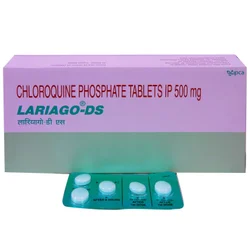
- Lariago 250 mg — Χλωροκίνη — μόνο για περιοχές ευαίσθητες στη χλωροκίνη
- Πριμακίνη 15 mg — Ριζική θεραπεία για επαναλαμβανόμενη ελονοσία vivax/ovale — Απαιτείται τεστ G6PD
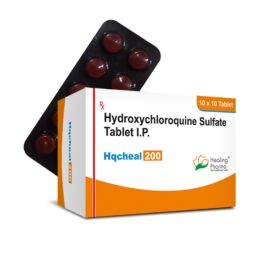
- HCQS 200/400 mg — Υδροξυχλωροκίνη — αντιμαλαρικό + ενδείξεις για αυτοάνοσα.
Περισσότερες επιλογές σε δισκία εναντίον της ελονοσίας
Ταξινομημένα σύμφωνα με τον όγκο παραγγελιών στο MedsBase — τι επιλέγουν άλλοι πελάτες σε αυτήν την κατηγορία.


| Ισχύς | 300 mg |
|---|---|
| Ποσότητα | 30 δισκία, 60 δισκία, 90 δισκία, 180 δισκία |
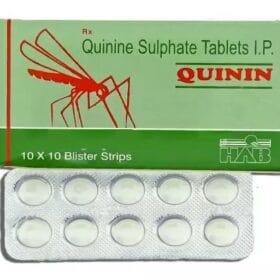 Quinin 300
Ερωτήσεις & Απαντήσεις
Quinin 300
Σχετικά προϊόντα



Κριτικές
Δεν υπάρχουν ακόμη κριτικές