








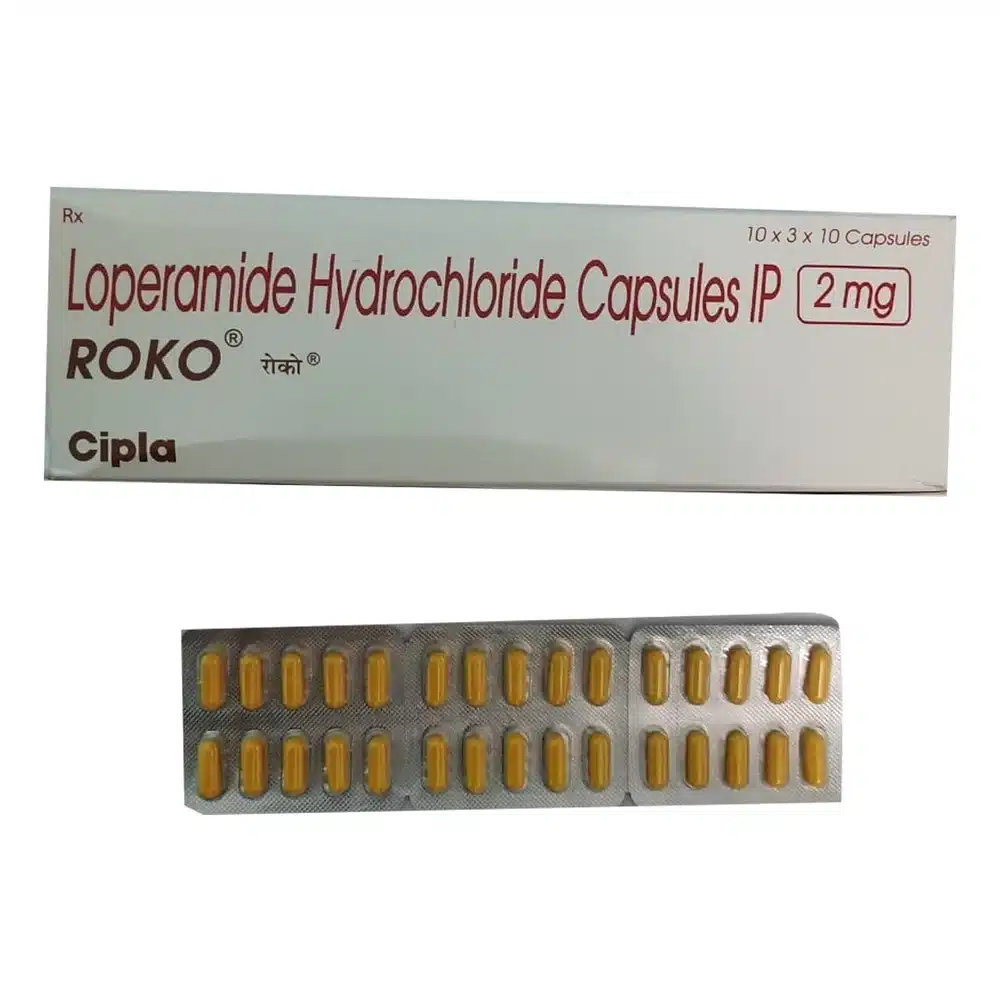
Roko
✅ Ανακούφιση από Συμπτώματα Διάρροιας
✅ Κανονικοποίηση της Λειτουργίας του Εντέρου
✅ Ανακούφιση από Συσχετιζόμενα Συμπτώματα
✅ Γρήγορη και Αποτελεσματική Δράση
✅ Βελτιωμένη Ποιότητα Ζωής
Το Roko περιέχει Υδροχλωρική Λοπεραμίδη
✓ Ιατρικά ελεγμένο από Morgan Ellis — Ερευνητής Φαρμακευτικής · 8 χρόνια εμπειρία · Τελευταία αναθεώρηση: Μάιος 2026
Γρήγορη απάντηση — Τι είναι το Roko;
Το δισκίο Roko περιέχει υδροχλωρική λοπεραμίδη 2 mg — έναν αγωνιστή υποδοχέων οπιοειδών που περιορίζεται στον τοίχο του εντέρου, επιβραδύνει την κινητικότητα του εντέρου και ανακουφίζει από οξεία και χρόνια διάρροια. Παράγεται από την Cipla, η τυπική δόση είναι 4 mg αρχικά και στη συνέχεια 2 mg μετά από κάθε αραιό κόπρανο, έως 16 mg σε 24 ώρες. Μειώνει τη συχνότητα και την επείγουσα ανάγκη για αφόδευση χωρίς τις επιπτώσεις στο κεντρικό νευρικό σύστημα που έχουν άλλα οπιοειδή.
📦 Κάθε παραγγελία καλύπτεται από την Πολιτική Εγγύησης Επαναποστολής — εάν το δέμα σας δεν φτάσει εντός 20 εργάσιμων ημερών, το επαναποστέλλουμε.
Γιατί να παραγγείλετε από τη MedsBase
Τα γενόσημα φάρμακά μας προέρχονται από κατασκευαστές που πιστοποιούνται από την WHO-GMP και αποστέλλονται παγκοσμίως σε διακριτική, απλή συσκευασία — χωρίς όνομα φαρμάκου στο εξωτερικό του δέματος. Οι πληρωμές με κάρτα δρομολογούνται μέσω ρυθμισμένου επεξεργαστή (οι περιγραφές εκκαθάρισης περιλαμβάνουν ρυθμισμένο επεξεργαστή πληρωμών με κάρτα — ποτέ “MedsBase” ή οποιοδήποτε όνομα φαρμάκου). Γίνονται δεκτές και πληρωμές με κρυπτονομίσματα και τραπεζική μεταφορά SEPA. Κάθε παραγγελία καλύπτεται από την Πολιτική Επαναποστολής Εξασφαλίσεώς μας.
Τι είναι το Roko;
Το Roko είναι ένα αντιδιαρροϊκό δισκίο που περιέχει υδροχλωρική λοπεραμίδη 2 mg, κατασκευασμένη από Cipla Ltd στην Ινδία. Η λοπεραμίδη είναι ένας συνθετικός αγωνιστής υποδοχέων οπιοειδών που δρα ειδικά στον τοίχο του εντέρου για να επιβραδύνει την κινητικότητα του εντέρου και να μειώσει τη συχνότητα των κοπράνων. Σε αντίθεση με τα παλαιότερα οπιοειδή (κωδεΐνη, διφενοξυλική), η λοπεραμίδη δεν έχει ουσιαστικά δραστηριότητα στο κεντρικό νευρικό σύστημα σε θεραπευτικές δόσεις επειδή αποκλείεται ενεργά από τον εγκέφαλο από τον μεταφορέα P-γλυκοπρωτεΐνης του φραγμού αίματος-εγκεφάλου.
Αυτή η φαρμακολογική στοχευμένη δράση καθιστά το Roko ιδιαίτερα κατάλληλο για τον έλεγχο της διάρροιας χωρίς την καταστολή, την ευφορία, την καταστολή της αναπνοής ή την πιθανότητα κατάχρησης που σχετίζεται με άλλα οπιοειδή. Είναι βασικό αντιδιαρροϊκό παγκοσμίως από τη δεκαετία του 1970 και περιλαμβάνεται στον Μοντέλο Κατάλογο Βασικών Φαρμάκων του ΠΟΥ.
Χρήσεις του Roko
- Οξεία μη λοιμώδης διάρροια — ξαφνική έναρξη, συνήθως αυτοπεριοριζόμενη, που προκαλείται από διατροφική απροσεξία, ιογενή γαστρεντερίτιδα (μετά την επίλυση των λοιμώδων συμπτωμάτων) ή παρενέργειες φαρμάκων.
- Χρόνια διάρροια — στο σύνδρομο ευερέθιστου εντέρου με διάρροια (IBS-D), φλεγμονώδη νόσο του εντέρου κατά την ύφεση, μετά από αγγελεκτομή ή σύνδρομο βραχέος εντέρου.
- Διάρροια του ταξιδιώτη — συμπτωματική ανακούφιση εκτός από την κατάλληλη επαναυδάτωση.
- Μείωση της εκροής ιλεοστόμης — σε ασθενείς με υψηλής εκροής στομία όπου η απώλεια υγρών είναι προβληματική.
- Διάρροια που προκαλείται από ακτινοθεραπεία — σε ασθενείς που υποβάλλονται σε πυελική ακτινοθεραπεία.
- Διάρροια που προκαλείται από χημειοθεραπεία — ιδιαίτερα με σχήματα που βασίζονται σε ιρινοτεκάνη.
Πώς λειτουργεί το Roko
Η λοπεραμίδη συνδέεται με υ-οπιοειδείς υποδοχείς στο μυεντερικό πλέγμα του παχέος εντέρου — το δίκτυο νευρικών κυττάρων που ρυθμίζει την περισταλτική κίνηση. Η σύνδεση αναστέλλει την απελευθέρωση ακετυλοχολίνης και προσταγλανδινών, γεγονός που μειώνει την ισχύ και τη συχνότητα των εντερικών συσπάσεων. Το αποτέλεσμα είναι επιβραδυνμένος χρόνος διέλευσης, δίνοντας στο παχύ έντερο περισσότερες ευκαιρίες να επαναρροφήσει νερό και ηλεκτρολύτες από τις κενώσεις. Ο καθαρός όγκος των κενώσεων μειώνεται και οι κενώσεις γίνονται πιο στερεές.
Η λοπεραμίδη μειώνει επίσης τις ανωμαλίες του τόνου του πρωκτικού σφιγκτήρα που παρατηρούνται στη διάρροια, βελτιώνοντας την συγκράτηση. Σε θεραπευτικές δόσεις, δεν υπάρχει αναλγητική ή κεντρική οπιοειδής επίδραση λόγω του φραγμού P-γλυκοπρωτεΐνης στο αιματοεγκεφαλικό φράγμα. Αυτός είναι ο λόγος για τον οποίο η λοπεραμίδη δεν ταξινομείται ως ελεγχόμενη ουσία στις περισσότερες χώρες.
Δοσολογία και Χορήγηση
Η δόση για ενήλικες για οξεία διάρροια: 4 mg (δύο δισκία) αρχικά, ακολουθούμενα από 2 mg (ένα δισκίο) μετά από κάθε επόμενη υγρή κένωση. Μέγιστο 16 mg (8 δισκία) σε 24 ώρες. Διακόψτε όταν οι κενώσεις γίνουν σχηματισμένες.
Η δόση για ενήλικες για χρόνια διάρροια: 4 mg αρχικά, στη συνέχεια 2 mg μετά από κάθε υγρή κένωση ή όπως χρειάζεται. Συντηρητική δόση 2–12 mg ημερησίως, προσαρμοσμένη στην κλινική απόκριση. Μέγιστο 16 mg ημερησίως.
Παιδιά ηλικίας 4–8 ετών: 1 mg έως 3 φορές ημερησίως, μέγιστο 2 ημέρες. Παιδιά 9–12 ετών: 2 mg δύο φορές ημερησίως, μέγιστο 5 ημέρες. Μην χρησιμοποιείτε σε παιδιά κάτω των 4 χωρίς ιατρική συμβουλή.
Πώς να χρησιμοποιήσετε το Roko
- Πάρτε τα δισκία ολόκληρα με νερό. Το Roko δεν χρειάζεται να λαμβάνεται με φαγητό.
- Μαζί με το Roko, διατηρήστε καλή ενυδάτωση — τα άλατα στοματικής ενυδάτωσης (ORS) συνιστούνται για την αντικατάσταση των χαμένων υγρών και ηλεκτρολυτών.
- Σταματήστε τη λήψη του Roko μόλις επιλυθεί η διάρροια ή οι κενώσεις πάρουν μορφή. Μην συνεχίσετε προφυλακτικά.
- Ζητήστε ιατρική συμβουλή εάν η διάρροια δεν βελτιωθεί εντός 48 ωρών ή εάν εμφανιστούν πυρετός, αιματηρή κένωση ή σοβερός κοιλιακός πόνος.
- Μην ξεπερνάτε τα 16 mg (8 δισκία) σε οποιαδήποτε 24ωρη περίοδο.
Παρενέργειες του Roko
- Συχνές: δυσκοιλιότητα (ειδικά με παρατεταμένη χρήση), κοιλιακός πόνος ή κράμπες, φούσκωμα, ναυτία, ξηροστομία, ζάλη.
- Ασυνήθιστες: δερματικό εξάνθημα, μετεωρισμός, εμετός, κόπωση.
- Σπάνιες αλλά σοβαρές: παραλυτική ειλεός (ειδικά με υψηλές δόσεις ή σε μικρά παιδιά), τοξικό μεγακόλον σε έξαρση ελκώδους κολίτιδας, αλλεργικές αντιδράσεις συμπεριλαμβανομένου του αγγειοοίδημα, σοβαρή δυσκοιλιότητα που οδηγεί σε αφόδευση.
- Σε ακραία υπερδοσολογία (>60 mg): καρδιακή αρρυθμία — επιμήκυνση QT, torsades de pointes — λόγω περιφερειακής αναστολής νατριουχικών καναλιών. Αυτός ο κίνδυνος έχει οδηγήσει σε κανονιστικούς περιορισμούς στο μέγεθος συσκευασιών σε πολλές χώρες.
Προφυλάξεις και προειδοποιήσεις
- Αιματηρή διάρροια ή υψηλός πυρετός: ΜΗΝ χρησιμοποιείτε το Roko — αυτά υποδηλώνουν εισβολική βακτηριακή λοίμωξη (Salmonella, Shigella, C. difficile) ή κολίτιδα όπου η επιβράδυνση της κινητικότητας μπορεί να επιδεινώσει την έκβαση.
- Έξαρση οξείας ελκώδους κολίτιδας: αντενδείκνυται — κίνδυνος τοξικού μεγακόλου.
- Αντιβιοτική κολίτιδα (C. difficile): αποφύγετε — η επιβράδυνση της κινητικότητας παγιδεύει τις τοξίνες στο κόλον.
- Παιδιά κάτω των 2 ετών: αντενδείκνυται — κίνδυνος παραλυτικού ειλεού.
- Σοβαρή ηπατική δυσλειτουργία: μειωμένη μεταβολή — χρήση με προσοχή, χαμηλότερες δόσεις.
- Εγκυμοσύνη: περιορισμένα δεδομένα· χρήση μόνο εάν τα οφέλη ξεκάθαρα υπερτερούν των κινδύνων.
- Θηλασμός: μικρές ποσότητες εκκρίνονται στο μητρικό γάλα — οι σύντομες θεραπείες γενικά θεωρούνται ασφαλείς.
Αλληλεπιδράσεις Φαρμάκων
Σημαντικές αλληλεπιδράσεις: ριτοναβίρ, κινιδίνη, ιτρακοναζόλη, κετοκοναζόλη — αναστέλλουν τον μεταβολισμό της λοπεραμίδης και την έκκριση P-γλυκοπρωτεΐνης, αυξάνοντας τα πλάσματικά επίπεδα και τον κίνδυνο κεντρικών οπιοειδών επιδράσεων και καρδιακής τοξικότητας·; χοληστυραμίνη — δεσμεύει τη λοπεραμίδη στο έντερο, μειώνοντας την απορρόφηση·; Φάρμακα που επιμηκύνουν το QT (αμιοδαρόνη, σοταλόλη, μακρολίδια αντιβιοτικά, ορισμένα αντιψυχωσικά) — πρόσθετος κίνδυνος αρρυθμίας σε υψηλές δόσεις λοπεραμίδης·; άλλα οπιοειδή — θεωρητικά πρόσθετες κεντρικές επιδράσεις σε πολύ υψηλές δόσεις.
Αποθήκευση
Αποθηκεύστε σε θερμοκρασία κάτω από 25 °C στην αρχική συσκευασία, προστατευμένο από την υγρασία. Φυλάξτε μακριά από παιδιά. Μην χρησιμοποιείτε μετά την ημερομηνία λήξης.
Συχνές Ερωτήσεις
Πόσο γρήγορα δρα το Roko;
Η ανακούφιση συνήθως ξεκινά εντός 30 λεπτών έως 1 ώρας από την πρώτη δόση των 4 mg. Η μέγιστη επίδραση παρατηρείται σε 4–5 ώρες. Οι περισσότερες περιπτώσεις οξείας διάρροιας επιλύονται εντός 24 ωρών από την έναρξη του Roko, αν και η χρόνια διάρροια απαιτεί μακροπρόθεσμη δοσολογία προσαρμοσμένη στην ατομική απόκριση.
Μπορώ να πάρω Roko για τη διάρροια του ταξιδιώτη;
Ναι — το Roko είναι αποτελεσματικό για την συμπτωματική ανακούφιση της διάρροιας του ταξιδιώτη και μπορεί να συνδυαστεί με κατάλληλη αντιβιοτική θεραπεία σε μέτριες έως σοβαρές περιπτώσεις. Εάν εμφανιστούν αιματηρά κόπρανα, υψηλός πυρετός ή σοβαρός κοιλιακός πόνος, αναζητήστε ιατρική φροντίδα αντί να αυτοθεραπευτείτε μόνο με λοπεραμίδη.
Είναι το Roko ασφαλές για μακροπρόθεσμη χρήση;
Για χρόνιες παθήσεις όπως το σύνδρομο ευερέθιστου εντέρου με διάρροια (IBS-D) ή τη διαχείριση ιλεοστομίας, η λοπεραμίδη μπορεί να χρησιμοποιηθεί μακροπρόθεσμα υπό ιατρική επίβλεψη στην ελάχιστη αποτελεσματική δόση. Παρακολουθήστε για δυσκοιλιότητα και προσαρμόστε τη δόση ανάλογα. Η μακροπρόθεσμη χρήση σε τυπικές δόσεις δεν σχετίζεται με εξάρτηση ή ανοχή.
Μπορώ να δώσω Roko στο παιδί μου;
Η λοπεραμίδη δεν συνιστάται για παιδιά κάτω των 2 ετών λόγω αυξημένου κινδύνου παραλυτικού ειλεού. Για παιδιά 4–8 ετών, μπορούν να δοθούν δόσεις 1 mg για σύντομες περιόδους. Συμβουλευτείτε πάντα πρώτα έναν παιδίατρο και διασφαλίστε επαρκή υγρασία με άλατα αναπλήρωσης υγρών από το στόμα, ανεξάρτητα από το αν χρησιμοποιείται το Roko.
Γιατί η λοπεραμίδη δεν προκαλεί εξάρτηση;
Η λοπεραμίδη αντλείται ενεργά από τον εγκέφαλο από την P-γλυκοπρωτεΐνη στο φράγμα αιματοεγκεφαλικής διαύλου. Σε θεραπευτικές δόσεις, πρακτικά καμία δεν φτάνει στους κεντρικούς υποδοχείς οπιοειδών που ευθύνονται για την ευφορία ή την εξάρτηση. Σε εξαιρετικά υψηλές δόσεις (>60 mg), ο μεταφορέας κορεσμού και μπορεί να προκύψουν ορισμένες κεντρικές επιδράσεις — γι' αυτό έχουν εισαχθεί όρια μεγέθους συσκευασίας σε πολλές χώρες.
Πότε ΔΕΝ πρέπει να πάρω Roko;
Μην παίρνετε το Roko αν έχετε: αιματηρή κένωση, υψηλό πυρετό (πάνω από 38,5 °C), σοβερό κοιλιακό άλγος που υποδηλώνει ειλεό ή περιτονίτιδα, κολίτιδα σχετιζόμενη με αντιβιοτικά ή ενεργή έξαρση ελκώδους κολίτιδας ή νόσου του Crohn. Σε αυτές τις καταστάσεις, η επιβράδυνση της κινητικότητας μπορεί να επιδεινώσει την υποκείμενη πάθηση.
Τι πρέπει να κάνω αν πήρα κατά λάθος υπερβολική δόση;
Μια μέτρια υπερδοσολογία (έως 16 mg πάνω από το ημερήσιο όριο) συνήθως προκαλεί μόνο σοβερή δυσκοιλιότητα ή κοιλιακούς κράμπες. Μεγάλες υπερδοσολογίες (πάνω από 60 mg σε μια ημέρα) μπορεί να προκαλέσουν καρδιακή αρρυθμία και απαιτούν άμεση ιατρική προσοχή — παρακολούθηση με ΗΚΓ και υποστηρικτική φροντίδα. Σε περίπτωση αμφιβολίας, καλέστε το κέντρο δηλητηριάσεων ή ζητήστε επείγουσα ιατρική βοήθεια.
Σχετικές Εναλλακτικές
Άλλα προϊόντα σε Γενική Υγεία που οι πελάτες εξετάζουν επίσης:
| Ποσότητα | 30 Καψάκια, 60 Καψάκια, 90 Καψάκια |
|---|
 Roko
Roko
Ερωτήσεις & Απαντήσεις
Roko
Σχετικά προϊόντα




Κριτικές
Δεν υπάρχουν ακόμη κριτικές