







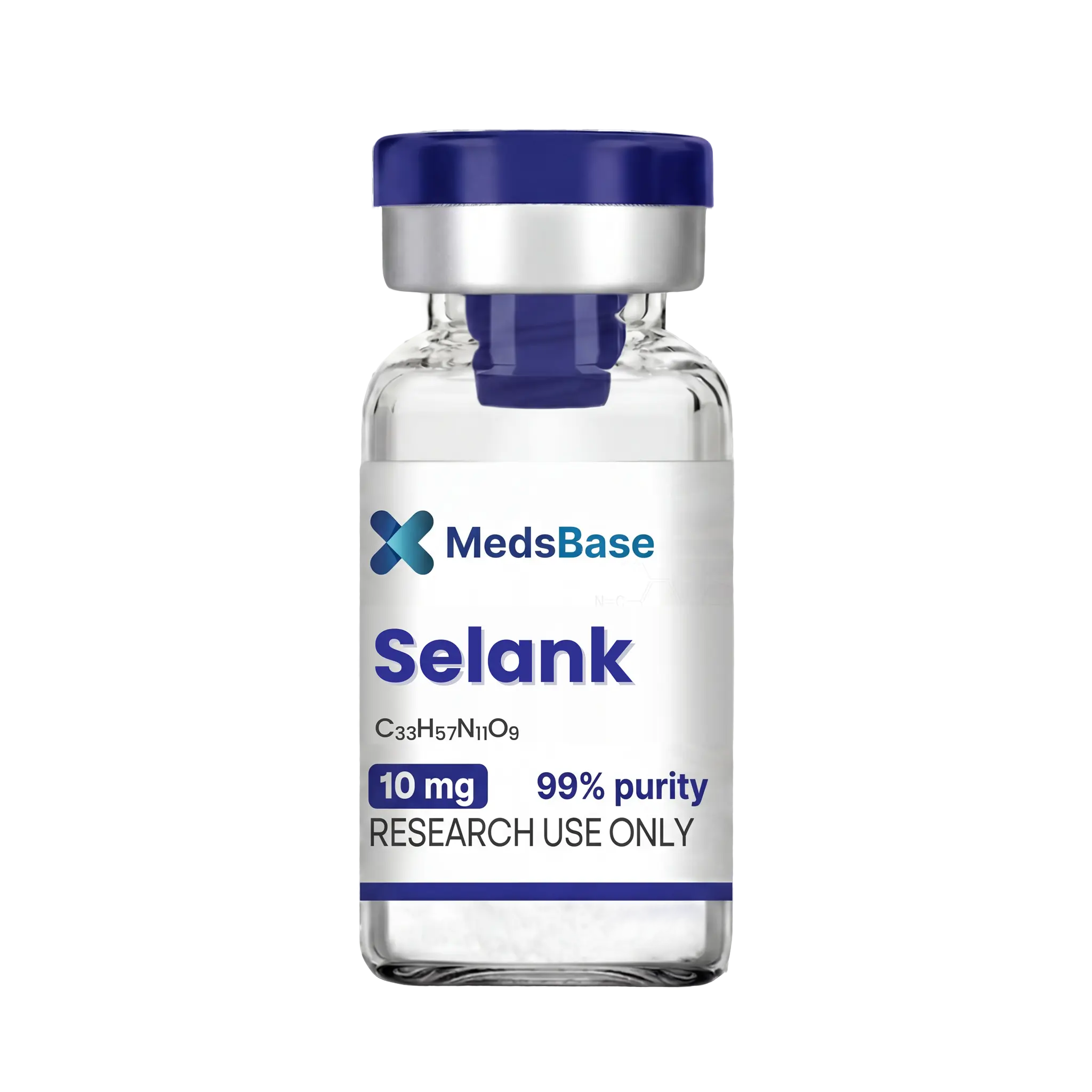
Selank
✅ Αγχολυτικό χωρίς καταστολή
✅ Διαμόρφωση πολλαπλών οδών GABA / BDNF / εγκεφαλίνης
✅ Έρευνα για ενώσεις ανθεκτικότητας στο στρες
✅ Πεπτιδικό προϊόν με διαθέσιμοτητα ενδορινικά
✅ Καθαρό προφίλ αποχής σε σύγκριση με τις βενζοδιαζεπίνες
Selank περιέχει συνθετική πεπτιδική ένωση.
✓ Ιατρικά ελεγμένο από Morgan Ellis — Ερευνητής Φαρμακευτικής · 8 χρόνια εμπειρία · Τελευταία αναθεώρηση: Μάιος 2026
Γρήγορη Απάντηση — Τι είναι το Selank;
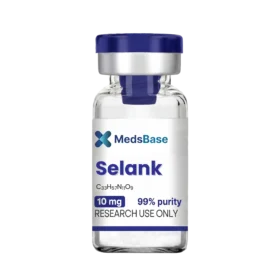
Selank είναι ένα συνθετικό επταπεπτίδιο 7 αμινοξέων που αναπτύχθηκε στη Ρωσική Ακαδημία Επιστημών ως ανάλογο του ενδογενούς ανοσοτροποποιητικού πεπτιδίου tuftsin. Στη δημοσιευμένη έρευνα λειτουργεί ως αγχολυτικό νοοτροπικό, διαμορφώνοντας την σηματοδότηση GABAergic, σεροτονεργική και εγκεφαλίνης και αυξάνοντας την έκφραση BDNF χωρίς την καταστολή ή το προφίλ εξάρτησης των βενζοδιαζεπινών. Προσφέρεται σε φιαλίδια λυοφιλισμένου σε δόσεις 5 mg και 10 mg μόνο για εργαστηριακή έρευνα.
📦 Κάθε παραγγελία καλύπτεται από την Πολιτική Εγγύησης Επαναποστολής — εάν το δέμα σας δεν φτάσει εντός 20 εργάσιμων ημερών, το επαναποστέλλουμε.
| Προδιαγραφή | Λεπτομέρεια |
|---|---|
| Αριθμός CAS | 129954-34-3 |
| Μοριακός Τύπος | C33H57N11O9 |
| Μοριακό Βάρος | 751.88 Da |
| Ακολουθία | Thr-Lys-Pro-Arg-Pro-Gly-Pro-NH2 (TKPRPGP-NH2, 7 αμινοξέα; C-τελικό αμιδωμένο ανάλογο tuftsin) |
| Μορφή | Λυοφιλισμένη σκόνη (λευκή έως ελαφρώς κιτρινωπή) |
| Καθαρότητα | ≥99% (HPLC επαληθευμένο, COA κατόπιν αιτήματος) |
| Αποθήκευση | Λυοφιλιωμένο: 2–8 °C (ψυγείο) για εργαστικό απόθεμα· −20 °C για μακροπρόθεσμη αποθήκευση ανοιχτών φιαλών. Ανασυντεθειμένο: 2–8 °C, χρήση εντός ~30 ημερών. Προστασία από το φως. Μην καταψύχετε-αποψύχετε το ανασυντεθειμένο διάλυμα. |
| Διαλυτότητα | Βακτηριοστατικό νερό (προτεινόμενο) ή στειρό νερό για μικρότερα χρονικά περιθώρια χρήσης. Συμβατό με ερευνητικά διαλύματα ενδορινικής χορήγησης. |
| Ερευνητική Χρήση | Μόνο για εργαστηριακή έρευνα. Δεν προορίζεται για διαγνωστική ή θεραπευτική χρήση σε ανθρώπους ή ζώα. |
Τι Είναι το Selank;
Selank είναι ένα συνθετικό επταπεπτίδιο που αναπτύχθηκε τη δεκαετία του 1990 στο Ινστιτούτο Μοριακής Γενετικής της Ρωσικής Ακαδημίας Επιστημών, το ίδιο εργαστήριο που ανέπτυξε το Semax. Είναι δομικά ανάλογο του ενδογενούς ανοσοτροποποιητικού τετραπεπτιδίου tuftsin (TKPR), επεκτεταμένο στο C-άκρο με μια Pro-Gly-Pro ουρά που προσδίδει πρωτεολυτική σταθερότητα και ένα αμιδωμένο C-άκρο. Η επέκταση της ουράς επεκτείνει δραματικά τον χρόνο ημιζωής στο πλάσμα σε σχέση με το φυσικό tuftsin, το οποίο αποικοδομείται μέσα σε λίγα λεπτά, διατηρώντας παράλληλα την ανοσοτροποποιητική δραστηριότητα του γονικού πεπτιδίου.
Η καλά χαρακτηρισμένη ακολουθία του Selank είναι TKPRPGP-NH2, μοριακό βάρος 751,88 Da, εμπειρικός τύπος C33H57N11O9. Παρασκευάζεται ως υψηλής καθαρότητας λυοφιλισμένη σκόνη για ανασύνθεση με βακτηριοστατικό νερό. Στη Ρωσία, το Selank εγκρίνεται ως συνταγογραφούμενο αγχολυτικό με την ονομασία Selank (ρινικό σπρέι). Εκτός του μετασοβιετικού μπλοκ, δεν έχει εγκριθεί από τον FDA, την EMA, την MHRA ή οποιονδήποτε άλλο μεγάλο ρυθμιστικό φορέα. Το ερευνητικού βαθμού Selank που πωλείται εδώ παρέχεται μόνο για εργαστηριακή έρευνα και δεν έχει εγκριθεί για χρήση σε ανθρώπους ή ζώα. Για έρευνα σε αδελφικά πεπτίδια, δείτε την Semax σελίδα προϊόντος μας.
Μηχανισμός Δράσης — GABAεργικές, Σεροτονινεργικές και BDNF Οδοί
Αυτό που κάνει το Selank ξεχωριστό μεταξύ των ερευνητικών ενώσεων αγχολυτικών είναι το πολυ-οδικό νευροδιαμορφωτικό προφίλ του χωρίς άμεση δέσμευση στον υποδοχέα GABAA θέση βενζοδιαζεπίνης — καθένα από τα οποία συμβάλλει στο παρατηρούμενο αγχολυτικό και νοοτροπικό φαινότυπο σε δημοσιευμένες έρευνες:
- GABAεργική διαμόρφωση χωρίς δέσμευση στη θέση βενζοδιαζεπίνης — Το Selank ενισχύει την αναστολή που μεσολαβείται από το GABA μέσω αλλοστερικών επιδράσεων που διαφέρουν από τη θέση σύνδεσης των βενζοδιαζεπινών. Σε μοντέλα έρευνας σε τρωκτικά αυξάνει το όριο σπασμών και προκαλεί αγχολυτική δράση σε δοκιμασίες υπερυψωμένου λαβυρίνθου και ανοιχτού χώρου, αλλά χωρίς την καταστολή, την απώλεια κινητικής συντονισμού, την εξάρτηση ή το άγχος επαναφοράς που παρατηρείται με τη διαζεπάμη. Αυτός ο διακριτικός τρόπος διαμόρφωσης του GABA είναι η πιο μελετημένη πτυχή της φαρμακολογίας του Selank.
- Σηριατονεργική και εγκεφαλινεργική σηματοδότηση — Δημοσιευμένη έρευνα έχει τεκμηριώσει αύξηση του μεταβολισμού της σεροτονίνης (αναλογία 5-HIAA/5-HT) σε φλοιώδεις και λιμβικές περιοχές μετά τη χορήγηση Selank σε τρωκτικά, παράλληλα με την αναρρόφηση της γονιδιακής έκφρασης της εγκεφαλίνης. Πιστεύεται ότι ο συνδυασμός σηριατονεργικής και εγκεφαλινεργικής σηματοδότησης συμβάλλει σε επιδράσεις διαμόρφωσης της διάθεσης και ανθεκτικότητας στο στρες σε μοντέλα έρευνας χρόνιου στρες.
- Έκφραση BDNF και νευροπλαστικότητα — Το Selank αυξάνει την έκφραση του παράγοντα νευροτροφικής προέλευσης του εγκεφάλου (BDNF) στον ιππόκαμπο και τον προμετωπιαίο φλοιό σε δημοσιευμένη έρευνα, έναν μηχανισμό που αναγνωρίζεται όλο και περισσότερο ως κεντρικός για τις μακροπρόθεσμες επιδράσεις ενώσεων διαμόρφωσης της διάθεσης. Η αύξηση της έκφρασης του BDNF υποστηρίζει επίσης το νοοτροπικό προφίλ του Selank — βελτιωμένη εδραίωση μνήμης και απόδοση μάθησης σε δοκιμασίες λαβυρίνθου σε τρωκτικά.
Το Selank είναι βιοδιαθέσιμο με ενρινική χορήγηση (ένα από τα πολύ λίγα πεπτίδια με τεκμηριωμένη απορρόφηση από βλεννογόνους), που είναι η κύρια διαδρομή έρευνας σε δημοσιευμένες ρωσικές και ανατολικοευρωπαϊκές μελέτες. Η ενρινική διαδρομή παρακάμπτει τον μεταβολισμό πρώτης διέλευσης και παρέχει το πεπτίδιο απευθείας μέσω της κριβριφόρμας πλάκας σε κεντρικούς χώρους, προκαλώντας επιδράσεις ΚΝΣ εντός λεπτών από τη χορήγηση. Η υποδόρια χορήγηση είναι επίσης τεκμηριωμένη σε προκλινική έρευνα και παράγει ένα παρόμοιο φαρμακολογικό προφίλ με ελαφρώς πιο αργή έναρξη.
Εφαρμογές Δημοσιευμένης Έρευνας
Το Selank χρησιμοποιείται σε πλαίσια εργαστηριακής έρευνας που διερευνούν:
- Αγχολυτική φαρμακολογία — δοκιμασίες υπερυψωμένου λαβυρίνθου, ανοιχτού χώρου, κοινωνικής αλληλεπίδρασης σε μοντέλα τρωκτικών γενικευμένου άγχους· συγκριτικές ομάδες έναντι βενζοδιαζεπινών (διαζεπάμη) και SSRI (Kozlovskaya et al., Eksp Klin Farmakol· Inozemtsev et al., Bull Exp Biol Med)
- Ανθεκτικότητα στο στρες και έρευνα άξονα HPA — μοντέλα χρόνιου ήπιου στρες, στρες περιορισμού και μαθημένης αδυναμίας· δυναμική κορτιζόλης και ACTH
- Έρευνα BDNF και νευροπλαστικότητας — έκφραση BDNF στον ιππόκαμπο και τον προμετωπιαίο φλοιό, μορφολογία δενδριτικών ακίδων, ηλεκτροφυσιολογία μακροχρόνιας ενίσχυσης
- Γνωστική και μνημονική έρευνα — λαβύρινθος Morris, αναγνώριση νέου αντικειμένου, παθητική αποφυγή· νοοτροπικές επιδράσεις ανεξάρτητες από την αγχολυτική δράση
- Ανοσοδιαμόρφωση — Το Selank κληρονομεί την ανοσοδιαμορφωτική δραστηριότητα της tuftsin, με τεκμηριωμένες επιδράσεις στην ισορροπία των κυτοκινών (TNF-α, IL-6, IFN-γ) και τη λειτουργία των μακροφάγων σε δημοσιευμένες έρευνες
- Συγκριτική έρευνα έναντι βενζοδιαζεπινών — άμεση σύγκριση με το διαζεπάμη, αλπραζολάμη και φεναζεπάμη ως προς την αντιάγχιστη αποτελεσματικότητα, την εξάρτηση και την επαναφορά· το καθαρό προφίλ απόσυρσης του Selank είναι ένα από τα πιο αναφερόμενα ευρήματα στη ρωσική βιβλιογραφία
- Έρευνα σε αδελφό-πεπτίδιο — συγκριτική αξιολόγηση έναντι Semax (ένα αδελφό επταπεπτίδιο από το ίδιο εργαστήριο) για νοοτροπικές και νευροπροστατευτικές επιδράσεις.
Για ευρύτερο πλαίσιο σχετικά με τη νευροδιαμόρφωση με μικρά πεπτίδια και την έρευνα νοοτροπικών ουσιών, δείτε Semax ως τον κανονικό ρωσικής προέλευσης συγκριτικό παράγοντα νοοτροπικών ουσιών, Επιταλόν για έρευνα μακροζωίας με πεπτίδια του επιφυσίου, και BPC-157 για το παράλληλο μικρό πεπτίδιο έρευνας για επούλωση. Περιηγηθείτε σε ολόκληρο το κατάλογο ερευνητικών πεπτιδίων για σχετικές ενώσεις.
Διαθέσιμες Δυνάμεις και Συγκεντρώσεις
MedsBase stocks Selank in two lyophilized vial sizes calibrated to typical research protocol lengths. Each strength is available in 10-vial, 20-vial, or 30-vial pack formats with full reconstitution guidance:
| Δύναμη Φιαλιδίου | Τυπική Περίπτωση Ερευνητικής Χρήσης | Μεγέθη Συσκευασίας |
|---|---|---|
| 5 mg | Σύντομα πρωτόκολλα έρευνας, πιλοτική δοσολογία, μελέτες διαμόρφωσης ενδορινικού φορέα | 10, 20 ή 30 φιαλίδια |
| 10 mg | Τυπική δόση έρευνας, εκτεταμένα πρωτόκολλα, χαμηλότερο κόστος ανά mg | 10, 20 ή 30 φιαλίδια |
Και οι δύο δόσεις είναι της ίδιας χημικής μορφής (λυοφιλισμένη σκόνη, καθαρότητα HPLC 99%+). Τα φιαλίδια υψηλότερης δόσης απαιτούν μικρότερους όγκους ανασύνθεσης ανά μονάδα δόσης, κάτι που είναι χρήσιμο όταν οι ερευνητές θέλουν να ελαχιστοποιήσουν τον όγκο έγχυσης ή ενδορινικής χορήγησης σε πρωτόκολλα με τρωκτικά.
Σύγκριση — Selank έναντι Semax
Selank και Semax είναι αδελφικά πεπτίδια που αναπτύχθηκαν στο ίδιο εργαστήριο της Ρωσίας (Ινστιτούτο Μοριακής Γενετικής, Ρωσική Ακαδημία Επιστημών) και συχνά συγκρίνονται στην έρευνα επειδή μοιράζονται αρχιτεκτονική επταπεπτιδίου, ενρινική βιοδιαθεσιμότητα και ιστορικό ρωσικής ρύθμισης, αλλά διαφέρουν σημαντικά στην πρωτογενή φαρμακολογική δράση. Το Selank είναι το κανονικό αγχολυτικό του ζεύγους· το Semax είναι το κανονικό νοοτροπικό/νευπροστατευτικό.
| Κριτήριο | Selank | Semax |
|---|---|---|
| Length | 7 αμινοξέα (επταπεπτίδιο) | 7 αμινοξέα (επταπεπτίδιο) |
| Γονικό πεπτίδιο | Tuftsin (TKPR) | Θραύσμα ACTH(4-10) |
| Κύριος μηχανισμός | Διαμόρφωση GABA, BDNF, εγκεφαλίνη | BDNF, μελανοκορτινικοί υποδοχείς, ντοπαμίνη |
| Πρωτογενές ερευνητικό σήμα | Αγχολυτικό, ανθεκτικότητα στο στρες | Νοοτροπικό, νευπροστατευτικό, συγκέντρωση |
| Τυπική δοσολογία έρευνας (ρινική χορήγηση) | 300–900 mcg/ημέρα | 200–1,000 mcg/ημέρα |
| Κλινική χρήση στη Ρωσία | Εγκεκριμένο αγχολυτικό (ρινική χορήγηση) | Εγκεκριμένο νοοτροπικό / ανάκτηση από εγκεφαλικό επεισόδιο (ρινική χορήγηση) |
| Συνδυασμός στην έρευνα | Συχνά συνδυάζεται με το Semax για συμπληρωματικό αγχολυτικό+νοοτροπικό αποτέλεσμα | Συχνά συνδυάζεται με το Selank |
Επειδή τα δύο πεπτίδια δρουν σε συμπληρωματικούς άξονες — το Selank στον GABA/αγχολυτικό, το Semax στον μελανοκορτινο/δοπαμινεργικό/νοοτροπικό — συχνά συνχορήγονται σε πρωτόκολλα έρευνας που μελετούν την γνωστική απόδοση υπό στρες, όπου και οι δύο πλευρές (ηρεμία και εστίαση) συνεισφέρουν στο μελετώμενο φαινότυπο.
Αποθήκευση και ανασύνθεση
Πριν την ανασύνθεση: Αποθηκεύστε τα λυοφιλισμένα φιαλίδια σε ψυγείο στους 2–8 °C στην αρχική συσκευασία για βραχυπρόθεσμο απόθεμα. Για μακροπρόθεσμη αποθήκευση χωρίς άνοιγμα, καταψύξτε στους −20 °C. Το λυοφιλισμένο Selank είναι σταθερό σε ψύξη έως και 24 μήνες και στους −20 °C έως και 36 μήνες. Αποφύγετε κύκλους πήξης-απόψυξης στο λυοφιλισμένο σκόνη.
Διαδικασία ανασύνθεσης: Εισάγετε βακτηριοστατικό νερό στον πλευρικό τοίχο του φιαλιδίου πεπτιδίου (όχι απευθείας πάνω στο λυοφιλισμένο κέικ). Για φιαλίδιο 5 mg, 1.0 mL βακτηριοστατικού νερού δίνει συγκέντρωση εργασίας 5 mg/mL· 0.1 mL παρέχει δοσολογία έρευνας 500 mcg. Ανακατέψτε απαλά — μην δεν το κουνήσετε — και αφήστε 2–5 λεπτά για πλήρη διάλυση. Ένα σωστά ανασυσκευασμένο διάλυμα θα πρέπει να είναι διαυγές και άχρωμο. Για ερευνητικές φορμές ρινικής χορήγησης, το ανασυσκευασμένο διάλυμα μπορεί να μεταφερθεί σε βαθμονομημένο μπουκάλι ρινικού ψεκασμού που παρέχει ~100 μL ανά παλμό.
Μετά την ανασύνθεση: Αποθηκεύστε σε ψυγείο στους 2–8 °C και χρησιμοποιήστε εντός 30 ημερών για βέλτιστη σταθερότητα. Μην καταψύχετε το ανασυσκευασμένο διάλυμα — οι κύκλοι κατάψυξης-απόψυξης υποβαθμίζουν την ακεραιότητα του πεπτιδίου. Απορρίψτε οποιοδήποτε φιαλίδιο εμφανίζει θολότητα, ίζημα ή αποχρωματισμό.
Συχνές Ερωτήσεις
Για τι χρησιμοποιείται το Selank στην έρευνα;
Το Selank χρησιμοποιείται σε εργαστηριακή έρευνα που μελετά την αγχολυτική φαρμακολογία, την ανθεκτικότητα στο στρες, τον BDNF και τη νευροπλαστικότητα, τη γνωστική απόδοση, την ανοσοδιαμόρφωση και τη σύγκριση με τις βενζοδιαζεπίνες. Είναι το πιο αναφερόμενο ρωσικής προέλευσης αγχολυτικό πεπτίδιο στη βιβλιογραφία. Το ερευνητικής ποιότητας Selank που πωλείται εδώ είναι δεν Εγκεκριμένο από τον FDA και παρέχεται αυστηρά μόνο για εργαστηριακή έρευνα.
Πώς διαφέρει το Selank από το Semax;
Και τα δύο είναι επταπεπτίδια 7 αμινοξέων από το ίδιο Ρωσικό εργαστήριο και έχουν κοινή ενρινική βιοδιαθεσιμότητα, αλλά οι μηχανισμοί τους διαφέρουν. Το Selank προέρχεται από το ανοσοτροποποιητικό πεπτίδιο tuftsin και δρα κυρίως μέσω GABAergic, enkephalinergic και BDNF μονοπατιών — κανονικός ερευνητικός άξονας: αγχολυτική δράση. Το Semax προέρχεται από το ACTH(4-10) και δρα μέσω μελανοκορτινικών υποδοχέων, BDNF και ντοπαμινεργικής διαμόρφωσης — κανονικός ερευνητικός άξονας: νοοτροπική και νευροπροστατευτική δράση. Τα δύο συχνά συνδιατίθενται στην έρευνα επειδή τα αποτελέσματα είναι συμπληρωματικά και όχι επικαλυπτόμενα.
Ποια είναι η τυπική ερευνητική δόση του Selank;
Οι δημοσιευμένες Ρωσικές πρωτόκολλες συνήθως χρησιμοποιούν 300–900 mcg την ημέρα που χορηγούνται ενρινικά σε 3 διαιρεμένες δόσεις, ή ισοδύναμες υποδόριες δόσεις. Ένα φιαλίδιο 5 mg που ανασυνθέτεται με 1.0 mL βακτηριοστατικού νερού δίνει 5 mg/mL — 0.1 mL ισούται με 500 mcg, μια τυπική ερευνητική δόση.
Είναι το Selank εγκεκριμένο από την FDA;
Όχι. Το Selank δεν έχει εγκριθεί από την FDA, EMA, MHRA ή οποιονδήποτε μεγάλο Δυτικό ρυθμιστικό φορέα. Είναι εγκεκριμένο στη Ρωσία ως συνταγογραφούμενο αγχολυτικό με την εμπορική ονομασία Selank (ενρινικό σπρέι, ZAO Pharm-Sintez). Όλο το Selank που πωλείται από προμηθευτές μόνο για ερευνητική χρήση εκτός Ρωσίας προορίζεται για εργαστηριακή έρευνα και δεν πρέπει να χορηγείται σε ανθρώπους.
Πώς πρέπει να αποθηκεύεται το Selank;
Λυοφιλισμένα φιαλίδια: ψυκτικά στους 2–8 °C για βραχυπρόθεσμη αποθήκευση, ή −20 °C για μακροπρόθεσμη αποθήκευση ανοιγμένων φιαλιδίων. Ανασυσταθείσα διάλυση: ψυκτικά στους 2–8 °C, χρήση εντός 30 ημερών. Μην καταψύχετε την ανασυσταθείσα διάλυση — οι κύκλοι κατάψυξης-απόψυξης υποβαθμίζουν το πεπτίδιο. Προστατέψτε από άμεσο φως ανά πάσα στιγμή.
Πώς ανασυνθέτω το Selank;
Ακολουθήστε τη διαδικασία ανασύνθεσης που αναφέρεται παραπάνω. Προσθέστε βακτηριοστατικό νερό κατά μήκος του πλευρικού τοιχώματος του φιαλιδίου (όχι πάνω από το λυοφιλισμένο κέικ), ανακατέψτε απαλά και αφήστε 2–5 λεπτά για πλήρη διάλυση. Μην δεν Ανακινήστε το φιαλίδιο. Μια σωστά ανασυντεθειμένη λύση είναι διαυγής και άχρωμη. Για ένα φιαλίδιο 5 mg + 1.0 mL διαλύτη, η συγκέντρωση εργασίας είναι 5 mg/mL.
Ποιες δόσεις διαθέτει το MedsBase;
MedsBase carries Selank in 5 mg and 10 mg lyophilized vials. Each strength is available in 10-vial, 20-vial, or 30-vial pack sizes. All vials are supplied at 99%+ HPLC purity with a certificate of analysis available on request.
Μπορεί το Selank να χορηγηθεί ενρινικά στην έρευνα;
Ναι — η ενρινική χορήγηση είναι η κύρια ερευνητική διαδρομή σε δημοσιευμένες μελέτες από τη Ρωσία και την Ανατολική Ευρώπη. Το Selank είναι ένα από τα λίγα πεπτίδια με τεκμηριωμένη ενρινική βιοδιαθεσιμότητα, λόγω του μικρού του μεγέθους (7 aa, ~752 Da) και του αμιδωμένου C-τερματικού. Η διαδρομή παρακάμπτει τον πρώτο μεταβολισμό και παραδίδει το πεπτίδιο μέσω της κριβρικής πλάκας σε κεντρικούς χώρους εντός λεπτών από τη χορήγηση. Οι υποδόριες και ενδομυϊκές διαδρομές λειτουργούν επίσης σε προκλινικά μοντέλα.
Μπορούν το Selank και το Semax να συνδυαστούν στην έρευνα;
Ναι. Το Selank και το Semax συχνά συνδιατίθενται σε δημοσιευμένη έρευνα επειδή οι μηχανισμοί τους είναι συμπληρωματικοί. Το Selank παρέχει αγχολυτικές και αντιστρεπτικές επιδράσεις στρες μέσω GABA/enkephalin/BDNF μονοπατιών· το Semax παρέχει νοοτροπικές και νευροπροστατευτικές επιδράσεις μέσω μελανοκορτινικών/ντοπαμινεργικών/BDNF μονοπατιών. Ο συνδυασμός μελετάται ιδιαίτερα σε ερευνητικά μοντέλα γνωστικής απόδοσης υπό στρες.
Προκαλεί το Selank παρενέργειες στην έρευνα;
Δημοσιευμένες προκλινικές και ρωσικές κλινικές έρευνες έχουν αναφέρει ένα ιδιαίτερα καθαρό προφίλ ασφάλειας σε τυπικές ερευνητικές δόσεις, χωρίς συνεπή καταστολή, επιδράσεις στη κινητική συντονισμό, εξάρτηση ή επαναφορά κατά τη διακοπή — σε σαφή αντίθεση με τις ομάδες συγκριτικών βενζοδιαζεπινών. Τα δεδομένα μακροπρόθεσμης ασφάλειας εκτός Ρωσίας είναι περιορισμένα λόγω του ότι το πεπτίδιο δεν έχει υποβληθεί σε δυτική ρυθμιστική αξιολόγηση.
Ποιος είναι ο χρόνος ημιζωής του Selank;
Σε προκλινικές έρευνες, το Selank έχει εκτιμώμενο χρόνο ημιζωής στο πλάσμα περίπου 15–30 λεπτά μετά από ενρινική χορήγηση, πολύ μεγαλύτερο από το γονικό πεπτίδιο tuftsin (λιγότερο από 5 λεπτά). Ο μικρός χρόνος ημιζωής στο πλάσμα αντισταθμίζεται από τη συσσώρευση στο κεντρικό διαμέρισμα μετά την ενρινική χορήγηση και τις επακόλουθες επιδράσεις στον BDNF και στη γονιδιακή έκφραση που παραμένουν πέρα από την εκκαθάριση του πλάσματος.
Πόσο χρόνο χρειάζεται το Selank για να δείξει αποτελέσματα σε προκλινικές έρευνες;
Οι οξείες αγχολυτικές επιδράσεις σε τεστ υπερυψωμένου λαβυρίνθου και ανοιχτού χώρου εντοπίζονται εντός 30–60 λεπτών από την ενρινική χορήγηση. Οι επιδράσεις στον BDNF και στη γονιδιακή έκφραση συσσωρεύονται σε 7–14 ημέρες τακτικής χορήγησης και αποτελούν τη βάση του μακροπρόθεσμου ρυθμιστικού φαινοτύπου διάθεσης και νοοτροπίας που παρατηρείται σε μοντέλα έρευνας χρόνιου στρες.
Μπορώ να παραγγείλω Selank για διεθνή αποστολή;
Ναι. Η MedsBase πραγματοποιεί αποστολές Selank παγκοσμίως από το αποκλειστικό δίκτυο αποστολών πεπτιδίων μας. Οι παραγγελίες μόνο με πεπτίδια πληρούν τις προϋποθέσεις για την αυτόνομη υπηρεσία αποστολών πεπτιδίων μας. Όλες οι παραγγελίες αποστέλλονται σε θερμοκρασιακά ελεγχόμενη συσκευασία με πλήρη παρακολούθηση και καλύπτονται από την Πολιτική Εγγύησης Επαναποστολής.
Άλλα Πεπτίδια για Νοοτροπική, Νευροπροστατευτική και Γνωστική Έρευνα
- Semax — Αδελφό επταπεπτίδιο από το ίδιο ρωσικό εργαστήριο — έρευνα για νοοτροπικά και νευροπροστατευτικά
- Επιταλόν — AEDG τετραπεπτίδιο περίπου από τον επινεαλικό αδένα — έρευνα για μακροζωία και κιρκαδικό ρυθμό
- BPC-157 — Σύνθεση Προστασίας Σώματος — έρευνα στην επούλωση και την ανάκαμψη ιστών
- KPV — Μικρό ανοσοτροποποιητικό τριπεπτίδιο — έρευνα για φλεγμονή και φραγμό
- Ανταμάξ — Επταπεπτίδιο νοοτροπικό ερευνητικό συστατικό
Περαιτέρω ανάγνωση
📖 Εξερευνήστε την έρευνα για νοοτροπικά μικρά πεπτίδια
Περιηγηθείτε σε ολόκληρη την κατάλογο ερευνητικών πεπτιδίων, με σχετικές ενώσεις συμπεριλαμβανομένων Semax για έρευνα νοοτροπικών στον άξονα μελανοκορτίνης, Επιταλόν για έρευνα μακροζωίας με πεπτίδια του επιφυσίου, και Ανταμάξ για έρευνα γνωστικών ικανοτήτων αδελφού επταπεπτιδίου.
Περισσότερες επιλογές σε Πεπτίδια
Ταξινομημένα σύμφωνα με τον όγκο παραγγελιών στο MedsBase — τι επιλέγουν άλλοι πελάτες σε αυτήν την κατηγορία.
| Ισχύς | 5 mg, 10 mg |
|---|---|
| Ποσότητα | 10 Φιαλίδια, 20 Φιαλίδια, 30 Φιαλίδια |
 Selank
Ερωτήσεις & Απαντήσεις
Selank
Σχετικά προϊόντα
Κριτικές
Δεν υπάρχουν ακόμη κριτικές