







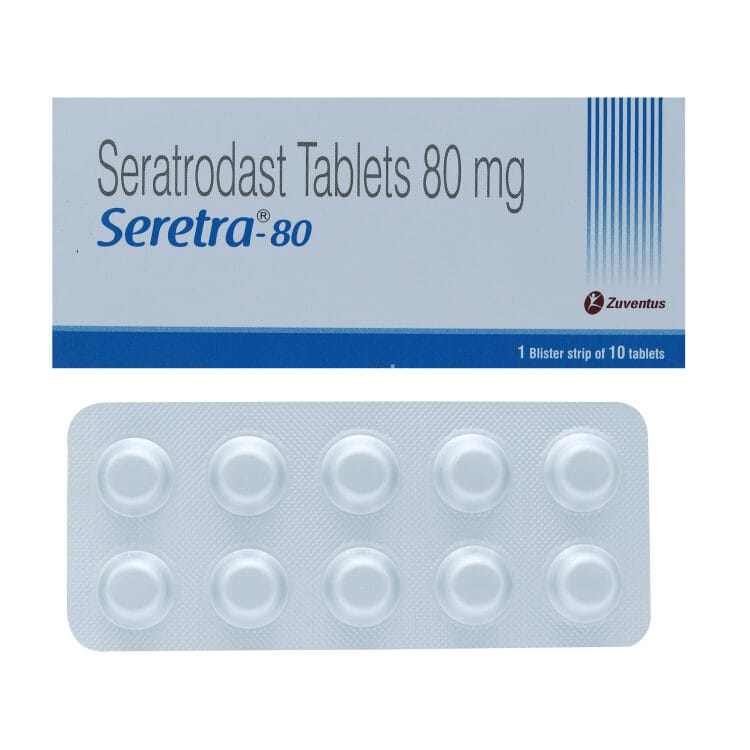
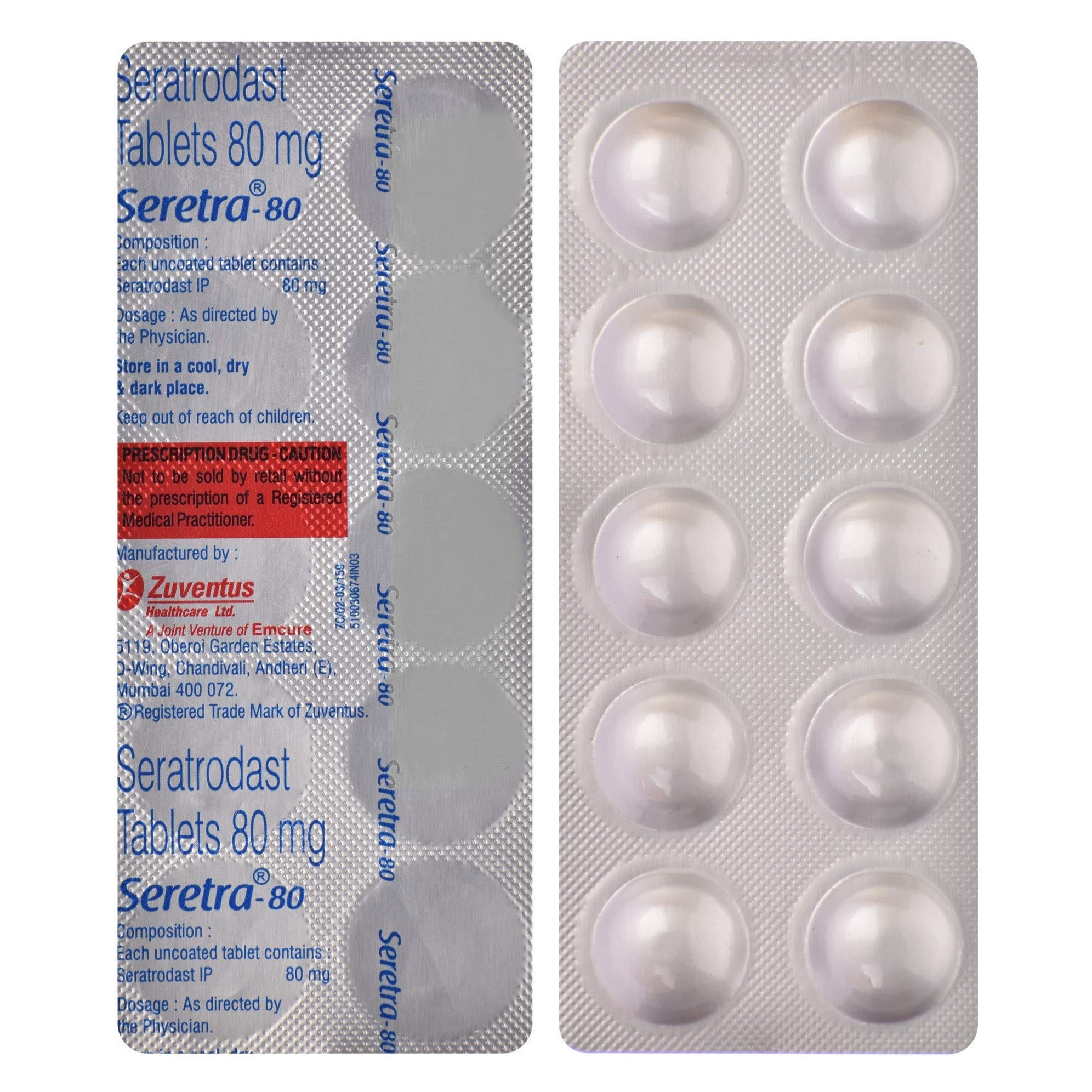
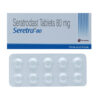
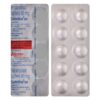
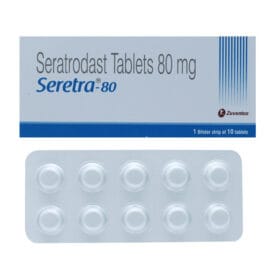
Seretra
✅ Μειώνει τη φλεγμονή των αεραγωγών
✅ Βελτιώνει τη λειτουργία των πνευμόνων
✅ Ανακουφίζει τα συμπτώματα άσθματος
✅ Αποτρέπει τη βρογχοσυστολή
✅ Βελτιώνει την αναπνευστική υγεία
Η Seretra περιέχει Seratrodast.
✓ Ιατρικά ελεγμένο από Morgan Ellis — Ερευνητής Φαρμακευτικής · 8 χρόνια εμπειρία · Τελευταία αναθεώρηση: Μάιος 2026
⚡ Γρήγορη Απάντηση — Τι είναι το Seretra;
Seretra περιέχει seratrodast 80 mg, ένα επιλεκτικός ανταγωνιστής του υποδοχέα θρομβοξάνης Α2 (TXA2) χρησιμοποιείται ως θεραπεία πρόληψης για άσθμα και αλλεργική ρινίτιδα. Το Seratrodast αποκλείει τον υποδοχέα TXA2 στους λείους μύες των βρόγχων, τους ηωσινόφιλους και τα αιμοπετάλια — αποτρέποντας τη βρογχοσύσπαση, την προσέλκυση ηωσινόφιλων και την υπερευαισθησία των αεραγωγών που προκαλείται από τη TXA2. Αναπτύχθηκε και χρησιμοποιείται κυρίως στην Ιαπωνία· είναι λιγότερο διαθέσιμο εκτός Ασίας. Χρησιμοποιείται ως πρόσθετη θεραπεία πρόληψης μαζί με ICS σε ασθενείς με επίμονο άσθμα. Η έναρξη της ωφέλειας της πρόληψης απαιτεί 1–2 εβδομάδες καθημερινής χορήγησης.
📦 Κάθε παραγγελία καλύπτεται από την Πολιτική Εγγύησης Επαναποστολής — εάν το δέμα σας δεν φτάσει εντός 20 εργάσιμων ημερών, το επαναποστέλλουμε.
Γιατί να παραγγείλετε από τη MedsBase
Τα γενόσημα φάρμακά μας προέρχονται από κατασκευαστές που πιστοποιούνται από την WHO-GMP και αποστέλλονται παγκοσμίως σε διακριτική, απλή συσκευασία — χωρίς όνομα φαρμάκου στο εξωτερικό του δέματος. Οι πληρωμές με κάρτα δρομολογούνται μέσω ρυθμισμένου επεξεργαστή (οι περιγραφές εκκαθάρισης περιλαμβάνουν ρυθμισμένο επεξεργαστή πληρωμών με κάρτα — ποτέ “MedsBase” ή οποιοδήποτε όνομα φαρμάκου). Γίνονται δεκτές και πληρωμές με κρυπτονομίσματα και τραπεζική μεταφορά SEPA. Κάθε παραγγελία καλύπτεται από την Πολιτική Επαναποστολής Εξασφαλίσεώς μας.
Τι Είναι το Seretra;
Το Seretra περιέχει seratrodast — ένα ειδικό αντι-ασθματικό παράγοντα που εισήχθη στην Ιαπωνία το 1995. Το Seratrodast στοχεύει στον υποδοχέα θρομβοξάνης Α2 (TXA2) — σε αντίθεση με τους ανταγωνιστές των υποδοχέων λευκοτριενών (montelukast) που στοχεύουν στον υποδοχέα κυστεϊνυλλευκοτριενών. Τόσο η TXA2 όσο και οι λευκοτριένες είναι φλεγμονώδεις μεσάζοντες που απελευθερώνονται κατά τη διάρκεια της αλλεργικής αντίδρασης.
Πώς Λειτουργεί το Seratrodast;
- Αποκλεισμός του υποδοχέα TXA2 στον βρογχικό λείο μυ εμποδίζει τη βρογχοσύσπαση που μεσολαβείται από το TXA2
- Μειώνει την προσέλκυση των ηωσινόφιλων στους αεραγωγούς
- Μειώνει την υπερευαισθησία των αεραγωγών σε διάστημα 1–2 εβδομάδων χορήγησης
- Μέτρια αναστολή των αιμοπεταλίων — το TXA2 είναι ισχυρός συσσωρευτής αιμοπεταλίων· αυτό το αποτέλεσμα είναι σπάνια κλινικά σημαντικό
Χρήσεις και ενδείξεις
- Παροξυσμικό άσθμα — συμπληρωματικός προφυλακτικός παράγοντας όταν η ICS μόνη δεν είναι επαρκής
- Αλλεργική ρινίτιδα — συμπληρωματική
- Άσθμα με βήχα
- Ασθένεια αναπνευστικού συστήματος που επιδεινώνεται από την ασπιρίνη (AERD) — ειδική χρήση
Δοσολογία Seretra
| Ασθενής | Δόση | Συχνότητα |
|---|---|---|
| Ενήλικες | 80 mg | Μία φορά την ημέρα μετά το δείπνο |
| Ηπατική δυσλειτουργία | Μείωση δόσης κατά 50% | Μία φορά την ημέρα |
Παρενέργειες της Seretra
- Ναυτία, δυσπεψία
- Κεφαλαλγία
- Ήπια ζάλη
- Ήπια αύξηση των ηπατικών ενζύμων
- Σπάνια: εξάνθημα, κόπωση
Σοβαρό — διακόψτε και ζητήστε βοήθεια:
- Ηπατίτιδα (ικτερος, σκούρα ούρα, πόνος στο δεξιό άνω τεταρτημόριο)
- Σοβαρή αλλεργική αντίδραση
- Σοβαρός επίμονος εμετός
Προειδοποιήσεις και προφυλάξεις
- Παρακολούθηση ηπατικής λειτουργίας: βασικές δοκιμές ηπατικής λειτουργίας και περιοδική παρακολούθηση κατά τη μακροχρόνια χρήση.
- Συνεχίστε τα ICS εάν είχε συνταγογραφηθεί προηγουμένως· το seratrodast είναι συμπληρωματικό, όχι αντικατάσταση.
- Δεν είναι φάρμακο επείγουσας ανάγκης. Χρησιμοποιήστε SABA (Asthalin, Levolin) για οξείες κρίσεις.
- Εγκυμοσύνη και θηλασμός: περιορισμένα δεδομένα· αποφύγετε εκτός εάν το όφελος είναι σαφές.
- Διαταραχές πήξης: η ήπια αναστολή TXA2 θεωρητικά θα μπορούσε να επιμηκύνει την αιμορραγία· σπάνια είναι κλινικά σημαντική.
Αντενδείξεις
- Υπερευαισθησία στο seratrodast
- Σοβαρή ηπατική δυσλειτουργία
- Ενεργή ηπατίτιδα
Αλληλεπιδράσεις Φαρμάκων
- Ασπιρίνη και άλλα αντιαιμοπεταλιακά φάρμακα — πρόσθετος κίνδυνος αιμορραγίας (σπάνια κλινικά σημαντικός)
- Warfarin — παρακολούθηση INR
- Άλλα ηπατοτοξικά φάρμακα — παρακολούθηση ηπατικών ενζύμων
Αποθήκευση
- Αποθήκευση κάτω από 25°C σε δροσερό, ξηρό μέρος μακριά από άμεσο ηλιακό φως.
- Διατηρήστε στην αρχική συσκευασία μέχρι τη χρήση για προστασία από υγρασία και φως.
- Μην χρησιμοποιείτε μετά την ημερομηνία λήξης που αναγράφεται στην ταινία.
- Μην αφήνετε σε μέρη προσβάσιμα από παιδιά.
Σχετικές Εναλλακτικές Λύσεις στο MedsBase
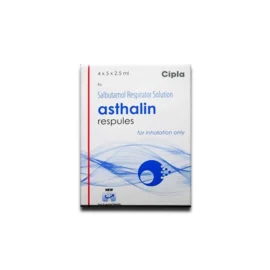
- Asthalin Inhaler — σαλβουταμόλη για άμεση ανακούφιση
- Budecort Inhaler — βουδεσονοίδη ICS για πρόληψη
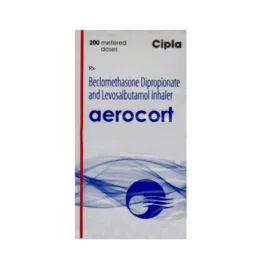
- Foracort Inhaler — βουδεσονοίδη + φορμοτερόλη ICS-LABA
- Montair — ταμπλέτα montelukast LTRA
- Tiova Inhaler — τιοτροπίου LAMA για ΧΑΠ
Συχνές Ερωτήσεις
Πώς διαφέρει το seratrodast από το montelukast;
Και τα δύο αναστέλλουν ειδικούς αλλεργικούς μεσάζοντες. Το montelukast (Montair) αναστέλλει τον υποδοχέα λευκοτριενίου cysLT1. Το seratrodast αναστέλλει τον υποδοχέα θρομβοξάνης A2. Διαφορετικοί μεσάζοντες, διαφορετικοί στόχοι, παρόμοια συμπληρωματική χρήση. Το montelukast έχει ευρύτερη χρήση και ισχυρότερη αποδεικτική βάση· το seratrodast χρησιμοποιείται κυρίως στην Ιαπωνία και σε μέρη της Ασίας.
Μπορώ να πάρω το Seretra μαζί με το montelukast;
Ο συνδυασμός δεν είναι στάνταρ. Συζητήστε με τον γιατρό σας — δεν υπάρχει καθιερωμένο πρόσθετο όφελος έναντι του ICS-LABA + LTRA.
Πόσο καιρό χρειάζεται για να δράσει το Seretra;
1–2 εβδομάδες για αισθητή βελτίωση· 4–8 εβδομάδες για πλήρη προληπτική επίδραση στον ρυθμό επιδείνωσης.
Είναι το Seretra αναπνευστήρας διάσωσης;
Όχι — η έναρξη δράσης είναι πολύ αργή. Χρησιμοποιήστε SABA (Asthalin, Levolin) για οξείες κρίσεις.
Γιατί να παρακολουθείτε τη λειτουργία του ήπατος;
Η ήπια αύξηση των ενζύμων του ήπατος είναι γνωστή παρενέργεια. Συνιστάται βασική εξέταση LFT και περιοδικός έλεγχος.
Θα αντικαταστήσει το Seretra τον αναπνευστήρα μου;
Όχι — το seratrodast είναι προφορικό συμπλήρωμα. Συνεχίστε την θεραπεία με εισπνεόμενο ICS ή ICS-LABA.
Είναι το Seretra βασισμένο σε αποδεδειγμένα στοιχεία;
Ναι, αλλά κυρίως μέσω κλινικών δοκιμών στην Ιαπωνία. Η αποδεικτική βάση είναι μικρότερη σε σύγκριση με το montelukast ή τους συνδυασμούς ICS-LABA. Είναι λογικό ως συμπληρωματική θεραπεία σε επιλεγμένους ασθενείς.
Μπορούν τα παιδιά να πάρουν Seretra;
Περιορισμένα δεδομένα για παιδιατρική χρήση· απαιτείται ειδικευμένη παρακολούθηση.
Είναι το Seretra ασφαλές κατά την εγκυμοσύνη;
Περιορισμένα δεδομένα· να αποφεύγεται εκτός αν το όφελος είναι σαφές.
Σχετικές Εναλλακτικές
Άλλα προϊόντα σε Χρόνιες Παθήσεις που οι πελάτες εξετάζουν επίσης:
Περισσότερες επιλογές στη θεραπεία Άσθματος/ΧΑΠ
Ταξινομημένα σύμφωνα με τον όγκο παραγγελιών στο MedsBase — τι επιλέγουν άλλοι πελάτες σε αυτήν την κατηγορία.

| Ισχύς | 80 mg |
|---|---|
| Ποσότητα | 30 δισκία, 60 δισκία, 90 δισκία, 180 δισκία |
 Seretra
Ερωτήσεις & Απαντήσεις
Seretra
Σχετικά προϊόντα


Κριτικές
Δεν υπάρχουν ακόμη κριτικές