







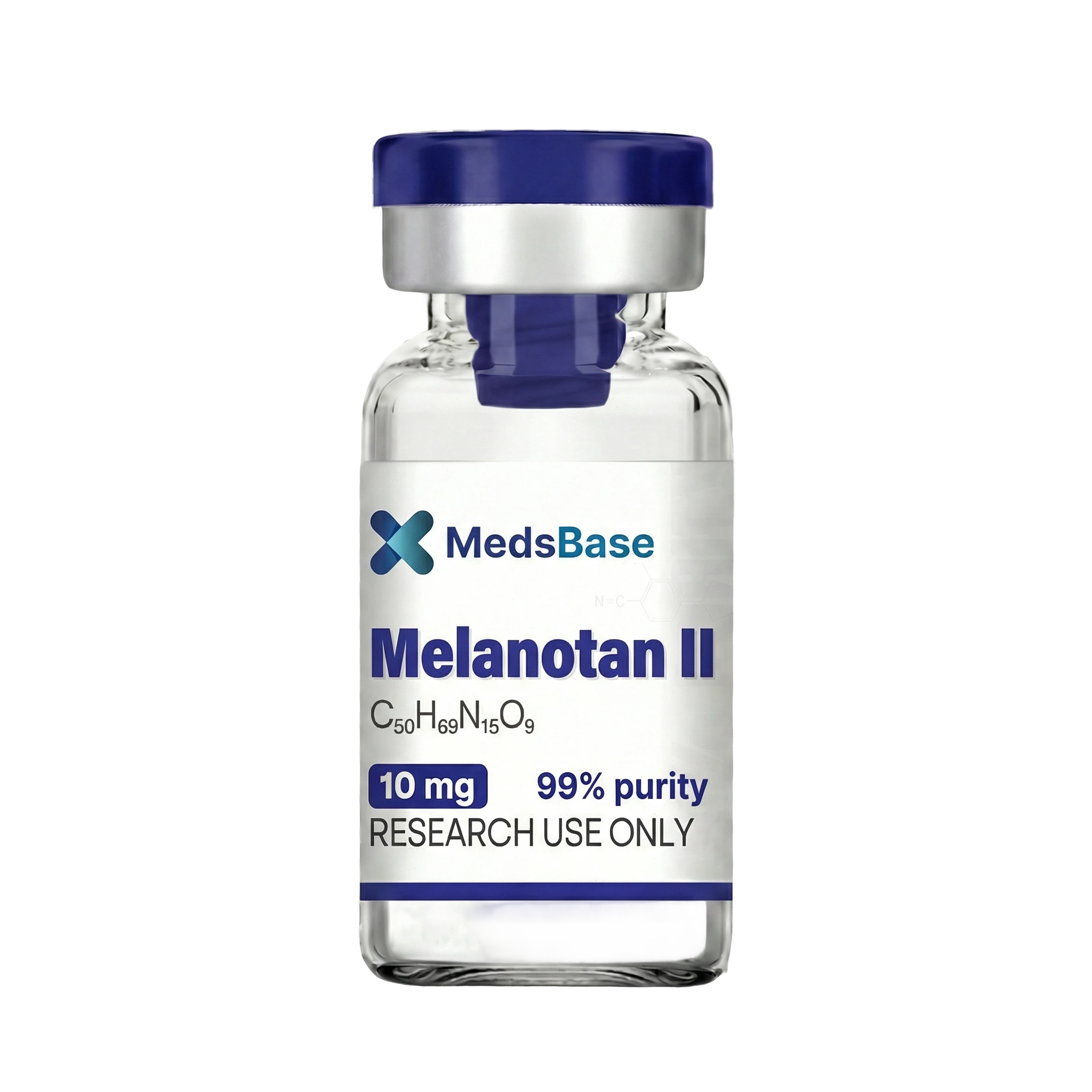
Melanotan II
✅ Favorece a pigmentação da pele
✅ Aumenta a produção de melanina
✅ Promove vias de fotoproteção
✅ Estimula a sinalização metabólica
✅ Melhora a função celular
Melanotan II contém composto de péptido sintético.
✓ Revisto medicamente por Morgan Ellis — Investigador Farmacêutico · 8 anos de experiência · Última revisão: maio de 2026
Resposta Rápida — O que é Melanotan II?
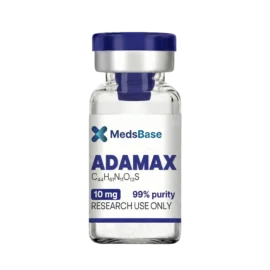
Melanotan II (MTII) é um análogo cíclico sintético de sete aminoácidos do hormônio estimulante de melanócitos alfa (α-MSH). É um agonista amplo de melanocortinas com atividade nos recetores MC1R, MC3R, MC4R e MC5R — distinguindo-o dos compostos mais seletivos para o MC4R PT-141. in studies, MTII is studied for melanogenesis, photoprotection, and broader melanocortin pharmacology. Supplied in 10 mg lyophilized vials.
📦 Cada encomenda está coberta pela nossa Política de Garantia de Reenvio — se a sua encomenda não chegar no prazo de 20 dias úteis, reenviamo-la.
| Especificação | Detalhe |
|---|---|
| Número CAS | 121062-08-6 |
| Fórmula Molecular | C50H69N15O9 |
| Peso Molecular | Ac-Nle-cyclo[Asp-His-D-Phe-Arg-Trp-Lys]-NH |
| Sequência | O que é o Melanotan II?2 |
| Forma | Pó liofilizado (ou conforme fornecido) |
| Pureza | ≥99% (HPLC verificado, COA disponível mediante pedido) |
| Armazenamento | Liofilizado: 2–8 °C (frigorífico) para stock de trabalho; −20 °C para armazenamento a longo prazo de frascos não abertos. Reconstituído: 2–8 °C, utilizar no prazo de ~30 dias. Proteger da luz. Não congelar-descongelar a solução reconstituída. |
| Solubilidade | Água bacteriostática (recomendada) ou água estéril para períodos de utilização mais curtos |
(frequentemente abreviado
Melanotan II MTII ) é um análogo sintético de heptapeptídeo cíclico do hormônio estimulante de melanócitos alfa (α-MSH). Foi desenvolvido na década de 1980 na Universidade do Arizona por Hruby e colegas como um análogo concebido para resistir à degradação enzimática e atravessar a barreira hematoencefálica de forma eficiente — ferramentas úteis para a investigação farmacológica de recetores de melanocortinas.) is a synthetic cyclic heptapeptide analog of alpha-melanocyte stimulating hormone (α-MSH). It was developed in the 1980s at the University of Arizona by Hruby and colleagues as an analog designed to resist enzymatic degradation and cross the blood-brain barrier efficiently — useful tools for melanocortin-receptor pharmacology studies. Sequence (cyclic): Ac-Nle-cyclo[Asp-His-D-Phe-Arg-Trp-Lys]-NH2. Peso molecular aproximadamente 1.024,2 Da. Ao contrário PT-141 (bremelanotide), which was refined from Melanotan II specifically to reduce MC1R activity (minimal tanning effect) while preserving MC4R-mediated signals, Melanotan II retains agonismo amplo dos melanocortinas — activity across MC1R, MC3R, MC4R, and MC5R. This pan-receptor profile is the central studies characteristic of MTII: it drives melanogenesis (MC1R) alongside appetite suppression (MC4R), arousal-pathway signaling (MC4R shared with PT-141), and broader melanocortin effects. Supplied as a high-purity lyophilized powder for reconstitution with bacteriostatic water. The US FDA has issued multiple public warnings about unregulated Melanotan II use — it has never received FDA approval and carries documented safety concerns including atypical nevus development, elevated blood pressure, nausea, and focal hyperpigmentation. For deeper mechanism and context, see our full Melanotan II guide.
Mecanismo de Ação — Agonismo Amplo dos Melanocortinas
Melanotan II’s pharmacology is defined by its activity across multiple melanocortin-receptor subtypes, each producing a distinct studies-relevant effect:
- Ativação do MC1R (melanogénese) — O MTII liga-se ao MC1R nos melanócitos epidérmicos, ativando a sinalização de AMP cíclico que altera a síntese de melanina de feomelanina para eumelanina. Eumelanin absorbs UV radiation more effectively than pheomelanin, producing the tanning signal that distinguishes MTII from MC1R-selectively-weaker analogs such as PT-141.
- Sinalização do MC4R (vias do SNC) — MTII activates MC4R in hypothalamic regions including the mPOA and arcuate nucleus, producing appetitive-behavior modulation, feeding-behavior effects, and CNS arousal-pathway signaling that partially overlaps with PT-141’s primary use.
- Atividade do MC3R e MC5R — MTII’s broader receptor profile includes activity at MC3R (central energy homeostasis) and MC5R (exocrine-gland and peripheral-tissue effects). This broader activity contributes to the studies observation that MTII produces more heterogeneous effects than MC4R-selective analogs — and to the wider safety-profile concerns.
Because Melanotan II activates multiple melanocortin pathways simultaneously, it has been used in clinical studies across dermatology, neuroscience, endocrinology, and melanocortin pharmacology. The lack of MC-receptor selectivity is also why FDA and dermatological societies have warned about its unregulated use — off-target effects are more common than with selective analogs.
Published Evidence
Melanotan II is used in clinical contexts that investigate:
- Melanogenesis studies — MC1R-driven eumelanin synthesis in cultured human melanocytes and rodent pigmentation-study models (Dorr et al., Life Sci 1996; Langan et al., Br J Dermatol 2010)
- Photoprotection studies — UV-response and melanin-production studies in dermatology models, with a particular studies focus on high-risk-for-skin-cancer populations
- Erythropoietic protoporphyria (EPP) studies — closely related MC1R-agonist studies led to FDA approval of afamelanotide (Scenesse) for EPP — MTII is one of the key reference compounds in this studies lineage
- Farmacologia dos recetores da melanocortina — MC1R/MC3R/MC4R/MC5R selectivity profiling in drug-discovery studies
- CNS arousal-pathway studies — MC4R-mediated CNS effects (partial overlap with PT-141 studies space)
- Appetite / feeding-behavior studies — modulação do MC4R na alimentação em modelos comportamentais de roedores
- Comparative MC-analog studies — em comparação direta com PT-141 (bremelanotide) para isolar efeitos seletivos do MC4R versus efeitos de amplo espectro
Para um contexto mais amplo sobre os péptidos da família MC, consulte o catálogo de péptidos.
Concentrações disponíveis
A MedsBase dispõe de Melanotan II num único frasco liofilizado de 10 mg, disponível em embalagens de 10, 20 ou 30 frascos:
| Força do frasco | Caso de uso típico | Tamanhos das embalagens |
|---|---|---|
| 10 mg | Standard strength — supports approximately 40 administrations at 250 mcg titration dose | 10, 20 ou 30 frascos |
The 10 mg single-strength format matches typical protocol requirements. Published protocols typically use a titration strategy (starting at 250 mcg and increasing to 500 mcg–1 mg) to manage MTII’s narrow tolerability window. Supplied as lyophilized powder at 99%+ HPLC purity.
Comparação — Melanotan II vs PT-141
MTII and PT-141 are the two most-studied melanocortin peptides. PT-141 was developed from MTII specifically to narrow the receptor-selectivity profile and reduce off-target effects — the comparison is clinically and mechanistically instructive:
| Critério | Melanotan II | PT-141 (Bremelanotide) |
|---|---|---|
| Seletividade do recetor | Amplo: MC1R, MC3R, MC4R, MC5R | Preferência por MC4R (redução de MC1R) |
| Primary signal | Melanogénese, bronzeamento, apetite, excitação | Via central de excitação |
| Estado regulamentar | Não aprovado (avisos da FDA emitidos) | Aprovado pela FDA como Vyleesi (HSDD) |
| Perfil de efeitos secundários | Mais amplo: alterações de pigmentação, náuseas, aumento da pressão arterial, desenvolvimento de nevos | Mais restrito: náuseas, rubor, pressão arterial transitória |
| Dose típica | Titulação de 250 mcg até 1 mg | 1–1,75 mg conforme necessário |
in studies where receptor selectivity matters (central arousal without tanning), PT-141 is typically preferred. in studies where broad melanocortin activity is the variable of interest (e.g., melanogenesis-focused dermatology studies), MTII remains the canonical reference compound.
Armazenamento e Reconstituição
Antes da reconstituição: armazenar frascos liofilizados refrigerados a 2–8 °C na embalagem original, estáveis até 36 meses. Evitar ciclos de congelação-descongelação no pó. Procedimento de reconstituição: injetar água bacteriostática pela parede lateral do frasco de acordo com o gráfico acima. Agitar suavemente — não não agitar — e permitir 5–10 minutos para dissolução completa. A solução deve estar límpida e incolor. Após reconstituição: armazenar refrigerado a 2–8 °C e utilizar dentro de 30 dias. Não congelar a solução reconstituída.
Perguntas Frequentes
What is Melanotan II used for in studies?
Melanotan II is used in studies investigating melanogenesis (MC1R-driven eumelanin synthesis), photoprotection, melanocortin-receptor pharmacology, CNS arousal pathways, appetitive-behavior studies, and comparative MC-analog pharmacology (especially versus MC4R-selective PT-141). It is não FDA-approved and is sold here strictly for clinical studies use only.
Como é que o Melanotan II difere do PT-141?
O PT-141 (bremelanotide) foi refinado a partir do Melanotan II especificamente para reduzir a atividade do MC1R (bronzeamento mínimo) e intensificar os efeitos mediados pelo MC4R nas vias de excitação. O Melanotan II mantém uma atividade ampla nos MC1R, MC3R, MC4R e MC5R. O PT-141 é aprovado pela FDA como Vyleesi para HSDD feminina; o MTII não é aprovado e tem avisos de segurança da FDA sobre o uso não regulamentado.
O Melanotan II é aprovado pela FDA?
No. Melanotan II has never received FDA, EMA, or any regulatory approval for any indication. The US FDA has issued multiple public warnings about unregulated Melanotan II products because documented safety issues include atypical nevus (mole) development, transient hypertension, nausea, and focal hyperpigmentation. All Melanotan II sold by specialist suppliers is for clinical investigation only.
What is the typical Melanotan II dose?
Published preclinical protocols and studies titration schemes typically start at 250 mcg and increase incrementally to 500 mcg or 1 mg per administration. A 10 mg vial reconstituted with 2.0 mL bacteriostatic water yields 5 mg/mL — 5 ticks on a U-100 syringe delivers 250 mcg. The titration approach is standard because MTII has a narrow tolerability window.
Porque é que a FDA emitiu avisos sobre o Melanotan II?
The FDA and dermatological societies have flagged MTII because unregulated sales for cosmetic tanning have produced documented safety issues including melanoma-associated atypical nevi, dysplastic nevus syndrome exacerbation, elevated blood pressure, rhabdomyolysis in isolated cases, and focal hyperpigmentation. Lot-to-lot variability between suppliers has been documented. Clinical studies should treat MTII with the same caution as any unapproved compound.
Como deve ser armazenado o Melanotan II?
Frascos liofilizados: refrigerados a 2–8 °C na embalagem original, estáveis até 36 meses. Solução reconstituída: refrigerada a 2–8 °C, utilizar no prazo de 30 dias. Não congelar a solução reconstituída.
Como reconstituir o Melanotan II?
Siga o gráfico de reconstituição acima. Adicione água bacteriostática pela parede lateral do frasco, agite suavemente e aguarde 5-10 minutos para dissolução completa. Não não Agitar. São fornecidas três opções de diluição, dependendo do volume desejado por administração.
O Melanotan II está relacionado com o afamelanotide ou o Scenesse?
Yes, indirectly. All three are synthetic α-MSH analogs in the melanocortin family. Afamelanotide (Scenesse) is the FDA-approved implant for erythropoietic protoporphyria (EPP). Melanotan II is a distinct studies analog with different receptor-selectivity and administration route (SC injection vs subcutaneous implant). Some of the mechanistic studies that preceded afamelanotide’s approval involved MTII as a reference compound.
Que dosagens estão disponíveis na MedsBase?
A MedsBase disponibiliza o Melanotan II em frascos liofilizados de 10 mg, disponíveis em embalagens de 10, 20 ou 30 frascos. Todos os frascos são fornecidos com pureza HPLC de 99%+ e certificado de análise mediante pedido.
Does Melanotan II cause side reported effects?
Reported effects in published studies and case-report literature include: nausea (especially early in dosing), transient blood-pressure elevation, facial flushing, yawning, appetite suppression, and focal hyperpigmentation. More serious concerns include atypical nevus development and, in isolated case reports, associations with dysplastic nevi or melanoma. These concerns are a primary reason for the FDA warnings and why protocols should use conservative titration.
Qual é a meia-vida do Melanotan II?
Melanotan II has an estimated plasma half-life of approximately 33 minutes, with a terminal elimination half-life of around 2 hours based on human pharmacokinetic studies. Study protocols studying acute MC1R/MC4R effects use single-dose administration, while those examining sustained tanning or other endpoints use repeated dosing schedules.
Como o Melanotan II difere do PT-141?
Melanotan II is a cyclic α-MSH analog with broad melanocortin receptor (MC1R–MC5R) activity, studied for UV-induced pigmentation, appetite suppression, and arousal studies. PT-141 (bremelanotide) is a metabolite of Melanotan II with reduced MC1R activity and more selective MC4R activity, and has FDA approval for hypoactive sexual desire disorder. MT-II produces more pronounced pigmentation effects; PT-141’s central arousal effects have the more characterised clinical dataset.
Posso encomendar Melanotan II para envio internacional?
Sim. A MedsBase envia Melanotan II para todo o mundo a partir da nossa rede dedicada de envio de péptidos. As encomendas exclusivas de péptidos qualificam-se para o nosso serviço de envio de péptidos autónomo. As encomendas são enviadas em embalagens com controlo de temperatura e com rastreio completo.
Other Peptides for Recovery and Performance
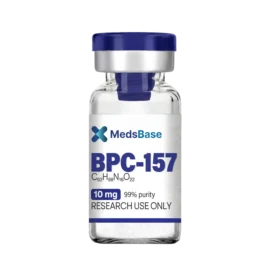
- BPC-157 — Body Protection Compound — tendon, ligament, gut recovery
- TB-500 — Thymosin Beta-4 fragment — soft tissue and vascular recovery
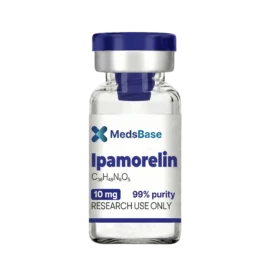
- Ipamorelin — Agonista selectivo de grelina — pulso de GH limpo sem cortisol/prolactina
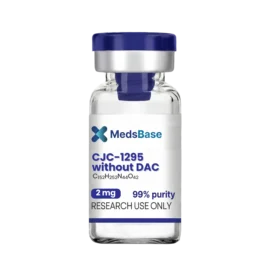
- CJC-1295 com DAC — Análogo de GHRH com meia-vida prolongada
- GHK-Cu — Copper peptide — skin and connective tissue regeneration
Leitura Adicional
📖 Learn the science behind this peptide
Leia o nosso guia completo baseado em evidências: Melanotan II — mechanism, melanogenesis & honest studies. Covers MC-receptor pharmacology, the MTII-to-PT-141 lineage, FDA safety warnings, published studies dosing ranges, reconstitution protocols, and comparative analog context.
Mais opções em Péptidos
Classificados por volume recente de encomendas na MedsBase — o que outros clientes nesta categoria estão a escolher.
| Dosagem | 10 mg |
|---|---|
| Quantidade | 10 Frascos, 20 Frascos, 30 Frascos |
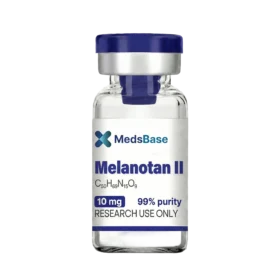 Melanotan II
Perguntas e respostas
Melanotan II
Produtos relacionados
Avaliações
Ainda não existem avaliações