








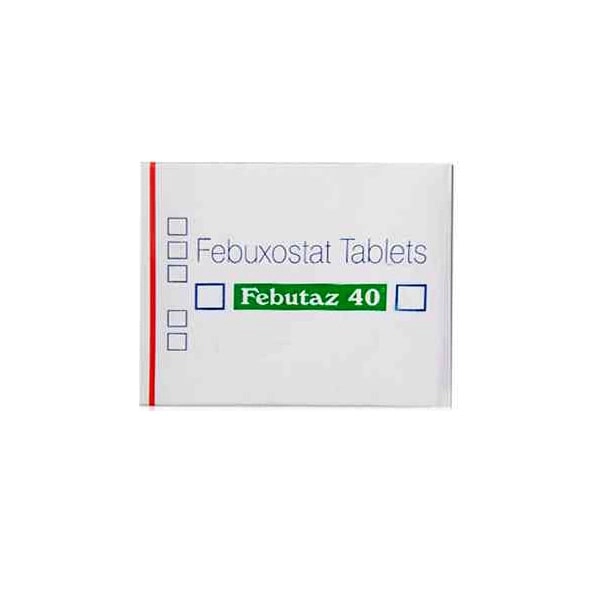
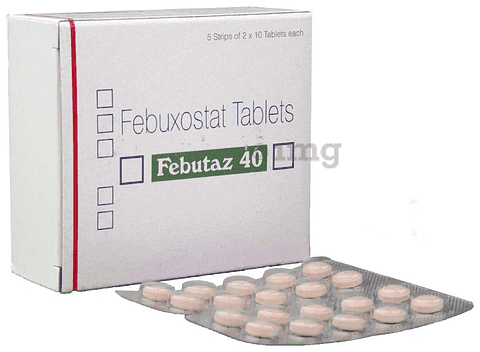
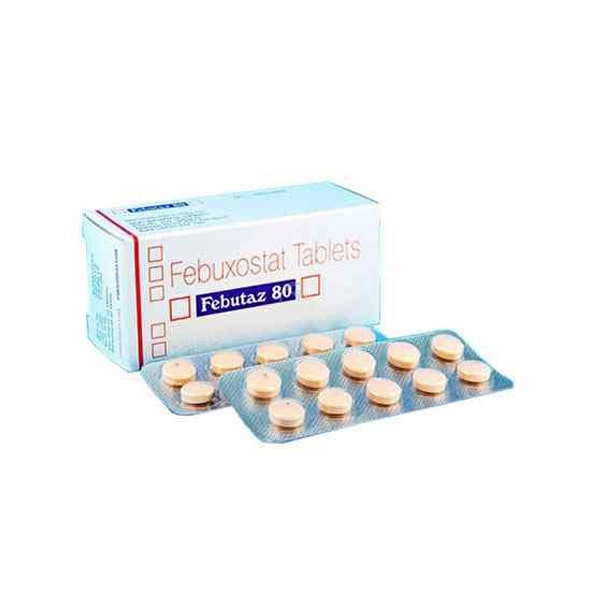
Febutaz

✅ Ελέγχει το ουρικό οξύ
✅ Αποτρέπει τις κρίσεις ουρικής αρθρίτιδας
✅ Μειώνει τον πόνο στις αρθρώσεις
✅ Βελτιώνει τη λειτουργία των νεφρών
✅ Ενισχύει τη γενική υγεία
✓ Ιατρικά ελεγμένο από Morgan Ellis — Ερευνητής Φαρμακευτικής · 8 χρόνια εμπειρία · Τελευταία αναθεώρηση: Μάιος 2026
Γρήγορη απάντηση
Febutaz περιέχει febuxostat 40 mg / 80 mg κατασκευάζεται από τη Sun Pharma. Χρησιμοποιείται για τη μακροπρόθεσμη μείωση του ουρικού οξέος στο αίμα σε ενήλικες με χρόνια ουρική αρθρίτιδα (θεραπεία μείωσης ουρικών) — συμπεριλαμβανομένων αυτών με ουρικούς λίθους στα νεφρά. Λαμβάνετε ακριβώς όπως ορίζει ο κλινικός σας — μην προσαρμόζετε τη δόση μόνοι σας.
📦 Κάθε παραγγελία καλύπτεται από την Πολιτική Εγγύησης Επαναποστολής — εάν το δέμα σας δεν φτάσει εντός 20 εργάσιμων ημερών, το επαναποστέλλουμε.
Γιατί να παραγγείλετε από τη MedsBase
Κάθε παρτίδα προέρχεται από ένα πιστοποιημένο από τη WHO-GMP κατασκευαστή. Οι παραγγελίες αποστέλλονται σε απλή συσκευασία χωρίς εμπορική σήμανση από τους συνεργάτες μας και καλύπτονται από την Πολιτική Εγγύησης Επαναποστολής. Έχουμε εξυπηρετήσει 1,400+ επαληθευμένους πελάτες με 4.9/5 μέσο όρο αξιολόγησης σε περισσότερα από 600 φάρμακα.
⚠ Προσοχή στην καρδιαγγειακή υγεία — το allopurinol είναι η προτιμώμενη θεραπεία πρώτης γραμμής για τη μείωση των ουρικών
The 2018 CARES trial έδειξε υψηλότερη καρδιαγγειακή και συνολική θνησιμότητα με το febuxostat σε σύγκριση με το allopurinol σε ασθενείς με ουρική αρθρίτιδα ΚΑΙ καθιερωμένη καρδιαγγειακή νόσο. Το 2020 FAST trial δεν βρήκε υπερβολική θνησιμότητα σε Ευρωπαϊκό πληθυσμό. Οι κύριες κατευθυντήριες οδηγίες (ACR 2020, EULAR 2016) συνιστούν allopurinol ως πρώτη γραμμή; · το febuxostat διατηρείται για ασθενείς που δεν ανέχονται ή δεν φτάνουν στο στόχο με το allopurinol, ή που έχουν αντενδείξεις HLA-B*5801. Συζητήστε το καρδιαγγειακό ιστορικό σας με τον ιατρό σας πριν από την έναρξη.
Τι είναι το Febutaz και πώς λειτουργεί
Το Febutaz περιέχει φεβουξοστάτη, ένα μη-πουρινικός επιλεκτικός αναστολέας της ξανθινικής οξειδάσης. Με το να αναστέλλει την ξανθινική οξειδάση, σταματά τη μετατροπή της υποξανθίνης και ξανθίνης σε ουρικό οξύ, μειώνοντας τα επίπεδα ουρικού οξέος στο αίμα. Σε αντίθεση με την αλλοπουρινόλη (που είναι πουρινικό ανάλογο), η φεβουξοστάτη μεταβολίζεται κυρίως στο ήπαρ, οπότε μπορεί να χρησιμοποιηθεί σε ήπια έως μέτρια νεφρική δυσλειτουργία χωρίς προσαρμογή δόσης.
Το Febutaz είναι άδειαχτημένο για τη χρόνια διαχείριση της υπερουριχαιμίας σε ασθενείς με ουρική αρθρίτιδα, συμπεριλαμβανομένης της τοφώδους ουρικής αρθρίτιδας. Δεν είναι θεραπεία για οξεία έξαρση ουρικής αρθρίτιδας· οι εκρήξεις αντιμετωπίζονται με ΜΣΑΦ, κολχικίνη ή κορτικοστεροειδή.
Δοσολογία και τρόπος χορήγησης
| Ομάδα ασθενών | Συνιστώμενη δοσολογία |
|---|---|
| Ενήλικες με χρόνια ουρική αρθρίτιδα — αρχική δόση | 40 mg μία φορά ημερησίως |
| Αυξήστε τη δόση μετά από 2–4 εβδομάδες αν η ουρική οξύδα στο ορό > 0,36 mmol/L (6 mg/dL) | Αύξηση σε 80 mg μία φορά την ημέρα |
| Σοβαρή νεφρική δυσλειτουργία (eGFR <30) | Χρησιμοποιείστε με προσοχή· περιορισμένα δεδομένα· εξετάστε εναλλακτική |
| Σοβαρή ηπατική δυσλειτουργία (Child-Pugh C) | Αποφύγετε — δεν έχει μελετηθεί |
| Ουρική αρθρίτιδα με τοφούς / πολύ υψηλή βασική ουρική οξύδα | Μπορεί να απαιτείται 80 mg από την αρχή υπό ειδικευμένη επίβλεψη |
Λάβετε την ίδια ώρα κάθε μέρα, με ή χωρίς τροφή. Συνεχίστε επ' αόριστον — η ουρική αρθρίτιδα είναι χρόνια πάθηση. Ο στόχος για την ουρική οξύδα στο ορό είναι συνήθως < 0,36 mmol/L (< 6 mg/dL); · για ουρική αρθρίτιδα με τοφούς, < 0,30 mmol/L (< 5 mg/dL) για διάλυση των τοφών.
✅ Συνταγογραφήστε προφυλακτική αγωγή για οξείες εξαρθήσεις για τους πρώτους 6 μήνες
Η έναρξη οποιασδήποτε θεραπείας μείωσης της ουρικής οξύος μπορεί να προκαλέσει εξαρθήσεις ουρικής αρθρίτιδας καθώς οι κρύσταλλοι αποβάλλονται από τις αρθρώσεις. Οι οδηγίες της ACR και της EULAR συνιστούν προφυλακτική χρήση κολχικίνης 0,5–1 mg/ημέρα ή NSAID για τουλάχιστον 3–6 μήνες με την έναρξη της φεβουξοστάτης — μην διακόψετε τη φεβουξοστάτη εάν εμφανιστεί έξαρση.
Παρενέργειες
| Παρενέργεια | Συχνότητα | Σημειώσεις |
|---|---|---|
| Έξαρση ουρικής αρθρίτιδας (πρώιμη θεραπεία) | Πολύ συχνή στους πρώτους 6 μήνες | Χρησιμοποιήστε προφύλαξη· μην διακόψετε τη φεβουξοστάτη |
| Αύξηση ηπατικών ενζύμων | Συχνά | Έλεγχος ηπατικών δοκιμασιών στη βασική αξιολόγηση, 2 μήνες μετά και έπειτα περιοδικά |
| Κεφαλαλγία | Συχνά | Συνήθως ήπια |
| Διάρροια, ναυτία | Συχνά | Πάρτε με φαγητό |
| Εξάνθημα | Ασυνήθιστες | Διακοπή σε περίπτωση εκτεταμένης δερματικής αντίδρασης· σπάνιες αναφορές για σοβαρές δερματικές αντιδράσεις |
| Καρδιαγγειακά συμβάντα (σε καρδιαγγειακή νόσο) | Σήμα CARES | Συζήτηση με καρδιολόγο· εξέταση αλλοπουρινόλης |
| Ηπατοτοξικότητα (σοβαρή) | Σπάνιες | Διακοπή και επανεξέταση |
Αλληλεπιδράσεις φαρμάκων
| Συνδυασμός | Αποτέλεσμα | Δράση |
|---|---|---|
| Αζαθειοπρίνη, μερκαπτοπουρίνη | Σημαντική αύξηση των επιπέδων 6-μεθυλπουρινής — τοξικότητα μυελού των οστών | Αποφύγετε συνδυασμό |
| Θεοφυλλίνη | Τα επίπεδα θεοφυλλίνης μπορεί να αυξηθούν | Παρακολούθηση |
| Μη στεροειδή αντιφλεγμονώδη, κολχικίνη, χαμηλή δόση ασπιρίνης | Χρησιμοποιούνται μαζί για πρόληψη εξάρσεων — τυπικό μοτίβο | Δεν πρόκειται για πραγματική αλληλεπίδραση· συνταγογράφηση μαζί |
| Διουρητικά (θειαζιδικά, βρόγχου) | Αυξάνουν το ουρικό ορό — μπορεί να απαιτείται υψηλότερη δόση φεβουξοστάτης | Παρακολούθηση του στόχου επιπέδου ουρικού |
| Βαρφαρίνη | Καμία κλινικά σημαντική αλληλεπίδραση | Τυπική παρακολούθηση INR |
Ποιος δεν πρέπει να λαμβάνει Febutaz
- Ταυτόχρονη χρήση αζαθειοπρίνης ή μερκαπτοπουρίνης
- Σοβαρή ηπατική δυσλειτουργία (Child-Pugh C)
- Καθιερωμένη καρδιαγγειακή νόσος — προτιμάται η αλλοπουρινόλη εκτός αν δεν μπορεί να χρησιμοποιηθεί
- Οξεία εξάρση της ουρικής αρθρίτιδας (θεραπεύστε πρώτα την εξάρση· ξεκινήστε τη φεβουξοστάτη 2 εβδομάδες αργότερα εάν είναι πρώτη φορά)
- Ασυμπτωματική υπερουρικαιμία χωρίς ιστορικό ουρικής αρθρίτιδας (καθόλου όφελος)
- Εγκυμοσύνη / θηλασμός (χωρίς ανθρώπινα δεδομένα)
Γιατί η φεβουξοστάτη εμφανίζεται στην κατηγορία Ουροδόχος κύστη & Πρόστατης
Η υπερουρικαιμία είναι μια από τις κύριες αιτίες ουρικών λίθων στα νεφρά και συμβάλλει στη χρόνια ουρική νεφροπάθεια. Η μείωση της ουρικής οξύτητας στο αίμα — μέσω φεβουξοστάτης ή αλλοπουρινόλης — μειώνει την επανεμφάνιση λίθων σε ασθενείς με τεκμηριωμένους ουρικούς λίθους. Οι ουρικοί λίθοι ωφελούνται επίσης από αλκαλοποίηση των ούρων (κιτρικό κάλιο) και υψηλή πρόσληψη υγρών. Εάν η ένδειξή σας αφορά λίθους και όχι ουρική αρθρίτιδα, ο ουρολόγος ή νεφρολόγος σας θα συνδυάσει τη φεβουξοστάτη με κιτρικό, ενυδάτωση και περιορισμό των πουρινών στη διατροφή.
Συχνές Ερωτήσεις
Ποιος είναι ο σωστός στόχος ουρικής οξύτητας στο αίμα;
< 0,36 mmol/L (< 6 mg/dL) για τυπική ουρική αρθρίτιδα. < 0,30 mmol/L (< 5 mg/dL) όταν υπάρχουν ορατές τοφές ή επαναλαμβανόμενοι λίθοι — οι χαμηλότεροι στόχοι διαλύουν τα κρυστάλλους γρηγορότερα.
Γιατί μπορεί να έχω περισσότερες εξάρσεις μετά στην αρχή;
Η μείωση του ορού ουρικού οξέος αποσταθεροποιεί την επιφάνεια των κρυστάλλων. Οι κρύσταλλοι αποκολλώνται και προκαλούν επιδείνωση. Αυτός είναι ο λόγος για τον οποίο συνταγογραφείται κολχικίνη 0,5–1 mg/ημέρα ή ένα ΜΣΑΦ για τα πρώτα 3–6 μήνες. Μην διακόψετε τη φεβουξοστάτη — η διακοπή κάνει τις μελλοντικές επιδείνωσεις χειρότερες.
Θα έπρεπε να παίρνω αλλοπουρινόλη αντί αυτού;
Η αλλοπουρινόλη είναι πρώτης γραμμής σύμφωνα με τις οδηγίες ACR 2020 / EULAR 2016. Η φεβουξοστάτη προτιμάται όταν η αλλοπουρινόλη δεν μπορεί να φτάσει τον στόχο παρά τη σωστή τιτλοδότηση, όταν η αλλοπουρινόλη δεν ανέχεται ή όταν οι εξετάσεις HLA-B*5801 δείχνουν κίνδυνο σοβαρών δερματικών αντιδράσεων (σχετικό σε ορισμένες ασιατικές πληθυσμούς).
Τι γίνεται με το καρδιαγγειακό σήμα;
Η μελέτη CARES (2018, ΗΠΑ) έδειξε υψηλότερη καρδιαγγειακή και συνολική θνησιμότητα σε σύγκριση με την αλλοπουρινόλη σε ασθενείς με καθιερωμένη καρδιαγγειακή νόσο. Η FAST (2020, Ευρώπη) δεν βρήκε υπερβολικό κίνδυνο σε ασθενείς χωρίς προηγούμενη καρδιαγγειακή νόσο. Συζητήστε την καρδιακή σας ιστορία με τον ιατρό σας.
Μπορώ να πίνω αλκοόλ;
Το αλκοόλ — ειδικά η μπύρα — αυξάνει το ουρικό οξύ στον ορό. Η μείωση της κατανάλωσης αλκοόλ με συνέπεια είναι η αλλαγή στον τρόπο ζωής με τη μεγαλύτερη επίδραση στο ουρικό οξύ. Μπορεί να είναι αποδεκτές μέτριες ποσότητες· συζητήστε με τον ιατρό σας.
Ποια τρόφιμα πρέπει να αποφύγω;
Τα τρόφιμα υψηλής περιεκτικότητας σε ουρικές ουσίες (εσωτερικά όργανα, αντζούγιες, σαρδέλες, ποτά με γλυκαντικά φρουκτόζης) αυξάνουν το ουρικό οξύ. Τα γαλακτοκομικά και τα κεράσια είναι προστατευτικά. Η δίαιτα μόνη της σπάνια φτάνει τον στόχο — είναι συμπληρωματική, όχι υποκατάστατο.
Πόσο γρήγορα θα μικρύνουν οι τόφοι;
Οι τόφοι διαλύονται σε μήνες έως χρόνια με διαρκή επίπεδα ουρικού οξέος < 0,30 mmol/L. Οι μικρότεροι τόφοι εξαφανίζονται πρώτοι. Αν οι τόφοι δεν μικρύνουν μετά από 12 μήνες παρά τα επιβεβαιωμένα υπο-στόχου επίπεδα ουρικού οξέος, είναι κατάλληλη η εξέταση από ειδικό.
Χρειάζομαι συνεχείς εξετάσεις αίματος;
Ναι. Ορού ουρικού κάθε 4–6 εβδομάδες κατά τη διάρκεια της τιτλοποίησης· έπειτα ανά 6 μήνες. Ηπατικές δοκιμασίες στην αρχή, μετά από 2 μήνες και έπειτα περιοδικά. eGFR μαζί με τις υπόλοιπες ρουτίνες αιματολογικές εξετάσεις.
Τι γίνεται αν χάσω μια δόση;
Πάρτε το μόλις το θυμηθείτε την ίδια μέρα. Αν είναι η επόμενη μέρα, παραλείψτε τη χαμένη δόση — μην πάρετε διπλή δόση.
Πόσο καιρό πρέπει να συνεχίσω το febuxostat;
Για αόριστο χρονικό διάστημα σε καθιερωμένη ουρική αρθρίτιδα. Η διακοπή προκαλεί αναπήδηση των επιπέδων ουρικού και επανακαθίζηση κρυστάλλων, προκαλώντας ξεσπάσματα εντός εβδομάδων έως μηνών.
Άλλα φάρμακα για την ουροδόχο κύστη και τον προστάτη
- Cystone — βοτανικό συμπλήρωμα για ουρολογικές/νεφρικές πέτρες
- Silofast (silodosin) — α-αναστολέας για την υπερτροφία του προστάτη
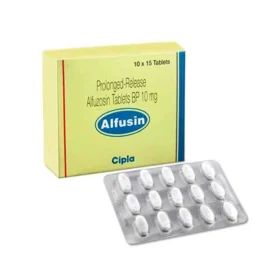
- Alfusin (alfuzosin 10 mg ER) — α-αναστολέας
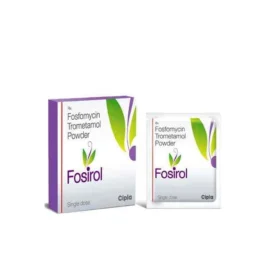
- Fosirol 3 g (fosfomycin) — μονοδόση για ουρολοιμώξεις
- Ketosteril — συμπληρωματική διατροφή για νεφρικές παθήσεις
Ιατρική αποποίηση ευθυνών. Οι πληροφορίες σε αυτή τη σελίδα είναι μόνο για γενικούς εκπαιδευτικούς σκοπούς και δεν αποτελούν υποκατάστατο της συμβουλής ενός καταρτισμένου κλινικού. Συζητήστε κάθε νέο φάρμακο ή αλλαγή δόσης με τον γιατρό ή τον φαρμακοποιό σας, ειδικά εάν είστε έγκυος, θηλάζετε, έχετε άλλες ιατρικές παθήσεις ή παίρνετε άλλα φάρμακα.
Περισσότερες επιλογές στην ουροδόχο κύστη και τον προστάτη
Ταξινομημένα σύμφωνα με τον όγκο παραγγελιών στο MedsBase — τι επιλέγουν άλλοι πελάτες σε αυτήν την κατηγορία.
| Ισχύς | 40 mg, 80 mg |
|---|---|
| Ποσότητα | 30 Δισκία, 60 Δισκία, 90 Δισκία |
| Φαρμακευτική Μορφή | Δισκία |
| Κατασκευαστής | Sun Pharma |
| Θεραπεία | Υπερουριχαιμία / Χρόνια ουρική αρθρίτιδα |
| Γενόσημη μάρκα | Febuxostat |
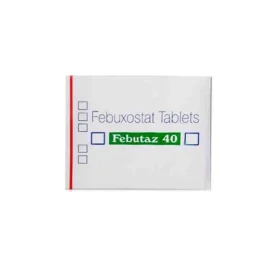 Febutaz
Ερωτήσεις & Απαντήσεις
Febutaz
Σχετικά προϊόντα



Κριτικές
Δεν υπάρχουν ακόμη κριτικές