







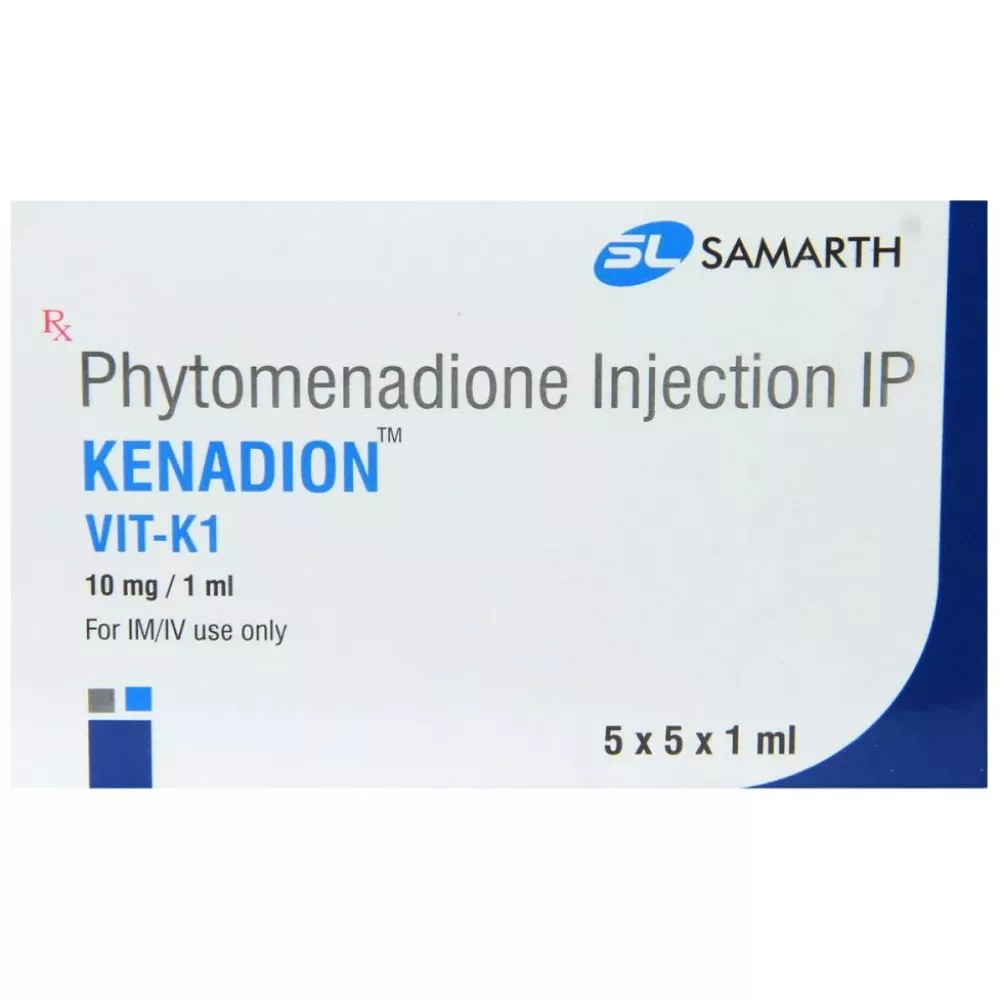
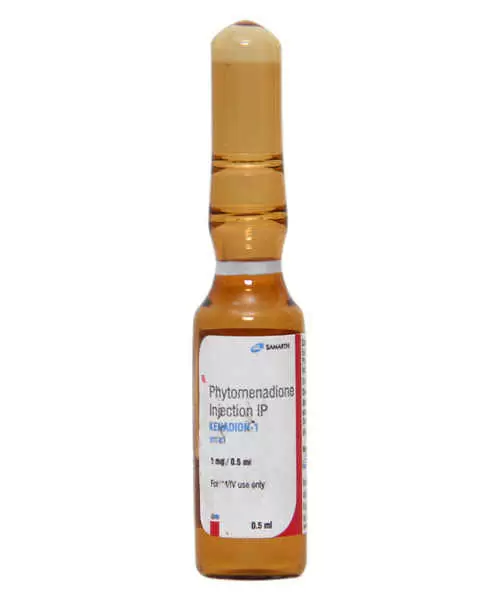
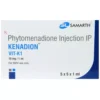
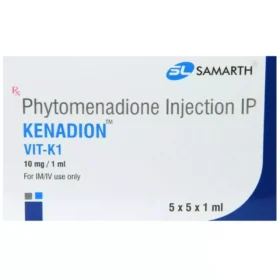
Kenadion Injection
✅ Βοηθά στην πήξη του αίματος
✅ Αποτρέπει την αιμορραγία
✅ Θεραπεύει την έλλειψη βιταμίνης K
✅ Υποστηρίζει την υγεία των οστών
✅ Απαραίτητο για νεογνά
Η ένεση Kenadion περιέχει βιταμίνη K.
✓ Ιατρικά ελεγμένο από Morgan Ellis — Ερευνητής Φαρμακευτικής · 8 χρόνια εμπειρία · Τελευταία αναθεώρηση: Μάιος 2026
Γρήγορη απάντηση
Kenadion Injection (φυτομεναδιόνη (βιταμίνη K1) 10 mg αμπουλά) είναι βιταμίνη K1 (φυτομεναδιόνη) για ενδοφλέβια ή ενδομυϊκή έγχυση. Χρησιμοποιείται ως αντίδοτο σε υπερδοσολογία warfarin, για την πρόληψη και τη θεραπεία της αιμορραγικής νόσου των νεογνών και σε έλλειψη βιταμίνης K από κακή απορρόφηση ή χολοστάση.
- Φυτομεναδιόνη (βιταμίνη K1) 10 mg ανά αμπουλά
- Ενδείξεις: αναισθητοποίηση warfarin, προφύλαξη βιταμίνης K σε νεογνά, έλλειψη λόγω κακής απορρόφησης
- Διαγελκτική (αργή) ή ενδομυϊκή χορήγηση — σε ειδικευμένο περιβάλλον
- πιστοποιημένο από τη WHO-GMP κατασκευαστή
📦 Κάθε παραγγελία καλύπτεται από την Πολιτική Εγγύησης Επαναποστολής — εάν το δέμα σας δεν φτάσει εντός 20 εργάσιμων ημερών, το επαναποστέλλουμε.
Κάθε παραγγελία καλύπτεται από την Πολιτική Εγγύησης Επαναποστολής.
Γιατί να παραγγείλετε από τη MedsBase
Η Kenadion Injection προέρχεται από κατασκευαστή πιστοποιημένο από τον WHO-GMP. Κάθε παραγγελία αποστέλλεται σε διακριτική, απροσωποποίητη συσκευασία παγκοσμίως και καλύπτεται από την Πολιτική Επαναποστολής Εξασφάλισης. Πληρώστε ασφαλώς με πιστωτική κάρτα, τραπεζική μεταφορά SEPA ή κρυπτονομίσματα. Δείτε τα 1,400+ επαληθευμένες κριτικές πελατών.
Τι είναι η Kenadion Injection;
Η Kenadion είναι παρεντερική φυτομεναδιόνη (βιταμίνη K1) — η φυσική μορφή της βιταμίνης K απαραίτητη για την ηπατική σύνθεση των πηκτικών παραγόντων II, VII, IX, X και των πρωτεϊνών C και S. Η βιταμίνη K1 είναι το αντίδοτο σε υπερδοσολογία warfarin, η ρουτίνα προφύλαξης που δίνεται σε νεογνά για την πρόληψη της αιμορραγικής νόσου του νεογνού και η αντικαταστατική θεραπεία για έλλειψη βιταμίνης K που προκαλείται από χρόνια κακή απορρόφηση ή χολική απόφραξη.
Ενδείξεις
- Υπερδοσολογία warfarin / υπεραντιπηκτική θεραπεία — δόση καθοριζόμενη από το INR
- Αιμορραγία από έλλειψη βιταμίνης K (VKDB) του νεογνού — ρουτίνα 1 mg ενδομυϊκά κατά τη γέννηση (ή 2 mg από του στόματος κατά τη γέννηση και επαναλαμβανόμενες δόσεις)
- Έλλειψη βιταμίνης K από κακή απορρόφηση — κοιλιοκάκη, φλεγμονώδης νόσος του εντέρου, κυστική ίνωση, σύνδρομο βραχέος εντέρου
- Χολοστατική νόσος του ήπατος — η χολική απόφραξη εμποδίζει την απορρόφηση της λιποδιαλυτής βιταμίνης που εξαρτάται από χολικές άλες
- Χρόνια χρήση ευρέος φάσματος αντιβιοτικών — καταστρέφεται η εντερική χλωρίδα, χάνεται η παραγωγή βιταμίνης K2
- Ολική παρεντερική διατροφή χωρίς επαρκή χορήγηση βιταμίνης Κ
- Αντιμετώπιση πριν από επέμβαση σε ασθενείς που λαμβάνουν βαρφαρίνη (σε συνδυασμό με 4F-PCC για επείγουσα αντιμετώπιση)
Η γρήγορη IV χορήγηση φυτομεναδιόνης έχει προκαλέσει θανάσιμες αναφυλακτοειδείς αντιδράσεις (ειδικά με τις παλαιότερες φόρμουλες που περιείχαν Cremophor). Οι σύγχρονες γαλακτωματοποιημένες φόρμουλες είναι ασφαλέστερες, αλλά η βιταμίνη Κ1 IV πρέπει να χορηγείται αργά — τουλάχιστον 30 δευτερόλεπτα για μικρές δόσεις, ιδανικά ως έγχυση 30 λεπτών σε 50 ml ορός για υψηλότερες δόσεις. Η ενδομυϊκή χορήγηση είναι γενικά ασφαλέστερη από την IV αλλά έχει πιο αρχή έναρξη δράσης.
| Ενδείξεις | Δόση & διαδρομή | Έναρξη |
|---|---|---|
| Προφύλαξη νεογνικής VKDB | 1 mg IM κατά τη γέννηση (ή 2 mg από του στόματος κατά τη γέννηση + παρακολούθηση) | Ώρες |
| INR βαρφαρίνης > 8 (χωρίς αιμορραγία) | 1–5 mg από του στόματος ή 0.5–1 mg αργή IV | IV: 6–12 ώρες; από του στόματος: 24 ώρες |
| Σοβαρή αιμορραγία από βαρφαρίνη | 5–10 mg αργή IV + 4F-PCC | IV: 6–12 ώρες (PCC: λεπτά) |
| Επιβεβαιωμένη έλλειψη βιταμίνης Κ | 5–10 mg IV/IM, μπορεί να επαναληφθεί | 6–12 ώρες |
| Συντήρηση στη χοληστατική νόσο | 10 mg ενδομυϊκά μηνιαία (ή φυτομεναδιόνη από το στόμα καθημερινά) | Ώρες έως ημέρες |
| Παρασύνθεση TPN | Σύμφωνα με το πρωτόκολλο παρεντερικής διατροφής | Συντήρηση |
Παρενέργειες
- Αναφυλακτοειδής αντίδραση με γρήγορη ενδοφλέβια χορήγηση — η κύρια ανησυχία για την ασφάλεια· υποχρεωτική αργή χορήγηση
- Δυσφορία στο σημείο της έγχυσης
- Αλλεργική αντίδραση — σπάνια αλλά καταγεγραμμένη
- Αντίσταση στη βαρφαρίνη — οι υψηλές δόσεις K1 μπορεί να κάνουν την επαναντιπηκτική θεραπεία δυσκολότερη· προτιμούνται μικρότερες δόσεις όταν αναμένεται γέφυρα
Αλληλεπιδράσεις φαρμάκων
- Βαρφαρίνη — η βιταμίνη K1 αντιστρέφει την αντιπηκτική θεραπεία· αυτό είναι σκόπιμο σε υπερδοσολογία αλλά προβληματικό εάν η αντιπηκτική θεραπεία είναι θεραπευτικά απαραίτητη. Επιλέξτε προσεκτικά τη δόση κατά την αντιστροφή.
- Άλλοι ανταγωνιστές βιταμίνης K (ακενοκουμαρόλη, φενπροκούμονη) — ίδια ανταγωνιστική δράση
- Άμεσα αντιπηκτικά από του στόματος (απιξαμπάν, ριβαροξαμπάν, νταμπιγατράν) — η βιταμίνη K1 ΔΕΝ επηρεάζει αυτά· η αντιστροφή απαιτεί διαφορετικά μέσα (αντεξανέτ, ιδαρουσιζουμάμπ, 4F-PCC)
Αντενδείξεις
- Υπερευαισθησία στη φυτομεναδίνη
- Προσοχή σε σοβαρή ηπατική δυσλειτουργία (η απόκριση μπορεί να είναι περιορισμένη εάν η ίδια η ηπατική σύνθεση αποτυγχάνει)
Αποθήκευση
Αποθήκευση κάτω από 25°C, προστασία από το φως. Χρησιμοποιήστε το φιαλίδιο μία φορά ανοιχτό.
Συχνές Ερωτήσεις
Γιατί δίνεται σε νεογνά;
Τα νεογνά έχουν έλλειψη βιταμίνης K κατά τη γέννηση (κακή πλακουντική μεταφορά, στείρο έντερο κατά τη γέννηση, χαμηλή K1 στο μητρικό γάλα). Η αιμορραγία λόγω ελλείμματος βιταμίνης K (VKDB) του νεογνού ήταν μια σημαντική αιτία καταστροφικής ενδοκρανιακής αιμορραγίας πριν από την ρουτίνα προφύλαξης. Ο ΠΟΥ και οι εθνικές οδηγίες συνιστούν 1 mg ενδομυϊκά κατά τη γέννηση (ή 2 mg από του στόματος κατά τη γέννηση ακολουθούμενα από πρόσθετες δόσεις)· η ενδομυϊκή είναι πιο αξιόπιστη από την από του στόματος για την πρόληψη.
Γιατί είναι επικίνδυνη η γρήγορη ενδοφλέβια χορήγηση;
Οι παλαιότερες συνθέσεις φυτομεναδίνης που περιείχαν Cremophor προκάλεσαν αναφυλακτοειδείς αντιδράσεις (οξεία υποπίεση, βρογχόσπασμο, σπάνια θανατηφόρες). Οι σύγχρονες υδατοδιαλυτές συνθέσεις είναι ασφαλέστερες αλλά η αργή χορήγηση παραμένει υποχρεωτική. Όπου είναι δυνατόν, προτιμάται η από του στόματος ή η ενδομυϊκή.
Πώς αντιστρέφει την βαρφαρίνη;
Η βαρφαρίνη μπλοκάρει την βιταμίνη-K-επξειδική αναγωγάση στο ήπαρ, εμποδίζοντας την ανακύκλωση της αναγωγμένης βιταμίνης K που απαιτείται για την γάμμα-καρβοξυλίωση των πηκτικών παραγόντων II, VII, IX, X. Η φυτομεναδίνη παρακάμπτει αυτό το μπλοκ παρέχοντας αναγωγμένη βιταμίνη K1, επιτρέποντας τη σύνθεση νέων πηκτικών παραγόντων. Η έναρξη είναι σε ώρες-μέρες· η επείγουσα αντιστροφή απαιτεί 4F-PCC για την άμεση αντικατάσταση των παραγόντων.
Θα λειτουργήσει για αιμορραγία από DOAC;
Όχι. Τα apixaban, rivaroxaban, edoxaban, dabigatran ΔΕΝ σχετίζονται με τη βιταμίνη K. Η φυτομεναδιόνη δεν έχει επίδραση σε αυτά. Η αντιστροφή απαιτεί andexanet alfa (αναστολείς Xa) ή idarucizumab (dabigatran), με 4F-PCC ως εφεδρικό.
Μπορούν οι ασθενείς που λαμβάνουν warfarin να παίρνουν βιταμίνη K;
Τα τρόφιμα πλούσια σε βιταμίνη K (πράσινα λαχανικά, μπρόκολο) δεν απαγορεύονται — ο κανόνας είναι η συνέπεια. Οι ασθενείς που λαμβάνουν warfarin πρέπει να διατηρούν σταθερή την πρόσληψη βιταμίνης K, ώστε η δόση του warfarin να μπορεί να προσαρμοστεί. Η ξαφνική έναρξη/διακοπή πολυβιταμινών ή μεγάλες διατροφικές αλλαγές προκαλούν αστάθεια του INR. Οι πολυβιταμίνες με βιταμίνη K πρέπει να συζητούνται με την κλινική warfarin.
Πόσο γρήγορα πέφτει το INR μετά τη βιταμίνη K;
Από του στόματος βιταμίνη K1: Το INR αρχίζει να πέφτει σε 6–12 ώρες, ομαλοποιείται σε 24–48 ώρες. IV βιταμίνη K1: πιο γρήγορα, το INR αρχίζει να πέφτει σε 6–12 ώρες. Η επείγουσα αντιστροφή (ενεργή αιμορραγία) απαιτεί 4F-PCC για άμεση αντικατάσταση παραγόντων — η βιταμίνη K είναι υποστηρικτική αλλά αργή.
Είναι ασφαλές στην εγκυμοσύνη;
Ναι — συνήθως χορηγείται σε κακή απορρόφηση / χοληστασία της εγκυμοσύνης. Διασχίζει τον πλακούντα ελάχιστα, επομένως δεν προκαλεί οξείες επιδράσεις στο έμβρυο.
Γιατί η χοληστατική νόσος του ήπατος προκαλεί έλλειψη βιταμίνης K;
Η βιταμίνη K είναι λιποδιαλυτή. Οι χολικές άλμες απαιτούνται για την απορρόφηση λιπών. Η χολική απόφραξη (χολολίθιαση, πρωτοπαθής χολική χολαγγίτιδα, χολαγγειοκαρκίνωμα) εμποδίζει τη ροή της χολής, αποτρέποντας την απορρόφηση λιποδιαλυτών βιταμινών. Η έλλειψη βιταμίνης K προκαλεί αυξημένο INR ακόμη και πριν από την κλινική αιμορραγία.
Μπορώ να πάρω βιταμίνη K από του στόματος αντί για ένεση;
Ναι — υπάρχουν δισκία φυτομεναδιόνης από του στόματος για μη επείγουσα αντικατάσταση (π.χ. συντήρηση χοληστατικής νόσου, ήπια υπερ-αντιπηκτικότητα warfarin χωρίς αιμορραγία). Η ένεση είναι για επείγουσες περιπτώσεις, νεογνική προφύλαξη, σοβαρή κακή απορρόφηση ή όταν η από του στόματος χορήγηση δεν είναι δυνατή.
Θα αλληλεπιδράσει με τα άλλα φάρμακά μου;
Κυρίως με το warfarin και άλλους ανταγωνιστές της βιταμίνης K. Δεν υπάρχουν κλινικά σημαντικές αλληλεπιδράσεις με τα περισσότερα άλλα φάρμακα — συμπεριλαμβανομένων αντιβιοτικών, στατίνων, αντιυπερτασικών ή ορμονικών αντισυλληπτικών.
Άλλες Βιταμίνες & Ανόργανα
- Βιταμίνη B12 1500 mcg — από του στόματος κυανοκοβαλαμίνη
- Ενέσιμο Walcobal — μεθυκοβαλαμίνη IM
- Polybion Ampoule — Β-συμπλέγματος παρεντερική
- Celin — βιταμίνη C 500 mg
- Arachitol 6L Injection — χοληκαλσιφερόλη IM depot
- Multivite Gold — περιεκτική πολυβιταμίνη
Ιατρική Αποποίηση Ευθύνης
Περισσότερες επιλογές σε Βιταμίνες και Μέταλλα
Ταξινομημένα σύμφωνα με τον όγκο παραγγελιών στο MedsBase — τι επιλέγουν άλλοι πελάτες σε αυτήν την κατηγορία.
| Ισχύς | 10mg/1ml |
|---|---|
| Ποσότητα | 5 Αμπουλά/ες, 10 Αμπουλά/ες, 15 Αμπουλά/ες, 25 Αμπουλά/ες |
 Kenadion Injection
Ερωτήσεις & Απαντήσεις
Kenadion Injection
Σχετικά προϊόντα



Κριτικές
Δεν υπάρχουν ακόμη κριτικές